

We Love Our Quilting Community
At High Country Quilts we care deeply about community. With our experiences in retail, we know that a store is not only a place to shop but also a place for the community to gather and share. During this busy...


You're standing in front of the fabric shelves, running one hand across a nubby bouclé and the other over a smooth matte velvet, and the same question pops up every time.
Are these fabrics quiltable, or are they only pretty on the bolt?
That hesitation makes sense. Textured fabrics ask more from a quilter than a flat cotton print does. They can shift, compress, snag, or behave beautifully, depending on what you choose and how you sew it. The good news is that textured bouclé and matte velvet quilting fabrics aren't off-limits for beginners or hobbyists. They just need a more thoughtful start.
If you've ever fallen for a fabric and then backed away because you were afraid of wasting time, money, or patience, this is the aisle-side guidance I'd give you in the shop.
You spot them while shopping for something practical. A bouclé catches your sleeve with its nubby surface. A matte velvet changes color slightly when you brush your hand across it. Then the question arrives: would this make a beautiful quilt, or a frustrating one?
That question is exactly why these fabrics have become so interesting to quilters. They do more than add color. They add surface. In a quilt, that can matter just as much as print or piecing because texture changes how light hits a block, how seams behave, and how the finished quilt feels in use.
Neither fabric is new. Velvet has been valued for centuries for its pile and depth. Bouclé became widely recognized in modern interiors for its looped, dimensional surface, including the mid-century designs discussed in Schumacher's history of bouclé fabric.

For quilters, the attraction is practical as much as visual. Bouclé can give a plain patchwork block the same kind of interest a heavily printed fabric would, but without adding a busy pattern. Matte velvet can make solids feel richer and softer, especially in simple layouts where every fabric choice has more room to speak.
There is also a reason beginners pause in front of these bolts. Quilting cotton behaves predictably. Bouclé and velvet ask you to pay attention to different things: pile direction, stretch, bulk at the seams, backing stability, and how the surface reacts under the presser foot. That does not make them poor quilt choices. It means they reward planning.
A good way to think about it is this: cotton is like stacking clean sheets of paper, while textured fabrics are more like layering paper with felt. You can still cut, align, and stitch them accurately, but the surface changes how the layers grip each other.
That difference is why quilters keep falling for them. Used well, bouclé and matte velvet can:
The appeal is strongest when beauty and usability meet. A bouclé with stable construction can work well in quilt tops, borders, or appliqué-style accents. A matte velvet with a firm backing and low, even pile is often much easier to piece and quilt than many shoppers expect. If you want a solid foundation before choosing specialty fabrics, this guide on how to choose quilt fabric for real projects is a helpful place to start.
Price plays a role here too. These fabrics often cost more because you are buying more than color alone. You are paying for looped yarn construction in bouclé or a cut pile surface in velvet, and those features affect not only the look of the fabric but also how it must be cut, pinned, sewn, and quilted.
That is why quilters are drawn to them. They offer drama, yes, but they also offer new design options for quilters who want texture to do some of the work. The key is choosing versions that are built well enough to handle actual quilt construction, not just look pretty on the bolt.
When you first pick up textured bouclé and matte velvet quilting fabrics, don't think about patterns yet. Start with what your eyes and hands can tell you in ten seconds.

A fast quality check saves you from bringing home fabric that looked dramatic on the shelf but turns frustrating under the needle. If you want a broader foundation for judging fabric before you buy, this guide on how to choose quilt fabric is a helpful companion.
Bouclé should look textured on purpose, not messy by accident. Good bouclé has loops that feel integrated into the cloth, not loosely sitting on top of it.
Use this aisle test:
Matte velvet should have depth without that slick, plastic-looking shine that can make a project feel costume-like instead of soft and refined.
Here's the tactile test I suggest most often:
| Fabric | First visual cue | First hand-feel cue | Caution sign |
|---|---|---|---|
| Bouclé | Even, intentional texture | Bouncy, structured surface | Loose loops or visible weak base |
| Matte velvet | Rich, even color with soft luster | Smooth pile with fluid drape | Harsh shine or crushed-looking patches |
A nice matte velvet usually drapes with some body but doesn't feel stiff. Run your hand lightly in one direction, then the other. You should see a soft shift in tone, not a harsh stripe effect.
If a velvet looks tired before you've even cut it, it usually won't improve once it's pieced.
Bouclé asks, “Will these loops stay put?”
Velvet asks, “Will this pile stay beautiful?”
Those are different questions, which is why shoppers sometimes get confused. Bouclé quality is mostly about loop construction and base stability. Velvet quality is mostly about pile consistency, color depth, and recovery after handling.
If you'd like to compare textures side by side, shop our curated collection of bouclé fabrics and look for examples with a secure, even surface rather than exaggerated novelty loops.
A fabric can feel wonderful in your hand and still fight you the minute you start cutting. The bolt is where you find out whether that pretty texture will piece calmly or shift, stretch, and shed all over your sewing table.
Start with the fiber line. Bouclé is a surface style, not a single fiber, so two bouclés can look related and behave like distant cousins. One may include wool and feel springy and warm. Another may be mostly polyester and hold its shape differently under an iron. A cotton blend often feels more familiar to quilters because it tends to press and stabilize more predictably.
Velvet works the same way. The word tells you about the pile, not the whole story. Cotton velvet, rayon velvet, polyester velvet, and blends can all have that soft, light-catching face, but they do not sew, press, or wear the same way. That difference matters in a quilt, because you are not just admiring the fabric. You are asking it to survive cutting, piecing, quilting, and use.
The part beginners miss most often is the backing, sometimes called the base cloth or substrate. If the pile or loops are the wallpaper, the backing is the wall underneath. Your needle goes through the wall, not just the pretty surface. A weak backing can stretch on the bias, ripple between quilting lines, or let seam lines look wavy even if your stitching is accurate.
I usually suggest reading the bolt with three practical questions in mind: What is this made of. What is supporting the texture. How will I care for the finished quilt.
A few clues help right away:
Needle choice starts here too. A stable woven bouclé may cooperate with a sharp or microtex needle because you are trying to pierce the base cleanly between textured loops. Velvet with a denser face often responds better to a fine sharp needle that enters cleanly without dragging the pile. If the backing feels knit, stretchy, or spongey, expect more movement and plan extra stabilization before you ever thread the machine.
That is why I tell customers not to read fiber content as trivia. Read it as a sewing forecast.
For a throw quilt that will be handled often, pair specialty fabrics with a support layer that is less likely to shift under them. A stable backing helps the whole quilt behave better during quilting and after washing. This guide to quilt backing fabric for better support and stability is a useful reference if your quilt top already includes textured fabrics.
If you want another practical way to judge how fiber and surface affect long-term wear, Woodstock Furniture & Mattress Outlet's tips offer a helpful durability lens from the upholstery side.
If the bolt sounds promising but the backing feels weak in your hands, believe your hands.
Before you commit, do a few quiet, non-destructive tests right at the cutting counter. You don't need lab equipment. You need a careful touch and a clear idea of what problem you're trying to avoid.

These tests won't tell you everything, but they will catch a lot of disappointing fabric before it reaches your sewing room.
Bouclé's biggest beginner concern is usually shedding, snagging, or loops pulling loose too easily.
Try this:
A little fiber movement can be normal in textured cloth. What you don't want is a fabric that seems to unravel from casual handling. If fraying is a concern, this guide on how to keep fabric from fraying can help you plan your prep before cutting.
Velvet needs a different kind of test. You're looking at pile recovery and surface behavior.
For more general thinking on surfaces that need to stand up to contact, expert tips for durable window fabrics from Henson's Designs give a helpful lens for evaluating resilience and finish.
Store-floor advice: If you're nervous, ask for a small cut first. Specialty fabric is much easier to learn on when the stakes feel lower.
Here's a useful demonstration to watch before your next fabric run:
A beautiful textured fabric can still turn into a frustrating project if you sew it with ordinary assumptions. That's why I always suggest buying the support tools at the same time you buy the fabric.
Think beyond just the yardage:
If your supply drawer needs help, find specialty needles and clips for textured fabrics before you start cutting.
You bring home a gorgeous bouclé or matte velvet, cut the first pieces, and suddenly your usual quilting routine stops working. The fabric shifts, the stitches look uneven, or the surface starts to flatten. That usually points to setup, not skill.
Bouclé and matte velvet are usable in quilts. They just ask for different handling than quilting cotton. If cotton is like writing on notebook paper, these fabrics are closer to writing on a soft towel. Your tools still work, but they need a steadier hand and a better match.
Bouclé can snag, stretch, or sew unevenly because the surface is full of little loops. Those loops can nudge the needle off its clean path, especially if the needle is dull, fine, or slightly wrong for the fabric weight.
Start with a fresh, slightly sturdier needle than you might use for standard patchwork. Many quilters get better results with a 90/14 needle on bouclé, because it passes through the fabric more cleanly and is less likely to skim across the loops. Pair that with good-quality polyester thread for everyday piecing. It tends to hold up well against textured surfaces and gives you fewer headaches than delicate decorative thread.
Feeding matters just as much as the needle. Bouclé often behaves better when the machine helps move both layers evenly. If you need a refresher, this guide on using a walking foot for quilting textured layers can help you set up before you start piecing.
A few shop-floor habits make a big difference with bouclé:
That last point matters. Pulling bouclé through the machine can stretch one patch while the other stays put, and then the mismatch shows up later at the corners.
Bouclé usually behaves best with steady feeding, a fresh needle, and a little extra patience at the machine.
Velvet brings a different set of concerns. The surface pile catches light in one direction and reflects it differently in another, which is why two identical pieces can look like different shades if the nap runs opposite ways.
Before you cut, decide which direction the nap will run for the whole quilt. Then keep every piece consistent. Beginners often skip this because the fabric still looks beautiful on the table. Once those blocks are sewn together, the color shifts become much more obvious.
Velvet also dislikes rough handling. Heavy pinning can leave marks, and dense quilting can flatten the pile enough to change the look of the fabric. Clips are often a safer choice. A smooth presser foot, a Teflon foot, or a foot that glides easily can also help reduce drag.
Use a simple test before committing to a full block. Stitch two scraps right sides together, press carefully from the back with a pressing cloth, then look at the surface under light. If the pile looks crushed or the seam area looks bruised, back off on pressure, reduce handling, or widen your quilting lines.
These velvet rules save beginners a lot of frustration:
Thread and needle choice can also affect the finish. A sharp, fresh needle often gives cleaner seams than a worn one, and smoother thread usually passes through dense pile with less drag. If a seam starts looking wavy or the fabric shifts against itself, slow your speed and stitch another sample before changing the whole project.
For a first quilt using textured bouclé and matte velvet quilting fabrics, keep the design simple. Larger pieces, fewer seam intersections, and a small practice sample give you room to learn how the fabric responds. That is often the difference between a project that feels manageable and one that ends up in a drawer.
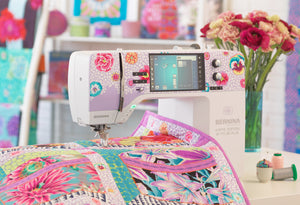
High Country Quilts also offers machine support and training as an authorized BERNINA dealer, which can be helpful if you want guidance on feet, feeding, and handling specialty fabrics in person.
You are standing at the cutting table with two fabrics that both look beautiful on the bolt. One will piece into a quilt without much fuss. The other will shift, shed, or bruise the first time you press a seam. With bouclé and matte velvet, buying well is part of sewing well.

By this point, you already know how to inspect surface texture, backing, and basic durability. Now the question becomes more practical. Where do you buy these fabrics, and who can help you sort out whether a gorgeous cut is a good quilt fabric?
A good quilt shop gives you something the screen cannot. You can fold the fabric, rub it lightly, hold it to the light, and compare two or three options side by side. That matters with textured fabrics because small differences in backing firmness or pile density often decide how the fabric behaves once it meets a rotary cutter, an iron, and a sewing machine.
It also helps to talk through your project with someone who sews. If you say, "I want this for a throw quilt that will be used on the couch," an experienced shop owner will usually steer you toward a more stable bouclé, a lower-pile velvet, or a simpler block layout. That kind of advice saves beginners from choosing fabric that is lovely in a garment or pillow but frustrating in patchwork.
Ask practical questions, not just color questions. Does this fabric fray heavily when cut into small pieces? Does it shift when layered with cotton? Does it need extra stabilization in borders or binding? Those are quilt-making questions, and they lead to much better purchases.
A helpful shop can also point you toward machine setup ideas, sample-friendly cuts, and realistic project sizes for a first try.
Online shopping still has a clear role. It works well for narrowing down color families, comparing fiber content, checking available yardage, and finding stores that carry specialty textures. If you are sorting through your options, this guide on where to buy quilting fabric online can help you compare shops more thoughtfully.
Just treat online photos as the first pass, not the final test.
A fabric listing can tell you fiber content and width. It usually cannot tell you how firmly the backing is knit or woven, how quickly the pile marks under pressure, or whether the surface sheds into your seam allowance. Those details are the difference between "pretty on the shelf" and "pleasant to quilt with."
If you shop online, order the smallest useful amount first when possible. A swatch or a half-yard can teach you a lot. You can cut a few pieces, stitch a sample, press from the back, and see whether the fabric stays attractive after handling. That is a much cheaper lesson than discovering trouble after you have bought enough for the whole quilt.
If you'd like help choosing fabrics, matching your project to the fabric's behavior, or deciding whether bouclé or matte velvet belongs in your next quilt, High Country Quilts can help in person. Bring your pattern, a sketch, or even just a few color ideas. For textured fabrics, a short conversation before you buy often prevents a long afternoon of avoidable sewing problems.
At High Country Quilts we care deeply about community. With our experiences in retail, we know that a store is not only a place to shop but also a place for the community to gather and share. During this busy...

Hi! We’re Adam and Renee Wheaton, the new owners of High Country Quilts! For more than 40 years, we’ve owned and operated vacuum and sewing businesses. Following in Renee’s father’s footsteps after he retired from All Discount Vacuum and Sewing in Colorado...


Leave a comment