
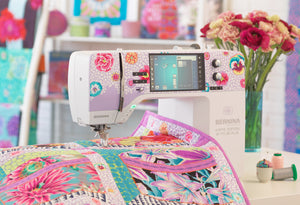

We Love Our Quilting Community
At High Country Quilts we care deeply about community. With our experiences in retail, we know that a store is not only a place to shop but also a place for the community to gather and share. During this busy...


Walking into a fabric shop is an experience. The bolts of color and pattern stacked floor to ceiling can be both a quilter’s dream and, let's be honest, a little overwhelming. But this is where the magic begins. Your very first choice—the fabric—sets the stage for the entire project.

Before you even think about cutting a single piece, the material you choose will have the biggest impact on your quilting journey. It influences everything from the sewing process to the final look and feel of your finished quilt.
While you technically can quilt with just about any fabric, there's a reason seasoned quilters always come back to high-quality, 100% quilting cotton. It's the gold standard. This fabric is designed specifically for what we do, with a medium weight and a tight, stable weave that behaves beautifully.
For anyone just starting, this stability is your best friend. It makes the whole process smoother:
When you're pouring hours of love and effort into piecing a quilt top, you need a foundation that honors your work. Investing in good fabric is the difference between making a nice project and creating a treasured heirloom that will last for generations.
The world of quilting is bigger and more exciting than ever. In fact, the global quilting market was valued at USD 695.84 million in 2024 and is expected to grow to USD 1.15 billion by 2030. This boom means we’re seeing an amazing variety of new substrates, from cozy flannels and rustic linens to silky lawn and rayon blends. You can read more about these trends in this detailed report on the growing quilt market.
While experimenting with different textures is part of the fun, starting with 100% quilting cotton is the best way to build your skills. It removes a lot of guesswork and lets you focus on mastering your technique.
To help you get a feel for the landscape, here's a quick rundown of the most common fabrics you'll encounter.
| Fabric Type | Best For | Feel & Handling | Beginner Friendliness |
|---|---|---|---|
| Quilting Cotton | All-purpose quilting, from piecing to backing and binding. The go-to standard. | Crisp, smooth, and stable. Minimal stretch. Easy to cut and press. | Excellent. The most forgiving and reliable option for learning. |
| Flannel | Cozy quilts, rag quilts, and quilt backs for extra warmth. | Soft, fuzzy, and warm. Can fray and stretch more than cotton. | Good. Requires careful handling. Pre-washing is a must to manage shrinkage. |
| Linen/Cotton Blend | Quilts with a modern, textured look. Pillows and home decor. | Heavier with a distinct, slightly nubby texture. Prone to fraying. | Intermediate. It can be shifty. Best to tackle after you're comfortable with cotton. |
| Rayon/Voile | Lightweight, drapey quilts or garment-style wholecloth quilts. | Silky, fluid, and very lightweight. Can be slippery and difficult to cut accurately. | Advanced. Not recommended for piecing until you have significant experience. |
Ultimately, starting with a quality quilting cotton gives you the best chance for a beautiful, stress-free result. Once you've got a few projects under your belt, you’ll have the confidence to branch out and explore all the wonderful textures the quilting world has to offer.
While 100% quilting cotton is the tried-and-true workhorse of our craft, knowing the difference between various cottons—and when to explore other fabrics—is what really takes a quilt to the next level. Learning to spot quality fabric is a skill you'll lean on for every single project you make.
It all starts with looking beyond the simple "cotton" label on the end of the bolt. Understanding the unique personalities of different natural fibers is key. If you want to take a deeper dive into the world of textiles, this guide to natural fiber clothing is a fantastic resource for learning about their properties.
Even within the cotton family, you’ll find several key players. Think of them as different tools you can pull out for specific creative jobs.
The best way to judge a fabric’s quality has nothing to do with the price tag. It’s all about using your senses. When you’re in a shop, don't be shy—unroll a bit of fabric from the bolt and really get a feel for it.
First, feel the "hand" of the fabric. That’s what we quilters call the way it feels. High-quality quilting cotton feels smooth and substantial, almost crisp. It shouldn't feel flimsy or scratchy. It needs to have enough body to hold a sharp crease when you press it.
Next, hold it up to the light. Can you see a lot of light peeking through the weave? That's a red flag for a low thread count. A tight, dense weave is what you're looking for.
A quilter's secret: A higher thread count is your best friend for precise piecing. It helps prevent the batting from poking through your quilt top (a problem called "bearding"), it frays less while you work, and it’s the key to getting those perfectly sharp points we all strive for.
Finally, give the dye a quick check. Deeply saturated colors, especially your reds and dark blues, are the most likely to bleed. Rub a corner of the fabric on a scrap of white fabric. If you see color transfer, you’ll know that pre-washing with a color catcher sheet is non-negotiable.
I get this question all the time: is it really worth spending more at a specialty quilt shop? My answer is almost always a firm "yes." While you can certainly find 100% cotton at the big-box craft stores, you'll often feel a world of difference in the quality.
Fabric from a dedicated quilt shop usually boasts:
Think of it this way: fabric from a discount store might be fine for a quick practice block or a kid's craft project. But when you’re pouring dozens, sometimes hundreds, of hours into a quilt, you want to build it on a foundation that will last. Using premium fabric is your insurance policy, ensuring your hard work becomes a beautiful heirloom that stands the test of time.
Alright, this is the fun part—and maybe the most intimidating. Walking into a quilt shop is like being a kid in a candy store, but how do you actually pick fabrics that will sing together in your finished quilt? It's less about memorizing strict color theory rules and more about training your eye to see how fabrics interact.
If there's one secret that seasoned quilters swear by, it's understanding value. This has nothing to do with price. Value is simply how light or dark a color is, and it's the single most powerful tool you have for making sure your pattern is clearly visible. Without good value contrast, all your beautiful piecing can blur into a single, undefined shape from a few feet away.
Here’s a fantastic, low-tech trick you can use anywhere: the "black and white test." After you've pulled a few bolts that you think look great together, just whip out your smartphone.
Snap a quick photo of your fabric stack and then edit it using a black-and-white or monochrome filter.
Instantly, all the color is gone, leaving you with a crystal-clear picture of each fabric's value. You’ll see right away if that medium blue and medium green are actually the same value (they’ll blend together) or if you have the light, medium, and dark tones needed for your design to pop.
This simple check is a game-changer, especially for patterns with strong geometric lines or intricate details.
Once you get the hang of seeing value, building a color story becomes much more intuitive. While fabric designers often create entire collections that work beautifully together, there’s nothing more satisfying than curating your own unique palette.
Here are a few trusted approaches to get you started:
Don’t feel boxed in by these formulas. My best quilts have often started with one "hero" fabric—that one print I just couldn't leave the shop without. I then pull colors from that single print to build out the rest of the palette. Let your intuition guide you.
With your colors chosen, the final piece of the puzzle is print scale. A dynamic quilt almost always features a mix of different print sizes. This variety is what gives a quilt top texture and keeps the eye moving.
Think about a modern quilt that uses a huge, bold floral print. The quilter might pair it with several coordinating solids and a tiny, subtle geometric print. That small print connects everything without competing. On the flip side, a traditional scrap quilt is a masterclass in mixing dozens of small and medium prints to create an incredibly rich, textured effect.
While we're talking about prints and colors, it's all tied to the physical quality of the fabric itself. How a fabric is woven and dyed directly affects its feel and how well it will hold up.

The quality of the base cloth and the dyeing process are what separate a fabric that frays and fades from one that will last for generations. It’s an investment in your time and effort.
This focus on quality textiles is a big deal in the broader market. With the global home textiles industry valued at $149.09 billion in 2025, we're seeing more innovation than ever. High-quality materials aren't just about looks anymore; they're about performance and longevity. You can read more about these trends over at Fashionating World. For us quilters, it simply means we have access to better, more beautiful fabrics than ever before.
Ask a room full of quilters whether they prewash their fabric, and you’re likely to start a lively debate. You'll find passionate advocates on both sides of the fence—some who wash every single piece of fabric that enters their sewing space, and others who love the crisp feel of fabric straight off the bolt.
So, who's right? The honest answer is that it really depends. There isn't one hard and fast rule, but there is a right choice for your quilt. Figuring that out comes down to understanding what can go right, and what can go wrong.
The biggest reason quilters prewash is to get the shrinkage out of the way. Most 100% cotton fabrics will shrink about 3-5% the first time they hit the water. If you make a quilt top with unwashed fabric, all that shrinking happens after it’s been pieced, which can lead to puckered seams and a distorted quilt.
Color bleeding is another huge concern. Those beautiful, deeply saturated colors—especially reds, navies, and purples—are famous for releasing excess dye in their first wash. Prewashing lets you rinse all that loose dye out before it has a chance to ruin your pristine white or light-colored fabrics.
Finally, washing your fabric removes the sizing, starches, and other chemicals used in the manufacturing process. It not only makes the fabric feel much softer but also gets rid of any dust or grime it might have collected on its journey to the quilt shop.
With all those benefits, why would anyone choose not to prewash? For many quilters, it comes down to preserving that crisp, stable feel of brand-new fabric. The sizing that manufacturers add gives the material a certain stiffness that makes it a dream to cut accurately. Once you wash it, the fabric softens up and can be a bit more slippery under a rotary cutter.
Let’s be honest, it can also be a real pain. Prewashing fabric, particularly smaller cuts, often leaves you with a tangled, frayed mess that needs a good press and a trim before you can even think about cutting your pieces.
Here's a key tip: If you're working with precuts like a Jelly Roll or Charm Pack from a single designer collection, you're usually safe to skip prewashing. These fabrics are all made in the same mill and will shrink consistently. In fact, washing precuts can be a disaster, causing them to fray and warp so much they become unusable.
So, how do you decide? Think about your specific fabrics and the quilt you plan to make.
You should probably prewash if:
You can likely skip prewashing if:
In the end, the most critical rule is consistency. Either wash every single fabric going into your quilt top, or wash none of them. Mixing washed and unwashed fabric is a guaranteed recipe for a puckered, uneven quilt down the road. By weighing the pros and cons for your project, you can confidently make the right call and set yourself up for a beautiful finish.

We've all been there. Staring at the last few seams, you suddenly realize you're just inches short of the fabric you need for that final border. It’s a gut-wrenching moment, and playing "fabric chicken" is a game no quilter wants to lose. Getting comfortable with calculating yardage and sourcing your materials is just as important as picking the right colors.
Your quilt pattern is your best friend here. It should lay out exactly what you need, but the terminology can feel like a foreign language at first. Let's break down the lingo.
Before you can confidently walk into a shop or click "add to cart," you need to know the language of the cut counter. These are the terms you'll see in almost every pattern.
Knowing these terms is half the battle. The other half is making sure you actually buy enough.
Even the most detailed pattern can't account for life's little mistakes. A slip of the rotary cutter, a piecing error you have to recut, or a flaw woven into the fabric can leave you scrambling. That’s why experienced quilters always buy a little extra.
I call it my "quilter's insurance." As a rule of thumb, I add an extra 1/4 yard to any cut that’s a yard or longer. For smaller amounts, I’ll just round up to the next common increment—like getting a 1/2 yard instead of the 3/8 yard the pattern calls for.
This tiny bit of extra spending can save you from the massive headache of hunting down a fabric from the exact same dye lot, which is often a lost cause. Plus, that leftover piece is perfect for making a matching pillow sham, creating a quilt label, or just adding to your scrap bin for a future project.
For your quilt back, the math is simple but crucial. Measure the final length and width of your quilted top, then add at least 4 inches to every side. This gives your longarm quilter (or you!) the necessary overhang to load the quilt onto the machine and ensure everything stays smooth and square.
With your shopping list in hand, you’ve got a choice to make. Do you visit a local quilt shop like High Country Quilts, or do you start browsing online? Honestly, both have their place in a quilter’s life.
The Magic of the Local Quilt Shop:
The Allure of Online Shopping:
The global quilt market, valued at US$ 5.6 billion in 2025 and projected to reach US$ 8.3 billion by 2032, shows just how much this craft is booming. North America is the largest market, meaning we have incredible access to fabric from all over the world through specialty shops and a massive online scene. You can see how these global market trends are shaping what's available.
In the end, most of us do both. We lean on our local shops for the community and tactile experience but turn to the internet when we’re on the hunt for something specific that we just can’t find down the street.
Even seasoned quilters run into head-scratching moments at the fabric store. Once you get past the basics of color and yardage, the little details can trip you up. I’ve heard these questions countless times over the years, so let's clear up some of the most common fabric dilemmas you might face.
You absolutely can! In fact, mixing quilting cotton with something like a soft flannel, a rustic linen, or even a bit of corduroy can give a quilt incredible texture and personality. But you can't just throw them all together and hope for the best.
These different materials all have their own quirks, especially when it comes to shrinkage. The non-negotiable first step is to prewash everything. If you don't, you're asking for puckered seams and a wonky quilt after its first trip through the laundry, because cotton and flannel will shrink at very different rates.
You’ll also want to think about your machine setup. If you’re piecing a beefy flannel with a standard cotton, you'll probably need to switch to a stronger needle (like a 90/14) and maybe lengthen your stitch a bit to handle the bulk. A walking foot is your best friend here, too.
A great way to dip your toes in is by using a different fabric for your quilt back. Try a cozy flannel or minky on the back of a cotton top. It lets you learn how the fabric feels, washes, and wears without the risk of ruining intricate piecing.
Think of precuts as your shortcut to a beautiful, coordinated quilt. They are simply bundles of fabric, cut by the manufacturer into standard sizes. You’ll find them with all sorts of names:
So, why use them? For one, they save an enormous amount of cutting time, letting you jump right into sewing. This is a huge win when you’re excited to start a new project.
Even better, precuts are almost always pulled from a single designer's collection. That means all the colors, prints, and scales are designed to work together perfectly. You get a professionally curated palette without any of the guesswork. They are fantastic for beginners and for "scrappy" patterns where you want lots of variety without buying a quarter-yard of 40 different fabrics.
For a quick and satisfying project, there's nothing easier than grabbing a fat quarter bundle and a few yards of a background solid. You can walk out of the shop with a fully coordinated quilt top, ready to go. It’s a wonderful way to build confidence.
When you’re sewing for a little one, your fabric priorities change. The number one focus becomes choosing materials that are soft, safe, and can stand up to a lot of love (and a lot of washing).
Always start with a high-quality, 100% cotton for the top. It’s breathable, gentle on a baby’s sensitive skin, and incredibly durable. I also strongly recommend looking for fabrics with an OEKO-TEX certification. This label is your assurance that the textile is free from a long list of harmful chemicals, giving you peace of mind.
Prewashing is a must. Always wash baby quilt fabrics in a gentle, dye-free, and fragrance-free detergent to remove any starches or chemicals left over from manufacturing. For the backing, a soft organic flannel or a smooth minky fabric makes the quilt extra cuddly. Just remember to prewash those as well—they tend to shrink even more than quilting cotton.
This is a question of investment, and in quilting, you truly get what you pay for. It can be so tempting to grab that cheaper fabric, but I always encourage quilters to think about the value of their own time.
You are going to pour dozens, maybe even hundreds, of hours into cutting, piecing, and quilting your project. That fabric is the literal foundation of all your hard work. When you invest in premium fabric from a dedicated quilt shop, you’re getting more than just a prettier print.
Higher-quality fabrics have:
While a budget fabric might be fine for a practice block or a quick project you don't expect to last, a quilt is meant to be a legacy. Using quality materials ensures your art can be loved, used, and washed for years, becoming a true heirloom.
Protecting your fabric stash is just as important as choosing it. Your fabric has two main enemies: direct sunlight, which will bleach the color right out, and humidity, which can lead to musty smells or even mildew.
The best solution is a cool, dry spot away from any windows. A closet or a dedicated cabinet works perfectly. To keep yardage tidy and visible, many quilters wrap it around comic book boards (they're acid-free!) or specialty fabric rulers. You can then line them up on a shelf like mini-bolts, making it easy to see what you have.
Clear plastic bins with lids are another great choice. They keep dust, moisture, and pests out while letting you see your collection at a glance. For precuts, I always advise leaving them in their original packaging until you’re ready to sew. It keeps the edges from fraying and ensures the collection stays together. Just try to avoid unsealed cardboard boxes, as the acid in the cardboard can discolor your fabric over time.
Ready to find the perfect fabrics for your next masterpiece? At High Country Quilts, we offer an incredible selection of high-quality quilting cottons, precuts, and notions to bring your vision to life. Explore our collection online or visit us in-store for expert advice and inspiration
At High Country Quilts we care deeply about community. With our experiences in retail, we know that a store is not only a place to shop but also a place for the community to gather and share. During this busy...

Hi! We’re Adam and Renee Wheaton, the new owners of High Country Quilts! For more than 40 years, we’ve owned and operated vacuum and sewing businesses. Following in Renee’s father’s footsteps after he retired from All Discount Vacuum and Sewing in Colorado...


Leave a comment