
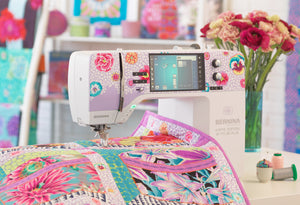

We Love Our Quilting Community
At High Country Quilts we care deeply about community. With our experiences in retail, we know that a store is not only a place to shop but also a place for the community to gather and share. During this busy...


You've got a summer racing event on the calendar. Your outfit is nearly sorted, the shoes are chosen, and now you need the finishing piece that makes the whole look feel intentional. Store-bought fascinators can work, but they often land in that frustrating middle ground. Almost right color, almost right scale, almost your style.
Making your own gives you control over every decision. You choose the shape, the angle, the trim, and the amount of drama. If you've never tried millinery before, don't worry. A fascinator is one of the most approachable ways to step into structured accessory making, especially if you already sew, quilt, or enjoy careful handwork.
At our workshop table, this is the kind of project I love teaching because it looks advanced when it's finished, yet the process breaks down into manageable parts. Good materials help. Thoughtful pressing helps even more. And if you've been searching for an Oliso TG1600 Pro+ iron local stockist, it usually means you already understand something important. Precise tools make precise work much easier.
A fascinator often starts with a practical problem. You've found a dress for a summer event, but every accessory you try feels slightly off. The navy is too dark. The flowers are too large. The headband sits too flat. That's usually the moment a custom piece starts to make sense.
For race day, the challenge isn't only style. It's also endurance. Summer sun changes how fabrics behave, how trims sit, and how comfortable a headpiece feels after hours of wear. A lovely design in the morning can look tired by midafternoon if the base is flimsy or the shaping wasn't set well.
Practical rule: If your outfit already has a strong print, let the fascinator carry shape more than extra pattern.
I often tell students to think of their fascinator as punctuation. It doesn't need to say everything. It needs to finish the sentence. A small tilted disc with crisp veiling can feel elegant and modern. A wired sweep of sinamay with a few well-placed feathers can feel festive without becoming costume.
The satisfying part is that this project lets you design for your real life. If you know you'll be outdoors, you can favor lighter fabrics and trims that won't collapse in the heat. If you'll be greeting people, moving around, and sitting in the sun for hours, you can choose an attachment method that stays secure and comfortable.
That's also why local guidance matters. When you can compare tools and supplies in person, touch the materials, and ask how they behave under steam and stitching, the whole project becomes less mysterious and much more doable.
You are designing for bright sun, long wear, and plenty of close-up photos. That changes the design process. A summer race day fascinator has to look graceful at first glance and still hold its shape hours later, after heat, movement, and a bit of wind.

Set your outfit on a chair or dress form if you can, then place possible fascinator materials beside it. Seeing everything together saves guesswork. At High Country Quilts, I often encourage students to compare color in natural light because indoor bulbs can make a cool blue look dusty or a pink look warmer than it really is.
Your fascinator usually needs to do one clear job.
| Approach | What it looks like | When it works well |
|---|---|---|
| Tonal match | Similar color family to your outfit | Printed dresses, statement jewelry, or dramatic silhouettes |
| Deliberate contrast | One accent color that repeats elsewhere | Solid outfits that need a focal point |
For summer events, cleaner color stories usually read better than complicated mixes. Sinamay, linen, and silk dupioni all catch daylight differently, so even two close shades can look very different once you step outdoors.
If color decisions start to feel slippery, limit yourself to a base color and one trim color. That small boundary works like a good cutting guide. It keeps the project focused and polished.
Shape carries as much style as color. A neat percher, a tilted disc, or a soft asymmetrical sweep each creates a different mood. For summer racing events, I usually suggest shapes with lift and airflow instead of dense, heavy clusters that sit flat and trap heat.
A few guidelines help:
A clear silhouette matters more than sheer size.
Sketching helps here, and the sketch does not need to be pretty. Draw a few simple outlines and mark where the trim would sit. I like students to try three versions on paper: one restrained, one balanced, and one dramatic. Side-by-side comparison makes proportion much easier to judge.
This is the part many generic fascinator tutorials skip. Summer sun can soften glue, flatten unsupported loops, and leave delicate fabric looking tired before the afternoon is over. Your design needs some backbone.
Choose materials that respond well to shaping and recover nicely after handling. Sinamay is a favorite for race day because it stays airy while still holding a crisp line. Buckram covered in a breathable fashion fabric also works well if you want a smoother finish. Wired edges help curves stay intentional instead of collapsing. Veiling should have spring, not droop.
Pressing matters too. A careful press sets the tone for the whole piece, especially on bows, covered bases, and shaped trims. In the shop, we often reach for the Oliso Pro+ iron for this stage because the precise heat control is helpful on delicate materials, and a BERNINA machine makes the fine stitching and edge work much easier to manage cleanly.
Before you cut into your final fabric, hold your chosen materials in your hands and ask three practical questions. Will this feel light after several hours? Will it keep its shape in sun? Will it still look crisp from the grandstand to the winner's circle? If the answer is yes, your design is on the right track.
A summer race day fascinator has to do more than look pretty on the worktable. It needs to stay light, keep its shape in heat, and still look fresh after hours outdoors. Your supplies decide a lot of that before you ever thread the machine.

Start with the pieces that give the fascinator its backbone. In class, I tell students to shop for structure before sparkle. It works like building a porch swing. The paint color matters, but only after the frame can hold steady.
For summer fascinators, two base materials are especially beginner-friendly.
If you are unsure which base to buy, ask yourself one question. Do you want the base to disappear under a cover fabric, or do you want the material itself to be part of the look? Buckram usually suits the first goal. Sinamay usually suits the second.
Once the structure is sorted, choose fabrics and trims that can tolerate careful steaming and won't turn heavy or limp in the sun. Race day fascinators differ from many generic tutorials in this regard. A beautiful trim that wilts by lunchtime is not doing its job.
A practical kit often includes:
Students often ask where to spend a little more. My answer is usually the same. Put your budget into the base materials, the wire, and the iron. If those three are doing their job, even simple trims can look refined.
Millinery asks a lot from an iron. You are not just pressing flat seams. You are shaping small curves, setting covered edges, smoothing ribbon, and coaxing materials into staying where you put them. A household iron can manage some of that, but a tool made for sewing work makes the process calmer and more precise.
One product listing describes the Oliso TG1600 Pro+ as having 1,800 watts, OnePass pressing, an extra-thick soleplate for heat retention, and strong vertical and horizontal steam output. Those details are useful when you are comparing it with lighter home irons for sewing and pressing tasks (Oliso TG1600 Pro+ product details).
High Country Quilts carries the Oliso Iron TG1600 Pro Plus Turquoise and the Oliso Iron Pro Plus Tula Pink in the same TG1600 Pro Plus line. For shoppers searching for an Oliso TG1600 Pro+ iron local stockist, having a nearby place to see the iron in person can make the choice much easier. You can judge the weight in your hand, look closely at the tip, and decide whether the features suit the kind of fine sewing and finishing you do most.
The right iron helps you press cleanly, shape with control, and finish small details without fighting the tool.
If you already own a BERNINA machine, pair it with an iron that can keep up. That combination is a pleasure on delicate summer millinery work.
Before you cut anything, gather these basics:
A well-chosen kit saves frustration later. When your tools are steady and your materials suit the heat, the fascinator is much easier to build cleanly and wear confidently.
Race day sun is hard on a fascinator. A base that looks lovely at your cutting table can soften, sag, or twist after a few warm hours outside if it was not shaped with enough support from the start. Build this part carefully and the decorating stage becomes much simpler, because every feather, loop, or veil has a stable place to sit.

Start with a paper pattern before you touch your millinery material. For summer racing events, small to medium shapes usually wear better in the heat than very wide designs. A teardrop, oval, or neat disc gives you enough presence without feeling heavy by midday.
Hold that paper shape near your head and turn slightly toward a mirror. A fascinator works like picture framing. The angle around your face matters as much as the shape itself. If it tips forward a touch or sits slightly off to one side, it often looks more polished than a base placed flat on top of the head.
Cut your buckram or sinamay with extra allowance around the edge. That margin gives you room to refine the curve after shaping, which is far easier than trying to stretch material that was cut too tight.
This stage asks for gentle hands. Buckram responds well to light moisture and heat, then can be formed over a bowl, hat block, or another smooth rounded surface. Sinamay needs a little more finesse. Coax it into shape bit by bit so the weave keeps its crisp character instead of collapsing into a harsh crease.
An iron with steady heat makes a real difference here, especially on summer-weight materials that show every press mark. In our Colorado shop, this is the point where a good tool earns its space on the table. A BERNINA handles the stitching beautifully later, but shaping starts with careful pressing. The Oliso Pro+ is especially handy for this kind of work because you are constantly setting the iron down, lifting the base, checking the curve, and pressing again.
Independent quilting coverage describes the Oliso Pro+ line's iTouch auto-lift as a handle-touch system that lifts and lowers the iron, and also notes a 360-degree rotating cord designed to reduce tangling. For makers who spend long stretches pressing and repositioning, that combination addresses repetitive wrist movement and cord interference in a very practical way (Oliso Pro+ review with iTouch and rotating cord details).
Press a little. Let the material cool. Check the curve with your hands, then press again.
That rhythm keeps the base smooth and controlled.
Here's a quick demonstration that helps many beginners visualize the shaping process before they try it at the table.
Once the base is holding its form, wire the perimeter. Millinery wire works like the spine in a well-made collar. It keeps the outline neat, helps the fascinator resist drooping in warm weather, and gives you a cleaner edge under ribbon or covering fabric.
A simple approach works well:
After the wiring is secure, add your fashion fabric if your design calls for it. Smooth from the center outward and clip the seam allowance where the curve tightens. If the fabric bunches, it usually means it needs easing, not pulling.
If you buy trims or findings in batches for hat projects, JBD's tips for wholesale components are useful for planning ahead.
Most base problems show up in predictable ways, and that is good news because they are usually fixable.
| Problem | Likely cause | Fix |
|---|---|---|
| Bubbles on the top | Fabric was not eased from the center | Lift and resmooth, then clip seam allowance where needed |
| Wavy outer edge | Wire shifted or was stitched unevenly | Remove the uneven section and restitch with consistent tension |
| Base feels flimsy | The shape was not set firmly before wiring | Return to steam shaping and let the form cool fully |
High Country Quilts keeps these finishing supplies on hand for makers who want to build a cleaner base, especially millinery wire, Petersham ribbon, and the kind of pressing tools that help summer fascinators hold their shape through a full day outdoors.
You can have a beautifully shaped base and still end up with a fascinator that feels busy, droopy, or a little flat. The trims decide whether the piece looks polished at 9 a.m. and still polished after hours in bright summer sun. For race day, decoration needs to do two jobs at once. It should catch the eye, and it should hold its shape.
Start by choosing the one detail you want people to notice first. Usually that is a ribbon loop, a small spray of feathers, or a flower cluster set slightly off center. Pin that main element in place and view it from arm's length, then from the side. A fascinator sits in motion, not on a flat worktable, so the profile matters just as much as the front.
A strong arrangement has direction. Ribbon loops can sweep upward like a brushstroke. Veiling softens hard edges and adds a little mystery without adding much heat. Feathers work best when they follow the line of the base, rather than poking out at unrelated angles.
If every trim asks for attention, the eye has nowhere to rest.
Summer events call for lighter choices than many standard fascinator tutorials suggest. Thick layered flowers, heavy satin bows, and dense trim clusters can wilt, trap heat, or slump by midday. Colorado makers know the sun is not gentle, so it helps to treat embellishments the way you would treat summer clothing. Lighter layers, breathable materials, and clean structure usually wear better.
These combinations tend to stay crisp through a warm day out:
If you are buying trims for several hats or comparing batches for color consistency, JBD's tips for wholesale components offer useful guidance on planning purchases and evaluating findings.
Now secure the design in layers. Tack down the focal piece first. Then add supporting details one at a time, checking balance after each addition. This is the same idea we use at the sewing table with a precise seam. Small corrections early are far easier than ripping out a finished cluster later.
Use stitching as your main support whenever possible. A tiny hand tack through a ribbon fold or feather quill gives far more control than a blob of adhesive. Glue has its place for a clean hold on a small accent, but for anything facing sun, breeze, and a full day of wear, stitching should do the structural work. A quick press with an Oliso Pro+ iron can help ribbon loops keep a crisp curve before they are attached, and a BERNINA set to a tidy narrow stitch is handy if you are preparing fabric petals or bias-cut trim beforehand.
The hidden parts matter here. Cover thread paths with an extra fold, tuck quill ends under another element, and keep attachment points close to the base so the decoration feels intentional instead of perched on top. High Country Quilts often recommends laying all the trims on the table first, then removing one item before you stitch anything down. That single edit usually improves the whole design.
A beautiful fascinator still needs to be wearable. If it pinches, slides, or feels scratchy, it won't matter how lovely the top looks. The underside is where comfort and professionalism meet.
Different outfits and hairstyles call for different hardware. There isn't one universal answer.
Before sewing the attachment in place, test it on your hairstyle. Tilt matters. A fascinator that sits beautifully on the table may need a different angle once it's on your head.
Line the underside with felt or Petersham so no raw edges scratch the scalp or catch in the hair. This also helps conceal stitches from the attachment method.
A polished finish usually includes:
This stage also explains why some makers choose a premium iron and keep it for years. A review discussing the Oliso TG1600 Pro+ raises a useful long-term question: whether the higher upfront cost translates into less fatigue, fewer scorch risks, and smoother daily workflow for serious sewists. That same discussion frames the tool as a potentially stronger long-term buy when reduced strain and consistent steam help prevent frustration and damaged work (long-term value perspective on the Oliso TG1600 Pro+).
If you enjoyed this project, that's often a sign you're ready for more structured sewing or millinery work. Classes can shorten the learning curve because you get feedback at the exact moment a shape, seam, or trim placement starts to drift.
If you loved the idea of a custom fascinator but found the process more time-intensive than expected, bespoke help makes sense too. That's not giving up. That's using your time wisely while still ending up with a piece designed around your event, your outfit, and your preferences.
For many makers, the sweet spot is a mix of both. Learn the techniques in a class, build confidence on simpler pieces, and then decide which special-occasion projects you want to make yourself.
If you're ready to turn inspiration into something wearable, visit High Country Quilts to explore tools, fabrics, classes, and support for your next project. If you've been searching for an Oliso TG1600 Pro+ iron local stockist, or you want guidance on sewing machines, notions, or race day fascinator supplies, we'd love to help you get started with confidence.
At High Country Quilts we care deeply about community. With our experiences in retail, we know that a store is not only a place to shop but also a place for the community to gather and share. During this busy...

Hi! We’re Adam and Renee Wheaton, the new owners of High Country Quilts! For more than 40 years, we’ve owned and operated vacuum and sewing businesses. Following in Renee’s father’s footsteps after he retired from All Discount Vacuum and Sewing in Colorado...


Leave a comment