
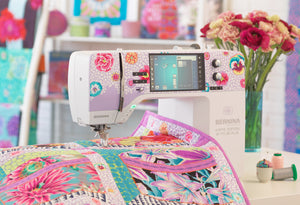

We Love Our Quilting Community
At High Country Quilts we care deeply about community. With our experiences in retail, we know that a store is not only a place to shop but also a place for the community to gather and share. During this busy...


The invitation is sitting on the counter, and the dress question has already started. If the event is black tie, winter formal, or an evening wedding, you may have the gown handled and still feel like something is missing. Usually, it's the outer layer. You need warmth, but you don't want to throw a plain cardigan over a special outfit and flatten the whole look.
That's where a handmade wrap earns its keep. A soft faux fur wrap in an elegant off-white can look polished, feel personal, and give you a project that stretches your sewing skills in a satisfying way. If you've mostly quilted cottons or made simple accessories, this is a lovely next step because the shape is straightforward even though the materials feel dressier.
A student in the shop once brought in a cream evening dress and asked a question I hear often: “I want something warm, but I don't want it to look bulky.” That's exactly the problem a formal wrap solves. It sits lightly on the shoulders, softens the whole outfit, and still lets the dress be the star.
Pantone named PANTONE 11-4201 Cloud Dancer its 2026 Color of the Year, describing it as a “lofty white” and a symbol of calm, according to Pantone's 2026 color announcement coverage for sewists and makers. For sewing, that matters because Cloud Dancer isn't a harsh optic white. It reads softer, quieter, and more expensive-looking in many formal settings.
That's why Pantone Cloud Dancer fabric for quilting translates so well into a luxury accessory project. Quilters already understand how a near-white can frame stronger colors and show off workmanship. In a wrap, that same quality helps the texture of faux fur do the talking.
Practical rule: If a fabric color feels peaceful in daylight and elegant under indoor lamps, it usually has real wardrobe potential.
Cloud Dancer also plays nicely with common formal event attire. It works with black, navy, charcoal, silver, soft blush, and jewel tones without feeling trendy in a way that will date quickly. If you're sewing one special accessory instead of a whole event wardrobe, that kind of flexibility matters.
For brides, bridesmaids, and guests trying to stay warm on your wedding day, a wrap is often more useful than a structured jacket. It tucks into photos more gracefully, it's easier to remove indoors, and it doesn't fight with evening silhouettes.
Quilters usually do well with this project for three reasons:
The shape can stay simple. The finish is what makes it feel refined. That's good news if you're sewing your first luxury piece.
You are standing in the fabric store with your event shoes already in mind. The Cloud Dancer-toned faux fur looks beautiful on the bolt, the satin catches the light, and every option seems glamorous. This is the moment to slow down. For a black-tie wrap, your materials need to work together the way good quilt blocks do. Each piece should support the whole design, not compete with it.
Start with touch before color matching. A pretty surface can hide a difficult backing, and faux fur with too much stretch is harder to cut, stitch, and turn neatly. Run your hand over the pile, bend a corner, and check whether the backing feels stable and supple rather than stiff or rubbery.
Cloud Dancer is appearing in fabric collections and sample presentations built around pale neutrals and soft texture, including a “Shades of Pearl” direction shown in this Cloud Dancer samplebook listing. That matters for this project. Pantone's 2026 color story can feel trend-driven in the abstract, but a wrap in this soft off-white reads timeless at a formal event, especially when you pair it with black, silver, navy, or jewel tones. It also makes shopping easier because faux fur, lining, thread, and closures do not have to match perfectly to still look intentional.
Choose your outer fabric first. Then build the rest of the project around it, the same way you would choose a focus fabric before pulling coordinates for a quilt.
| Item | Quantity/Size | Notes |
|---|---|---|
| Faux fur in a Cloud Dancer-like shade | Wrap length plus a little extra for nap planning | Choose a soft off-white with a backing that doesn't feel brittle |
| Lining fabric | Same cut size as outer fabric | Satin gives shine, crepe feels quieter and less slippery |
| Thread | To match lining or the least visible side | Near-white thread needs careful color matching |
| Machine needle | Heavy-duty or sharp suitable for thicker layers | Test on scraps first |
| Wonder clips or fabric clips | Enough to secure the perimeter | Better than pins for thick pile |
| Walking foot | One for your machine model | Helps feed fur and lining evenly |
| Hand-sewing needle | One sharp needle | For closing the turning opening neatly |
| Marking tool | Chalk or removable marker | Mark the wrong side only |
| Craft knife or box cutter | One | For cutting fur backing only |
| Pattern weights | A few | Useful on slippery lining |
| Padded hanger | One | For storage after sewing |
A beginner can sew this project with a short supply list. The trick is choosing calm, compatible materials instead of chasing every fancy option.
Lining changes how the wrap feels on the body and how polished it looks when it opens at the neckline or slips off the shoulder. A glossy satin gives you that classic evening-wear flash. It also shifts under the presser foot like a deck of cards sliding out of line. A matte crepe or another soft woven lining is usually easier to control, and it still looks refined.
Use this quick test at the store. Drape the lining over your forearm, then rub two layers together. If it squirms around right away, expect more clipping and slower sewing. If it falls softly and stays put, it will be friendlier for a first luxury project.
If you are choosing by feel instead of fiber content, use these guidelines:
A wrap looks expensive when the outer fabric, lining, and thread agree with each other in color, weight, and behavior.
For a first wrap, a rectangle is the safest choice and often the most elegant. It is easier to cut accurately, easier to turn cleanly, and easier to style over formalwear without fussing.
Use the fabric itself to decide the final proportions. Drape it around your shoulders in front of a mirror. If the fur feels bulky near the elbows, add length instead of width. If it slips off too easily, keep the depth modest so it sits closer to the body.
Beginners usually get stuck here because they plan the drama before they test the drape. Let the faux fur show you how much volume it wants. That small pause saves fabric, reduces bulk, and gives the finished wrap the poised look that suits a formal event.
The first cut is usually the moment that makes a new sewist tense up. You have a pale, formal faux fur on the table, a lining that wants to slide, and a black-tie wrap in your head. The goal is to keep that elegant Cloud Dancer look intact before you ever reach the machine.

Faux fur misbehaves for a simple reason. The beauty is on the surface, but the cut needs to happen underneath. If you chop straight through the pile with dressmaking scissors, you shear off the long fibers that give the wrap its soft, formal finish. That is what creates the messy cloud of fluff and the blunt-looking edges.
Start by petting the fur in both directions. One way feels smooth. The other way feels rough, almost like brushing a cat's coat backward. The smooth direction is the nap.
Mark an arrow on the backing with chalk or a removable pencil. Keep every pattern piece running the same way. On a casual throw, mixed nap can look like a small mistake. On an evening wrap in a pale shade like Cloud Dancer, event lighting will catch the difference right away, and one area can read darker than another even though the fabric is the same.
If you are unsure which direction should point where, let the nap fall downward when the wrap is worn. That usually gives the richest, most polished look.
Turn the fabric pile side down. Smooth the backing flat, but do not tug it into shape. Faux fur backing can stretch a little under pressure, and a stretched piece often relaxes into the wrong size later.
A craft knife works well here because it lets you score the backing without mowing through the pile. The motion is closer to opening an envelope than carving a roast. Small, controlled passes are easier than one heavy cut.
Use this order:
That one habit preserves the fluffy edge, reduces shedding, and gives you a seam that blends much better after sewing.
If the pile stays long at the cut edge, the finished seam looks fuller and far more expensive.
Your lining needs the opposite treatment. Fur likes a gentle hand and shallow cuts. Lining likes stability and precision.
Cut slippery lining in a single layer if you can. Use pattern weights, a rotary cutter, and a large flat surface so the fabric stays supported. If it shifts while you are lining up the edge, slide tissue paper underneath first. The tissue adds a little grip, and you can tear it away after cutting.
A few shop-floor habits help a lot:
That last trick saves more confusion than beginners expect. Once pieces are off the table, many linings look nearly identical on both sides.
Set a small bin beside your cutting area and drop loose fluff into it as you work. Keep a lint roller nearby. After cutting, shake the fur piece gently outdoors or over a floor you can sweep easily.
Some shedding is normal. Controlled shedding is the target.
If you see a little fluff and start worrying that you ruined the fabric, pause and look at the edge itself. If the pile is still long and the backing line is clean, you are on track. That careful prep is what helps a trend-driven color like Cloud Dancer read as refined instead of fussy once it becomes a formal wrap.
You can feel the project change at this stage. Loose pieces start acting like a garment, and the main job is control. Faux fur has loft and drag. Lining has slip. Your machine has to feed both at the same pace, or the edge will ripple and the wrap will twist.

Cloud Dancer adds one more detail to watch. It often reads softer than a bright optic white, especially under evening lighting, which matters for a formal wrap. A thread that disappears in daylight can look sharp or chalky under ballroom lights. The same goes for lining. If you want this piece to feel polished enough for black-tie dressing, test your thread and lining against the fur in the light where the wrap is likely to be worn.
A walking foot helps because it feeds the top layer more evenly instead of letting the lining race ahead. If you have ever tried to stack satin on a slippery ironing board cover, you already know the problem. One layer wants to stay put. The other wants to shift. The walking foot works like an extra set of hands keeping both layers together.
Start with a scrap test before you touch the actual piece.
If you sew on a BERNINA, a walking foot from High Country Quilts is one practical option for handling fur and lining together.
Put the wrap pieces right sides together. On faux fur, that means the pile faces inward toward the right side of the lining. Before clipping anything, smooth the layers on the table and confirm that the nap runs the same direction across the visible outer piece. Fur sewn with a flipped nap can look darker on one side, and Cloud Dancer's soft off-white tone makes those shifts easier to notice.
Then clip around the perimeter. Clips are kinder here than pins because they hold the bulk without crushing it.
If the lining slides the moment you lift the project, baste first. Beginners sometimes skip that step because it feels slow, but basting is often the fastest route to a clean result. It is much easier to remove a line of basting than to unpick a final seam through fur backing and slippery lining.
A steady prep order helps:
Begin on a straight edge instead of at a corner. Keep your hands close to the presser foot and use a stiletto, chopstick, or other blunt tool to nudge the fur away from the seam line as you sew. That small habit keeps fewer fibers trapped in the stitching and makes the seam easier to blend later.
Leave a turning opening large enough for the bulk of the wrap. For this project, a 6-inch opening is usually comfortable.
Corners deserve patience. Sew up to the pivot point, stop with the needle down, lift the presser foot, turn the project, and continue. If a corner looks lumpy under the foot, pause and flatten it with your fingers before taking the next stitches. One rushed corner can make an otherwise beautiful wrap look homemade in the wrong way.
If you like seeing the movement before trying it, this short demonstration helps clarify how to guide layered fabric steadily through the machine:
Pull the wrap right side out through the opening with slow, steady pressure. Faux fur backing is stronger than it looks, but it does not like sharp poking. Use a point turner or a blunt chopstick from the lining side to shape corners and curved areas.
Then lay the wrap flat and roll the seam slightly so the lining sits just to the inside. Quilters often call this controlling the turn of cloth. The goal is simple. When the wrap is on your shoulders, the fur should frame the edge and the lining should stay behind it.
Close the opening with a hand-sewn ladder stitch. Keep the stitches small, catch only a little fabric on each side, and pull the thread snug rather than tight. Tight stitches can pucker the lining and create a dent that shows on the finished edge.
These are the trouble spots I see most often at the shop table.
Slow sewing wins here.
The shape itself is simple. The luxury look comes from handling the materials with restraint, testing before sewing, and letting the walking foot do the feeding instead of forcing the project through.
A wrap can be sewn correctly and still look unfinished if the seam line is hiding all that beautiful pile. This is the stage where you coax the project into its final shape.
After sewing, some of the fur fibers will be caught in the seam allowance. Use a pin, tapestry needle, or small comb to pull those fibers gently out to the surface. Work a little at a time instead of dragging hard on one spot.
That small grooming step softens the seam line and helps the edge look plush rather than flat.

Most faux fur doesn't want direct heat. If the lining needs smoothing, press from the lining side only, on very low heat, with a press cloth between the iron and the fabric. Test first on a scrap. If there's any doubt, skip the iron and use finger pressing plus time on a hanger.
A careful finish checklist helps:
The nicest finish often comes from restraint. Too much heat, too much brushing, or too much handling can make faux fur look tired before it's even worn.
Cloud Dancer works beautifully with dark formalwear because the contrast feels crisp but not stark. A black gown is the simplest pairing. The wrap lightens the overall look and frames the face in a flattering way. It also works with emerald, sapphire, burgundy, or plum, where the off-white softens the richness of the dress color.
If your outfit is modern, try it over an evening jumpsuit with clean earrings and simple heels. If your outfit is more classic, add a brooch at one shoulder or a hidden hook-and-eye closure near the front edge so the wrap stays put during photos and cocktails.
A few tasteful add-ons can enhance the piece:
If you'd like to add one of those finishing details, compare clasps, hooks, and garment notions for wraps and evening accessories before you sew the closure in place.
Light colors ask for more care. That isn't a reason to avoid them. It's a reason to plan for them from the start. Trend coverage often skips this practical side, yet white and near-white materials show wear and construction details more sharply, especially plush surfaces, as noted in Pantone's partner coverage discussing Cloud Dancer in texture-forward applications. A wrap in a Cloud Dancer tone will reward gentle handling.
If you spill something, blot it right away with a damp cloth. Don't scrub. Scrubbing pushes the problem deeper into the pile and can rough up the fibers. Let the area dry naturally, then fluff it gently with your fingers.
For more than a small spot, check the fabric care information from the manufacturer if you have it. Some faux furs tolerate careful hand washing better than others. Some are better left to a professional cleaner. If you wear white or off-white outerwear often, Cedar & Lily's white faux fur guide gives helpful style-and-care context that makes these maintenance choices easier to think through.
Don't fold the wrap into a drawer. Don't compress it in a plastic bin. Faux fur pile can flatten if it stays crushed for long periods.
Use this storage routine instead:
If the pile gets flattened after storage, let the wrap hang for a while before wearing it. A light grooming by hand often revives the texture.
A handmade formal wrap isn't just a costume piece for one evening. If you store it well and clean it thoughtfully, it can become one of those rare accessories you're happy to reach for again.
If you're ready to turn this color trend into a polished sewing project, explore fabrics, notions, BERNINA tools, and beginner-friendly guidance at High Country Quilts. A well-chosen neutral, the right walking foot, and a little patient finishing can take your first luxury wrap from “homemade” to “beautifully made.”
At High Country Quilts we care deeply about community. With our experiences in retail, we know that a store is not only a place to shop but also a place for the community to gather and share. During this busy...

Hi! We’re Adam and Renee Wheaton, the new owners of High Country Quilts! For more than 40 years, we’ve owned and operated vacuum and sewing businesses. Following in Renee’s father’s footsteps after he retired from All Discount Vacuum and Sewing in Colorado...


Leave a comment