

We Love Our Quilting Community
At High Country Quilts we care deeply about community. With our experiences in retail, we know that a store is not only a place to shop but also a place for the community to gather and share. During this busy...


Think of quilt batting as the soul of your quilt. It’s the unseen middle layer that gives your project its warmth, its drape, and its personality. When it comes to batting, 100% cotton is the tried-and-true classic, a natural fiber choice quilters have trusted for generations. It’s celebrated for its soft, breathable feel and the lovely, traditional crinkled texture it creates after a wash.
For as long as quilts have been made, cotton has been a go-to fiber. There's a good reason for that. A quilt with 100% cotton batting feels like a genuine, old-fashioned quilt. It’s got a bit of weight to it, a comforting drape that synthetic options just can't replicate. And because cotton is a natural fiber, it breathes beautifully, making it perfect for bed quilts you want to use all year long.
One of the most beloved quirks of cotton batting is what happens after its first trip through the laundry. It shrinks just a little—typically around 3-5%. This slight shrinkage is what creates that gorgeous, puckered texture around your quilting stitches. The result is that cozy, crinkled look that makes a quilt feel instantly like a well-loved heirloom. In fact, many quilters choose cotton specifically to get that timeless, vintage finish.
Picking the right batting can make or break your quilt, so understanding what makes cotton special is key. Here’s a quick rundown of what sets it apart:
Quilting has seen a huge resurgence, and with it, a demand for high-quality, natural materials. It's no surprise that the global market for quilt batting, driven largely by favorites like 100% cotton batting, is valued at around USD 500 million as of 2025 and continues to grow. This really shows how much quilters today value sustainable and comfortable materials for their projects.
The natural versatility of cotton is seen in many crafts, from quilting to the delicate threads used in embroidery, which you can learn more about in a crafter's guide to embroidery floss cotton. To see how cotton stacks up against other options, be sure to check out our detailed guide on selecting the best batting for quilts for a deeper dive.
Think of loft as the personality of your 100% cotton batting. It's simply the word we use for its thickness and puffiness, and honestly, it's one of the biggest decisions you'll make for the final look and feel of your quilt. Picking the right loft isn't just a technical step; it’s a creative choice that dictates your project's texture, warmth, and overall character.
I like to compare it to baking cookies. A low loft batting is like a thin, crisp sugar cookie—flat, defined, and perfect for showing off intricate quilting designs. High loft batting, on the other hand, is your puffy, pillowy chocolate chip cookie—cozy, substantial, and all about comfort.
The loft you choose also plays a big role with your quilting density. If you stitch your lines close together, you'll compress the batting, flattening it out and creating that classic, crinkly look we all love. But if you space your quilting lines farther apart, you give the batting room to puff up, adding beautiful dimension and a plusher feel.
This little chart helps break down how your goal—a classic heirloom or a sleek modern piece—can point you to the right batting.
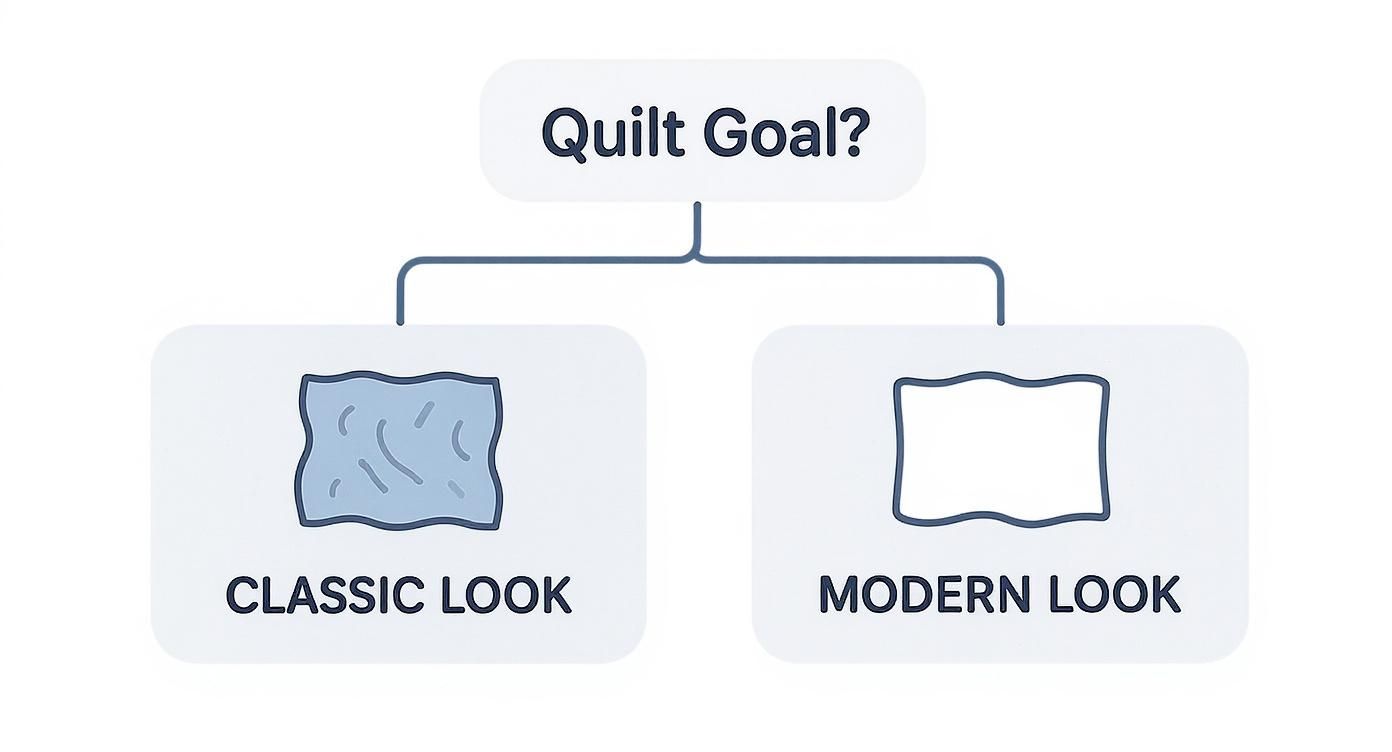
It’s a simple way to connect the aesthetic you're aiming for with the right batting to get you there.
Low loft is the thinnest you can go, usually measuring less than a 1/4 inch thick. This creates a quilt with a flatter profile and a wonderful drape, which is why it hangs so beautifully. It’s the perfect choice when you want your piecing and stitch work to be the real star of the show.
Low loft batting is fantastic for:
When you're digging into loft, you might also come across terms like GSM (grams per square meter) in quilts. It's just another way to measure the weight and density, which ultimately affects the final warmth and feel of your project.
Medium loft is the versatile workhorse of the batting world. It's a fantastic all-rounder, perfect for bed quilts that need that sweet spot between stitch definition and cozy softness. It offers more warmth and a slightly puffier look than low loft, making it a super popular choice for everyday quilts. If you’re ever stuck and not sure what to pick, a medium loft is almost always a safe and beautiful bet.
High loft is the thickest, plushest option out there, designed for maximum warmth and a feel that’s closer to a comforter. It’s what you want for a truly cozy, cloud-like quilt where the quilting itself carves deep, textural channels into the surface. Just be aware that its thickness can be a bit more challenging to wrangle through a standard home sewing machine.
No matter the loft, you can find various quilt batting sizes to fit any project you can dream up, from a tiny wall hanging to a massive king-sized bedspread. Cotton’s place in our craft is secure; it makes up nearly a third of all global fiber production. In fact, the cotton market is projected to grow by an incredible USD 7.86 billion between 2024 and 2028, proving just how essential this natural fiber continues to be.
https://www.youtube.com/embed/_rkWyxBt_wA
Choosing 100 cotton batting for your next quilting project is a bit like picking a classic cast-iron skillet for your kitchen. It's a reliable, time-tested choice that only gets better with age, but you need to know how to work with its unique personality.
Like any material, cotton batting isn’t a one-size-fits-all solution. It has a distinct set of strengths and a few quirks you’ll want to consider. By looking at both sides of the coin, you can decide if it's the right fit for the quilt you have in mind.
The number one reason quilters keep coming back to cotton is its beautiful, natural feel. It’s a breathable fiber, meaning your quilt will keep you warm without making you feel stuffy or trapping moisture. This makes it wonderfully comfortable for year-round use—the kind of quilt that lives on your couch, not just in the linen closet.
Another huge plus is how beautifully it ages. 100% cotton batting gets softer and more supple with every trip through the washing machine, improving the quilt's drape and cozy factor over time. This washing process is what creates its most iconic feature: the "antique pucker."
That lovely, slightly crinkled texture that appears after the first wash is the signature of a cotton quilt. This gentle shrinkage pulls the quilt top in around the stitches, giving the project an instant heirloom look that many quilters absolutely adore.
Beyond its feel and vintage charm, cotton has some other great things going for it:
Of course, no material is perfect for every single project. The main thing to be aware of with cotton is its tendency to shrink. While many quilters see the 3-5% shrinkage as a feature, not a bug, it can be a real downside if you're aiming for a perfectly flat, modern quilt. You can pre-wash your batting to handle this, but it does add an extra step to your prep work.
Cotton is also heavier than polyester or bamboo batting. That weight can feel cozy and comforting in a large bed quilt, but it might be too much for a delicate wall hanging or a piece of quilted clothing. For a deeper dive into these differences, our guide on choosing the right batting for quilts breaks down how cotton stacks up against other popular fibers.
Finally, think about puffiness. Natural 100 cotton batting is known for its low loft, which means it lays relatively flat. If you're dreaming of a thick, pillowy comforter with lots of dimension, a high-loft polyester or even wool might be a better choice to get that dramatic look.
Working with 100% cotton batting is a classic quilting experience, and honestly, it's one of my favorites. A few good habits can make the whole process go smoothly and give you those gorgeous, professional-looking results we all want. Think of it like cooking a great meal—good prep work makes all the difference.
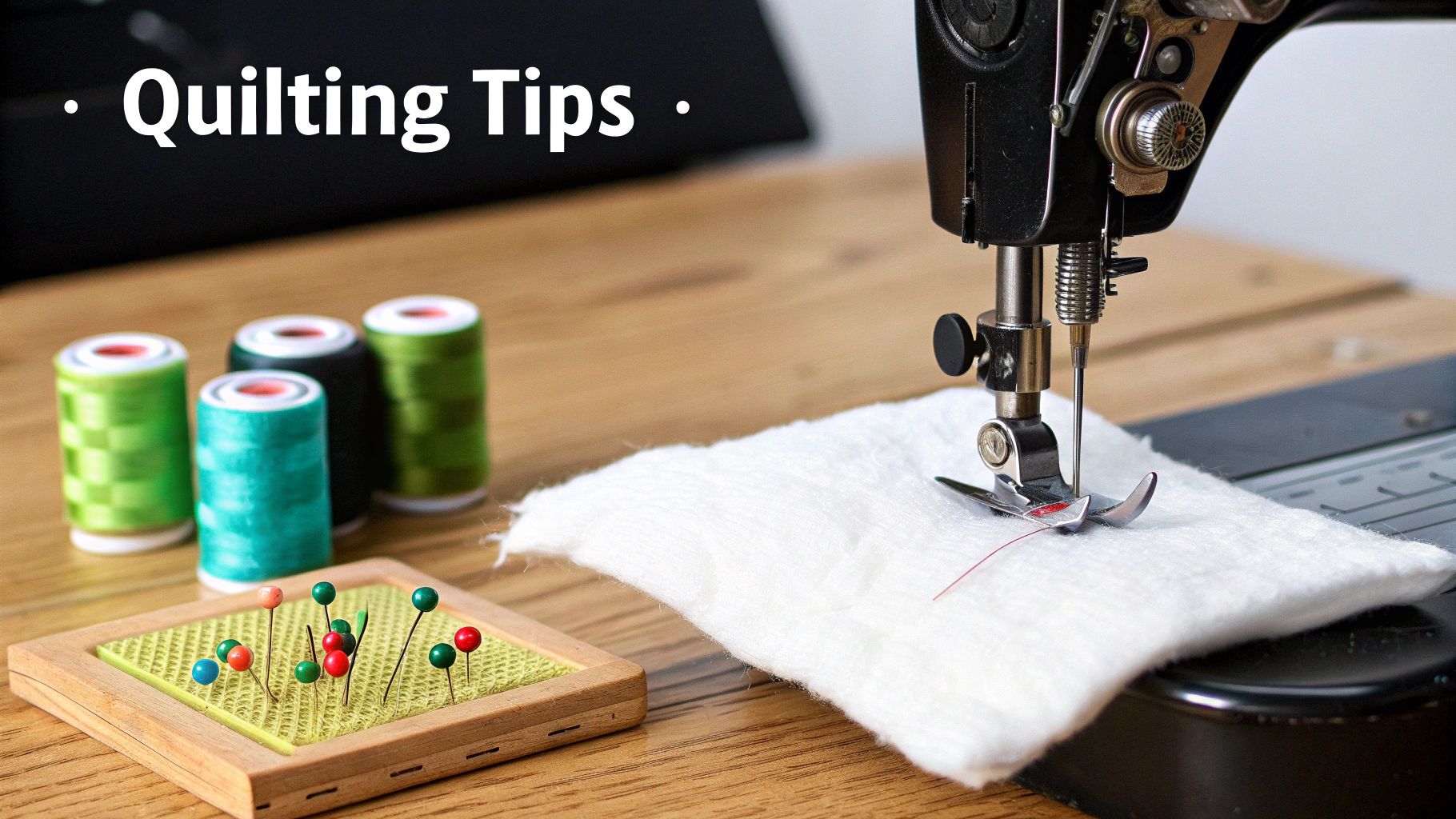
Let's start with your needle. Cotton fibers are naturally dense, and trying to punch through them with a standard needle is asking for trouble. It can bend, break, or even worse, shred the batting. This is what causes that annoying "bearding," where little bits of fluff poke through your quilt top.
A sharp, strong needle isn't just a suggestion; it's essential. Grab a 90/14 Quilting needle. They're specifically designed to pierce all those layers cleanly, leaving you with perfect stitches and keeping those cotton fibers right where they belong.
With the right needle in place, let's talk thread. It's a detail that's easy to overlook, but it plays a huge role in how your quilt looks and lasts over the years.
The old-school rule here is simple: match your fibers. When you use 100% cotton thread with your 100% cotton batting, everything inside your quilt sandwich works together in harmony. They’ll shrink at roughly the same rate after washing, which is exactly what gives you that beautifully crinkled, vintage look and prevents your stitches from pulling or snapping under stress.
Okay, needle and thread are set. Now it’s time to look at your sewing machine. The number one culprit behind puckered fabric and wonky stitches is almost always incorrect tension. Your machine's default setting is usually too tight for quilting through three thick layers.
Before you even think about touching your actual quilt, make a small practice sandwich. Just use some scraps of your backing, batting, and top fabric. Sew a few lines and play detective.
Tweak the tension dial just a little at a time. Your goal is to get those stitches to lock perfectly in the middle, between the fabric layers, giving you a smooth, balanced look on both sides.
A well-basted quilt is the foundation of beautiful quilting. If your layers aren't secure, no amount of tension adjustment or needle changing can prevent shifting and puckering. Proper basting is your insurance policy for a smooth finish.
Finally, we have to talk about basting. This is where you temporarily secure your quilt top, batting, and backing together before you start the real quilting. I know it can feel tedious, but this step is absolutely critical. It’s what stops the layers from shifting around and causing those frustrating puckers and tucks.
Whether you're a fan of pin basting or you prefer a spray baste, the objective is the same: create a stable, unmoving quilt sandwich. If you’re a little rusty on the process, our guide on how to baste a quilt walks you through it step-by-step. Taking the time to do this right will save you so much frustration later and help you create a quilt you'll be proud of for years to come.
Let’s talk about two of the biggest worries quilters have when using 100% cotton batting: shrinkage and puckering. The good news? Both are completely manageable. With a little know-how, you can master these tendencies to get the exact finish you want, whether that's a vintage crinkle or a smooth, modern look.
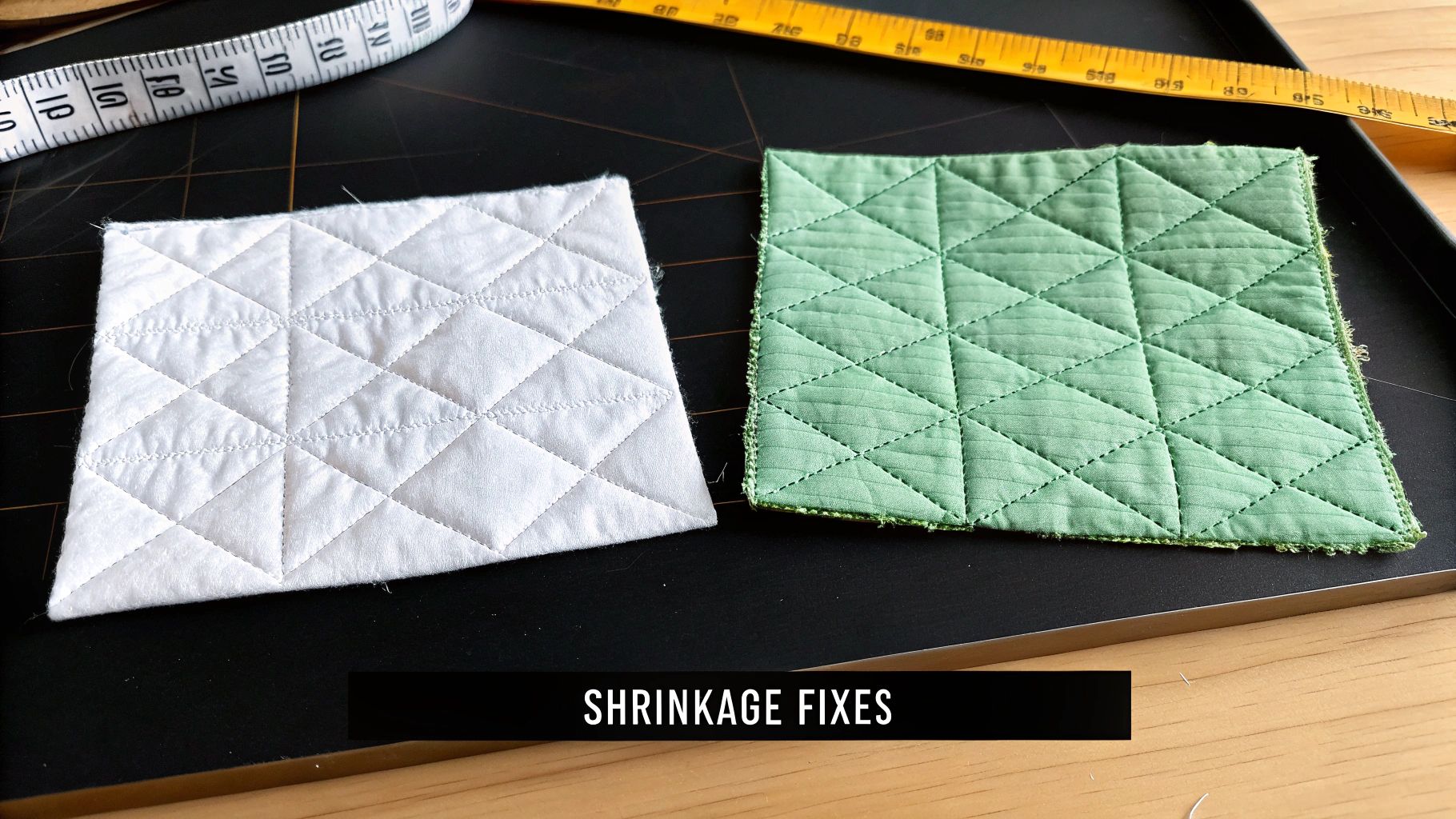
First up is shrinkage, which is just a natural part of what cotton does. This brings us to one of quilting's great debates: to pre-wash or not to pre-wash? The right answer really comes down to the style you're aiming for.
Do you adore that cozy, well-loved look of an antique quilt? If so, skip the pre-wash. The 3-5% shrinkage that occurs in the first wash is exactly what creates that beautiful, gentle pucker around your stitches. This "crinkle effect" is a signature of traditional quilts and something many quilters want to achieve on purpose.
On the other hand, if you're picturing a perfectly flat, crisp quilt for a modern wall hanging, then pre-washing is your best friend. This simple step gets most of the shrinking out of the way before you even start sewing.
Here’s a gentle way to pre-wash your batting:
The consistent availability of raw cotton is essential for textile industries. Global cotton production for the 2025/26 season is projected to hit about 117.7 million bales. This stable supply chain ensures that high-quality materials like 100% cotton batting remain readily accessible for quilters everywhere. Discover more insights about cotton marketing statistics on amraandelma.com.
Puckering is a different beast entirely. Those little wrinkles and tucks that pop up as you're quilting aren't an inherent quality of the batting; they're usually a sign that something in your process needs a tweak. Think of it as playing detective with your quilt.
The usual suspects for puckering include:
Fixing puckers is often about getting back to basics. A solid basting job and balanced tension are your strongest defenses. The right tools also make a huge difference. To see how the right presser foot can prevent your layers from shifting, check out our guide on how to use a walking foot for quilting.
Once you've decided to use 100% cotton batting, a few practical questions almost always pop up. Getting these details straight can make all the difference, turning a potentially frustrating process into a smooth and enjoyable one. Let's walk through the most common queries I hear from quilters so you can move forward with total confidence.
This isn't just about following rules; it's about understanding why these little details matter. Knowing the logic behind each choice helps you perfectly execute the vision you have for your quilt.
This is easily the question I get asked the most, and the answer really depends on the final look you're trying to achieve.
Are you dreaming of that classic, slightly crinkled, vintage quilt? If so, do not pre-wash your batting. That wonderful, puckered texture—the hallmark of a well-loved heirloom—is created when the batting shrinks just a little (3-5%) in the first wash. This shrinkage gently pulls the quilt top and back together, making your stitches pop.
On the other hand, if you're aiming for a sleek, flat, modern aesthetic with minimal texture, then pre-washing is your best bet. To do it right, just soak the batting in a tub of lukewarm water. Gently squeeze out the excess water (never wring or twist it!), and then either lay it flat to air dry or toss it in the dryer on the lowest heat setting. Always take a peek at the manufacturer's packaging first, as some cotton battings are pre-shrunk or treated to minimize shrinkage.
This is a critical detail for the long-term life of your quilt. The "maximum quilting distance" is simply how far apart your stitching lines can be while still keeping the batting from shifting around inside your quilt sandwich. For most 100% cotton batting, this sweet spot is between 3 and 4 inches.
Following this guideline is what prevents the cotton fibers from bunching up, separating, or getting lumpy over time, especially after a few trips through the laundry.
Always, always, always check the information on your batting's packaging. The manufacturer will clearly state the maximum recommended distance. Pushing it too far can cause the batting to sag or even tear inside the quilt, which can ruin all your hard work.
You absolutely can! In fact, the right cotton batting is a dream to hand quilt. The trick is to choose one with a lower density that isn't heavily bonded with resins. You want something your needle can glide through with very little effort.
A lighter, softer cotton batting is much kinder to your hands, meaning you can quilt for longer without fatigue while creating those beautiful, uniform stitches. Try to steer clear of heavily needle-punched battings, as their dense structure can feel like you're fighting the quilt with every stitch. Many brands even offer specific products designed just for hand quilters.
Think of scrim as a super-thin, lightweight mesh that’s been needle-punched into one side of the batting. It acts like a fine support grid, giving the cotton fibers extra strength and stability.
The main advantage of using a batting with scrim is that you can space your quilting lines much farther apart—sometimes up to 8-10 inches—without the batting stretching, sagging, or distorting. It's also great for preventing "bearding," which is when tiny cotton fibers migrate through the weave of your quilt top.
So, when should you use it?
Ready to find the perfect 100% cotton batting for your next masterpiece? At High Country Quilts, we stock a carefully chosen selection of high-quality battings for any project you can imagine, from vintage-inspired heirlooms to modern wall art. Explore our collection online or stop by the shop to feel the difference for yourself and start your next project with confidence.
At High Country Quilts we care deeply about community. With our experiences in retail, we know that a store is not only a place to shop but also a place for the community to gather and share. During this busy...

Hi! We’re Adam and Renee Wheaton, the new owners of High Country Quilts! For more than 40 years, we’ve owned and operated vacuum and sewing businesses. Following in Renee’s father’s footsteps after he retired from All Discount Vacuum and Sewing in Colorado...


Leave a comment