

We Love Our Quilting Community
At High Country Quilts we care deeply about community. With our experiences in retail, we know that a store is not only a place to shop but also a place for the community to gather and share. During this busy...


The core difference between polyester and cotton thread comes down to their very nature. Polyester is a synthetic powerhouse, engineered for strength and a bit of stretch, while cotton is a classic natural fiber, loved for its soft touch and ability to handle a hot iron. Your choice really hinges on what you’re making. A sturdy tote bag needs a different kind of thread than a delicate heirloom quilt.
Choosing between polyester and cotton thread goes way beyond just picking a color. It's one of those foundational decisions that affects how your quilt looks, how it holds up, and its overall health for years to come. The right thread becomes one with your fabric, but the wrong one can lead to puckering, frustrating breaks, and can even tear your fabric over time.
You’ll often hear quilters swear by the "like with like" rule—cotton thread for cotton fabric. It’s a solid guideline, but modern polyester threads have come a long way, making them a fantastic option for a lot of quilting jobs. Understanding their essential differences is how you make a choice you feel good about.
Here are a few key points to keep in mind:
This guide will help clear up the polyester vs. cotton thread question by looking at what makes each unique and giving you practical advice you can actually use.
Before we get into the nitty-gritty details, here’s a quick snapshot of how these two threads stack up against each other.
Sometimes you just need a quick comparison to get your bearings. This table breaks down the most important differences to help guide your initial decision.
| Characteristic | Polyester Thread | Cotton Thread |
|---|---|---|
| Strength | Very high; stronger than fabric. Great for high-stress seams. | Moderate; designed to break before your fabric tears. |
| Stretch | Has a bit of stretch and give, which is good for knits. | Very little to no stretch at all. |
| Lint | Produces very little lint, keeping your machine cleaner. | Can be quite linty, requiring more frequent machine cleaning. |
| Sheen | Varies widely from matte to a high-sheen, silky finish. | Typically has a soft, natural matte finish. |
| Heat Resistance | Can melt if the iron is too hot. Use caution. | High heat resistance. It will scorch before it melts. |
| Best For | Machine quilting, bags, clothing, topstitching. | Quilt piecing, heirloom quilting, hand appliqué. |
Think of this as your starting point. As we explore each characteristic in more detail, you'll get a clearer picture of which thread is the right partner for your specific project.
To really get to the heart of the polyester vs. cotton debate, we need to dig into their core characteristics. These properties are what determine how a thread will act under a needle, feel in a finished quilt, and hold up over the years. Getting this choice right can make or break your project.
You only need to look at the global market to see how popular synthetics have become. Dominated by polyester, the synthetic thread market has taken the lead in the textile industry. In 2024, synthetics accounted for over 60% of the total sewing thread market share. This isn't a fluke; it's a direct result of polyester's engineered strength, durability, and resistance to things like moisture and chemicals.
When it comes to pure muscle, polyester is the clear winner. It's an incredibly strong, durable fiber built to handle serious stress. This makes it a fantastic choice for seams on bags, outdoor gear, or any clothing that gets a lot of rough-and-tumble wear.
But in the quilting world, super strength isn't always a good thing. There's an old quilter's wisdom that says your thread should be slightly weaker than your fabric. Why? If a seam is stressed, you want the thread to break—that’s an easy fix. A tough-as-nails polyester thread might refuse to snap and instead tear your delicate cotton fabric, creating a much bigger headache to repair.
Another major difference is how much they stretch. Polyester thread has a bit of built-in elasticity, or "give." This is exactly what you want for sewing with knits or stretchy fabrics, as it allows the seams to flex and move with the material instead of popping.
Cotton, on the other hand, has almost zero stretch. This stability is precisely what makes it the go-to for quilt piecing. It helps you create crisp, accurate seams that won’t warp or pull out of shape when you press them, ensuring all your blocks line up perfectly.
Key Insight: Polyester's stretch is a feature for garments but a potential flaw for precision piecing. Cotton’s stability provides the control needed for crisp, flat quilt blocks, preventing unwanted distortion.
Thinking about how your thread handles heat is crucial, especially with all the pressing we do in quilting.
Beyond the ironing board, polyester holds up much better against UV rays and chemicals, making it the superior choice for anything that will live outdoors. As a natural fiber, cotton is more prone to mildew and breaking down over time if it gets stored somewhere damp. Knowing the different types of sewing thread helps you pick the one with the right properties for whatever you're making.
Finally, let's talk aesthetics. Polyester threads come in a huge variety of finishes, from a subtle matte look to a high-sheen gloss that can look a lot like silk or rayon. This makes them a versatile pick for decorative topstitching where you want the thread to stand out.
Cotton thread, by its nature, has a soft, matte finish that blends beautifully and almost invisibly into cotton fabrics. This understated texture is why it’s so beloved for traditional and heirloom quilts—it lets the fabric and the quilting design be the stars of the show.
Knowing the difference between polyester and cotton thread is a great start, but the real artistry comes from knowing which one to grab for the task at hand. The thread you choose has a huge impact on your project's final look, feel, and how well it holds up over time. Let’s get practical and break down the best choices for common quilting and sewing jobs.
The old-timers had a rule: "cotton for cotton." It’s still fantastic advice, especially when you're piecing a quilt top. Using 100% cotton thread with cotton fabric means everything will age gracefully together. They’ll wear, shrink, and soften at the same pace, which is exactly what you want for an heirloom quilt.
Why it Works: Piecing is all about precision. Cotton thread has almost no stretch, which gives you the stability you need for super-crisp seams. Your blocks will lie perfectly flat, and you won’t get that annoying distortion when you hit them with the iron.
That said, rules are sometimes made to be bent. A high-quality, very fine polyester thread (think 60wt or 80wt) can be a great option for piecing, too. It’s especially useful if you want to cut down on the bulk in your seams, which can be a lifesaver in complex blocks.
When you get to the actual quilting part—stitching through all three layers—the polyester vs. cotton debate gets a little more interesting. Your choice here really boils down to performance versus aesthetics.
Topstitching is meant to be a feature, so your thread choice is a big part of the design. This is often where polyester gets to show off. It comes in every sheen imaginable, from a quiet matte to a high-gloss, silky look, giving you tons of creative freedom. Polyester’s strength also means you get a bold, durable stitch that really stands up on bags, clothes, and home decor.
While polyester is a quilter's friend, its industrial reputation speaks volumes about its toughness. The leather and shoe industries, for example, are responsible for nearly 40% of all polyester thread consumption. That kind of industrial-grade strength is exactly what you want for projects that will see a lot of wear and tear.
On the flip side, if you're aiming for a more rustic or homespun decorative look, a thick cotton thread (like a 12wt) gives you a beautiful, almost hand-stitched effect that polyester just can’t mimic.
Both threads have a role to play when you're working by hand. Cotton is a classic choice for hand piecing and appliqué. It’s easy to pull through fabric with a needle and it presses like a dream. A fine 80wt cotton thread is perfect for creating appliqué stitches that are practically invisible.
Polyester might not be the traditional choice for handwork, but it has its uses. Its slickness helps it glide through fabric with less friction, which can help prevent those infuriating tangles. It's also a great pick for mending or any hand-sewn project that needs an extra dose of durability. In the end, it’s all about matching the thread to the project and finding what feels right in your hands.
Picking the right thread is just the first step. To get those perfect, pucker-free stitches we all dream of, you have to get your sewing machine on the same page. How a thread behaves is completely dependent on your needle, tension settings, and even how clean you keep your machine.
Getting these details right will save you a ton of headaches. Trust me, taking a few minutes to dial in your setup is far better than hours of unpicking snapped threads and skipped stitches.
A beautiful stitch line really does start with the needle. It's the first point of contact, and the wrong needle can shred your thread before it even has a chance to form a stitch.
Think of the needle as the thread's guide. A slick, synthetic polyester needs a different kind of guide than a softer, fibrous cotton. The goal is to create a clean hole in the fabric with minimal friction on the thread passing through it.
For Polyester Thread: I almost always reach for a Microtex or Sharp needle. Their incredibly sharp, slender points slice through fabric fibers instead of pushing them aside. This clean entry drastically reduces friction, which is key for preventing heat-related snaps with polyester. If you're topstitching with a thicker poly, switch to a Topstitch needle—that larger eye makes all the difference.
For Cotton Thread: While a Universal needle can get the job done in a pinch, you'll see better results with a Quilting needle. They have a special taper designed specifically for piercing multiple layers (fabric and batting) without putting extra strain on the natural cotton fibers.
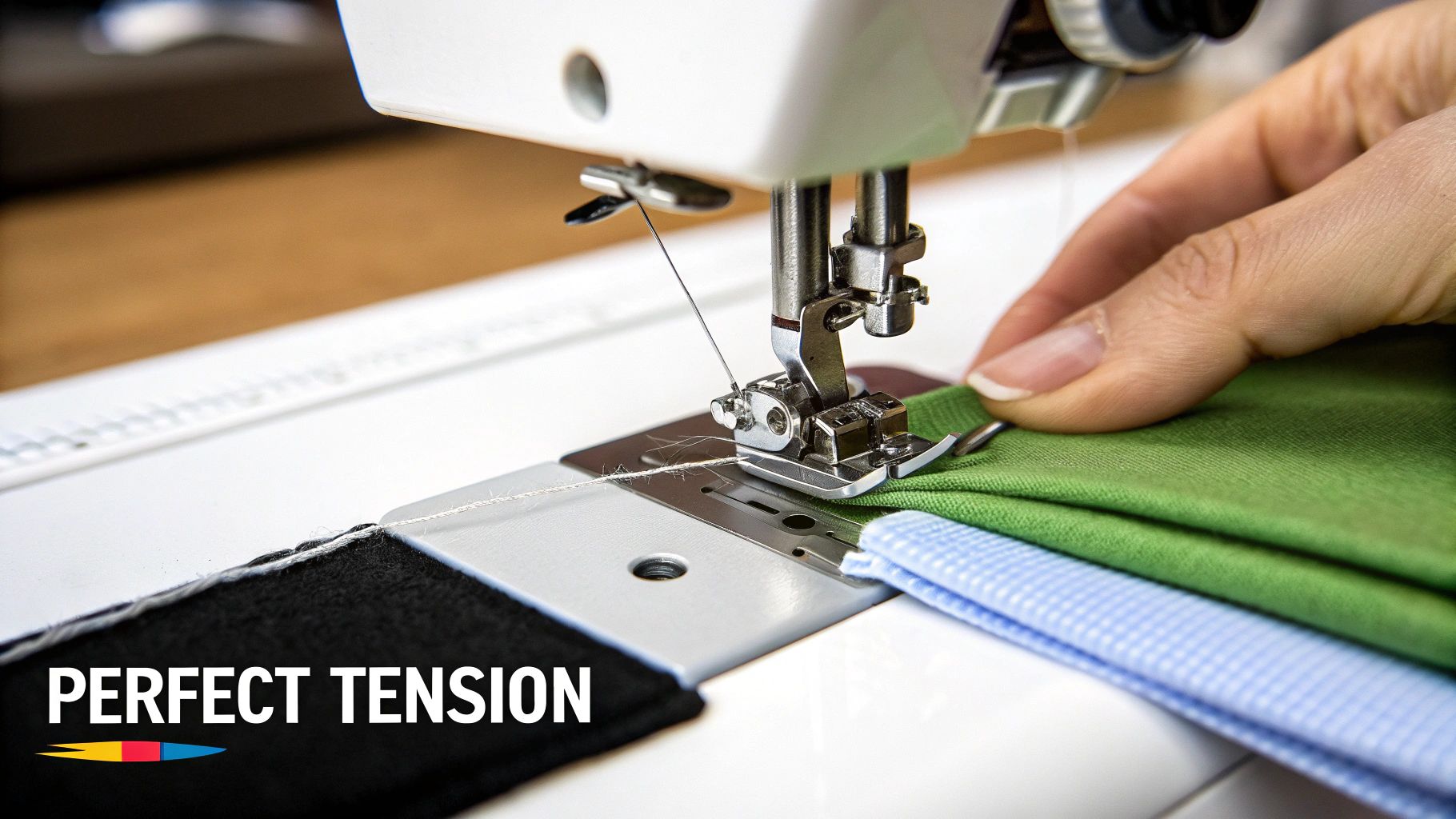
Ah, tension. It's often the most intimidating dial on the machine, but it’s absolutely critical. When comparing polyester thread vs cotton thread, their unique stretch and strength properties mean you’ll likely need to tweak your tension when switching between them.
Your goal is always a perfectly balanced stitch, where the top and bobbin threads lock together right in the middle of your fabric layers. No loops on the bottom, no bobbin thread showing on top.
Pro Tip: Always use the same weight thread in your bobbin as your top thread, or one step lighter. Never go heavier in the bobbin. It’s an open invitation for tension nightmares.
If you’re seeing loops on the underside, your top tension is too loose. If the bobbin thread is being pulled up to the top, it’s too tight. Adjust in small increments! For a deep dive into troubleshooting, check out our complete guide on how to fix sewing machine tension.
Here’s a non-negotiable rule, especially for cotton thread lovers: keep your machine clean. Cotton, being a natural fiber, sheds a surprising amount of lint. Polyester is much cleaner in comparison.
That fluffy lint builds up fast in your bobbin case and around the feed dogs, where it soaks up oil and creates drag. This is a common, and often overlooked, cause of tension issues and frustrating thread nests.
Make it a habit to brush out the bobbin area after every big project, or even after every few bobbins if you're piecing with cotton. A clean machine is a happy machine, and it will reward you with beautiful, consistent stitches every single time.
When you're standing in the thread aisle, it's easy to let the price tag make the decision for you. But with polyester and cotton thread, what you see on the spool is only the beginning of the story. While polyester often looks like the more wallet-friendly choice at first glance, the true value for a quilter is a much bigger picture.
It's not just about saving a couple of dollars on this project; it's about investing in the future of your work.
Polyester's lower cost comes straight from how it's made. Manufacturing synthetic fibers is simply less expensive than growing, harvesting, and processing a natural crop like cotton. That difference in production cost trickles all the way down to the spools on the shelf.
As of early November 2024, the raw material costs show a clear gap: polyester yarn was priced at USD 2.04 per kilogram, while cotton yarn sat at USD 3.12 per kilogram. That’s a significant difference that makes polyester a very tempting option for everyday sewing, practice pieces, or massive quilts that eat up a lot of thread.
On the other hand, a high-quality cotton thread is an investment in your quilt's future. A spool of premium 100% cotton Mako thread may cost more upfront, but its real value shines through over decades.
When you use quality cotton thread on cotton fabric, you're creating a piece where all the components will age, wear, and shrink together. This harmony prevents the stress and potential fabric damage that happens when a super-strong, non-shrinking polyester thread is paired with a natural, aging fabric.
This idea of "wearing together" is the secret to a long-lasting heirloom. The slightly higher cost of good cotton thread is really just a small insurance policy to protect the countless hours you’ve poured into your quilt, ensuring it stays beautiful for generations.
So, how do you actually decide between polyester and cotton? It all boils down to what you’re making and the fabric you've chosen. There’s no single "best" thread out there—just the right thread for the job at hand. The choice you make directly impacts everything from how your finished piece looks to how well it holds up over time.
Think about a soft baby quilt made from 100% cotton fabrics. A quality cotton thread is its natural partner. It will shrink, wear, and age right alongside the fabric, creating a beautiful, cohesive piece. This prevents the seams from putting too much stress on the quilt top, which is key for a gentle, long-lasting heirloom.
Now, picture sewing a heavy-duty tote bag out of a rugged canvas or outdoor fabric. This is where polyester shines. Its incredible strength, low lint, and resistance to UV rays and moisture make it the obvious choice. Using cotton here would be a mistake; the thread would likely break down and rot away long before the sturdy canvas shows any sign of wear.
This simple visual can help you quickly decide which thread to grab based on what you hope to achieve with your project.
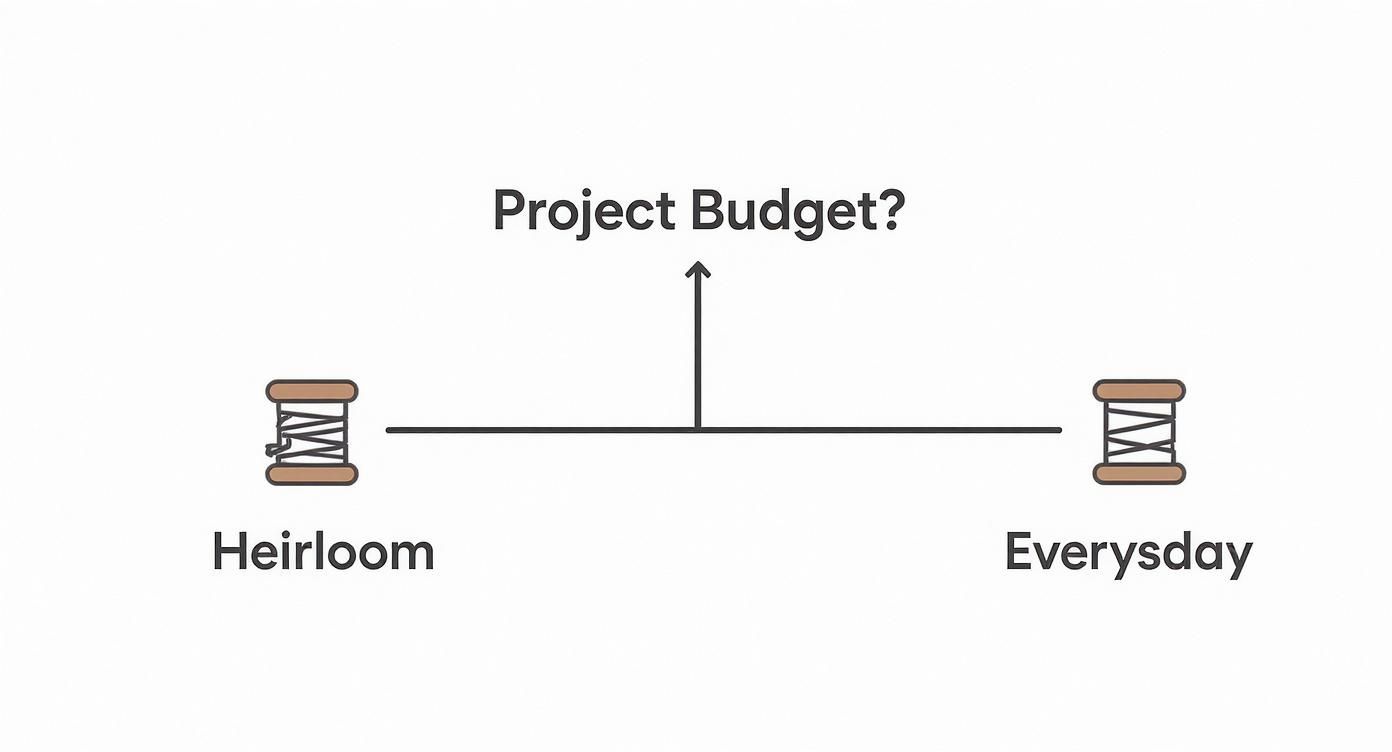
As you can see, the decision often hinges on whether you're creating a timeless heirloom or a durable, everyday item. Aligning the thread's properties with the project's purpose is the secret to success.
To make it even easier, I've put together a quick guide for common sewing and quilting scenarios. Think of this as your cheat sheet for thread selection.
| Project Type | Recommended Thread | Key Reason |
|---|---|---|
| Heirloom Quilt Piecing | 50wt Cotton Thread | Matches fabric properties for even aging and minimal seam stress. |
| Heavy-Duty Bags/Gear | 40wt Polyester Thread | Provides superior strength and durability for high-stress seams. |
| Garments (especially knits) | All-Purpose Polyester | Offers necessary stretch and recovery to move with the fabric. |
| Decorative Topstitching | Polyester or 12wt Cotton | Polyester offers sheen and strength; thick cotton provides a matte, rustic look. |
Ultimately, having both types of thread in your stash gives you the flexibility to tackle any project with confidence, knowing you have the perfect tool for the task.
Even after you've got a handle on the basics, a few specific questions always seem to pop up. Let's tackle some of the most common things quilters ask when they're staring at a wall of thread, trying to choose between polyester and cotton.
Yes, you absolutely can. This is probably one of the biggest myths in the quilting world—that strong polyester thread will eventually cut through weaker cotton fabric.
That idea is a relic from a time when threads were, frankly, not made as well as they are today. Modern, high-quality polyester threads are smooth and well-behaved. They pair wonderfully with cotton fabrics, especially for machine quilting or making sturdy items like tote bags where you want that extra durability. The trick is always to use the right needle (a fresh Microtex is a great choice) and match your thread weight to your fabric.
Not in the slightest. While polyester wins in a lab-tested strength contest, a good quality 50wt or 40wt cotton thread has more than enough muscle for machine quilting. It's perfectly calibrated for the demands of quilting cottons.
Many quilters swear by cotton because it has no stretch and a soft, matte finish that just melts into the quilt top. It’s a classic for a reason and has held together beloved quilts for centuries.
Rethinking Strength: The strongest thread isn't always the best thread. For an heirloom quilt, you actually want a cotton thread that will age and wear at the same rate as the fabric. This creates a more balanced quilt that lasts longer without putting stress on the seams.
This all comes down to the look you're after. If you want your stitches to pop with a vibrant, silky sheen, polyester is your go-to. It’s tough enough for high-speed embroidery machines and the colors are incredibly brilliant.
But if you’re aiming for something more rustic, subtle, or with a vintage feel, nothing beats a heavier cotton thread. A 12wt or 30wt cotton delivers a beautiful, soft texture and a gentle matte finish that polyester just can’t imitate.
Don't just toss your spools in a sunny window! Proper storage makes a huge difference. The two biggest culprits that ruin thread are sunlight and dust. UV rays from the sun will weaken and fade both cotton and polyester fibers over time. Dust is just as bad—it settles on the spool and gets pulled right into your machine’s tension discs, which is a recipe for stitching problems.
The best solution is simple: keep your thread in closed containers, drawers, or on a covered thread rack. Just make sure it's out of direct sunlight. Protecting your thread this way means it will be ready to go, stitching flawlessly whenever inspiration strikes.
Ready to find the perfect thread for your next masterpiece? Explore our wide selection of high-quality cotton and polyester threads at High Country Quilts and get equipped for success. Shop our thread collection today!
At High Country Quilts we care deeply about community. With our experiences in retail, we know that a store is not only a place to shop but also a place for the community to gather and share. During this busy...

Hi! We’re Adam and Renee Wheaton, the new owners of High Country Quilts! For more than 40 years, we’ve owned and operated vacuum and sewing businesses. Following in Renee’s father’s footsteps after he retired from All Discount Vacuum and Sewing in Colorado...


Leave a comment