

We Love Our Quilting Community
At High Country Quilts we care deeply about community. With our experiences in retail, we know that a store is not only a place to shop but also a place for the community to gather and share. During this busy...


Ask any seasoned quilter what the best thread for quilting is, and they'll likely tell you, "It depends." And they're right. The perfect thread is all about the specific job at hand. For piecing quilt tops, the gold standard is a 50wt 100% cotton thread. But when it comes to the actual quilting, a tough 40wt polyester is often the hero.
Your ideal choice really comes down to the task, whether you're meticulously joining small fabric pieces, hand-stitching an heirloom, or running a high-speed longarm machine.
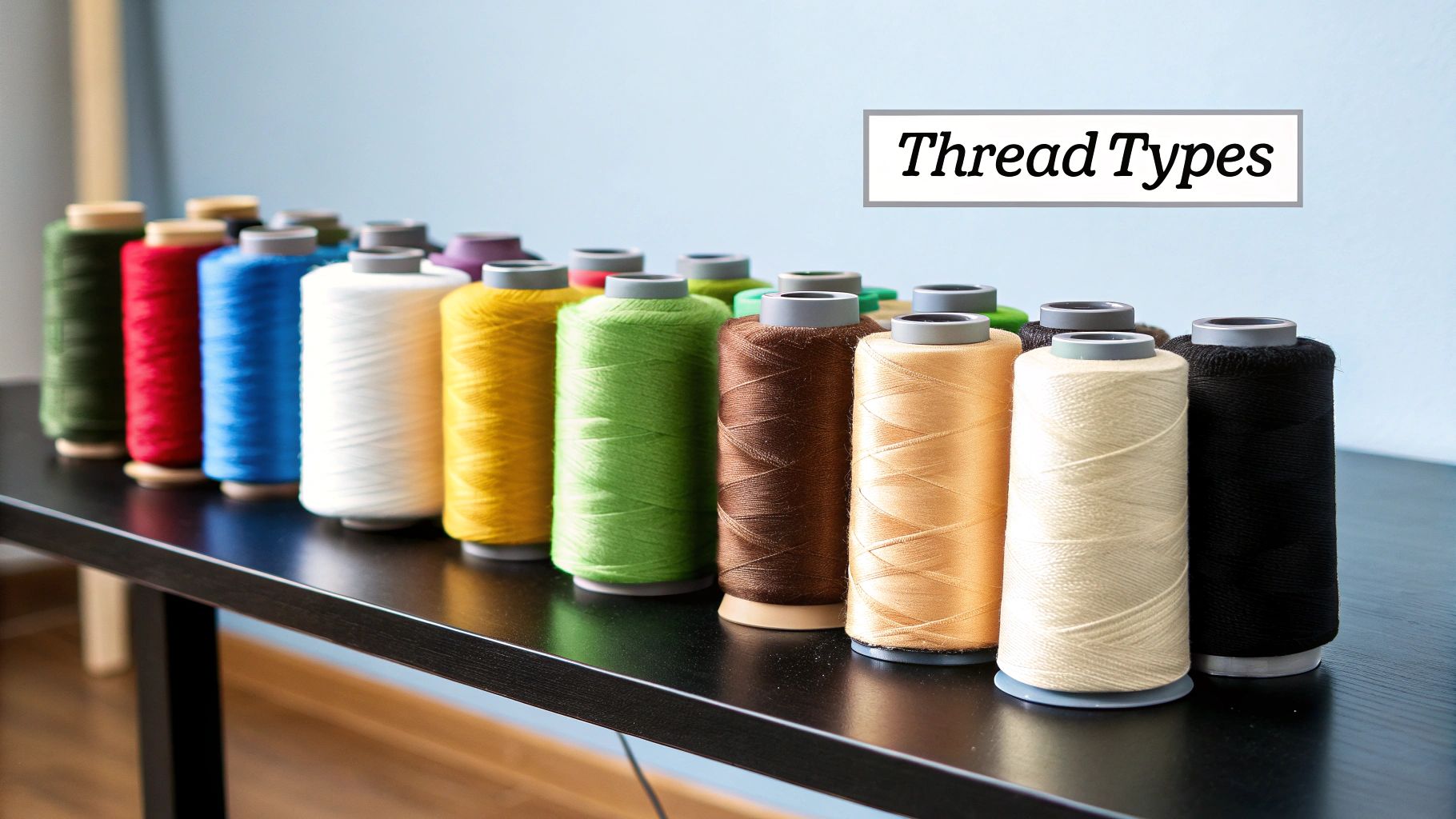
Walking into a shop and seeing a wall of thread can be intimidating. The secret is to simplify. It all boils down to three things: the fiber content, its thickness (weight), and how you plan to use it. The goal isn't to find one single spool that does everything, but to have a few reliable options in your toolbox. A good rule of thumb to start with is to match the thread fiber to your fabric.
If you're making a traditional quilt top from cotton fabrics, using a 100% cotton thread just makes sense. It has the same personality as your fabric—it shrinks, wears, and presses in a similar way, which helps your seams lie beautifully flat and avoid puckering over time. A 50wt cotton is the go-to because it's fine enough to create a strong, clean seam without adding bulk, which is absolutely crucial for accurate patchwork.
But the game changes completely when you move on to the actual quilting—the stitches that hold your quilt sandwich (top, batting, and backing) together. For this stage, durability is everything.
Modern quilting, whether on a high-speed longarm or a powerful domestic machine, puts an incredible amount of tension and stress on the thread. This is where polyester often steps into the spotlight. A high-quality 40wt polyester thread gives you incredible strength and produces far less lint than cotton. Less lint means fewer frustrating thread breaks and a much cleaner, happier machine.
Key Takeaway: Think of your thread like a specialized tool. You wouldn't use a screwdriver to hammer a nail. In the same way, the delicate thread that’s perfect for piecing isn’t the workhorse you need for quilting through multiple layers.
To make things easier, this guide breaks down the best threads for specific quilting jobs. This way, you can be confident your thread will not only look great but will also hold up to your technique, creating a quilt that’s as durable as it is beautiful.
To cut straight to the chase, here’s a quick-reference table to help you grab the right thread for whatever you’re working on today.
| Quilting Task | Recommended Thread Type | Why It Works Best |
|---|---|---|
| Machine Piecing | 50wt Cotton | Creates flat seams that press well and has similar properties to cotton fabric. |
| Longarm Quilting | 40wt Polyester | Offers superior strength and low lint, preventing breakage at high speeds. |
| Hand Quilting | Glazed 28wt Cotton | The coating allows it to glide smoothly through fabric layers without tangling. |
| Decorative Stitches | 30wt or 12wt Variegated | Thicker weight and color variation make stitches a prominent design element. |
Think of these as solid starting points. As you gain more experience, you'll develop your own personal preferences, but these recommendations are trusted by quilters everywhere for consistently great results.
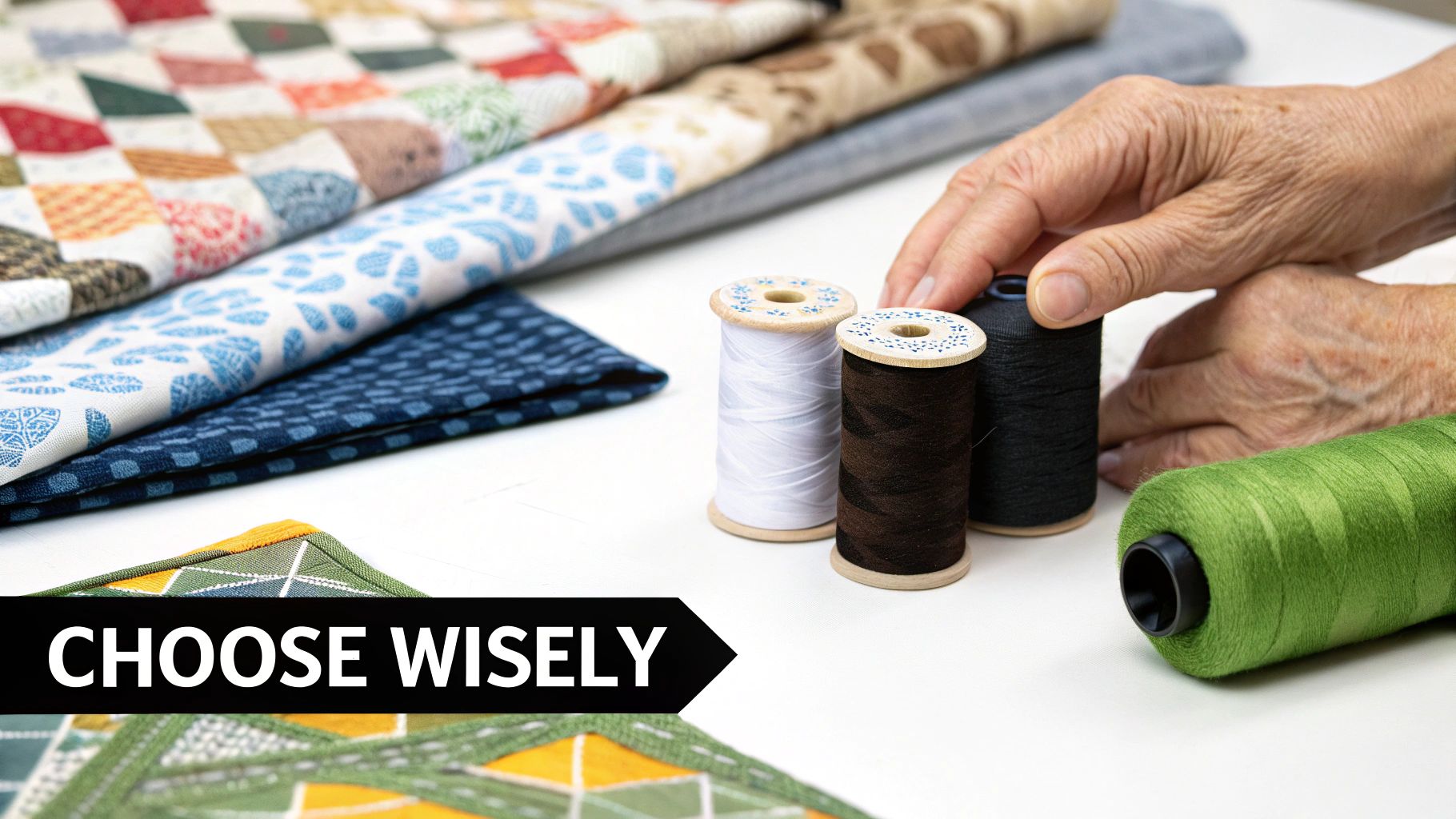
To pick the best thread for quilting, you first have to learn its language. Every spool tells a story through its characteristics, and understanding them is a game-changer. Once you know what to look for, you can move beyond just relying on brand names and start judging a thread on its own merits for whatever quilt you have in mind.
The global sewing thread market was valued at around USD 3.79 billion in 2025 and is expected to hit USD 4.84 billion by 2034. That's a lot of thread! This growth shows just how much demand there is for quality materials, especially in quilting where the thread has to hold multiple layers together and look good doing it.
One of the first things you'll notice on a spool is the thread weight, often shortened to "wt." It’s simply a measure of the thread's thickness, but the numbering system can feel a little backward at first. Just remember: a higher number means a finer thread, while a lower number indicates a thicker, heavier thread.
This distinction is everything in practice. A 50wt thread, for example, is a fine, lightweight workhorse that’s perfect for machine piecing. It creates seams that are strong yet lie incredibly flat, which is critical for getting those quilt block points to match up perfectly. On the other end of the spectrum, a chunky 12wt thread is bold and makes a statement, making it a fantastic choice for decorative stitches you really want to show off.
Pro Tip: For most machine quilting where the texture is the goal and not the thread itself, a 40wt or 50wt is your go-to. But if you want the quilting stitches to be the star of the show, dropping to a 30wt or even a dramatic 12wt will make them pop.
Beyond its thickness, what the thread is actually made of—its fiber content—heavily influences how it behaves. For quilters, the main contenders are natural fibers like cotton and synthetics like polyester. Cotton thread acts much like the quilting cotton it's stitching, while polyester brings incredible strength and very little lint, a huge plus for high-speed machine quilting. For bobbins, a fine polyester thread is a popular choice, and you can find convenient https://www.famcut.com/products/super-bobs-poly-624-natural-white-l-style-72-pack-pre-wound-bobbins that save a ton of time.
Threads also get special treatments, or finishes, that enhance their performance.
When you're standing in front of a wall of quilting thread, the choice often boils down to the big three: cotton, polyester, and silk. Each one has its own personality, and knowing which one to reach for can make a huge difference in your final quilt. Let's get past the basic pros and cons and dig into how their strength, stretch, and heat resistance really play out on your projects.
The world of quilting thread has changed a lot over the years. Cotton has always been the traditional standby, and for good reason—it works beautifully with cotton fabrics. But as technology has advanced, so have our threads. Modern synthetics like polyester bring a level of strength and resilience to the table that's essential for today's intricate quilting styles. You can get a sense of these industry shifts from this in-depth report on the sewing thread market. Understanding this background helps explain why a particular fiber might be the perfect match for one project but not another.
For the quilting purist, especially when it comes to piecing, cotton thread is king. Its biggest selling point is that it acts just like the cotton fabric you're sewing. It has almost zero stretch, which is exactly what you need for seams that lay perfectly flat and don't pucker or warp when you hit them with an iron.
Speaking of heat, as a natural fiber, cotton can take the high heat of an iron without any trouble. This is a huge plus when you're constantly pressing seams for patchwork. The one downside? Cotton creates more lint than synthetics, so you'll need to be diligent about cleaning your machine to keep it humming along smoothly.
If you need strength and durability, polyester is your thread. It's the undisputed champion for machine quilting, particularly on high-speed longarm machines that put thread under immense stress. It has just a little bit of stretch, giving it the resilience to handle high tension and stitch through thick quilt sandwiches without snapping.
This strength is a game-changer. Another massive benefit is that polyester is practically lint-free. That means a cleaner machine, especially around the tension discs and in the bobbin case, which translates to fewer frustrating thread breaks and more consistent stitches. Many quilters find that buying a collection like this Omni-V Lagoon 4-Cone Set is a smart way to stock up on reliable thread for all sorts of quilting projects.
Key Differentiator: The real trade-off between cotton and polyester comes down to stretch. Cotton’s stability is perfect for precise piecing, as it prevents any distortion. In contrast, polyester’s slight give is a lifesaver during the quilting process, as it absorbs tension and stops stitches from popping under stress.
This image offers a great visual breakdown of the tensile strength and cost of popular thread brands, really showing off polyester's durability.
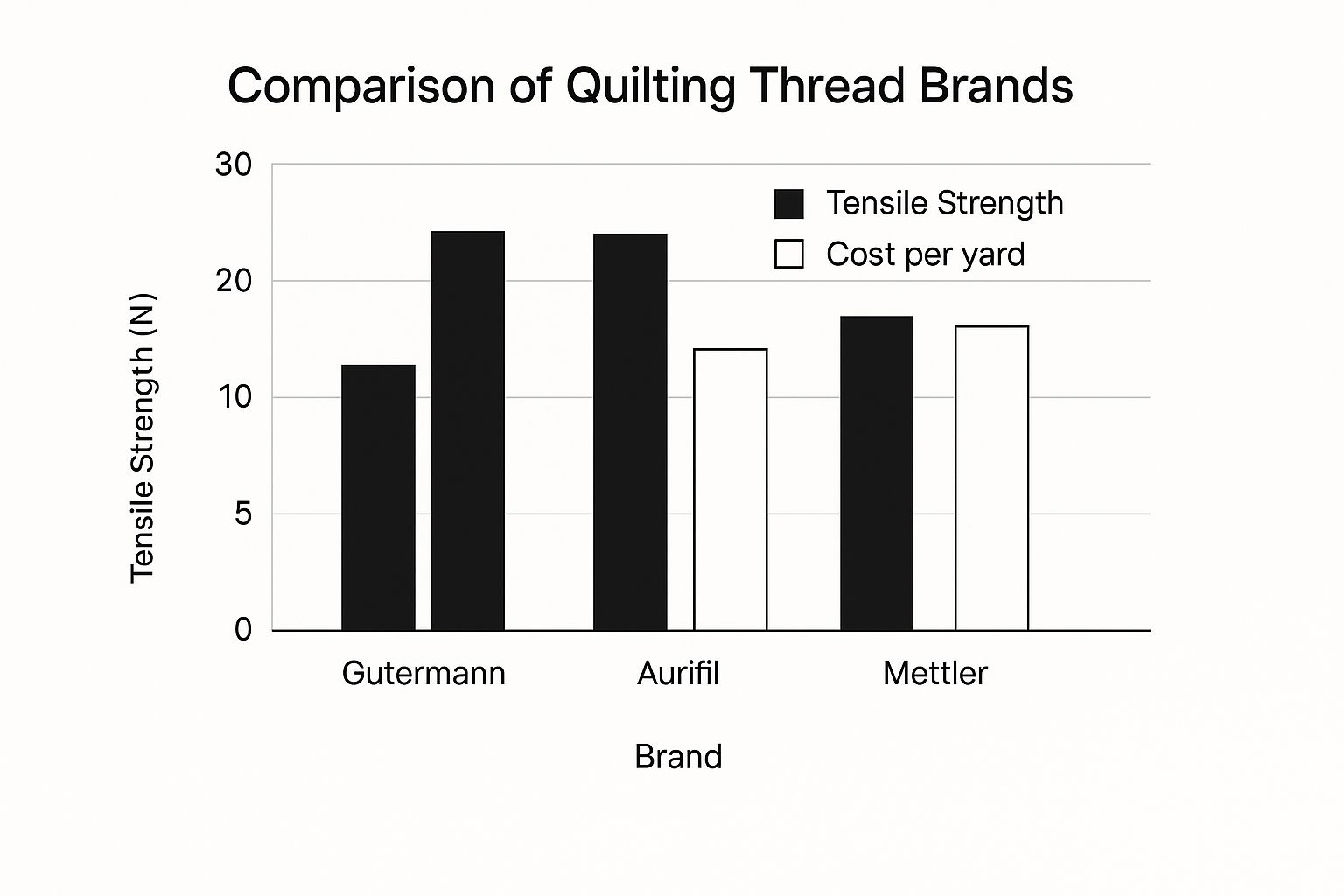
As you can see, polyester threads pack a lot of strength for their price, which is why they're such a workhorse for machine quilting.
Silk thread is really in a league of its own. It's incredibly fine but shockingly strong, making it the secret weapon for any stitching you want to disappear. Think invisible machine appliqué or the most delicate detail work.
The natural elasticity and smooth finish of silk help it sink right into the fabric, creating seams that are not only secure but also practically invisible. It’s definitely a premium option and costs more, but for those high-visibility areas on an heirloom quilt, its performance is second to none. Think of it less as an everyday thread and more as a specialized tool for when you need that truly elevated, professional finish.
To help you visualize these differences, here's a quick side-by-side comparison.
| Characteristic | Cotton Thread | Polyester Thread | Silk Thread |
|---|---|---|---|
| Best For | Piecing, traditional quilting, hand quilting | Machine quilting (especially longarm), high-stress seams | Invisible appliqué, fine detail work, heirloom quilting |
| Strength | Good | Excellent | Very Strong for its fine diameter |
| Stretch/Give | Very Low | Low to Medium | Medium |
| Heat Resistance | Excellent | Good (can melt at very high iron temps) | Good (can be damaged by excessive heat) |
| Lint | High | Very Low | Very Low |
| Cost | Moderate | Low to Moderate | High |
Ultimately, having a stash with a bit of each gives you the flexibility to choose the perfect thread for whatever your quilting project throws at you.
The best way to pick a quilting thread is to ask yourself a simple question: what am I trying to do right now? The delicate thread you use for piecing intricate blocks just isn't the same workhorse you need for stitching through a thick quilt sandwich.
When you match your thread’s characteristics to the job at hand, you get professional-looking results every single time. It stops being a guessing game and becomes a confident choice based on experience. Let’s break down the best threads for the most common quilting tasks.
When you're piecing a quilt top, your main goal is precision. You need seams that are strong, of course, but also incredibly flat so your points and corners line up perfectly. This is exactly where a fine, 50wt thread shines.
A 50wt cotton thread is the undisputed king of piecing, and for good reason. It has virtually no stretch, which means your seams won't distort when you press them with a hot iron. Its fine diameter also prevents bulky buildup, which is a lifesaver when you have multiple seams coming together in one place. No more frustrating lumps!
Machine quilting, whether you’re on a home machine or a longarm, is like a marathon for your thread. It has to endure high speeds, constant friction, and a lot of tension. This is a job that demands pure strength and resilience.
A 40wt polyester thread is my go-to recommendation here. Its superior tensile strength dramatically cuts down on those infuriating thread breaks, making the whole quilting process smoother. Plus, its low-lint quality helps keep your machine's tension discs and bobbin area cleaner, leading to better stitch quality over the long haul.
Situational Insight: While polyester is the tough workhorse, don't rule out a high-quality 50wt cotton. It's a great choice for machine quilting when you want a softer, more traditional look where the stitches melt right into the fabric.
Hand quilting is a completely different animal. It's an art that requires a thread that can glide through all three layers of the quilt sandwich without twisting into a tangled mess. The repetitive motion of hand stitching can wreck a weaker thread, causing knots and breaks.
For this traditional technique, a heavier, glazed cotton thread—often around a 28wt—is the perfect partner. This thread has a special waxy coating that gives it just enough stiffness to pass smoothly through the fabric, batting, and backing. That glaze is a godsend for preventing tangles, but you should never use it in a sewing machine. The coating can flake off and gum up the internal mechanics.
Getting the foundation right is just as important. Starting with a quality Hobbs Heirloom fusible batting package can make all the difference. When you pair the right needle, batting, and thread, your hand quilting becomes a joy, not a chore.
Picking the best thread for your quilt goes way beyond just matching colors. To really nail it, you need to connect the thread's characteristics to what your specific project demands. The best way to start is by asking a few key questions.
Thinking through these points helps you weigh the options and make a choice you can feel good about. Your answers will point you to a thread that doesn't just look great but also holds up exactly how you need it to.
First up, think about what this quilt is for. Is it a showpiece that will hang on a wall, untouched? Or is it a baby quilt that’s going to see the inside of a washing machine more times than you can count? Durability is a huge deal here.
For a bed quilt that gets a lot of use, you'll be glad you chose a strong, colorfast 40wt polyester thread. It's built to handle friction and frequent washing. On the other hand, a special heirloom project might call for the beautiful sheen and strength of silk, especially for fine appliqué where you want the thread to be almost invisible.
Situational Recommendation: If you're working with tough, dense fabrics like denim or canvas, you absolutely need a stronger thread. A robust polyester or a sturdy cotton-poly blend is your best bet to punch through those layers without shredding or snapping.
The global quilt market, valued at USD 5.32 billion in 2024, is growing fast, which tells you there's a huge demand for quality quilting supplies. This boom underscores the need for threads that deliver on both performance and looks. You can find more details about the quilt market on expertmarketresearch.com, but it's clear quilters are seeking premium materials.
Next, what do you want the quilting stitches to do? Should they melt into the background, adding subtle texture, or do you want them to be a star player in the design?
If you're going for invisible stitches, match your thread color as closely as you can to your fabric. A finer 50wt thread is perfect for this. But if you want your quilting to stand out, grab a contrasting color or a funky variegated thread in a heavier 30wt or 12wt. This thicker thread creates a bold, visible line that makes your quilting a design feature in itself. Getting this right takes some practice, and if you're looking to sharpen your skills, our guide on free sewing lessons has some great pointers.
By taking a moment to think about your quilt's function, fabric, and final look, you can confidently pick the perfect thread every single time.
Even after you've got a handle on the different types of thread, there are always those little questions that pop up mid-project. Let's dive into some of the most common things quilters ask. Think of this as a quick-reference guide to help you sort out those details and get back to the fun part.
Getting these specifics right can make a huge difference in how your final quilt looks and feels. From what to load in your bobbin to why your thread keeps snapping, these answers should help you quilt with more confidence.
You can, but it's not your best bet. All-purpose thread is usually a polyester or a poly-cotton blend made for sewing clothes, which means it has a bit of stretch. While it'll work for piecing in a pinch, you'll get much better results with a dedicated 100% cotton quilting thread. It behaves just like your cotton fabric, which helps your seams press flatter and lie truer.
When it comes to the actual quilting part—stitching through all those layers—a specialized quilting thread is really non-negotiable. It’s built for strength and is low-lint, so it can handle the job without shredding or breaking.
It doesn't have to! In fact, a lot of machine quilters prefer using a lighter-weight thread in the bobbin, like a 60wt or 80wt polyester. There are a couple of great reasons for this.
A neutral color in the bobbin—think grey, cream, or beige—usually disappears into most quilt backs. Of course, if you've dialed in your tension perfectly and want the back to look identical to the front, go ahead and use the same thread top and bottom. It works just fine.
Ah, the age-old question. This is probably the most maddening issue for any machine quilter, but the fix is usually simpler than you think. Nine times out of ten, the culprit is your needle, your threading, or your tension.
Troubleshooting Tip: Before you even think about touching your tension dial, do this first: change your needle. A dull, bent, or wrong-sized needle is the #1 cause of thread shredding and breaking. Make sure you're using a fresh quilting or topstitch needle that’s the right size for your thread.
If that doesn't solve it, unthread your machine completely and re-thread it from scratch. Take your time and make sure the thread clicks securely into every guide and tension disc. Still breaking? It might be the thread itself. Lower-quality threads can have tiny weak spots that just can't handle the stress of quilting. Using good batting, like what you’d find in a Hobbs Heirloom 100% cotton batting package, can also make the needle glide through more easily, reducing stress on the thread.
At Famcut, we live and breathe quilting, and we’re here to make sure you have the materials and know-how to bring your vision to life. Check out our huge selection of top-notch quilting supplies and find the perfect tools for your next project at https://famcut.com.
At High Country Quilts we care deeply about community. With our experiences in retail, we know that a store is not only a place to shop but also a place for the community to gather and share. During this busy...

Hi! We’re Adam and Renee Wheaton, the new owners of High Country Quilts! For more than 40 years, we’ve owned and operated vacuum and sewing businesses. Following in Renee’s father’s footsteps after he retired from All Discount Vacuum and Sewing in Colorado...


Leave a comment