

We Love Our Quilting Community
At High Country Quilts we care deeply about community. With our experiences in retail, we know that a store is not only a place to shop but also a place for the community to gather and share. During this busy...


Picking the right sewing thread can feel a little overwhelming, but it really just comes down to matching the thread’s material and thickness to the fabric you're using. Think of it this way: thread is the quiet, hardworking framework holding your entire quilt together. Choosing it wisely is every bit as important as picking your fabrics.
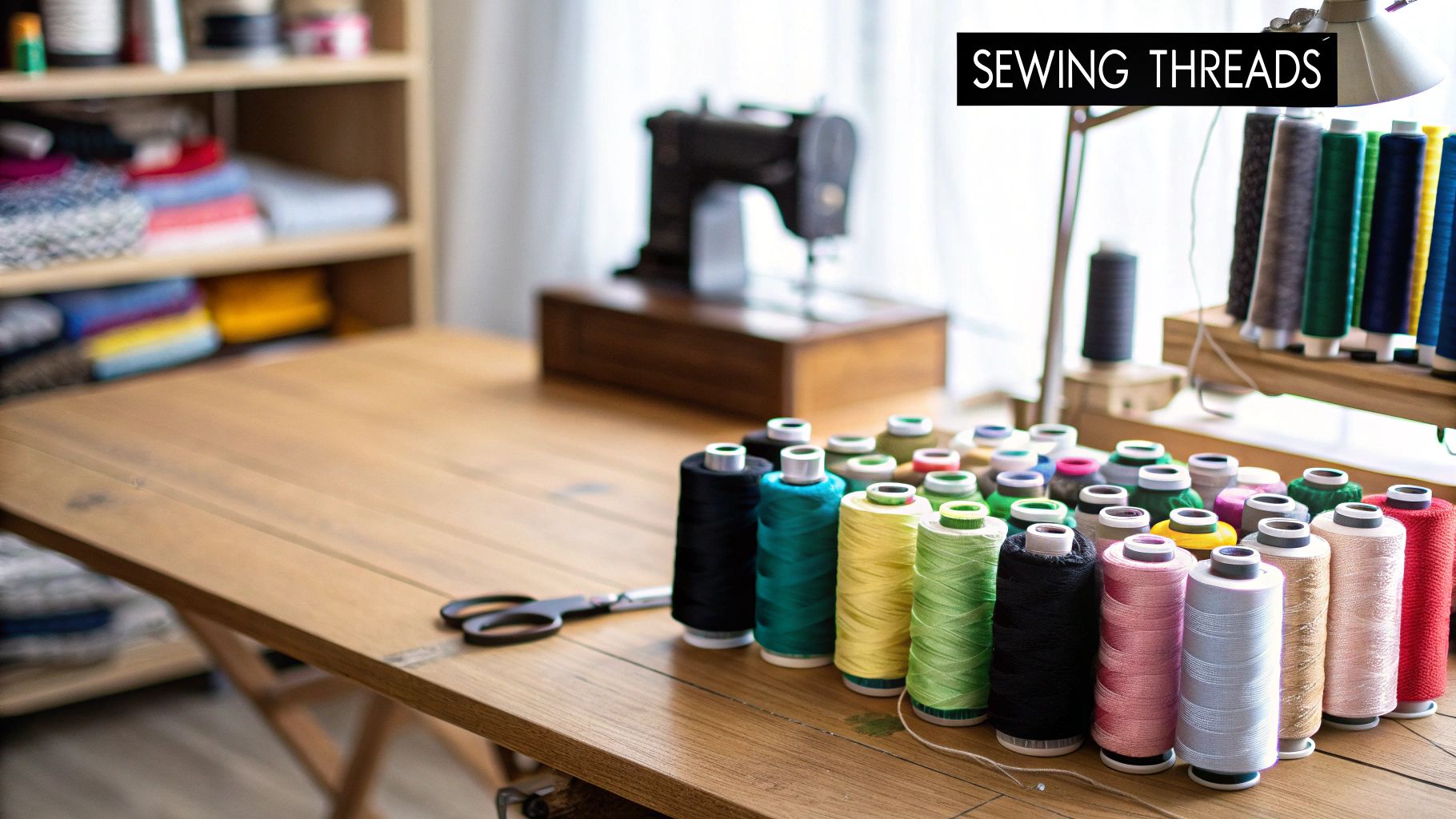
It’s like trying to build a solid wooden house with flimsy, bendable nails. It doesn't matter how gorgeous the design is if the structure itself is compromised. Sewing thread plays that same foundational role in quilting—it’s the skeleton that gives your project integrity and lets it live a long, well-loved life. The right choice makes sure your quilt not only looks beautiful but can actually stand up to years of snuggling and washing.
So many quilters pour their hearts into selecting fabrics and planning a pattern, only to grab any old spool of thread without a second thought. This is where frustrating problems start, and all that hard work can be undermined. Using a thread that’s a poor match for your project can lead to snapped threads, puckered seams, wonky tension, and even fabric damage.
Choosing the correct thread isn’t just about dodging problems; it’s about elevating your craft from good to great. The thread you pick directly influences the quilt's final look, its feel, and how well it holds up over time.
A great quilt begins with great thread. It’s the unsung hero that works behind the seams to ensure your creation lasts for generations. Neglecting it is like building a masterpiece on a shaky foundation.
Have you ever spent a whole afternoon fighting with your sewing machine, convinced it was broken, only to discover the culprit was a cheap, linty thread? Or what about finishing a gorgeous quilt top, then watching in horror as the seams pull apart after the very first wash? These common headaches almost always trace back to that one simple choice made at the beginning.
This guide is here to demystify the world of sewing threads for you. We're going to break down the different types of sewing thread, explore materials from classic cotton to tough polyester, and finally decode those confusing numbers on the spool labels. By the time we’re done, you’ll be able to walk into any shop and pick the perfect thread with confidence. You’ll be swapping potential frustration for pure creative joy, because making an informed choice is the very first stitch toward an exceptional quilt.
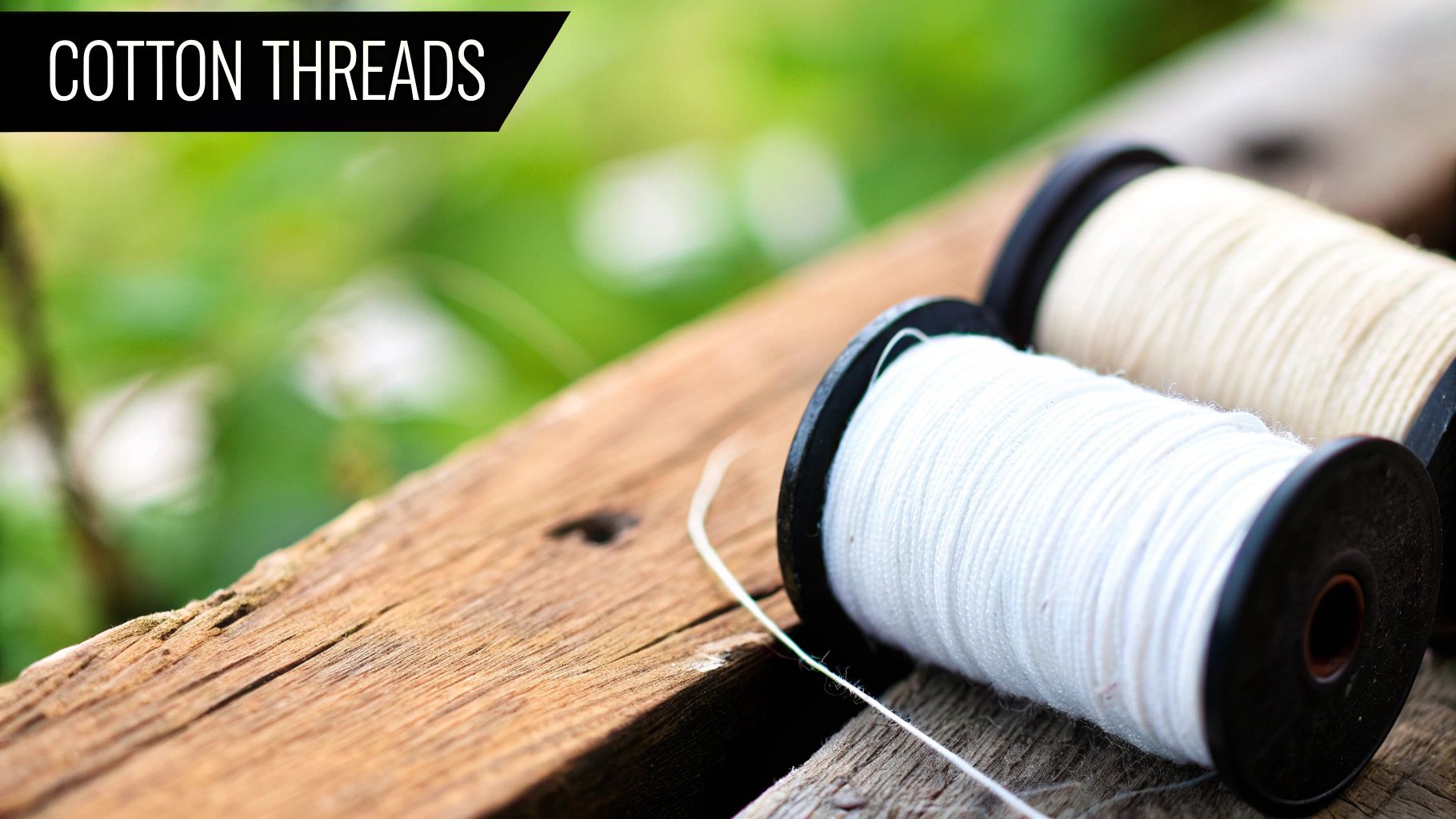
When you think of a classic quilt, chances are you're picturing one stitched together with natural fiber thread. For centuries, these threads—spun from materials like cotton and silk—have been the heart and soul of quilting. They bring a timeless, authentic quality to a quilt that synthetics can imitate but never truly replicate.
The undisputed king of the natural fiber world is 100% cotton. For quilters who primarily use cotton fabrics (which is most of us!), it’s the natural go-to. Think of it this way: cotton thread and cotton fabric grew up together. They understand each other, they age at the same pace, and they shrink similarly when washed. This harmony ensures your quilt holds up beautifully for generations.
It’s this very relationship that creates the magic. After a wash, a cotton thread "settles" into the cotton fabric, producing that wonderfully soft, crinkled texture we all associate with a well-loved quilt. This is why natural fiber thread remains the top choice for heirloom projects.
You’ve probably noticed that not all cotton threads feel the same. The finish applied to the raw fiber makes a huge difference in how it looks, feels, and performs. Getting to know these finishes is the key to picking the right thread for the right job.
This variety is what makes cotton such a versatile player among the different types of sewing thread. Whether you need a strong, smooth thread for piecing or something special for handwork, there’s a cotton finish out there designed for it.
For traditional quilts made with 100% cotton fabric, a high-quality mercerized cotton thread is almost always the best choice. It ensures the entire quilt will behave as a single, cohesive unit through years of use and washing.
So, how does this all play out in a real project? Let's say you're making a classic nine-patch baby quilt.
This shows how you can strategically use different weights and finishes of a single fiber—cotton—throughout one project. The popularity of these spun threads, made by twisting short fibers together, is no accident. In fact, by 2025, spun threads are expected to command the largest market share at around 46.87%, a market value of over $2 billion. You can read the full research about the sewing thread market to see where these trends are heading.
While cotton certainly reigns supreme, it’s not the only natural option on the shelf. Silk thread is another fantastic, if more luxurious, choice. For its incredibly fine diameter, it is surprisingly strong and has a brilliant sheen that adds a touch of elegance.
Silk is perfect for appliqué, especially when you want your stitches to melt into the fabric and become nearly invisible. It’s also stunning for decorative machine quilting where you want the stitches to pop with a beautiful luster. And because it's so strong, it’s a go-to for hand beading and attaching other embellishments to art quilts.
While natural threads give quilts that classic, traditional feel, synthetic threads are the modern workhorses in any quilter's toolkit. These threads are engineered for pure performance, offering incredible strength and consistency that you can rely on. If you're making a quilt that's going to see a lot of love and use, synthetics are a fantastic choice.
The two main players you'll come across are polyester and nylon. These powerhouse fibers are known for their resilience. They won't shrink or lose their shape like some natural fibers can, and they stand up incredibly well to abrasion, chemicals, and UV light, which means your quilt's colors will stay bright and beautiful for years to come.
The demand for these durable threads is huge. The global sewing thread market was valued at about $3.66 billion in 2024, with synthetics like polyester leading the pack thanks to their strength and versatility. And it's only growing. You can discover more insights about the global thread market to see how these materials continue to shape the industry.
There's a good reason why polyester is the most popular synthetic thread for machine sewing. It’s incredibly strong, has just enough give to prevent stitches from popping, and creates almost no lint. That means you get to spend more time quilting and less time cleaning out your machine's bobbin case.
But not all polyester thread is the same. Knowing a little about how it’s made will help you pick the perfect spool for your project.
Think of corespun thread like a steel-reinforced cable. The inner filament core provides immense strength, while the outer spun layer gives it a classic, sewable texture.
This hybrid construction makes it incredibly durable and resistant to shredding, even when you're sewing at high speeds on a longarm machine.
With its different forms, polyester can handle just about any quilting job you can imagine.
For piecing your quilt top, a 50wt spun or corespun polyester is a workhorse you can count on. It creates strong, secure seams that will hold up through years of washing and use.
When it's time for the actual quilting, a 40wt polyester is a great choice. It’s a bit thicker, so your stitches will add beautiful texture and definition to the quilt. The strength of a corespun polyester is especially great for free-motion or longarm quilting, as it dramatically reduces those frustrating thread breaks.
While polyester is the all-around champion, nylon has its own special talents. Nylon is known for its exceptional strength and elasticity—even more than polyester. This makes it the clear winner for projects that need to be seriously tough.
You probably won't use it for everyday quilt piecing, but nylon is a lifesaver in certain situations.
Some quilters find nylon a bit slippery to work with since knots can sometimes come undone. But for those demanding projects where strength and stretch are non-negotiable, nylon is the go-to synthetic that simply won't quit.
To make things a little easier, here's a quick cheat sheet comparing the most common threads we've discussed so far.
| Thread Type | Key Characteristics | Best For Quilting | Considerations |
|---|---|---|---|
| Cotton | Natural, soft, matte finish, minimal stretch, strong. | Traditional piecing, quilting where thread blends in, heirloom projects. | Can shrink slightly, can create more lint than synthetics. |
| Polyester | Synthetic, very strong, slight stretch, low lint. | All-purpose piecing, machine quilting (especially longarm), decorative stitches. | The slight stretch might not be ideal for precision piecing. |
| Nylon | Synthetic, extremely strong, high elasticity, slick. | Quilting on stretchy fabrics (minky, knits), heavy-duty projects, bags. | Can be slippery to handle; not typically used for piecing. |
This table gives you a starting point, but the best way to find your favorite is to experiment! Don't be afraid to try different types and see what works best for your machine and your style.
Walking down the thread aisle can feel like trying to crack a secret code. Every spool is covered in numbers and abbreviations that seem intentionally confusing, but they're actually a helpful roadmap. Once you learn to speak the language of the spool, you'll be able to confidently choose between the different types of sewing thread.
The most important number you’ll find is the thread weight, often shown as "wt" (like 50wt or 40wt). This simply tells you how thick the thread is. But here’s the catch, and it’s a bit backward from what you might expect.
Analogy: Think of thread weight like sandpaper grit. With sandpaper, a low number means a coarse, heavy grit. It’s the same with thread! A low number means a coarse, thicker thread, while a high number always means a finer, thinner one.
So, a 28wt thread is going to be thick and bold, perfect for decorative topstitching you really want people to see. On the other hand, a 60wt thread is super fine, designed for stitches that practically disappear into the fabric. Grasping this simple rule is the key to unlocking everything else.
Knowing the "why" behind different thread weights is what truly elevates your quilting. Each weight has a specific job it excels at, and matching the right thread to the task is what creates those beautiful, professional-looking results we all strive for. It’s all about controlling how much your stitches stand out—or blend in.
Choosing the right thread weight is a crucial step in quilting. The table below breaks down the most common weights you'll find and exactly where they shine.
| Thread Weight (wt) | Description | Best Use in Quilting | Recommended Needle Size |
|---|---|---|---|
| 80wt or 60wt | Very Fine & Delicate | Machine appliqué, bobbin thread, fine detail quilting where stitches should disappear. | 60/8 or 70/10 Microtex |
| 50wt | Medium-Fine | The go-to for quilt piecing. Strong but doesn't add bulk to seams. Great for general quilting. | 80/12 Microtex or Universal |
| 40wt | Medium / All-Purpose | The most common choice for machine quilting. Creates visible, defined stitches. | 80/12 or 90/14 Quilting/Topstitch |
| 28wt or 30wt | Medium-Thick | For decorative quilting and topstitching that you want to stand out. Also good for hand quilting. | 90/14 or 100/16 Topstitch |
| 12wt | Very Thick & Heavy | Creates a bold, textured stitch that mimics hand embroidery. Best for artistic details. | 100/16 or 110/18 Topstitch |
This table serves as a great starting point, but don't be afraid to experiment! Sometimes the "wrong" thread for the job creates the most interesting effect.
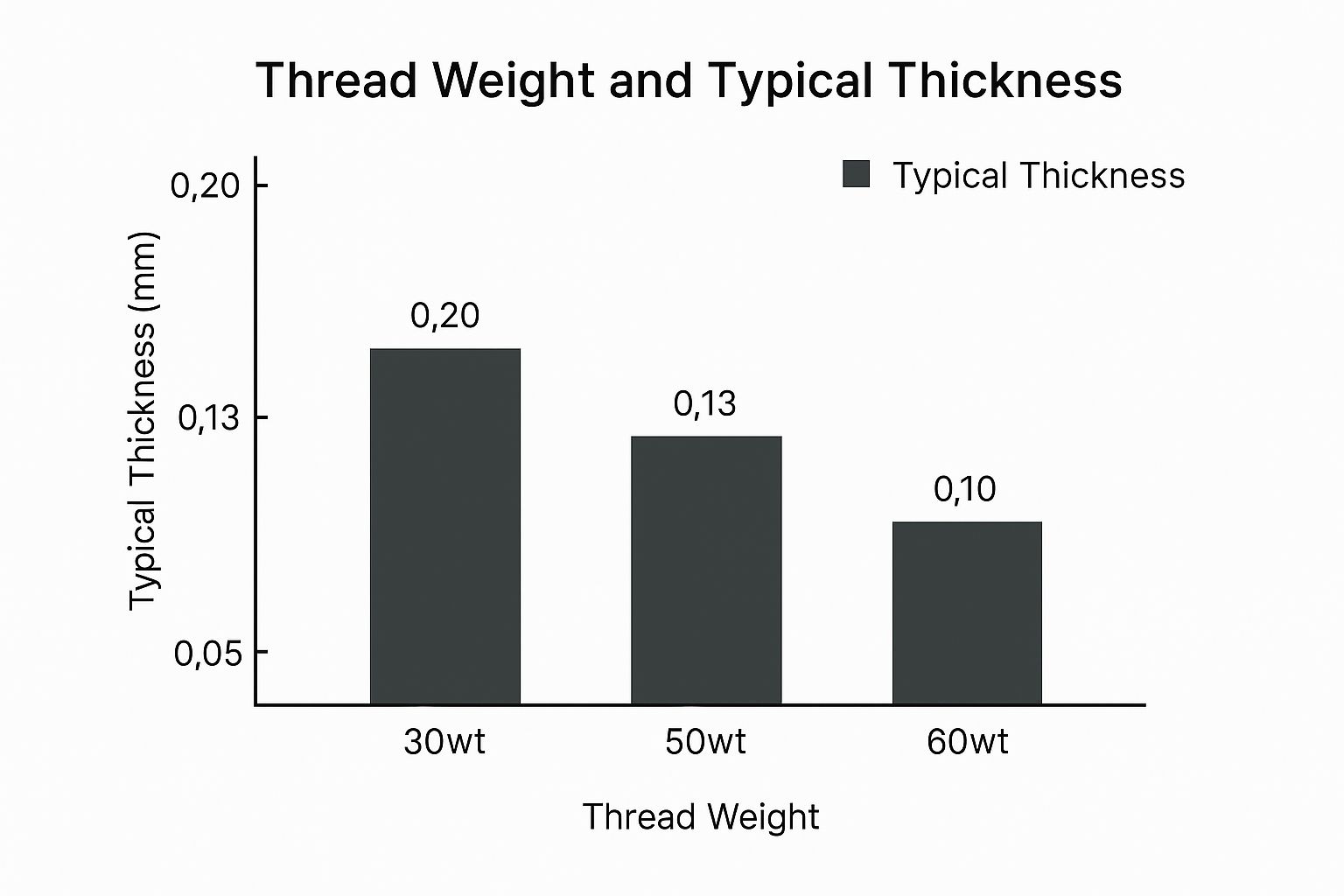
This graphic perfectly illustrates the rule: as the weight number gets bigger (from 30wt to 60wt), the actual thread gets thinner. It’s a great visual reminder to keep in your sewing room.
While weight is the star of the show, the other info on the spool label tells the rest of the story. You'll often spot a number that looks like a fraction, such as 40/2 or 50/3. This gives you a peek into the thread's construction.
The first number is the weight (40wt), and that second number tells you the ply. Ply is just the number of individual strands twisted together to make the final thread. A 2-ply thread is made from two strands, while a 3-ply is made from three.
As a general rule, a 3-ply thread will be stronger, rounder, and produce less lint than a 2-ply thread of the same weight. This is why so many experienced quilters swear by a quality 50/3 cotton thread for piecing—it’s strong, smooth, and behaves beautifully in the machine. Of course, the label will also tell you the fiber content, so you know if you're getting 100% cotton, polyester, or something else entirely.
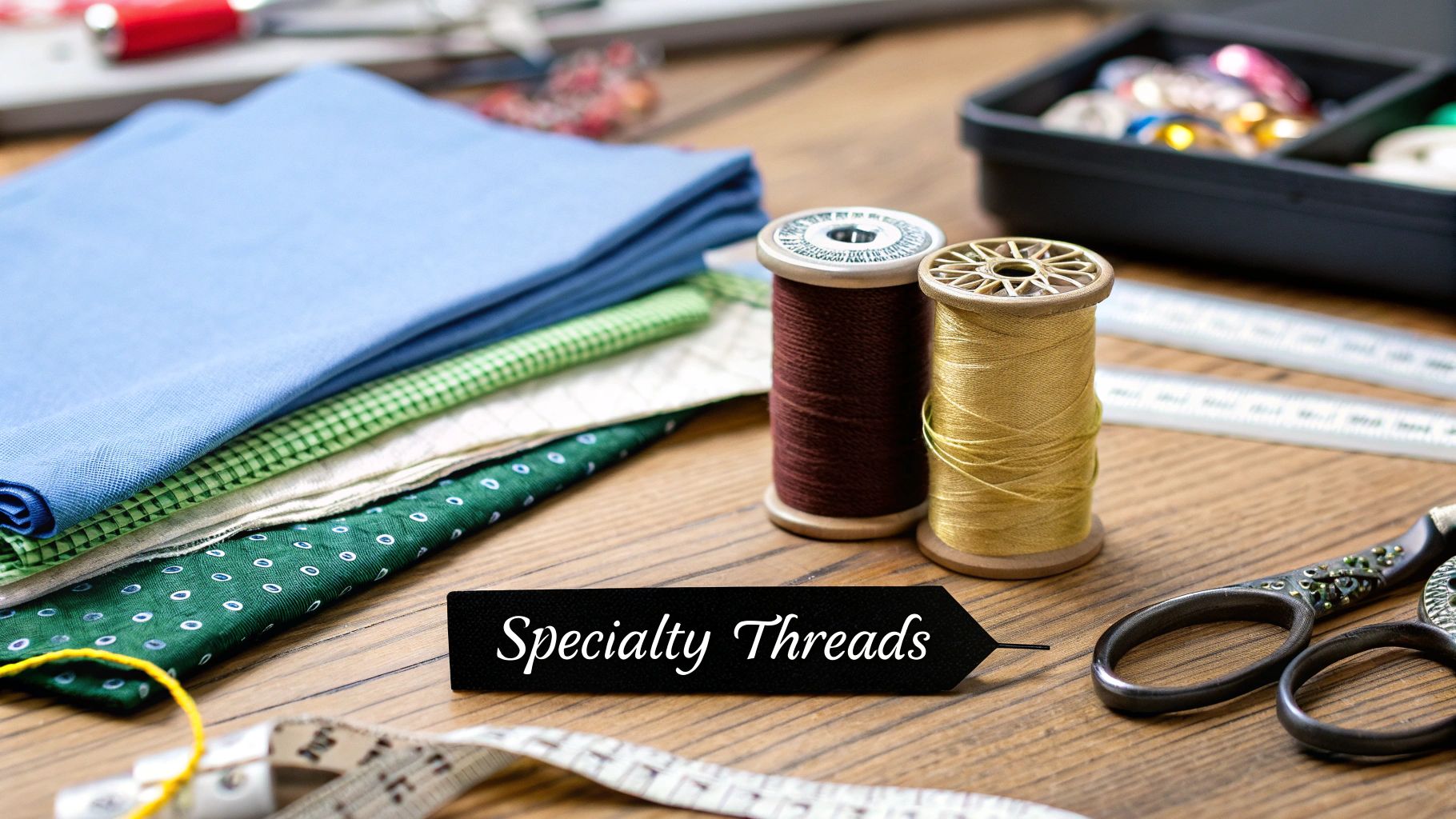
Alright, now that we've covered the what and why of thread materials and weights, let's get to the fun part: putting that knowledge into practice. Choosing the right thread isn’t about finding one magical, do-it-all spool. Instead, it’s about making a few smart choices that will elevate your quilt from good to great.
Think of it like being a detective. Your quilt project leaves clues—the fabric you're using, the design you've envisioned, and how the quilt will eventually be used. By following these clues, you'll find the perfect thread fiber, weight, and color to make your stitches just as intentional as your fabric choices.
If you only remember one thing, make it this: whenever you can, match the fiber of your thread to the fiber of your fabric. This simple rule is the foundation of a quilt that will stand the test of time. When cotton thread meets cotton fabric, they become a team. They’ll shrink, stretch, and wear at the same rate, which is exactly what you want.
This little bit of planning helps you sidestep a common quilting pitfall. Using a tough polyester thread on cotton fabric can lead to puckering or even torn fabric after a wash because the thread doesn't shrink with the fabric. Matching them ensures your quilt will age beautifully, getting that soft, crinkly texture we all love in an heirloom.
So, if you’re piecing a classic quilt top with 100% cotton fabrics, grabbing a spool of 50wt 100% cotton thread is almost always the right move. It’s strong enough to hold your seams securely but fine enough that it won't add any unnecessary bulk.
Next up, ask yourself what you want your stitches to do. Are they the quiet, unsung heroes holding everything together behind the scenes? Or are they front-and-center, a bold part of the design? Your answer points you straight to the right thread weight.
For Blending In: When you want your beautiful fabric and piecing to get all the attention, a finer thread is your best friend. A 50wt or 60wt thread is perfect for piecing and subtle "stitch-in-the-ditch" quilting. It just melts into the fabric, giving you flat seams and nearly invisible quilting lines.
For Standing Out: If your quilting is a key design element, go for something thicker. A 40wt thread gives you lovely, defined stitches. For a really bold, textured line that becomes a feature in itself, a 28wt or 12wt thread is fantastic. These heavier types of sewing thread are how you add that artistic, hand-stitched look.
A quilter's thread choice is their signature. Fine threads whisper of precision and structure, while thick, bold threads shout with texture and artistic confidence. Choose the voice you want your quilt to have.
Just remember, a thicker thread needs a bigger needle. To avoid shredding and snapping, you'll want to pair it with a 90/14 or 100/16 Topstitch needle that has a larger eye.
Last but not least, it's time for color! This decision has a huge impact on your quilt's final look. You've got three main strategies, and each one creates a totally different vibe.
The choices we have on our shelves are shaped by what's happening in the global textile industry. For instance, the Asia-Pacific region is the biggest player in the sewing thread market, valued at around USD 2.7 billion in 2025, largely driven by manufacturing. Meanwhile, quilters in North America and Europe are often pushing for higher quality and more eco-friendly options, which influences the availability of natural fibers and dyes. You can learn more about these global market findings and see how they ripple down to our local quilt shops.
By weighing these three factors—fiber, weight, and color—you'll be able to walk up to any thread rack and confidently pick the perfect spool for your next masterpiece.
Once you get the basics down, the real questions start popping up. We get it. Think of this as your go-to guide for those nagging little queries that come up mid-project. We've gathered the most common questions we hear in the shop and online, and we're here to give you straightforward answers.
Let's clear things up so you can get back to quilting with confidence.
You absolutely can, and many quilters do, especially for piecing. That spool of "all-purpose" thread is usually a dependable medium-weight polyester or a cotton-wrapped poly, often a 40wt or 50wt. It's strong, it's reliable, and it’s more than capable of holding your patchwork seams together for years to come.
Where you might want to pause and reconsider is when you get to the actual quilting—the stitches that go through all three layers. Many quilters make a deliberate switch to a 100% cotton thread to match their cotton fabrics. Why? Because the thread and fabric will then behave as one, shrinking and wearing at the same rate over countless washes. It’s a small detail that helps preserve the quilt’s classic feel for the long haul.
The Bottom Line: All-purpose thread is a workhorse for piecing your quilt top. But for the quilting stitches themselves, consider switching to 100% cotton to create a true heirloom.
And if you want your quilting to be the star of the show? That's when you'd grab a thicker, more decorative thread, like a 28wt or 12wt, to make those stitches pop.
This is a big one. Matching your needle to your thread isn't just a good idea—it's essential for a headache-free sewing experience. An improper pairing is one of the biggest culprits behind shredded thread, skipped stitches, and frustrating breaks. The guiding principle couldn't be simpler: finer thread needs a smaller needle, and thicker thread needs a larger one.
Picture the needle's eye as a tunnel. If you try to force a big truck (your thread) through a tiny tunnel (the needle eye), you're going to get a lot of friction and damage. That friction heats and weakens the thread, causing it to shred and snap.
Here’s a simple cheat sheet to get you started:
Think of proper thread storage as an investment in your tools. You’re protecting your thread from its two worst enemies: sunlight and dust. The UV rays from sunlight are brutal; they can weaken the fibers and fade those gorgeous colors over time, especially on the outside of the spool.
Dust is just as sneaky. As you sew, any dust on the spool gets pulled right down into your machine's tension discs and bobbin area. That buildup can eventually throw off your tension and lead to all sorts of stitch problems.
Your best bet is to keep your spools in a closed container, like a clear plastic bin or a specially designed thread case. This keeps them clean and out of the light. We know those wall-mounted thread racks look amazing, but if you use one, just make sure it’s not in a spot that gets blasted by direct sunlight. A little protection goes a long way in ensuring your thread is ready to perform when you are.
It sure does. While a top-notch thread stored properly can last for decades, thread does have a shelf life. Over time, natural fibers like cotton can become dry and brittle, especially if they've been hanging out in a place with a lot of temperature swings, humidity, or sunlight.
If you’ve inherited a beautiful collection of vintage thread on old wooden spools, treasure it for its beauty, but be wary of using it in your machine. It will almost certainly break under the speed and tension of modern sewing.
There’s a quick test you can do.
But don’t toss it! That thread is perfect for hand-basting, kids' craft projects, or just looking lovely on a shelf. For the quilt you’re pouring your heart into, always start with fresh, high-quality thread you know you can count on.
At High Country Quilts, we believe that the right tools make all the difference. Explore our extensive collection of premium quilting threads from the best brands in the industry and find the perfect match for your next masterpiece. Visit us in-store or online at https://hcquilts.com to see our vibrant selection and get expert advice from our passionate team.
At High Country Quilts we care deeply about community. With our experiences in retail, we know that a store is not only a place to shop but also a place for the community to gather and share. During this busy...

Hi! We’re Adam and Renee Wheaton, the new owners of High Country Quilts! For more than 40 years, we’ve owned and operated vacuum and sewing businesses. Following in Renee’s father’s footsteps after he retired from All Discount Vacuum and Sewing in Colorado...


Leave a comment