

We Love Our Quilting Community
At High Country Quilts we care deeply about community. With our experiences in retail, we know that a store is not only a place to shop but also a place for the community to gather and share. During this busy...


If you think about what makes a great quilt, you probably picture beautiful fabrics and an intricate design. But just like a master baker needs the right flour, a quilter needs the right thread. For us, that foundational ingredient is almost always 100% cotton thread. It's the classic, time-tested choice that works with your cotton fabrics, not against them, to create quilts that will be loved for years to come.
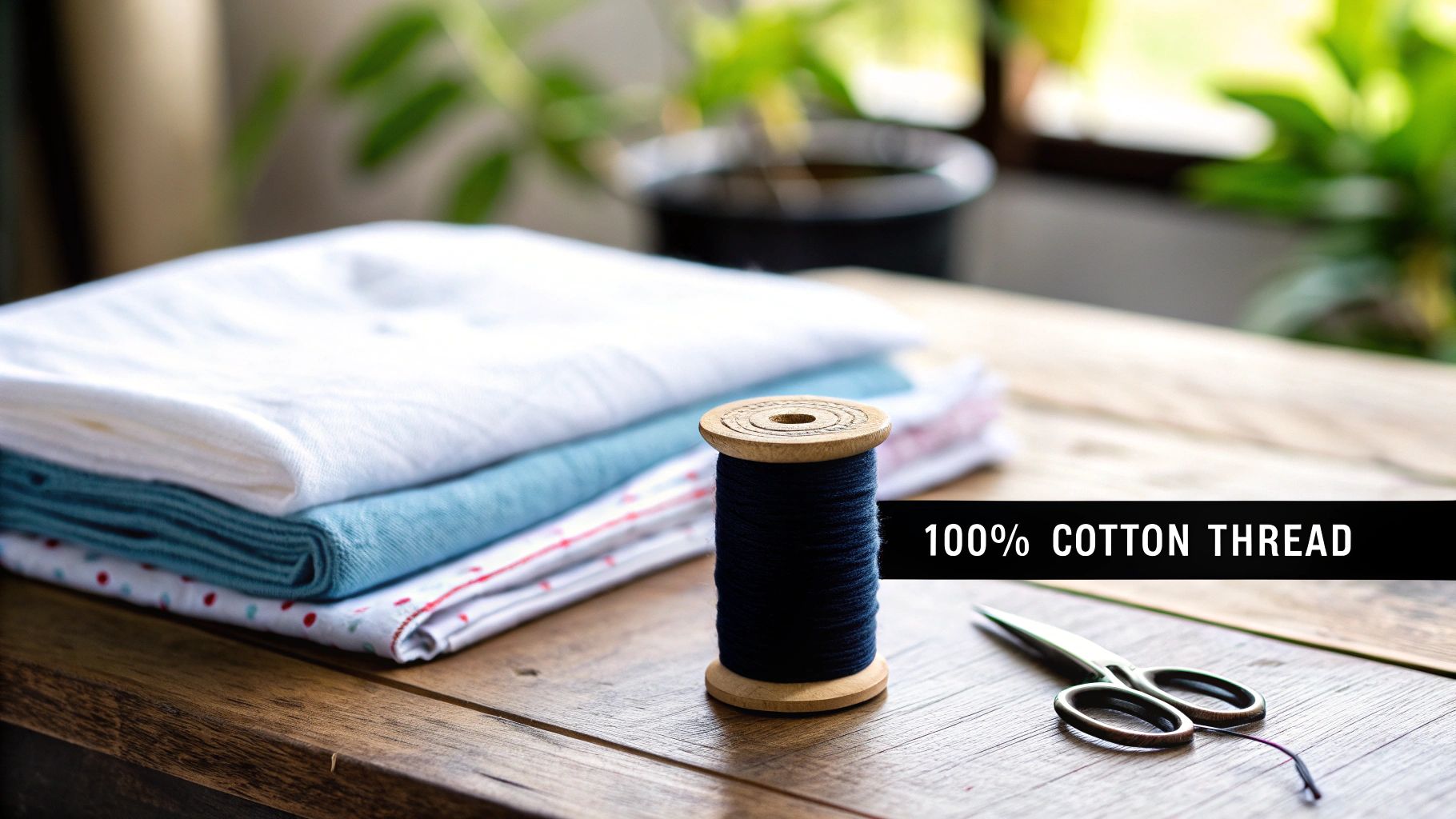
When you’re quilting, you’re not just sewing; you’re building an heirloom. Every single material you choose plays a part in how that quilt will look and feel decades from now. That’s why so many of us swear by a simple rule: use like fibers together.
Using 100% cotton thread on cotton fabric means everything will behave as one. The thread and fabric will shrink, wash, dry, and age at the same rate. This harmony prevents the dreaded puckering you can get when a synthetic thread (which doesn't shrink) puts stress on cotton fabric (which does).
It’s this shared quality that creates that wonderful, slightly crinkled texture we all love after a quilt’s first wash. It’s a sign of authenticity! Plus, cotton thread has almost no stretch, which is fantastic for piecing. It gives you crisp, stable seams and helps keep those sharp points perfectly aligned.
Want to see how it stacks up against the main alternative? We break it all down in our guide on polyester thread vs cotton thread.
So, what makes this thread such a workhorse in our sewing rooms? Let's get into the specifics of what makes it so special. Each of these features helps turn a stack of fabric into a beautiful, durable quilt.
For a quick overview, here's a look at the core characteristics of 100% cotton thread.
| Attribute | Description | Best For |
|---|---|---|
| Material | A natural fiber derived from the cotton plant. | Piecing and quilting with natural fabrics like cotton, linen, and rayon. |
| Stretch | Very low to no stretch. | Creating stable, precise seams that won't distort or warp. |
| Heat Tolerance | High; will not melt under a hot iron. | Pressing seams open or to the side with confidence. |
| Finish | Soft, low-sheen matte appearance. | Blending seamlessly into the fabric without adding distracting shine. |
These attributes combine to create a thread that’s not just easy to work with but also helps ensure the longevity of your projects.
Here are a few more reasons it's a quilter's staple:
One of the secret weapons of 100% cotton thread is its ability to "grab" the fabric. This tiny bit of friction helps lock stitches securely in place, creating strong seams that are much less likely to unravel over time.
It's not just quilters who rely on this natural fiber. The global market for cotton sewing threads was valued at around USD 5.5 billion in 2023, and it's projected to keep growing. That huge number shows just how much sewists and textile industries around the world count on cotton for high-quality, reliable results.
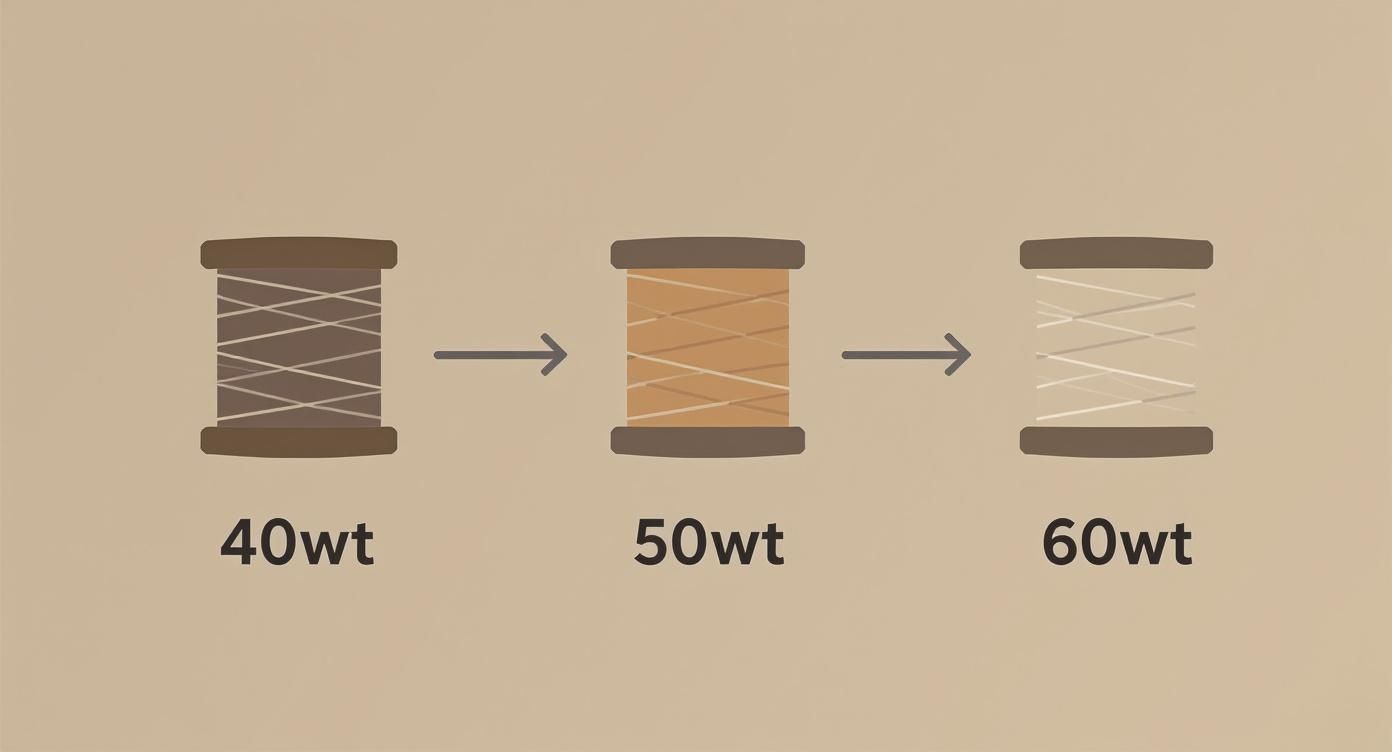
Walking into the thread aisle can be a little intimidating. You’re met with a wall of spools, all marked with cryptic numbers like "40wt" or "50wt." So, what do those numbers actually mean? It's a bit backward from what you might expect: the higher the number, the finer and thinner the thread.
A good way to think about it is like artists' pencils. A low number, like a 40wt thread, is your bold, thick pencil—perfect for making a statement with decorative quilting stitches that really need to stand out. On the other end of the spectrum, an 80wt or 100wt thread is like a super-fine mechanical pencil, creating delicate, barely-there lines that are ideal for invisible appliqué or English paper piecing where you want the stitches to just disappear.
Getting this one concept down is the key to matching your 100 cotton thread perfectly to every step of your quilting process.
When it comes to quilting, you'll mostly be working with three main weights of thread. Each one has a job it was born to do, and using the right one will make a world of difference in your results, from flatter seams to more beautiful topstitching.
Let's get to know the workhorses of the quilting world:
A great rule of thumb is to use 50wt cotton thread for construction (piecing) and then choose between 40wt, 50wt, or 60wt for the quilting itself, depending on how much you want the stitches to show.
Picking the right thread weight isn’t just a technicality; it’s an artistic choice that directly shapes the final look and feel of your quilt. A mismatched thread can lead to a whole lot of frustration, while the right pairing makes the entire process smoother and more fun. While these are the most common weights, the world of thread is vast. To explore more options, you can learn about the different types of sewing thread in our detailed guide.
Here's a quick reference table to help you make confident decisions for your next project.
| Task | Recommended Weight | Why It Works |
|---|---|---|
| Machine Piecing | 50wt or 60wt | Creates strong, flat seams that press beautifully and reduce bulk. |
| General Quilting | 50wt | Offers excellent stitch definition without overpowering the fabric design. |
| Decorative Quilting | 40wt | Provides a bold, visible stitch that adds texture and becomes a design element. |
| Hand Appliqué | 60wt or 80wt | Sinks into the fabric for stitches that are nearly invisible to the eye. |
| Machine Binding | 40wt or 50wt | A 50wt thread is durable, while a 40wt can add a decorative topstitch finish. |
| Hand Piecing | 50wt | Strong yet fine, it’s perfect for creating accurate and secure hand-sewn seams. |
https://www.youtube.com/embed/K7YJeDoeBo8
Choosing between a natural and a synthetic thread isn't just a small detail—it's a decision that echoes through the entire life of your quilt. For projects you hope will last for generations, the guiding principle I always come back to is simple: like fibers work best together. When you pair 100% cotton thread with your cotton fabrics, you’re creating a single, harmonious piece where every single component ages gracefully as one.
I like to think of it this way: if you were restoring a beautiful antique oak chair, you wouldn't patch a crack with plastic filler, right? You'd use wood putty. The same exact logic applies to our quilts. Using cotton thread on cotton fabric ensures that the seams and the fabric shrink, wear, and soften at the very same rate, preserving the integrity and authentic feel of your work for decades to come.
Polyester, on the other hand, is a synthetic powerhouse. It’s incredibly strong and has a slight stretch, which might sound like a good thing at first. The trouble is, that strength can become a problem down the road. As your cotton fabric naturally softens and wears with love and use, the much stronger polyester thread can act like a tiny saw, slowly cutting or stressing the very fibers it's supposed to be holding together.
When you really get down to it, the differences between cotton and polyester become crystal clear. Each has its own personality, making it suitable for very different jobs. Understanding these key distinctions is what will help you pick the right one for your project every single time.
Let’s break it down into a simple table to see how these threads stack up for quilting.
| Feature | 100% Cotton Thread | Polyester Thread | Cotton-Wrapped Poly |
|---|---|---|---|
| Fiber Type | Natural (Cellulose) | Synthetic (Plastic) | Hybrid (Poly Core, Cotton Wrap) |
| Strength | Good, strong enough for quilting. No stretch. | Very strong, has some stretch. | Very strong, has some stretch. |
| Heat Resistance | Excellent. Won't melt under a hot iron. | Poor. Can melt and damage fabric/iron. | Moderate. The cotton wrap offers some protection. |
| Longevity | Ages and wears at the same rate as cotton fabric. | Stronger than fabric; can cut or tear it over time. | Polyester core outlasts cotton fabric. |
| Best Use | Heirloom quilting, precision piecing, topstitching. | General-purpose sewing, high-stress seams. | Garment construction, bag making. |
As you can see, each thread has its place. But for the art of quilting, where we want our quilts to live a long and happy life, the choice becomes pretty obvious.
Let's look a little closer at the key differences:
The takeaway is this: Choosing your thread is about matching its personality to your project's long-term future. For a quilt you want to become a family heirloom, the beautiful harmony of all-cotton materials is your safest bet for a long life and classic texture.
Now, you've probably seen a third option on the shelf: cotton-wrapped polyester. This hybrid thread tries to give you the best of both worlds, with a strong polyester core wrapped up in a soft cotton exterior.
This design gives you the strength of polyester with the matte look and feel of cotton. For many types of sewing, like making clothes or sturdy bags, it’s a fantastic and durable choice. For heirloom quilting, however, the core issue doesn't go away—that polyester core simply won't behave like your cotton fabric over the long haul. You can explore more options in our detailed guide to machine quilting threads.
This preference for natural fibers isn't just a quilting thing. While synthetics have their market, cotton remains a beloved and essential fiber. Global consumption for yarn and thread production is forecast at 115.2 million bales for 2024/25, showing just how important it still is.
So, while polyester certainly has its uses, 100% cotton thread remains the quilter's true north for creating timeless pieces with that authentic character we all love.
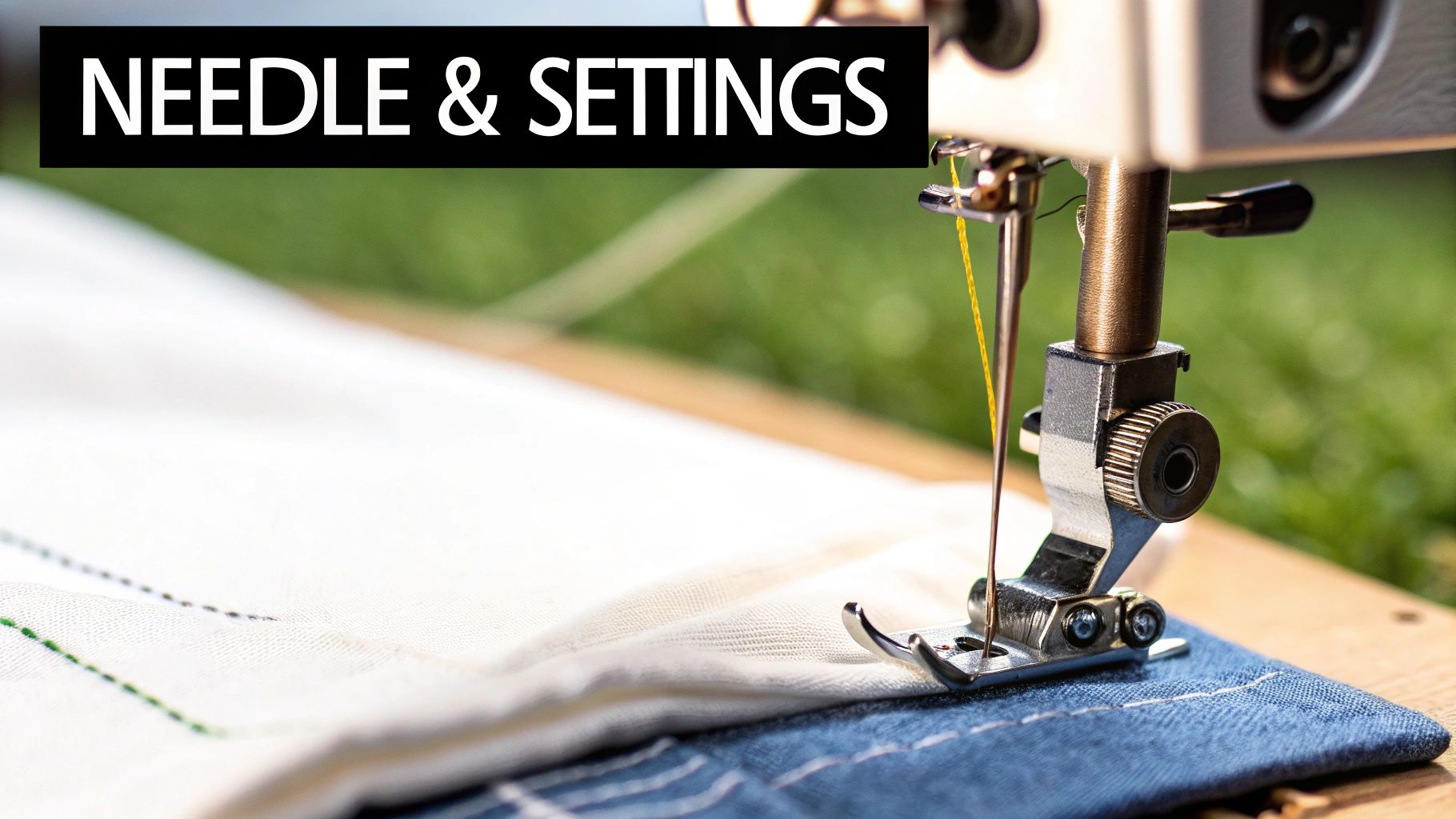
Getting a beautiful, even stitch isn’t just about the thread you choose. It’s really about the perfect partnership between your thread, needle, and machine. Think of it like trying to fit a thick rope through the eye of a tiny needle—it just won’t work. The same logic applies to quilting: your needle's size and type must match your 100% cotton thread to get those smooth, frustration-free stitches we all crave.
When the needle and thread are mismatched, you’re just asking for trouble. A needle that’s too small will shred and snap your thread, while one that’s too big can leave gaping holes in your beautiful fabric. Nailing this combination is the first and most important step toward getting professional-looking results.
This dedication to quality materials is why natural fibers remain so popular. In fact, the global demand for cotton yarn (the stuff our thread is made of) was valued at a whopping USD 82.81 billion in 2023 and is only expected to grow. It just goes to show how much quilters and sewists everywhere appreciate high-quality, natural fibers. You can read more about the global cotton yarn market on fortunebusinessinsights.com.
When you’re quilting with cotton thread, your needle is your most trusted tool. A fresh, sharp needle is key to piercing your fabric cleanly and preventing skipped stitches. My best advice? Always start a new project with a new needle. It's the cheapest insurance policy you can buy for your quilt!
For cotton fabrics and thread, a couple of needle types are your best friends:
Make sure the needle size matches your thread weight. A good rule of thumb is to use an 80/12 needle for 50wt thread and a slightly larger 90/14 needle for thicker 40wt thread. For a deeper dive, check out our comprehensive sewing machine needle guide.
With your needle and thread paired up, it’s time to fine-tune your sewing machine. A few small adjustments to your tension and stitch length can solve nearly any common issue, from puckering fabric to loopy stitches.
A perfectly balanced stitch looks the same on both the top and bottom of your fabric. The top and bobbin threads should lock together neatly right in the middle of the layers. If you see little loops on either side, it’s time to adjust your tension.
Start with your machine’s default settings, but never skip the test run on a scrap of fabric. Because 100% cotton thread has almost no stretch, you might find that lowering your top tension just a bit (say, from a 4.5 to a 4.0) helps the stitches relax into the fabric for a smoother finish.
For stitch length, a setting between 2.0 to 2.5 mm is perfect for piecing—it creates a strong, secure seam. When you move on to topstitching or quilting, a longer stitch of 3.0 to 3.5 mm often looks more decorative and lets the thread's color really stand out. Taking a minute to test these settings before you start sewing will save you hours with a seam ripper later
A quilt isn't just a blanket. It’s a story told in fabric and thread, a piece of art meant to be used and loved. To make sure that story lasts for generations, you have to start with the right care, especially when you’ve used 100% cotton thread.
Cotton is a natural fiber, and it has its own personality. Understanding how it behaves is the secret to keeping your hard work looking beautiful. Both cotton thread and fabric react to water and heat by shrinking just a little bit, and that’s not a bad thing—it’s what gives quilts that classic, cozy look we all adore.
Ever admire an antique quilt and wonder how it got that wonderfully soft, puckered texture? That signature "crinkle" comes from the cotton thread, batting, and fabric all shrinking together at a similar rate the first time it’s washed. This gentle puckering is what creates that cozy, lived-in feel, a true hallmark of a handmade quilt.
For many of us, that crinkle is the whole point! If you're aiming for that beautiful, vintage texture, it couldn't be simpler: just wash and dry your finished quilt. The 100% cotton thread will do its thing right alongside the fabric and batting, pulling everything together into that soft, crinkly finish.
But what if you prefer a flatter, more modern look? You can absolutely achieve that. The trick is to preshrink your materials by pre-washing your fabrics and even your batting before you start sewing. They'll change far less dramatically once the quilt is all stitched up.
There’s no worse feeling than pulling a finished quilt from the wash only to see that a vibrant red has bled all over your crisp white background. This is exactly why testing for colorfastness is one of the most crucial steps you can take, especially when you're working with bold, saturated colors.
A simple five-minute test before you start sewing can save you hours of heartache later. Always test any fabric or thread you're unsure about, particularly reds, deep blues, and blacks.
Here’s a quick and foolproof way to check your thread:
If you find a thread that bleeds, your best bet is to set it aside for another project and choose a different color or brand. Taking this one small precaution is the key to ensuring your colors stay exactly where you so carefully placed them.
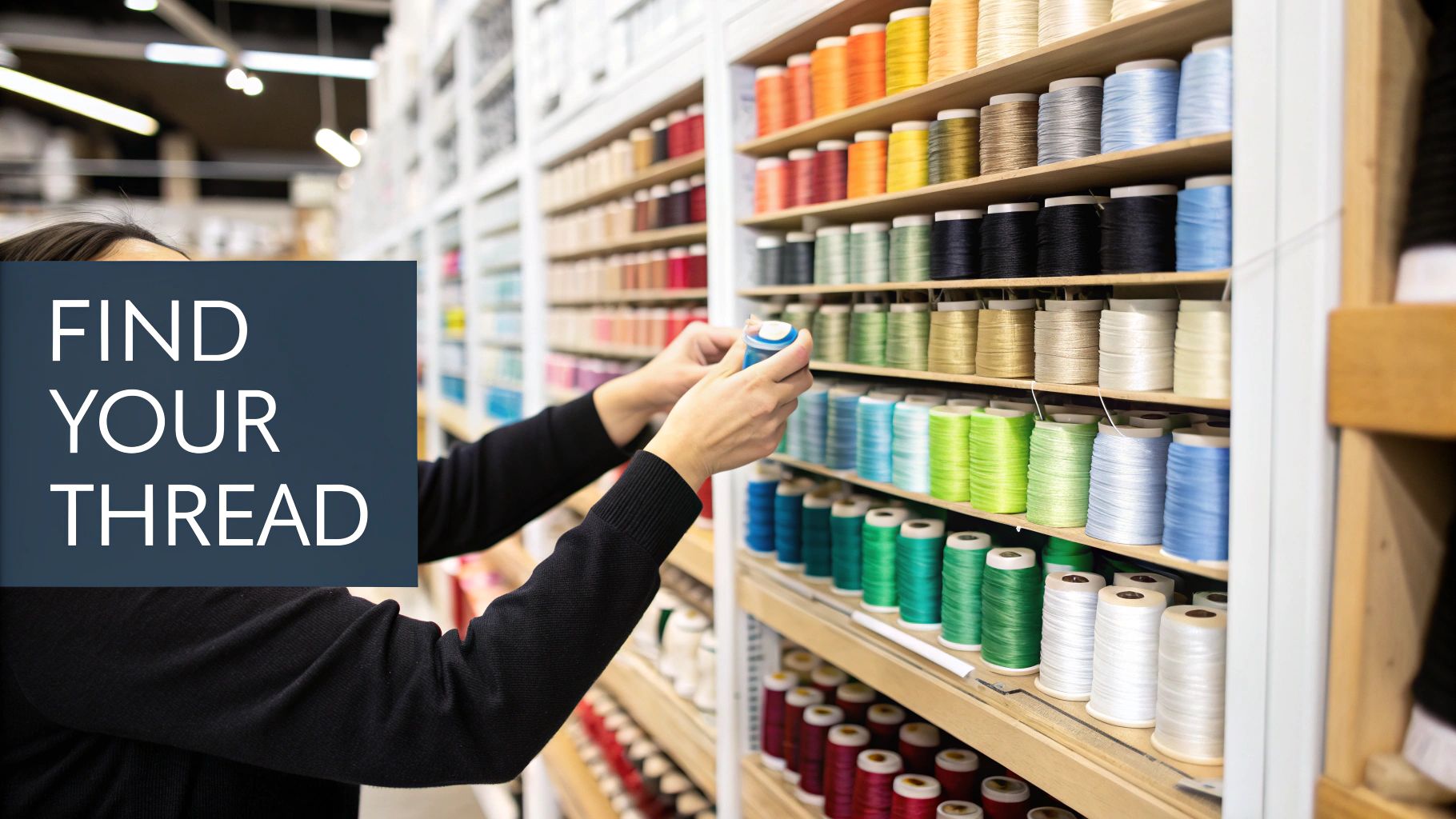
Knowing the difference between thread weights and fiber types is one thing, but actually putting that knowledge to work is where the quilting magic really happens. Here at High Country Quilts, we love closing that gap between theory and your next beautiful project. We don't just sell thread; we use it ourselves, every single day, and have carefully chosen a collection of 100% cotton thread from brands we trust with our own quilts.
Picking the right thread is a lot like choosing the perfect frame for a painting—it’s supposed to complement the artwork, not steal the show. That’s why our team is so dedicated to helping you find the perfect partner for your fabric. When you bring your quilt top into our shop, you’re getting more than a product; you’re working with people who get the subtle details of color, texture, and finish.
Every quilter eventually finds their go-to threads, and our staff is no different. We lean on high-quality options that give us consistent, beautiful stitches with minimal lint, project after project. So, to give you a place to start, here are some of our top picks for different quilting jobs.
For Piecing: We almost always reach for a smooth, strong 50wt cotton. A workhorse thread like Aurifil's Cotton Mako 50wt thread is our top choice. It creates flat, secure seams that won’t add extra bulk, which is a lifesaver for matching those precise points.
For Quilting: When you want the stitches themselves to create texture and pop, a 40wt cotton is fantastic. It has just enough body to add beautiful definition with either walking-foot or free-motion quilting, making your stitches a core part of the design.
For Appliqué: For those delicate jobs where the stitches need to blend in seamlessly, we suggest a fine 60wt or even an 80wt thread. It's so thin that it sinks right into the fabric, making it perfect for invisible stitching by machine or hand.
"There's a special kind of magic in unspooling a fabric bolt and finding the exact thread to make it sing. That’s what we do here—we help you find that perfect harmony. It’s the best part of our day." - The High Country Quilts Team
Reading articles online is a fantastic way to learn, but there’s simply no substitute for seeing the thread right next to your fabric. We’d love for you to stop by High Country Quilts with your latest project. Let us help you audition different shades and weights of 100% cotton thread directly against your quilt top.
Our team can give you personalized advice based on your design, your fabrics, and how you plan to quilt it. We're here to answer your questions, help you solve any problems, and share in the joy of making something beautiful that lasts. Your perfect thread is waiting, and we can't wait to help you find it.
Even quilters who have been at it for years still have questions about the little details of using 100% cotton thread. It’s a wonderful, natural fiber to work with, but every now and then, a tricky situation pops up. Let's walk through some of the questions we get asked most often here at the shop.
Think of this as your go-to guide for those moments when you're staring at your machine, trying to figure out what's gone wrong. These are the solutions we share every day to help folks get back to happy stitching.
You bet! In fact, sticking with the same high-quality 50wt 100% cotton thread for both piecing your top and quilting the layers is a fantastic practice. It’s the true workhorse of the quilting world.
When you're piecing, a 50wt thread gives you seams that are strong but still fine enough to press nice and flat—which is key for getting those points to match up perfectly. Then, when you move on to quilting, that same thread creates beautiful stitch definition without being so thick that it overpowers your fabric.
Our Pro Tip: Using the same fiber for both your quilt top and your quilting thread means everything will wear, wash, and age together. This is the real secret behind that lovely, crinkly, heirloom look and feel that we all adore.
Oh, the dreaded thread break! It's beyond frustrating, but trust us, it's almost always a simple fix. The culprit is usually hiding in one of three places: your needle, your tension, or your thread path.
First things first: change your needle. A dull or damaged needle is the number one reason for thread shredding and snapping. For a standard 50wt thread, a fresh 80/12 needle is your best friend.
Next, take a look at your tension. Cotton doesn't have the same give as polyester, so it can be a little fussy if the tension is cranked up too high. Try dialing back your machine's top tension just a bit. Finally, when was the last time you cleaned out the fluff? Lint building up in the bobbin case or along the thread path can create just enough drag to snap a thread.
For piecing, not at all. You just need a neutral color that will disappear into the seam allowance. A soft gray, cream, or beige works beautifully. We especially love a medium gray because it has an amazing ability to blend into both light and dark fabrics.
When it comes to the quilting itself, though, your thread color becomes part of the design.
You’ll see "mercerized" on a lot of high-quality thread spools. It just means the cotton has gone through a special process that makes it stronger, smoother, and gives it a lovely, subtle sheen.
What does that mean for you? A few really great things. Mercerized 100% cotton thread creates way less lint, which keeps your sewing machine happy and running smoothly. It also glides through your fabric with less friction and takes dye much better, giving you those deep, rich colors that won't fade away.
Ready to find the perfect spool for your next masterpiece? At High Country Quilts, we've curated a collection of the finest threads to bring your creative vision to life. Explore our selection and get expert advice at https://hcquilts.com.
At High Country Quilts we care deeply about community. With our experiences in retail, we know that a store is not only a place to shop but also a place for the community to gather and share. During this busy...

Hi! We’re Adam and Renee Wheaton, the new owners of High Country Quilts! For more than 40 years, we’ve owned and operated vacuum and sewing businesses. Following in Renee’s father’s footsteps after he retired from All Discount Vacuum and Sewing in Colorado...


Leave a comment