

We Love Our Quilting Community
At High Country Quilts we care deeply about community. With our experiences in retail, we know that a store is not only a place to shop but also a place for the community to gather and share. During this busy...


Before you pack up your machine and head out for repairs, let’s talk about a few things you can check right at your sewing table. More often than not, what seems like a catastrophic failure is actually a simple fix you can handle yourself in less than five minutes. A little DIY troubleshooting can save you a trip and the cost of sewing machine repair in Colorado Springs.
I can’t tell you how many times a "broken" machine just needed a new needle. It sounds too simple, but a dull, bent, or incorrectly inserted needle is behind a staggering 80% of common sewing issues like skipped stitches, snagged fabric, and shredded thread. Seriously, check this first. Make sure the flat side of the needle shank is facing the back and that it's pushed up as far as it will go.
Next up is your thread. Take a deep breath and unthread your entire machine—top thread and bobbin. Don't just snip the thread at the spool and pull it through, as this can drag lint into your tension discs. Remove it all and re-thread everything from scratch with the presser foot up. This ensures the thread seats properly in the tension discs, which often solves a whole host of tension headaches.
This handy little flowchart gives you a visual path for figuring out what might be going on.
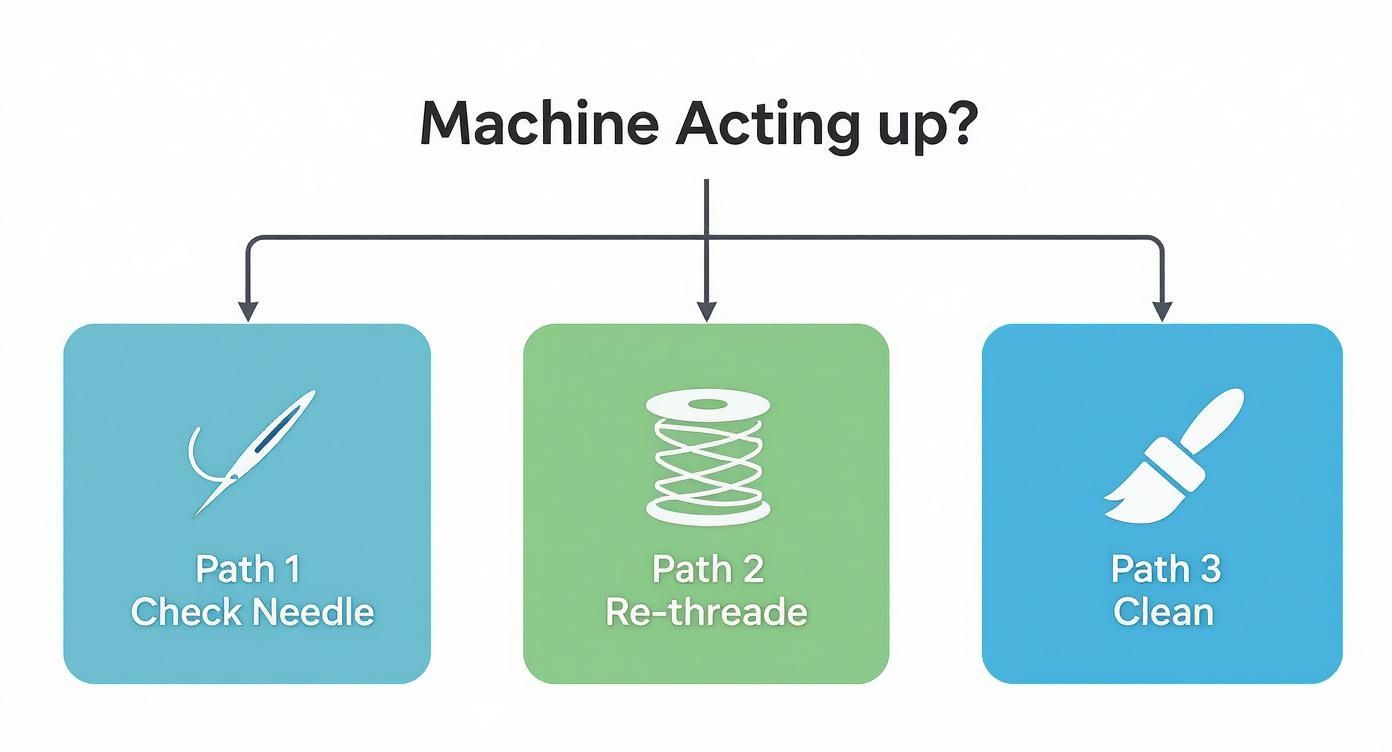
As you can see, the first stops on the troubleshooting train are always the needle, the thread, and a good cleaning. It's the foundation of a happy machine.
Lint is the enemy of a smooth-running sewing machine. Over time, tiny fibers from thread and fabric build up in the bobbin area and under the needle plate, gumming up the works. Grab the little brush that came with your machine and give the bobbin case and feed dogs a thorough sweep.
A Quick Tip from Experience: Never underestimate the power of a fresh start. A new needle, a complete re-threading, and a quick clean-out solve the vast majority of problems I see. It's the magic trifecta.
Sometimes, a quick reference can help pinpoint the problem before you even start taking things apart.
Here's a quick table to help you diagnose what's going on. Think of it as a first-aid guide for your machine.
| Symptom | Potential Cause | What to Check First |
|---|---|---|
| Skipped Stitches | Wrong, dull, or bent needle | Install a new, correct-size needle |
| Shredding Thread | Poor thread quality; needle eye too small | Switch to a quality thread; use a larger needle |
| "Bird's Nests" on Bottom | Incorrect top threading or tension | Re-thread the top with the presser foot up |
| Uneven Tension | Dirty tension discs; incorrect bobbin threading | "Floss" tension discs with thread; re-thread bobbin |
| Machine is Loud | Lint buildup; needs oiling | Clean bobbin area; check manual for oiling points |
Trying these simple fixes first can often get you back to sewing without any fuss.
By working through these basics, you can confidently rule out the simple stuff. For a deeper dive into these fixes and a few more, our complete sewing machine troubleshooting guide is a great resource. If you've tried all this and your machine is still acting up, then you know it's truly time to call in a professional.
When your machine hits a snag that’s beyond your skill set, finding the right person for the job is everything. Honestly, the absolute best place to start looking for sewing machine repair in Colorado Springs is within the local sewing community itself. A good old-fashioned word-of-mouth recommendation is worth its weight in gold.
Next time you’re picking up fabric, chat with the staff at your favorite quilt shop. They’re on the front lines and hear all the feedback from fellow sewists—the good, the bad, and the frustrating. They can usually point you toward a technician who consistently does great work. Our guide to local Colorado Springs quilt shops is a great place to start, as these shops are true community hubs.
Don't forget about local sewing guilds. These are filled with passionate crafters who are fiercely protective of their machines, so they’ll have a trusted technician they swear by. These groups are fantastic for getting honest feedback and maybe even a warning about shops with painfully long wait times or questionable service.
When you take your search online, dig deeper than the first result. Read reviews across a few different sites, but learn to read between the lines. A single grumpy review isn't a deal-breaker—everyone has a bad day. But if you see a recurring pattern of complaints, like surprise charges or poor communication, consider that a major red flag.
The demand for skilled technicians hasn't gone away. Sewing machine repair professionals in Colorado have plenty of work, and a quick look at the Better Business Bureau (BBB) shows several established, specialized shops. You can get more insights on the demand for technicians at ziprecruiter.com.
Once you've narrowed it down to a few names, it’s time to pick up the phone. A quick call can tell you a lot about their professionalism and expertise before you even haul your machine across town. Having a few key questions ready makes it easy to compare your options.
Here’s what I always ask:
Their responses are incredibly revealing. A technician who knows their stuff will be upfront about their experience, pricing, and policies. That transparency is exactly what gives you the confidence that your machine is in good hands.
For more general tips, these resources for finding local businesses can also offer some helpful strategies for your search.
Walking into a repair shop blind can be stressful, especially when you have no idea what to expect on the bill. So, let’s pull back the curtain on sewing machine repair costs in Colorado Springs. Knowing the numbers ahead of time helps you make a confident, informed decision.
Most reputable shops will start with a diagnostic fee, sometimes called a bench fee. Think of it as the cost for the technician's expert eyes to get on your machine and figure out exactly what’s wrong. This usually runs between $40 and $75 and is almost always applied to the final repair cost if you decide to go ahead with the work.
Once the technician has pinpointed the issue, the repair work typically falls into a couple of common categories. This helps set clear expectations for what you're paying for.
The most frequent service is what we call a "Clean, Oil, and Adjust," or COA. This is the essential tune-up every machine needs to stay in peak condition. For a standard mechanical or electronic machine in the Springs, you can expect this to cost somewhere between $90 and $150.
A proper COA isn't just a quick dusting. It involves:
If your machine has a bigger problem—like a burnt-out motor, a broken gear, or a faulty circuit board—the cost will be based on the price of the parts plus labor. Most shops charge an hourly labor rate, often between $60 and $95 per hour.
Here's a dose of reality: if you have a basic, entry-level machine that cost less than $200 new, a major repair might not be the most practical choice. It's a tough call, but sometimes the cost of the repair can approach the price of a brand-new machine. If you find yourself in that spot, our guide on how to choose a sewing machine can help you figure out the best path forward.
Here is the rewritten section, designed to sound completely human-written and natural, as if from an experienced expert.
Around here, a great sewing machine technician isn't just a nice-to-have; they're an essential part of our creative economy. Think about it: the Pikes Peak region is a unique hub for home-based quilters, Etsy crafters, and small businesses cranking out custom outdoor gear. That vibrant mix creates a real, consistent need for expert sewing machine repair in Colorado Springs.
When a machine goes down, it's a hard stop. For a quilter racing to finish a showpiece or a local gear maker on a deadline, a broken machine means creativity and income grind to a halt. The skill needed to keep these machines humming—whether it’s a treasured vintage Singer or a high-tech computerized model—is something you just can't fake.
Let's be honest, modern sewing machines are basically computers. They've got circuit boards, sophisticated sensors, and software that can be a real headache. A timing issue on a computerized embroidery machine, for example, is something you’re just not going to solve with a screwdriver and a YouTube video. It takes specialized knowledge and the right tools.
This is even more true on the commercial side. The industrial sewing market is growing across the U.S., and we see that right here in our local contract sewing and upholstery shops. These businesses rely on perfectly tuned industrial machines to hit their deadlines. You can get a better sense of this growth by checking out the market data on straitsresearch.com.
A skilled technician’s real value is their ability to diagnose problems across this huge range of machines. Their expertise is what keeps our local sewing community—from hobbyists to pros—stitching.
A top-notch repair pro does more than just replace a broken part. They get the little details of different machine types and understand what you, the owner, need from it. That kind of deep knowledge is exactly why finding the right person for the job here in our region is so important.
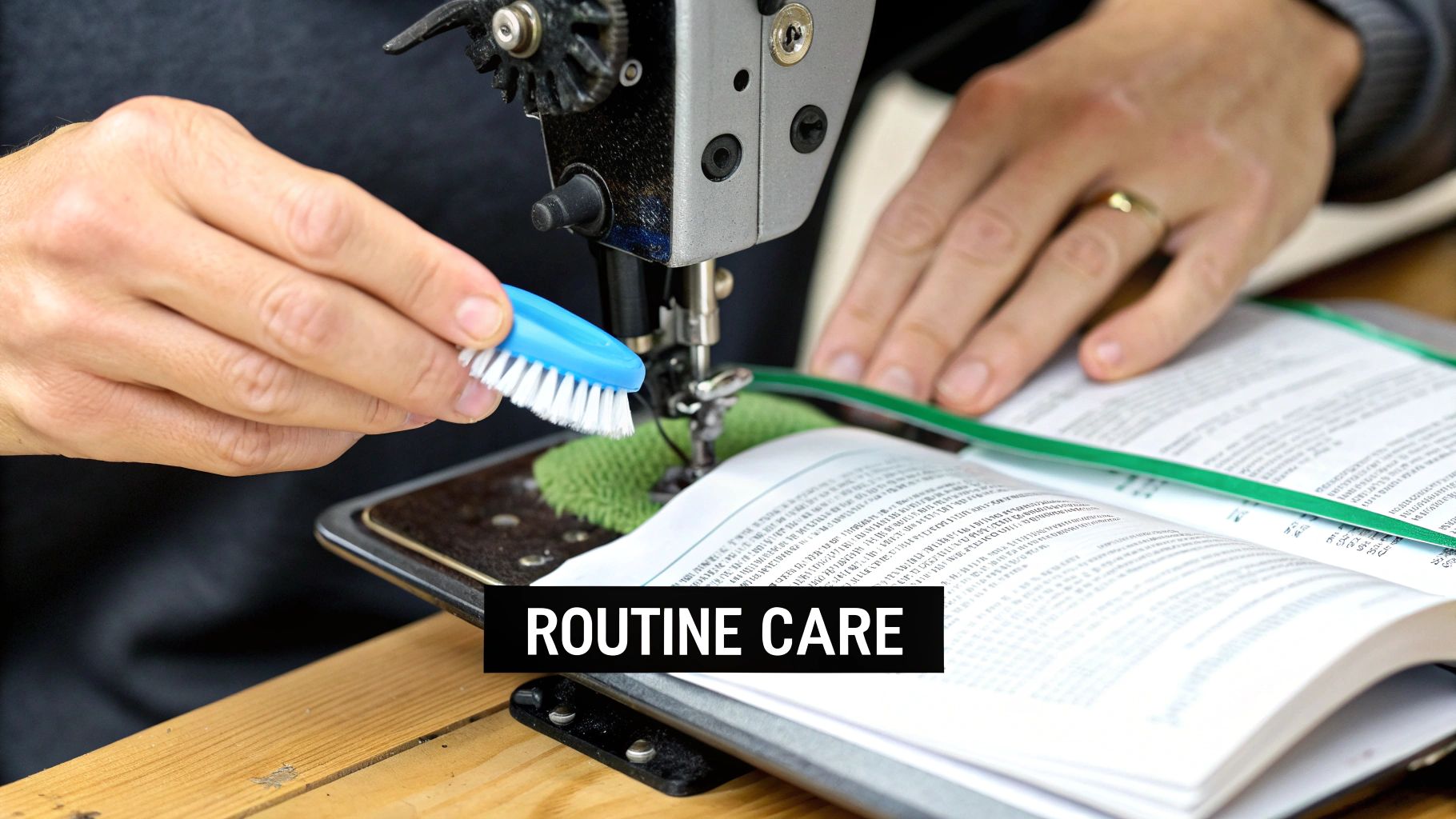
Honestly, the best repair is the one you never have to make. A little bit of proactive care can go an incredibly long way in extending the life of your sewing machine and helping you sidestep those frustrating breakdowns that always seem to happen mid-project.
One of the simplest yet most effective habits? Change your needle often. I tell everyone to start each new project with a fresh needle. It's a cheap and easy way to avoid problems. A dull or bent needle is the culprit behind skipped stitches and damaged fabric far more often than you'd think, and it's easy to mistake for a serious mechanical failure.
Building a simple routine is the secret sauce. Think of these as the essential tasks that prevent the most common headaches that lead people to search for sewing machine repair in Colorado Springs.
Simple, consistent care is your best defense against wear and tear. A clean, well-maintained machine is a happy and reliable one, saving you money on future repairs.
Taking this proactive approach isn't just smart; it's also part of a larger trend. More and more people are choosing to repair their trusty machines rather than replace them. In fact, the appliance and machine repair industry in Colorado Springs has seen steady growth, driven by a desire for sustainability and keeping quality equipment in service. You can learn more about these industry trends and what's behind them in this market research report.
Even after trying every trick in the book at home, it's natural to have a few lingering questions before you pack up your machine and head to a repair shop. Let's tackle some of the most common ones we hear from our fellow sewists here in Colorado Springs.
Think of it like a wellness check-up for your creative partner. If you're sewing almost every day, having a professional look it over annually is your best bet to keep it humming along.
For more casual sewing, maybe a few times a month, a professional tune-up every two to three years is usually plenty. This isn't just a simple cleaning; it lets a technician spot and correct minor issues before they turn into major, project-stopping headaches.
This is the classic dilemma, and honestly, it really depends on the machine itself.
If you've got a vintage workhorse—one of those all-metal Singers or a classic Bernina—the answer is almost always a resounding yes. Those machines were built to last, and a good repair is an investment in a tool that will likely outlive many newer models.
On the other hand, if you're working with an entry-level machine that cost under $200, you might find the repair bill gets uncomfortably close to the cost of a brand new one.
Here's a practical way to think about it: If the repair quote is less than half the price of a comparable new machine, it's usually a smart move to fix the one you already know.
Bringing the right accessories is a huge help for the technician. It allows them to diagnose the problem quickly and accurately because they can test the machine exactly as you use it.
Make sure you pack up these key items:
The most helpful thing you can bring is a fabric swatch demonstrating the exact problem you're having, whether it’s skipped stitches, bird's nests, or wonky tension. Seeing is believing, and it saves a ton of guesswork. Speaking of tension woes, our guide on how to fix sewing machine tension has some great troubleshooting tips.
Whether your machine just needs a routine tune-up or is facing a more complicated issue, the expert technicians at High Country Quilts are here to get you back to stitching perfectly.
Learn more at https://hcquilts.com
At High Country Quilts we care deeply about community. With our experiences in retail, we know that a store is not only a place to shop but also a place for the community to gather and share. During this busy...

Hi! We’re Adam and Renee Wheaton, the new owners of High Country Quilts! For more than 40 years, we’ve owned and operated vacuum and sewing businesses. Following in Renee’s father’s footsteps after he retired from All Discount Vacuum and Sewing in Colorado...


Leave a comment