

We Love Our Quilting Community
At High Country Quilts we care deeply about community. With our experiences in retail, we know that a store is not only a place to shop but also a place for the community to gather and share. During this busy...


You know the feeling. Your quilt top is pressed, your thread matches beautifully, and the first few lines of stitching should be the satisfying part. Instead, the stitches look uneven. Some areas pucker. Others look loose or too tiny. You adjust one setting, then another, and suddenly a simple project feels much more technical than creative.
Most of the time, the issue starts with one basic choice that affects everything else. Stitch length. It sounds small, but it changes how a seam holds, how quilting lines look, and how smoothly your machine handles a quilt sandwich.
For many sewists, this is also the point where online advice stops being enough. A video can show where the button is, but it can’t always tell you why your particular machine is skipping, pulling, or ignoring the setting you just changed. That’s where local, hands-on help matters. If you’ve been searching for a BERNINA service center Colorado Springs quilters can rely on, it helps to understand both the skill side and the machine side together.
A lot of stitch problems look like fabric problems at first. You might blame the batting, the thread, or your pressing. Sometimes those things matter. But often the underlying issue is that the stitch is too long for the job, too short for the layers, or not balanced with the way you’re sewing.

When stitch length is set well, sewing feels calmer. Seams lie flatter. Quilting lines look more intentional. Curves flow better. Even beginners can spot the difference between stitches that are working with the fabric and stitches that are fighting it.
Quilters usually notice stitch length in three places:
The encouraging part is that stitch length isn’t mysterious. It’s a practical tool. Once you understand what it does, you can make smarter choices without guessing.
A simple rule: If your stitches look wrong, don’t start by changing five things. Start by checking whether the stitch length actually fits the task.
This is also where machine support matters. BERNINA owners often want to know whether a stitch issue is a setting issue, a technique issue, or a service issue. Learning that difference saves time, fabric, and frustration. And it builds confidence, which is what every quilter needs when moving from “I hope this works” to “I know what to adjust.”
Stitch length is the distance between one stitch and the next, usually shown in millimeters on your machine. Stitches per inch, or SPI, measures the same line from the opposite direction. It tells you how many stitches fit into one inch of sewing.
That reversal is what trips up many quilters at first.
If your machine is set to a longer stitch length, fewer stitches fit into an inch. SPI goes down. If you shorten the stitch length, more stitches fit into that same inch. SPI goes up. Once that clicks, a lot of machine behavior starts making more sense.
At High Country Quilts, we see this confusion often when someone brings in samples and says, “I shortened my stitch, so why does the seam look busier?” The answer is usually simple. A shorter stitch packs more stitches into the same space, so the line looks denser and more detailed.
A small adjustment can affect both the look of the stitching and the way the seam behaves in fabric.
Quilting asks one machine to do several different jobs. A pieced seam needs to stay secure through pressing and handling. A basting line should come out without a fight. Quilting through batting and multiple layers often looks better with a stitch that has a little more room.
Short stitches place more stitch formations along the seam line. That often gives you cleaner detail and a firmer hold. It can also create problems if the setting is too short for the fabric stack in front of you. Thick layers may start to draw up. The seam can feel stiff. On some quilts, the stitching starts to look pecky instead of smooth.
Longer stitches often behave better on bulkier projects because they travel across the thickness with less crowding. If you have ever quilted through batting and wondered why the machine seems to punch in place rather than glide forward, stitch length is one of the first settings to check.
Your machine forms each stitch one at a time through fabric, thread, batting, and motion. That is why a change that looks tiny on the screen or dial can show up clearly in the finished line.
Many quilters prefer millimeters because that is what the machine displays. Others think in SPI because they learned quilting from charts, classes, or older print guides. Both are useful. You do not need to pick one forever. You only need to recognize that they describe the same result from two directions.
| Term | Plain-language meaning | What you’ll notice |
|---|---|---|
| Stitch length | Space between stitches | The stitches look longer or shorter |
| SPI | Number of stitches in one inch | The stitching looks more dense or more open |
| Short stitch | More stitches packed together | More detail, firmer seam, less flexibility |
| Long stitch | Fewer stitches packed together | Easier removal, softer look, more openness |
If your stitch samples still do not match what the setting should produce, that usually points to something beyond the number on the screen. At that stage, hands-on help matters. That is one reason local BERNINA owners appreciate being able to learn the concept online, then bring the machine or fabric sample to a BERNINA service center in Colorado Springs for real-world guidance.
A quilt rarely asks your machine to do just one job. You might piece the top in the morning, appliqué a border after lunch, and quilt through three layers by evening. Each task asks the stitch to behave a little differently, so the setting that works beautifully in one step can look wrong in the next.

At High Country Quilts, we often remind quilters to treat these numbers like a recipe starting point. You still taste and adjust. In quilting terms, that means testing on the same layers you plan to sew, then nudging the stitch length until the line looks balanced and the fabric still feels right in your hands.
| Quilting Task | Recommended Stitch Length (mm) | Stitches Per Inch (SPI) | Why it usually works |
|---|---|---|---|
| Piecing Fabric Blocks | 2.0 to 2.5 mm | About 10 to 13 SPI | Holds seams securely without making the patchwork too stiff |
| Machine Appliqué | 1.5 to 2.0 mm | About 13 to 17 SPI | Helps curves look smoother and keeps edges tidy |
| Free Motion Quilting | Varies by machine setting and movement | Variable | Stitch appearance changes with your hand speed and machine speed together |
| Walking Foot Quilting | 2.8 to 3.5 mm | About 7 to 9 SPI | Gives the needle a little more room to travel through the full quilt sandwich |
Start with the purpose of the stitch.
If you are piecing, you want a stitch short enough to secure the seam through pressing and handling, but not so short that removing one mistake feels like pulling out staples. Many quilters settle near the middle of the range for everyday patchwork.
If you are appliquéing, shorter stitches usually trace curves more neatly. Small shapes show this quickly. A leaf tip or rounded flower petal often looks smoother at 1.5 to 2.0 mm than it does at a longer setting.
The fabric matters too. Crisp quilting cotton often behaves differently than linen blends, flannel, or batiks. Batting changes the look as well. Loftier batting can make a stitch line appear tighter than the same setting on a flat practice sample.
Free-motion quilting works more like drawing with the needle than standard straight stitching. The machine still forms the stitch, but your hands control how far the quilt moves between needle drops.
That is why one fixed number cannot guarantee one fixed stitch length. If your hands move fast and the needle cycles more slowly, the stitches stretch out. If your hands slow down while the machine keeps stitching quickly, the stitches pack closer together.
A simple practice routine helps:
If the stitches still look uneven after practice, that is often the moment when online advice meets real-life machine setup. Many local quilters learn the concept first, then bring their BERNINA and a sample sandwich to the BERNINA service center in Colorado Springs for hands-on guidance that matches their machine, foot, and quilting style.
Walking foot quilting usually prefers a slightly longer stitch. The needle is traveling through the quilt top, batting, and backing, and a tiny stitch can make the line look crowded or slightly puckered.
A good test is simple. Sew six to eight inches on a practice sandwich made from the same materials as your project. If the quilting line looks tight, pebbly, or overly compact, increase the stitch length a little and try again.
Decorative stitches need their own test run too. Even a small adjustment can change the shape of the motif. One setting may make the design look dense and heavy. Another may open the pattern enough to show the detail cleanly.
That kind of comparison work builds confidence fast. It also gives you a much clearer sample to bring in if your machine still is not producing the stitch you expect.
You sit down to quilt a practice block, tap the stitch length button, and sew a few inches. The stitches still do not look the way you expected. In class, this is one of the most common sticking points we see at High Country Quilts. The setting itself is usually easy to change. The hard part is knowing which control changed, whether the machine saved that choice, and how to test it in a way that gives you a clear answer.

Most machines adjust stitch length in one of three places. You may turn a dial, press plus and minus buttons, or use a touchscreen menu. Mechanical models usually show the setting on a numbered dial. Digital models usually show the active stitch and its current values on screen, which is helpful, but it also gives you more than one place to check.
Use this order each time:
That order saves a lot of frustration.
BERNINA machines often give you very precise control, which is one reason quilters love them. The tradeoff is that you may be working with a default stitch, a temporarily edited stitch, or a saved personal version. If the machine keeps returning to a number you did not expect, the setting may be stored in memory rather than lost.
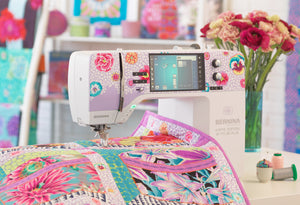
On many BERNINA models, the multi-function knobs make this easier because you can adjust settings without digging through every menu. That is especially useful when you are sewing a test line, stopping, changing the number, and sewing again.
A good comparison is a car seat setting. If one driver saves a position and another adjusts it for a single trip, the car may return to the stored setting later. Your machine can behave in a similar way with stitch variations. Once quilters see that pattern, the controls make much more sense.
That hands-on explanation is often what turns online advice into real confidence. At High Country Quilts, many BERNINA owners come in after watching tutorials and reading guides, then get faster results when someone can point to the exact screen, knob, or saved setting on their machine.
If you learn best by watching the sequence, this visual walkthrough can help reinforce the hand motions and menu logic.
Small adjustments matter most when you can repeat them on purpose. Write down the setting that worked on your sample, especially for specialty threads or unusual batting.
If your machine will not keep the setting, skips past the adjustment, or stitches differently than the screen suggests, stop and check the setup methodically. A saved stitch variation, the wrong stitch mode, or a service issue can all cause that mismatch.
A stitch never works alone. It forms through fabric, thread, batting, needle, pressure, and movement. When one part changes, the others react. That’s why a stitch length that looked perfect on pieced cotton can suddenly look awkward on a quilted wall hanging with loftier batting.
A quilt sandwich is bulkier than two plain pieces of fabric. The needle has to travel through more material, and the thread has to settle into a thicker stack. In many cases, a slightly longer stitch gives the machine room to form a cleaner line.
You can often see this in straight-line quilting. A setting that looked crisp during piecing may look cramped once batting is added. The stitches can appear too tight, and the fabric may draw upward between penetration points.
Try thinking in terms of “space to travel”:
Thread creates texture. A finer thread tends to sink into the quilt more subtly. A heavier or more decorative thread stands out and becomes part of the design.
That affects stitch length in a very practical way. If you use a heavier decorative thread with a very short stitch, the line can look crowded. The texture may become thick and compact rather than elegant. If you use a fine thread with a slightly longer stitch, the line may look soft and understated.
A useful habit is to ask two questions before you begin:
If you want the thread to show, you may prefer a stitch length that lets each stitch be seen distinctly. If you want a subtle result, a finer thread and balanced stitch length often help the quilting texture read as a surface pattern rather than a thread statement.
Some stitch issues aren’t “bad stitching.” They’re simply a mismatch between the thread’s visual weight and the stitch length you chose.
Tension controls how the top and bobbin threads meet inside the layers. Stitch length influences the spacing. Speed affects how consistently the stitch forms while the machine is in motion. In free-motion quilting, your hand movement adds another variable.
When people say their free-motion stitches look wildly different from one area to another, they’re often seeing a combination of:
This is why practice sandwiches are so valuable. They let you test the whole system, not just one number on the screen.
When the stitch line looks off, check in this order:
| Check first | What to look for | Why it matters |
|---|---|---|
| Fabric and batting thickness | Flat or lofty sandwich | Bulk changes how the stitch forms |
| Thread choice | Fine, standard, or decorative | Thread weight changes texture and visibility |
| Stitch length | Too dense or too open | Spacing affects both look and movement |
| Tension balance | Loops, pulling, or imbalance | Threads must meet properly inside the layers |
| Sewing speed | Smooth or inconsistent rhythm | Motion changes visible stitch length, especially in FMQ |
This systems mindset makes quilting less frustrating. Instead of asking, “What number should I use?” you start asking, “What combination does this project need?”
You finish a line of quilting, hold the project up, and wonder why one area looks packed and tiny while the next looks loose and long. That moment can feel discouraging, especially when you are sure you used the same machine and the same setting the whole time. The good news is that stitch-length problems usually leave clues. Once you know where to look, they become much easier to solve.
At High Country Quilts, we see this often. A quilter learns a setting online, tries it at home, and still gets results that do not match the sample. Usually, the missing piece is not effort. It is knowing whether the problem comes from technique, setup, or the machine itself.
Symptom
Your free-motion stitches look tiny and dense in one area, then suddenly long in another.
Likely causes
Your hand movement and machine speed are out of sync. If the machine keeps stitching while your hands pause, stitches stack up close together. If your hands move faster than the needle cycles, the stitches stretch out. Gripping the quilt too tightly can also slow the fabric in subtle ways.
What to try
Use a practice sandwich with a few drawn loops or curves. Keep your foot pedal at a steady, comfortable speed and aim for smooth hand movement, not fast hand movement. A good comparison is driving on snow. Gentle, even motion gives you more control than sudden starts and stops. If your shoulders are creeping up toward your ears, pause and relax them before you sew another line.
Symptom
Straight quilting lines look inconsistent, especially when crossing seams or thicker spots.
Likely causes
The stitch length may be too short for the bulk of the quilt. Thick intersections ask the machine to climb and feed at the same time, and that can change how each stitch lands. Uneven feeding can also come from lint, a dull needle, presser foot pressure that needs adjustment, or wear inside the machine.
What to try
Increase the stitch length a little and test on the same quilt sandwich. Then re-thread, put in a fresh needle, and clean out visible lint around the bobbin area and feed dogs. If the machine struggles in the same way on more than one project, treat that as a pattern, not a fluke.
Symptom
You change stitch length, but the stitch on fabric barely changes or does not change at all.
Likely causes
You may be testing a stitch pattern that has only a small adjustment range. Some machines also store settings or activate specialty features that affect what you see on the fabric. Sometimes the issue is mechanical, especially if the controls and the stitch result no longer match.
What to try
Switch to a basic straight stitch and test again on plain woven cotton. Change the length in clear steps so the difference should be easy to see. If the stitch still does not respond, stop chasing settings. That is usually the point where a technician should inspect the machine.
When a machine behaves differently than its controls suggest, the problem may be inside the machine, not in your technique.
A healthy machine should respond predictably. If you have already changed the needle, thread, stitch setting, and your sewing approach, but the same problem keeps returning, home troubleshooting has probably done its job.
At that point, a service appointment makes sense because stitch formation depends on parts you cannot fully assess from the sewing table. A technician can check timing, feed performance, internal buildup, and how the machine forms stitches under load. Those are the kinds of issues that can make stitch length look inconsistent even when your settings are reasonable.
That local, hands-on support is the piece many quilters need most. Online advice can tell you what to test. An authorized BERNINA service center in Colorado Springs can help confirm why the machine is responding the way it is and get you back to stitching with confidence.
Your stitch length looks right on the screen, but the sample in front of you still looks off. That is usually the moment a quilter realizes online advice has taken them as far as it can. A local service bench can answer the next question, which is whether the machine is responding correctly inside, not just whether the setting was chosen correctly.
At High Country Quilts, that hands-on step matters. As an authorized BERNINA service center in Colorado Springs, the shop provides maintenance, repair, and model-specific support for BERNINA sewing and embroidery machines. For BERNINA owners, authorization means the machine is being checked by technicians trained to work within the BERNINA system, using the correct procedures and parts for that brand.
A sewing machine is a little like a quilt block with many layers. From the top, a stitch problem can look simple. Underneath, feed movement, hook timing, thread path, sensors, and wear all have to work together. An authorized BERNINA technician is trained to read those layers in the way the manufacturer intends.
That matters in a few practical ways:
BERNINA's long history also helps explain why proper service matters. The company has been making machines since 1893, and many owners choose them because they expect years of use. Regular maintenance supports that long-term reliability.
The first question is usually simple. How long will my machine be gone?
Turnaround can vary by machine model, parts availability, and the kind of repair needed. For that reason, it is better to ask the service desk for the current schedule than rely on a generic national estimate. High Country Quilts can give you the most useful answer because it reflects the actual workload in Colorado Springs, not a broad average from somewhere else.
The second question is what to bring. In most cases, bring the machine, power cord, foot control, and any accessory related to the problem. If the issue shows up only during embroidery, include the embroidery unit. If it happens with a particular foot or technique, bring that too. That gives the technician a better chance to reproduce the problem instead of guessing.
Cost is another common concern. Service charges, bench fees, and approval limits can vary by shop and by repair type. If you want exact numbers, ask High Country Quilts for its current service policy when you drop off the machine. That is the clearest way to know what applies to your model and your repair.
For many local sewists, that is what searching for BERNINA service center Colorado Springs really means. They already learned the basics online. Now they want a trained person to look at the machine, confirm what is happening, and help them get back to quilting with confidence.
Yes. In general, shorter stitches place more stitches into the same distance, so they use more thread than longer stitches over that same line. You don’t need to calculate it precisely for everyday quilting, but it helps explain why dense quilting and tiny appliqué stitches can go through thread faster than basting or longer straight quilting lines.
Sometimes, yes. On many machines, a zero or near-zero length setting is used for tasks like reinforcing a spot, creating a bar tack effect, or sewing in place. It’s usually not meant for regular seam sewing or quilting lines. If you accidentally leave the machine there, it can look like the machine is “not moving forward” properly when it’s sewing exactly as instructed.
Because the stitch is being formed under different conditions. In regular stitching, the feed system moves fabric at a controlled rate. In free-motion quilting, you move the fabric yourself. That means the visible stitch length depends on your hand motion and machine speed working together, which is why free-motion stitches often vary more until your rhythm settles in.
Not always. A shorter stitch can make a seam more secure, but too-short stitches in thick layers can create stiffness or puckering. Strength and appearance have to work together. For quilts, the right choice depends on the task, the layers, and the thread.
Start with a scrap test, a fresh needle, and correct threading. If the machine still forms poor stitches or won’t respond predictably, the issue may be mechanical rather than user error.
If your stitches still aren’t behaving the way they should, bring your questions and your machine to High Country Quilts. We can help you sort out whether you need a setting change, hands-on instruction, or professional BERNINA service so you can get back to quilting with confidence.
At High Country Quilts we care deeply about community. With our experiences in retail, we know that a store is not only a place to shop but also a place for the community to gather and share. During this busy...

Hi! We’re Adam and Renee Wheaton, the new owners of High Country Quilts! For more than 40 years, we’ve owned and operated vacuum and sewing businesses. Following in Renee’s father’s footsteps after he retired from All Discount Vacuum and Sewing in Colorado...


Leave a comment