

We Love Our Quilting Community
At High Country Quilts we care deeply about community. With our experiences in retail, we know that a store is not only a place to shop but also a place for the community to gather and share. During this busy...


Last Updated: October 10, 2026
Choosing where to buy high quality fabric is one of the most important decisions a quilter or sewer can make. The difference between premium fabric and mass-market alternatives shows up immediately in how your finished projects look, feel, and hold up over time. High-quality fabrics feature tighter weaves, better color fastness, and superior hand feel that transforms your sewing experience from frustrating to genuinely enjoyable.
Quality fabric costs more upfront but saves time, frustration, and money long-term. Premium quilts retain colors and structure for decades; low-quality ones fade, pill, and distort within years.
The best online fabric stores offer extensive designer collections, detailed product descriptions with fiber content clearly stated, and straightforward shipping policies.

High Country Quilts maintains an online catalog of over 20,000 products, featuring carefully selected fabric lines from trusted designers and mills.
Reputable retailers provide transparent fiber content, width, and care instructions upfront.
| Fabric Store Type | Best For | Key Features |
|---|---|---|
| Specialty online retailers | Dedicated quilters | Designer collections, detailed specs, expert support |
| Local brick-and-mortar with online | Community connection | Samples available, expert advice, immediate gratification |
| Large fabric marketplaces | Budget shopping | Wide selection, competitive pricing, variable quality |
| Designer direct sites | Premium fabrics | Newest collections, exclusive prints, higher price points |
High-quality quilting fabric is 100% cotton, typically 44-45 inches wide, with balanced weave that creates a smooth, stable surface for piecing and allows needles to pass through cleanly.
Look for consistent color saturation and print registration. Hand-dyed batiks show natural variation that should feel intentional and beautiful, not like a defect. The fabric should have a soft hand, pleasant to touch without being limp or flimsy.

Cotton dominates quilting because it's stable, forgiving, and takes dye beautifully. Linen adds structure, wool provides warmth and drape, and silk brings luxury and sheen.
Ethically sourced fabrics from designers working directly with artisan communities ensure your purchases support fair wages and traditional craft methods.
Pellon 300TC Long Staple Cotton Embroidery Fabric represents the premium end of natural fibers, with longer fibers creating a smoother, more durable fabric than short-staple alternatives.
Designer collections command higher prices because designers invest in developing color palettes, testing print techniques, and ensuring prints coordinate across colorways, resulting in predictable piecing behavior.
Premium collections offer hand-touched prints and carefully curated colors that save time because the designer has already solved the color coordination problem.
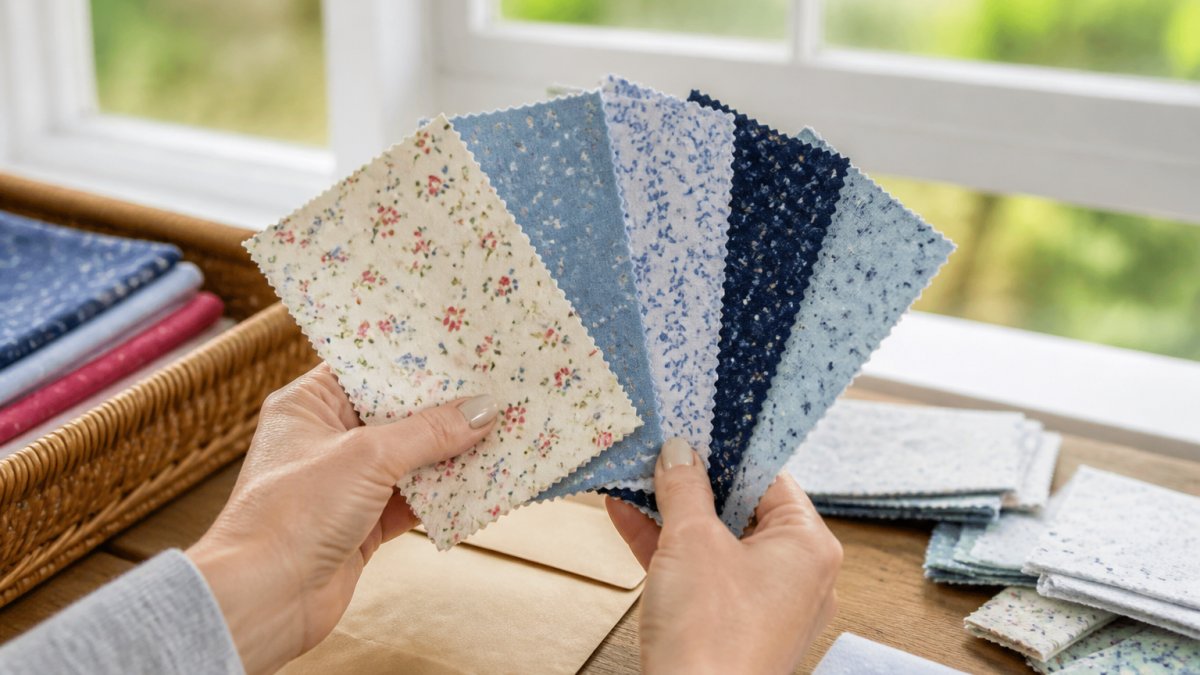
Requesting fabric samples before committing to yardage protects you from color surprises, texture disappointments, and mismatched expectations between screen images and physical fabric.
Reputable retailers allow you to request small cuts that arrive quickly and cost far less than full yardage.
Examine samples in natural daylight, artificial light, and next to other project fabrics, as colors shift with lighting and texture varies from crisp to soft.
Understanding fabric pricing requires matching fabric properties to your project type and calculating total cost, not just per-yard price.
Quality quilting cotton ranges from $11.99 to $15.99 per yard, reflecting premium fiber and quality control. Budget fabric costs $6-$9 per yard but requires re-washing, shifts during piecing, and fades within years.
Designer collections and hand-dyed batiks cost $14-$18 per yard due to limited print runs and artisan dyeing. Specialty fabrics range from $18-$35 per yard. Wideback fabrics (108 inches wide) cost $16-$22 per yard and eliminate piecing backing.
Yardage Requirements by Project Type:
Minimum Cut and Waste: Many retailers have 0.5-1 yard minimums; some offer 0.25-yard minimums for flexibility. Most projects require 5-10% extra yardage for shrinkage and errors.
Shipping Impact: Shipping costs can raise per-yard cost significantly. Ordering larger quantities or combining projects reduces shipping cost per yard.
Fabric by the Yard: Most flexible format for custom projects and coordinating multiple fabrics.
Pre-Cut Bundles: Fat quarters (18" × 22"), charm packs (5" × 5" squares), and layer cakes (10" × 10" squares) cost 10-20% more per yard but save time sorting and cutting.
RK Taupe Cotton Jersey Knit 58in Wide →
Wideback Fabric: 108-inch-wide fabrics designed for quilt backs. A 10-yard bolt costs $160-$220 and saves 2-3 yards per quilt compared to piecing.
Fabric Samples: Packs of 5-10 cuts cost $8-$15 and test colors and textures before committing to yardage.
Selection depth matters only if the retailer organizes inventory well. Look for filtering by fiber content, collection, and color; detailed product photos; and searchable descriptions with fiber content, GSM, width, and care instructions. These tools reduce decision fatigue and help you make confident purchases.
For a medium quilt (6-8 yards): budget costs $56 total, mid-range $104, premium $136. Over 10-20 years, premium fabric's superior colorfastness and durability often justify the upfront cost.
If budget is tight, use premium fabric for visible pieces and mid-range fabric for backing and binding to reduce total cost.
This decision depends on your priorities, timeline, and comfort level with online shopping. In-store shopping offers immediate gratification, expert guidance, and the ability to examine fabric under proper lighting with your own hands. You walk out with your purchases the same day, and you can ask questions in real time.
Online shopping offers convenience, broader selection, and the ability to shop on your schedule. You can take time comparing options without feeling rushed. The tradeoff is waiting for shipping and the possibility of color surprises despite detailed product photos.
Many experienced makers use both approaches strategically. They shop online for basics and known quantities, then visit a store when they need expert guidance, want to see new collections in person, or need immediate supplies. Our two Colorado locations serve as project centers where makers of all skill levels find inspiration, education, and community alongside retail shopping.
Verifying fabric quality requires understanding the specifications that determine how fabric will perform in your finished project. Most shoppers focus on price and appearance, but professional makers and experienced sewers evaluate a deeper set of measurable properties.
Thread Count and Weave Density Thread count refers to the number of threads per square inch. For quilting cotton, a quality standard is 180-220 threads per inch. Hold fabric up to natural light and examine the weave: you should see a tight, even grid with no visible gaps. A loose weave indicates the fabric will shift during piecing and may not hold seams securely. Conversely, a weave that is too tight can be difficult to needle and may cause thread breakage.
Weight and GSM GSM (grams per square meter) measures fabric weight and density. Quilting cotton typically ranges from 120-150 GSM. Heavier fabric (150+ GSM) offers more structure and durability, making it ideal for quilts and upholstery. Lighter fabric (under 120 GSM) drapes better and suits garments, curtains, and delicate projects. Retailers who provide GSM specifications are demonstrating transparency about their product quality.
Fiber Content and Staple Length Read fiber content carefully: genuine quilting cotton should be 100% cotton or a clearly disclosed blend with stated percentages. Long-staple cotton (such as Pima or Egyptian cotton) produces smoother, more durable fabric than short-staple varieties because longer fibers create fewer surface irregularities and pill less easily. Staple length is rarely printed on retail labels, but premium fabric retailers often mention it in product descriptions.
Weave Type Most quilting fabric uses a plain weave (over-under pattern), which is stable and forgiving. Twill weaves (diagonal pattern) offer more structure and are common in denim and home décor fabrics. Sateen weaves (floating threads) create a lustrous surface but are less stable for piecing. Understanding which weave suits your project prevents purchasing the wrong fabric type.
Colorfastness, the fabric's resistance to fading and color bleeding, is one of the most important quality markers. Quality fabric manufacturers use dyes that bond permanently to fibers, while budget fabrics often use surface dyes that wash out or bleed onto adjacent colors.
When you receive fabric samples, test colorfastness by dampening a corner with cool water and pressing it against a white paper towel. If color transfers to the paper, the fabric has poor dye stability. This is especially critical for hand-dyed batiks and dark solids, which are more prone to bleeding. Reputable retailers will note if a fabric requires a color-catcher sheet or pre-washing before use.
Print registration refers to how accurately the design aligns with the fabric weave. In high-quality fabric, pattern edges are sharp and colors do not bleed into adjacent areas. Examine the selvage (fabric edge) where manufacturer information is printed: if that text is crisp and clear, the printing equipment is well-maintained and the fabric likely has good overall registration.
For multi-color prints, check that colors are evenly saturated across the entire piece. Uneven color saturation suggests inconsistent dyeing or printing, which can result in visible color variation between cuts from the same bolt. This matters most for projects where multiple pieces need to match, such as quilt borders or coordinated garments.
Quality fabric retailers provide complete care information: water temperature, whether the fabric requires pre-washing, and any special handling needs. Fabric with a finish treatment (such as sizing for crispness or a starch coating) should be labeled clearly. Some finishes wash out after the first use, which is normal; others are permanent. Understanding these details prevents surprises after you've invested time in a project.
Before purchasing, verify the retailer's return policy for defects. Reputable sellers accept returns if fabric arrives with visible flaws (holes, stains, weaving errors, or color bleeding), and they typically do not charge restocking fees for defective merchandise.
You can buy high-quality quilting fabric from dedicated online fabric retailers that specialize in natural fibers and designer collections. High Country Quilts offers over 20,000 products online and in-store, including premium quilting cotton from Art Gallery Fabrics, Riley Blake Designs, and other established textile artisans. Look for retailers that provide detailed fiber content, width specifications, and care instructions, and verify they source from reputable fabric manufacturers.
Examine the thread count and fiber content, high-quality quilting fabric is typically 100% cotton or blended with natural fibers like linen or silk. Check the weave density by holding it to light; tight, even weaves indicate better quality. Quality fabrics have a smooth finish, consistent dye lots, and no loose threads or irregularities.
Yes, samples let you verify color accuracy under your own lighting, test how the fabric feels in your hands, and confirm it works with your design vision.
High-quality quilting fabric typically ranges from $11.99 to $17.49 per yard depending on the designer, fiber content, and collection. Art Gallery Fabrics solid quilting cotton starts at $11.99 per yard, while premium designer batiks and specialty collections run $13.49 to $15.99 per yard. Wide-back fabrics for quilt backing measure 108 inches wide and cost $17.49 per yard. Specialty knits and embroidery-weight fabrics vary by fiber composition and intended use.
At High Country Quilts we care deeply about community. With our experiences in retail, we know that a store is not only a place to shop but also a place for the community to gather and share. During this busy...

Hi! We’re Adam and Renee Wheaton, the new owners of High Country Quilts! For more than 40 years, we’ve owned and operated vacuum and sewing businesses. Following in Renee’s father’s footsteps after he retired from All Discount Vacuum and Sewing in Colorado...


Leave a comment