

We Love Our Quilting Community
At High Country Quilts we care deeply about community. With our experiences in retail, we know that a store is not only a place to shop but also a place for the community to gather and share. During this busy...


You know the moment. A length of fabric is draped over the dining table, half of it sliding off the edge, the pattern piece is hanging in midair, and you're trying to hold a ruler, a rotary cutter, and your patience at the same time. A lot of sewists start there. Many of us did.
The trouble isn't just inconvenience. Small mats and makeshift cutting surfaces push fabric off grain, make long cuts choppy, and leave your back sore before the sewing even begins. If you've ever cut on the floor, then stood up feeling about twenty years older, you already know the problem.
A proper large cutting surface changes that. It gives fabric room to rest flat, gives your ruler a stable lane, and gives you the confidence to cut once instead of trimming and correcting later. It also helps protect the table underneath, which matters if you're trying to maintain furniture quality while sewing in a shared room instead of a dedicated studio.
The first time a sewist uses a large self-healing mat on a sturdy table, the difference is immediate. Wide fabric stops drooping off the edge. Long strips can stay aligned. Pattern pieces don't need to be shuffled every few inches. The work feels calmer because the setup finally matches the project.

For garment sewing, that means smoother curves and cleaner hems. For quilting, it means less fuss when sub-cutting strips, squaring units, or trimming yardage. Large mats earn their space because they reduce the small errors that pile up over a project.
A big mat doesn't make someone more careful. It makes careful work easier.
When your fabric can lie flat across the surface, your ruler sits more securely and your rotary cutter travels in one clean line. That alone improves the whole rhythm of cutting. You spend less time repositioning and more time making pieces that fit together the first time.
Practical rule: If the mat is too small for the cut, the cut starts controlling you instead of the other way around.
There's another benefit beginners often underestimate. A large cutting station is easier on the body. Standing at table height with the fabric fully supported is a different experience from kneeling on the floor and crawling around pattern pieces. The work is more accurate, but it's also more pleasant. That matters because comfortable sewing rooms get used more often.
Quilters tend to feel the upgrade sooner because so much quilting depends on repeatable cuts. Long strips, block trimming, border preparation, and general fabric handling all benefit from a mat that stays flat and gives you visible measuring lines across a broad area.
A large self-healing mat also turns a general-purpose table into a cutting station with a real job. Instead of protecting the surface with cardboard, old paper, or luck, you've got a reusable work layer designed for rotary cutting. That shift sounds small, but it changes how confidently you approach bigger projects.
Here's where the revolution really happens. You stop planning projects around your limitations. You start planning them around what you want to make.
A good mat should match the way you cut, not just the space you have. For a project like a summer evening cape, that difference shows up fast. Long hem curves, wide pattern pieces, and slippery fabric all go more smoothly when the mat fits both your table and your habits.

Measure your table before you shop. Then measure the kind of cut you make most often.
For large-table workflows, commercial large-format mats commonly start at 24" x 36" for quilting, and the practical way to choose is to measure the widest fabric width you routinely cut, then leave room for ruler placement and rotary cutter travel without edge overhang, as noted in this large-format mat sizing guidance.
That extra margin matters in real sewing rooms. If your ruler lands half on the mat and half off, your hand position changes and your cut gets less steady. On cape fabrics like rayon blends or chiffon overlays, one wobbly pass is enough to turn a clean edge into a trimming job.
Use this quick check before you buy:
If you like efficient layout planning before the first cut, this step-by-step zero waste tutorial is a smart reference.
For self-healing cutting mats for large tables, 3 mm is widely treated as the minimum durable thickness for quilting and sewing use because thinner mats are more likely to let rotary blades slice through or warp under repeated use, according to this guide to choosing the right cutting mat.
I tell students to treat thickness as a working feature, not a spec sheet detail. On a big table, a thin mat shows every flaw underneath it. A thicker mat stays calmer under pressure, especially during long straight cuts or when trimming several layers.
| Feature | What works | What usually disappoints |
|---|---|---|
| Thickness | 3 mm or thicker for regular rotary use | Very thin mats that flex easily |
| Support | Full table support under the entire mat | Overhang, seams, uneven folding tables |
| Use pattern | Shallow, controlled cuts | Heavy pressure and repeated deep scoring |
Self-healing describes how the surface responds to careful rotary cutting. Modern mats typically rely on a multi-layer structure, often with a harder core and softer outer layers, or on a semi-solid surface made from tiny pressed particles that let the blade pass and the surface close back up afterward, as explained in this material overview of cutting mats.
The mat is still a wear item. Shallow cuts close up far better than deep, forceful ones.
A mat can recover from careful cutting and still wear out early under heavy pressure.
That is why the label alone is never enough. Check the ply information if the maker provides it. Look at thickness, surface feel, and whether the mat is built for repeated rotary use or lighter craft work. A budget mat may be fine for occasional paper patterns, but a cape project with long flowing pieces asks more from the surface.
Large heavy-duty mats are often made from polymer plastic or urethane rubber, and some large-format examples are specified at 1/4" thick or 180-gauge (3/16") polyethylene, which is why thicker mats tend to resist telegraphing and warping better on broad tables, based on these large-format construction notes.
Heavier is not always better. A thick mat can feel excellent on a permanent cutting table and annoying if you need to lift it after every session. If your sewing room doubles as the dining room, weight and portability matter. If your table stays set up, I would choose stability first.
High Country Quilts carries mats in the size range many sewists use for quilting and garment work, so it helps to compare dimensions and thickness side by side before buying.
The best choice is usually the mat you will keep on the table and use with confidence. For a summer cape, that means enough surface for graceful pattern pieces, enough thickness for repeated rotary cuts, and grid lines you can trust when the fabric starts to shift.
Late afternoon light, slippery fabric, a fresh rotary blade, and a cape pattern spread across the table. In such a situation, a large self-healing mat stops being a nice extra and starts proving its value. A summer evening cape is one of the clearest ways to see the difference, because the project asks for long hems, calm handling, and pattern pieces that do not forgive a crooked start.

Choose a pattern with a few generous pieces instead of lots of fussy sections. That lets the fabric drape the way it should and gives the mat room to do its job. Voile, rayon blends, and chiffon overlays all make a lovely warm-weather cape, but they slide, twist, and creep if the cutting surface is too cramped.
If you enjoy low-waste layout ideas, this step-by-step zero waste tutorial is a useful creative reference before you start placing pieces.
Good cutting starts before the blade touches cloth.
Press the fabric first, then let it rest flat on the mat for a minute if it has been folded tightly. I tell students this all the time. A cape can look simple on paper, yet one stretched edge or one shifted fold can show up later as a neckline that refuses to sit smoothly.
A steady setup for this project usually includes:
On a large mat, there is room to smooth the cloth, check the grainline against the grid, and correct the fold without rebuilding the whole layout every few minutes. That matters more on a cape than many beginners expect.
Use a fresh blade, light pressure, and one confident pass whenever possible. Those three habits give cleaner edges and are easier on the mat surface.
The most common mistake is forcing the cut. If the blade drags, stop and fix the problem. Change the blade, resettle the ruler, or smooth the fabric again. Pressing harder usually leaves a rougher edge and a less accurate line.
Use a sharp blade and let it glide. If you feel the need to force it, correct the setup before you cut the next inch.
For a summer cape, cut the longest straight sections first while the fabric is still undisturbed. After that, move to the neckline and the hem curves. If your pattern has front ties, a slit, or a shaped opening, cut those details once the larger body pieces are free and easier to turn.
Cape fabric loves to drift at the wrong moment. A broad mat gives the fabric somewhere to stay. That is the main advantage.
Here is what improves during a project like this:
This is also where the mat connects the buying decision to the pleasure of sewing. A large self-healing surface is not just a table protector. It helps turn a flowing cape from a nervous cutting job into a project you can enjoy.
High Country Quilts carries rotary cutters and lightweight fabrics that suit projects like this, so it can be useful to gather your tools and fabric before cutting day instead of making substitutions halfway through.
Students get the best results on delicate cape fabrics when they pause at three points: the fold, the neckline, and the first long hem cut.
Check each one before cutting, not after. If the fold has crept off grain, reset it. If the ruler rocks, move your hand. If the blade skips, replace it before you touch the next piece. Careful cutting saves far more time than rushed recutting.
That is the quiet beauty of a large self-healing mat. It supports the fabric, protects the table, and helps the finished cape hang the way you pictured it when you chose the pattern.
A large cutting mat can serve you well for a long time, but only if you treat it like a work surface and not like a floor tile you happen to sew on. Big mats develop problems slowly. Curling at an edge, a slight hump over a seam, or a favorite cutting lane that gets used too often can all change how the mat behaves before the damage looks dramatic.

For large-table use, the mat should sit on a fully flat substrate and avoid seams or curled edges, because those irregularities can telegraph through the mat and affect day-to-day cutting accuracy, as noted in this oversized mat setup guidance.
That's one reason folding banquet tables can be troublesome for serious cutting. Even when the top looks mostly level, small seams or dips can show up when you run a ruler across a large mat. On quilt cotton, you may not notice immediately. On slippery fabric or long strip cuts, you will.
Storage habits decide whether a large mat stays pleasant to use.
The table under the mat is part of the tool. If the table is uneven, the mat can't fix it for you.
Fancy cleaning routines aren't necessary. Consistent simple habits are.
Wipe away lint and thread bits so they don't collect in cut lines. Check for adhesive residue if you've been doing mixed-media sewing or pattern prep nearby. If the surface starts feeling dusty, a gentle wipe with mild soap and water is enough for routine cleaning. Harsh cleaners aren't worth the risk.
Rotating the mat periodically also helps. If you always stand in the same spot and cut the same lane, you create a high-traffic zone. Turn the mat and spread the wear around before that groove pattern becomes a habit.
Sometimes the mat isn't worn out. The workflow is.
| Symptom | Likely issue | Better fix |
|---|---|---|
| Ruler rocks slightly | Table seam or curled edge under mat | Reposition the mat on a flatter section |
| One lane feels rougher | Repeated use in same cutting path | Rotate the mat and vary cut location |
| Blade catches unexpectedly | Deep scoring or debris in cut line | Clean the surface and inspect the area |
If you do create a deep gouge, don't keep trying to cut directly through it. Shift to another part of the mat for precision work. Reserve the worn area for rough trimming or tasks where exact alignment matters less.
A mat lasts longest when the setup, storage, and cutting habits all agree with each other.
Once the cutting is accurate, the sewing gets quieter. That's especially true with a cape. Clean edges feed more evenly, curves are easier to finish, and matching mirrored sections takes less persuasion. Good cutting doesn't guarantee perfect sewing, but it removes a lot of avoidable trouble.
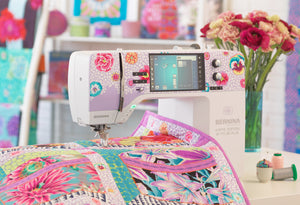
For lightweight evening fabrics, use a fine needle that suits the fabric and test your stitch settings on scraps before you touch the project. On a BERNINA machine, that usually means slowing down a little, checking stitch balance, and letting the machine feed the fabric instead of pulling it from behind. Delicate cloth behaves better when the sewer relaxes.
A simple cape usually comes together in a straightforward order. Sew the shoulder or neckline construction first, then finish the front edges, then handle the hem once the garment can hang naturally. If you're adding a tie, clasp, or narrow facing, baste and test placement before final stitching.
Helpful finishing options include:
If you'd like to add details, browse decorative trims for garment finishing and compare them against the drape of your fabric rather than choosing by looks alone.
This project shines when the styling stays simple. A cape made from airy fabric works beautifully over a sleeveless dress, linen separates, or a fitted top and trousers for a garden party or outdoor dinner. Soft floral prints feel romantic. Solids with a touch of shimmer look dressier.
You can also personalize the cape with small touches that don't overwhelm the silhouette:
If you're sewing on a machine upgrade path or comparing options, BERNINA sewing machines and support are worth reviewing alongside the fabrics and notions for the project.
A cape project uses long lanes of the mat, and that's a good reminder that “self-healing” doesn't mean “stays perfect forever.” Repeated cutting in the same zones can still affect blade performance and surface accuracy, and a mat can remain technically self-healing while becoming less precise for measurement in high-traffic lanes, as noted in this cutting mat review and maintenance discussion.
That's why I don't trust any one lane forever. If you notice your blade wanting to follow an old path, shift your cutting area and check your ruler placement before blaming the fabric. Long-term precision comes from paying attention early, not after the grooves become a permanent feature.
A good mat supports the whole process. It helps you cut with confidence, sew with less correction, and finish with cleaner lines. And when the project is something lovely enough to wear on a warm evening, that support feels well worth the table space.
If you're ready to set up a cutting station that makes sewing easier from the first cut to the final hem, visit High Country Quilts to browse supplies, compare tools, or plan a stop at the Colorado Springs shop. It's a practical place to start if you need fabric, notions, machine guidance, or help choosing tools that fit the way you sew.
At High Country Quilts we care deeply about community. With our experiences in retail, we know that a store is not only a place to shop but also a place for the community to gather and share. During this busy...

Hi! We’re Adam and Renee Wheaton, the new owners of High Country Quilts! For more than 40 years, we’ve owned and operated vacuum and sewing businesses. Following in Renee’s father’s footsteps after he retired from All Discount Vacuum and Sewing in Colorado...


Leave a comment