
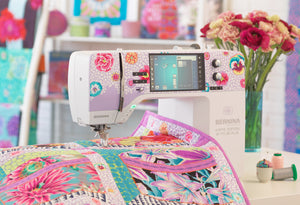

We Love Our Quilting Community
At High Country Quilts we care deeply about community. With our experiences in retail, we know that a store is not only a place to shop but also a place for the community to gather and share. During this busy...


Orders come in faster than they used to. A friend wants team polos. A local shop asks about caps. Someone needs quilted gifts with names stitched before the weekend. Your single-needle machine can do the work, but it can't do it without constant babysitting.
That's the point where many home embroiderers stop thinking like hobbyists and start thinking like operators. The machine on your table isn't just a creative tool anymore. It has become the bottleneck.
A multi-needle embroidery machine for small business is more than a fancier version of what you already own. It changes how you schedule work, what kinds of jobs you can accept, and how much of your day goes into actual stitching instead of thread changes, rehooping, and waiting around. That matters because the broader equipment market is no longer being driven by hobby use alone. The global multi-needle embroidery machine market was valued at USD 1.65 billion in 2025 and is projected to reach USD 2.214 billion by 2034, with a 4.0% CAGR from 2026 to 2034. The apparel industry accounts for nearly 65% of global demand, according to Intel Market Research on the multi-needle embroidery machine market. Small shops are part of that demand because personalized apparel has become real production work.
That shift is where good buying decisions matter. If you buy too soon, you can saddle yourself with overhead your order volume doesn't support. If you wait too long, you lose margin on every job that takes twice as long as it should.
The usual story starts the same way. Someone buys a home embroidery machine for quilting labels, gifts, baby items, or monograms. Then neighbors start ordering. Then a school group calls. Then a small apparel run turns into repeat work, and suddenly evenings are spent changing thread colors instead of packing finished orders.

I've seen new business owners make the same mistake over and over. They judge the next machine purchase by whether the current machine still works. That's the wrong test. The critical question is whether the current setup still supports the business you're trying to run.
A hobby machine is built to finish one project at a time with a lot of operator involvement. A production tool is built to keep moving. That difference shows up fast when you're running multi-color names, logos, jacket backs, or repeat orders across several garments.
A multi-needle machine starts to make sense when your workday looks like this:
Practical rule: If your machine requires you to stand next to it for most of a multi-color job, you're still working in a hobby workflow.
The mental shift matters as much as the mechanical one. A multi-needle machine is a way to buy back operator time. It also lets a small shop act more like a micro-manufacturer, which is exactly why so many growing decorators move in that direction.
The best reason to upgrade isn't vanity. It's capacity. You get a machine that's built for repeatability, less manual intervention, and more product flexibility. That's why people exploring their first serious upgrade often benefit from learning the business side alongside the machine side. If you're building that skill set, a structured training resource like this creator business course can help you think more clearly about positioning, offers, and workflow.
The leap feels big because it is big. But it's often the purchase that turns embroidery from “something I do for extra money” into “something I can schedule, price, and grow.”
A lot of owners hit the upgrade question on an ordinary Tuesday. Three youth jerseys are due Friday, a quilted baby gift needs a name added before pickup, and a local boutique wants twelve hoodies with a six-color chest logo. The single-needle machine can finish the work, but only if someone stays close by to babysit thread changes, re-hoop carefully, and keep the day from getting away.
That is usually the point. The machine still works. The workflow no longer does.
The clearest sign is not that you are busy. It is that your schedule stays full while your margins stay thin. If every added order also adds more operator time, the business is reaching the limit of a hobby-style setup.
Watch for these patterns:
For a small quilting or apparel business, that trade-off matters more than headline speed. A machine that cuts supervision can free up time for trimming, pressing, invoicing, and customer service. Those are the tasks that often get ignored in home shops, even though they affect repeat business just as much as stitch quality.
| Metric | Single-Needle Machine | Multi-Needle Machine |
|---|---|---|
| Thread handling | Manual color changes require more operator attention | Automatic thread changes reduce interruption |
| Typical use | Personalized gifts, names, monograms, simpler flat projects | Repeat logos, multi-color apparel, broader product mix |
| Speed in real work | Slows down further once color swaps and resets are counted | Faster overall because fewer stops interrupt the run |
| Best fit | Lower-volume custom work | Jobs that need consistency, quicker turnaround, and less babysitting |
| Product range | Strong on straightforward flat items | Better suited to tubular items and mixed commercial work |
| Operator involvement | Higher | Lower during multi-color runs |
| Throughput potential | Limited by manual workflow | Better suited to steady production |
The practical difference is not just output. It is how the day feels. Single-needle owners often underestimate the stop-and-start fatigue that comes with short runs, names on multiple garments, or left-chest logos in several thread colors. Multi-needle machines reduce those interruptions, which is why they make sense once order flow becomes predictable enough to justify the cost.
Before buying, look past the brochure and audit the room where the machine will sit. Multi-needle units take more space than many first-time buyers expect, and the stand, thread tree, cap station, and clear working area all count. Noise matters too. In a garage or spare bedroom shop, a production machine running for hours changes the feel of the whole house.
I tell new buyers to ask four plain questions:
Those questions save people from buying capacity they cannot use well.
The payment often decides whether the upgrade helps cash flow or strains it. If you are comparing ways of financing business equipment with SBA loans, look at the monthly obligation next to your actual order volume, not your hoped-for volume. A machine can be a sound purchase and still be bought at the wrong time.
Demand generation matters too. If your plan is to grow through local brand collaborations, custom merch drops, or niche apparel launches, working with an influencer outreach service for custom product promotion may help fill the schedule that will justify the new equipment.
Upgrade when the machine will remove a recurring bottleneck and earn back operator time every week, not when it simply looks like the next serious step.
Profit comes from reducing operator time, keeping jobs moving, and saying yes to work that fits your shop. That is the frame to use when comparing features.

A first-time buyer coming from a single-needle machine usually notices one benefit right away. The machine keeps multiple colors loaded, so production stops less often. That matters more than headline specs. If your weekly work is quilt labels, applique accents, left-chest logos, baby items, or small apparel runs, fewer interruptions often do more for profit than raw top speed.
Four needles can work for simple name jobs and limited-color designs. Six needles is the point where many small shops start feeling real relief. Common logo colors stay loaded. You spend less time rethreading, less time restarting, and less time checking whether the next color is set correctly.
More needles still have a cost. The machine usually gets larger, heavier, louder, and more expensive. For a home-based quilting or apparel business, that trade-off matters. Extra capacity only pays if your order mix uses it often enough.
A fast machine that stops for thread breaks, awkward setup, or poor hoop support will not earn the way buyers expect. Day-to-day profit usually comes from steady stitching and repeatable setup.
Look for features that help the machine stay productive:
Shops selling personalized apparel through Instagram, Etsy, or local pop-ups should also study how creators present custom products on UGC creator platforms. Better product presentation can raise average order value just as much as a machine upgrade can raise output.
This is one feature buyers often underestimate. A machine that runs flat goods well can still struggle with items that are narrow, bulky, or awkward to hoop. Tubular capability expands your saleable product list.
That includes:
Those jobs are not only for large uniform shops. Small local businesses ask for branded fleece. Parents want monogrammed baby items. Quilt customers add embroidered labels, bags, and gift pieces. A machine that handles mixed product types gives a small shop more room to build profitable order minimums.
Here's a quick look at the machine in action:
Attachments are where many new owners either save money wisely or waste it. Cap frames, larger hoops, magnetic hooping options, and specialty fixtures can expand your menu, but only if those products are part of your actual sales plan.
I usually tell buyers to start with the accessories tied to repeatable orders. If jacket backs make up five jobs a year, do not build the purchase around them. If baby gifts, quilt labels, tote bags, and small business polos show up every week, buy the hoops and frames that make those jobs faster and cleaner. That is how features turn into margin.
The cleanest way to evaluate a multi-needle embroidery machine for small business use is to stop calling it an expense and start testing it like a production asset. If the machine saves labor, opens profitable product categories, and lets you accept better orders, then the purchase decision should be based on workflow math.

One solid benchmark is this: a 6-needle machine can deliver up to 40% faster production than a single-needle setup, largely because it cuts down time spent swapping thread colors. That same guidance notes that the advantage is especially strong on tubular items like caps, pockets, and jacket backs, according to Embroidery Legacy's guide for home-business buyers.
That doesn't mean every shop automatically gets the maximum gain. It means you have a credible benchmark for what improved workflow can look like if your order mix includes multi-color work.
Use your own numbers, not somebody else's dream scenario. Write down:
Bench test the machine against your top ten repeatable jobs, not your most exciting one-off order.
The return isn't limited to faster output. It usually comes from three places working together:
A lot of owners also forget the hidden return of reduced fatigue. If you're spending less time babysitting color changes, you can use that time for digitizing review, customer approvals, order intake, packing, or sales.
If your plan involves product seeding, local maker collaborations, or gift-box style launches, tools that support outreach and sampling can also shape ROI from the marketing side. Platforms for influencer gifting programs are worth looking at if your embroidery business depends on getting personalized items into the hands of niche audiences.
Don't justify a machine based on fantasy volume. Don't assume every product you can technically stitch will sell. And don't buy based on the idea that a bigger machine automatically fixes weak pricing or poor niche selection.
Bad ROI usually comes from one of three mistakes:
That's why a sober, back-of-the-napkin calculation beats excitement every time.
The first week after a home shop installs a multi-needle machine usually answers questions the spec sheet never did. The machine is faster. The workflow is better. But the room sounds different, the floor vibrates more than expected, and every supply shelf suddenly feels too small. That transition catches a lot of first-time buyers, especially quilters and apparel decorators who are upgrading from a single-needle hobby setup, not building a cap-focused production shop.

Noise is one of the least glamorous buying factors, and one of the most practical. A multi-needle machine often sounds acceptable in a showroom and much louder in a spare bedroom at 9 p.m. The issue is not just comfort. It affects how early you can start, how late you can run, and whether the rest of the household will tolerate busy weeks.
The earlier sentence about 65% of owners lacked a reliable source in the same sentence, so it should not be used as a buying fact. A better rule is simple. If the machine will sit near living space, assume sound will matter every day.
I tell buyers to test this realistically. Stand in the room where the machine will live. Consider phone calls, naps, TV noise, shared walls, and neighbor distance. For a home-based quilting or apparel business, usable stitching hours matter more than the peak speed on a brochure.
A multi-needle unit may fit on paper and still crowd the room in real use. New owners measure the stand, then forget the working space needed for hooping, backing, folded garments, thread cones, spare needles, oil, topping, stabilizer, boxes, and mis-stitch recovery.
That is where home shops get messy fast.
A practical layout should answer a few blunt questions:
For small quilting businesses, this matters even more because batting, rolls, and cut pieces eat space quickly. For apparel sellers, poly bags, size sorting, and order staging do the same. If you are still comparing machine classes, reviews of top embroidery machines for businesses help, but floorplan reality should make the final cut.
Residential compliance rarely feels urgent until a complaint shows up. Noise, delivery volume, porch pickups, added electrical load, and customer visits can all create friction with neighbors, landlords, HOAs, or local zoning rules. Check those limits before delivery day, not after you have financed the machine.
Support matters too. A multi-needle machine is still a production tool, even in a home studio. Setup errors, poor hooping habits, and missed maintenance cost real money once customer orders are involved. If your plan includes building a content-driven custom brand alongside production, communities such as this UGC creator agency signup for creators building brand partnerships can help you line up demand, not just equipment.
The machine saves labor on color changes. It does not save you from ownership. You still need cleaning routines, correct needle changes, design testing, backing choices that fit the product, and enough operator discipline to catch problems before a dozen pieces go bad.
That trade-off is worth it for many home businesses. The wrong expectation is believing the upgrade removes hands-on work. The right expectation is that it shifts your time away from repetitive babysitting and toward higher-value tasks, while asking for a more serious shop setup in return.
The best home-shop purchase is not the biggest machine you can afford. It is the one your room, schedule, household, and product mix can support without strain.
A multi-needle machine is the right move when your current embroidery setup is holding back profitable work. Not when you're bored with it. Not when a sales video makes commercial embroidery look glamorous. The deciding factor is whether your business needs more consistent throughput, less operator interruption, and access to products your current machine handles poorly.
Start with your order mix. Then look at your space. Then check your budget and support options. That order keeps you from buying a machine that solves one problem while creating two more.
A practical shortlist should answer these questions:
If you're still comparing models, a roundup of top embroidery machines for businesses can be useful for seeing how different machines are positioned for different kinds of shops.
The smoothest transitions usually come from buyers who do three things well.
First, they buy for the work they already know how to sell. Second, they leave room in the budget for attachments, training, and supplies. Third, they choose support they can reach when something goes sideways.
The right machine should make your business calmer, not more complicated.
That's especially true for quilters and home-based apparel decorators who are moving from occasional embroidery into regular paid work. You don't need the largest machine in the category. You need the one that fits your workload, your physical space, and your business model.
If you're at that point, don't shop by headline specs alone. Sit down with someone who understands hooping realities, support needs, and the difference between a machine that looks productive and one that earns its keep.
If you're weighing your first serious embroidery upgrade, talk with High Country Quilts about machine options, training, and real-world setup considerations before you buy. A short conversation can help you narrow the field, avoid mismatched equipment, and choose a machine that fits the kind of business you're building.
At High Country Quilts we care deeply about community. With our experiences in retail, we know that a store is not only a place to shop but also a place for the community to gather and share. During this busy...

Hi! We’re Adam and Renee Wheaton, the new owners of High Country Quilts! For more than 40 years, we’ve owned and operated vacuum and sewing businesses. Following in Renee’s father’s footsteps after he retired from All Discount Vacuum and Sewing in Colorado...


Leave a comment