

We Love Our Quilting Community
At High Country Quilts we care deeply about community. With our experiences in retail, we know that a store is not only a place to shop but also a place for the community to gather and share. During this busy...


Every quilter understands the joy of a growing fabric stash and the satisfaction of a diverse tool collection. Yet, this abundance can quickly lead to creative chaos, making it difficult to find exactly what you need when inspiration strikes. A well-organized space isn't just about tidiness; it’s about fostering creativity, improving efficiency, and protecting your valuable materials from dust and fading.
This guide provides a comprehensive roundup of practical and innovative quilting storage ideas designed to help you conquer the clutter. Whether you're working in a dedicated studio or a compact corner of your home, these solutions will help you create a functional and inspiring environment. We’ll cover specific strategies for managing everything from mountains of fabric to tiny, easy-to-lose notions. For a broader perspective on decluttering, exploring creative storage ideas for other areas of your home can also provide useful inspiration.
From clear bins that let you see your inventory at a glance to wall-mounted systems that maximize vertical space, get ready to transform your quilting area into a haven of organized creativity. This isn't about achieving perfection, but about building a system that works for you, making your creative process smoother and more enjoyable.
Clear plastic storage bins are a foundational element in many quilting rooms, and for good reason. They offer an immediate visual inventory of your supplies, eliminating the frustrating hunt for a specific fabric or tool. Unlike opaque containers, these transparent boxes let you see exactly what’s inside, saving precious time and inspiring creativity by keeping your beautiful materials in sight. This method is one of the most effective quilting storage ideas for maintaining an organized and efficient workspace.
The primary advantage is visibility and accessibility. When you can quickly scan your collection of fat quarters, scraps, or threads, you're more likely to use what you have. This approach prevents you from buying duplicate supplies and helps you plan projects more effectively. The stackable nature of these bins also maximizes vertical space, a crucial benefit for quilters working in smaller rooms or multi-purpose areas.
Key Insight: Using dividers within these bins transforms a simple container into a powerful organizational tool. You can create custom-sized compartments for everything from bobbins and needles to fabric scraps sorted by color or size.
To get the most out of this system, consider the following strategies:
Many professional quilting studios and home organizers rely on brands like Sterilite, IRIS, and ArtBin. For a robust solution designed specifically for crafters, you can explore specialized deep base clear bins that offer durability and clear views. This simple yet highly effective storage solution brings order to chaos, allowing you to focus more on quilting and less on searching.
For quilters who manage a sizable fabric collection, fabric bolt storage racks transform a personal sewing space into a professional-level studio. This system mimics the organized, shoppable displays found in retail fabric stores, keeping large cuts of fabric neatly wrapped on bolts or boards. It is one of the most visually impressive quilting storage ideas, turning your fabric stash into a vibrant and inspiring wall of color and potential.
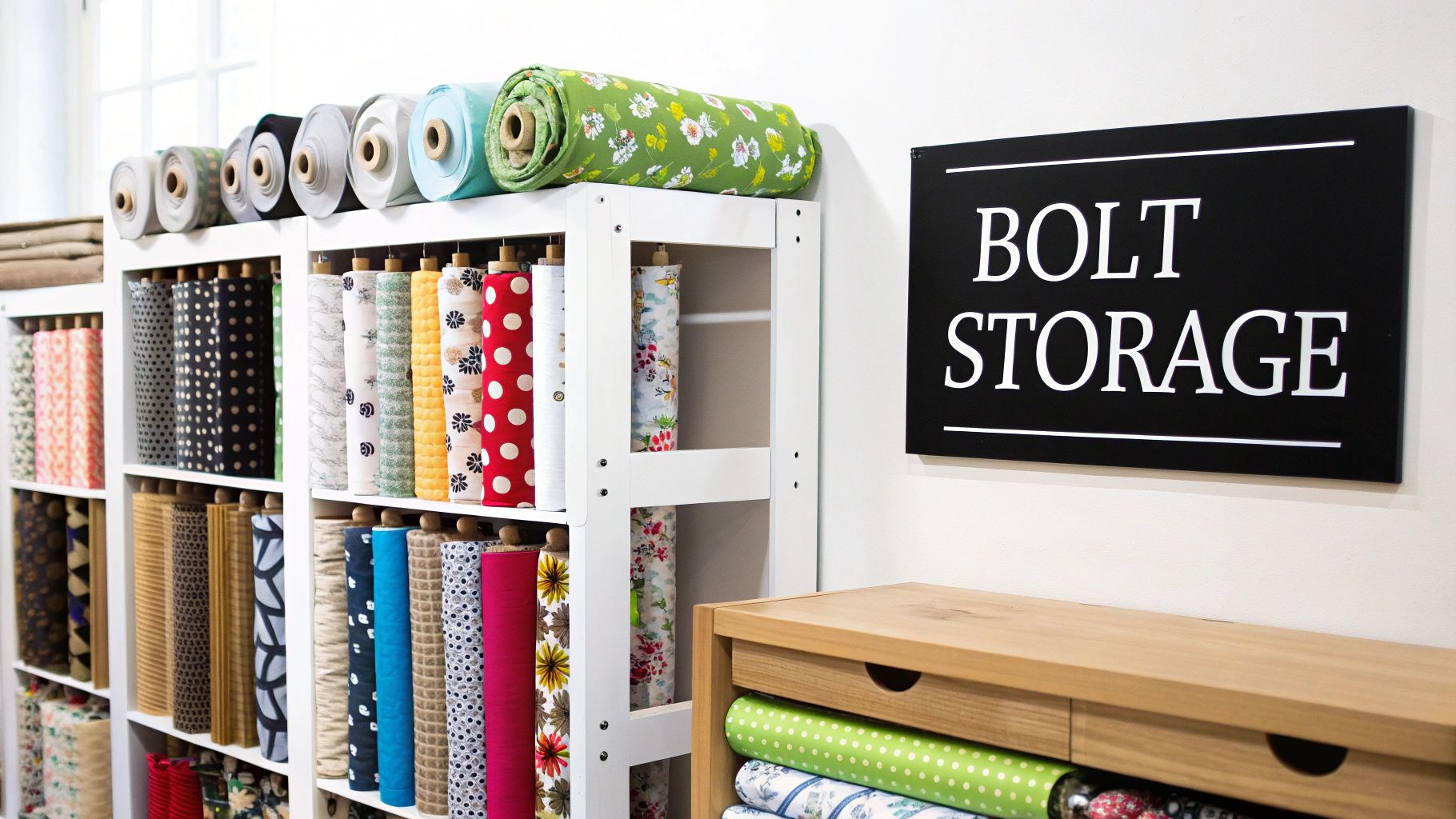
The core benefits are organization at scale and fabric preservation. Storing fabric on bolts prevents deep creases and wrinkles that can be difficult to iron out, preserving the material's integrity. It also allows you to see your entire collection at a glance, making it incredibly easy to pull coordinating fabrics for a new project. This method is ideal for quilters with dedicated rooms, long-arm quilting businesses, and anyone who buys fabric in multi-yard cuts.
Key Insight: Arranging your fabric bolts by color, designer, or collection creates a functional "color wall" that streamlines the design process and sparks new creative combinations you might have otherwise overlooked.
To effectively set up a fabric bolt system, follow these guidelines:
This storage solution is particularly favored by professional quilt shop owners and high-volume pattern designers who need to access and manage large inventories efficiently. For more insights on keeping your materials pristine, you can discover the best way to store fabric and protect it from environmental factors.
Rolling carts are the ultimate flexible friend in a quilting studio, offering mobile organization that adapts to your workflow. These multi-drawer units on wheels provide a dedicated home for your most-used tools and current project pieces, allowing you to bring your supplies directly to your cutting mat or sewing machine. This mobility is a game-changer, making it one of the most dynamic quilting storage ideas for those who value adaptability and efficiency in their creative space.
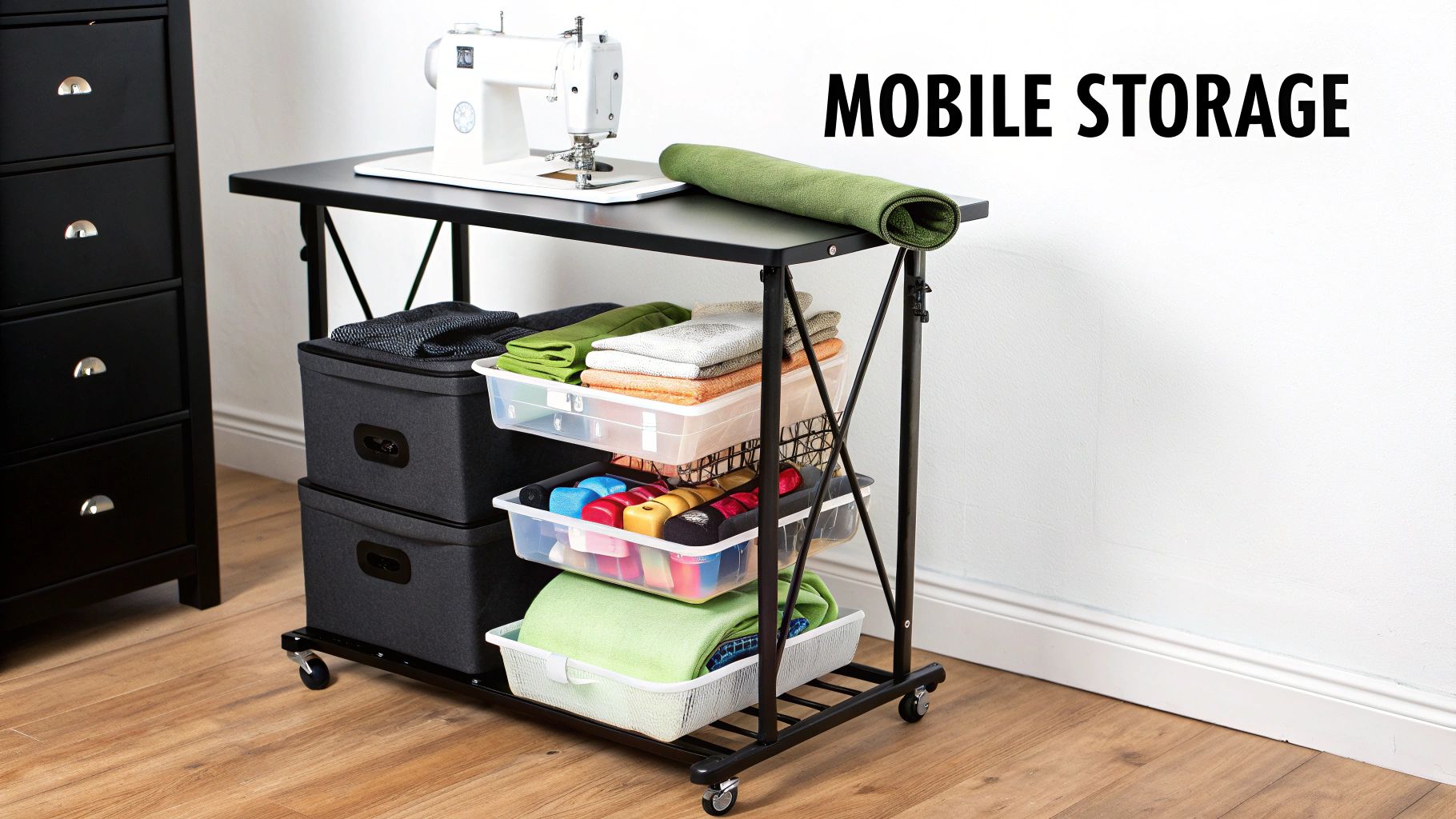
The primary advantage is portability and accessibility. Instead of constantly getting up to retrieve supplies, you can wheel your entire workstation to wherever you need it. This is invaluable for small or multi-purpose rooms where your quilting area might need to be packed away. It keeps your primary work surfaces clear while ensuring essential items like rotary cutters, thread, and fabric squares are always within arm's reach.
Key Insight: A rolling cart acts as a "project hub," holding all the fabrics, threads, and notions for one specific quilt. This keeps everything consolidated, reduces clutter, and makes it easy to switch between multiple projects.
To maximize the effectiveness of a rolling cart, consider these strategies:
Many quilters have found success adapting popular carts like the IKEA Raskog or standard office supply units for their needs. For a more structured approach, you can integrate these carts with modular systems and explore the Super Satchel Cube to create a comprehensive and mobile storage solution. By keeping your tools organized and mobile, a rolling cart streamlines your process from the first cut to the final stitch.
Wall-mounted pegboards offer a highly customizable and visual way to organize your most-used quilting tools. These perforated panels transform empty wall space into a functional and inspiring display, keeping essential supplies like rulers, rotary cutters, and thread spools off your work surfaces but always within arm's reach. This method is one of the most popular quilting storage ideas for those who appreciate seeing their tools and want to create an efficient, grab-and-go system.
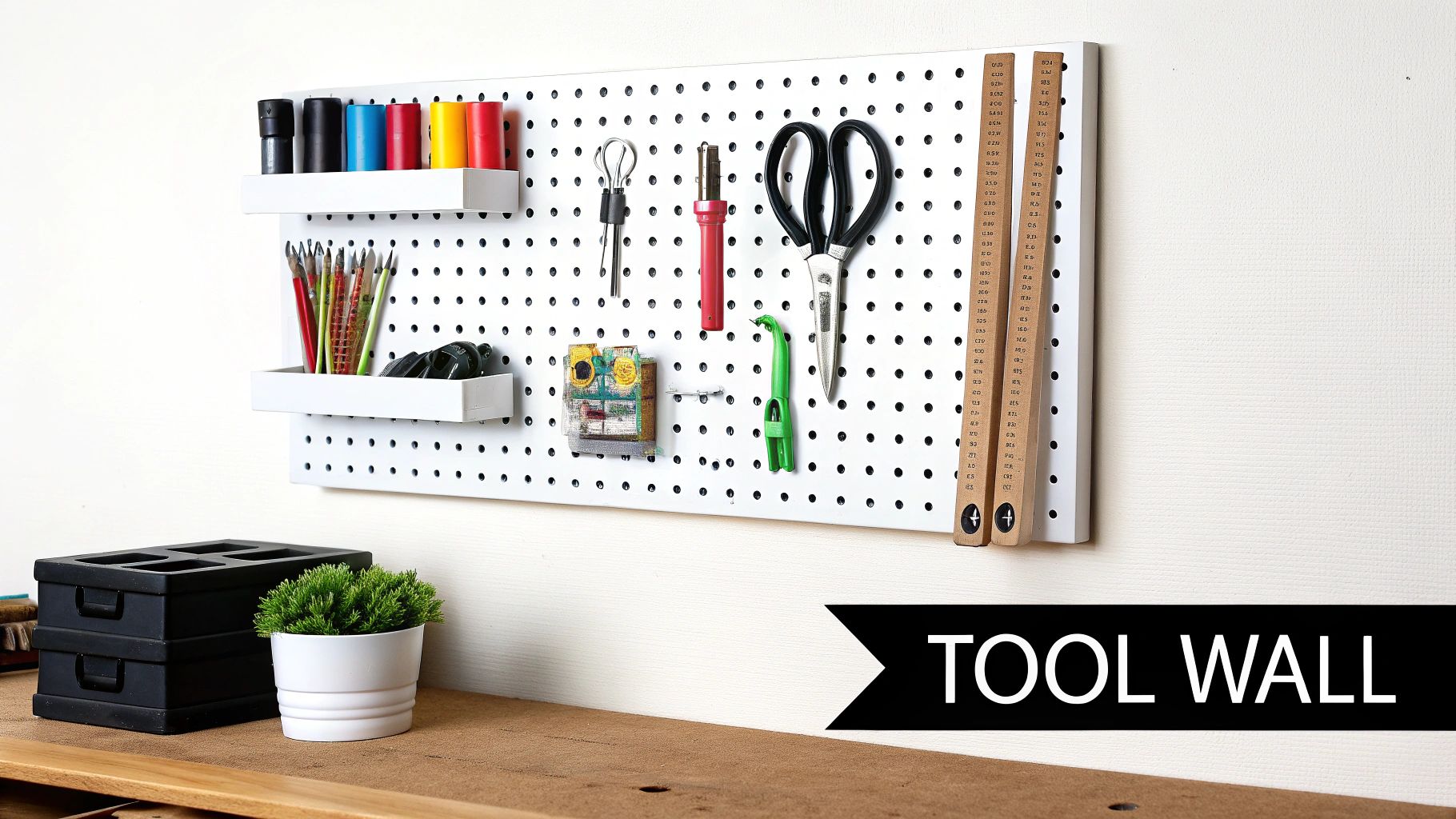
The genius of a pegboard system lies in its flexibility and verticality. As your tool collection grows or your project needs change, you can easily rearrange hooks, shelves, and baskets without any permanent modifications. This system maximizes wall space, which is especially valuable in smaller sewing rooms, and keeps your cutting table and work areas clear of clutter. Having tools visible also serves as a constant reminder of what you own, preventing repurchase and sparking new ideas.
Key Insight: Create dedicated "zones" on your pegboard for different tasks. Group all your cutting tools in one area, measuring tools in another, and marking utensils in a third to build muscle memory and streamline your workflow.
To design an effective pegboard organization system, consider these strategies:
Pegboards are a favorite among DIY home organizers and have become a staple in countless craft room tours on social media. You can find versatile and affordable options like the SKADIS series at IKEA, which offers a modern look and a wide array of compatible accessories. This storage solution not only declutters your space but also turns your quilting tools into a personalized piece of wall art.
Hanging closet organizers and over-door racks transform underutilized vertical areas into prime storage real estate. These systems, often designed for shoes or accessories, are perfectly suited for quilting supplies, allowing you to reclaim precious floor and shelf space. By leveraging the backs of doors or unused closet rods, you can create a highly accessible and visible inventory of fabrics, threads, and tools. This approach is one of the most clever quilting storage ideas for those working in compact environments like apartments or shared rooms.
The genius of this method is its space efficiency and visibility. It takes advantage of otherwise dead space, a critical benefit for quilters with limited square footage. Clear pocket organizers, in particular, allow you to see your entire collection of fat quarters, thread spools, or small cutting tools at a single glance. This not only saves time but also provides a colorful, inspiring display of your materials, making it easier to coordinate fabrics for your next project.
Key Insight: This system excels at compartmentalization. Each pocket or shelf acts as a dedicated home for a specific item, preventing smaller supplies from getting lost in larger bins or drawers.
To effectively implement this vertical storage solution, consider these strategies:
This method is particularly popular with quilters in apartments, dorm rooms, or multi-purpose craft spaces where floor space is at a premium. Organizers like this multi-pocket over-door solution are readily available and require no permanent installation, making them a flexible and budget-friendly option. It's a simple change that can dramatically expand your storage capacity.
For quilters who appreciate both function and form, storing fabric in decorative boxes or vintage wooden chests offers a solution that is as beautiful as it is practical. This method conceals your stash from sight, protecting it from dust and light while adding an element of classic charm to your creative space. Unlike purely utilitarian options, these containers become part of your room's decor, making them one of the most aesthetically pleasing quilting storage ideas.
The primary benefit of this approach is protection and preservation. Wooden chests, particularly those made of cedar, naturally repel pests that can damage fabric. Opaque containers completely block UV light, preventing the fading of precious prints and heirloom textiles over time. This makes the method ideal for long-term storage of special collections, vintage fabrics, or materials for future legacy projects.
Key Insight: A beautiful wooden chest serves a dual purpose as both a secure fabric vault and a functional piece of furniture, such as a bench or a low-profile table.
To properly preserve your fabrics using this system, consider these strategies:
This traditional method is favored by heirloom quilters and textile collectors who prioritize the longevity of their materials. By combining secure storage with timeless style, fabric chests provide an elegant solution that honors the craft and the materials used to create it.
An overflowing basket of thread spools can quickly become a tangled, frustrating mess. Specialized thread storage systems, like stackable boxes and spoolers, are designed to tame this chaos. These purpose-built organizers arrange your thread collection neatly, keeping each spool separate, visible, and ready for use. This method is one of the best quilting storage ideas for quilters who value precision and want to protect their thread investment.
The core benefits are organization and protection. Thread can easily become dusty, tangled, or damaged when stored loosely. Specialized containers protect spools from dust and prevent threads from unraveling and tangling with each other. More importantly, they provide an at-a-glance inventory of your colors, weights, and brands, making it simple to find the perfect thread for piecing, quilting, or binding without a disruptive search.
Key Insight: Organizing thread by color or type in a dedicated system transforms it from a simple supply into a curated palette. This visual organization inspires better color choices and streamlines the entire quilting process.
To maximize the effectiveness of your thread storage, consider these strategies:
Many professional quilters and designers rely on systems from brands like Aurifil and Janome. For an efficient and space-saving solution, you can find high-quality Isacord thread storage trays that stack securely. Investing in proper thread storage not only organizes your space but also protects the quality of your essential supplies.
Quilt patterns, templates, and rulers are the architectural blueprints of quilting, yet they are often the most awkwardly shaped and difficult items to store. Specialized storage solutions address this challenge by keeping these flat, often fragile items organized, protected, and easily accessible. From vertical ruler racks to repurposed magazine files, these methods prevent patterns from creasing and rulers from warping, ensuring they remain in pristine condition for accurate cutting and piecing.
The main benefit is protection and organization. Patterns can easily get lost, torn, or creased, while rulers, if stored improperly, can warp or get chipped, compromising their accuracy. Dedicated storage keeps these essential tools safe and sorts them logically, making it simple to find a specific ruler size or pattern. This systematic approach is one of the most practical quilting storage ideas for maintaining the integrity of your most important design aids.
Key Insight: Storing rulers vertically is crucial. Laying them flat in a stack or a drawer makes it hard to see what you have and can lead to warping over time. Vertical storage keeps them straight and visible.
To create a functional system for your patterns and rulers, try these strategies:
For quilters looking to keep project patterns organized with their corresponding fabrics, a labeled pattern bag is an excellent solution. You can explore pattern bags with clear labels to streamline your project management. By implementing these tailored storage methods, you ensure your patterns and rulers are always ready for your next creative endeavor.
| Item | Implementation (🔄 Complexity) | Resource Requirements (💡) | Expected Outcomes (⭐📊) | Ideal Use Cases | Key Advantages (⚡) |
|---|---|---|---|---|---|
| Clear Plastic Storage Bins with Dividers | Low 🔄 — plug-and-play, minimal setup | Low–Medium 💡 — affordable; shelf/floor space; optional airtight | ⭐⭐⭐ 📊 — Improved visibility, protection, easier inventory | Scrap sorting; project-by-project storage; home studios | ⚡ Quick access; stackable; customizable compartments |
| Fabric Bolt Storage Racks | High 🔄 — installation or custom build, may require mounting | High 💡 — significant cost; dedicated wall/floor space; sturdy supports | ⭐⭐⭐⭐ 📊 — Retail-style display, wrinkle-free bolts, effortless browsing | Quilt shops; high-volume studios; backing/bolt storage | ⚡ Maximizes visibility; preserves fabric condition; professional appearance |
| Rolling Carts with Multiple Drawers | Low–Medium 🔄 — simple assembly, mobile | Low–Medium 💡 — moderate cost; small footprint; floor space needed | ⭐⭐⭐ 📊 — Portable organization; dust protection for small items | Small spaces; mobile workflows; apartment quilters | ⚡ Mobility; compact multi-compartment storage; easy relocation |
| Wall-Mounted Pegboards and Hooks | Medium 🔄 — mounting and layout planning required | Low–Medium 💡 — affordable; uses vertical wall space; basic hardware | ⭐⭐⭐ 📊 — High accessibility; keeps tools visible and reachable | Tool-heavy setups; workstations; frequently-used supplies | ⚡ Immediate access; highly customizable; space-saving |
| Hanging Closet Organizers and Over-Door Racks | Low 🔄 — hook-on or simple installation | Low 💡 — very affordable; uses door/closet vertical space | ⭐⭐ 📊 — Good visibility for small items; saves floor space | Renters; dorms; small apartments; seasonal storage | ⚡ Space-efficient; removable; inexpensive |
| Fabric Stash Boxes and Wooden Chests | Medium 🔄 — minimal assembly but heavy placement | Medium–High 💡 — higher cost; takes floor or furniture space; heavy | ⭐⭐⭐ 📊 — Excellent protection from light/pests; long-term storage | Heirloom fabrics; long-term stash; decorative storage | ⚡ Protective; decorative; doubles as furniture |
| Stackable Thread Boxes and Specialized Spoolers | Low–Medium 🔄 — simple setup or mounting | Medium 💡 — moderate cost; dedicated shelf or counter space | ⭐⭐⭐⭐ 📊 — Efficient color selection; prevents tangles; tidy inventory | Large thread collections; professional sewists; color-critical work | ⚡ High capacity in small footprint; organized visibility; professional display |
| Pattern and Ruler Storage Solutions | Low–Medium 🔄 — straightforward shelving or filing | Low–Medium 💡 — moderate cost; vertical or drawer space needed | ⭐⭐⭐ 📊 — Protects patterns, reduces creasing, faster selection | Pattern-heavy quilters; designers; guild libraries | ⚡ Prevents damage; organized reference; space-efficient |
As we've journeyed through a variety of practical and creative quilting storage ideas, one central theme emerges: organization is not about achieving a sterile, perfect space. Instead, it’s about crafting an environment that serves your creativity, saves you time, and protects the materials you’ve so carefully collected. An organized quilting studio allows your creative energy to flow into your projects, not into searching for a misplaced rotary cutter or the right shade of green fabric.
From the clear visibility of plastic bins to the space-saving brilliance of wall-mounted pegboards, each solution offers a unique way to tackle the delightful chaos of a quilter's collection. Think of these ideas as individual quilt blocks. Your perfect system won’t come from using just one, but from thoughtfully piecing together several methods to create a personalized organizational quilt that fits your unique space and workflow.
The most effective storage strategies are those that are easy to maintain. Consider these core principles as you begin your organizational journey:
Feeling inspired but overwhelmed? Don't try to overhaul your entire sewing room at once. Instead, adopt a block-by-block approach to tidying up.
Ultimately, mastering your quilting storage is an investment in your craft. It transforms your space from a source of stress into a sanctuary of inspiration, where every tool is ready and every piece of fabric is waiting to become part of your next masterpiece. A tidy space not only makes quilting more efficient but also infinitely more joyful. May your seams be straight, your corners sharp, and your creative space a true reflection of the beautiful work you do.
Ready to find the perfect tools and accessories to fill your newly organized space? Visit High Country Quilts online or in our Colorado Springs store for a curated selection of high-quality quilting supplies. Let us help you find everything you need to bring your creative vision to life. High Country Quilts
At High Country Quilts we care deeply about community. With our experiences in retail, we know that a store is not only a place to shop but also a place for the community to gather and share. During this busy...

Hi! We’re Adam and Renee Wheaton, the new owners of High Country Quilts! For more than 40 years, we’ve owned and operated vacuum and sewing businesses. Following in Renee’s father’s footsteps after he retired from All Discount Vacuum and Sewing in Colorado...


Leave a comment