


Free Fabric All Year: Our 2027 Fabric Punch Card
November 2–25 only: buy a $200 gift card in either store and get a free yard of fabric every month of 2027.

Last Updated: November 21, 2026
Quick Summary
Professional sewing machine maintenance starts with cleaning lint from the bobbin area, feed dogs and needle plate after every project, since debris causes skipped stitches and uneven tension. Clean the bobbin case and tension discs weekly for most home sewists, oil only the points your manual specifies, and have a qualified technician service the machine every 6 to 12 months.
Professional sewing machine maintenance tips start with one simple idea: a machine that is cleaned and oiled on schedule sews better and lasts longer. Lint and dust collect in the bobbin area, under the needle plate and around the feed dogs every time you sew.
Most home sewists only think about maintenance when something goes wrong. A better habit is to treat cleaning as part of every project, the same way you press seams. Sewing machine care and maintenance guidance recommends regular cleaning as the foundation of machine care.
Regular maintenance also protects your investment. A quality machine represents a significant purchase, and routine care is far cheaper than an emergency repair.
A sewing machine maintenance checklist works best when you match tasks to how much you sew and to the type of machine you own.
Core schedule by usage level:
How care varies by machine type:
Diagnostic signs that maintenance is overdue. Neglect rarely announces itself; it shows up as small changes in how the machine behaves.
Watch out: continuing to sew through a grinding noise or persistent thread bunching can turn a simple cleaning and timing adjustment into a costly repair, so treat these signs as a stop-and-check moment rather than something to sew through.
The article's schedule breaks down into these usage-based maintenance tasks.
| Frequency | Task | Note |
|---|---|---|
| After every project | Unplug, brush lint from bobbin area, feed dogs, needle plate | Wipe exterior too |
| Every 8 hours of sewing | Clean bobbin case, check needle, clear tension discs | Weekly for most home sewists |
| Monthly or per manual | Oil specified points only, check thread path and take-up lever | Follow manual's oiling points |
| Every 6 to 12 months | Professional inspection and service | Sooner under regular use |
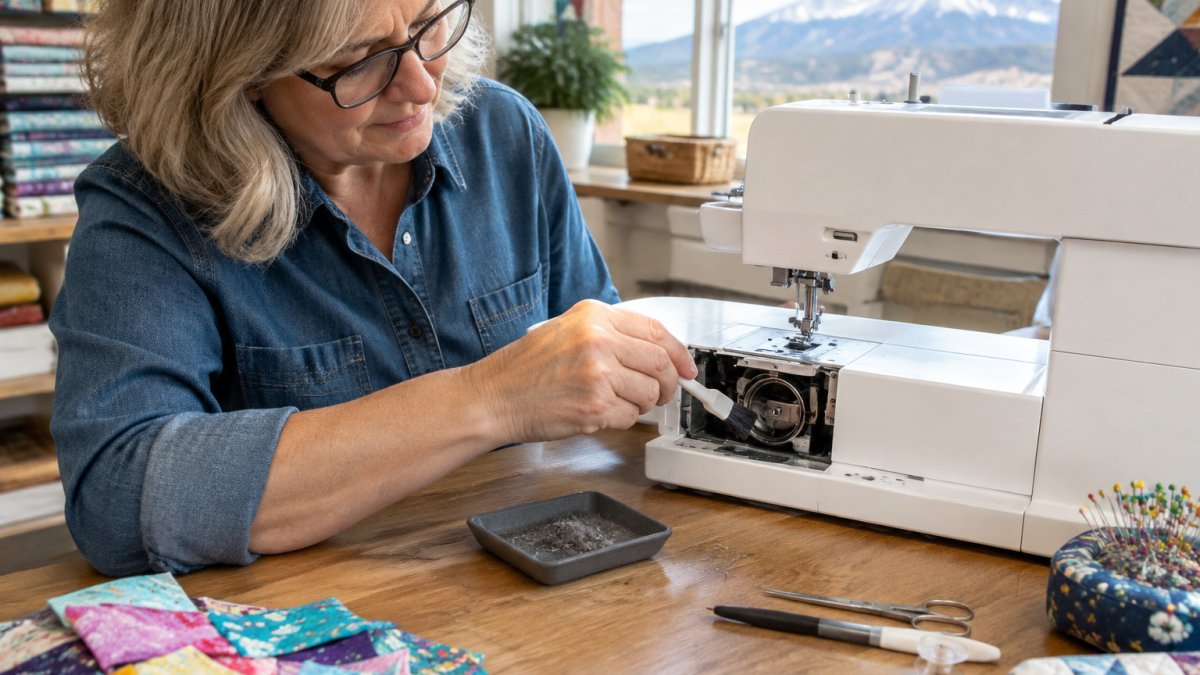
Cleaning a sewing machine takes about 15 minutes when you follow a set routine. Work in this order:
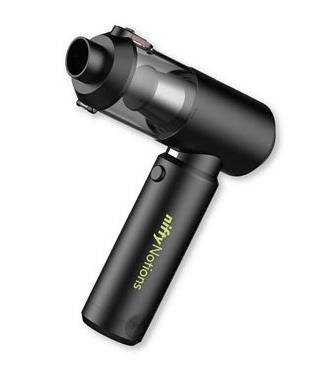
A portable vacuum with a precision nozzle makes steps 3 and 6 much faster. The Nifty Notions Sew Clean Portable Vacuum and Power Bank ($99.99) includes six attachments, including a precision nozzle for tight machine areas and a built-in blower for clearing hard-to-reach debris.
Many modern machines are self-lubricating and need little or no oil. Older machines and some models specify oiling points in the manual. Use only sewing machine oil, and apply it only where the manual indicates.
Avoid over-oiling. Excess oil can drip onto fabric and leave stains, and it attracts more lint. Wipe away any surplus after oiling. Never use household oils, WD-40 or cooking oil, since these can gum up internal parts.
Needle condition affects almost every stitch. A dull or bent needle causes skipped stitches, fabric pulls and thread breaks. Replace the needle after roughly eight hours of sewing, or sooner if you hit a pin or sew heavy layers. For a fuller troubleshooting guide, see how to fix skipped sewing stitches on any machine.
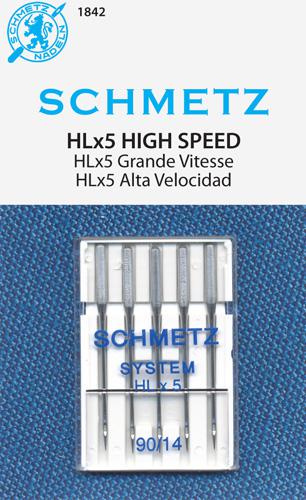
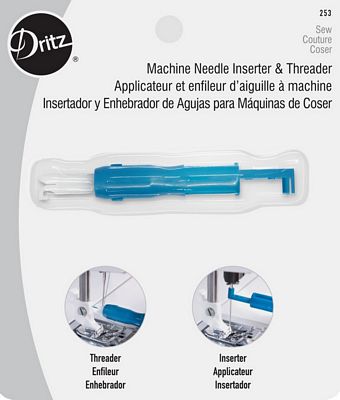
Thread quality and proper threading matter too. Make sure the thread path is fully seated in the tension discs and take-up lever. Tools like the Machine Needle Inserter & Threader by Dritz ($9.49) make needle changes safer and easier, and Schmetz 90/14 High Speed 5pk ($6.79) provides fresh needles for heavier work.
The line between owner maintenance and professional servicing is the single most useful thing to learn about your machine. Most top-ranking tutorials stop at "clean it and take it in sometimes," which leaves owners either over-disassembling their machines or paying for service they could safely do themselves.
Tasks that are safe for most owners (follow the manual):
Tasks that warrant a qualified technician:
Before you book a tune-up, do the owner-safe tasks above and run a test seam. If the problem persists, that is your signal to call a technician rather than disassemble further.
Watch out: over-disassembly and incorrect lubrication are the two most common ways owners turn a minor cleaning job into a repair bill. If a screw is not shown in your manual's maintenance diagram, leave it alone.
Service intervals by usage level. Your manual always takes precedence over the following general schedule:
If your machine needs more than routine care, sewing machine repair service in Colorado Springs can help you find a dependable option for your area. Readers in the Highlands Ranch area can also review sewing machine tune-up costs and service intervals before booking.
High Country Quilts, Sewing & Vacuums is an authorized BERNINA dealer, Stop by our Highlands Ranch store to find the right tools for your sewing room. Get Directions and schedule your next tune-up before your next big project.
For most home sewists, light cleaning after each project and a fuller maintenance pass every few months is a sound routine. Machines used daily or for long quilting sessions need attention more often. Check your manufacturer's manual for the recommended interval, since oiling points and service schedules differ by model. A professional tune-up is typically worth scheduling once a year or whenever stitches start looking uneven.
Routine sewing machine maintenance includes removing lint and dust from the bobbin area, feed dogs and under the needle plate, changing the needle regularly, and oiling only the points your manual specifies. Check thread tension discs for lint and wipe the exterior. Using the correct needle and thread for your fabric also reduces wear. A portable vacuum such as the Nifty Notions Sew Clean Portable Vacuum and Power Bank ($99.99) can make lint removal quicker.
No. Use only sewing machine oil or the lubricant recommended in your manual, applied sparingly to the points the manual identifies. Household oils can gum up and attract lint, and over-oiling can stain fabric and cause malfunctions. Wipe away any excess after oiling and run a test seam on scrap fabric before starting a project.
Most owners can safely handle cleaning, lint removal, needle changes, threading checks and light oiling at the points listed in the manual. Always unplug the machine first. Tasks involving timing, internal gears, motor components or electrical parts should be left to a qualified technician. If you are unsure whether a step is safe for your model, ask a professional before proceeding.
Take your machine in if it skips stitches, makes grinding or knocking noises, leaves loops or puckers that cleaning does not fix, or the motor runs hot or slowly. Persistent thread breakage, a machine that will not sew smoothly after cleaning, or one that has been dropped also warrants professional servicing. Neglected machines can develop costly damage, so early service is usually cheaper than repairs.
Tune-up pricing depends on the machine and the work required, so High Country Quilts recommends contacting our Highlands Ranch store directly for a current quote on your model. A tune-up typically covers cleaning, oiling, timing checks and a test sew. Ask whether the service includes a written summary of any parts that need replacing so you can decide before any work proceeds.
Oil only the specific points marked in your machine's manual, which usually include certain moving parts in the hook or bobbin area. Many modern machines are self-lubricating and need little or no oil at all. Applying oil to the wrong spot can damage the machine or leave stains on your fabric, so follow the manufacturer's diagram.
High Country Quilts, Sewing & Vacuums serves Highlands Ranch and Colorado Springs as an authorized BERNINA dealer, and our team can help you with questions about BERNINA machines at our store.
November 2–25 only: buy a $200 gift card in either store and get a free yard of fabric every month of 2027.

Serger and BERNINA Mastery classes, longarm training, bag-of-the-month, Kids Sewing Club and a Highlands Ranch retreat. Here's what's on the calendar in November.

Free gifts, included packages and special pricing on the BERNINA 790 ULTRA, 990, Liberty Editions, L 890 serger and Q Series longarms, now through December 31.


Leave a comment