

Free Fabric All Year: Our 2027 Fabric Punch Card
November 2–25 only: buy a $200 gift card in either store and get a free yard of fabric every month of 2027.

A well-chosen scrappy pattern beats a single-fabric quilt for character, and using leftovers is part of quilting's foundation, not a modern shortcut. The National Park Service's quilt history describes quilters using worn clothing, household linens, and irregular remnants, with simple patchwork helping turn available material into useful quilts.
Scrap projects often stall when quilters choose a yardage-based design, then discover their leftovers won't yield its matching pieces. Choose the pattern around your scraps instead. Start with their usable shapes, separate lights from darks, and decide whether you want an ongoing block project or a defined finish.
These seven scrappy quilt patterns cover different skill levels, fabric requirements, and design variations. Each is assessed for fabric control, incremental sewing, and tolerance for clashing prints.
Need a structured starting point? Explore the block-based 9-Patch Garden Quilt, an intermediate collaboration with Angie Wilson of Gnome Angel. If your stash needs larger cotton pieces, examine the RB Gentler Times 10in Squares, 42pcs/bundle before planning your cuts.
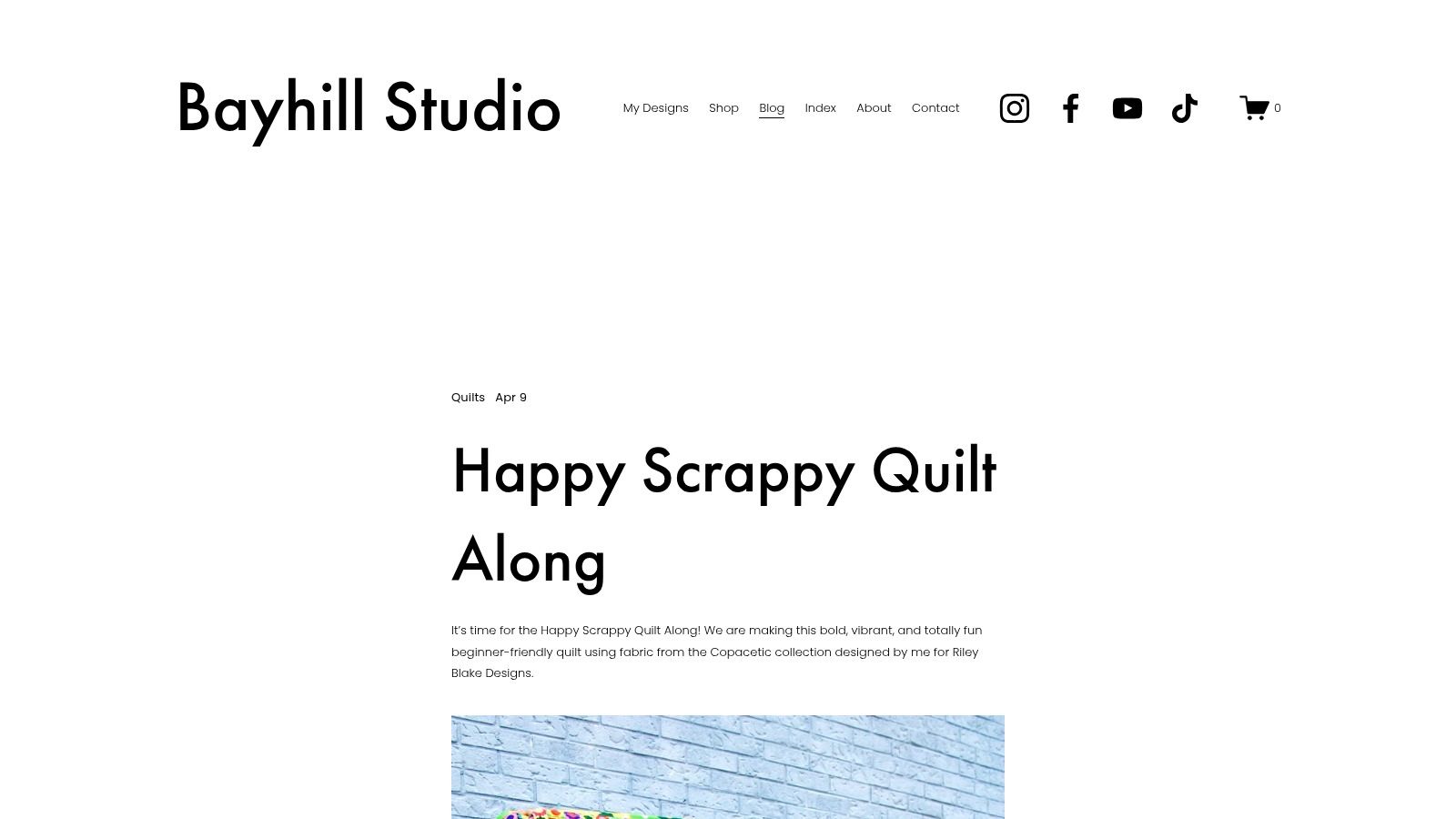
Best for beginners with larger remnants rather than a bin of tiny offcuts. Happy Scrappy uses bold blocks that give varied prints room to show. You'll spend less time handling fiddly pieces, but you'll need scraps large enough to satisfy the cutting instructions.
The Happy Scrappy quilt-along from Bayhill Studio includes a free downloadable pattern and seven instructional videos, covering the process from cutting through binding. That visual support is useful if written instructions leave you unsure how to position a piece.
The main trade-off is scrap size. Don't piece together tiny remnants just to make the required larger shapes unless you want extra seams and bulk.
Practical rule: Let a bold print occupy a generous patch. Cutting every favorite fabric into tiny pieces doesn't necessarily make a better scrap quilt.
The quilt-along is a past event, not a live class. For readers publishing their own sewing content, the separate gifted collaboration application is a creator resource, not part of the pattern or its instruction.
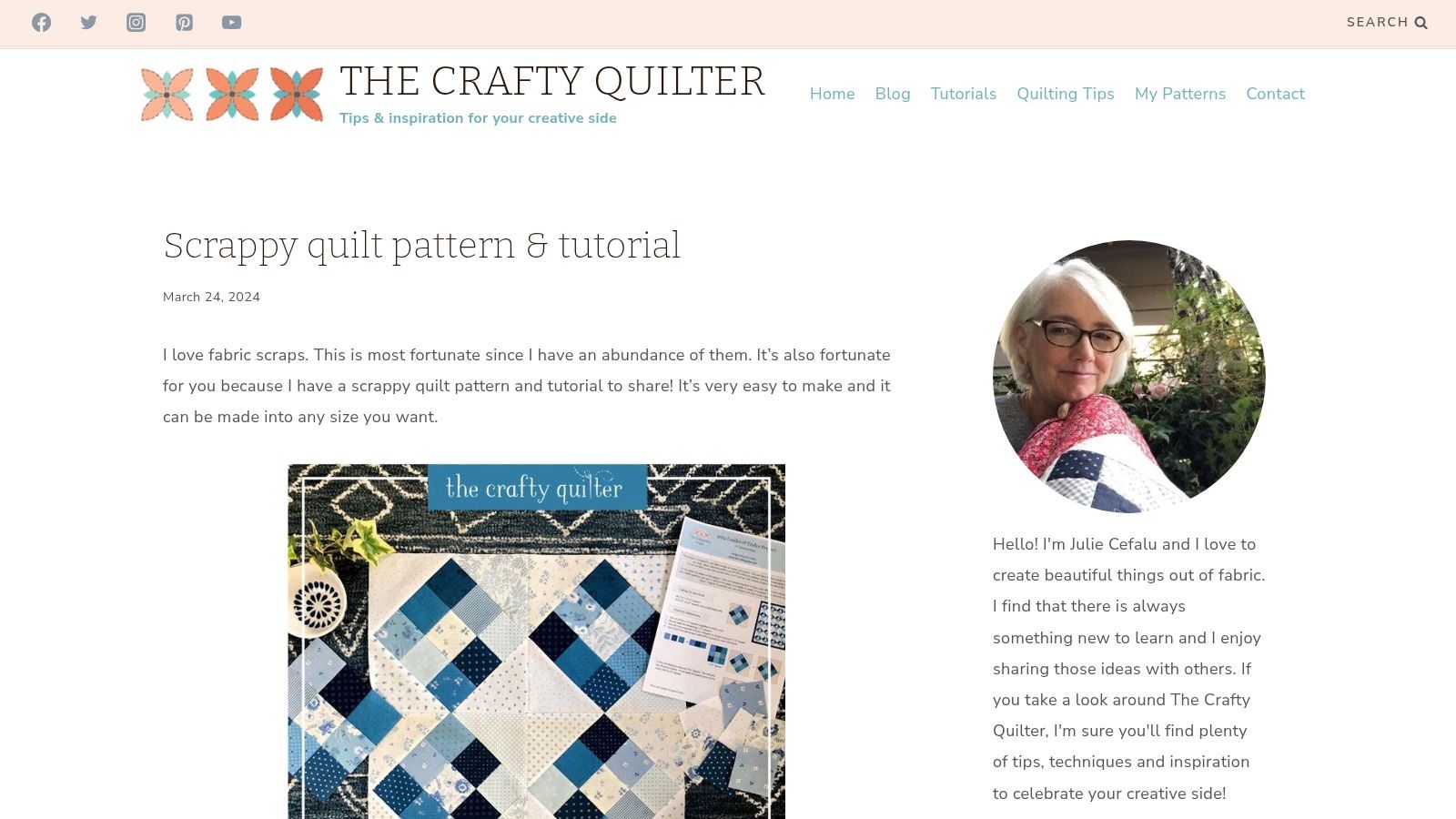
Nine-patch centers make small dark squares useful in a quilt that can grow between other sewing projects. Sew the squares as leaders and enders, then set the completed units aside until you're ready to assemble the quilt.
The Crafty Quilter's free tutorial shows cutting, piecing, trimming, and assembly, with estimated fabric requirements for a lap quilt. Its example uses 35 blocks for a 47½ × 66½-inch quilt before borders.
Small scraps can vary widely in color and print. Keep the nine-patch centers dark and the surrounding triangles noticeably lighter; that repeated value contrast gives the blocks a clear structure without requiring a coordinated collection.
This pattern suits incremental sewing. Store completed centers flat, separate them from the unsewn squares, and mark your place before pausing. A rainbow layout adds decisions about placement, while a two-color approach simplifies the layout but limits which scraps will fit.
The designer notes that the pattern hasn't been tech-edited or independently tested. Sew a complete test block before batch-cutting, and check that the triangles point the right way before trimming. A reversed unit may need to be re-cut.
Small squares and pointed units demand accurate piecing, so this is less forgiving than Happy Scrappy. It's a good fit for a patient beginner willing to manage fabric value and orientation as the quilt grows. For sewing-content creators seeking a relevant marketing resource, the influencer outreach service covers outreach for collaborations.
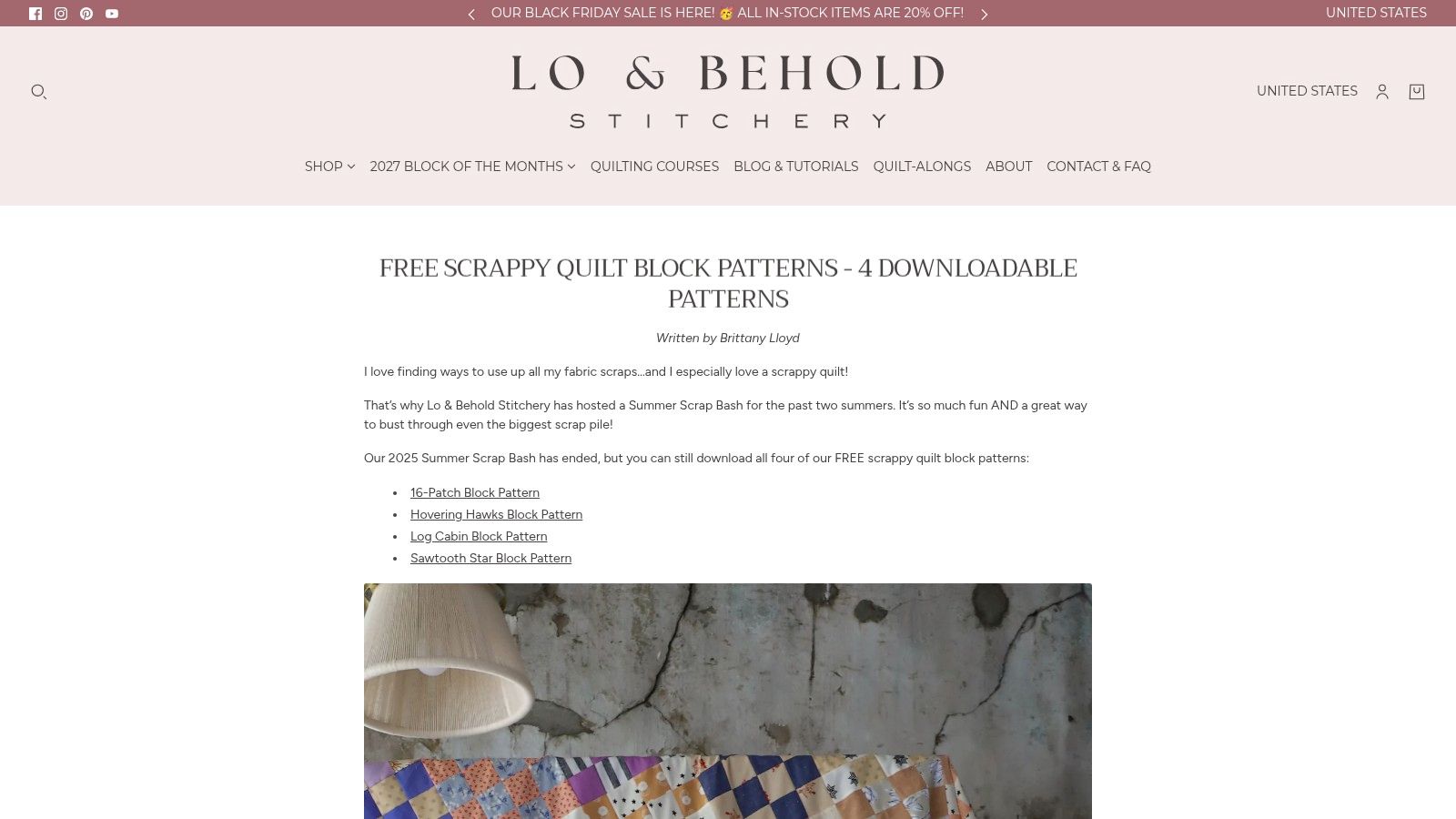
Lo & Behold Stitchery's four free blocks cover distinct cutting approaches, making them a useful test set for a mixed stash. The free block collection includes 16-Patch, Hovering Hawks, Log Cabin, and Sawtooth Star. Completed-project examples help with visualization, and the page also links to Cathedral Windows and an Ombre Puff quilt.
The blocks can be repeated or sewn gradually into a sampler, so you can use scraps as they become available. The collection supplies block designs, not a complete quilt plan. You'll still need to choose the block count, layout, sashing, borders, and finished dimensions.
Check unfinished measurements before combining different block designs. Sew samples, measure them, and decide whether to add framing before making a larger batch.
Log Cabin uses straight seams and is the simpler starting point. Sawtooth Star takes more care because its points depend on accurate seam allowances and trimming. A guide to UGC creator platforms covers publishing resources, not sewing instructions.
A dark floral and a dark geometric can look distinct in the scrap bin, then merge into one value after stitching. Half-square triangles make that contrast easy to spot, so sort scraps by lightness and darkness before cutting.
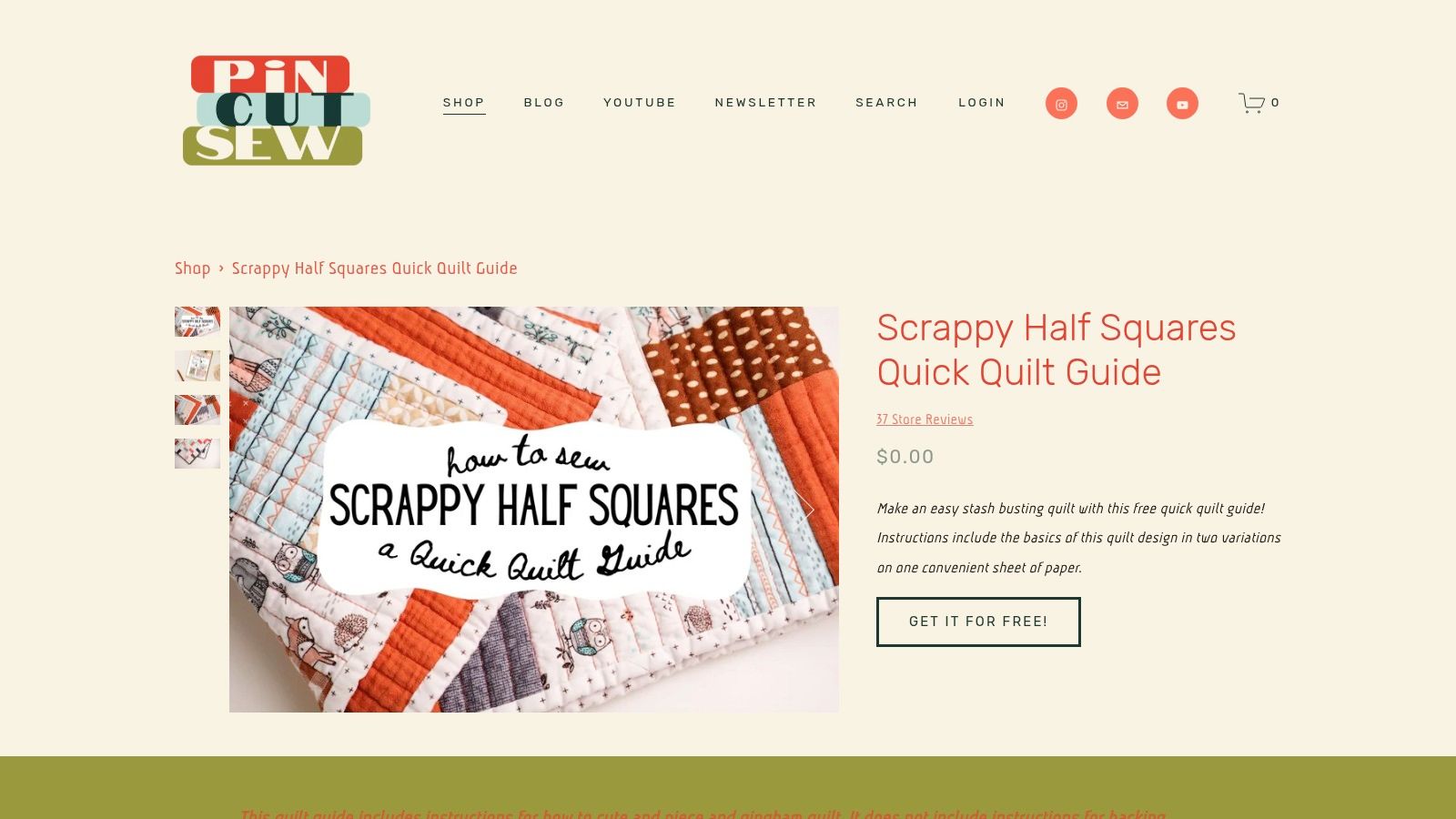
The free Scrappy Half Squares Quick Quilt Guide from Pin Cut Sew Studio includes two variations and baby-size instructions. Compare the layouts before choosing one. The guide can be scaled up, links to separate finishing tutorials, and states personal-use terms.
Value contrast does more work here than color coordination. A bright print beside a dark one usually keeps the diagonal readable, while two medium-value prints can blur together even if their colors differ.
Sew and trim units in batches, keeping each batch at the same unfinished size. That lets you build the quilt gradually without losing track of the pieces. The design tolerates a lively print mix, provided you preserve clear light-dark separation.
Plan the expanded layout before cutting extra units. Otherwise, a pile of triangles may not add up to the size or arrangement you want.
The guide concentrates on piecing, so allow separate time to learn backing preparation, basting, quilting, and binding. Makers looking for resources on sponsored-project logistics can consult the influencer gifting application form.
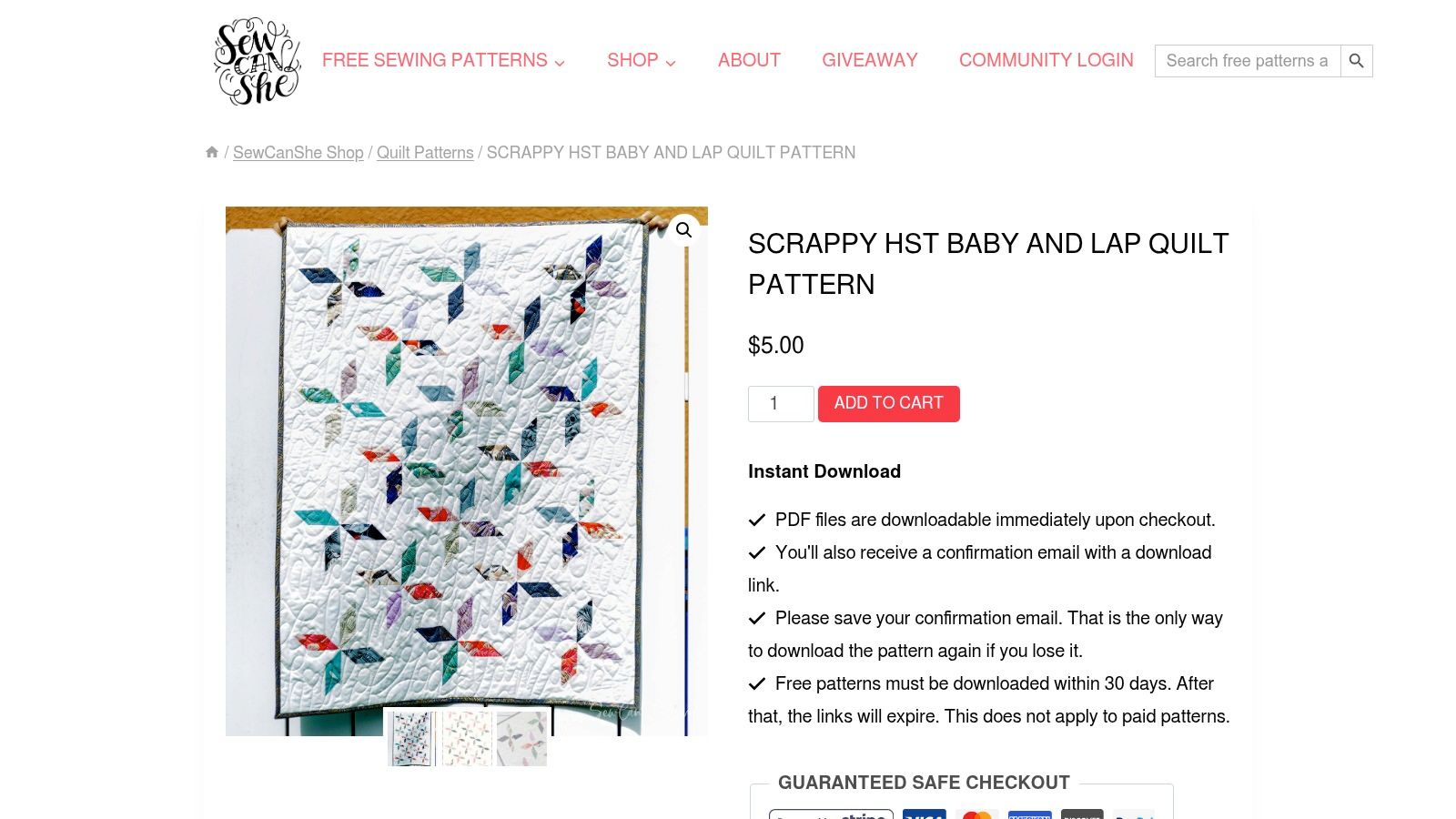
A set finished size makes scrap planning easier: you can check whether your available pieces will yield enough contrasting pairs before you cut. The paid SewCanShe Scrappy HST Baby or Lap Quilt pattern is a five-page PDF with step-by-step photos and a finished size of 34½ × 46 inches. The pattern is described as beginner-friendly, with digital delivery after purchase.
Treat the suggested weekend timeline as flexible. Sorting scraps and trimming half-square triangles can take longer than sewing with prepared fabric.
Sew a test unit before cutting your favorite remnants. Check the seam allowance and trim it to the pattern's specified size before making a batch.
This pattern gives you a defined project and printable photographic instructions. The trade-off is limited sizing: the product page specifies one finished size rather than a range.
Fabric control is moderate. Pair prints with a clear difference in value so the triangle shapes remain visible, then spread standout colors across the layout. A chaotic mix can work, but too many similar-value fabrics will blur the pieced design.
Make units in small batches, and keep track of which fabrics you paired. During assembly, label rows and store them together so you can resume without rebuilding the layout. Reviews may be absent for new patterns, so check the designer's sample photos and PDF preview before buying. For those researching creator outreach, influencer gifting platforms serve a separate purpose from the pattern's printable sewing instructions.
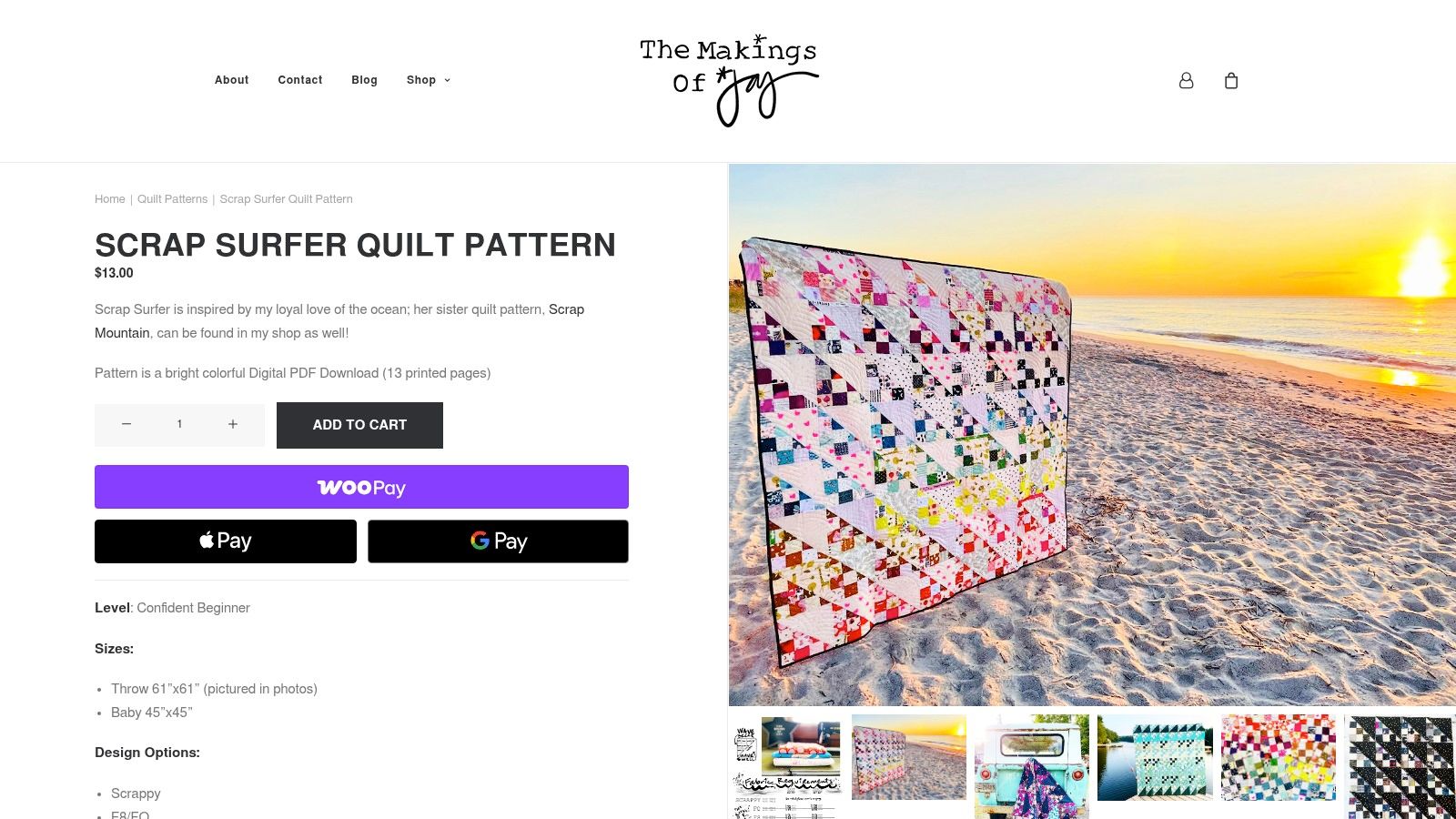
Scrap Surfer accepts strips, fat quarters, precut leftovers, and yardage in the same quilt, so you can draw from scraps in several formats. The Makings of Joy's Scrap Surfer pattern offers 45 × 45-inch baby and 61 × 61-inch throw options. Its thirteen-page PDF includes color photos, strip-piecing guidance, and a coloring page.
The wave-inspired layout needs more fabric planning than an all-over patchwork grid. Use the coloring page to sort scraps into value groups, then assign prints within those groups. Similar-value fabrics can soften the wave, while strong value changes make its movement clearer.
The pattern is rated confident beginner. Strip piecing uses suitable lengths efficiently, but short, irregular scraps may not fit that method. The handwritten, photo-heavy presentation may also take longer to follow than a diagram-led pattern.
A scrappy wave needs readable value changes, not matching prints. Choose the contrast you want to preserve, then vary the fabrics within those groups.
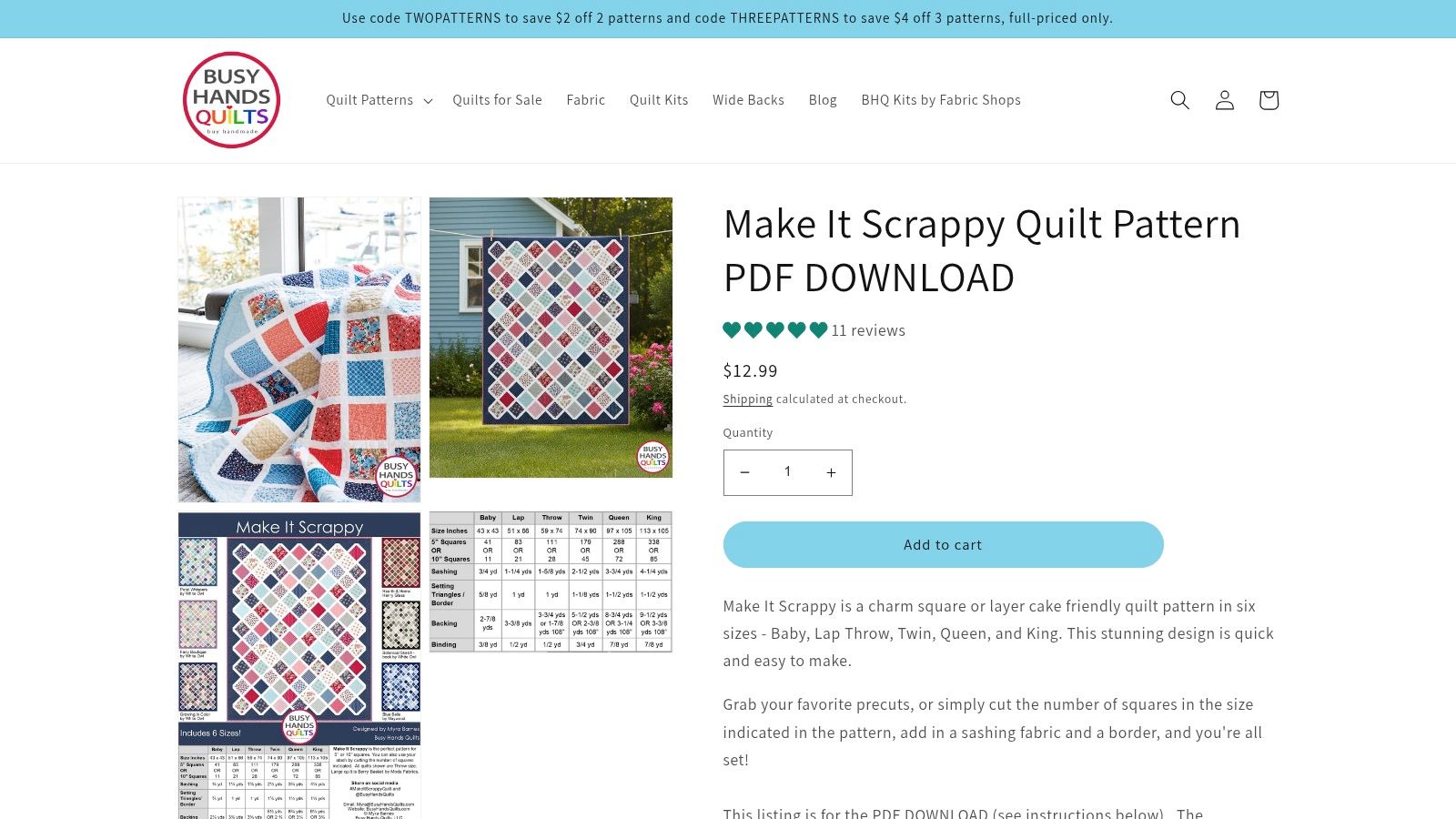
Charm squares and layer-cake squares give you two different starting counts for the same quilt size. Make It Scrappy from Busy Hands Quilts uses 5-inch charm squares, 10-inch layer-cake squares, or scraps cut into squares, with cutting and piecing charts to guide the layout. The pattern offers six sizes: baby, lap, throw, twin, queen, and king.
Make It Scrappy from Busy Hands Quilts gives a scrap quilt a defined structure. Choose your finished size before cutting, then check that you have enough usable squares and consistent sashing and border fabric to complete it.
The squares can mix freely, so fabric control is relatively low within the blocks. The sashing and borders need more planning: choose a fabric that separates the prints without blending into too many of them.
You can cut squares and sew repeated units in stages, which suits a project built from scraps gathered over time. Keep each unit organized by its intended layout, and reserve enough of the same sashing and border fabric for the full quilt.
The listing shows the pattern as sold out, so check availability before planning your cuts around it.
The best comparison is how each pattern manages a mixed scrap bin: how much control it needs over fabric, whether you can sew it in stages, and how well varied prints work together.
| Pattern | Fabric control | Can sew incrementally? | Scraps and prints it handles well |
|---|---|---|---|
| Happy Scrappy, Bayhill Studio | Low; large blocks allow print variety | Yes, one block at a time | Mixed prints in larger pieces |
| Scrappy Quilt, The Crafty Quilter | Moderate; nine-patch units benefit from consistent piecing | Yes, build blocks as scraps become available | Small scraps that can form nine-patch blocks |
| Free Scrappy Quilt Block Patterns, Lo & Behold Stitchery | Depends on the block; the quilter sets the overall layout | Yes, make blocks individually | A varied stash suited to sampler layouts |
| Scrappy Half Squares Quick Quilt Guide, Pin Cut Sew Studio | Moderate; half-square triangles need accurate matching and trimming | Yes, in batches of units or blocks | Scraps with enough fabric for half-square triangles |
| Scrappy HST Baby and Lap Quilt, SewCanShe | Moderate; consistent half-square triangle units keep the top even | Yes, assemble units in stages | Scraps suitable for half-square triangles |
| Scrap Surfer, The Makings of Joy | Flexible fabric choices, with placement guiding the wave effect | Yes, work through the design in sections | A mix of prints that can support a wave-inspired layout |
| Make It Scrappy, Busy Hands Quilts | Low within the squares, higher for coordinating background and borders | Yes, prepare squares and assemble repeated units in stages | Scraps or precuts that can be cut into squares |
Sort for construction first and color second. Separate usable woven cotton from stretchy, heavily worn, or unfamiliar fabrics, then group the cotton by size and value. The beginner scrap-quilt guide from Appliqué Fits emphasizes size sorting and warns that mixed fibers can shrink unevenly.
Don't force every leftover into the same quilt. Set aside pieces that need stabilization or special handling, and test questionable fabrics for color bleeding before combining them with pale backgrounds.
Keep scrappy quilts cohesive with a consistent background, controlled color families, or sashing. You don't need all those controls at once. Preserve the contrast that defines the design, then let the remaining fabric choices be playful.
For background yardage and precuts, shop by brand, including Moda, Riley Blake, and Robert Kaufman, and compare your selections against actual scraps rather than memory. A fabric that looks quiet alone may compete with the prints already in your pile.
Regular stash builders can explore Stitch Rewards, our loyalty program. If you'd rather work from a planned fabric selection, email or call us about a special-order fabric kit; we label kit fabrics or provide a swatch sheet when the background isn't obvious.
Choose the pattern your scraps can support, make the test block, and start your next scrappy quilt today.
High Country Quilts offers quilting fabrics, patterns, notions, and classes in Colorado Springs, along with on-site quilting services to help finish your project. Visit High Country Quilts to find the supplies that fill your stash's gaps and turn your chosen scrappy pattern into a quilt you'll use.
November 2–25 only: buy a $200 gift card in either store and get a free yard of fabric every month of 2027.

Serger and BERNINA Mastery classes, longarm training, bag-of-the-month, Kids Sewing Club and a Highlands Ranch retreat. Here's what's on the calendar in November.

Free gifts, included packages and special pricing on the BERNINA 790 ULTRA, 990, Liberty Editions, L 890 serger and Q Series longarms, now through December 31.


Leave a comment