


Free Fabric All Year: Our 2027 Fabric Punch Card
November 2–25 only: buy a $200 gift card in either store and get a free yard of fabric every month of 2027.

Last Updated: November 3, 2026
Quick Summary
To choose a sewing machine in 2026, start with your skill level and the projects you will actually sew in your first year, then match machine type to those goals. Confirm the core stitches you need, including a stretch stitch and a one-step buttonhole, and weigh total cost of ownership beyond the sticker price. Test drive the machine with your own fabric before buying.
Learning how to choose a sewing machine in 2026 starts with one honest question: what will you actually sew in your first year? A confident answer narrows the field faster than any spec sheet. Beginners often walk in overwhelmed by stitch counts, and answering that question first helps them choose the right machine.
New sewists fall into three rough camps. Skill level is the first filter, and it's less about talent than about patience for setup. If you want to sit down and sew within minutes, a simpler machine wins. If you enjoy tinkering with settings, a computerized model rewards that curiosity.
Project goals decide machine type more than budget does. Here's how we'd sort it:
If you're still weighing a first purchase, our guide to tips for buying your first sewing machine goes deeper on the beginner decision.
The features that matter most for beginners are the ones you'll touch every session, not the ones with the biggest numbers on the box. An automatic needle threader and a clearly marked bobbin system save minutes per project. Speed control keeps early seams steady. A presser foot with adjustable pressure handles everything from chiffon to denim.
Watch out: a low stitch count marketed as "beginner-friendly" often means missing the one stitch you need later, usually a stretch stitch or a proper buttonhole. Check for those two before anything else.
A mechanical machine sets stitch width, length, and pattern with physical knobs and a dial. A computerized machine stores stitches in memory and selects them with buttons or a screen, then drives the needle with a stepper motor that can repeat a setting exactly. That's the whole difference in one sentence, but the practical consequences run deeper than the control style.
How the two control systems behave in use. On a mechanical machine, every adjustment is visible at a glance: you can see the stitch length dial at 2.5 mm and the width dial at 0. If a seam looks wrong, you trace it back to a physical setting. On a computerized machine, the same adjustment lives in a menu, but the machine holds it precisely project after project, and one-touch functions like tie-off, needle up/down, and automatic thread cutting remove repetitive hand motions.
Service and repairability. Mechanical machines have fewer electronics to fail and are generally simpler for a service technician to adjust. Computerized machines add a circuit board, a screen, and sensors; when those fail out of warranty, repair can cost more than a mechanical tune-up.
Power and fabric handling. Mechanical machines often deliver strong piercing power through a direct-drive motor, which is why they remain popular for denim, canvas, and bag making. Computerized machines can match that power, but the servo motor's advantage shows up in speed control: it holds low speeds steadily for detailed work and ramps smoothly rather than surging.
Cost of ownership over five years. A mechanical machine typically costs less up front and less to maintain, but it may lack the automatic features that save you time. A computerized machine costs more up front and carries a higher repair reserve for electronics, but its repeatable settings reduce fabric waste from mis-set stitches. Neither path is cheaper in every case, the honest comparison is purchase price plus five years of service, feet, and consumables, which is the total-cost approach we cover below.
Which fits you. Choose mechanical if you want direct, visible controls, fewer electronics to service, and strong piercing power for heavy fabric. Choose computerized if you want repeatable stitch settings, built-in tutorials, one-touch functions, and you have local service access for the electronics. Match the control style to how you think, then confirm the service story before you pay.
The machines below are available in store so you can sit down at each one before deciding. Here's how they compare:
| Machine | Price | Type | Stitches | Best For |
|---|---|---|---|---|
| Bernette B35 | $529.00 | Mechanical | 23 | First-time sewists who want simple knobs |
| Bernette 05 Academy | $649.00 | Mechanical | 30 | Learners who want more feet and speed control |
| Bernette B77 | $2,249.00 | Computerized | 500 | Quilters ready to grow into a long-term machine |
The Bernette B35 is a strong first machine to consider. It features an automatic 1-step buttonhole and 23 utility and decorative stitches. Seven snap-on presser feet are included, along with a two-stage presser foot lifter.
The Bernette 05 Academy adds adjustable presser foot pressure, a speed limiter, and 12 presser feet, plus an extension table.
For quilters, the Bernette B77 features a 5-inch color touchscreen, Dual Feed for even fabric feed, and 500 stitches including 17 buttonholes. You can see the Bernette B35 and compare it side by side with the others in person.

Most beginners need about a dozen stitches, not five hundred, but the number that matters is which dozen. The core set is a straight stitch, a zigzag, a stretch stitch (sometimes labeled a triple or lightning stitch), a blind hem, and at least one buttonhole. Those five cover garment seams, hemming, knit fabrics that need to stretch with the seam, and the buttonhole every shirt and pair of pants requires.
Stitch length and width matter more than stitch count. Stitch length controls how much fabric the feed dogs advance between needle penetrations; stitch width controls how far the needle swings side to side on zigzag and decorative stitches. On lightweight fabric like chiffon, a shorter length (around 1.5-2.0 mm) and narrow width prevent puckering.
Check for the stitches you will need. Confirm the machine offers the stitches your projects require, such as a stretch stitch or a buttonhole, rather than relying on the total stitch count.
Buttonholes deserve their own check. A one-step automatic buttonhole (the machine measures the button and sews the whole buttonhole in one pass) is far easier for beginners than a four-step manual buttonhole that requires you to turn a dial between stages.
Buy for the sewist you'll be in two years. A 500-stitch machine isn't wasted on a beginner if you'll grow into decorative and quilting work, but it's wasted if you never open the menu. The practical test: list the three projects you want to sew next year, then confirm the machine has the specific stitches those projects require. Matching your project list against the capabilities of specific machine models ensures that your investment remains relevant as your technical skills evolve.
The total-cost angle most guides skip. Stitch options can carry an accessory cost, since specialty stitches may require additional presser feet. Before you buy, price the feet you plan to use and confirm whether they are standard or proprietary. That's the same total-cost-of-ownership logic we apply to the machine itself below.
The sticker price is roughly half the real cost. Total cost of ownership includes accessories, consumables, maintenance, and repairs over the machine's life. A cheaper machine with proprietary feet and hard-to-find bobbins can cost more across five years than a mid-range model with standard parts.
Budget for these line items:
A machine with local service access and available parts protects that investment. That's the practical argument for buying where someone can actually fix it.
Buying local can make service easier if something goes wrong, since you can avoid shipping a machine out for repair.
Ask three questions before you buy anywhere:
For readers planning ahead, our sewing machine repair guide for the region covers what typical service involves and how to time it around projects.
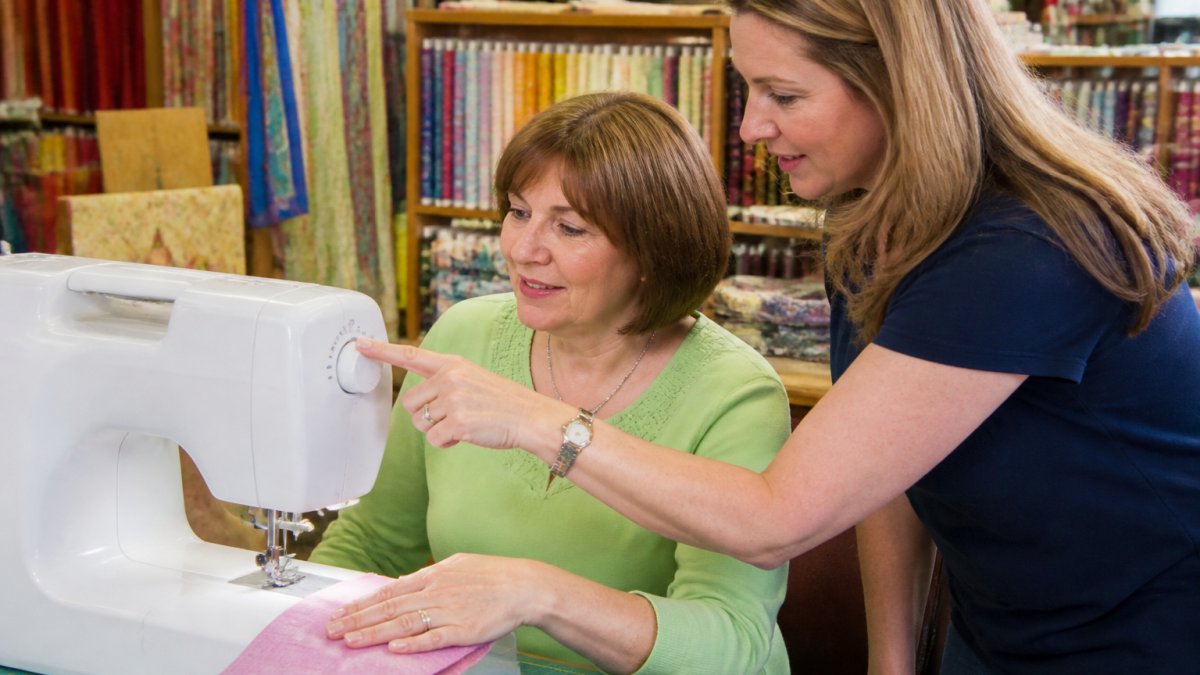
A test drive settles what no spec sheet can. Bring scrap fabric in the weights you actually sew, including denim and a lightweight knit, and run each machine yourself.
Use this checklist at the machine:
You can find buying details and directions for the Highlands Ranch, CO location before you visit.
For most beginners, a mechanical machine with an automatic one-step buttonhole is the safest starting point. The Bernette B35 at $529 offers 23 utility and decorative stitches, adjustable stitch length and width, and seven snap-on presser feet, which covers everything from hemming to simple quilting. If you want room to grow, the Bernette 05 Academy at $649 adds 30 stitches, speed limitation, and 12 presser feet. You can see both in person before deciding.
Mechanical machines handle straight-line piecing well and cost less, which suits beginners on a budget. Computerized models give you precise stitch control, memory, and features like Dual Feed that keep multiple layers from slipping. The Bernette B77 at $2,249 includes Dual Feed and 500 stitches for quilters who plan to work on larger projects.
List the projects you plan to make in the next year, then check for the features those projects require. Quilting needs a large throat space and even fabric feed. Garment sewing needs a buttonhole function and adjustable presser foot pressure. Embroidery needs a dedicated module. Skip features you will not use in the first six months; you can upgrade later.
High Country Quilts provides authorized BERNINA sales, maintenance, and technical education at its Highlands Ranch and Colorado Springs locations. Buying from a local dealer can make service easier than shipping a machine to a distant repair center. Ask about warranty terms and turnaround time before purchase.
Choosing a machine in 2026 comes down to matching control style, stitch needs, and service access to the way you actually sew. High Country Quilts carries an authorized BERNINA and bernette lineup across two Colorado locations, with more than 20,000 products in stock and staff who will sit beside you through a full test drive. Get started with High Country Quilts and choose a machine you can thread, run, and service with confidence.
November 2–25 only: buy a $200 gift card in either store and get a free yard of fabric every month of 2027.

Serger and BERNINA Mastery classes, longarm training, bag-of-the-month, Kids Sewing Club and a Highlands Ranch retreat. Here's what's on the calendar in November.

Free gifts, included packages and special pricing on the BERNINA 790 ULTRA, 990, Liberty Editions, L 890 serger and Q Series longarms, now through December 31.


Leave a comment