

We Love Our Quilting Community
At High Country Quilts we care deeply about community. With our experiences in retail, we know that a store is not only a place to shop but also a place for the community to gather and share. During this busy...


You're standing in front of a rack of stabilizers, holding a piece of fabric in one hand and trying to guess which package won't ruin your project. That's a familiar spot for a lot of quilters and home sewists. The confusion usually starts after the first puckered appliqué, the first wavy monogram, or the first time a knit shirt stretches out of shape under the needle.
Iron on stabilizer is one of those supplies that seems minor until a project goes wrong. Then it suddenly becomes the thing that would have saved the whole piece. If you've ever wondered what it does, when to use it, or why one type works beautifully while another leaves your fabric stiff or distorted, this guide will walk you through it in plain language.
This isn't just one keyword topic. It's a whole stabilizer pillar for beginners: what iron on stabilizer is, how to choose it, when to use fusible instead of sew-in, how to apply it, how to fix mistakes, and what to make with it once you feel comfortable.
A beginner often meets iron on stabilizer after a frustrating afternoon. You stitch a nice appliqué shape onto a quilt block, pull it out of the hoop or off the machine, and the fabric ripples around the stitches. The stitching itself may be neat, but the base fabric has shifted, stretched, or buckled.
That's where iron on stabilizer earns its place. It gives fabric support during stitching so the cloth doesn't move around while the machine is doing its job. It functions similarly to cardboard placed behind wrapping paper before drawing a straight line. The paper behaves better because it has backing.

Iron on stabilizer bonds to the wrong side of the fabric with heat. That bond helps keep the fabric flat and steady. For embroidery, especially on knits, that support isn't optional. Iron-on cut-away stabilizers are imperative for embroidery on knit fabrics, which tend to stretch and distort during stitching; without this permanent fusible backing, embroidery designs on knits will pucker and lose stitch integrity, as shown in this embroidery demonstration on knit fabrics.
A good stabilizer can help with several common problems:
Practical rule: If the fabric feels soft, stretchy, lightweight, or easily misshapen in your hands, it usually needs more support than you think.
For many beginners, the biggest mindset shift is this: stabilizer isn't cheating, and it isn't only for embroidery experts. It's part of the foundation. The stitches may be the visible part of the project, but the backing is often what keeps the final result crisp, flat, and durable.
You are standing in front of the stabilizer rack with two bolts in your hands, and both say fusible. One will help your project behave. The other may leave it stiff, saggy, or harder to finish neatly.
That is why choosing by type matters first.

A simple way to sort iron on stabilizers is to ask two questions. Should the stabilizer stay in the project or come out after stitching? And how much body does the fabric need?
If you answer those two questions, the aisle gets much less confusing.
| Iron-On Stabilizer Quick Guide | Best For | Removal Method | Example Project |
|---|---|---|---|
| Tear-away | Stable woven fabrics and lighter stitch density | Torn away after stitching | Name on a tea towel |
| Cut-away | Knits, stretch fabrics, and dense embroidery | Trimmed and left in place | Monogram on a T-shirt |
| Wash-away | Temporary support when nothing should remain | Dissolves in water | Delicate decorative stitching |
| Fusible fleece | Projects that need loft and body | Usually remains inside | Small bag or placemat |
| Lightweight fusible | Gentle support for lighter fabrics | Usually remains inside | Soft appliqué on apparel |
| Heavyweight fusible | Firm shaping and structure | Usually remains inside | Structured craft project |
Removal method affects how the finished project feels in your hands.
Tear-away works well on fabrics that already have some stability, like quilting cotton or a firm linen blend. It supports the stitching while you sew, then you remove the excess. If the fabric stretches easily, tear-away often does not give enough lasting support.
Cut-away stays with the project. You trim the extra close to the stitching and leave the rest behind. That makes it a reliable choice for knits, T-shirts, and any design with dense stitching, because the remaining layer keeps the fabric from relaxing and pulling out of shape after the hoop comes off.
Wash-away is different from both. It is for temporary support when you want little or nothing left after rinsing. It helps with specialty techniques, but it is not the default choice for most everyday fusible embroidery support.
One point trips up many beginners. Most iron-on stabilizers, including tear-away and cut-away types, are not water-soluble. They may soften but will not dissolve in the wash, a point detailed in Sulky's stabilizer overview.
If you are making a knit top, a baby onesie, or anything stretchy, cut-away is usually the safer first choice.
After you know whether the stabilizer should stay or go, look at weight. Weight is the stabilizer's firmness and density. It works a bit like choosing batting for a quilt. Too little support and the project collapses. Too much and the fabric loses its natural feel.
A medium weight fusible cut-away is often the easiest starting point for beginners, especially for embroidery on garments and soft fabrics. Fabric Tex notes in its stabilizer handbook that medium-weight fusible cut-away is a common choice for preventing stretching, puckering, and distortion, and that two lighter layers can sometimes preserve flexibility better than one very heavy layer.
Here is the practical version we share with new customers at the shop. Match the stabilizer to the fabric, not just the project name.
If you are unsure, bring your fabric into class or into the shop and compare it by feel. That hands-on step helps faster than reading ten package labels. A soft, drapey rayon and a crisp quilting cotton do not need the same kind of support, even if the stitched design is similar.
The best beginner habit is simple. Choose removal method first, then weight, then test on a scrap before committing to the whole project.
This is one of the most common beginner questions, and it's a good one. Both products support fabric. The difference is how they behave before and during stitching.
For most new sewists, iron on stabilizer is the friendlier option. Because it bonds to the wrong side of the fabric, it stays put while you hoop, pin, stitch, or reposition. That means fewer wrinkles, fewer bubbles, and less shifting.
If you've ever tried to keep a loose backing lined up with a soft fabric, you already know the problem. One layer moves a little, then the other layer moves more, and by the time the needle starts stitching, the whole sandwich is just slightly off.
Brother's embroidery support guidance notes that iron-on stabilizer should be attached to the back of the fabric with a steam iron, and the stabilizer piece should be larger than the embroidery frame so the project can be clamped properly.
Sew-in stabilizer has its place. It's a safer choice when:
Ask yourself three questions before you choose:
Sew-in stabilizer works around heat-sensitive fabrics. Iron on stabilizer works around movement.
If you're new, start with fusible for ordinary cottons, knits, and basic appliqué. It removes one variable from the process, and fewer moving parts usually means a cleaner finish.
You cut your fabric, thread the machine, and line everything up carefully. Then one small slip of the iron turns the backing crooked, and the fabric feels slightly rippled before you even take the first stitch. That is why this step deserves a calm, steady approach.

Iron on stabilizer works more like glue than like everyday pressing. Your job is to help two layers settle together and stay put.
Start with fabric that is smooth, dry, and lying flat. Any wrinkle or twist can get fused in place, and stitches tend to make those problems more obvious.
A simple prep routine helps:
At High Country Quilts, this is one of the first habits we teach beginners in class. Slow pressing feels fussy at first, but it saves a lot of frustration later.
Use this order:
If you also work with transfers, Raccoon Transfers' pro guide is a useful companion read because the same steady pressing habits matter there too.
Project density changes how much support you need. A small monogram and a filled embroidery design do not ask the fabric to do the same job.
The goal is to match the support to the project, not to exclusively add more layers. A light cotton label may need only modest support. A dense design on a stretchy top usually needs a steadier base. If you are standing in the stabilizer aisle at High Country Quilts and feeling unsure, that is a normal place to be. This is exactly the kind of question our staff helps customers sort out every day.
Most stabilizer problems aren't project-ending. They're usually small handling issues that can be corrected once you know what to look for.
If the stabilizer lifts away from the fabric, the usual cause is too little heat, too little pressure, or not enough time under the iron. Fusible products need contact and stillness to bond.
Try this:
Bubbling often comes from sliding the iron, pressing unevenly, or fusing onto fabric that wasn't lying flat to begin with. The fix is boring but effective. Reposition the fabric smoothly, press in sections, and lift the iron straight up between placements.
If the stabilizer shifts while fusing, the stitching will often magnify that problem instead of hiding it.
Many people are often surprised. They assume extra stabilizer must mean extra control. In reality, too much fusible support can make fabric look worse.
OESD and sewing experts in this video discussion warn that adding more than two layers of fusible iron-on stabilizer can cause shine, reduced fabric movement, and embroidery distortion, especially on knits and stretch fabrics.
That's the overlooked mistake called overstabilizing.
After stitching, trimming matters almost as much as fusing. Cut-away stabilizer is generally trimmed about 1/4 inch from the design. Too close, and the edges may pucker. Too far away, and the remaining stabilizer can show through or leave an indentation.
If you're removing tear-away near embroidery stitches, place your thumb close to the stitch line while tearing so the fabric and thread don't take the strain.
Mistakes with iron on stabilizer usually come from one of two instincts. Rushing, or adding too much. Slow down, match the support to the fabric, and the results usually improve fast.
A beginner project should feel like a practice sandwich. Small enough to handle, useful enough to finish, and simple enough that you can notice what the stabilizer is doing.
That is why first projects matter so much. A giant embroidered tote or a detailed appliqué quilt block can teach you eventually, but a small project teaches faster because there are fewer moving parts.
A tea towel with a name or short word is a gentle starting point. Tea towels are usually woven cotton, so they stay put better under the needle. You get to practice hooping, placement, and stitching without also fighting stretch.
A T-shirt monogram is your lesson in support. Knit fabric behaves a bit like a springy sweater on a hanger. It shifts, stretches, and tries to bounce back. Fusible cut-away helps hold that shape steady so the stitches do not ripple after the shirt is worn and washed.
Fabric coasters or mug rugs are perfect for noticing feel. Add fusible support to one and leave another plain, and you can compare them in your hands right away. That side-by-side test teaches more than a package label ever could.
As noted earlier, medium tear-away and medium cut-away do different jobs, and beginner projects make that easier to see.
A simple set of pairings looks like this:
Choose first projects that isolate one skill at a time. Use stable woven fabric to practice placement. Use stretch fabric to learn how stabilizer controls movement.
Customers at High Country Quilts often do best when they bring in the fabric they want to use and match it to a small practice project first. That saves frustration, and it helps you build a reference point for the next project. For your next practice piece, explore the beginner kits and patterns at High Country Quilts.
You are standing in front of a wall of stabilizers with a tea towel in one hand and a knit shirt in the other. Two packages look similar. The labels sound technical. That is usually the moment a beginner realizes stabilizer is much easier to understand when someone can show the difference, not just describe it.
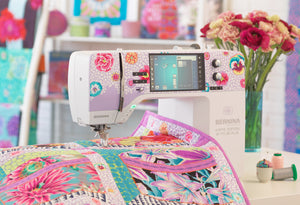
At High Country Quilts in Colorado Springs, new quilters can ask those fabric-specific questions face to face. A woven cotton, a stretchy knit, and an appliqué block may all need support, but they do not need the same kind. Seeing a cut-away and a tear-away side by side, and matching them to your actual project, makes the choice much clearer. That kind of help is especially useful for BERNINA owners who want clean, accurate results from the start.

A few basics will save a lot of frustration:
Those three habits work like good pinning before sewing. They keep things steady so the next step goes more smoothly.
A real quilt shop answers the questions package labels leave open. You can compare OESD options in your hands, ask whether a beginner class fits your goals, and bring in the exact fabric that has been giving you trouble. That is much more useful than guessing from a photo and hoping the package means what you think it means.
Many beginners gain confidence faster when they can talk through one small project with someone who sews every day. High Country Quilts offers that kind of practical guidance, along with supplies, machine support, and classes that help turn “I'm not sure” into “I know what to use next.”
At High Country Quilts we care deeply about community. With our experiences in retail, we know that a store is not only a place to shop but also a place for the community to gather and share. During this busy...

Hi! We’re Adam and Renee Wheaton, the new owners of High Country Quilts! For more than 40 years, we’ve owned and operated vacuum and sewing businesses. Following in Renee’s father’s footsteps after he retired from All Discount Vacuum and Sewing in Colorado...


Leave a comment