
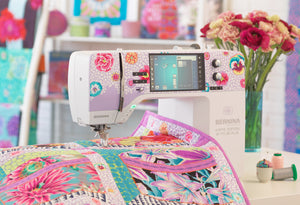

We Love Our Quilting Community
At High Country Quilts we care deeply about community. With our experiences in retail, we know that a store is not only a place to shop but also a place for the community to gather and share. During this busy...


You've stitched the top, pressed the seams, maybe even admired your quilt across the room a dozen times. Then one small question pops up at the very end. How do you add your name in a way that feels worthy of all that work?
That's where ribbons with names shine. They can act like a signature, a gift tag, a memory marker, or a polished finishing detail that makes a handmade project feel complete. If you've never made one before, don't worry. This is one of those lovely little finishing steps that sounds fussy at first and becomes simple once you know your options.
Some makers want a professional printed ribbon and zero guesswork. Others want to sew, stamp, press, or embroider the name themselves. All of those paths can work. If you're planning personalized labels for gifts, swaps, events, or maker collaborations, it can also help to think through how the label will be used in real life, much like the planning mindset behind a gifted collaboration application.
You finish a quilt, fold it neatly, and picture the moment someone opens it years from now. They will see the fabrics first. Then they will look for the little clues that tell the story. Who made this? When was it given? Why was it special?
A ribbon with a name answers those questions in a warm, visible way. It turns a baby quilt into a keepsake, gives a wall hanging a signed-and-finished feel, and helps a holiday runner become part of family tradition instead of just seasonal decor.
Quilters have used ribbon this way for a long time. One memorable example is the Political Ribbon Quilt from 1841, now held by the National Museum of American History. It was made to mark William Henry Harrison's inauguration and uses multiple ribbon designs across the quilt. This history reminds us that ribbon isn't just trim. It can hold a name, a date, an event, or a memory that stays attached to the work.
Practical rule: If a project is worth finishing with care, it is worth labeling with care.
Here is the part that helps many beginners relax. You do not need to commit to one fancy technique or buy every tool in the shop. You can make ribbons with names through custom printing, embroidery, heat-transfer vinyl, or stamping. Each method has its own personality. Custom printing is tidy and consistent. Embroidery feels classic. HTV works well for crisp lettering if you follow a good guide to HTV transfer paper. Stamping is simple and charming for short runs.
That comparison is what makes this kind of project easier to choose, especially if you are still figuring out your style. At High Country Quilts, we often help makers sort through the same questions. Do you want one beautiful label for a gift, or a stack of matching ribbons for a market, guild swap, or maker gift collaboration application? Start there, and the right method usually becomes much clearer.
Some ribbons look polished and professional. Others feel handmade in the best possible way. The best choice is the one that fits your tools, your patience, and the kind of project sitting on your table right now.
You cut a lovely label, add a name, and then the ribbon puckers, frays, or lets the lettering blur. Most of us do that once. After that, we learn this lesson. The ribbon itself does half the work.

Before you choose custom printing, embroidery, HTV, or stamping, start with the base. A slippery ribbon can frustrate a beginner using stamps. A thick, textured ribbon may fight tiny printed text. The easiest projects happen when the ribbon and the method suit each other.
A helpful overview of eight common ribbon types for crafts explains why ribbon names often describe texture, weave, or finish. That matters at the worktable. Texture affects how ink sits, how stitches sink in, and how cleanly heat-applied lettering bonds.
If this is your first personalized ribbon project, start with ribbons that behave predictably.
Here is the shortcut I give customers at High Country Quilts. If you want crisp and polished, smoother ribbons usually pair better with printing or HTV. If you want tactile and handmade, textured ribbons often pair better with embroidery or stamping.
You do not need a crowded tool drawer. You need a small set of supplies that helps you measure, test, and finish neatly.
If you are curious about HTV, read this guide to HTV transfer paper before pressing onto your final ribbon. It helps sort out material choices, which saves ribbon and patience.
One more tip from the quilting table. Buy extra ribbon. A short practice strip lets you test spacing, heat, ink, or stitch density before you touch the final piece.
For shopping, don't think of this as one keyword or one item. Build a small project kit instead. Choose the ribbon base, then the naming method, then the attachment supplies. If you want help matching those pieces to your project and skill level, the High Country Quilts course on choosing personalization supplies is a practical place to start.
Every method has a different personality. Some are quick. Some are polished. Some reward patience. If you're choosing your first approach, pick the one that matches the result you want to live with, not just the tool you already own.
This is the easiest route when you want consistency. You choose the ribbon type, the text, and sometimes a logo or motif. Then the manufacturer handles the production.
A helpful process for ordering custom branded ribbons is outlined in this step-by-step ribbon customization guide. It breaks the process into six critical phases. Identify the purpose and audience, design the ribbon with logo or text, choose a manufacturer, submit specifications for a sample, place and monitor the bulk order, and then use the finished ribbons. The sample-verification step matters because it helps catch bulk-order mistakes before they become expensive.
Custom printing is a strong fit for:
The trade-off is that you usually wait for production rather than finishing the ribbon the same day.
Embroidery gives the most stitched-in look. If your quilt already celebrates thread, embroidery often feels like the most natural extension of the project.
You'll need an embroidery-capable machine, stabilizer, thread, and ribbon with enough body to handle stitching cleanly. A wider ribbon is usually easier for names, initials, or a short phrase. I recommend keeping the wording brief. Dense lettering can make narrow ribbon pucker.
For inspiration on how lettering and stitched personalization translate across fabric projects, it's worth looking at examples of custom embroidered shirts. The medium is different, but the design lesson is the same. Clean text, good spacing, and the right scale make personalization look intentional.
If you're learning machine techniques, structured training helps more than random trial and error. A hands-on creator skills course can also be a reminder that process matters. Practice on scraps, refine your setup, then move to the final piece.
HTV is a favorite because it creates crisp, modern lettering. If you have a Cricut or similar cutting machine, this route feels approachable after a little testing.
The most important part is the pressing setup. When using HTV for names, the application requires the vinyl “Shiny Side” down at 140°F for 30 seconds with firm pressure, and skipping the 5-second preheat phase is a common mistake that causes adhesion failure, as shown in this HTV application demonstration.
That sounds very specific because it is. HTV rewards precision.
A few beginner notes help a lot:
Stamping is the low-tech charmer in the group. If you like handmade labels that feel a bit organic rather than perfectly machine-made, this is a wonderful option.
You'll need alphabet stamps or a custom name stamp, fabric ink, a firm work surface, and ribbon that won't shift too much while you stamp. Grosgrain or a stable woven ribbon is often easier than slippery satin. Press straight down. Don't rock the stamp. Let the ink dry fully before handling.
Stamping works well for:
If you want “perfect,” choose printing or HTV. If you want “warm and handmade,” stamping has a lot of charm.
| Method | Difficulty | Cost | Best For |
|---|---|---|---|
| Custom printing | Easy | Moderate to higher | Batches, polished branding, repeat orders |
| Embroidery | Moderate to advanced | Higher if equipment is needed | Heirloom labels, stitched finishes, durable text |
| HTV | Moderate | Moderate | Crisp names, modern styles, DIY personalization |
| Stamping | Easy to moderate | Lower | Handmade charm, one-off labels, simple setups |
There isn't one winner for everyone. The best method depends on whether you want speed, softness, stitched texture, or a more polished repeatable result.
A good name label isn't crowded. It isn't trying to prove how much information can fit on a small strip of ribbon. It's readable first, pretty second.
The name should be the star. If you add a date, keep it secondary. If you add a phrase, make it short. A label usually looks cleaner when it carries one primary message and one supporting detail, rather than three competing lines.
Font choice makes a huge difference. Script fonts can be lovely, but small loops and thin swashes disappear fast on ribbon. If you need a starting point, this roundup of best fonts for custom apparel is useful because the same readability issues show up on fabric and ribbon. Bold, clean letterforms nearly always survive size changes better than fussy decorative fonts.
Many beginners stumble here. The prettiest ribbon on the spool isn't always the best ribbon for the finished project.
There's a real trade-off between durability and vibrancy. Full-color printing on satin can look vivid at first, but satin can fray and doesn't handle heat as well, while grosgrain offers better texture stability for names and quotes intended for longer use, as discussed in this personalized ribbon material overview.
That's why a soft baby gift, a display bow, and a frequently handled quilt label may need different ribbon choices.
A broader view of maker and creator tools can help you think about how people read names, labels, and branded details across products. That's one reason directories like UGC creator platforms can be unexpectedly useful. They show how clarity and visibility matter whenever text has to be seen quickly.
A name label should still be readable when the quilt is folded, handled, or seen from arm's length.
Attaching the ribbon is the part that makes everything feel finished. A beautiful label can still look awkward if it's placed in the wrong spot or sewn on with too much tension.

A fold-over label is tucked into a seam or binding so the ribbon peeks out from the edge. This style feels neat and subtle.
Cut the ribbon a little longer than the finished visible length, fold it in half, and baste it in place before attaching the binding. This works especially well for names only, initials, or a tiny brand mark. If the ribbon is thick, trim bulk before the final seam.
A flat patch label is stitched directly onto the back of the quilt or project. This gives you more room for a full name, a date, or a short message.
Use small, even stitches close to the ribbon edge. Press the ribbon first so it lies flat. If the ribbon wants to ripple, hand-basting is worth the extra minute. For projects that will be gifted, this style often feels more intentional and easier to read.
If you like seeing finishing options in the broader world of presentation and gifting, browsing examples from influencer gifting platforms can spark ideas for placement, visibility, and presentation details that translate surprisingly well to handmade projects.
For a visual walk-through, this video gives a helpful look at label attachment in practice.
Longevity starts long before the first wash. It starts when you match the personalization method to the ribbon itself.
A recent analysis found that 42% of ribbon failures occur within 6 months due to improper ink adhesion or a mismatch between the ink type and fabric, which is a strong reminder to test materials before finishing the project, according to Nametag.com's custom imprint information.
That number lines up with what many makers learn the hard way. The ribbon looked fine on day one, then peeling, fading, or fraying showed up later.
If you're using stamping, heat-set only as your ink manufacturer recommends. If you're using HTV, treat the ribbon gently until the bond is fully set. If you ordered printed ribbon, keep a sample scrap and test it before attaching the final label to a finished quilt.
The nicest thing about adding ribbons with names is that it doesn't require you to become an expert at everything. You just need a good starting point, the right materials, and someone who can answer the questions that pop up halfway through a project.

If you love the idea of stitched labels, High Country Quilts is an authorized BERNINA dealer with the kind of training and support that helps beginners feel steady and experienced makers feel understood. If you're more interested in ribbon, notions, and hands-on project supplies, the shop's mix of sewing tools and quilting materials makes it easier to gather what you need without guessing.
Local help also matters. Sometimes a project doesn't need another generic tutorial. It needs a real person who can say, “Yes, that ribbon will work,” or “Try the wider one instead.” For makers who also think about presentation, outreach, and polished handmade branding, tools and services like this influencer outreach service can be a reminder that thoughtful finishing details always stand out.
If you've been putting off labels because they felt complicated, this is a good project to start now. Pick one method, test on scraps, and make your next quilt unmistakably yours.
If you're ready to try ribbons with names on your next quilt, bag, or gift, visit High Country Quilts for sewing inspiration, quality tools, and expert help that makes the first step feel easy.
At High Country Quilts we care deeply about community. With our experiences in retail, we know that a store is not only a place to shop but also a place for the community to gather and share. During this busy...

Hi! We’re Adam and Renee Wheaton, the new owners of High Country Quilts! For more than 40 years, we’ve owned and operated vacuum and sewing businesses. Following in Renee’s father’s footsteps after he retired from All Discount Vacuum and Sewing in Colorado...


Leave a comment