


Free Fabric All Year: Our 2027 Fabric Punch Card
November 2–25 only: buy a $200 gift card in either store and get a free yard of fabric every month of 2027.

Quick Summary
The best beginner sewing machine is one that matches the projects you plan to sew in your first six months. Start by listing those projects and their fabric weights, then choose between a mechanical model for simple controls and lower cost or a computerized one for automatic features. Test the machine on your own fabric before buying.
Choosing your first sewing machine gets easier once you know what you want to make. A machine that handles cotton quilt blocks well may struggle with denim jeans or stretchy knit tops.
Start by listing the three projects you expect to sew in the next six months. Write down the fabric weight for each one. Light cotton, heavy denim and jersey knit each put different demands on a machine's motor, feed system and needle options.
Pay attention to how often you plan to sew. A weekly quilter needs a sturdier machine than someone who hems curtains twice a year. Consider whether you'll want to add embroidery later, since that affects which models make sense now.
Write your project list down before you shop. It becomes the filter for every machine you consider.
Mechanical machines use dials and knobs to set stitch type, length and width. They are simpler to repair and usually cost less. Computerized machines use a screen or buttons and often include automatic buttonholes and built-in stitch libraries.
A common mistake is buying a computerized model for features you will never use. Many beginners stick to straight and zigzag stitches for their first year. A mechanical machine covers that work well.
Choose a computerized machine if you want automatic needle threading, multiple buttonhole styles or the option to add embroidery. Choose a mechanical machine if you prefer hands-on controls and a lower price. The Bernette B35 is a mechanical model with an automatic 1-step buttonhole, priced at $529.00, so you get automation without a touchscreen. For a fuller comparison of machine types, read our guide on choosing a sewing machine in 2026. Before deciding, it also helps to understand how a sewing machine differs from an embroidery machine.
Most beginners need only a handful of stitches, but which features matter depends on the fabric and projects you listed before you shopped. Use this section as a filter: match each feature to the work you actually plan to do.
The core stitches. The straight stitch handles seams and topstitching on woven fabrics. The zigzag stitch finishes raw edges, sews stretch fabrics, and attaches elastic. A buttonhole stitch saves time on garments. A blind hem stitch is useful if you plan to hem trousers or skirts. Beyond those four, decorative stitches are nice to have but rarely used in a beginner's first year, do not pay extra for a large stitch library unless you have a specific project that needs it.
Stitch length and width controls. Adjustable length lets you sew long basting stitches for gathering and shorter stitches for strong seams. Width matters for zigzag and decorative work. On mechanical machines these are dials; on computerized machines they are buttons or screen settings. Test both while the machine is running to see how smooth the adjustment feels.
Features mapped to projects and fabrics:
Match the machine to your first projects. If your list is mostly cotton quilt blocks, prioritize a walking foot option, feed dog drop, and a large throat space. If it is jersey knit tops, prioritize a stretch stitch or zigzag and adjustable presser foot pressure. If it is denim jeans or bags, prioritize a strong motor and metal frame over a large stitch library.
Watch out: a machine with many decorative stitches but weak feed dogs will struggle on heavy fabrics, test the feed on thick material before you commit, because a long stitch menu does not compensate for a feed system that cannot move denim.
Beginner sewing machines generally fall into three price bands, and each band buys a different level of capability. Knowing what changes between bands helps you avoid overpaying for features you will not use.
The Bernette B33 at $399.00 offers 15 stitches, a semi-automatic needle threader, and a 2-step presser foot lift, a good fit for occasional sewers who want simple, dependable controls. The Bernette B35 at $529.00 adds an automatic 1-step buttonhole and seven included presser feet.
The Bernette B79 at $2,999.00 combines sewing and embroidery with a 5-inch color touchscreen, capability most beginners do not need on day one.
Consider the total cost of ownership, not only the sticker price. Budget for:
Compare the whole first-year number, not just the price tag. For reading material on operating your machine, How to Train Your Sewing Machine is listed at $16.79.
Test the feed on denim before you commit to any machine.
For home sewing, prioritize reliability, easy controls and a quiet motor. A machine you use every week should start every time and handle everyday fabrics without fuss.
The Bernette B35 suits home sewers who want garment and craft projects with automatic buttonholes and seven included presser feet. Quilters who plan to work on larger projects may prefer the Bernette B77 sewing and quilting machine, which is built for the extra bulk of quilt layers. Compare these options with the Bernette B77 sewing and quilting machine before choosing a quilting model. For a lighter, budget-friendly pick, the Bernette B33 keeps the controls simple.


Consider how much table space you have and whether the machine is easy to lift in and out of storage. Those practical details affect how often you actually sew.
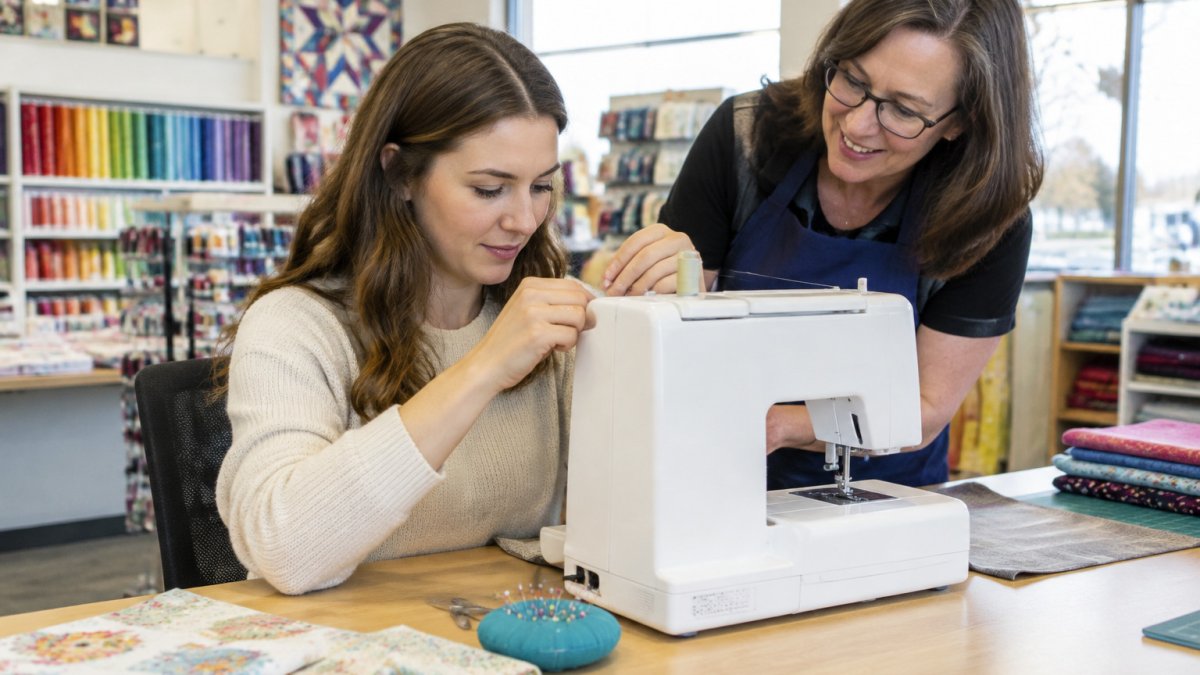
Testing a machine in person is the most reliable way to judge it. Bring a sample of your own fabric, including one heavy layer and one stretch knit if you plan to sew those.
Check each of these during your test:
Ask staff to show you the features you need most. Take advantage of the chance to test machines before you buy. Bring your fabric and ask for a hands-on demonstration at upcoming local workshops, where you can compare machines side by side.
Use this checklist during an in-person test to compare machines side by side.
| Test step | What to check | Why it matters |
|---|---|---|
| Straight and zigzag seams | Sew on scrap fabric | Confirms basic stitch quality |
| Adjust length and width | Change settings while sewing | Shows how smooth the dials feel |
| Sew a buttonhole | Test if the machine offers one | Reveals ease of automatic features |
| Listen at full speed | Note noise or vibration | Flags motor or balance issues |
| Thread it yourself | Thread without help | Tests how intuitive the machine is |
Once you have narrowed your list to two or three machines, visit High Country Quilts in Highlands Ranch for a hands-on test. Bring your project list and your fabric samples so we can help you compare options. Start with the machines in this guide and take each one through the test checklist above before you decide.
For most beginners, a mechanical machine with a straight stitch, zigzag stitch, and an automatic buttonhole is the most practical starting point. Mechanical models use dials for stitch selection, which makes the basic controls easy to learn and easy to troubleshoot. Computerized machines offer more stitches and features, but they cost more and can feel overwhelming early on. Choose a model that handles the fabrics and projects you plan to sew first, then grow into extra features later.
Brand matters less than fit. Compare the stitches, buttonhole options, presser feet, and the ease of threading and adjusting settings on each model you consider. High Country Quilts carries the Bernette B33 at $399.00 and the Bernette B35 at $529.00, both mechanical machines built for beginners. Test each one in the store before deciding, so you can judge the controls and stitch quality yourself.
A reasonable starting budget depends on how often you plan to sew. A solid mechanical beginner machine typically falls in the lower price range, while computerized models with embroidery or touchscreen controls cost considerably more. Consider total ownership cost too: factor in presser feet, needles, and any future service. High Country Quilts' Bernette B33 at $399.00 and B35 at $529.00 are good reference points for a dependable first machine.
Yes. Most beginner machines handle garment seams and quilting straight stitches well, especially with a straight stitch foot and an adjustable stitch length. Heavy fabrics like denim or layered quilt sandwiches benefit from a two-step presser foot lift and strong piercing power, which features on the Bernette B33 and B35. Check that the machine's stitch width and length settings cover the techniques you plan to use before buying.
November 2–25 only: buy a $200 gift card in either store and get a free yard of fabric every month of 2027.

Serger and BERNINA Mastery classes, longarm training, bag-of-the-month, Kids Sewing Club and a Highlands Ranch retreat. Here's what's on the calendar in November.

Free gifts, included packages and special pricing on the BERNINA 790 ULTRA, 990, Liberty Editions, L 890 serger and Q Series longarms, now through December 31.


Leave a comment