


We Love Our Quilting Community
At High Country Quilts we care deeply about community. With our experiences in retail, we know that a store is not only a place to shop but also a place for the community to gather and share. During this busy...


Last Updated: October 23, 2026
Quick Summary
A sewing machine vs embroidery machine differs fundamentally in control: you guide the fabric on a sewing machine while the machine automatically guides fabric under a stationary needle on an embroidery machine. Sewing machines handle everyday tasks like piecing and hemming, while embroidery machines add decorative designs to finished items. Most beginners should start with a dedicated sewing machine to learn foundational skills before adding embroidery capability.
Choosing between a sewing machine vs embroidery machine for beginners is one of the most important decisions you'll make as a new maker.
A sewing machine uses a needle and thread to create stitches by moving fabric under the needle in patterns you control. An embroidery machine, by contrast, moves the fabric automatically under a stationary needle, following pre-programmed designs.
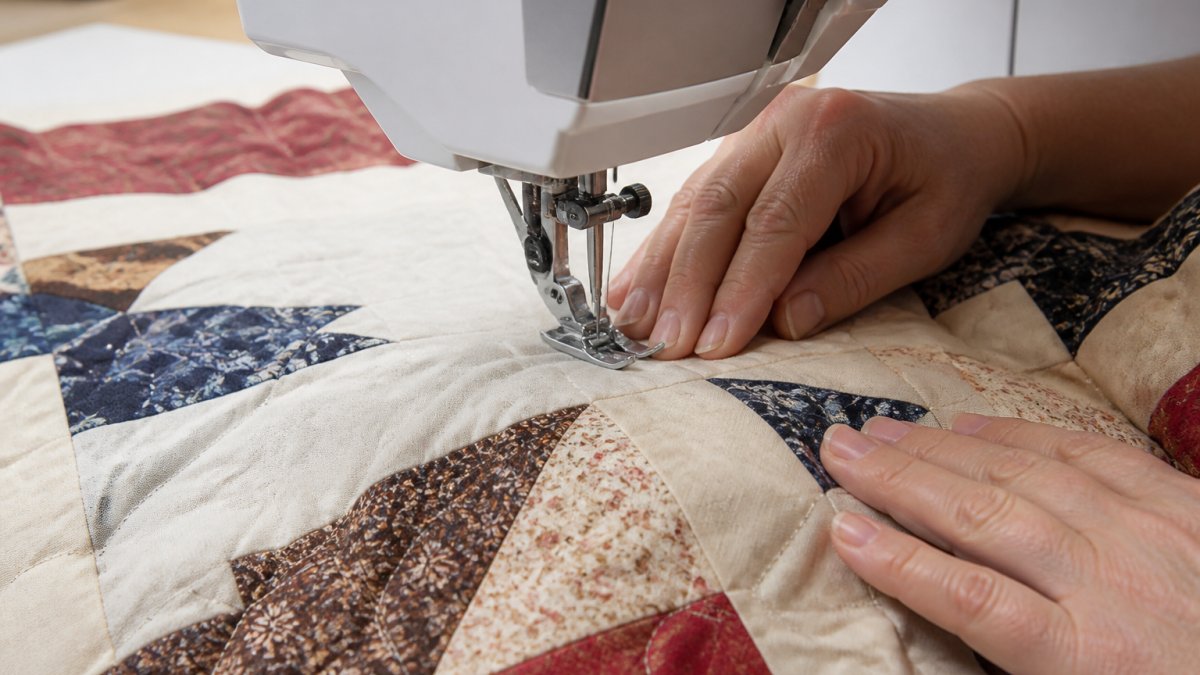
The core difference comes down to control. With a sewing machine, you guide the fabric. You decide the stitch length, speed, and direction. With an embroidery machine, the machine guides the fabric automatically. You load a design file, thread the machine, and press start.
This matters because it determines what projects fit each machine. Sewing machines handle everyday tasks: piecing quilt blocks, hemming pants, mending tears, sewing seams on garments.
For quilters specifically, a sewing machine is non-negotiable. Quilting involves piecing fabric pieces together into blocks, then quilting those blocks (stitching through all layers). You need manual control for this precision work. An embroidery machine alone won't get you there.
If you're starting your quilting journey, a beginner-friendly sewing machine should balance ease of use with the features quilting requires. Read our comparison of the best sewing machines for quilting to help you evaluate your options. Look for machines with a larger throat space (the distance from the needle to the machine's body), consistent stitch quality, and reliable tension control.
When you're evaluating sewing machines for quilting, prioritize these features:
High Country Quilts carries machines that meet these requirements. Visiting one of our locations lets you sit down with a machine before buying, test the foot pedal feel, and ask questions about features that matter for your specific projects.
Many beginners worry they'll outgrow a budget-friendly machine quickly. Get a beginner's guide to crazy quilting techniques to complement your machine selection and expand your quilting skills. In reality, quilters often keep their first machines for years. A solid beginner machine handles thousands of projects. The investment matters less than choosing a machine that feels comfortable in your hands and produces consistent results.
A combo machine that handles both sewing and embroidery appeals to makers who want flexibility without buying two separate machines. The appeal is obvious: one machine, one learning curve, one workspace footprint.
But combo machines involve trade-offs. They're more complex than dedicated machines. The control panel has more buttons. The setup process takes longer. For absolute beginners, this added complexity can feel overwhelming.
That said, combo machines make sense if you're genuinely interested in both sewing and embroidery. You'll eventually want embroidery capabilities, to add monograms to gifts, create custom designs on finished projects, or explore embroidery as its own craft. A combo machine lets you grow into that interest without a second purchase.
When comparing combo options, ask yourself honestly: Will you actually use the embroidery features in the next year? If the answer is "maybe someday," stick with a dedicated sewing machine now. Add embroidery capability later when you're ready. If the answer is "yes, I have projects in mind," a combo machine pays for itself in convenience.
Machine embroidery feels intimidating to beginners because it involves design files, thread changes, and software. But breaking it into steps removes the mystery.
Start with the fundamentals. Machine embroidery uses specialized needles and threads that differ from regular sewing (Ferd. SCHMETZ GmbH). The Schmetz Embroidery Needle Assortment (sizes 75/11) features a light ball point, wide eye, and groove designed specifically for delicate embroidery threads like rayon and polyester.

The learning process follows this path: understand your machine's embroidery mode, practice with simple designs, gradually tackle more complex projects. Most beginners benefit from structured instruction rather than trial-and-error.
Embroidery 101, a hands-on class offered monthly, walks you through machine embroidery techniques while you complete an actual project. The class covers design selection, hooping fabric, thread management, and troubleshooting common issues. You'll leave with finished embroidery and confidence to try projects on your own.
| Learning Stage | Time Investment | Key Focus | Recommended Next Step |
|---|---|---|---|
| Beginner | 4-6 weeks | Machine basics, simple designs | Take structured class |
| Early practice | 2-3 months | Design selection, thread management | Experiment with medium-complexity designs |
| Building confidence | 3-6 months | Troubleshooting, custom designs | Explore advanced techniques |
| Intermediate | 6+ months | Complex projects, specialty threads | Develop personal style |
The biggest mistake beginners make is jumping to complex designs before mastering simple ones. Start with pre-programmed designs built into your machine or simple downloaded designs. Practice hooping, threading, and monitoring stitches. Once those steps feel automatic, advance to custom designs and specialty threads.
The price range for beginner machines spans from under $300 to over $1,000. Where you land depends on what you actually need versus what marketing tells you to want.
A basic sewing machine that handles quilting well costs between $400-$700. This range gives you reliable stitch quality, adequate throat space, and features that matter without unnecessary complexity. Machines in this range from reputable manufacturers hold up through thousands of projects.
Combo machines cost more, typically $800-$1,200, because you're paying for two sets of capabilities. If you're only interested in sewing right now, that premium isn't justified. If you genuinely plan to embroider within the next year, the combo cost amortizes across both skills.
Factor in accessories and supplies beyond the machine itself. You'll need:
At High Country Quilts, we help beginners understand what's essential versus what's nice-to-have. Many first-time buyers overspend on features they'll never use. Our goal is matching you with a machine that fits your actual projects and budget.
This decision ultimately depends on what projects excite you and what skills you want to develop first.
Choose a sewing machine if:
Choose an embroidery machine if:
Choose a combo machine if:
The honest truth: most beginners should start with a dedicated sewing machine. It teaches you the fundamentals, lets you complete actual projects quickly, and keeps frustration low. Once you've spent time sewing and discovered what you actually want to do next, you'll make a better decision about adding embroidery capability.
The difference between a frustrating first experience and a confidence-building one often comes down to having someone answer questions when you get stuck.
High Country Quilts operates as more than a retail store. Our two Colorado locations serve as project centers where makers get education, community, and expert support.
The Embroidery 101 class is one example of how structured instruction removes barriers for beginners. You learn from experienced instructors, practice on actual machines, and leave with completed work and confidence.
Your first machine decision shapes your entire journey as a maker. Take time to understand what you actually need, test machines in person if possible, and connect with experienced people who can answer questions. The investment pays dividends through years of creative projects and the satisfaction of making something with your own hands.
A sewing machine moves the fabric under a stationary needle to create seams and stitch patterns, making it ideal for piecing quilts and general sewing. An embroidery machine keeps the fabric stationary while the needle moves in programmed patterns to create decorative designs. Sewing machines give you control over stitch length and width; embroidery machines execute pre-designed patterns from digital files. For quilting specifically, a sewing machine is typically your foundation tool.
Standard sewing machines cannot execute embroidery designs automatically because they lack the programming and motorized movement system that embroidery machines have. However, you can add decorative stitching manually on a sewing machine using specialty threads and needles, like Schmetz Embroidery needles ($5.99-$6.99), which feature a wide eye and groove to protect delicate threads. This manual approach works for simple embellishments but won't replicate the precision of dedicated embroidery machines.
Combo machines save space and cost upfront, making them attractive for beginners with limited budgets. However, they often compromise on both functions, neither sewing nor embroidery performs as well as dedicated machines. If you're certain you'll use both functions equally, a combo can work. If you're primarily quilting with occasional embroidery accents, starting with a quality sewing machine and adding embroidery capability later is often smarter. Consider your actual project plans before deciding.
No. Quilting fundamentally requires a sewing machine to piece fabric squares and blocks together. An embroidery machine is optional and adds decorative elements to finished quilts. Most beginners should focus on mastering a reliable sewing machine first. Once you're comfortable with basic quilting, you can explore embroidery through classes like Embroidery 101 ($25.00), which is open to all machine brands and all experience levels, helping you decide if embroidery is worth pursuing.
Starting your sewing or embroidery journey should feel exciting, not overwhelming. High Country Quilts has helped thousands of beginners in Highlands Ranch and across Colorado choose the right machine, learn essential techniques, and discover the joy of making. Whether you're drawn to quilting, embroidery, or both, we're here to support every step of your creative path. Get Directions to our nearest location and let's find the machine that's right for you.
At High Country Quilts we care deeply about community. With our experiences in retail, we know that a store is not only a place to shop but also a place for the community to gather and share. During this busy...

Hi! We’re Adam and Renee Wheaton, the new owners of High Country Quilts! For more than 40 years, we’ve owned and operated vacuum and sewing businesses. Following in Renee’s father’s footsteps after he retired from All Discount Vacuum and Sewing in Colorado...


Leave a comment