

We Love Our Quilting Community
At High Country Quilts we care deeply about community. With our experiences in retail, we know that a store is not only a place to shop but also a place for the community to gather and share. During this busy...


So, you're making a quilt for a queen bed and wondering, "What's the right size?" It's one of the most common questions we get, and the answer isn't as simple as you might think!
While a great starting point for a standard queen quilt is around 90 inches wide by 95 inches long, the perfect dimensions really come down to your specific bed and the look you want to achieve.
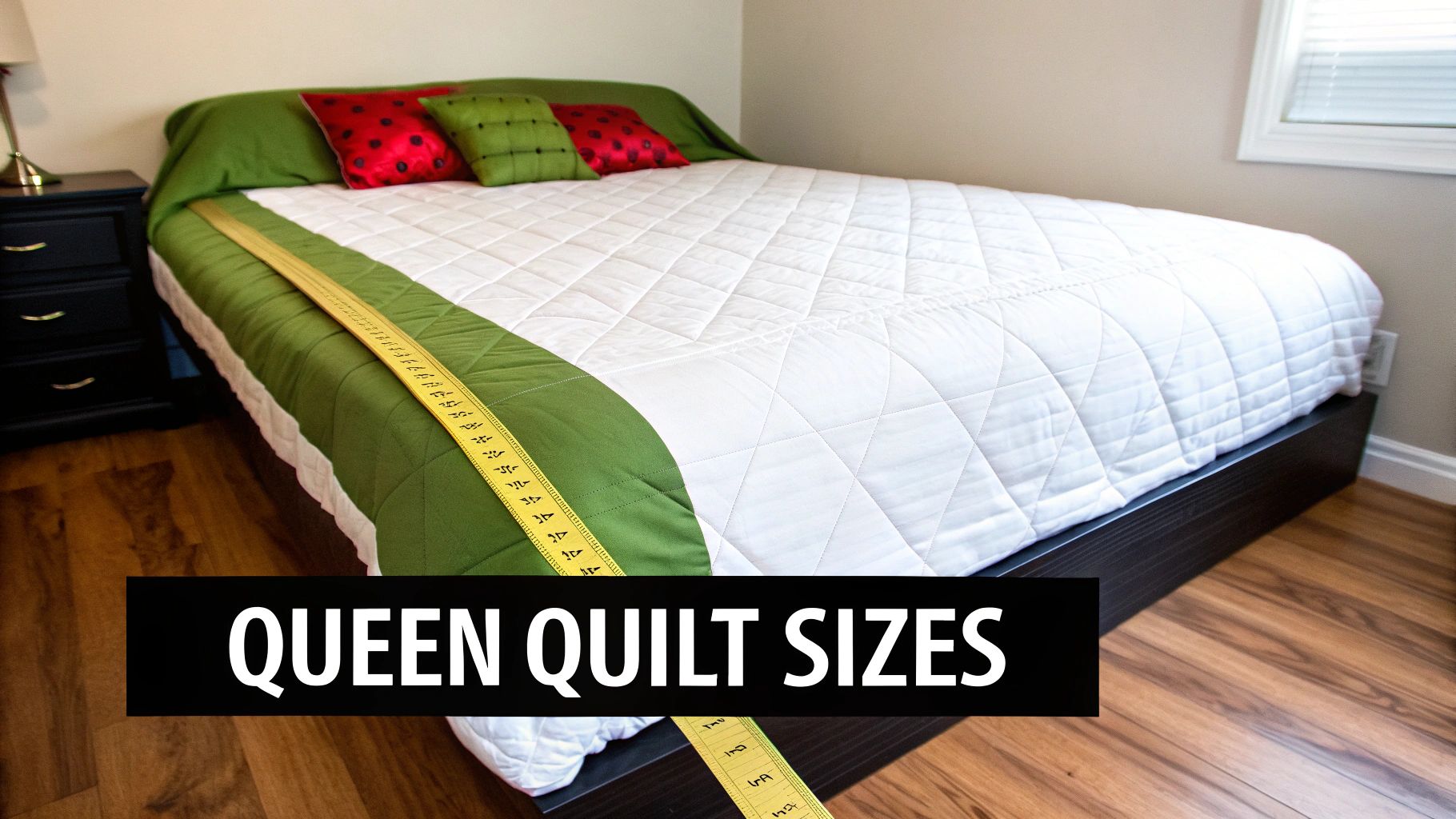
Getting that "just right" fit is all about balancing the size of your mattress with your personal style. There’s no single correct answer, which is part of the fun of creating something custom! The first step is always to know your canvas—the bed itself. Understanding the standard queen mattress dimensions is essential before you even think about cutting fabric.
As a general rule of thumb, most quilters aim for a finished size somewhere between 84 to 92 inches wide and 90 to 98 inches long. This range gives you enough fabric for a beautiful drape over the sides of most mattresses, from classic profiles to thicker pillow-tops, without the quilt puddling on the floor.
To make things a bit clearer, let's break down the most common queen quilt sizes you'll see.
This table compares common quilt dimensions for a standard queen bed (which is 60" x 80") to help you visualize how each one will look.
| Quilt Size Category | Typical Dimensions (Width x Length) | Best For |
|---|---|---|
| Standard Queen | 90" x 95" | A classic, go-to size that covers the mattress and box spring. |
| Oversized Queen | 100" x 110" | Deeper mattresses or achieving a luxurious, floor-length drape. |
| Coverlet Style | 86" x 86" | A modern, shorter look where the quilt just covers the mattress top, often paired with a bed skirt. |
Seeing the numbers side-by-side really helps illustrate how a few inches can completely change the style. Now, you’re ready for the most important step: measuring your own bed to find your perfect custom fit.
Have you ever brought home a quilt labeled "queen size," only to find it looks oddly short on your bed? You're not alone. The culprit is almost always the mattress depth. While the top surface of a standard queen mattress is 60 inches by 80 inches, that's only part of the equation. It's the thickness—that third dimension—that really dictates how your quilt will drape.
Think of it like this: you wouldn't use the same frame for a thin watercolor paper as you would for a thick, gallery-wrapped canvas. A deeper canvas needs a deeper frame to look right. It's the exact same principle with your bed. An 8-inch mattress and a 16-inch pillow-top both have the same 60x80 sleeping surface, but they need completely different quilt sizes to get that polished, finished look.
This is where we talk about "quilt drop." The drop is simply how much of the quilt hangs down over the sides of the mattress.
Key Takeaway: Getting the quilt drop right is what makes a bed look thoughtfully put together instead of like an afterthought. It’s the key to covering the mattress sides for a cozy, cohesive style.
If you feel like bedding sizes are all over the place, you're right. Mattresses have changed a lot over the years, and our quilts have had to keep up.
Not too long ago, mattresses were much thinner. But today, with plush pillow-tops and thick, multi-layered foam beds becoming the standard, mattress heights have ballooned. It's not uncommon to see queen mattresses go from a mere 7 inches to a towering 15 inches thick. As beds got taller, bedding manufacturers had to start making quilts and comforters bigger to provide that same generous drop. This is why a vintage quilt might seem small on a modern bed.
This shift is precisely why grabbing any "queen" quilt off the shelf is a gamble. You have to measure your own mattress to find the right fit. For a deeper dive into how bedding dimensions have evolved, Parachute Home offers some great insights on modern blanket and quilt sizing.
Without accounting for your mattress's specific height, you could end up with a beautiful quilt that just doesn't hang right, leaving you with that frustrating "too short" look.
Before you even think about fabric, the first tool you need is a simple tape measure. Figuring out the right quilt size for a queen bed isn't about guesswork or relying on standard package numbers. Your bed has its own unique personality and dimensions, and that’s what really counts.
Let’s walk through how to get the exact numbers you need for a quilt that drapes just right.
First, let's get the surface measurements. Lay your tape measure flat and find the width and length of your mattress. A standard queen is typically 60 inches wide by 80 inches long, but it's always best to confirm your own. Jot those down.
Next comes the most important—and most often overlooked—measurement: the mattress depth. This is its thickness. Measure from the bottom edge of your mattress right up to its top crown. Modern pillow-tops and foam toppers can add a surprising amount of height, so don't just eyeball this one!
Now for the fun part: deciding on the drop. This is simply how far you want the quilt to hang over the sides and foot of the bed. Are you looking for a short, crisp edge that just covers the mattress, or do you love a dramatic look that pools on the floor? There’s no wrong answer, it's all about your style.
Once you have a drop length in mind, a little bit of simple math gives you the final dimensions.
Let's say you want a generous 12-inch drop on that standard queen mattress. Here’s how it works out:
This quick calculation is your secret to avoiding a quilt that looks like it shrank in the wash.
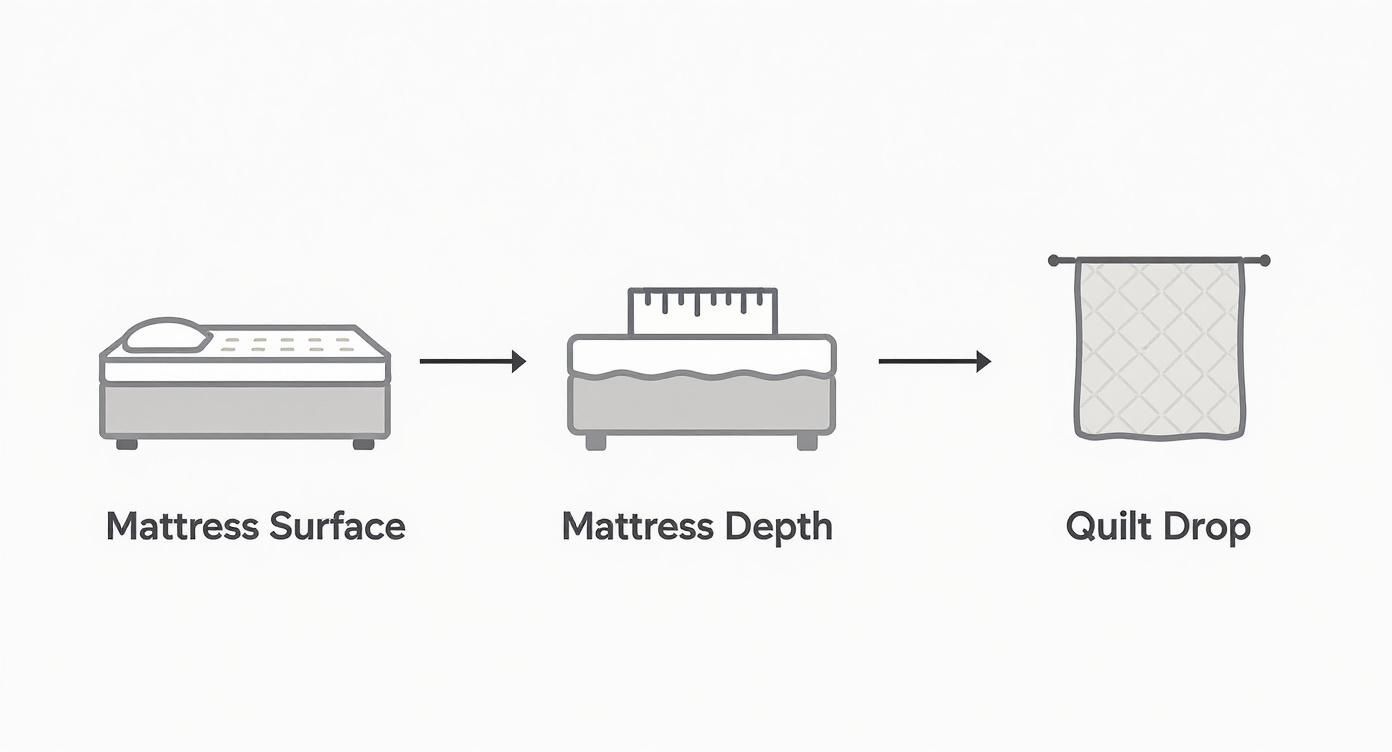
As you can see, it's about more than just the flat surface; you have to account for the three-dimensional space your beautiful quilt will cover. If you’re also working on a larger bed, this king quilt sizing and measurement guide is a fantastic resource with more helpful tips.
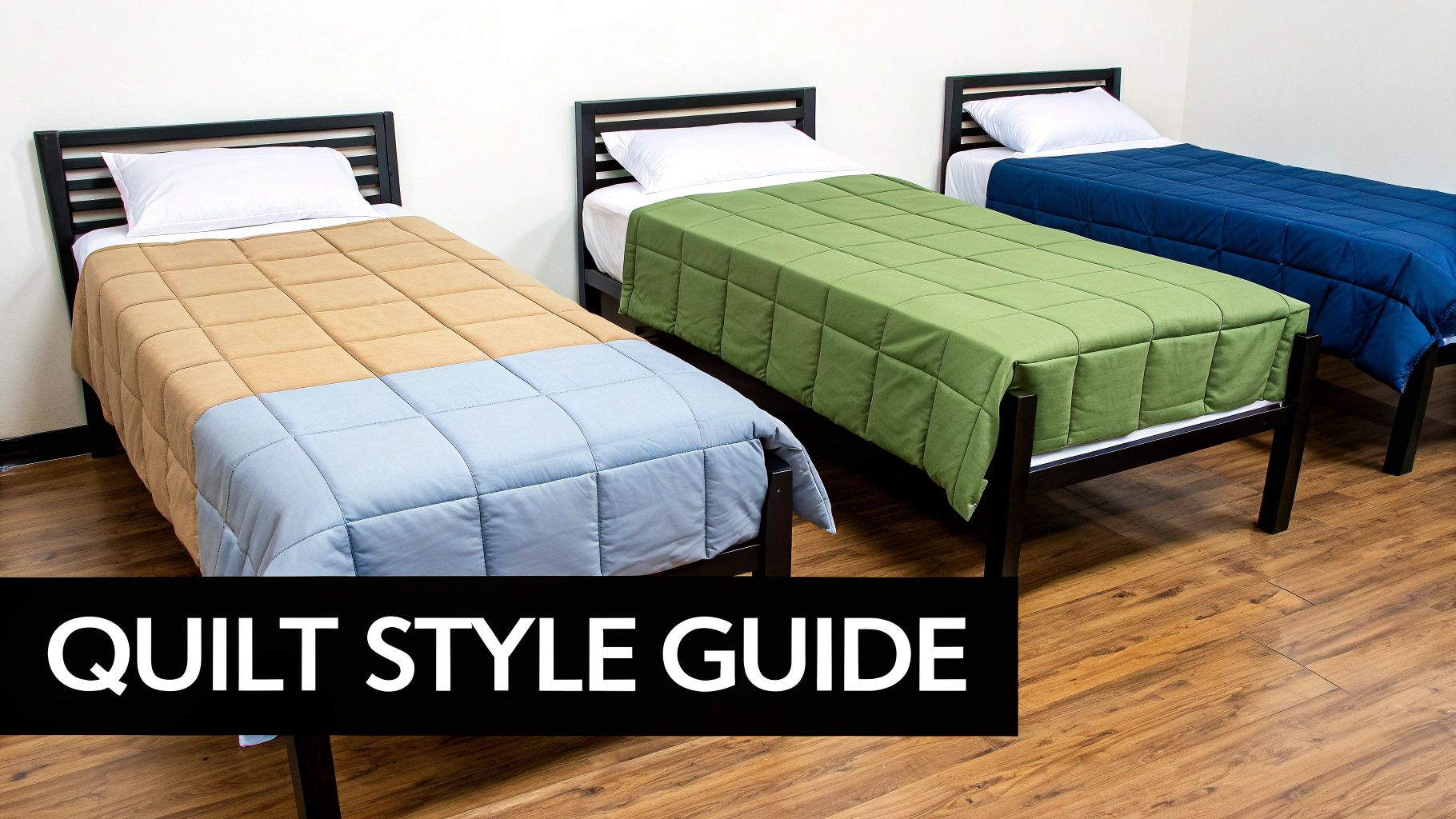
Now that you've got your bed’s measurements, we can get to the fun part—deciding on the perfect quilt style. I like to think of this step like choosing a new outfit. The right size and cut can completely change your look, and the same is true for a quilt. It can transform a bed from just a piece of furniture into the beautiful, cozy centerpiece of your room.
Ultimately, the size you pick comes down to the "look" you're going for. Let's walk through the three most common styles you'll run into. Each one offers a totally different feel, so figuring out which one speaks to you is the key to getting it just right.
First up is the Standard Queen Quilt, which is probably the most common size you'll see. It usually measures around 90" x 95", making it a fantastic all-rounder. This size gives you a classic drop that neatly covers the mattress and most of the box spring, creating that clean, traditional look that just works in almost any bedroom.
Then you have the Oversized or Luxury Queen Quilt. If you've got one of today's extra-deep pillow-top mattresses, this is your new best friend. With generous dimensions often reaching 110" x 115", it's designed for a dramatic, floor-grazing drape that feels incredibly plush. It’s also the perfect solution to any nightly tug-of-war over the covers!
Finally, there’s the Coverlet-Style Quilt. This modern take is often smaller and more square, typically around 86" x 86". It’s designed to just cover the top of the mattress, creating a tidy, layered look. This shorter, crisper drop is perfect for pairing with a beautiful bed skirt to hide the box spring or for showing off a unique platform bed frame.
Choosing your style really comes down to balancing function and fashion. Are you looking for full coverage and cozy warmth, or a shorter, more decorative layer that lets other parts of your bedding shine? Your answer will lead you straight to the perfect size.
There's nothing quite like the feeling of making your own quilt. It's a special kind of journey, but getting the final size just right requires a bit of insider knowledge. When you're the one making the cuts and sewing the seams, you have to think about the entire process, not just the final measurements.
One of the biggest culprits that can throw off your final dimensions is fabric shrinkage. It’s a classic “gotcha” moment! Most quilting cottons will shrink about 3-5% in that first wash and dry cycle, and those inches can really add up.
The easiest way to avoid this is to simply pre-wash and press all your fabrics before you even think about cutting. It’s an extra step, I know, but it ensures the size you piece is the size you get in the end.
Here’s another little trick I’ve learned over the years: use borders to your advantage. Let's say you finish piecing your main design and realize it's just a few inches smaller than you wanted. Don't panic! Adding a border (or even two or three) is a fantastic way to hit your target width and length without redesigning the whole quilt.
Finally, and this one is crucial, always cut your backing fabric and batting larger than your finished quilt top. A good rule of thumb is to add at least four extra inches on all four sides.
This extra fabric is often called "overage," and it's your best friend during the quilting stage. It gives you the space needed to clamp the quilt onto a longarm machine, or just gives you some wiggle room if you're quilting on your home machine, preventing the edges from puckering and pulling inward.
Keeping these tips in mind will help ensure that the beautiful queen quilt you imagined is the one you get to snuggle under. It's all about planning ahead to create a piece you’ll be proud of for years to come.
When you're deep in the planning stages, a few common questions always seem to pop up. Let's walk through some of the specific situations we help quilters navigate every day, so you can pick or plan your quilt with total confidence.
You sure can! In fact, it's a fantastic solution for a few common scenarios. If you have an extra-plush, deep mattress, a king-size quilt often provides the generous drape you're looking for. A standard king quilt, which usually runs about 108 inches wide, will give you a full 24-inch drop on each side of a 60-inch queen mattress. That's a luxurious, floor-grazing look.
It’s also the perfect peacemaker for couples who are constantly fighting over the covers. That extra width means nobody gets left out in the cold. Just keep an eye on the length; you want a beautiful drape, not a tripping hazard pooling on the floor at the foot of the bed.
Platform beds are sleek and modern, and you don’t want to hide that beautiful frame under a mountain of fabric. For these beds, a shorter drop is almost always the way to go. Since there's no box spring to conceal, a quilt that drapes too far can look messy and overwhelm the bed's clean lines.
The best approach is to measure from the top of your mattress straight down to the bottom of the platform frame. That measurement is the perfect drop length to aim for. We find that a quilt around 88" x 92" is often just right—it gives you enough coverage to look polished without hiding the very design you love.
Ah, the great shrinkage debate! It's a real thing, and it all comes down to your materials. If you’re working with 100% cotton fabric and batting that you haven't pre-washed, expect them to shrink about 3-5% in their first trip through the washer and dryer. For a 90-inch quilt, that means losing anywhere from three to four and a half inches.
The surest way to prevent sizing surprises is to pre-wash and dry your fabric before you even make the first cut. On the other hand, many quilters (myself included!) adore the crinkly, vintage texture that you get when a finished quilt shrinks. If that’s the look you're after, just build a few extra inches into your plan to account for it.
It's easy to use these terms interchangeably, but in the world of bedding, they each have a distinct personality.
Feeling ready to tackle that queen-sized quilt? Here at High Country Quilts, we've got all the gorgeous fabrics, quality batting, and friendly advice to help you bring your vision to life. Swing by our Colorado Springs shop or browse our collection online to get started!
At High Country Quilts we care deeply about community. With our experiences in retail, we know that a store is not only a place to shop but also a place for the community to gather and share. During this busy...

Hi! We’re Adam and Renee Wheaton, the new owners of High Country Quilts! For more than 40 years, we’ve owned and operated vacuum and sewing businesses. Following in Renee’s father’s footsteps after he retired from All Discount Vacuum and Sewing in Colorado...


Leave a comment