

We Love Our Quilting Community
At High Country Quilts we care deeply about community. With our experiences in retail, we know that a store is not only a place to shop but also a place for the community to gather and share. During this busy...


Walk into any fabric store, and you'll be met with a kaleidoscope of colors and patterns. At the heart of that explosion of creativity is quilting cotton. So, what is quilting cotton fabric?
It's a straightforward, 100% cotton material made with a simple plain weave, but it's engineered specifically for the precision that patchwork and quilting demand. I like to think of it as the all-purpose flour of the sewing room—it's reliable, predictable, and the perfect starting point for an incredible variety of projects.
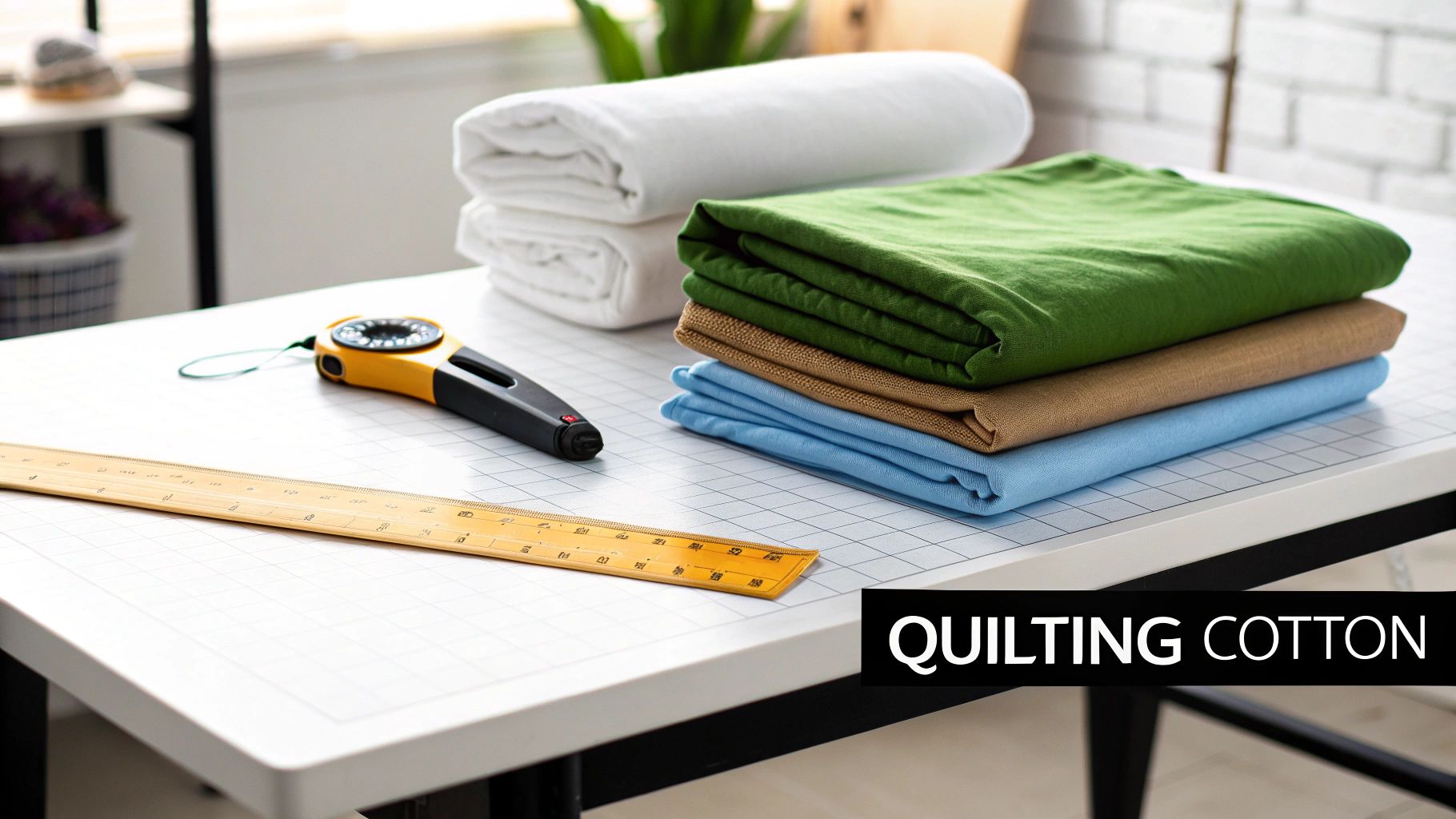
Quilting cotton is a medium-weight woven fabric that feels crisp to the touch and has a beautifully smooth surface. One of its best qualities? It has virtually no stretch. This stability is what makes it a dream to work with—it’s easy to cut, handle, and sew, making it a favorite for quilters and sewers of every skill level.
Its real strength lies in how predictable it is. That stability allows for the tiny, precise seam allowances and sharp, matching points that are the hallmarks of great patchwork.
Unlike the soft, drapey cottons you might choose for a blouse, quilting cotton is all about structure. It's designed to ensure that quilt blocks keep their shape and lie perfectly flat, which is crucial for a professional-looking and long-lasting quilt. It strikes a perfect balance: strong enough to handle dense quilting and frequent washing, yet soft enough for a cozy blanket, a structured bag, or charming home decor.
The unique combination of properties in quilting cotton makes it a fantastic choice whether you're a seasoned expert or just starting out. If you're new to sewing, its forgiving nature is a huge confidence booster. For those of us with years of experience, its reliability gives us a perfect canvas for bringing complex designs to life.
Here’s a quick rundown of why it’s so beloved:
I always tell beginners to start with quilting cotton. It’s like learning to cook with good ingredients—it sets you up for success right from the start because the fabric behaves exactly as you expect it to.
This guide is here to break down everything you need to know about this essential fabric. We'll get into how it's made, see how it stacks up against similar materials, and share some practical advice for choosing and caring for it.
Whether this is your first quilt or your fiftieth tote bag, getting to know quilting cotton is the first step. If you're looking to build a solid foundation, these free sewing lessons are a fantastic place to start.
To really get what makes quilting cotton so special, you have to look at how it’s built—its basic architecture. The secret to its crisp, stable feel is a simple but incredibly effective structure called a plain weave.
Think of a tiny, perfect checkerboard. In a plain weave, each thread running lengthwise (the warp) passes over one crosswise thread (the weft), then under the next, and so on. This straightforward over-under, over-under pattern creates a strong, balanced grid. It's exactly this structure that gives quilting cotton its signature traits: it barely stretches and it holds up beautifully. You might also hear this called a percale weave, especially when you're talking about fabrics with a higher thread count.
Speaking of thread count, it’s not just a buzzword for fancy bedsheets. For quilting cotton, it tells you how many threads are packed into a single square inch of fabric. You'll often see it written as two numbers, like 60x60, which simply means there are 60 warp threads and 60 weft threads per inch.
Generally, a higher thread count is a good sign of a better-quality fabric. When you pack more threads into that square inch, you get a material that’s tighter, smoother, and just feels more substantial. This density is a huge deal for quilters because it helps stop the fabric from fraying like crazy when you cut it and keeps it from getting pulled out of shape as you sew. While a basic cotton might have a 60x60 thread count, premium quilting cottons can get up to 68x68 or even higher, giving them a silky-smooth surface that’s just a dream to work with.
The difference is something you can really feel. A higher thread count means your fabric will hold a sharper crease when you press it, feel smoother in your hands, and give you a more stable foundation for all those tiny, perfect stitches.
Beyond the weave, the fabric's weight is a huge part of the equation. Quilting cotton usually weighs somewhere between 4.0 to 4.5 ounces per square yard. This is what we call a 'medium-weight' fabric, and honestly, it’s the sweet spot for quilting.
This specific weight strikes the perfect balance:
Once you understand these details, you can spot high-quality fabric on the shelf from a mile away. When you see a beautiful print like this classic 30s Blue Bella Solids, you can appreciate that its smooth finish and reliable feel come from that well-constructed weave and the perfect medium weight. This knowledge helps you choose materials that don’t just look pretty—they'll perform beautifully under your needle, too.
Alright, now that we've covered the technical nuts and bolts of what quilting cotton is, we get to the really fun part—choosing the fabrics that will bring your vision to life. Walking into a quilt shop can feel a little overwhelming with all the colors and patterns, but it's much simpler than it looks. Let's break down the common fabric cuts and print types you'll run into.
First, let's talk about fabric width. Most quilting cotton you'll find is sold on a bolt that's 42 to 44 inches wide. This is the industry standard, and it’s the width nearly all quilting patterns are designed around. So, when you ask for "a yard of fabric," you're getting a piece that measures 36 inches long by that 42-44 inch width.
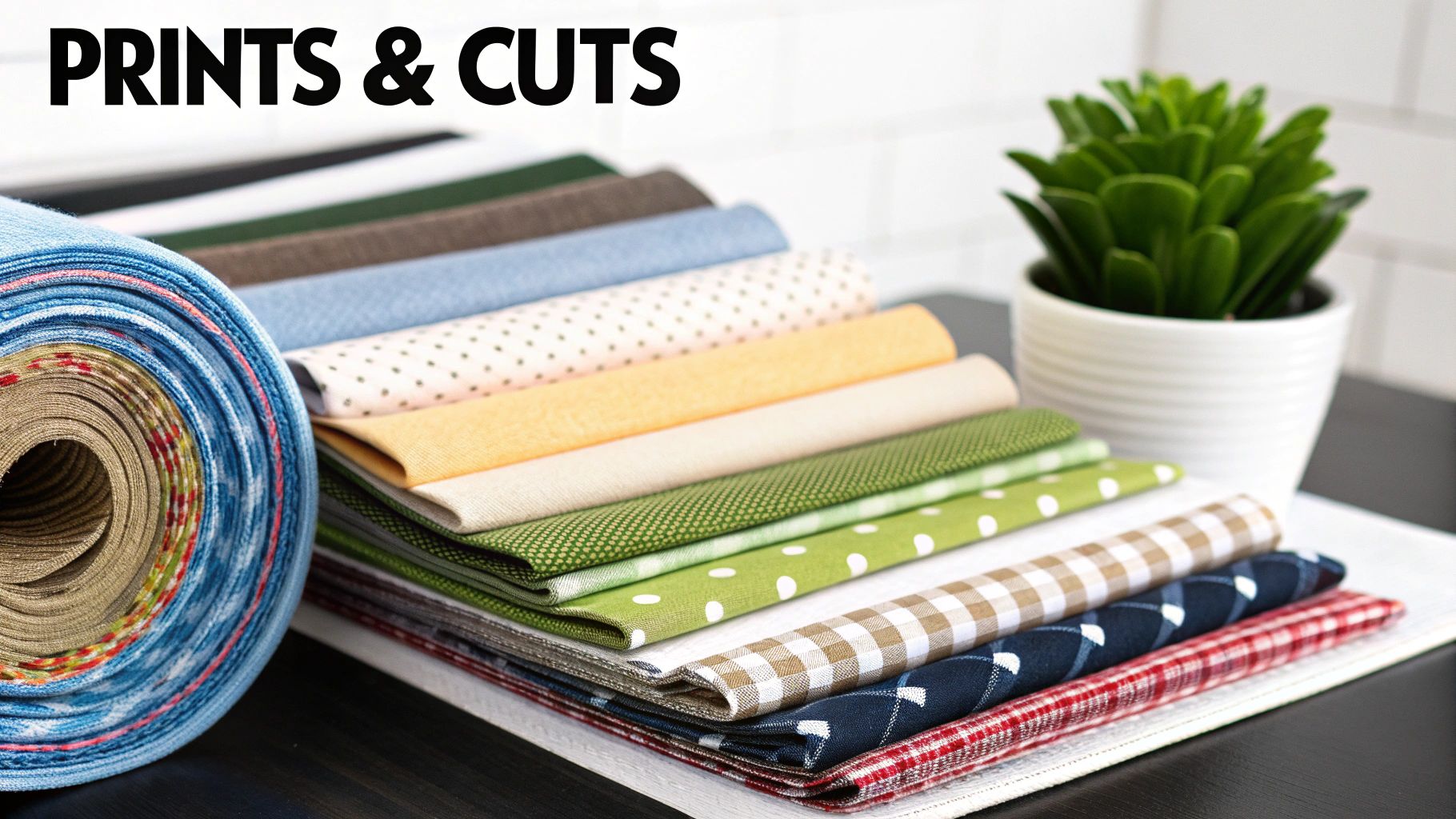
There's one big exception, though, and it's a lifesaver for finishing your quilts: 108-inch wide backing fabric. This extra-wide material is an absolute game-changer. It’s designed to cover the entire back of most quilts in one seamless piece, saving you the hassle of stitching multiple standard-width pieces together.
To make our lives easier and quilting more accessible, fabric companies create curated bundles called pre-cuts. These are coordinated collections that are perfect for building your fabric stash, sampling a new designer's work, or jumping right into a project without spending hours cutting. Using a good quality dual-side cutting mat with these pre-cuts can make your prep work even faster and more accurate.
Here are the most popular pre-cuts you’ll see:
Pre-cuts take all the guesswork out of coordinating fabrics. They're curated by designers to ensure every piece works together beautifully, giving your project a professional, cohesive look right from the start.
Putting together a quilt is a lot like casting a play. You need your stars, your supporting actors, and the background scenery to set the stage. Each fabric you choose has a role to play, and understanding those roles is the key to creating a balanced, beautiful quilt.
Think about your fabric choices like this:
Beyond how it feels on the bolt, what really matters is how a fabric behaves at your sewing machine. Fortunately, this is where quilting cotton truly shines, making it a dream to work with, especially if you're just starting out.
Its biggest asset is how stable and predictable it is. That plain weave we talked about gives it very little stretch, so you don't have to worry about it twisting, warping, or shifting as you guide it through the feed dogs.
This stability is the secret ingredient for accurate patchwork. When your pattern demands a perfect quarter-inch seam, quilting cotton cooperates beautifully, helping your points match up and your blocks lie flat without a fight.
Another fantastic quality is how well quilting cotton holds a press. When you press a seam open or to the side, the fabric creates a sharp, defined crease that actually stays put. This is a game-changer for accurate piecing and gives your finished project a clean, polished look.
For any quilter, a great iron isn't a luxury—it's essential. Using a reliable, high-quality iron like the Oliso TG1600 ProPlus Smart Iron can make all the difference, delivering the consistent heat you need to set seams perfectly without scorching your hard work.
A well-pressed seam is the key to accurate patchwork. Quilting cotton’s ability to hold a crease ensures that each piece of your puzzle fits together exactly as it should.
Now, while it’s incredibly user-friendly, quilting cotton does have its quirks. The most common one? Fraying. Since it's a woven fabric, the raw edges will unravel if you handle them too much. Don't panic—this is totally normal and not a sign of poor quality, but it's something you'll want to manage.
To keep things running smoothly from the first cut to the final stitch, here are a few practical tips:
Once you understand how quilting cotton works with you, you can lean into its strengths for a much more enjoyable and successful project.
To really get a feel for what makes quilting cotton so special, it helps to see how it stacks up against other fabrics you'll find at the craft store. Think of it like cooking—you wouldn't use cake flour to make a rustic sourdough bread. Every fabric has a job it was designed to do, and choosing the right one is the key to a successful project.
When you're surrounded by bolts of fabric, it's easy to see things that look similar but act in completely different ways once you get them under your sewing machine needle. Cottons made for clothing are a perfect example.
Most cotton fabrics are created with apparel in mind, which means the top priorities are softness and drape—that lovely way a fabric hangs and moves with your body. But for a quilter, that flowing quality can be a real headache when you're trying to line up a perfect seam.
The real takeaway here is the fabric’s original purpose. Quilting cotton is engineered for stability and structure, while most clothing cottons are made for drape and comfort. Trying to swap one for the other usually ends in pure frustration.
This infographic does a great job of showing the core behaviors that make quilting cotton so reliable for any project that demands precision.
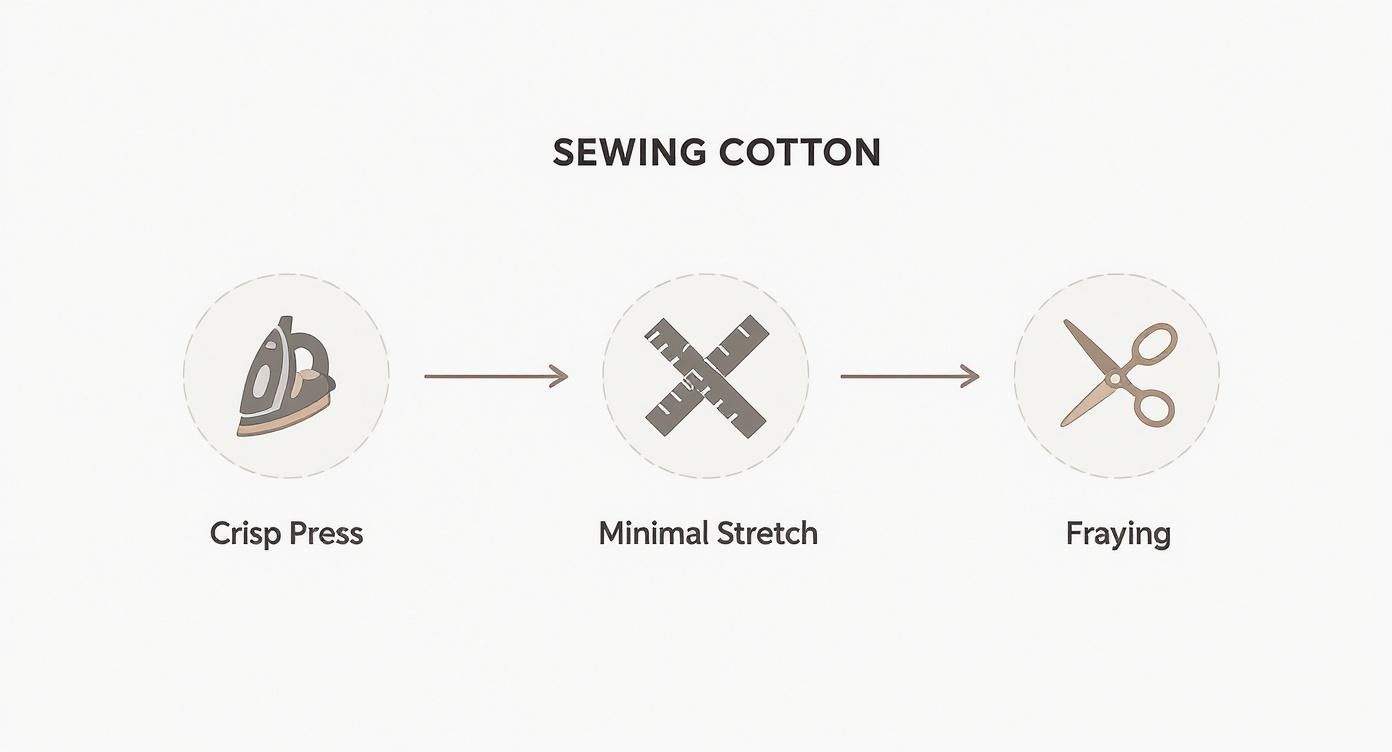
As you can see, that ability to hold a sharp, crisp press with very little stretch is what makes all the difference.
Now, let's look at the other side of the coin: heavier materials like canvas, denim, and flannel.
Canvas is a true workhorse, loved for its incredible durability. You'll often see clever bag makers using it for the exterior of a tote and lining it with a fun quilting cotton print. But its sheer thickness makes it a poor choice for the delicate seams you need in patchwork.
Flannel is another popular one, a soft and loosely woven cotton famous for its cozy warmth. It’s fantastic for those fluffy "rag quilts," but it stretches and frays like crazy, making it a real challenge for traditional, precise piecing.
Still not sure what to grab for your next project? This quick comparison breaks down the key differences to help you choose the right material every time.
| Fabric Type | Primary Use | Weight | Drape | Best For |
|---|---|---|---|---|
| Quilting Cotton | Quilting, Crafts, Bags | Medium | Stiff, Structured | Projects needing precision and stability. |
| Cotton Lawn | Apparel | Very Light | Fluid, Flowy | Blouses, dresses, and linings. |
| Poplin | Apparel | Light | Crisp, some drape | Shirts, lightweight dresses, and skirts. |
| Canvas | Home Decor, Bags | Heavy | Very Stiff | Totes, upholstery, and outdoor gear. |
| Flannel | Bedding, Apparel | Medium-Heavy | Soft, some drape | Pajamas, shirts, and cozy rag quilts. |
Understanding these distinctions makes it crystal clear why quilting cotton has been the quilter's choice for generations. It strikes the perfect balance of weight, weave, and stability, creating the ideal canvas for your creativity. To dive deeper into how different fabrics are suited for specific jobs, you can explore this guide on various curtain cloth types, which also shows just how important it is to match a fabric’s properties to its function.
Sooner or later, every quilter faces the big question: to prewash or not to prewash? It's practically a rite of passage in the quilting world, and you'll find passionate quilters firmly planted on both sides of the fence. Honestly, the "right" answer really boils down to your personal preference and the specific project you're working on.
Let's dive in.
https://www.youtube.com/embed/DOcfi5it4Nk
The biggest reason people prewash is to get shrinkage out of the way before they start cutting. Since quilting cotton is a natural fiber, it’s going to shrink when it hits warm water and heat for the first time—sometimes by as much as 3-5%.
By washing and drying your yardage first, you’re ensuring that all that shrinking happens upfront. This prevents your beautifully finished quilt from puckering or distorting in strange ways after its first trip through the laundry. Think of it as a little insurance policy for all your hard work.
Beyond just tackling shrinkage, giving your fabric a preliminary wash serves a couple of other crucial purposes.
But what about the other side? Some quilters swear by not prewashing. They love the crisp, stiff feel of brand-new fabric, finding that the sizing makes it easier to get super-accurate cuts and perfect points. They wait until the entire quilt is pieced, quilted, and bound before its first wash.
When you wash a finished quilt made from unwashed fabric, the cotton and the batting all shrink together. This process creates that classic, slightly crinkled, vintage texture that many people absolutely adore.
Ultimately, there’s no quilt police here. If you're mixing fabrics from different manufacturers or using high-contrast colors, prewashing is probably your safest bet. If you love that crinkly, lived-in look and prefer working with stiff fabric, then skipping it might be for you.
The most important rule? Be consistent. Whatever you do, do it for all the fabrics in a single quilt so they all behave the same way. The same logic applies to your batting choice, which shrinks at different rates. You can find some great info in this Hobbs Batting recommendation chart to help match your batting to your project goals.
Even after you've got the basics down, a few practical questions always seem to pop up when you're standing in the fabric store or planning your next project. Let's tackle some of the most common ones quilters and sewers ask.
You absolutely can! Quilting cotton is a fantastic choice for more structured garments. Think of things like crisp button-up shirts, A-line skirts, aprons, and especially children's clothes, which need to stand up to a lot of wear and washing.
Where it doesn't shine is in projects that need a soft, flowing drape—like a billowy dress or a slinky top. A good rule of thumb is this: if the garment needs to hold its shape, quilting cotton is a sturdy, beginner-friendly option that's a dream to sew with.
Yes, and the difference really comes down to how it's made and what it's made for. "Regular cotton" is a huge category, but quilting cotton is specifically woven for the demands of quilting. It has a balanced, plain weave with a higher thread count—usually 60 threads per inch each way—and a medium weight that gives it stability without being too stiff.
Apparel cottons, on the other hand, are often lighter with a looser weave to give them that soft, drapey feel. That lovely drape makes them great for clothes, but it's a nightmare for the precise cutting and piecing that quilting demands.
Quilting cotton is built for structure and stability. Most other cottons are designed for comfort and drape. Using the right tool for the job makes all the difference in your finished project.
You can learn a lot just by using your senses. A great piece of quilting cotton feels smooth and substantial in your hand, never thin, flimsy, or coarse. Hold it up to a light source; you should see a tight, even weave with no major gaps between the threads.
Here’s a great little test: scrunch a corner of the fabric in your fist for a few seconds and then let it go. Higher-quality fabric will feel crisp and resist wrinkling more than a lower-quality one, thanks to its high thread count and better finishing processes. When in doubt, stick with trusted brands known for producing beautiful, reliable fabrics.
Feeling inspired to start your next project? Famcut.com has a huge selection of beautiful, high-quality quilting cottons, plus all the tools and supplies you need to bring your ideas to life.
Come explore the collection at https://famcut.com.
At High Country Quilts we care deeply about community. With our experiences in retail, we know that a store is not only a place to shop but also a place for the community to gather and share. During this busy...

Hi! We’re Adam and Renee Wheaton, the new owners of High Country Quilts! For more than 40 years, we’ve owned and operated vacuum and sewing businesses. Following in Renee’s father’s footsteps after he retired from All Discount Vacuum and Sewing in Colorado...


Leave a comment