

We Love Our Quilting Community
At High Country Quilts we care deeply about community. With our experiences in retail, we know that a store is not only a place to shop but also a place for the community to gather and share. During this busy...


So, what exactly is muslin, and why is it such a staple in almost every sewing room?
At its heart, muslin is a plain-weave cotton fabric, usually unfinished and unbleached, giving it that characteristic creamy, off-white color. It’s been a go-to for makers for centuries, and for good reason. Its straightforward construction and low price point make it the perfect canvas for bringing ideas to life without the risk of ruining expensive material.
Think of muslin as the fashion designer’s secret weapon or the quilter’s trusted sidekick. It’s the fabric you reach for when you need to figure things out.
Before a designer ever touches that pricey silk or wool, they’ll create a mock-up of the garment using muslin. This test version, often called a toile (pronounced "twahl"), is where the real magic happens. It's how they check the fit, tweak the drape, and make sure every seam line is perfect. Getting it wrong on a cheap piece of muslin is a smart move; getting it wrong on the final fabric is just a painful waste of money.
This same idea applies to quilting and cosplay. For quilters, muslin is a fantastic, reliable backing that gives a quilt structure without adding too much weight or bulk. For cosplayers trying to build intricate costumes or armor, it’s the only way to draft and perfect complex patterns before committing to foam, Worbla, or other specialized materials.
Muslin isn’t just practice fabric; it’s a tool for precision. It gives you the freedom to test, refine, and perfect your vision, which is often the difference between a good idea and a great finished piece.
But muslin isn't a one-size-fits-all fabric. It comes in a whole range of weights and textures, each suited for different kinds of projects.
Ultimately, muslin is the smart first step that sets your final project up for success. It’s the unsung hero of the sewing world.
Walking into the world of muslin can feel a bit like browsing a paper shop. You've got everything from delicate, almost see-through tracing paper to sturdy, reliable cardstock. Thinking about muslin in terms of these different weights is a great way to get a handle on it. Some are whisper-light, while others are built like a tank.
Choosing the right one is the first, and arguably most important, step to making sure your project turns out just right. You wouldn't use heavy-duty sheeting for a baby's swaddle any more than you'd use flimsy gauze for a structured coat pattern. It’s all about matching the fabric's personality to your project's needs. Let's break down the most common types you'll run into.
This handy visual gives a quick look at the main playgrounds for muslin, from the pattern-making table to the quilting frame and even the cosplay workshop.
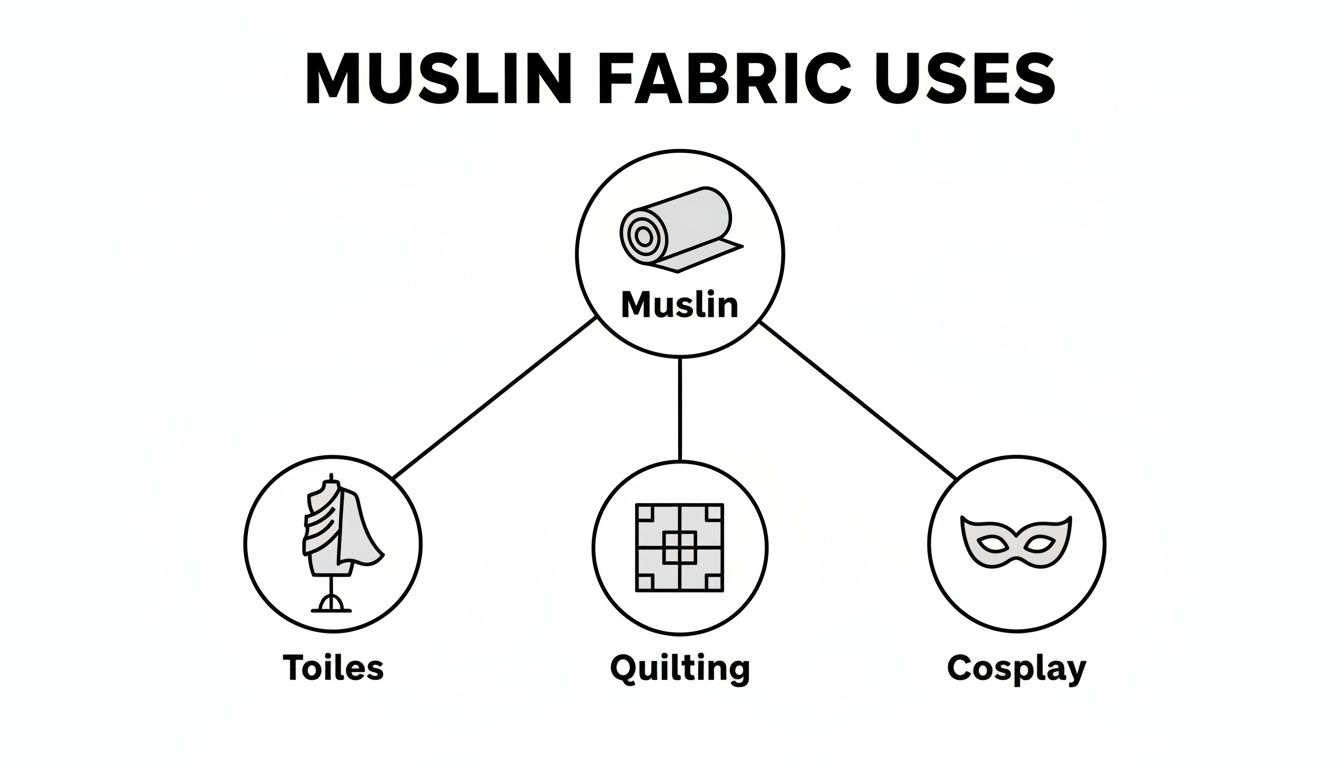
As you can see, it's a true foundational fabric, acting as the starting block for countless creative endeavors.
On the most delicate end of the spectrum, you'll find gauze. This is the featherweight champion of the muslin family. It's incredibly soft with a very open, airy weave that makes it exceptionally breathable.
Because it's so gentle on the skin, gauze is the go-to choice for anything that needs a soft touch.
Sitting right in that sweet spot in the middle is mull. It's finer and softer than your average quilting muslin but has more substance and stability than gauze. This perfect balance makes it a surprisingly versatile player, especially in dressmaking.
Mull is often the secret weapon used as an interlining. It provides gentle support to fashion fabrics without adding any real bulk, perfect for giving a soft structure to a silk bodice or stabilizing a delicate cuff.
Now for something a little fancier. Swiss Muslin is a more refined version, often featuring charming, raised dots or other patterns woven right into the fabric. It’s sheer and lightweight with a slightly crisp hand, making it a favorite for heirloom sewing projects.
Swiss Muslin takes the humble cotton weave and elevates it into something truly elegant. It’s the perfect choice when you want the breathability of muslin but with a touch of built-in decoration for a final garment.
You'll see this lovely fabric used for:
At the opposite end from gauze, we have sheeting. This is the tough, durable workhorse of the muslin world. It’s dense, sturdy, and built to withstand a lot of handling.
This is the stuff you grab when you need to make a really solid toile for a heavy garment, like a tailored blazer or a structured winter coat. Its durability also makes it a go-to for things outside of clothing, like theatrical backdrops, upholstery lining, and pattern drafting boards where you need a surface that won't give up. When you picture a classic, all-purpose muslin, you're probably thinking of sheeting.
To make things a bit clearer, here’s a quick-glance table to help you match the muslin to the mission.
This table breaks down the most common types of muslin, their defining features, and where they shine the brightest.
| Muslin Type | Key Characteristics | Best For |
|---|---|---|
| Gauze | Extremely lightweight, open weave, very soft, breathable | Baby items (swaddles, burp cloths), lightweight scarves, medical dressings |
| Mull | Lightweight but stable, soft, fine weave | Garment interlining, soft-structured bodices, delicate pattern tests |
| Swiss Muslin | Lightweight, sheer, often has raised woven dots or patterns | Heirloom sewing, blouses, children's dresses, decorative curtains |
| Sheeting | Heavyweight, dense weave, very durable and sturdy | Toiles for heavy garments (coats, jackets), backdrops, upholstery lining |
Think of this as your cheat sheet. When you're standing in front of a wall of fabric rolls, you can quickly pinpoint exactly which one you need to bring your idea to life.
If you've ever stepped into a fashion design studio or peeked behind the curtain at a cosplay workshop, you've seen it: that plain, off-white cotton fabric draped over dress forms. That's muslin, and it's the unsung hero behind countless incredible garments.
For serious creators, a muslin mock-up—also known as a toile—is the most critical step between a paper pattern and the final piece. Think of it as a dress rehearsal for your fabric. You wouldn't build a house without a blueprint, and you definitely shouldn't take your scissors to that expensive silk or intricate brocade without a trial run.
This is where muslin really proves its worth. It's inexpensive and behaves similarly to many other woven fabrics, making it the perfect low-stakes material to work out all the kinks. Sewing a quick version in muslin lets you catch fitting issues, tweak design lines, and solve construction puzzles before they become expensive, heart-breaking mistakes.
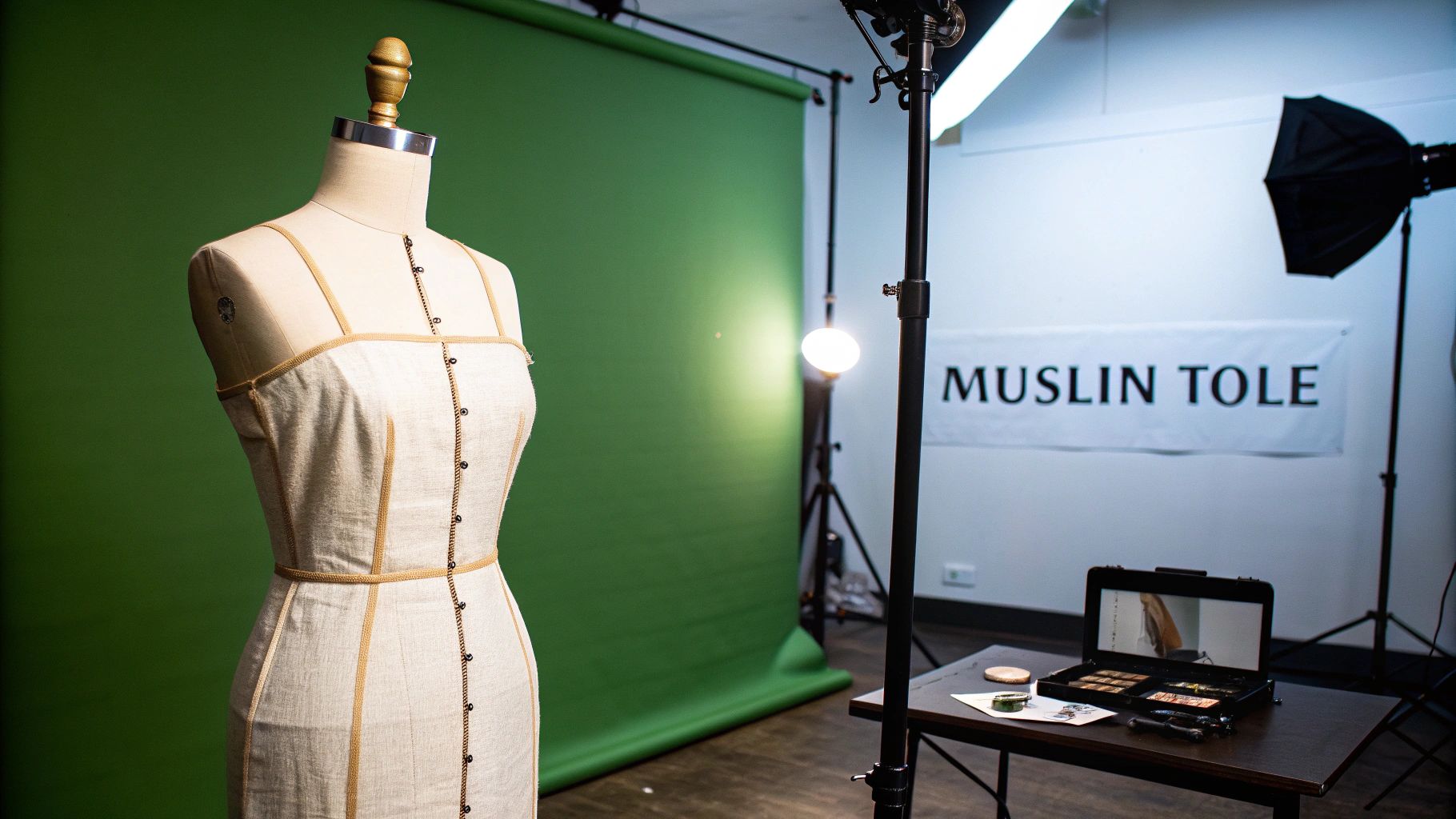
But it's not just about saving money on fabric. The toile is a powerful design tool. Muslin’s plain surface is essentially a blank canvas. You can grab a marker and draw directly on it, moving a dart, reshaping a neckline, or adding a new seam line right on the form.
Making a toile is a non-negotiable step for getting a professional, tailored fit. It's the part of the process where you can confidently dial everything in.
A muslin toile isn't just a test run; it's an active part of the design process. It takes the guesswork out of sewing and turns it into something more like engineering. You save so much time, frustration, and expensive fabric down the road.
That little bit of extra time spent making a muslin mock-up is what ensures your final fashion piece or cosplay build looks polished and professional. It lets you problem-solve and customize in a way that's impossible otherwise. For sewers in the know, this foundational practice is the core answer to what is muslin fabric used for.
While fashion designers love muslin for their mock-ups, its true home might just be in the quilter's studio and the cozy corners of our homes. Here, its affordability and rugged charm make it a go-to workhorse fabric. Think of it as the ultimate blank canvas, equally suited for a supporting role or as the main event.
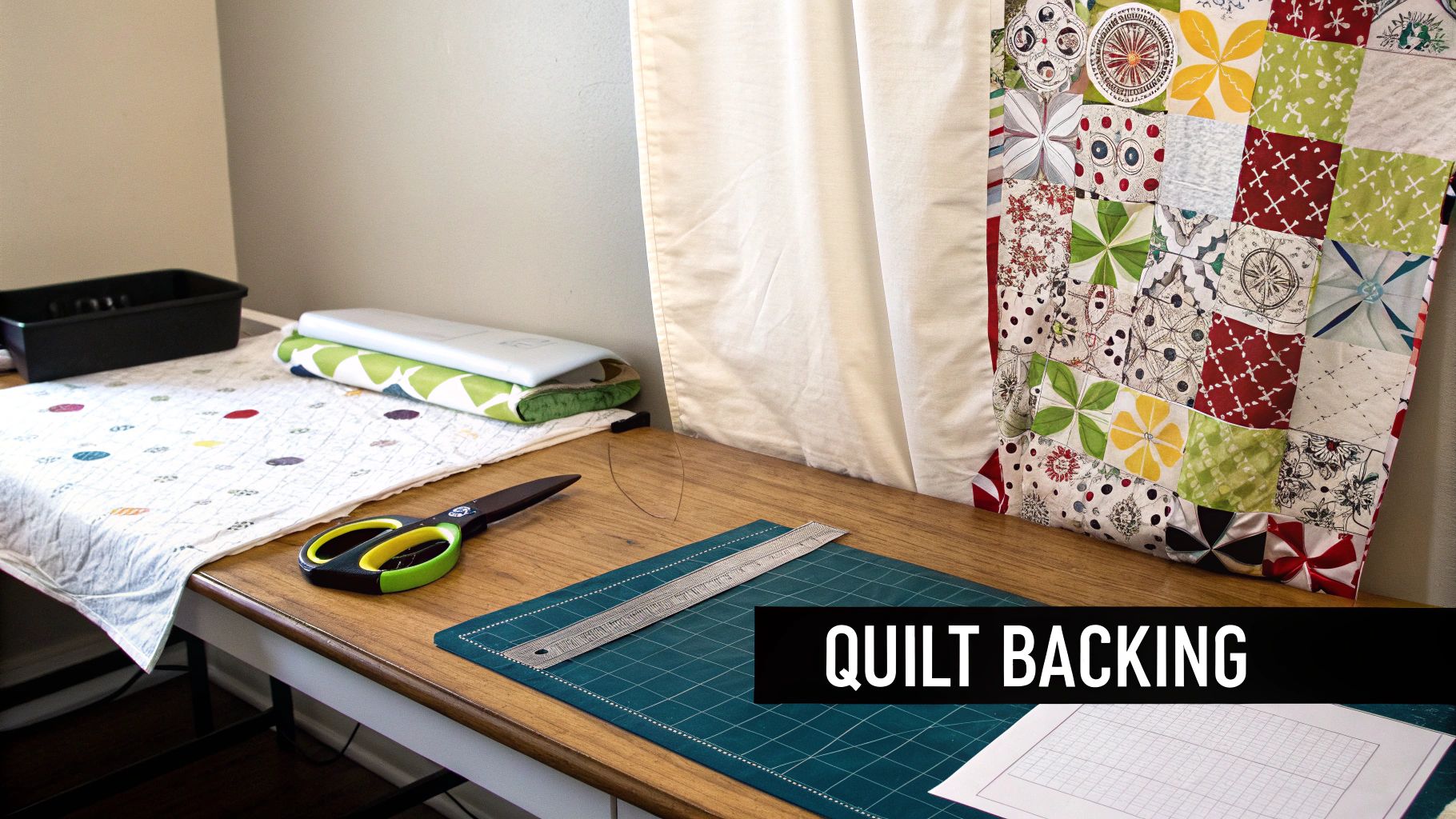
For quilters, muslin is practically a non-negotiable part of the toolkit. You’ll most often find it used as quilt backing. A good medium-weight muslin sheeting offers the ideal blend of strength and softness to finish a quilt perfectly, all without adding too much weight or breaking the bank. Its quiet, off-white color is a huge plus—it never steals the spotlight from the beautiful piecing on the quilt top.
This kind of everyday usefulness is exactly why the fabric is becoming so popular worldwide. The global muslin fabric market is expected to grow to an estimated $3.34 billion by 2032. This isn't just a trend; it's a reflection of how deeply this fabric is woven into both the apparel and home textile industries, keeping it affordable for all of us. You can read more about the global expansion of the muslin market on Coherent Market Insights.
Beyond just backing a quilt, muslin plays another critical role: it’s the perfect fabric for a test run.
When you're choosing a muslin for quilting, understanding GSM in quilts can be a huge help. Knowing about fabric weight and density ensures the backing you pick has the right feel and durability for your finished piece.
Muslin’s natural, slightly rustic look makes it an easy choice for home decor projects. That unbleached, textured appearance brings a warm, organic vibe to any room. It’s perfect for crafting handmade items that make a house feel like a home.
Muslin in home decor is all about embracing simple, natural beauty. It’s not trying to be silk or velvet; its charm lies in its honest, unpretentious character.
Makers have come up with all sorts of beautiful and functional ways to use it:
From the quilting frame to the living room, muslin continues to prove it’s one of the most adaptable and inspiring fabrics you can have in your stash.
If you want to get the best out of your muslin, you’ve got to treat it right from the get-go. Seriously. Proper prep isn't just a suggestion—it's the secret to making sure your final project looks exactly like you planned. And it all boils down to one critical step: pre-washing.
Muslin has that beautiful, open weave we love, but it comes with a catch: it shrinks. A lot. Skipping the pre-wash is a classic rookie mistake we've all made at some point. Imagine spending hours on a perfect dress toile, only to have it shrink two sizes after its first wash. Pre-washing takes that risk completely off the table and stabilizes the fabric for good.
Getting your muslin project-ready is easy. Follow these steps to not only beat the shrinkage but also to soften the fabric and get the grain perfectly straight, which makes cutting and sewing so much easier.
This simple routine is what takes muslin from a stiff, crinkly fabric right off the bolt and turns it into the soft, predictable material you need. It’s a little bit of upfront effort that makes a huge difference in the quality of your finished work.
One of the best things about muslin? It just gets better and better. This pre-treatment and subsequent washing make it even softer, which is why it's such a go-to for things like baby blankets and comfy clothes.
For more great advice on handling natural fabrics, this guide offers some fantastic tips on how to wash fabric covers without shrinking. The principles are spot-on for any cotton project and will help keep your muslin creations looking their best.
In a world where we’re all thinking more about our environmental footprint, muslin really stands out. Choosing it for your next project isn't just a practical move; it's a small but powerful nod towards a more responsible way of making things. When you pick up a bolt of muslin, you're joining a growing community of crafters who believe in "slow fashion" and mindful making.
At its heart, muslin is a simple, honest fabric. It's made from natural cotton, which means it's both biodegradable and renewable. That’s a huge plus compared to synthetic fabrics like polyester, which come from petroleum and can stick around in landfills for centuries. With muslin, you’re using a material that comes from the earth and can gracefully return to it.
The push for eco-friendly materials is really starting to shake up the textile world. As makers and buyers, we're looking for better options, and the demand for sustainable fabrics has never been higher. Muslin, in particular, hits the mark for so many people—from new parents wanting gentle, natural baby wraps to fashion designers committed to sustainability.
Choosing muslin is more than just a fabric selection. It's a statement. It says you care about quality, sustainability, and the story behind the materials you use. It connects the quiet joy of your craft to a bigger, global movement.
This shift isn't just a feeling; the numbers back it up. The market for canvas and muslin bags alone is expected to hit $7.2 billion by 2035. That’s a massive signal that people want reusable, earth-friendly alternatives in their lives. For the Famcut.com community, this trend is exciting. It means we can create projects with a conscience, whether that’s a quilt made from organic materials or an eco-friendly cosplay prototype. You can read more about the growth of the muslin market on MarketResearch.com.
What's more, the growing availability of GOTS-certified organic and artisanal muslins means you can find materials that are not only beautiful but also ethically made. It’s a wonderful way to ensure your craft truly reflects your values, from start to finish.
Muslin might seem simple, but a few questions always come up, especially when you're just starting out with it. Getting these sorted out can save you a ton of frustration down the road. Let's tackle some of the most common things sewers, quilters, and cosplayers wonder about.
You absolutely can! While muslin gets all the credit for being a "practice" fabric, the higher-quality versions are gorgeous enough for the finished piece. Think of fabrics like Double Gauze or Swiss Muslin—they're practically begging to be turned into real clothes.
Their soft hand and incredible breathability make them a go-to for:
The key is simply picking the right weight and quality for your vision. Just remember to pre-wash it to get all the shrinkage out of the way before you cut into it. Do that, and you'll end up with a garment that’s as beautiful as it is comfortable.
This is a classic mix-up, but no, they're definitely different. I like to think of them as cousins in the plain-weave cotton family—related, but each with its own unique personality.
In a nutshell, they're all simple cottons, but muslin hits that sweet spot of versatility. Calico is stronger, and cheesecloth is the delicate one.
Muslin is an absolute dream to dye. Its natural, unprocessed cotton fibers soak up color beautifully, making it the perfect canvas for your experiments. For the most vivid, wash-fast results, you'll want to use a fiber-reactive dye. These dyes form a permanent chemical bond with the cotton, so your colors won't fade away.
The most important first step is to pre-wash your muslin. This gets rid of any sizing or finishes from the factory that could prevent the dye from penetrating evenly. After that, the world is your oyster! You can do a simple immersion dye for a solid color or get creative with tie-dye and shibori techniques. Its low cost makes it the ideal fabric for playing with color without worrying about ruining expensive material.
At Famcut.com, we get the creative process, from that first spark of an idea to the final, beautiful creation. Whether you're draping a new pattern or piecing a quilt, the right fabric makes all the difference. Check out our selection and find the perfect materials for your next project at https://famcut.com.
At High Country Quilts we care deeply about community. With our experiences in retail, we know that a store is not only a place to shop but also a place for the community to gather and share. During this busy...

Hi! We’re Adam and Renee Wheaton, the new owners of High Country Quilts! For more than 40 years, we’ve owned and operated vacuum and sewing businesses. Following in Renee’s father’s footsteps after he retired from All Discount Vacuum and Sewing in Colorado...


Leave a comment