

We Love Our Quilting Community
At High Country Quilts we care deeply about community. With our experiences in retail, we know that a store is not only a place to shop but also a place for the community to gather and share. During this busy...


Have you ever admired a handmade bag that stands up perfectly on its own, or a set of placemats that lie beautifully flat without curling at the edges? Chances are, the secret ingredient is fusible fleece. It's a game-changer for so many projects, giving them that polished, professional look we all strive for.
So, what exactly is this stuff? Think of it as a soft, lofty layer of polyester fleece that has a heat-activated adhesive on one side. When you press it with a hot iron, that adhesive melts and bonds directly to your fabric. It's the perfect middle ground between a lightweight interfacing and a bulky quilt batting, adding structure and a lovely padded feel without any of the hassle of pins or messy basting sprays.
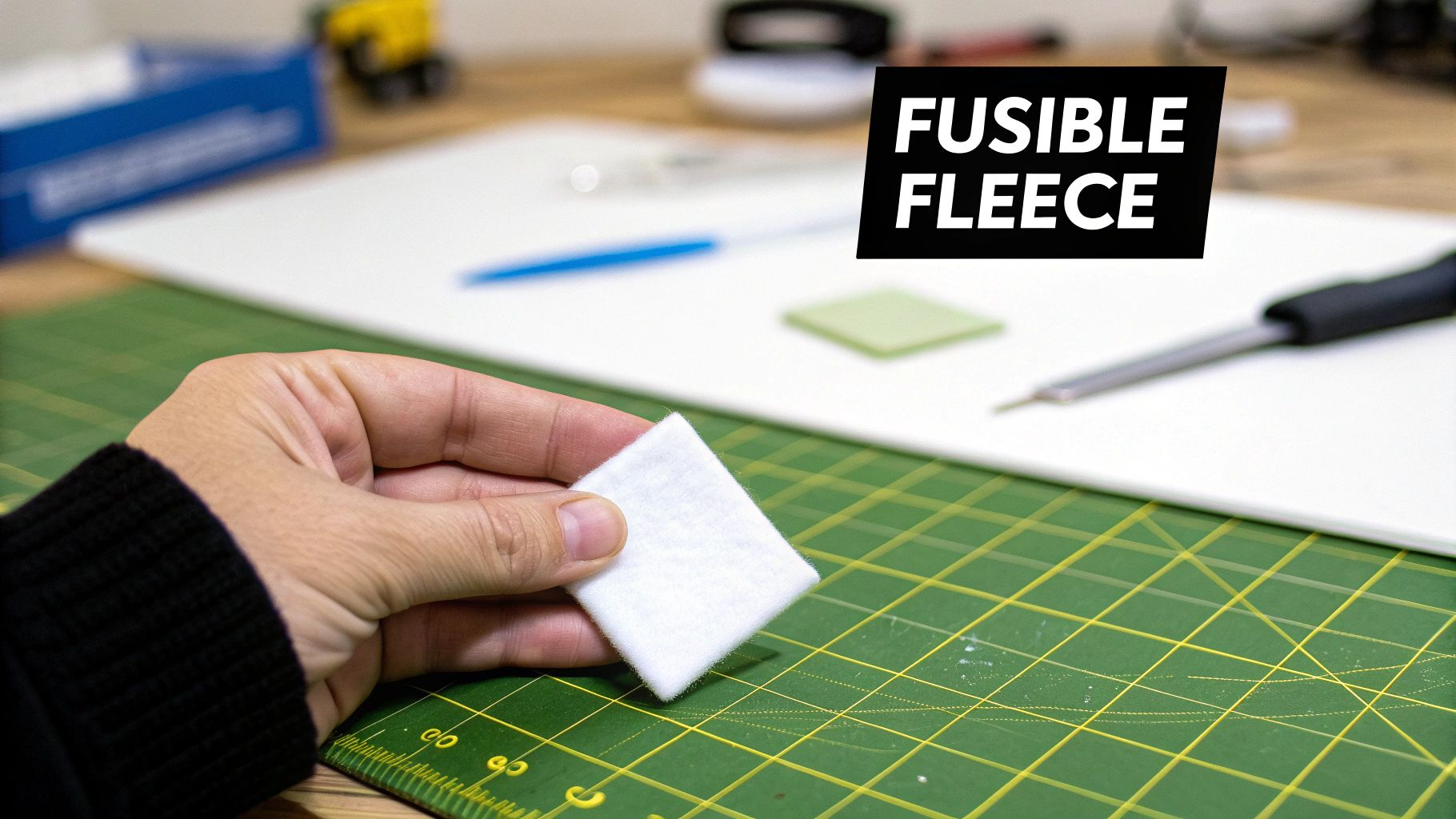
If you run your hand over it, you'll notice one side is soft and fluffy, just like regular fleece. Flip it over, and you'll feel a rougher, bumpy texture. Those little bumps are the magic—they're tiny dots of resin that melt under your iron, creating a secure bond with your fabric. This simple trick is what makes it a go-to for so many quilters and bag-makers.
Why do so many of us keep fusible fleece in our stash? It really comes down to a few key features that make it incredibly useful:
To give you a clearer picture, here’s a quick summary of what makes fusible fleece tick.
| Characteristic | Description |
|---|---|
| Material | Usually 100% polyester fleece on one side, with a heat-activated adhesive on the other. |
| Primary Purpose | To add soft structure, stability, and a layer of light padding to fabric projects. |
| Application | Fused to the wrong side of fabric using a hot iron with steady pressure. |
| Common Uses | Tote bags, pouches, placemats, table runners, quilted garments, and dimensional appliqué. |
| Key Advantage | Completely eliminates the need for pins or spray basting, which really speeds up prep time. |
Simply put, it’s one of those materials that, once you try it, you’ll wonder how you ever managed without it.
So, what’s the magic behind that perfect, pillowy bond? It's actually quite simple. One side of the fusible fleece is covered in thousands of tiny dots of a heat-activated adhesive. Think of them as microscopic beads of solid glue, just waiting for your iron to wake them up.
When you bring your hot iron into the picture, that heat softens and melts the resin dots. It’s a lot like how a hot glue gun operates—a solid stick of glue turns into a powerful liquid adhesive when heated. In the same way, the solid resin on the fleece liquefies just enough to sink into the fibers of your fabric.
This is where the real connection happens. As the melted resin works its way into the fabric's weave, it creates a super-strong physical grip. Once it cools down, the resin hardens again, locking the fleece and fabric together into one unified piece. The result is a secure yet flexible bond that gives your project body without making it stiff.
Knowing why it works helps you get it right every time. It all comes down to a simple partnership between three things: heat, pressure, and time. Nailing this trio is the key to getting that flawless, pucker-free finish you're after.
The real trick isn't to slide your iron around like you're pressing a dress shirt. Instead, you want to press and hold. This gives the heat and pressure enough time to fully melt those adhesive dots, letting them sink deep into the fabric for an even, lasting bond.
This press-and-hold method keeps the fabric and fleece from shifting, which is what causes those annoying wrinkles or weak spots in the bond. You're basically setting the adhesive in place, one section at a time, instead of smearing it around.
Just as critical as heating is the cooling phase that comes after. You have to let your fused piece cool down completely on a flat surface before you even think about moving it. Seriously, this step is non-negotiable if you want the bond to last.
If you pick it up while it's still warm, the adhesive is still in a semi-liquid state. This means it can easily pull away from the fabric, create bubbles, or set unevenly. Letting it cool all the way solidifies the bond and makes it permanent.
This straightforward technology has been a game-changer for sewists. For quilters and bag-makers, it was a brilliant way to add lightweight structure without spending an extra 5–10 minutes on basting for every project. Once home irons could reliably hit temperatures of 260–300°F, fusible fleece became a go-to for bonding to cotton in under 20 seconds per section. You can dig deeper into these kinds of material advancements in various garment interlining reports.
Walking into the stabilizer aisle can be overwhelming. Let’s be honest, it feels like trying to read a map in a foreign language with options like interfacing, batting, and foam all shouting for your attention. It's easy to feel a little lost.
So, where does fusible fleece fit into this picture? Think of it as your secret weapon for projects that need soft structure without turning stiff as a board.
You wouldn’t use a delicate thread to sew a heavy canvas bag, right? The same logic applies here. Every stabilizer has a specific job, and picking the right one is the first step to getting that polished, professional finish we all crave.
Let's get down to it and see how fusible fleece really stacks up against the other common choices. It truly shines when you need a project to hold its shape but still feel pliable and soft. It’s the hero for a tote bag that needs to stand up on its own but not feel like you’re carrying around a cardboard box.
A crisp woven interfacing, on the other hand, is perfect for a shirt collar that needs a sharp, defined edge. And those super-thick foam stabilizers? They’re built for heavy-duty jobs, like a protective laptop sleeve or camera case where you need serious, rigid protection.
The key is to match the stabilizer's properties—its thickness, stiffness, and how you apply it—to what you actually want your finished project to do. Fusible fleece hits that sweet spot for items that need both body and a gentle, quilted dimension.
Understanding these differences is what takes you from just following a pattern to making smart design choices on your own. This little decision tree is a great visual for the basic troubleshooting you'll do at your ironing board.
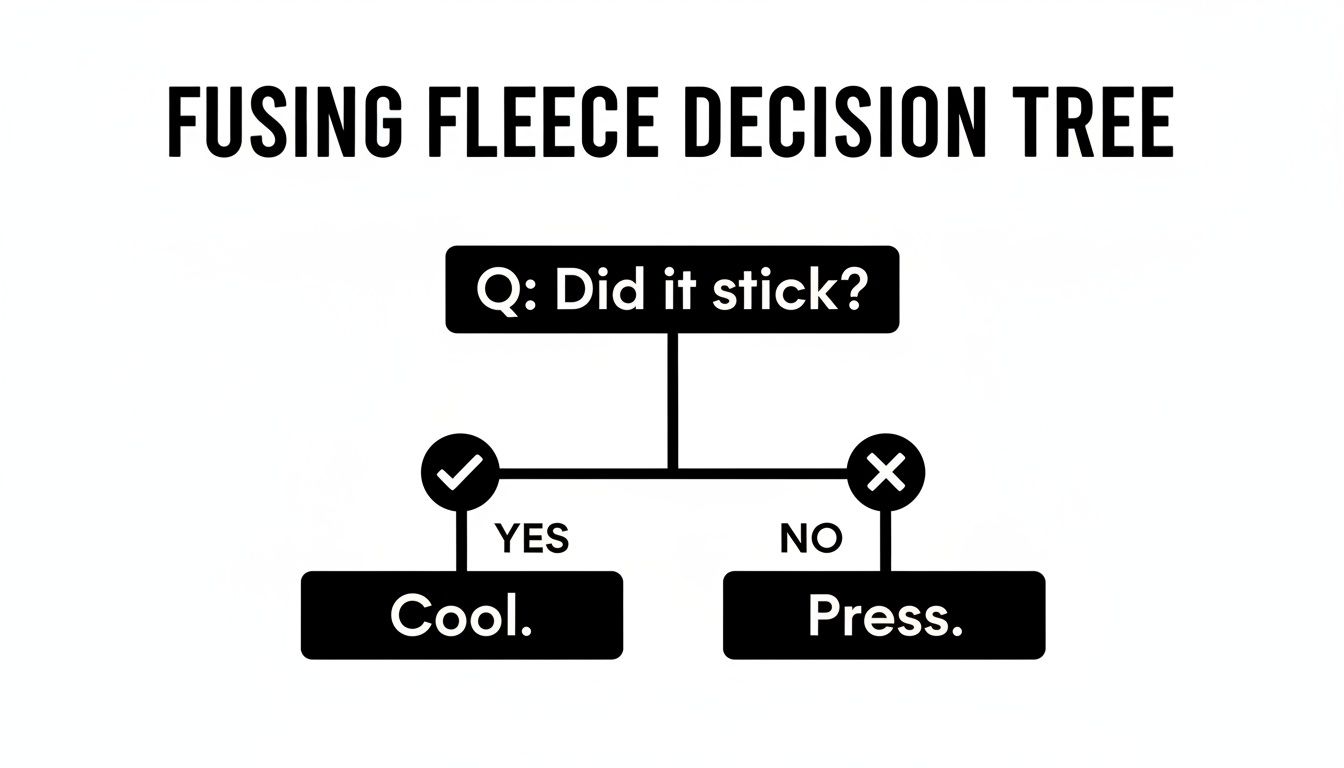
It’s a simple reminder of the golden rule of fusing: if the bond isn't secure, the answer is almost always more patient pressing, not cranking up the heat.
To make your next trip to a shop like High Country Quilts a breeze, I've put together a quick comparison chart. This should help you confidently grab the perfect foundation for whatever you're dreaming up.
| Stabilizer Type | Best For | Loft/Thickness | Stiffness Level | Application |
|---|---|---|---|---|
| Fusible Fleece | Tote bags, placemats, quilted jackets, and soft-structured pouches that need body without rigidity. | Low to Medium | Soft & Flexible | Iron-on (fusible) |
| Woven Interfacing | Shirt collars, cuffs, and button plackets that require crispness and stability like the original fabric. | Very Low | Crisp to Stiff | Fusible or Sew-in |
| Quilt Batting | Traditional quilts, warm blankets, and projects where a distinct, puffy quilting definition is desired. | Low to High | Very Soft | Sew-in or Fusible |
| Foam Stabilizer | Protective cases (laptops, glasses), structured purses, and items needing rigid, stand-alone shape. | High | Stiff & Dense | Fusible or Sew-in |
Looking at the table, you can see that fusible fleece really finds its niche with that unique blend of soft structure and simple application. It gives you the body of a lightweight batting with the convenience of an interfacing, making it an absolute must-have for a huge range of sewing projects.
Alright, now that we’ve covered the what and why, let's get to the fun part: all the amazing things you can make with fusible fleece. This is where the magic really happens, as this stuff opens up a whole new world of creative projects that need just a bit of soft structure without feeling stiff or bulky.
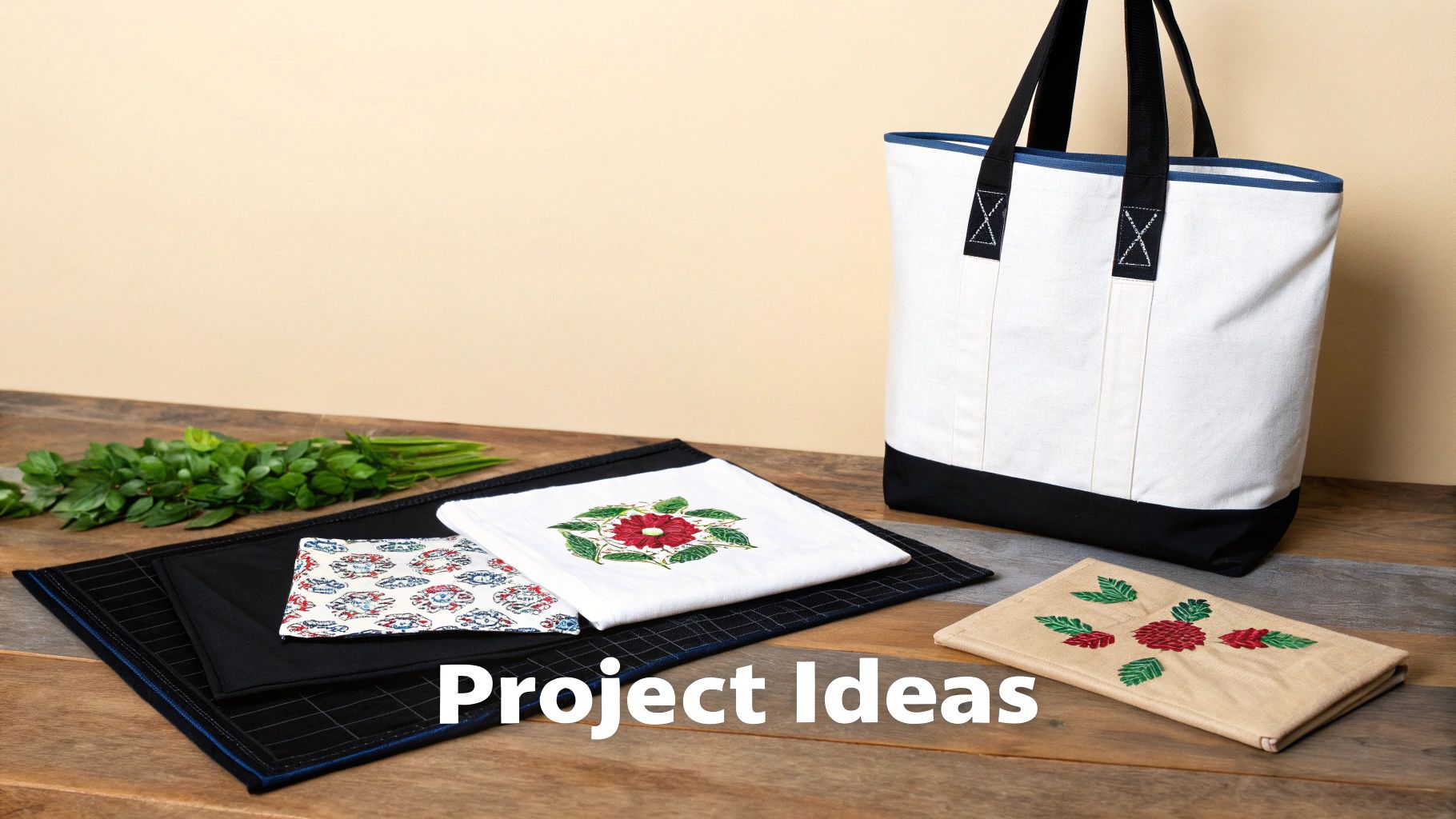
From bags that actually stand up on their own to home decor that looks like it came from a high-end boutique, fusible fleece gives your projects a satisfying body that really elevates the final look and feel.
This is, without a doubt, where fusible fleece is a total superstar. If you've ever sewn a tote that ended up feeling a bit limp or a pouch that just collapses in on itself, this is the fix you've been waiting for.
The real game-changer here is how much time you save. Making a traditional quilted bag often means spending 15–30 minutes just pinning or spray-basting your batting. With fusible fleece, you just press and go! Sewers often find they can slash that prep time by 30–50%.
Fusible fleece is fantastic for bringing a touch of polished durability to items all around your home. Its ability to add a smooth, low-loft layer is perfect for projects that need to lie flat and look crisp.
Think about using it for:
It’s also great for crafts that need a specific shape, like soft toys. If you're learning how to sew a stuffed animal, using fusible fleece can give your creations the perfect soft, huggable body.
Don't forget about using fusible fleece in clothing and decorative details! Since it's so lightweight and flexible, it can add warmth and texture without messing up the natural drape of your fabric.
A quilted vest or jacket made with fusible fleece has a modern, streamlined look. It provides a layer of warmth without the puffiness of traditional high-loft batting, making it perfect for stylish, transitional outerwear.
It’s also my secret weapon for machine appliqué. Just fuse a small piece to the back of your main fabric, right where you plan to stitch your appliqué shape. This gives your stitches a super smooth foundation, preventing any puckering and making the design stand out with a soft, 3D effect.
Getting that perfectly smooth, professional bond with fusible fleece is one of the most satisfying parts of a project, and it’s a lot easier than you might think. Once you get the hang of it, what seems like a tricky task becomes a simple, predictable process. Let's walk through the steps to get it right every single time, giving your projects the beautiful structure they deserve.
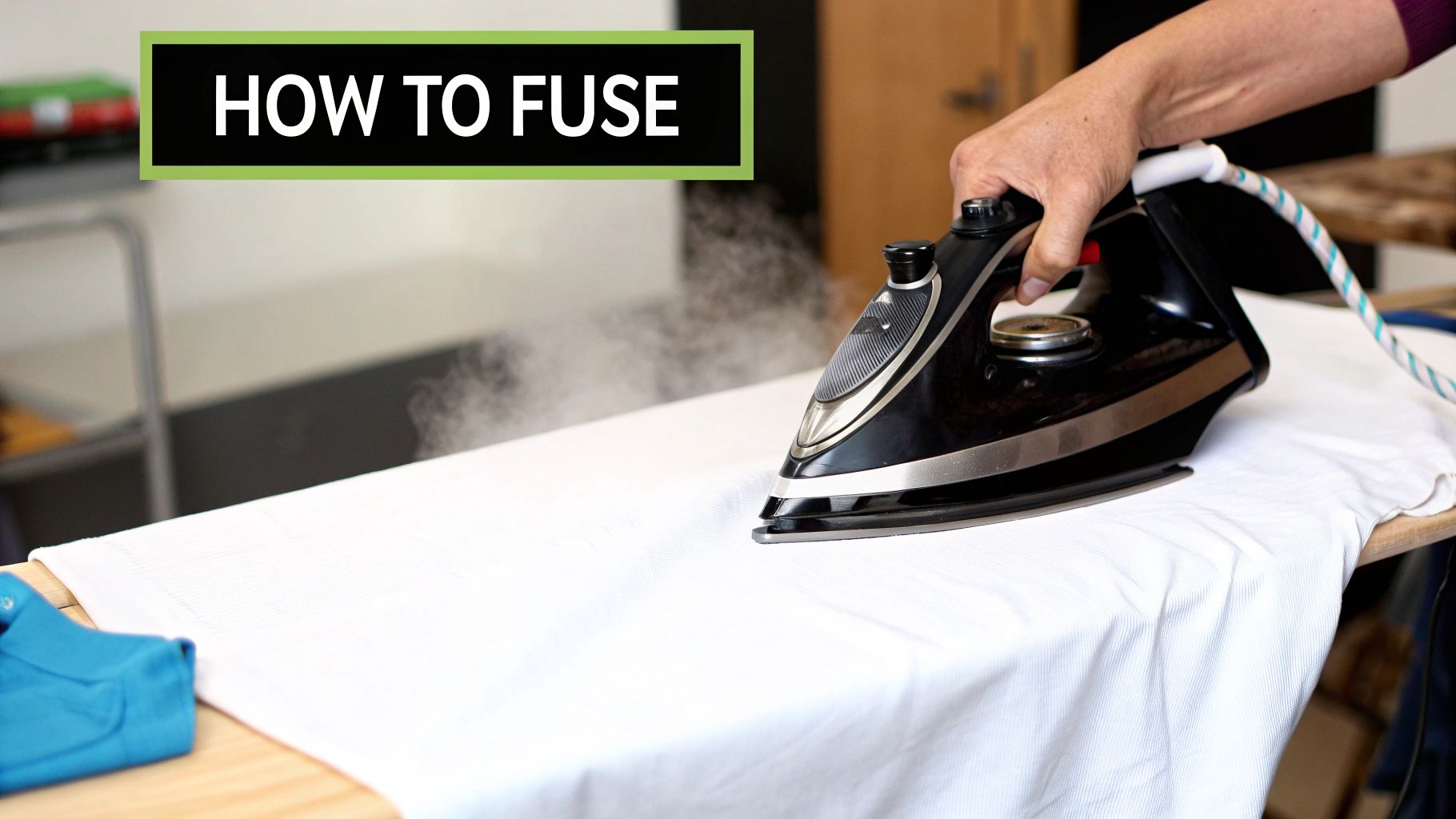
The real secret isn’t about speed; it's about being methodical. A little bit of prep and the right technique are what separate a bubbly, uneven mess from a crisp, seamless bond.
Before you even think about plugging in your iron, spending a few minutes on prep work will save you a world of headaches later. This is where you lay the foundation for a perfect fuse.
First things first: always pre-wash and press your fabric. We all know fabric can shrink, and if you fuse fleece to an unwashed piece, you're setting yourself up for puckers and bubbles after its first trip through the laundry. Ironing it completely smooth also gets rid of any wrinkles that could get trapped under the fleece forever.
Next up, cut your fusible fleece. Here’s a pro-tip I swear by: cut the fleece slightly smaller than your fabric piece, maybe by about a ¼ inch on all sides. This simple step prevents the gluey adhesive from oozing out at the edges and making a sticky mess of your iron and ironing board.
Finally, get your pressing station ready. A firm, flat surface like your ironing board is ideal. You’ll also want a pressing cloth—this can be a scrap piece of cotton or a dedicated Teflon sheet. Its job is to protect your iron from any stray adhesive.
This is where the magic happens, and it's the most critical part of the whole process. You need to forget everything you know about sliding an iron back and forth like you’re pressing a shirt. For fusible fleece, it’s all about the press and hold.
The goal is to melt the adhesive dots so they sink directly into the fabric fibers. Sliding the iron just smears the glue, which creates a weak bond and can even cause wrinkles. Trust me, patience is your best friend here.
After you've pressed the entire piece from the fleece side, I like to flip it over and give it one last press from the fabric side. This really helps lock in the bond. Then comes the most important (and most ignored) step: let the piece cool completely on a flat surface before you touch it. Moving it while it's still warm can ruin the bond. Letting it cool allows the adhesive to fully set, creating that permanent, flawless finish you're after.
Even when you do everything right, you might occasionally run into a snag with fusible fleece. The good news is that most of these little hiccups are easy to fix once you know what’s causing them. From a weak bond to mysterious bubbling, let's walk through the most common issues and get your project back on track.
This is hands-down the most frequent question we get. If your fusible fleece bond feels weak or starts peeling away at the edges, it usually comes down to one of three things: heat, pressure, or time.
If you’ve checked all those boxes and still have trouble, take a look at your fabric. Materials with a heavy texture or certain synthetic blends can be a bit stubborn and resist the adhesive. This is why we always recommend doing a quick test on a scrap piece first!
Seeing bubbles or wrinkles appear after you’ve fused is incredibly frustrating, but it's almost always caused by one of two things.
First, you might not have pre-washed your main fabric. If the fabric shrinks from the iron's heat (or later in the laundry), it will pull away from the fleece, creating those dreaded bubbles.
The second culprit is sliding the iron instead of pressing. When you glide the iron across the surface, you can accidentally shift the fabric and fleece while the glue is melted, trapping wrinkles underneath. Always remember to lift, press, and hold, overlapping each section as you go.
Pro-Tip: If you spot a bubble after the piece has cooled down, don't panic! You can often fix it. Just place a pressing cloth over the bubbled area and press firmly again. This can sometimes reactivate the adhesive just enough to smooth things out.
To keep your beautiful projects looking their best, a little care goes a long way.
Items made with fusible fleece are generally fine to machine wash on a gentle cycle with cold water. When it's time to dry, you can tumble dry on a low heat setting. For best results, though, we recommend laying the item flat to air dry. High heat from a dryer can sometimes reactivate the adhesive, so it's always better to be cautious.
With these simple troubleshooting and care tips, you can be confident your projects will maintain their gorgeous structure for years to come.
When you're excited to dive into a new project, you want clear answers, not confusing instructions. Let's tackle some of the most common questions we get here at the shop about working with fusible fleece. A little know-how up front can make all the difference.
This is the number one question people ask, and thankfully, it's the easiest to answer! Take a look at your piece of fusible fleece. One side will be soft and fluffy, just like regular quilt batting.
Flip it over, and you'll notice the other side feels different—it's often a bit rough, bumpy, or might even have a little sheen to it. That bumpy side is your adhesive. It’s the side you’ll place against the wrong side of your fabric before you press. Simple as that.
This is a big one, and the answer is a definite no, you should not pre-wash fusible fleece. The heat-activated glue is designed to work straight off the bolt. Sending it through the washer and dryer can weaken or even completely wash away the adhesive, leaving you with a plain, non-fusible piece of batting.
Instead, turn your attention to the fabric you're using. Always pre-wash and press your main fabric (especially cottons and linens) to get any potential shrinkage out of the way before you fuse anything to it. This simple step is your best defense against future puckering.
Finding that "just right" temperature can feel tricky. While you should always defer to the manufacturer's instructions on the packaging, a great place to start for most cotton fabrics is a medium-heat setting—often the 'wool' setting on most irons—with a good amount of steam.
Before you commit to your main project piece, always do a small test. Fuse a scrap of fleece to a scrap of your fabric to make sure you get a strong bond without scorching your material.
Absolutely! In fact, that's one of its best features. Fusible fleece is specifically designed to be stitched through. It provides a lovely, low-loft structure that gives your quilting stitches beautiful definition, making it perfect for projects like table runners, placemats, and especially handbags that need a little body.
Ready to give your next project that professional, polished structure? Stop by High Country Quilts here in Colorado Springs, or take a look at our selection of fusible fleece and other go-to stabilizers online. Explore Our Stabilizers
At High Country Quilts we care deeply about community. With our experiences in retail, we know that a store is not only a place to shop but also a place for the community to gather and share. During this busy...

Hi! We’re Adam and Renee Wheaton, the new owners of High Country Quilts! For more than 40 years, we’ve owned and operated vacuum and sewing businesses. Following in Renee’s father’s footsteps after he retired from All Discount Vacuum and Sewing in Colorado...


Leave a comment