
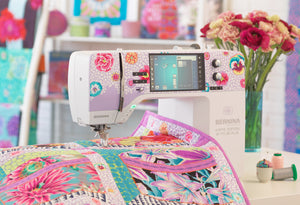

We Love Our Quilting Community
At High Country Quilts we care deeply about community. With our experiences in retail, we know that a store is not only a place to shop but also a place for the community to gather and share. During this busy...


Have you ever meticulously sewn a seam, only to have it pucker and twist for no apparent reason? We’ve all been there. The culprit is almost always the same thing: the fabric's grain.
Think of your fabric not as a solid sheet of material, but as a grid of threads woven together. This internal structure, or grain, is the invisible map that dictates how the fabric will stretch, hang, and behave when you cut and sew it. Learning to read this map is the single most important skill for taking your projects from homemade to beautifully handcrafted.
Every piece of woven fabric has a distinct "grainline" created by its interlocking threads. There are three directions you absolutely need to know: the warp, the weft, and the bias.
Let’s break them down.
Warp (Lengthwise Grain): These are the threads that run the full length of the fabric bolt, parallel to the finished edges (the selvages). They are pulled tight during the weaving process, making them incredibly strong and stable. Warp threads have virtually no stretch. Think of them as the sturdy vertical posts in a fence.
Weft (Crosswise Grain): These are the threads woven back and forth across the warp threads, running from selvage to selvage. Because they aren't held under as much tension, weft threads have a slight amount of give. They’re like the horizontal rails that connect the fence posts.
Bias: Now, the bias isn't a thread at all—it's a direction. The true bias refers to the 45-degree angle between the warp and weft threads. This is where the magic happens. A cut on the bias gives the fabric its maximum stretch, fluidity, and beautiful drape.
For a quick reference, here’s how they stack up.
This simple table is a great cheat sheet for remembering the properties of each grainline and what it’s best used for in your sewing.
| Grainline | Direction & Stretch | Primary Use |
|---|---|---|
| Warp (Lengthwise) | Runs parallel to selvage. No stretch. | Structural seams, pant legs, long cuts that need to hold their shape. |
| Weft (Crosswise) | Runs perpendicular to selvage. Slight stretch. | Areas needing a little give, like the width of a shirt or skirt. |
| Bias | 45-degree angle to warp and weft. Maximum stretch. | Creating drape in skirts, binding curved edges, necklines, and decorative ties. |
Keeping this in mind will help you make intentional choices when laying out your pattern pieces for a truly professional result.
Imagine you're at a shop like High Country Quilts here in Colorado Springs, unrolling a beautiful bolt of cotton. If you pull it along its length, it feels rigid. Pull it side-to-side, and you'll feel a little give. But pull it on the diagonal? It stretches like a dream. That’s the grain in action!
Mastering fabric grain is the single most important step toward achieving professional, predictable results in any sewing project. It's the difference between fighting your fabric and making it work for you.
Ultimately, honoring the grain is the first step toward creating pieces that hang beautifully and last for years. It's a fundamental part of understanding fabric, fit, and finish that elevates the quality of any garment or quilt you create.
Figuring out your fabric's grain isn't some secret art—it's a hands-on skill that, once you learn it, becomes second nature. With a little practice, you'll be able to spot the warp, weft, and bias in any woven fabric, which is the key to making sure every cut is a good one.
Your best friend for finding the grain is the selvage. Look for that finished, tightly woven edge on the fabric that doesn't fray. The threads running right alongside it are your lengthwise grain, or warp. The threads running from one selvage edge to the other, across the fabric, are your crosswise grain, or weft. It’s as simple as that.
This little diagram makes it crystal clear. You can see how the warp and weft form a stable grid, while the bias cuts right across it.

Think of the warp as the fabric's strong backbone, the weft as having a little bit of comfortable give, and the bias as where all the stretchy, drapey magic happens.
What if you're working with a scrap and the selvage is long gone? No problem. The "stretch test" is your go-to move. It’s a simple way to feel the grain.
Here’s a little secret from the shop: fabric rarely comes off the bolt perfectly straight. It's often pulled a bit crooked as it’s wound, meaning your warp and weft threads might not be at a perfect 90-degree angle. This is why "squaring up" your fabric is so important.
I always recommend pre-washing your fabric first—it helps the fibers relax into their natural state. To find a true straight edge, you can either snip and tear the fabric across the weft (this works great for many quilting cottons) or carefully pull a single weft thread out to create a visible line.
Fold your fabric in half lengthwise, matching up the selvages. Does it lie perfectly flat, and do your new straight edges line up? If not, you’ll need to gently pull the fabric on the diagonal to coax the threads back into a perfect grid.
Squaring up your fabric before you even think about cutting is absolutely non-negotiable for precise quilting. It's what keeps your blocks from looking wonky and guarantees they'll fit together beautifully, so you can say goodbye to wavy borders and warped quilts.
Once you’ve got it all squared up, give it a good press with your iron to set everything in place. If you need a hand, remember that we always have a great selection of rulers and cutting mats at High Country Quilts to help you get a perfectly square start on any project.
For any sewing project, understanding fabric grain is important. But for a quilter? It's the absolute bedrock of everything we do. Think of your quilt block as a tiny, intricate puzzle. The only way those pieces will snap together perfectly is if you respect the grain from the very first cut.
When you cut your quilting cotton along its straight grain—either lengthwise or crosswise—you're using the most stable part of the weave. These threads have almost no stretch, which means your pieces won't distort or go rogue on you as you handle, press, and sew them. This stability is what precision piecing is built on.
It’s the simple reason a 4-inch square cut on the straight grain stays a 4-inch square when it's time to stitch it into your block. This reliability is how master quilters get those impossibly sharp points and seams that line up flawlessly.
Cutting even slightly off-grain throws a wrench in the works. It introduces a sneaky, unpredictable stretch that leads to all the classic quilting frustrations. Suddenly, your half-square triangles are wonky, your blocks are lopsided, and your finished quilt top refuses to lie flat.
This is exactly how you get the dreaded “bacon strip” border—a long fabric strip that was cut off-grain and stretched while you sewed it, creating ugly waves that even the best longarmer can’t quilt out. Your finished project won't hang straight, and your seams will have a subtle, nagging pucker. Paying attention to the grain is the best preventative medicine for your quilt.
For a quilter, fabric grain isn't a friendly suggestion—it's the blueprint for success. Cutting on the straight grain is your guarantee that every piece will hold its shape from the cutting mat to the final stitch, letting your blocks come together like a dream.
The difference this makes isn't just something you can feel; you can see it in the data. Studies have shown that once quilters get solid training on fabric grain, their piecing accuracy skyrockets—with 65% reporting a significant improvement. It’s also a smarter way to work, reducing fabric waste by up to 25%.
On the flip side, ignoring the grain is the top culprit behind the puckered seams and skewed blocks that plague nearly 40% of beginner quilts. It's the number one reason quilts don't end up square.
The good news is that this is a totally learnable skill. And to make it even easier, many precuts, like the beautiful seasonal bundles we get here at the shop, are designed to save you time by being cut with the grain in mind. We're lucky to work with such amazing materials, especially considering the US is a huge player in the cotton world, exporting about 35% of the world's supply. If you're a fabric nerd, you can dive deeper into the journey of our favorite fiber with this report on the US cotton sector from the USDA.
At the end of the day, taking the time to understand and use fabric grain is the single most powerful thing you can do to get a professional result. It’s what transforms a creative idea into a crisp, beautiful quilt that you and your family will treasure for years.
If the warp and weft threads are the sturdy foundation of your fabric, the bias is where the real magic happens. So many of us have been taught to fear it—the stretching, the warping, the potential for a sewing project to go sideways. But once you understand how it works, the bias stops being a problem to avoid and becomes one of the most powerful tools in your sewing arsenal.
So, what exactly is it? The bias isn't a type of thread; it’s simply a direction. Imagine your fabric's grid of threads. The true bias is a line drawn at a perfect 45-degree angle to that grid. When you cut along this diagonal, you fundamentally change how the fabric behaves. The woven threads are no longer locked in place, giving them room to shift and slide past one another. This is what creates that signature stretch and fluidity.

That gorgeous, body-hugging drape you see in a classic slip dress? That's the bias at work. It allows the fabric to cascade and cling to curves in a way that a straight-grain cut simply can't replicate.
While a bias cut is the star of elegant garments, its flexibility makes it a practical hero in quilting and other projects, too. It’s perfect for any job where you need a little give.
Of course, the key to sewing with bias cuts is learning how to control that stretch so it works for you, not against you. An unsupported bias edge will grow and warp with even the gentlest handling.
One of the most common mistakes I see is when someone picks up a bias-cut pattern piece and lets it hang. The fabric's own weight will stretch it out of shape before you even get to the sewing machine! Always keep bias-cut pieces flat and supported.
The single best technique for preventing this is staystitching. It’s just a simple row of straight stitches sewn just inside your seam allowance on a single layer of fabric. Think of it as putting up a little temporary fence that holds the edge in place, stopping it from stretching while you work.
For quilters, understanding grain is especially critical. Sticking to the straight grain for your piecing can result in 20-30% less stretch distortion compared to cutting off-grain. In the BERNINA classes we host here at the shop, we’ve seen how even slightly off-grain cuts can lead to 15-25% size inconsistencies in finished quilt blocks. While we focus on quilting cottons, you can get a broader perspective on fabric markets from this report on cotton trends. By learning to use both the stable straight grains and the flexible bias with intention, you gain total command over your fabric.
Every experienced sewist knows a secret: the most critical work often happens before your rotary cutter or scissors even touch the fabric. Getting these few prep steps right is what separates a project that fights you at every turn from one that comes together like a dream. Think of it as your pre-flight check for sewing success.
These habits guarantee more accurate cuts, prevent frustrating problems down the line, and are the true foundation of a professional-looking project.

It’s this simple bit of prep that makes all the difference. You’re setting the stage for everything that follows.
First up, and this one is a golden rule: pre-wash and dry your fabric. For most cottons, this is non-negotiable. Washing does two incredibly important things. First, it gets all the shrinkage out of the way now, so you don't pour hours into a garment only to have it shrink two sizes in its first wash.
Second, it helps the fabric relax. When material is wound tightly onto a bolt at the mill, the threads get pulled and put under tension. A quick trip through the washer and dryer lets them settle back into their natural, right-angled state, making it so much easier to find the true grain.
Once your fabric is dry, it’s time to head to the ironing board. But notice the word I’m using: "press," not "iron." When you iron, you slide the hot plate back and forth, which can easily stretch and distort the very threads you just worked so hard to get straight.
Pressing is the key to accuracy. Simply lift your iron and place it down firmly on one section. Then lift it again and move to the next. This up-and-down motion flattens wrinkles without ever stretching the warp and weft.
Use a steam setting that’s right for your fabric; the moisture is fantastic for helping fibers relax into a perfectly crisp, flat surface. A pro tip? Let the fabric cool completely before you move it. Warm fabric can still stretch, undoing your careful pressing. Precise fabric handling is a skill you'll see in any high-quality work, and you can even draw inspiration from a professional guide to sewing stuffed animals, where accuracy is everything.
With your fabric clean, shrunk, and pressed flat, there’s one final check. Fold the fabric in half lengthwise, matching the selvage edges. A truly on-grain piece of fabric will lie perfectly flat, with no odd ripples or twists along the fold.
If you see any pulling, your fabric is still a bit off-grain. Don't worry! Just grab opposite corners and give it a gentle tug along the bias (the diagonal). This coaxes the threads back into a perfect 90-degree grid. Once it’s all squared up, you’re ready to lay out your pattern pieces with confidence, knowing your project will hang and wear beautifully.
We’ve all been there. You finish a project only to find a twisted pant leg, a wavy quilt border, or a dress that just hangs funny. More often than not, these frustrating moments trace back to a simple misunderstanding of fabric grain.
The good news is that these mistakes are not just fixable, they're some of the best learning opportunities in sewing. Once you learn to spot the common pitfalls, the solutions become second nature. You'll build the confidence to not only prevent grainline issues but also to diagnose and correct them on the fly.
Probably the most common mistake is failing to get the pattern's grainline arrow perfectly parallel with the fabric's lengthwise grain. Even being off by a tiny bit can introduce unwanted bias stretch, leading to twisted seams and misshapen pieces once the garment is assembled. A sleeve cut just slightly off-grain, for example, can cause the entire thing to rotate uncomfortably around your arm.
To fix this, always grab a ruler. Before you pin or cut, measure from the selvage edge to the top of the grainline arrow on your pattern piece, then measure from the selvage to the bottom of the arrow. If the measurements match, you're perfectly parallel. This quick check saves hours of frustration later.
A pattern piece cut off-grain is a project set up for failure. The fabric's inherent stretch, however subtle, will pull and distort your finished work in ways that are almost impossible to correct after sewing.
We love the bias for its gorgeous, flowing drape, but that same stretchiness makes it tricky to handle. When you let a bias-cut edge hang off your sewing table or pull on it during construction, it can stretch out permanently. This is what causes saggy necklines, rippling hems, and quilt bindings that simply refuse to lie flat.
The solution is to handle these edges with care and staystitch them right away. Always keep bias-cut pieces fully supported on your work surface. Immediately after cutting, sew a line of stitches just inside the seam allowance to stabilize the edge and stop it from growing. If you need tools to help you master these techniques, check out our selection at High Country Quilts.
Once you get the hang of the basics, you start running into those specific "what-if" scenarios right in the middle of a project. Let's walk through a few of the most common questions I hear from fellow sewers to get you sewing with complete confidence.
This is a great question! For non-woven materials like felt, vinyl, or leather, you can pretty much throw the rulebook out the window. Since these fabrics are created by pressing or bonding fibers together, not by weaving threads, they don't have a grainline.
That's actually a huge plus for many projects—you can lay out your pattern pieces in any direction to make the most of your material. The one thing to watch for is any printed pattern or embossed texture; you'll still want to keep that consistent across all your pieces for a polished look.
I hear this one all the time. The answer is: sometimes! If your quilt has perfectly straight sides and 90-degree corners, straight-grain binding is a fantastic choice. It’s stable, strong, and uses less fabric than its bias-cut cousin.
But the moment you introduce a curve, you'll run into trouble.
Straight-grain binding has virtually no stretch. Try to force it around a scalloped edge or a rounded corner, and it will pucker and fight you the whole way. Only bias-cut binding, with its natural 45-degree stretch, can gracefully hug curves and create perfectly flat, crisp mitered corners.
Yes, and you absolutely should! Don't panic if your fabric seems a little wonky when you get it home. It's incredibly common for fabric to get pulled off-grain as it’s wound onto the bolt at the mill. Fixing it is a crucial prep step we call "squaring up."
First, always pre-wash your fabric to let the fibers relax. Once it's dry, you can find the true grain and gently pull the fabric along the diagonal, coaxing those warp and weft threads back into a perfect 90-degree grid. A good press with plenty of steam will help lock it all in place, giving you a stable, accurate foundation for cutting.
Nailing these details is what really elevates your sewing. Here at High Country Quilts, we believe that having the right tools and a bit of expert guidance makes all the difference. Stop by our Colorado Springs shop to see our beautiful fabrics, get a feel for a new BERNINA machine, and find your next project at High Country Quilts.
At High Country Quilts we care deeply about community. With our experiences in retail, we know that a store is not only a place to shop but also a place for the community to gather and share. During this busy...

Hi! We’re Adam and Renee Wheaton, the new owners of High Country Quilts! For more than 40 years, we’ve owned and operated vacuum and sewing businesses. Following in Renee’s father’s footsteps after he retired from All Discount Vacuum and Sewing in Colorado...


Leave a comment