

We Love Our Quilting Community
At High Country Quilts we care deeply about community. With our experiences in retail, we know that a store is not only a place to shop but also a place for the community to gather and share. During this busy...


Batik isn't just another pretty fabric on the shelf; it's a piece of art created with a centuries-old wax-resist dyeing technique. Artisans use this incredible, hands-on process to transform plain cloth—usually cotton or silk—into a one-of-a-kind textile that quilters and artists absolutely love.
So, what exactly is batik material? Think of it like this: instead of painting with color, you're painting with melted wax to create a temporary shield. This wax blocks dye from reaching the fibers underneath, allowing artisans to build up incredibly complex, layered designs. Once the dyeing is done, the wax is carefully removed, and the stunning final pattern is revealed.
This process is the complete opposite of machine printing, where patterns repeat flawlessly. With true batik, every single yard is a direct reflection of the artist's hand. You'll notice subtle shifts in pattern, tiny "crackle" lines from the wax, and a depth of color you just can't get any other way. These little imperfections are exactly what make it so special.
Batik is so much more than a beautiful textile; it's a vibrant cultural tradition with deep roots, especially in Indonesia. For centuries, the craft has been a medium for storytelling and a symbol of cultural identity. In fact, its global importance was cemented in 2009 when UNESCO designated Indonesian batik as an Intangible Cultural Heritage. This recognition sparked a huge surge in its worldwide popularity and export, as highlighted in reports on the growing demand for these beautiful textiles on english.news.cn.
The signature "crackle" effect seen in many batiks isn't a flaw—it's a celebrated feature. It happens when the hardened wax cracks just a little during dyeing, letting tiny veins of color seep through to create beautiful, web-like lines.
To really get why batiks look and feel the way they do, it helps to have a little background in fabric science. The way different fibers absorb dye and how the wax resists it are the secrets behind the magic.
For a quick reference, here's a look at the key traits that make batik a quilter's favorite.
| Characteristic | Description |
|---|---|
| Fiber Content | Primarily high-quality, tightly woven cotton. Also found in rayon and silk. |
| Dye Method | Wax-resist and immersion dyeing, resulting in deep, two-sided color saturation. |
| Texture | Crisp and smooth hand-feel with unique, non-repeating "crackle" patterns. |
| Handling | Minimal fraying and stable weave make it excellent for precise cutting and piecing. |
| Uniqueness | Every bolt is handmade, meaning no two pieces are ever completely identical. |
These characteristics come together to create a fabric that's not only beautiful but also a joy to work with.
For those of us who quilt and sew, knowing what makes batik tick is crucial for getting the best results. Here’s a quick rundown of what sets it apart:
These features make batik an incredible choice for anyone wanting to add character, depth, and a touch of handcrafted soul to their work.
To really get what makes batik so special, you have to picture the artisan's workshop. Creating this fabric isn't a quick, automated process; it’s a mesmerizing dance of wax, dye, and heat. Every single yard is infused with the maker's touch, transforming a simple bolt of cloth into a one-of-a-kind piece of textile art.
It all starts with a blank canvas—usually a high-quality, tightly woven piece of "prepared-for-dyeing" (PFD) cotton. Artisans take this plain fabric and meticulously apply hot, melted wax to the areas they want to protect from the dye. This wax acts as a resist, physically blocking the color from reaching the fibers underneath.
There are two classic ways to apply the wax, and the tool an artisan chooses really defines the look of the final design.
This first waxing is a crucial step, setting the stage for the first layer of vibrant color.
Once that first layer of wax has hardened, the fabric takes a dip in a cool dye bath. All the unwaxed areas soak up the color, while the waxed sections stay pristine. But here’s where the real magic happens.
If the artisan wants to introduce a second color, they dry the fabric and apply more wax, this time to protect some of the newly dyed areas. Then, it goes into another dye bath, almost always a darker shade. This cycle of waxing and dyeing can be repeated over and over. With each dip, new layers of dye and wax add incredible depth and complexity to the design.
The golden rule in traditional batik is to dye from the lightest color to the darkest. You can't go backward. Each new dye bath interacts with the existing colors, creating rich, blended hues you could never get from a single application.
The infographic below breaks down this traditional workflow, showing how the artisan builds the pattern from start to finish.
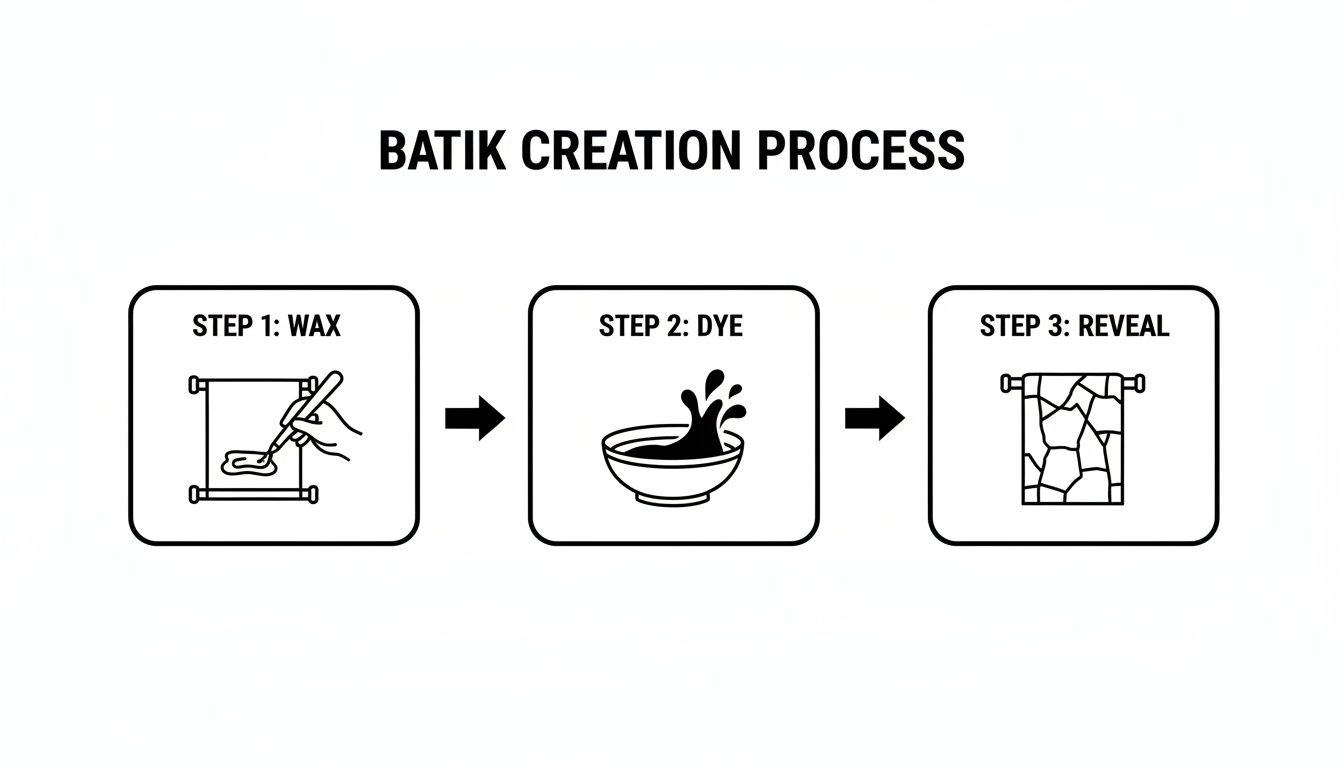
It’s a patient, methodical process that requires a real feel for how colors will mix and layer on the fabric.
After the final dye bath, the moment of truth arrives. How do they get all that hardened wax off? The most common method is to boil the fabric in a huge vat of water. As the water heats up, the wax melts away and floats to the surface, revealing the brilliantly colored fabric hidden beneath.
This boiling isn't just for cleanup; it's a critical part of the process. It’s also where the signature "crackle" effect comes from. As the fabric is handled between dye baths, the brittle wax often cracks in fine lines. Tiny veins of dye seep into these cracks, creating the web-like patterns that batik is famous for.
Once all the wax is gone, the fabric gets a final rinse and is hung to dry. What you're left with is a soft, vibrant piece of material with deep, saturated color on both sides. Because of this hands-on process, no two bolts are ever exactly alike, giving batik a soul that quilters and creators at shops like High Country Quilts absolutely treasure.
Not all batik is created equal. The fiber a design is dyed on will completely change how it looks, feels, and behaves in your project. Think of it like a painter choosing between a smooth canvas or a textured one—the surface itself is a huge part of the final piece.
For quilters, knowing the difference between cotton, rayon, and silk batiks is everything. It's the key to making sure the fabric you fall in love with is the right match for what you're trying to create. One might be sturdy and crisp, perfect for those sharp points in a quilt block, while another offers a fluid, graceful drape that's just made for wearable art. Let's break down the three most common options you'll find.
When you think of batik for quilting, you're almost certainly picturing cotton. Cotton batiks are the undisputed favorite in the quilting world, and for very good reasons. They're typically made on high-quality, high-thread-count cotton, which gives them a crisp hand and fantastic stability.
This structure makes cotton batiks a dream to work with. They hold a crease beautifully when you press them, fray far less than many standard quilting cottons, and are incredibly easy to cut with precision. That makes them the perfect choice for any project with intricate piecing where accuracy is non-negotiable.
Plus, their durability means that quilts made from cotton batiks will stand the test of time, becoming the heirlooms you want them to be. If your project has sharp points, detailed blocks, or needs a fabric that will hold its shape without any fuss, cotton is your go-to option.
While cotton is the quilter’s staple, rayon brings something totally different to the table. Rayon is made from natural cellulose (often wood pulp), resulting in a batik fabric with a wonderfully soft, silky feel and a liquid-like drape. It just flows.
This quality makes it a stunning choice for projects where you want to emphasize movement and softness. Think about using rayon batiks for quilt backings that feel luxurious against the skin, for elegant table runners that drape perfectly, or for beautiful wearable art like scarves and flowing tops.
When you're quilting with rayon, you'll notice it behaves differently under the needle. It's more slippery than cotton, so you’ll want to use extra pins and a sharp, fine needle to keep things in line. The stunning visual effect of its gentle movement, however, is often well worth the extra care.
The global demand for unique, handmade textiles is surging. The handicrafts market, which includes batik, was valued at $10.88 billion USD in 2024 and is projected to reach $26.26 billion by 2033. This growth is fueled by a consumer desire for sustainable, artisanal goods, making batik a popular choice in creative communities like the classes offered at High Country Quilts. Discover more insights about this growing market for cotton batik on prof-research.com.
At the very highest end of the spectrum, you’ll find silk batiks. These fabrics are the pinnacle of luxury, combining the intricate artistry of batik with the natural luster and delicate hand of pure silk. The dye takes to silk in a special way, creating colors that are exceptionally vibrant and luminous—they seem to glow and catch the light in a way no other fiber can.
Because of their delicate nature and higher price point, silk batiks aren't typically used for everyday bed quilts. Instead, they're reserved for those truly special projects where visual impact is everything. They are an exquisite choice for fine art quilts, decorative wall hangings, and high-end accessories that are meant to be showstoppers.
Working with silk requires a gentle touch and specialized tools, like fine silk pins and a fresh Microtex needle, to avoid snagging the delicate fibers. The result, however, is a breathtaking piece of textile art with unparalleled beauty and elegance.
Choosing the right fiber can feel like a big decision, but it really comes down to what you want the finished project to do. This table breaks down the key differences to help you pick the perfect batik for your next creation.
| Fiber Type | Key Characteristics | Best For Quilting Projects |
|---|---|---|
| Cotton | Crisp hand, stable, durable, holds a sharp crease, minimal fraying. | Traditional quilts, intricate piecing, wall hangings, and any project requiring structure. |
| Rayon | Soft feel, fluid drape, silky texture, more movement. | Quilt backings, wearable art, table runners, and quilts with a softer aesthetic. |
| Silk | Luminous sheen, vibrant color, delicate, luxurious feel. | Art quilts, decorative wall hangings, and heirloom projects where beauty is prioritized. |
By thinking about the specific needs of your project—whether it’s durability for a bed quilt or drape for a scarf—you can confidently select the perfect batik material to bring your creative ideas to life.
In a world full of fast fashion and mass-produced textiles, telling a genuine, handcrafted batik from a machine-printed lookalike can feel like a real challenge. But once you know what to look for, the differences become beautifully clear. Spotting an authentic piece isn't just about buying fabric; it’s about investing in artistry, tradition, and a one-of-a-kind material for your projects.
Think of it like telling an original painting from a high-quality print. The print is uniform and flawless, but the painting has texture, depth, and the subtle marks of the artist's hand. Authentic batik tells a similar story through its own unique characteristics.
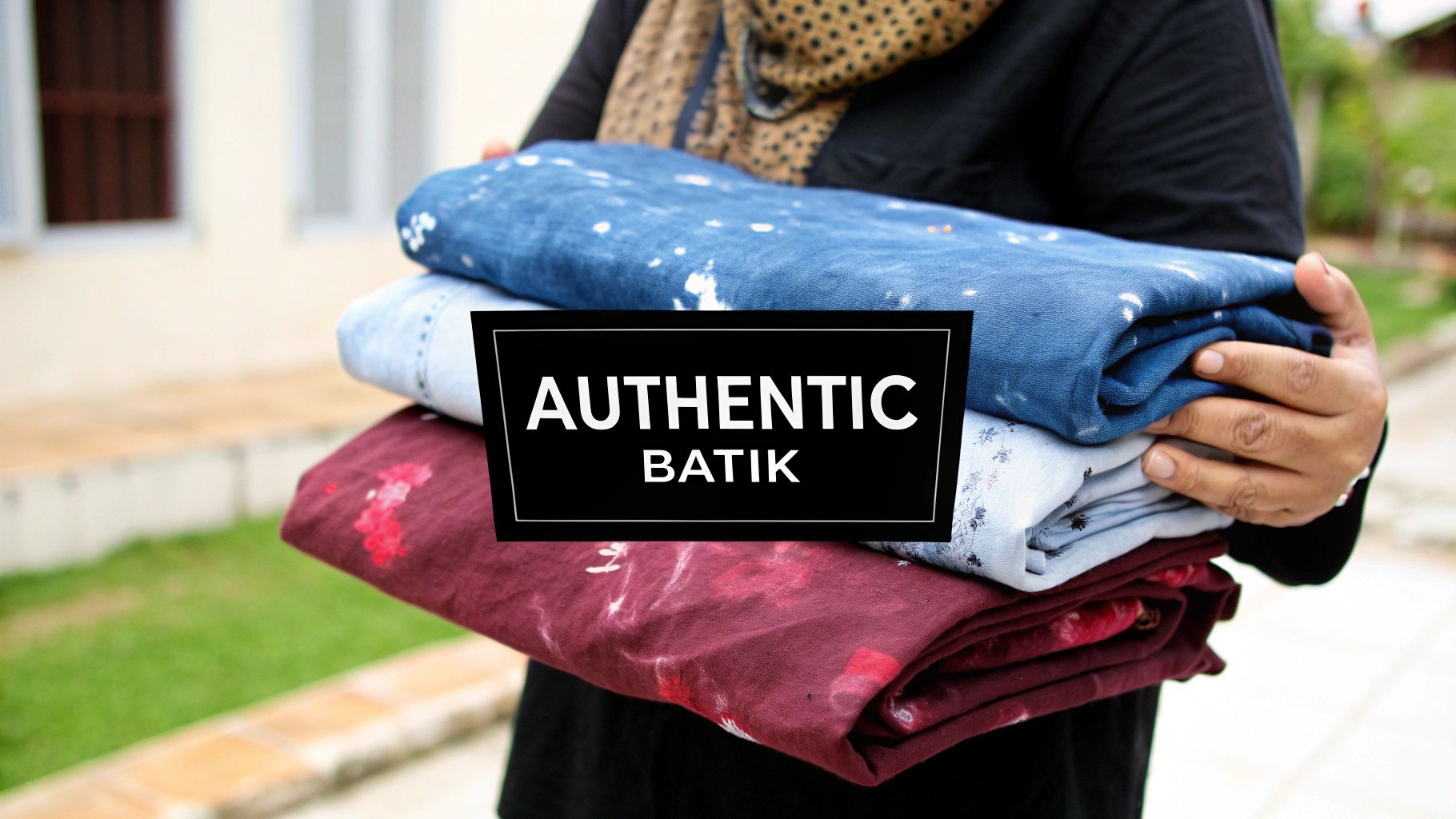
This is the fastest and most reliable test you can do. Flip the fabric over and take a good look at the back. Because of the traditional wax-resist and immersion dyeing process, the color is forced deep into the fibers from all angles.
The result? The design on the back should be nearly as vibrant and crisp as the design on the front. You’ll see rich, saturated color through and through. In contrast, a machine-printed imitation often has a faded, blurry, or even white appearance on the reverse side where the ink simply hasn't penetrated the material.
Key Takeaway: An authentic batik has a "two-sided" personality. If the back looks significantly duller or lighter than the front, you're almost certainly looking at a printed fabric, not a genuine batik.
Handmade art is never flawless, and that’s what gives it soul. The same is absolutely true for batik. These subtle variations aren't defects; they are the beautiful hallmarks of a process done by human hands.
Get up close and look for these tell-tale signs:
Run your hand over the fabric. Authentic batik is almost always made on high-quality, high-thread-count cotton, which gives it a distinctively smooth and crisp feel. It feels substantial and tightly woven, which is a big part of why it’s so wonderful for quilting.
Printed lookalikes, on the other hand, are often produced on lower-quality base cloths that may feel thinner, rougher, or less dense. While this test is more subjective, with a little practice, your hands will quickly learn to recognize the superior quality of a true batik. Since many genuine batiks are found in older garments, knowing how to identify vintage clothing can also be a huge help in spotting handcrafted textiles.
The authenticity of batik is a point of pride and economic importance, especially in its homeland of Indonesia, where the sector includes over 39,000 artisans and businesses. Learning to spot these details connects you directly to this incredible craft tradition and the skilled hands behind it.
Working with batik fabric opens up a world of vibrant color and unique texture, but its handcrafted nature means it behaves a little differently than standard quilting cotton. If you know what to expect, you'll have a much smoother, more successful project. Let's walk through the practical tips you need to handle batik with confidence, from the first wash to the final press.
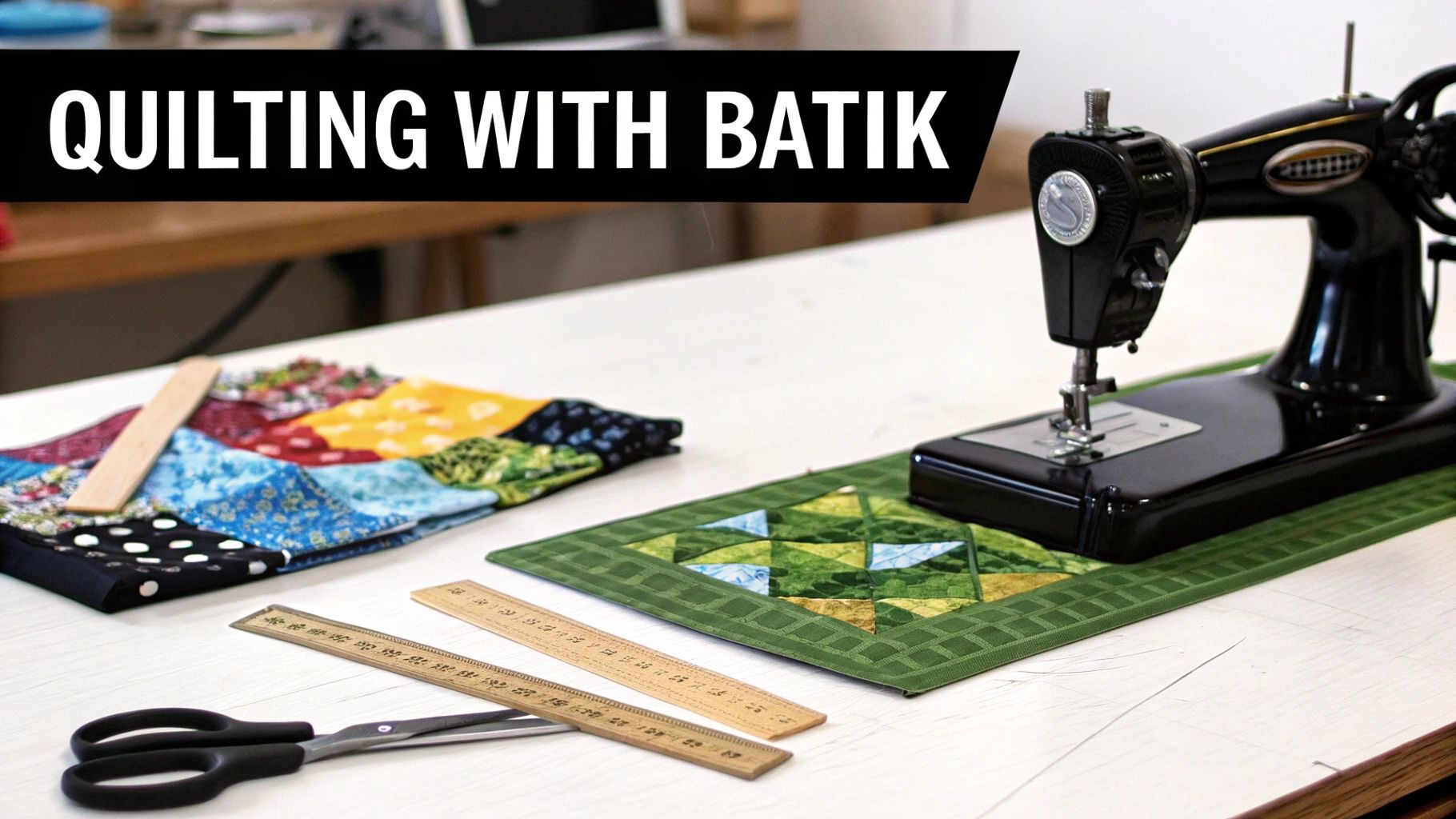
One of the first questions quilters always ask is, "Do I really need to pre-wash my batiks?" The short answer is a resounding yes. Because of that intensive hand-dyeing process, batiks are famous for releasing excess dye, especially the deep reds, blues, and purples. Pre-washing is your best insurance policy against a tragic color bleed all over the lighter fabrics in your quilt.
This step also takes care of any shrinkage before you sew, ensuring your meticulously pieced blocks stay true to size after the quilt is finished. A quick wash in cool water with a color catcher sheet can save you a world of heartache later.
Batik fabric is made on a high-quality base cloth with a much higher thread count than your average quilting cotton. This dense, tight weave is fantastic for preventing fraying, but it can be tough on your sewing machine needle. A dull or incorrect needle will literally punch its way through the fabric instead of piercing it, leading to skipped stitches or even damaged fibers.
You should always start a new batik project with a fresh, sharp needle. Here’s what works best:
As for thread, a high-quality 50-weight cotton thread is the perfect partner for your batik. It's strong enough to hold everything together securely but fine enough that it won’t add extra bulk to your seams.
Pro Tip: If you notice your stitches are skipping or your machine suddenly sounds like it's working way too hard, the first thing to check is your needle. It's almost always a sign that it’s time for a new one!
That same tight weave that gives batiks their stable, crisp feel can also create bulky seams if you're not careful. Many of us are used to pressing seams open to distribute the bulk, but that’s not always the best move with batik material.
Because the fabric is so dense, you'll often get a flatter result by pressing seams to one side. This method allows the seams to nest together beautifully when you join blocks, which is key for getting those sharp, accurate points we all love. Use a hot, dry iron (the cotton setting is usually perfect) and consider using a tailor's clapper to set the seam. It pulls the heat out and leaves you with an exceptionally crisp, flat finish.
The complex patterns and rich, layered colors are the true stars of any batik. The most successful batik quilts are often the ones that let the fabric itself do the heavy lifting. If you use an overly intricate block design with lots of tiny pieces, you can accidentally chop up the beautiful motifs, and the fabric’s unique artistry gets lost.
Instead, try these design strategies to make your batiks pop:
By simply selecting the right tools and tweaking your techniques, you'll find that working with beautiful batik material is a joyful and rewarding experience. These fabrics bring a unique, handcrafted soul to every quilt they touch.
Once you've fallen in love with a stack of batiks, you'll probably have a few practical questions before you start cutting. Working with these unique fabrics is a joy, but knowing a few key things upfront will help you get the best results. Let's tackle the most common questions quilters ask.
Yes, batiks are famous for bleeding, especially those rich, saturated reds, blues, and purples. It's a natural side effect of the intensive hand-dyeing process that creates their stunning depth of color. But don't worry—it's easy to manage.
I always strongly recommend pre-washing your batiks. Wash them separately in cool water, and toss in a color catcher sheet to grab any loose dye. This simple step not only prevents bleeding onto other fabrics in your quilt but also takes care of any minor shrinkage, ensuring your piecing stays accurate.
Because of their famously tight weave, batiks don't play well with standard sewing machine needles. A regular needle can struggle to get through the high-thread-count cotton, which can cause skipped stitches, shredded thread, or even damaged fabric.
Your best friend here is a size 80/12 Microtex (or Sharp) needle. Its extra-fine, sharp point is designed specifically to pierce through dense fabrics cleanly. I make it a rule to start every new batik project with a fresh needle—it’s a small thing that makes a huge difference in getting those perfect, professional-looking stitches.
That initial stiffness you feel in new batik fabric? It comes from the leftover wax and the high-quality, dense cotton. Many quilters, myself included, actually love this crispness. It makes the fabric incredibly stable and a dream to cut accurately. It softens up beautifully after the first wash.
Absolutely! Pressing is essential for getting those crisp, flat seams needed for accurate quilt blocks. You can confidently use a medium-to-high heat setting (the cotton setting on most irons is perfect) and a bit of steam to smooth everything out.
Here’s a pro tip: because batik is so dense, it's often better to press your seams to one side instead of pressing them open. This little trick helps reduce the bulk where multiple seams join together, which makes your blocks lie much flatter. As always, it’s smart to test your iron on a small scrap first, just to be safe.
Ready to find the perfect batik for your next masterpiece? At High Country Quilts, we offer a stunning selection of high-quality batik fabrics, plus all the needles, threads, and expert advice you need to bring your vision to life. Explore our beautiful batik collection today
At High Country Quilts we care deeply about community. With our experiences in retail, we know that a store is not only a place to shop but also a place for the community to gather and share. During this busy...

Hi! We’re Adam and Renee Wheaton, the new owners of High Country Quilts! For more than 40 years, we’ve owned and operated vacuum and sewing businesses. Following in Renee’s father’s footsteps after he retired from All Discount Vacuum and Sewing in Colorado...


Leave a comment