

We Love Our Quilting Community
At High Country Quilts we care deeply about community. With our experiences in retail, we know that a store is not only a place to shop but also a place for the community to gather and share. During this busy...


Let's get straight to the point. A serger, which you might also hear called an overlock machine, is a special type of sewing machine that does three things at once: it stitches a seam, trims the excess fabric, and finishes the raw edge so it can't fray. It does all this in a single pass, creating those clean, professional-looking seams you see inside almost any store-bought garment.
Think of a serger not as a replacement for your regular sewing machine, but as its highly skilled partner. Your standard sewing machine is the versatile workhorse—it's your go-to for things like zippers, buttonholes, topstitching, and general construction. It can do a little bit of everything.
A serger, however, is a specialist. It’s designed to do one job—creating perfect seams—with incredible speed and precision.
Here's an analogy I like to use: If you're building a house, your regular sewing machine is the finish carpenter, meticulously installing the detailed trim, doors, and windows. The serger is the framing crew, putting up the strong, stable skeleton of the house quickly and efficiently. You need both to get the job done right.
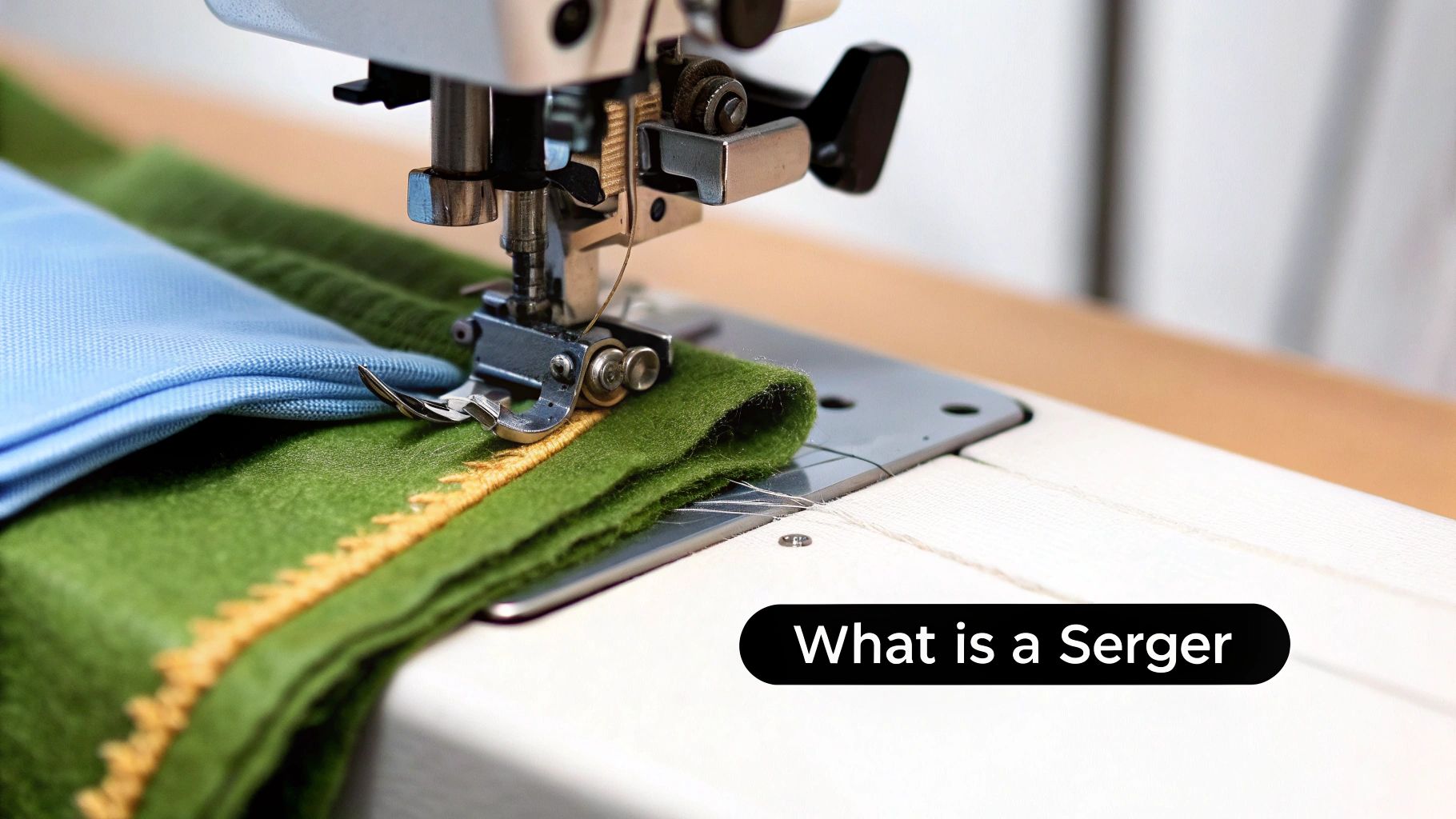
The real magic of a serger is how it multitasks. As you guide fabric through the machine, it performs several key actions simultaneously, making it an absolute game-changer for anyone serious about making clothes, whether for everyday wear or intricate cosplay.
Let’s break down what a serger does in that one, swift motion:
To really understand how these functions come together, here's a quick summary of what a serger brings to the table.
| Function | What It Does | Primary Benefit |
|---|---|---|
| Multi-Thread Looping | Uses 2-5 threads to create an interlocking stitch. | Creates strong, flexible seams perfect for knits. |
| Integrated Blade | Trims the raw fabric edge just before stitching. | Guarantees a clean, uniform seam allowance. |
| Overlock Stitch | Wraps threads around the fabric edge. | Prevents fraying for a professional, durable finish. |
| Differential Feed | Adjusts feed dogs to control fabric movement. | Prevents stretching or puckering in tricky fabrics. |
These features working in harmony are what give your projects that polished, "I bought this at a store" look.
A serger can sew up to 1,500 stitches per minute, which is often twice as fast as a standard home sewing machine. This efficiency dramatically cuts down on construction time for projects.
Instead of sewing a seam with your regular machine and then going back over it with another stitch to finish the edge, the serger handles everything at once. It’s all about saving time while seriously upgrading the quality and durability of your work.
So, what really makes a serger so different from the regular sewing machine you might have at home? It all comes down to a few key parts working together in a kind of high-speed mechanical ballet. Your standard machine has a single needle and a bobbin, but a serger is engineered from the ground up for speed, strength, and that flawless, store-bought finish.
Once you get a feel for these core components, the magic of how a serger works starts to make perfect sense. It’s not actually magic, of course—it's just incredibly clever engineering. Each piece has a specific job, and when they all work together, you get a stitch that’s both tough and tidy.
The three most important parts of any serger are its loopers, its knives, and its differential feed system. Think of these as the heart of the machine. They're responsible for creating that signature overlock stitch and are the reason a serger can do what it does. They work in a super-fast, coordinated sequence to sew, trim, and finish a fabric edge, all in one pass.
This infographic gives you a great visual breakdown of what each of these parts is up to.
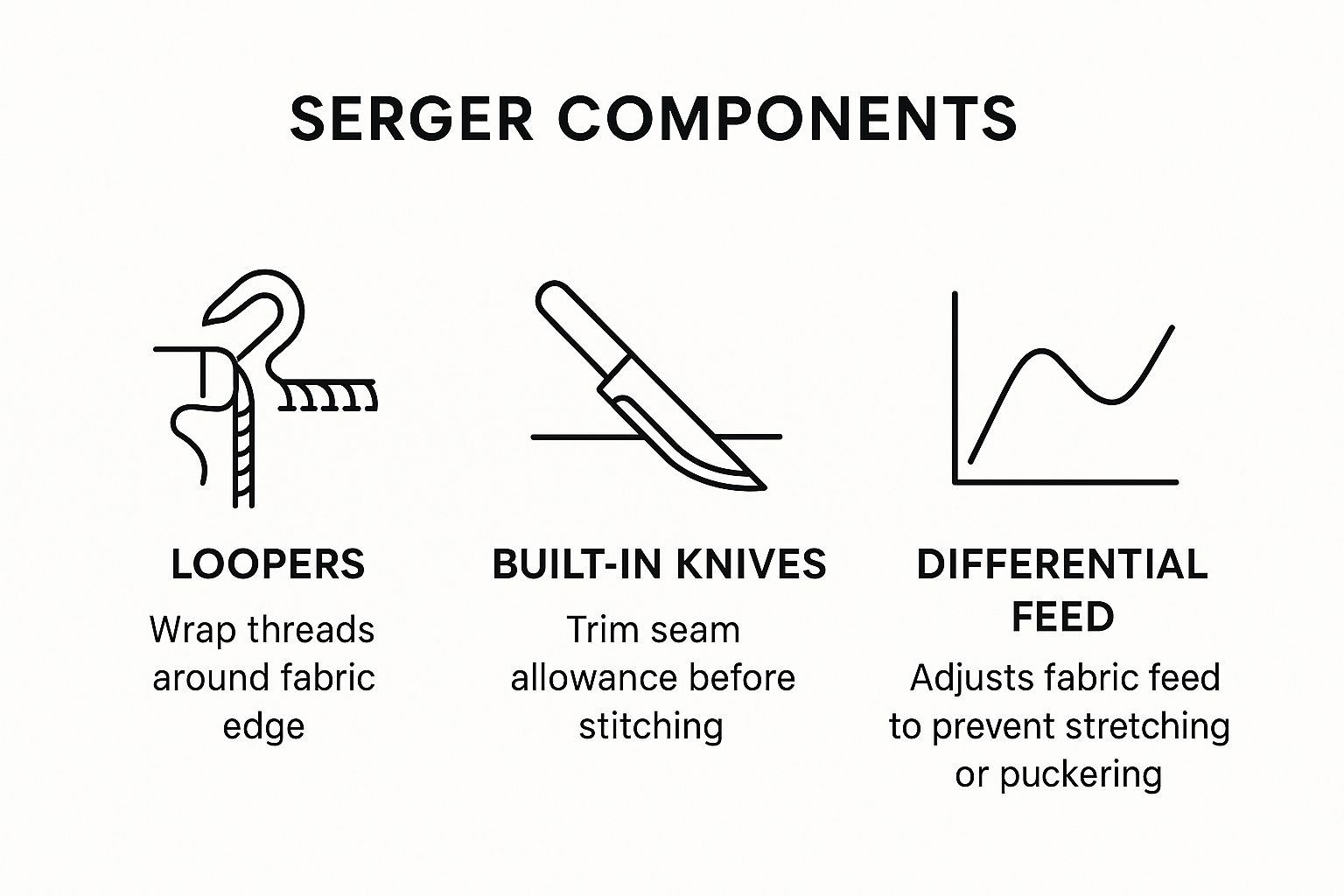
As you can see, the loopers are all about creating the stitch, the knives handle the trimming for that clean edge, and the differential feed makes sure the fabric moves through without getting stretched or bunched up.
Let's zoom in on these parts. Instead of a simple bobbin, sergers use what are called loopers—usually an upper and a lower one. These clever little arms dance around each other, weaving multiple threads together to create the interlocking loops that securely wrap around the raw edge of the fabric. This is what stops fraying in its tracks.
At the exact same time, a set of built-in knives—one on top, one on the bottom—acts like a tiny pair of automated scissors. They slice away the excess seam allowance just milliseconds before the needles and loopers swoop in to form the stitch.
This trim-then-stitch action is the serger's secret weapon for a perfectly neat edge. It guarantees the overlock stitch forms right on the fabric's edge, with no stray threads or ragged bits left behind.
Finally, there’s the differential feed, which might just be a serger's most impressive feature, especially when you're working with finicky fabrics. It uses two separate sets of feed dogs (those little metal teeth that pull the fabric) that you can set to move at different speeds. This unique system gives you incredible control over how your material is fed through the machine.
From a purely mechanical standpoint, a serger is a specialist built to trim, stitch, and overcast in one smooth motion. It typically uses 3, 4, or even 5 threads running through its various loopers and needles to create stitches that lock seams and prevent unraveling. If you're curious about how we got here, you can dive into the history of sewing technology on Sew Guide. It's this all-in-one design that truly sets it apart.
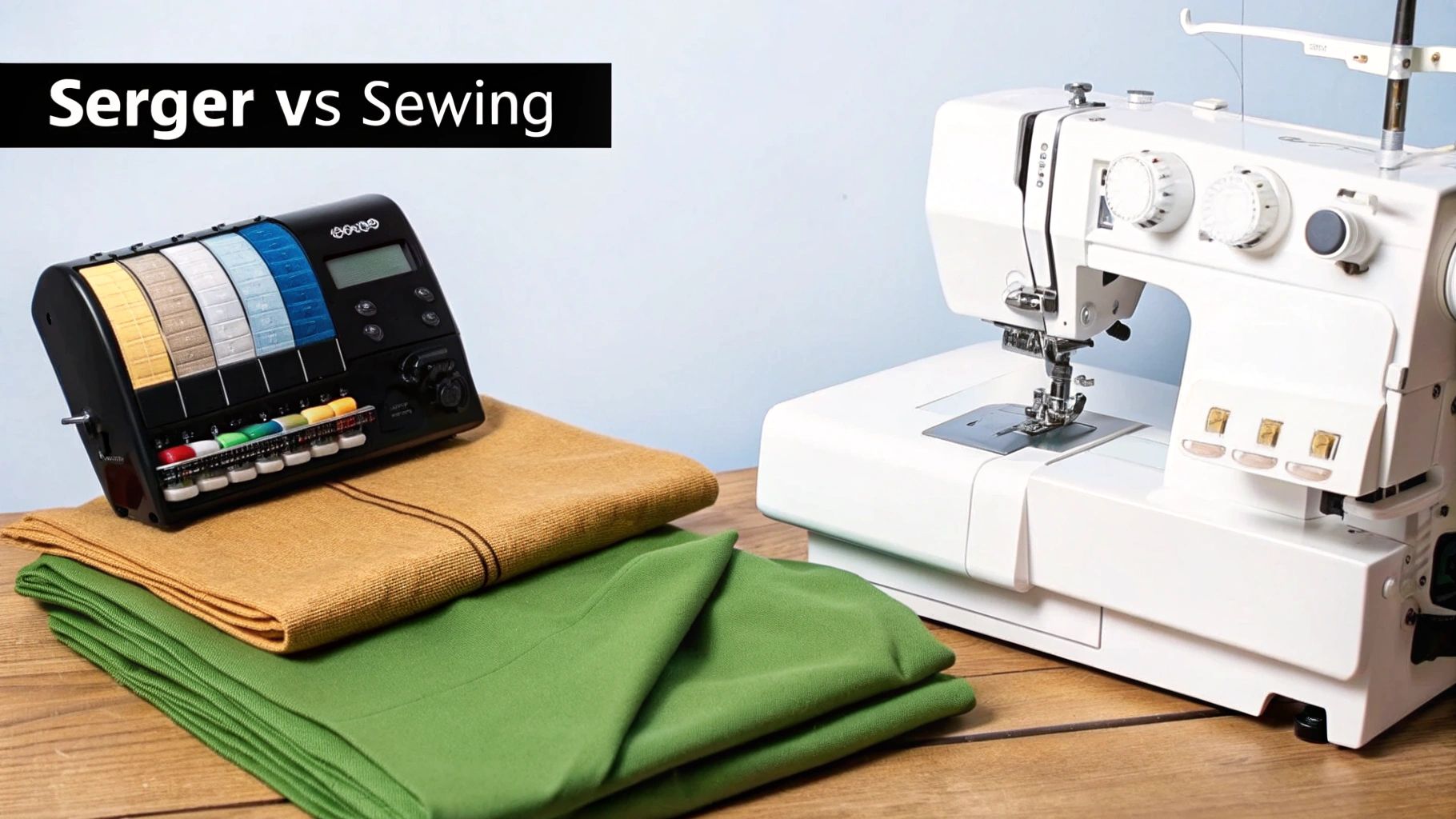
It’s a question that pops up all the time in sewing circles: "Do I really need a serger if I already own a good sewing machine?" The short answer is, it's not about one being better than the other. They're different tools for different jobs. Thinking of them as competitors completely misses the point.
A serger is the perfect partner to your sewing machine, not a replacement. Each one has its own unique strengths, and knowing when to reach for which machine is what will take your projects from looking homemade to looking professionally made. They're two specialists on the same team.
Think of it this way: a serger is your go-to for construction and finishing. Your sewing machine is your expert for details and decoration. Using both is the secret to getting those truly high-end results.
Let’s get one thing straight—a serger can’t create a buttonhole, install a zipper, or do any kind of topstitching. Those detailed, precise tasks are still the exclusive territory of your trusty sewing machine. Where the serger shines is in handling the heavy lifting of putting a garment together with incredible speed and durability.
Once you understand what each machine is built for, you'll see how perfectly they complement each other. A serger is an absolute beast when it comes to speed, capable of stitching at up to 1,500 stitches per minute. That's nearly double the speed of many home sewing machines, making it a game-changer for quickly assembling the main seams of a garment.
Its biggest advantage, though, is how it handles tricky fabrics—especially knits. The overlock stitch a serger creates is naturally stretchy, so it moves with the fabric instead of popping under tension. This is exactly why a serger is considered a must-have for making activewear, swimwear, or anything out of jersey or spandex.
On the other hand, a regular sewing machine is all about versatility. With dozens of stitch options, it can tackle everything from delicate decorative work to heavy-duty seams. It’s the machine you need for precision, like setting a pocket perfectly, hemming a pair of pants, or quilting a complex pattern.
The easiest way to really grasp the difference is with a side-by-side look. This table breaks down what each machine does best, helping you picture how you'd use them together on a project.
Key Differences Serger vs Sewing Machine
| Feature | Serger Machine | Regular Sewing Machine |
|---|---|---|
| Primary Use | Seam construction, edge finishing, knits | Topstitching, details, versatile construction |
| Speed | Very fast (up to 1,500 SPM) | Moderate speed (around 800 SPM) |
| Stitch Type | Overlock (stretchy, enclosed) | Lockstitch (straight, zig-zag, decorative) |
| Fabric Handling | Excellent for knits, sheers, and wovens | Versatile for most fabrics, requires care with knits |
| Functions | Sews, trims, and finishes in one step | Sews, but requires separate finishing steps |
| Cannot Do | Zippers, buttonholes, topstitching | Overlock seams, simultaneous trimming |
So, the workflow becomes pretty simple. You’ll use the serger to build the garment’s structure quickly and cleanly, then switch over to your sewing machine for all the finishing touches. This two-machine approach not only saves a ton of time but also seriously improves the durability and gives your projects that polished, professional look that's tough to get with just one machine.
Knowing what a serger is doesn't mean you know when to fire it up. That's the real secret sauce that takes your sewing from pretty good to truly professional. Think of a serger less like a replacement for your sewing machine and more like a specialist you call in for the jobs it does best—creating durable, beautiful finishes that a regular machine just can't match.
So, when should you make the switch? The number one reason most people buy a serger is for sewing knit fabrics. If you've ever tried to make a t-shirt or a pair of leggings on a regular sewing machine, you know the struggle. The seams can get wavy, or worse, the threads pop the second you try to put the garment on.
A serger was born for this kind of work.
Knits like jersey, spandex, or fleece need seams that can stretch right along with the fabric. A serger's overlock stitch is naturally elastic, making it the perfect tool for the job. It's the go-to for activewear, swimwear, and comfy loungewear.
Here’s why it works so well:
Honestly, if you plan on sewing with knits more than once, a serger will save you a world of frustration. It turns a tricky task into a surprisingly fast and satisfying one.
While it's famous for handling knits, a serger is just as incredible for finishing woven fabrics like cotton, denim, or linen. Ever look inside a store-bought pair of jeans or a blouse? Those clean, tidy seam edges are almost always serged. It’s the industry standard for preventing fraying and making sure clothes last.
In one quick pass, a serger trims the raw edge, sews a seam, and wraps the edge in thread. This creates an unbelievably clean and durable finish inside your garments. It’s what makes your handmade clothes look less "homemade" and more professionally crafted, ready to stand up to wash after wash.
My Favorite Trick: I often construct the main structural seams on my regular sewing machine for pinpoint accuracy, then I'll zip over to my serger to finish the raw seam allowances. It’s the best of both worlds and dramatically boosts the garment's quality and lifespan.
Once you've mastered the fundamentals, a serger opens up a whole new world of creative techniques that can really make your projects stand out. This is where you see the machine's true versatility.
Here are a few popular advanced techniques you can try:
A serger's real superpower is its incredible speed. These machines are built for efficiency, stitching at up to 1300-1500 stitches per minute—that's about twice as fast as most home sewing machines. This speed is a huge part of why they're so essential in the garment industry, and it's a history rooted in the industrial revolution. You can even read more about the sewing machine's role in changing manufacturing on Millmuseum.org.
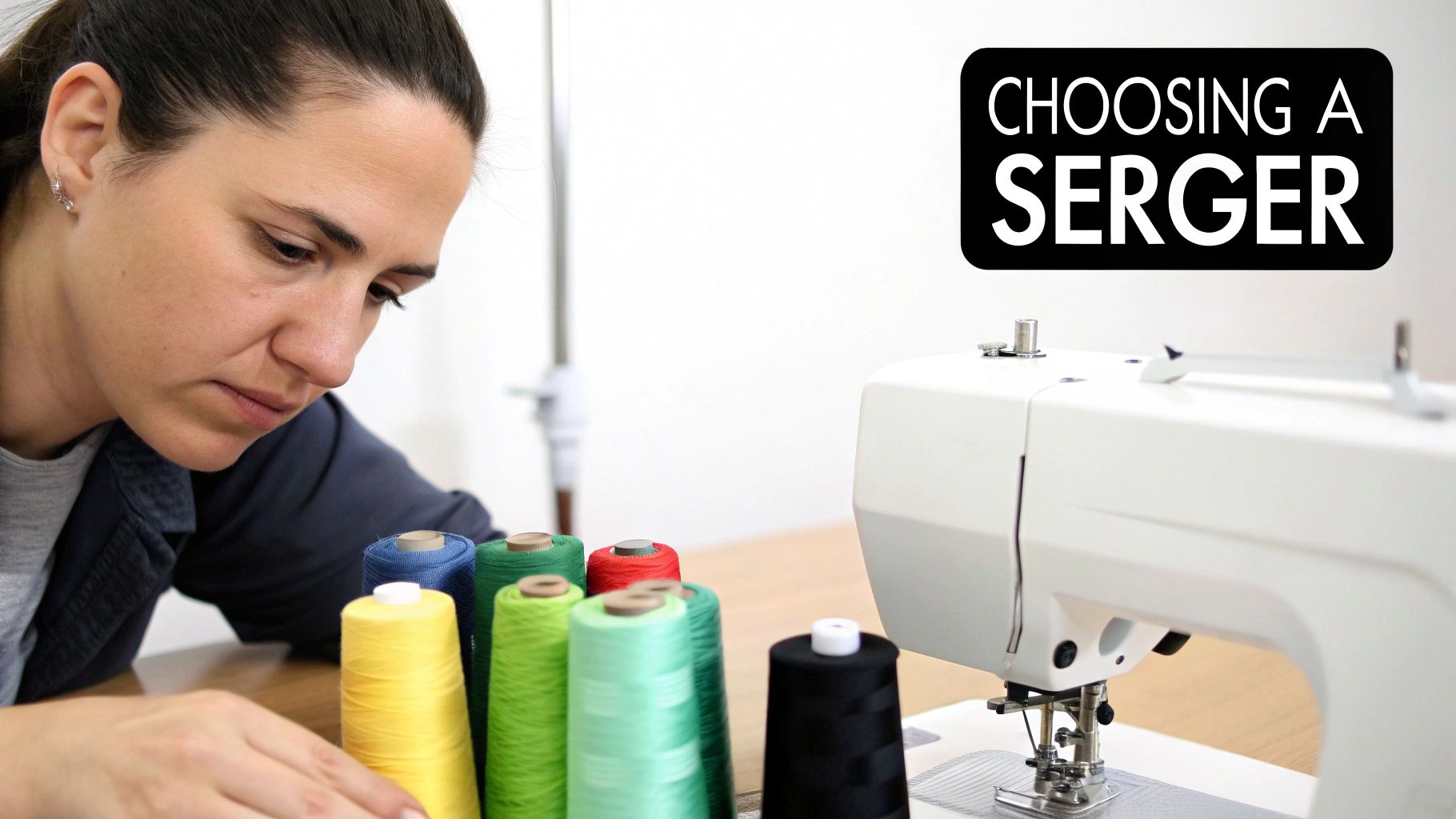
When you start looking at sergers, the sheer number of options can feel a little overwhelming. But don't get bogged down by all the different model numbers and brand names. The secret is to ignore the noise and focus on a handful of core features that will genuinely impact your sewing.
The best way to start is by deciding on the thread count. Sergers are usually sold as 3, 4, or 5-thread machines, and this single number tells you a lot about the kinds of stitches it can handle and the projects it's built for.
Let’s break down what those thread counts actually mean for you. While more threads can offer more options, most people who sew at home find that a 4-thread serger hits the perfect sweet spot for nearly everything they want to make.
If you’re just starting out, a 4-thread model is almost always the right call. It gives you the power to construct and finish garments in a single step, which is the main reason most people want a serger in the first place.
Once you've settled on a thread count, a couple of other features can make a world of difference in how much you enjoy using your machine. Some are essential for getting good results, while others are just fantastic quality-of-life improvements.
Differential feed is the one feature I consider non-negotiable. It lets you adjust the speed of the front and back feed dogs independently, giving you total control over how the fabric moves under the needle. This is the key to preventing stretchy knits from becoming wavy and stopping thin, silky fabrics from puckering up. It’s what separates a homemade look from a professional one.
Investing in user-friendly features can be a game-changer. While not strictly essential, things like color-coded threading guides or advanced air-threading systems dramatically shorten the learning curve and make using your serger a joy rather than a chore.
Ultimately, picking the right serger machine comes down to your budget, the types of fabric you work with most, and what you dream of making. By focusing on these core functions, you can find a machine that not only meets your needs today but will also grow with you as your skills advance.
To really get what a serger is all about, you have to go back to its roots. This machine wasn't dreamed up for a quiet hobby room—it was forged in the heat of industrial garment factories. It was a hardcore solution to a massive problem in a rapidly growing industry.
Picture this: The demand for ready-to-wear clothing was exploding. Factories were under immense pressure to churn out garments faster than ever before. But they hit a major snag. A regular sewing machine was just too slow, and it couldn't finish the raw fabric edges to keep them from unraveling without a second, time-consuming step.
This bottleneck was a huge deal. Manufacturers needed a machine that could do it all, and do it fast. They needed something that could stitch a seam, slice off the extra fabric, and wrap the raw edge in a protective case of thread—all in one go.
That's how the serger was born. It was an industrial powerhouse built for pure efficiency.
The serger came into existence to meet a core need for speed and professional quality. Those are the exact same benefits it delivers to home sewists and cosplayers today. It’s a direct link to how the clothes you buy in a store are actually made.
Eventually, this factory workhorse was adapted for the home. Companies realized that serious sewers wanted that same clean, durable finish on their own creations. The serger's journey is tangled up with the broader history of sewing machines, driven by the rise of the fashion industry in the early and mid-1900s. If you're a history buff, you can dive deeper into the evolution of sewing technology on study.com.
This leap from the factory floor to the home sewing table was a game-changer. It put the power of industrial-grade finishing right into the hands of everyday creators, letting us all bring a new level of polish to our work.
Even after you get the hang of what a serger is, it's totally normal to have a few more questions rattling around before you decide to bring one home. Let's tackle some of the most common ones I hear, so you can feel completely confident about adding this amazing machine to your sewing space.
In a word, no. Think of a serger as a highly specialized partner to your regular sewing machine, not a replacement for it. It's an absolute powerhouse for constructing seams and finishing edges with that professional, store-bought look.
But it can’t do things like install a zipper, create a buttonhole, or do any kind of topstitching. They really are a dream team: you'll use the serger to build the main body of a garment with incredible speed and durability, then switch to your sewing machine for all those crucial finishing details.
Ah, the age-old question! Sergers have a bit of a scary reputation, but honestly, it's mostly overblown. Threading multiple spools through a series of loopers and guides can look like a plate of spaghetti at first glance, but modern machines have made the process so much easier.
Most sergers today come with color-coded diagrams printed right on the machine, showing you exactly where each thread needs to go. Higher-end models even have air-threading systems that literally whoosh the thread through the loopers for you. After you've done it a couple of times with the manual by your side, it becomes second nature.
Don't let the fear of threading stop you. The time and frustration you save with perfect seams far outweigh the initial learning curve. It’s a skill that pays for itself almost immediately.
You can technically sew knits on a regular machine with a zigzag or stretch stitch, but a serger does the job infinitely better. The stitch a serger creates is inherently stretchy, which means your seams will stretch with the fabric instead of popping when you pull on them. This is non-negotiable for things like leggings, activewear, or any close-fitting cosplay.
Even more importantly, a serger's differential feed is the secret weapon against wavy, stretched-out seams—a problem that plagues even experienced sewists on a standard machine. If you plan on sewing with knits regularly, a serger isn't just a nice-to-have; it's a total game-changer.
This is one of the coolest features of a serger! Differential feed uses two sets of feed dogs (the little teeth that pull the fabric under the needle), and you can control their speeds independently.
So, why does that matter?
It’s one of the most powerful tools in a serger’s arsenal and is absolutely essential for getting professional-looking results on all kinds of tricky materials.
Here at Famcut.com, we believe that the right tools can unlock your creative potential. Whether you're sewing your first cosplay or crafting beautiful garments, we have the resources and expertise to help. Discover our range of supplies and classes today at https://famcut.com.
At High Country Quilts we care deeply about community. With our experiences in retail, we know that a store is not only a place to shop but also a place for the community to gather and share. During this busy...

Hi! We’re Adam and Renee Wheaton, the new owners of High Country Quilts! For more than 40 years, we’ve owned and operated vacuum and sewing businesses. Following in Renee’s father’s footsteps after he retired from All Discount Vacuum and Sewing in Colorado...


Leave a comment