

We Love Our Quilting Community
At High Country Quilts we care deeply about community. With our experiences in retail, we know that a store is not only a place to shop but also a place for the community to gather and share. During this busy...


If you’ve ever walked into a quilt shop, you’ve probably seen those delightful, swirled bundles of fabric that look almost good enough to eat. That, my friend, is a jelly roll. It's a collection of pre-cut fabric strips, all neatly rolled up into a spiral that gives it its tasty name.
These aren't just for show. Jelly rolls are a quilter's secret weapon, offering a perfectly coordinated set of fabrics from a single designer's collection. Instead of buying a quarter yard of ten different fabrics, you get them all in one convenient bundle.
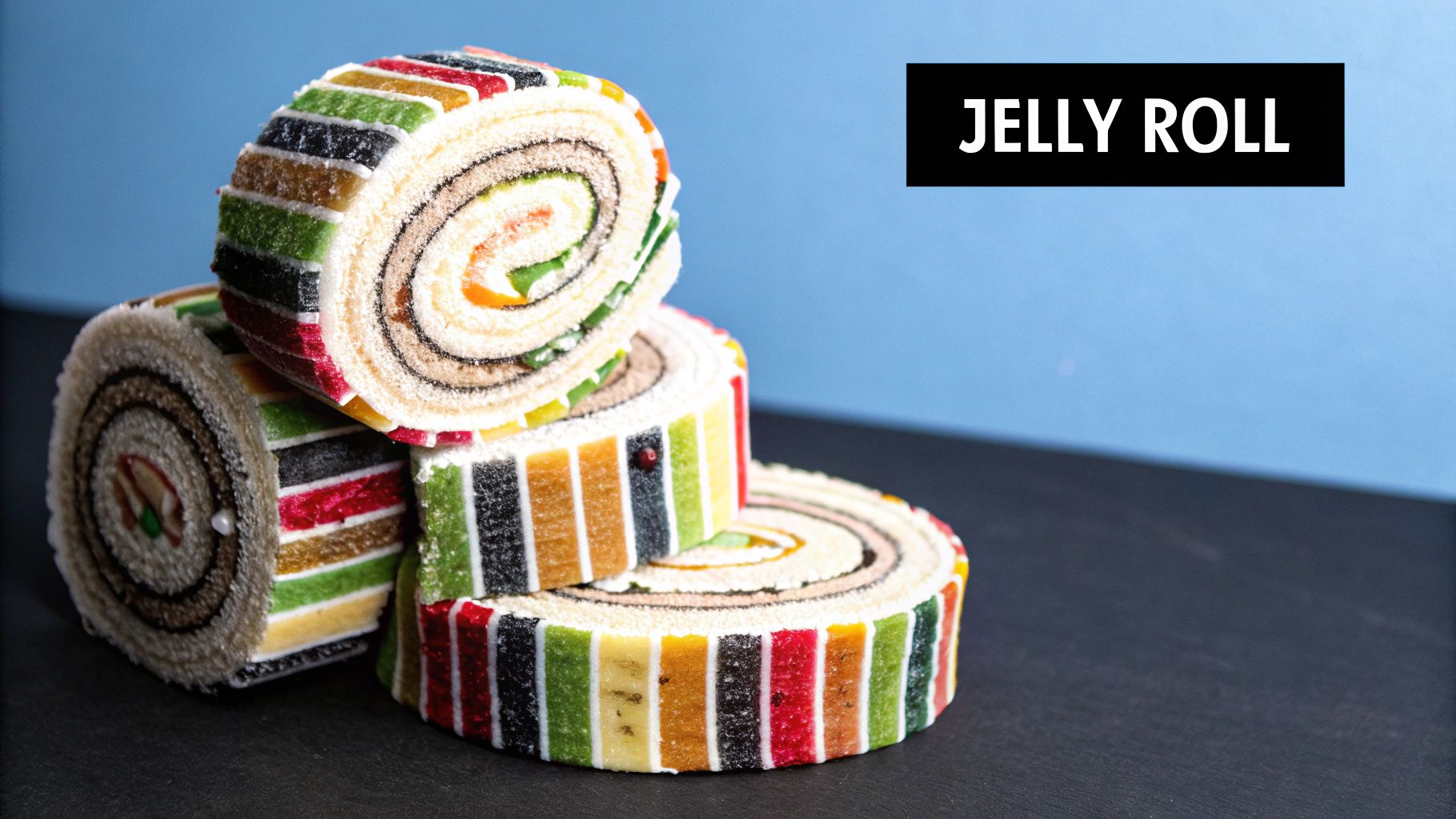
Think of a jelly roll as a quilting "meal kit." All the main ingredients are prepped and ready to go. It completely eliminates the most tedious part of starting a new project: cutting dozens of long, straight strips of fabric. This simple but brilliant idea makes quilting faster, more fun, and way more approachable for everyone.
The real magic is in the coordination. The fabric designer has already done the hard work of matching colors and patterns. When you unroll it, you have a treasure trove of prints and solids that are guaranteed to look fantastic together. It takes all the guesswork out of building a color palette, so your final quilt has that polished, professional look right from the start.
Most jelly rolls are made from high-quality quilting cotton fabric, which is known for its durability and how beautifully it handles when sewing.
So, what exactly are you getting when you buy one of these bundles? Here's a quick breakdown of the standard specs for a typical jelly roll.
| Component | Standard Specification |
|---|---|
| Strip Width | 2.5 inches (6.35 cm) |
| Strip Length | Approx. 42-44 inches (Width of Fabric) |
| Strips Per Roll | 40 strips (some may have duplicates) |
| Total Fabric | Approx. 2.75 yards |
Essentially, you get a significant amount of perfectly cut and coordinated fabric, ready for you to sit down and start sewing immediately.
Ask any quilter what the most tedious part of a project is, and you'll likely get the same answer: cutting the fabric. For ages, that was just the way it was—the necessary, time-sucking first step before the real fun began. The jelly roll of fabric popped up as an ingenious fix to this age-old problem, completely shaking up how quilters get started.
The idea itself was beautifully simple. Think about getting a meal-prep kit with all the ingredients perfectly measured and ready to go. That’s exactly what fabric companies wanted to give quilters.
We have Moda Fabrics to thank for this brilliant precut. Back around 2006, they introduced the very first Jelly Roll: a tidy bundle of 40 coordinated fabric strips, each one cut to a perfect 2.5 inches wide. This wasn't just a time-saver; it was a burst of inspiration. Quilters could now get their hands on an entire designer collection in one go, skipping hours of rotary cutting while knowing every piece would match perfectly. You can learn more about how this became an industry standard over at The Quilt Show.
Almost overnight, a whole new world of patterns emerged. Designers started creating quilts specifically for these 2.5-inch strips, giving us iconic designs like the "Jelly Roll Race."
The Jelly Roll knocked down two of the biggest barriers for quilters: the sheer time it takes to cut fabric and the guesswork of coordinating a pile of different prints. It put beautifully complex results within reach for everyone.
The Jelly Roll was an instant hit. It didn't take long for other fabric companies to jump on board, releasing their own versions with names like "Design Rolls" or "Rolie Polies." But no matter what they called it, the 2.5-inch strip bundle became a beloved fixture in quilt shops everywhere. This simple roll of fabric did more than just save time—it ignited creativity and helped define the look of modern quilting.
So, what's really inside that cute, coiled-up bundle of fabric? A jelly roll is far more than just a pretty package. Think of it as a quilter's dream: a perfectly coordinated set of pre-cut building blocks, ready for your next project.
Every detail, from the width of the strips to how many you get in a roll, is intentionally designed to make quilting easier and more efficient. It takes all the guesswork out of the initial cutting phase.
Let's break down the key numbers that define a classic jelly roll. The most important dimension is the 2.5-inch width of each strip. This isn't an arbitrary number; it’s designed to work perfectly with the standard quarter-inch seam allowance quilters use. When you sew two strips together, you get a clean 4.5-inch wide piece, a super common size for quilt blocks.
Each of those strips is usually 42 to 44 inches long, which is the standard "width of fabric" (WOF) you'd find on a bolt. A typical jelly roll comes packed with 40 individual strips, often featuring several prints from a single designer collection. While these are the industry standards, it's always smart to double-check the label, as some manufacturers might have slight variations.
This infographic gives you a great visual breakdown of what you're getting in a standard roll.
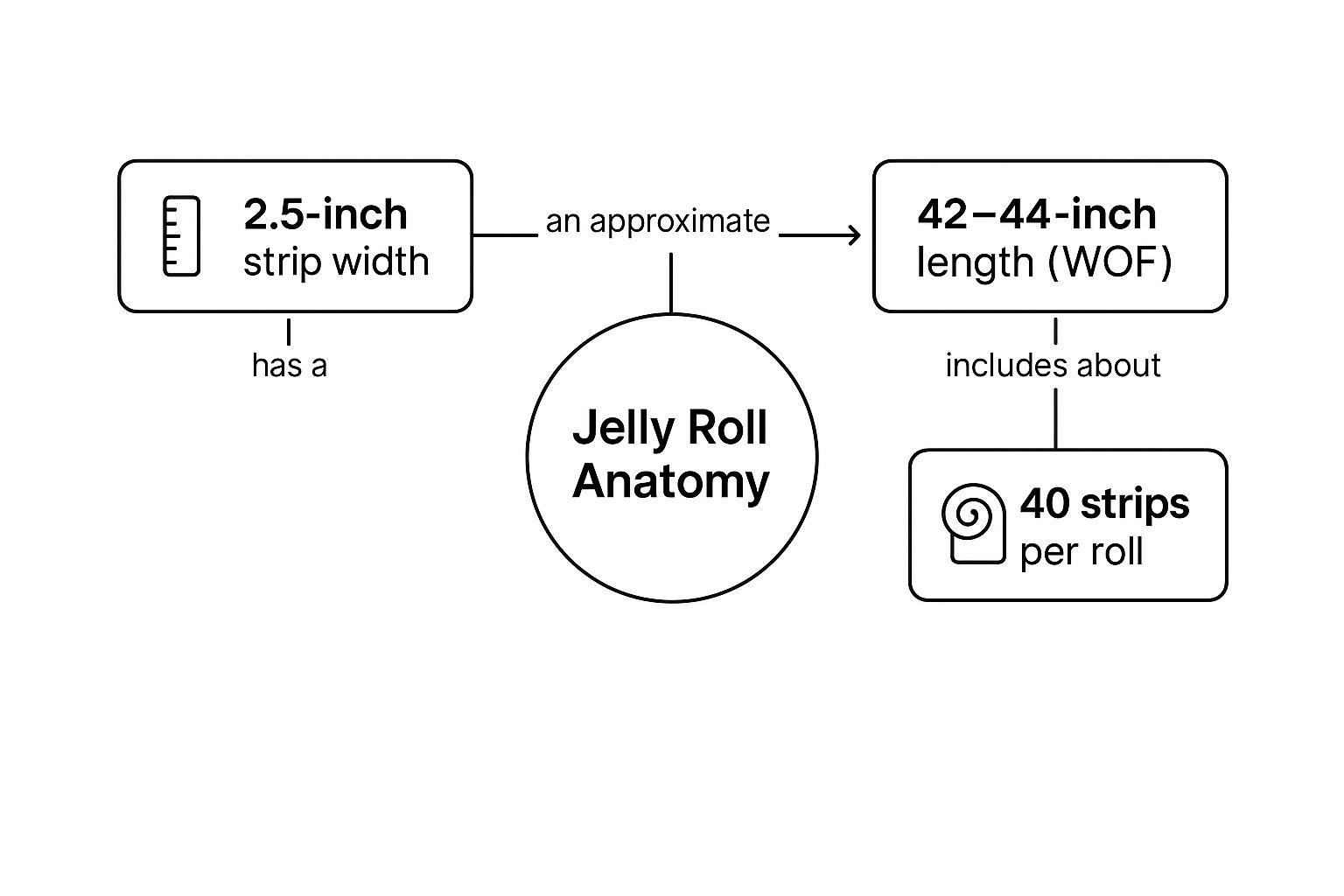
As you can see, all those little strips add up to a whole lot of creative potential.
It might not look like it at first glance, but a single jelly roll packs a surprising amount of fabric. Let's do the math:
That's the real magic of a jelly roll. You're getting nearly three yards of fabric that’s not only perfectly coordinated but also pre-cut. This saves you hours of tedious work with a rotary cutter and mat, letting you jump right into the fun part—sewing
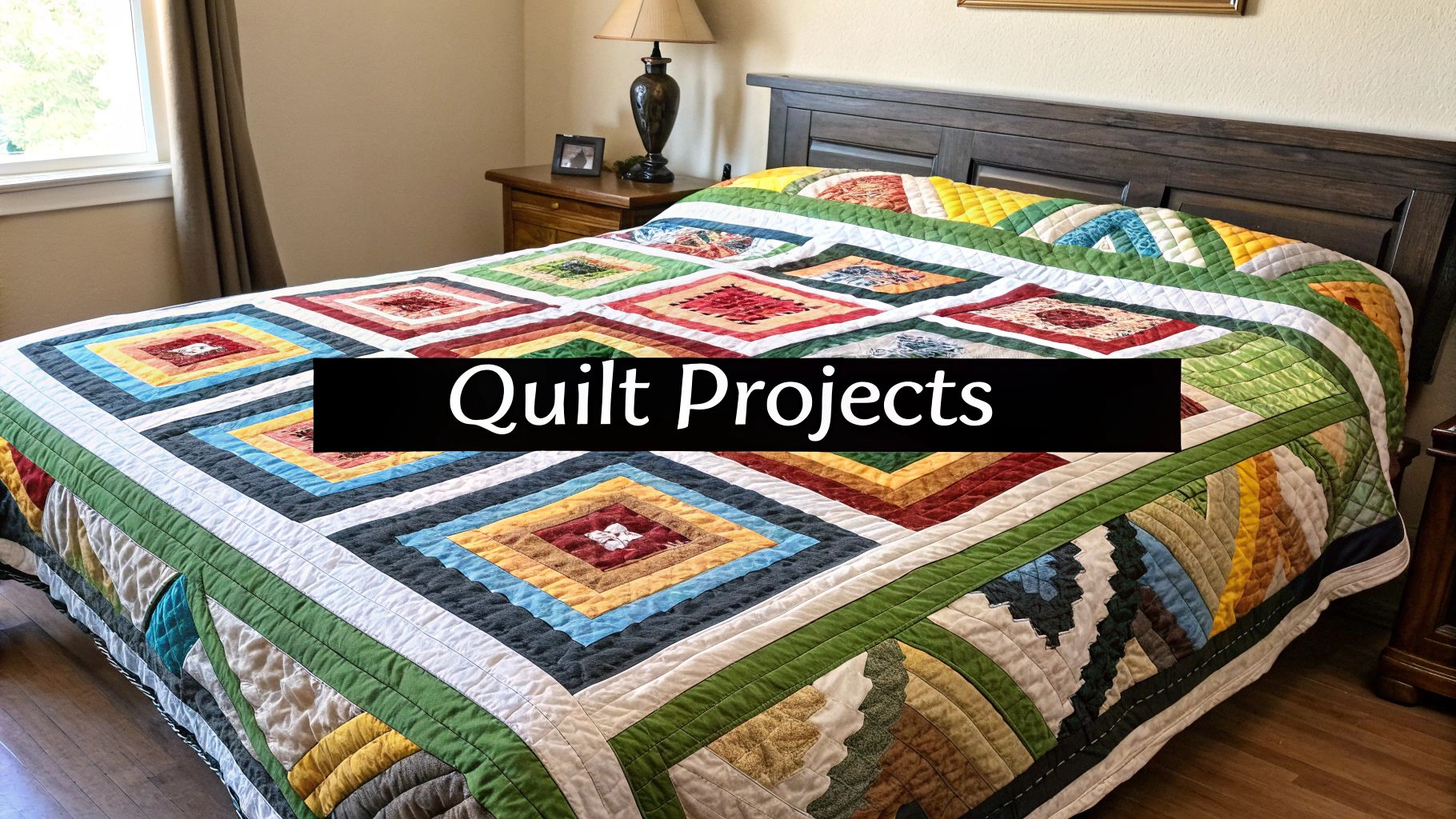
Alright, now that you know what a jelly roll of fabric is, it’s time for the fun part: deciding what to make! Unfurling a jelly roll feels a bit like opening a present. You've got this beautiful, coordinated collection of strips just begging to be sewn into something amazing.
That 2.5-inch width isn't arbitrary, either. It’s a quilter's magic number, perfectly suited for tons of patterns, both classic and modern. Because the fabrics are already curated for you, all the guesswork is gone. You can just get right to the good stuff—the sewing.
Many patterns are even designed to use one whole roll, which is incredibly satisfying and leaves you with minimal waste. Let's dig into a few fantastic projects that make jelly rolls shine.
If you want a project that delivers maximum impact with minimum fuss, look no further than the Jelly Roll Race quilt. This one is a huge hit with quilters of all levels for a simple reason: you can get a gorgeous quilt top done in a single afternoon. Seriously!
The process is brilliantly simple. You start by sewing all 40 strips together, end-to-end, creating one ridiculously long strip. From there, it's a clever process of folding and sewing the long edges together. The result is a wonderfully scrappy and dynamic quilt that shows off every single fabric in the collection.
Beyond the famous race, those 2.5-inch strips are the backbone of so many classic quilt blocks. Having them precut saves a ton of time at the rotary mat and lets you jump right into piecing.
The real secret to why jelly rolls work so well for these patterns is precision. The factory-cut strips mean your piecing is more accurate from the start, which is the key to getting those sharp points and professional-looking results we all strive for.
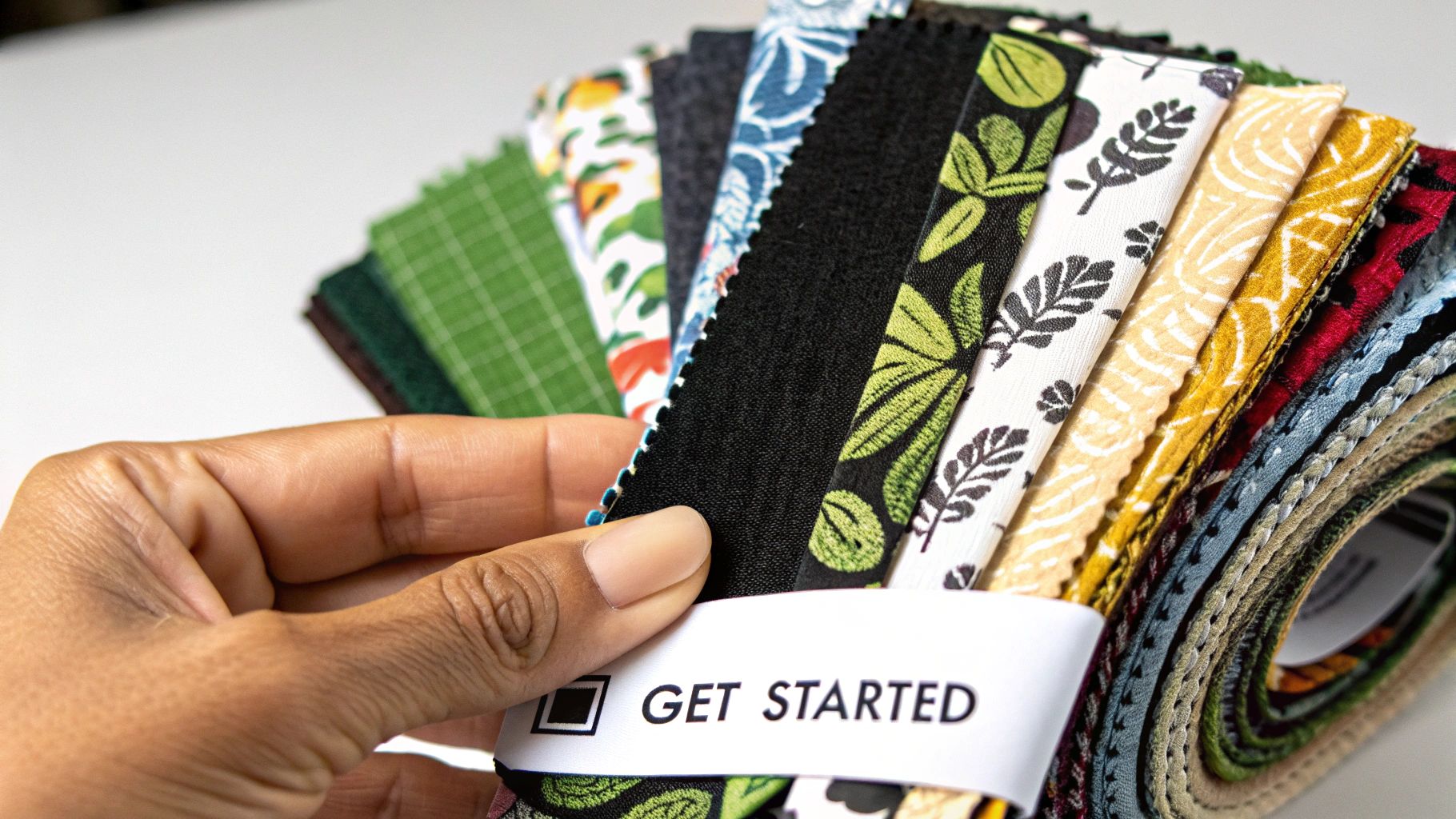
Walking into a quilt shop (or browsing online) and seeing all those beautiful jelly rolls can be both thrilling and a little overwhelming. The best advice? Trust your gut. Pick a collection that makes you happy and gets your creative gears turning. Your own excitement for the colors and patterns is the best fuel to get a project from start to finish.
Take a peek at the fabric lineup, too. Some jelly rolls feature 40 unique strips, giving you a ton of variety for a vibrant, "scrappy" quilt. Others might include duplicates or triplicates of certain designs. This is perfect if you're planning a quilt with a more organized, repeating pattern. There’s no right or wrong choice—it all comes down to the vision you have for your quilt.
So you've brought your beautiful jelly roll home. Before you even think about touching your sewing machine, a little prep work will make all the difference. Start by unrolling those strips and giving them a good press with a hot, dry iron. This will smooth out any wrinkles from being coiled up in the packaging.
Now, let's address the big question: to wash or not to wash? For jelly rolls, the answer from seasoned quilters is a resounding do not pre-wash your jelly roll. Those long, thin strips will fray and twist into a tangled nightmare in the washing machine. It's much, much easier to just wash the finished quilt once it's all pieced and quilted.
You'll probably also notice a bit of fluff coming off the pinked edges. That's totally normal. Just keep a lint roller or a scrap of masking tape nearby to quickly clean up any lint as you work.
Pro Tip: Before you start sewing, it’s a smart move to measure a few of the strips with a good quilting ruler. While they are cut with amazing precision, tiny variations can sometimes occur. If you find a strip is a hair wider or narrower, you can adjust your seam allowance accordingly to keep all your blocks perfectly uniform.
One last trick of the trade is to use a bit of spray starch. A light spritz while you're ironing makes the cotton fabric crisper and more stable. This little step helps prevent the strips from stretching out of shape as you handle them, leading to more accurate seams and a flatter, more professional-looking quilt top. It’s a simple thing that really pays off.
Once you've got your hands on a beautiful jelly roll, a few practical questions almost always pop up. Let's tackle some of the most common things quilters wonder about before they start sewing.
This is a big one, and the answer from seasoned quilters is a firm "no." Don't pre-wash your jelly roll strips.
Because the strips are so narrow with those pinked, unfinished edges, tossing them in the wash is a recipe for a tangled, frayed disaster. They can shrink, twist, and warp, making them nearly impossible to piece together accurately. It's much better to work with them crisp and straight from the roll. If you're concerned about colors running, just throw a color catcher sheet in with your finished quilt during its first wash.
The number of jelly rolls you'll need really depends on the quilt pattern you've chosen and how big you want the final project to be. Many popular patterns, like the famous "Jelly Roll Race," are cleverly designed to use exactly one roll to make a great lap-sized quilt, which usually ends up around 50" x 64".
If you're dreaming bigger, like a queen or king-sized quilt, you'll definitely need more fabric. Plan on using at least two jelly rolls, and you’ll likely need extra yardage for things like borders or binding.
The best rule of thumb is to always follow your pattern’s guide. It will tell you exactly how much fabric is needed, taking all the guesswork out of planning your project.
Not at all. The quality of the fabric can vary quite a bit from one manufacturer to another. Brands like Moda, Robert Kaufman, and Art Gallery Fabrics have a reputation for a reason—they use high-quality quilting cotton with a tight weave, minimal fraying, and dyes that won't bleed.
You might be tempted by a cheaper, unbranded roll, but it's often a case of "you get what you pay for." Lower-grade fabric can be thin, fray like crazy, or have colors that run in the wash. For a quilt you want to love and use for years, investing in a jelly roll from a trusted fabric company is always the right call.
At High Country Quilts, we stock a beautiful selection of high-quality jelly rolls from the brands you trust. Explore our collection and find the perfect inspiration for your next quilting project!
At High Country Quilts we care deeply about community. With our experiences in retail, we know that a store is not only a place to shop but also a place for the community to gather and share. During this busy...

Hi! We’re Adam and Renee Wheaton, the new owners of High Country Quilts! For more than 40 years, we’ve owned and operated vacuum and sewing businesses. Following in Renee’s father’s footsteps after he retired from All Discount Vacuum and Sewing in Colorado...


Leave a comment