

We Love Our Quilting Community
At High Country Quilts we care deeply about community. With our experiences in retail, we know that a store is not only a place to shop but also a place for the community to gather and share. During this busy...


Ever found yourself in a fabric shop, staring at those tempting, coiled bundles of fabric and wondering what they are? You've stumbled upon one of quilting's best inventions: the jelly roll.
This simple but brilliant idea—a bundle of perfectly coordinated 2.5-inch fabric strips from a single designer collection—saves you heaps of time and makes starting a new project a total breeze.
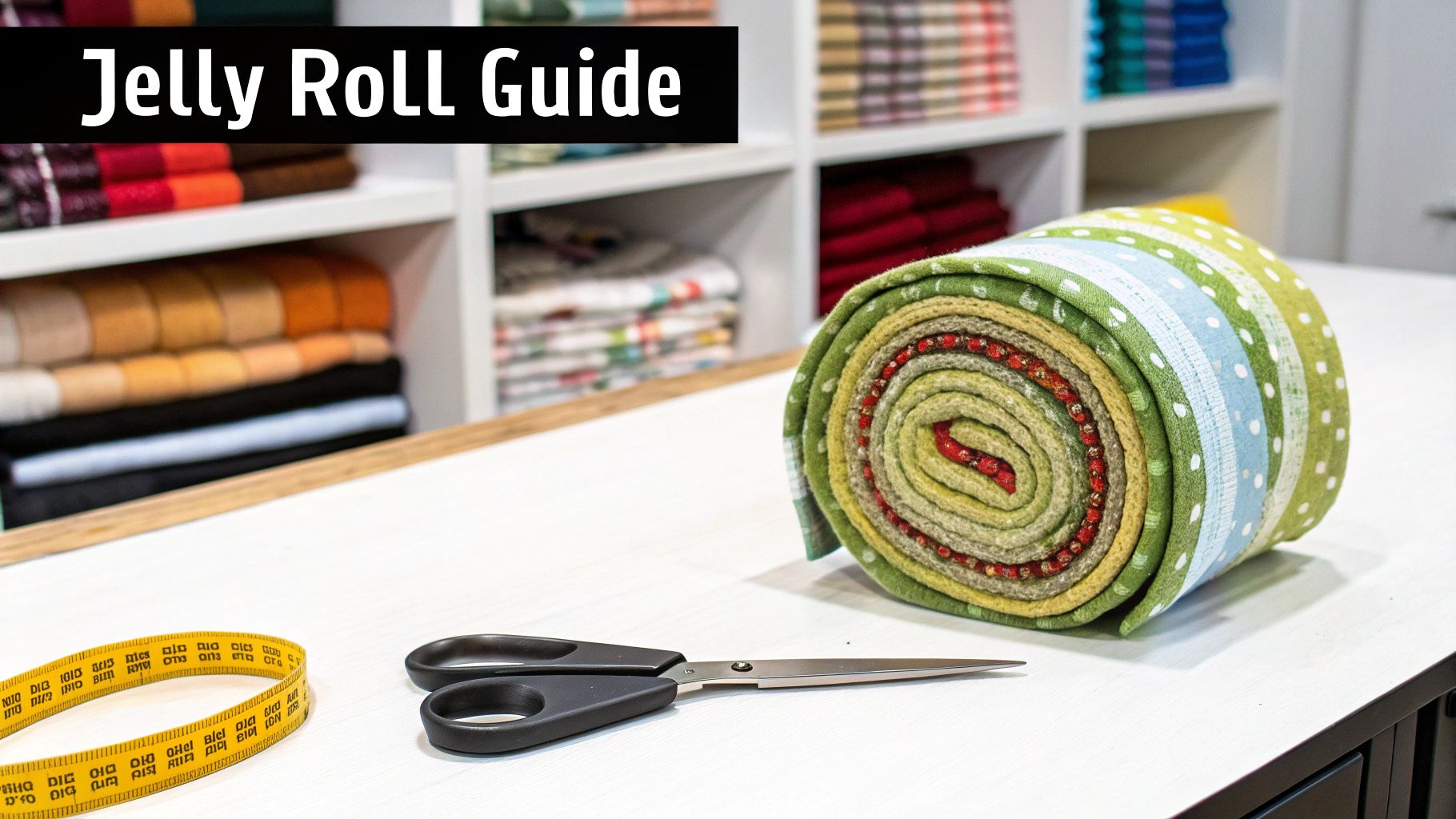
If you've ever felt that mix of inspiration and confusion when looking at quilting precuts, you're not alone. Quilting has its own unique lingo, and "jelly roll" is a term you'll hear all the time. Getting to know what a jelly roll is for quilting is your ticket to a whole new world of fast, fun, and creative projects.
Think of it as a perfectly curated meal kit, but for your sewing machine. Instead of buying yards of different fabrics and spending what feels like an eternity at the cutting mat, a jelly roll hands you a ready-to-sew palette of coordinating strips. This makes it a fantastic starting point for beginners and a go-to for seasoned quilters who want a quick and satisfying finish.
So, what’s the big deal with these fabric rolls? The magic is all in the convenience and the built-in color coordination. The strips are all precut to a standard size, which cuts out one of the most tedious and mistake-prone steps in the quilting process. You get to jump right to the best part—the sewing.
This guide will walk you through everything you need to know about using these precut bundles to change the way you quilt. We'll cover:
By the time we're done, you won't just know what a jelly roll is—you'll be excited and ready to pick one out for your next beautiful quilt. Let's get started.
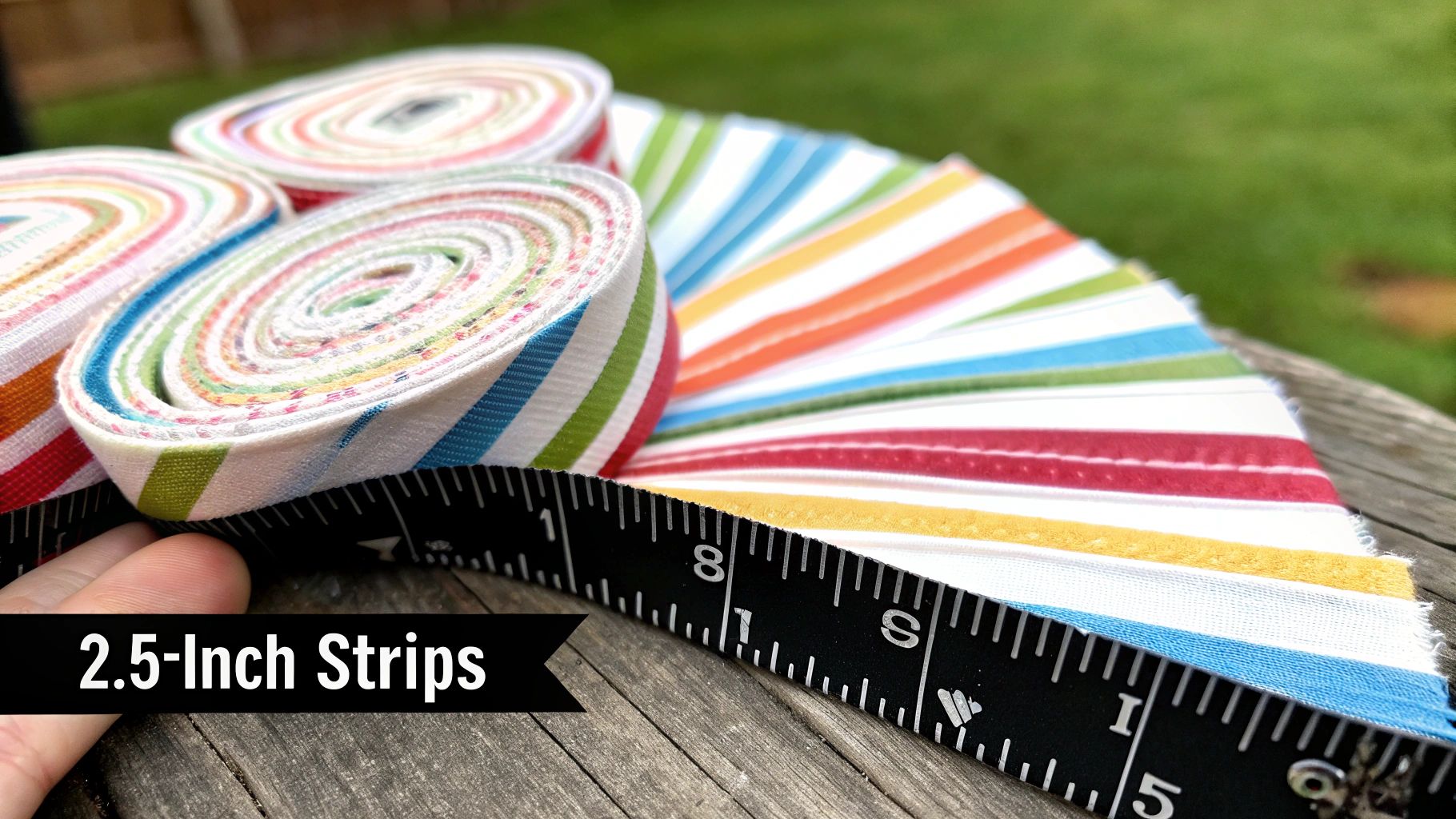
So, what exactly is a jelly roll when you get down to it? Think of it like a perfectly rolled-up birthday present for a quilter. The real fun begins when you untie the ribbon and unroll the bundle to reveal a gorgeous collection of coordinated fabric strips.
These aren't just random scraps, either. A quilting jelly roll is a bundle of pre-cut fabric, and every single strip has been precision-cut to a specific, industry-wide standard. It's this uniformity that makes them an absolute game-changer for so many quilt patterns.
The magic of a jelly roll really comes down to its consistent measurements. Every strip is cut to a perfect 2.5 inches wide, which is an ideal size for things like sashing, binding, and countless popular quilt blocks. This precise width is the secret behind quick-and-easy patterns like the "Jelly Roll Race," where the uniform size lets you chain-piece like a pro.
Each of those strips runs about 42 to 45 inches long. That length isn't random—it's the usable width of a standard bolt of quilting fabric. In quilting lingo, we call this a selvage-to-selvage cut. The selvages are those tightly woven edges on the fabric that keep it from unraveling.
A standard jelly roll almost always contains 40 individual strips of fabric. Depending on the collection, you might get a few duplicates of your favorite prints, or you might get 40 totally unique designs. Either way, you get a ton of fabric to play with, usually just under three yards in total.
Think of a jelly roll as a curated playlist from your favorite artist. Instead of buying every single album, you get a collection of all their greatest hits in one neat package, perfectly harmonized and ready to enjoy.
The material itself is just as important as the dimensions. You'll find that the vast majority of jelly rolls are made from 100% high-quality quilting cotton. This isn’t the same stuff your t-shirts are made of; quilting cotton has a much higher thread count and a tighter weave. It's specifically engineered to hold its shape through all the cutting, sewing, and washing a quilt endures.
Using this premium cotton is what makes your finished quilt so durable, soft, and long-lasting. It also keeps fraying to a minimum and is far less likely to stretch or get distorted as you sew those long strips together.
While quilters have been using fabric strips forever, the neatly packaged jelly roll is a surprisingly recent invention. The term "Jelly Roll" was actually trademarked by Moda Fabrics, one of the biggest names in the quilting world. They first introduced the concept back in 2006, and it was an instant hit.
This simple idea totally revolutionized quilting by solving one of the biggest headaches for hobbyists: the incredibly tedious and time-consuming process of cutting fabric. By offering pre-cut, coordinated bundles, Moda made quilting more accessible and, frankly, more fun. This brilliant move has been shown to slash cutting time by up to 80% compared to starting with yardage. You can dive deeper into its impact by reading about National Sew a Jelly Roll Day.
The name "jelly roll" was so catchy that it stuck. And while Moda holds the trademark, the term is now used by pretty much everyone to describe any 2.5-inch strip bundle—kind of like how people say "Kleenex" for any tissue. This standardization means that no matter which brand you buy, you can trust the dimensions will be consistent, letting you mix and match with confidence.
So, what's the big deal with jelly rolls? Ask any quilter, and you'll probably get an earful about why they're a must-have. It really comes down to a few game-changing benefits that make quilting faster, easier, and, for many of us, a lot more fun. Whether you’ve been quilting for decades or are just threading your first needle, these little bundles are a true game-changer.
The biggest reason, hands down, is the time you get back. Picture this: you get a great idea for a quilt, and instead of spending the next few hours meticulously cutting fabric, you get to sit down and just sew. That’s the magic of a jelly roll. It lets you completely leapfrog the most tedious part of the process.
Let's be honest, one of the hardest parts of starting a new quilt is picking the fabrics. Will these prints clash? Do these colors actually work together? A jelly roll takes all that guesswork right out of the equation. Each roll is a curated bundle from a single designer's collection, so all the patterns and colorways are designed to be a perfect match.
This built-in coordination is your guarantee that the finished quilt will look polished and professionally designed. You don't have to spend an afternoon in the fabric shop agonizing over bolts of fabric. The designer already did the heavy lifting for you.
It's like having an interior designer hand you a complete set of paint swatches, fabrics, and textures that are guaranteed to look amazing together. You can just start creating, confident that the final result will be stunning.
Since Moda Fabrics first introduced them back in 2006, the jelly roll has completely reshaped quilting. In fact, U.S. market data shows precut strips are on track to make up 40% of all quilting fabric sales by 2025—a huge jump fueled by quilters who want to spend more time sewing. Each roll gives you 40 strips of 2½" x 42" fabric from one collection, which works out to about 2.8 yards of material. That’s often enough that two rolls plus your batting can make a whole twin-sized quilt top, turning a project that could take weeks into something you can finish in a few days. You can learn more about the history of the jelly roll on Moda's blog.
Beyond saving time, jelly rolls are just a smarter way to build your fabric stash. Buying a full yard of every single print you love in a new collection would cost a fortune. A jelly roll lets you get your hands on the entire line without breaking the bank.
You'll also find you waste a lot less fabric. When you cut your own strips, a tiny slip of the rotary cutter or a slight wobble in the fabric can create unusable pieces and a whole lot of frustration. With precuts, every strip is perfectly sized and ready to sew, which means less of that beautiful fabric ends up in the scrap bin.
Here’s a quick look at why jelly rolls are such a big win for quilters.
| Benefit | Description for a Beginner Quilter | Impact on a Project |
|---|---|---|
| Time-Saving | You can skip the long and tricky cutting process and start sewing right away. | This drastically shortens the time from start to finish, making projects feel more achievable. |
| Coordinated Fabrics | The colors and prints are already matched for you by a professional designer. | It removes the guesswork and ensures a beautiful, cohesive look without stress. |
| Cost-Effective | You get a variety of prints from a collection without buying yards of each one. | This allows you to work with designer fabrics on a smaller budget and build a diverse stash. |
| Reduced Waste | Every strip is precision-cut, so you avoid cutting mistakes that waste fabric. | You use nearly all the fabric you purchase, making it an efficient and sustainable choice. |
| Creative Spark | The pre-selected palette can inspire new ideas and color combinations. | It provides a clear starting point, overcoming creative blocks and encouraging new designs. |
When you get right down to it, the love for jelly rolls is pretty simple: they make quilting more approachable and enjoyable. They knock down some of the biggest hurdles—time, cost, and color-matching—so you can focus on the pure joy of making something beautiful with your own two hands.
While jelly rolls get a lot of attention, they’re just one member of a wonderfully convenient family of precut fabrics. Once you get to know the whole lineup, you can walk into any quilt shop and pick the perfect starting point for your next project with total confidence.
Think of it this way: if a jelly roll is like a box of spaghetti, perfect for long, linear designs, then a charm pack is like ravioli. They're both pasta (fabric), but their shapes are suited for entirely different dishes (quilts).
Beyond the 2.5-inch strips of a jelly roll, the most common precuts you'll see are based on squares. These are fantastic for classic patchwork, creating half-square triangles, and building intricate quilt blocks where squares are the main component. Let's meet the rest of the family.
Charm Packs: These are little bundles of 5-inch squares. A typical pack has 42 squares, giving you a perfect little taste of an entire fabric collection. They’re brilliant for smaller projects like table runners, tote bags, or quilts made of many small blocks.
Layer Cakes: Just as the name implies, these are a much bigger version of charm packs. A layer cake is a stack of 10-inch squares, also usually containing 42 pieces. With four times the fabric of a charm pack, they’re great for larger quilts or patterns where you need to cut down bigger pieces.
Fat Quarters: A fat quarter is a quarter-yard of fabric, but it's cut into a more quilter-friendly rectangle of about 18 x 21 inches. Unlike other precuts that are usually bundled from one collection, fat quarters are often sold individually, making them perfect for building your stash with specific prints you love. Their generous size is ideal for patterns that need larger, uncut pieces of fabric.
This handy flowchart breaks down exactly why jelly rolls are such a go-to for so many quilters.
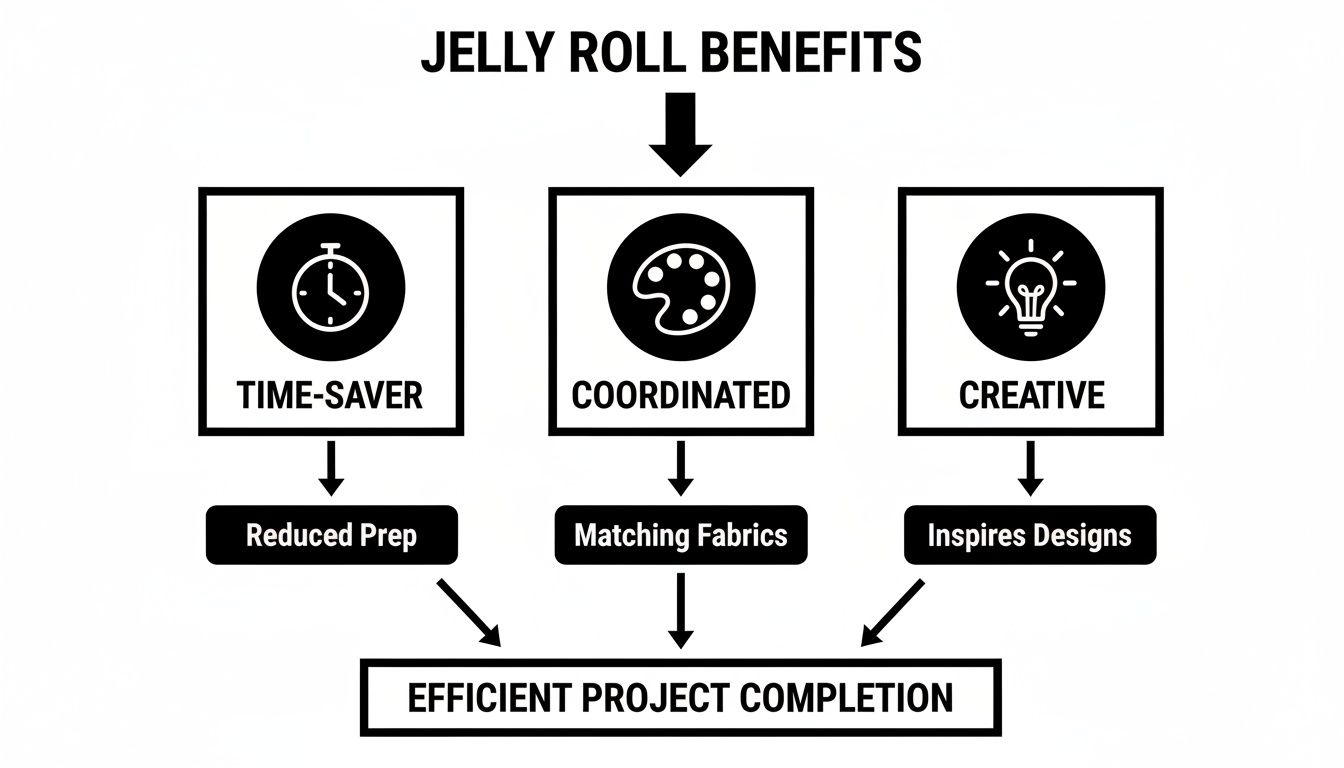
The bottom line is that jelly rolls really shine when you need speed, perfectly matched fabrics, and a design built from strips.
So, when do you grab a jelly roll instead of a layer cake? Let your pattern be your guide. A quilt designed with strips—like a Log Cabin or a Jelly Roll Race—is a perfect match for a jelly roll. On the other hand, a pattern based on traditional patchwork blocks will come together much more smoothly with charm packs or layer cakes.
To make it even easier to decide, I've put together a simple side-by-side comparison. This table helps you see at a glance which precut is the best tool for your next creative adventure.
Here's a quick look at the most common precuts, what you get in each bundle, and the kinds of projects they're made for.
| Precut Name | Dimensions | Total Fabric | Best For |
|---|---|---|---|
| Jelly Roll | 40 strips of 2.5" x 42" | 2.75 yards | Strip quilts, sashing, binding, log cabin blocks, and "race" quilts. |
| Charm Pack | 42 squares of 5" x 5" | 0.75 yards | Small patchwork projects, baby quilts, tote bags, and half-square triangles. |
| Layer Cake | 42 squares of 10" x 10" | 3 yards | Large-scale patchwork, patterns requiring bigger blocks, and creating custom strips. |
| Fat Quarter | One piece of 18" x 21" | 0.25 yards | Appliqué, patterns needing larger pieces, and building a fabric stash. |
Ultimately, the world of precuts is all about making quilting more fun and less work. Whether you fall in love with the long strips of a jelly roll or the neat squares of a charm pack, there’s a bundle out there ready to get you sewing faster.
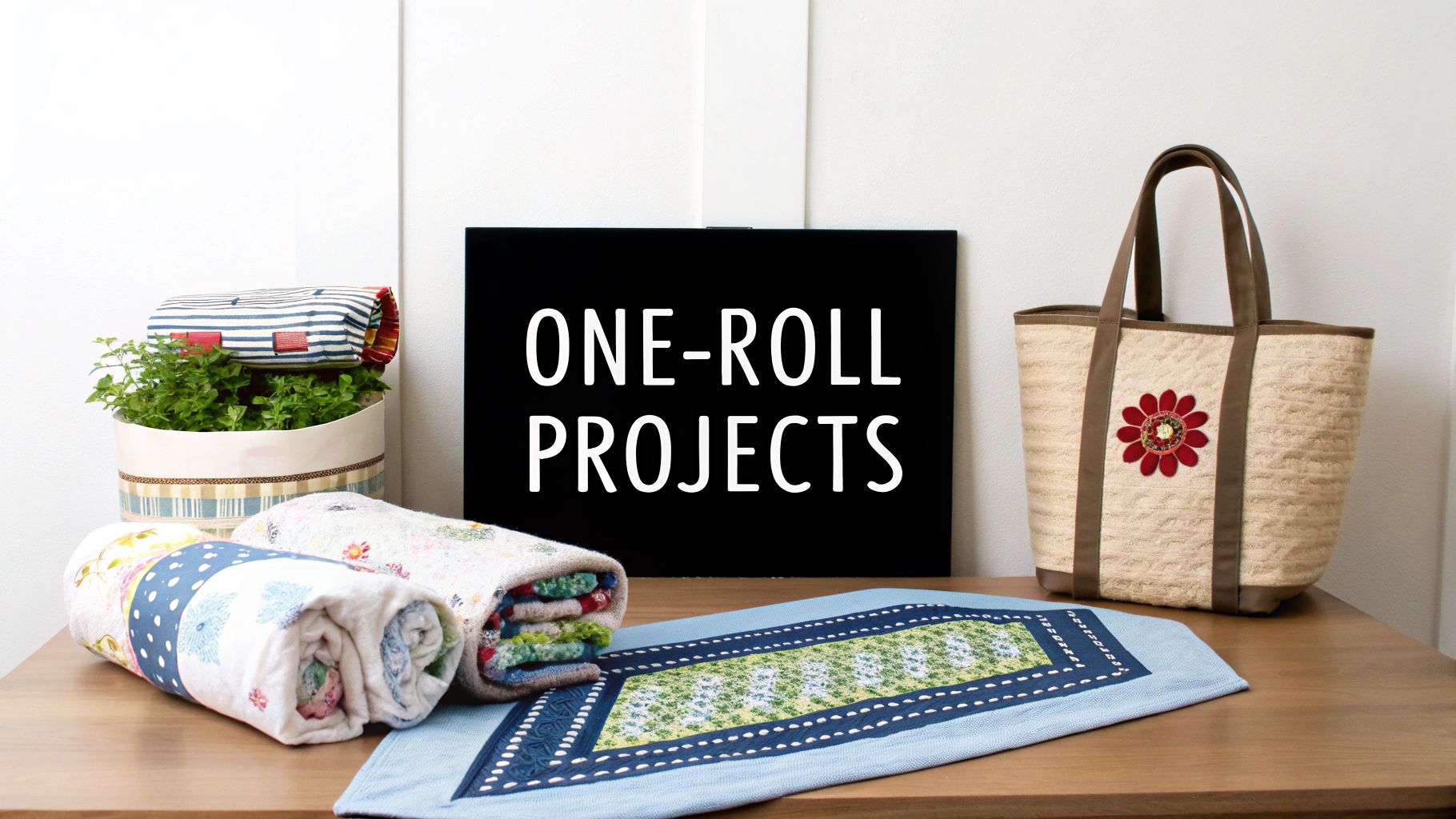
Okay, so you know what a jelly roll is. Now for the fun part: what can you actually make with one? The magic of these little bundles is just how much creative power is packed inside. You really don't need a huge fabric stash to make something stunning. Often, one roll is all it takes for a project you can start and finish in a weekend.
The famous "Jelly Roll Race" quilt is a great place to start, especially for beginners, but it's honestly just scratching the surface. Those precut strips are way more versatile than you might think, perfect for everything from home decor to accessories. Let’s dive into a few ideas you can tackle with just one of these curated fabric rolls.
A single jelly roll is practically made for whipping up a charming baby quilt. It’s the perfect amount of fabric, and because all the prints are designed to coordinate, the finished quilt automatically looks cohesive and professionally planned. It's my go-to for a thoughtful, handmade baby shower gift.
The 2.5-inch strips are ideal for simple but beautiful patterns, like strip-and-flip designs or basic log cabin blocks. Since you get to skip all that initial rotary cutting, you can have a gorgeous quilt top pieced in just a few hours. It’s a wonderfully rewarding project, no matter your skill level.
Think of a single jelly roll as the perfect recipe for a small quilt. You have all the pre-measured ingredients you need, so you can focus entirely on the joy of creating without getting bogged down in prep work.
Looking to add a personal touch to your dining room? A jelly roll can easily become a beautiful table runner with a matching set of placemats. The long strips are a natural fit for creating the length of a runner, and you can play with the prints to create lovely color gradients or fun, repeating patterns.
Here’s a quick breakdown of how one roll can furnish your table:
This is such a practical project, and it's also a fantastic way to sharpen your piecing and quilting skills on a smaller scale before you jump into a bed-sized quilt.
Believe it or not, a jelly roll can also be the starting point for a unique and surprisingly durable tote bag. By sewing all the strips together, you create your very own custom "made fabric" that shows off every single print in the collection.
It’s a pretty straightforward process: just sew all 40 strips together along their long edges to make one big, striped panel. From there, you just lay out your pattern pieces and cut them out like you would with any other yardage. You end up with a one-of-a-kind bag that’s sturdy, stylish, and perfect for a trip to the farmer’s market or your local quilt shop.
The real genius of jelly roll strips is seeing how they can be used for more than just straight-line piecing. So many modern patterns cleverly use the 2.5-inch strips to build intricate designs that you’d never guess came from a precut bundle. Quilters are making everything from cute animal-shaped blocks to complex geometric patterns. It just goes to show how adaptable these simple strips really are.
The next time you pick up a jelly roll, try to look past the race quilt. See it as a curated bundle of potential, ready to become a cherished baby gift, a piece of beautiful home decor, or your new favorite bag.
Working with jelly roll strips can be an absolute joy, but a few insider tips will make your sewing experience even better. Learning how to handle these long, skinny fabric strips is the secret to a project that looks polished and professional, avoiding any frustrating waves or warping. A couple of simple techniques are all you need to manage your strips like a pro.
One of the first questions on every quilter's mind is whether to pre-wash a jelly roll. The short answer is almost always no. Tossing these long strips into the wash can lead to a tangled, frayed mess and uneven shrinkage. Most of us prefer to work with the crisp, starched feel of the unwashed fabric and then wash the finished quilt to achieve that wonderful, crinkly texture we all love.
Jelly roll strips have one little vulnerability: their length. Those long edges are often cut on the bias or crossgrain, which gives them a surprising amount of stretch. A gentle touch is key to keeping them from getting distorted.
Try not to pull or tug on the strips as you feed them into your sewing machine. Your machine’s feed dogs are designed to do all the work, so just guide the fabric and let them pull it through. When it's time to press, use an up-and-down motion with your iron instead of sliding it side-to-side, which can easily stretch the strips out of shape.
Think of your jelly roll strips like delicate pasta. If you stretch them too much before cooking (sewing), they lose their shape. Guiding them gently keeps them perfectly straight and true.
In quilting, precision is everything, and it all begins with your seam allowance. To get perfect results with 2.5-inch strips, you need to master the scant 1/4-inch seam. This is a seam that's just a thread’s width narrower than a true quarter-inch.
So, why does that tiny bit matter so much? When you press your seam, the fold in the fabric eats up a little bit of width. That scant seam allowance compensates for this, making sure your finished strip sets measure exactly what the pattern calls for. It’s always a good idea to test your seam on a couple of scrap strips first and measure the result to dial it in perfectly.
The way you press your seams can make or break your quilt top. The goal is simple: get your seams to lie as flat as possible without stretching anything. The best way to start is by "setting" the seam—just press it flat, exactly as you sewed it.
After setting it, you can press the seams open or to one side. Here are the two main camps:
No matter which method you choose, just be consistent. Pressing all your seams the same way, whether open or to one side, will give your finished quilt a clean, professional finish. Following these simple tips transforms sewing with a jelly roll from a potentially tricky task into a truly joyful and creative process.
Jelly rolls are fantastic, but if you're new to them, you probably have a few questions. Let's tackle some of the most common ones so you can get started with confidence.
This is a big one, and the short answer is no, it's best not to. Those long, skinny strips can turn into a tangled, frayed-out mess in the washing machine. It's a sewing headache you definitely want to avoid.
Plus, most quilters find the crisp, unwashed fabric easier to cut and sew with precision. That wonderful, slightly crinkled texture we all love in a finished quilt? That comes from washing it after all the piecing and quilting is done.
You can almost always count on finding 40 strips in a standard jelly roll. Each of those strips will be 2.5 inches wide and about 42-44 inches long—the same as the width of a typical bolt of fabric.
The number of different prints might change from one roll to another. Some have 40 unique designs, while others might include a few duplicates. But no matter what, you'll have 40 strips ready to go.
Absolutely! A single jelly roll gives you plenty of fabric for a smaller project. You can easily whip up a beautiful baby quilt, a lap quilt, a fun table runner, or even a couple of tote bags.
In fact, some patterns are designed specifically for one roll. The famous "Jelly Roll Race" quilt is a perfect example—it's a fast, fun project that shows just how much you can do with a single roll.
It's true, they can shed a bit of fluff. With 40 strips all having exposed, pinked edges, a little lint is totally normal.
It's a good idea to keep a small lint roller or a mini brush next to your sewing machine. A quick swipe now and then keeps your sewing area clean and your machine happy. A single jelly roll contains about 2.75 yards of fabric, and all those cut edges add up! For a larger quilt, like a twin size, you'll probably want to grab two rolls.
Key Takeaway: The magic of the jelly roll is its consistency. Knowing you'll always get 40 coordinated, 2.5-inch strips lets you plan projects with total confidence. You can even mix and match rolls from different collections without a second thought.
Ready to start your next quilting adventure with the perfect precut fabrics and supplies? At Famcut.com, we offer a curated selection of high-quality materials for all your sewing needs. Explore our collection today and find the inspiration for your next masterpiece.
At High Country Quilts we care deeply about community. With our experiences in retail, we know that a store is not only a place to shop but also a place for the community to gather and share. During this busy...

Hi! We’re Adam and Renee Wheaton, the new owners of High Country Quilts! For more than 40 years, we’ve owned and operated vacuum and sewing businesses. Following in Renee’s father’s footsteps after he retired from All Discount Vacuum and Sewing in Colorado...


Leave a comment