

We Love Our Quilting Community
At High Country Quilts we care deeply about community. With our experiences in retail, we know that a store is not only a place to shop but also a place for the community to gather and share. During this busy...


Batik is far more than just a colorful pattern; at its core, it's an ancient art form. It's a method of dyeing fabric using a wax-resist technique that has been practiced for centuries. This hands-on, meticulous process means that every single piece of true batik is a one-of-a-kind creation, bearing the unique touch of the artisan who made it.
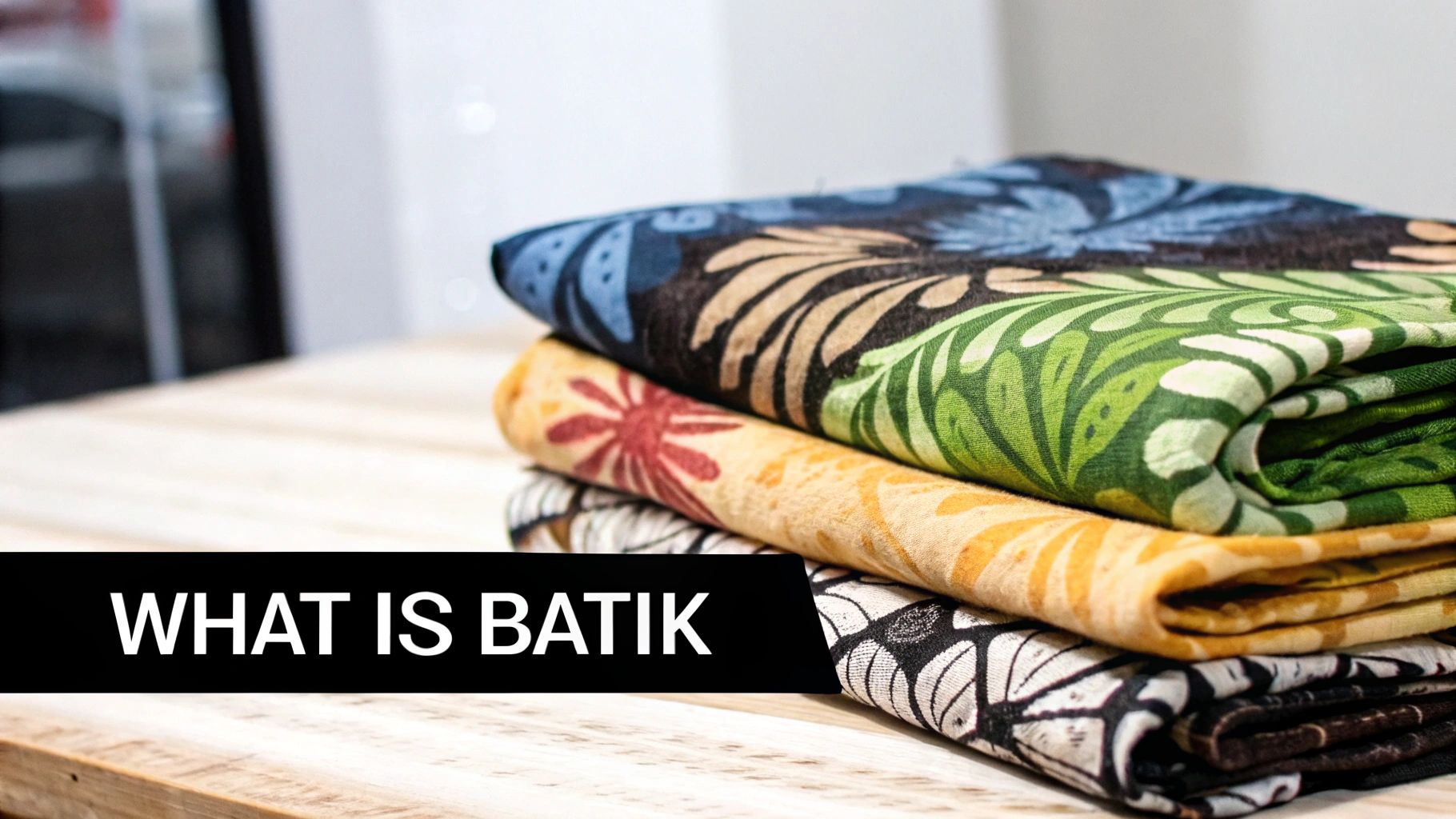
To get a real sense of what makes batik so special, think about preparing a room for painting. You carefully apply painter's tape to the trim to keep it clean. Batik artisans do something similar, but with hot wax and a small tool called a tjanting. They draw intricate designs onto cloth with the wax, which acts as a barrier to the dye.
Once the wax design is complete, the fabric is dipped into a dye bath. The wax-covered areas resist the color, while the rest of the cloth soaks it up. For more complex, multi-colored designs, this process of waxing and dyeing is repeated over and over.
The final, almost magical step is when the wax is removed, usually by boiling the fabric in water. This is the big reveal, unveiling the stunning, layered patterns that were hidden beneath the wax. This incredible technique isn't just a way to make textiles; it's a storytelling tradition passed down through generations, with deep roots on the island of Java in Indonesia.
So, what separates a genuine batik from a standard printed cotton? There are a few key characteristics to look for that highlight the artistry involved. Spotting these details will not only help you identify the real deal but also deepen your appreciation for this unique fabric.
To quickly summarize what makes a batik a batik, here are its core defining traits.
| Characteristic | Description |
|---|---|
| Wax-Resist Dyeing | This is the heart of the process. Hot wax is applied to the fabric to create a design that resists dye, forming the final pattern. |
| Unique Imperfections | You'll often see a "crackle" effect—fine, web-like lines where dye has seeped through cracks in the wax. This is a beloved sign of a handmade piece. |
| Rich Color Saturation | Because the cloth is fully submerged in dye, the color is vibrant and deeply saturated on both sides. Printed fabrics usually have a faded look on the back. |
| High Thread Count | Artisans typically use high-quality, tightly woven cotton. This results in a smooth, durable fabric that frays less, making it a dream for quilters. |
These characteristics come together to create a fabric with an unmistakable look and feel.
The real magic of batik is in its perfect imperfections. Even with a master artisan guiding the process, the way the wax cracks and the dye bleeds means no two pieces can ever be exactly alike. Each yard has its own distinct personality.
It's this beautiful blend of artistic tradition and high-quality material that has made batik a treasured textile for everything from quilting and apparel to stunning home decor.
Batik is so much more than a pretty piece of fabric. It’s a story told in wax and dye, a tradition with roots stretching back more than a thousand years. While different cultures have experimented with wax-resist dyeing, the art form truly blossomed on the island of Java, Indonesia, where it evolved from a simple craft into a practice steeped in spirituality and sophistication.
For centuries, making and wearing batik was a privilege reserved for royalty and nobility in the Javanese courts. The patterns weren't just for show; they were a complex visual language.
Specific designs communicated social standing, family lineage, and even offered spiritual protection. Some motifs were considered so sacred that commoners were forbidden from wearing them.
The intricate patterns were often inspired by nature and local philosophies. Take the classic parang motif, for instance. Its sharp, diagonal, knife-like design was a symbol of power, traditionally worn only by rulers. Another well-known pattern, the kawung, features interlocking circles that represent purity and the hope for a just, orderly life.
It's this deep cultural significance that led UNESCO to officially recognize Indonesian batik in 2009 as a Masterpiece of the Oral and Intangible Heritage of Humanity. This wasn't just an award; it was a global acknowledgment of batik's rich history, the incredible skill of its makers, and its role as a cornerstone of Indonesian identity. It celebrated the fact that this is a living art form, passed from one generation to the next.
Batik is a tangible piece of Indonesian heritage. Every single dot and line of wax carries the history, beliefs, and artistic soul of the people who created it, weaving a connection between the past and the present.
After receiving this global spotlight, batik enjoyed a massive comeback. It shifted from being a garment for ceremonies and formal events to a powerful symbol of national pride. Suddenly, Indonesians from all walks of life were wearing batik for everyday occasions, cementing its place in modern culture.
Today, the spirit of traditional batik continues to inspire. Modern artists and designers often pull from the vast library of historic patterns, but they also bring fresh energy with new color palettes and contemporary applications.
When you ask, "What is batik fabric?" you're really asking about this incredible journey. You're touching on a story that started in quiet palace workshops and grew into a celebrated global textile. Each piece you hold is a direct link to this long and vibrant history, carrying echoes of ancient courts, spiritual beliefs, and the enduring heart of Indonesian craftsmanship.
Think of creating authentic batik not so much as manufacturing, but more like painting a masterpiece. It's a patient, deliberate art form that turns a simple piece of cloth into something truly unique, all through the careful dance of wax and dye. The entire process hinges on a simple principle: wax resists dye, and this resistance is what allows artisans to create such intricate patterns.
The journey starts with the canvas. Artisans almost always reach for high-quality, natural-fiber fabrics like cotton or silk. These materials have a tight, even weave that drinks up the dye beautifully, making them the perfect base for the detailed work ahead. Before a single drop of wax touches the cloth, it's meticulously washed and boiled to get rid of any starches or impurities that could mess with the dyeing process.
This visual guide breaks down the core steps of this amazing traditional craft.
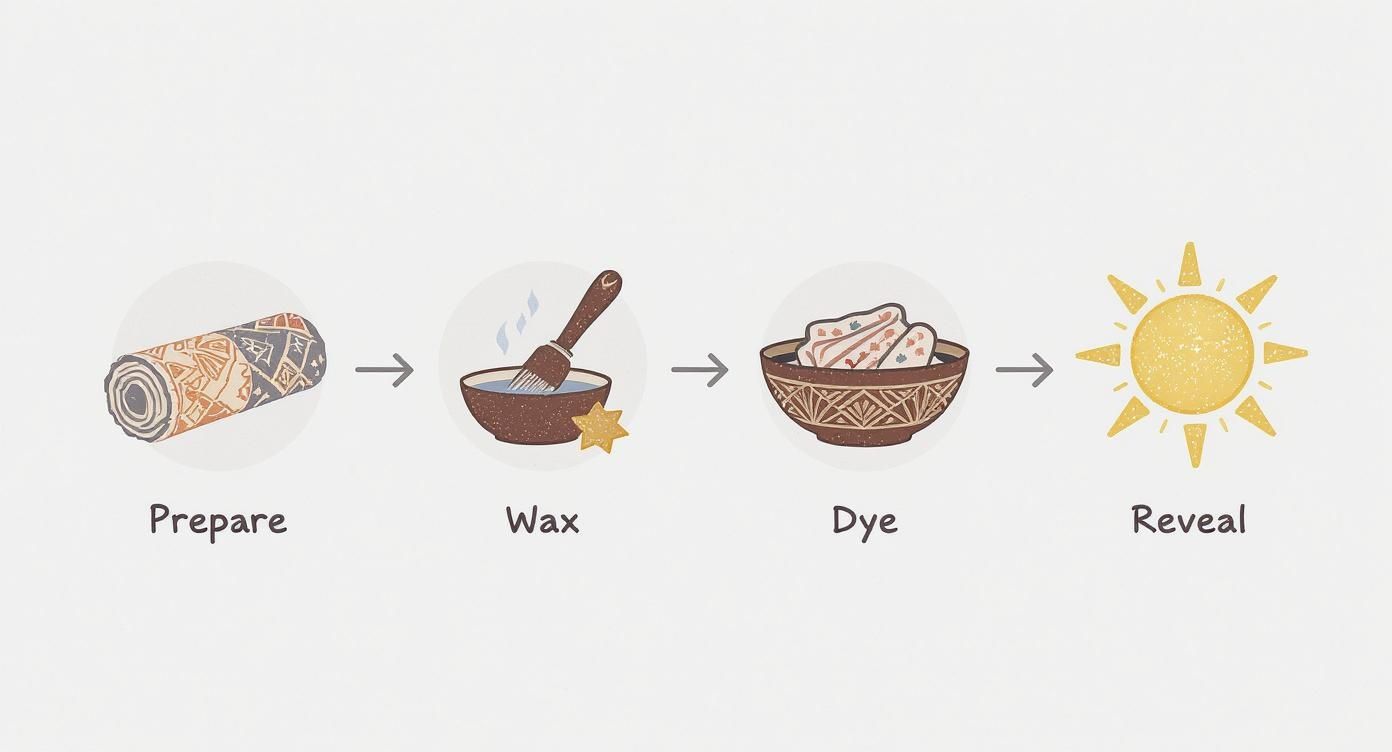
As you can see, each stage builds on the one before it, all leading up to that beautiful final reveal of the pattern.
With the fabric prepped and ready, the real artistry can begin: applying hot, molten wax. This is where the design truly comes to life, and artisans have two main tools in their arsenal to get the job done.
The Canting Tool: To draw fine, free-flowing lines and delicate dots, artists use a canting (sometimes spelled tjanting). It’s a small, pen-like tool with a copper bowl to hold the hot wax and a tiny spout for drawing. It takes incredible skill and a rock-steady hand to master the flow of wax and create those organic, intricate designs.
The Cap Stamp: For repeating patterns, artisans turn to a cap (pronounced chap). This is a copper stamp that’s been painstakingly bent and soldered into a specific design. The artist dips the cap into the wax and presses it firmly onto the fabric. It’s a much faster method than the canting and is perfect for creating more uniform, geometric motifs.
Whether by hand-drawing or stamping, the goal is the same. The wax soaks into the fibers and forms a barrier that the dye simply can’t get through. This first wax application protects the original color of the fabric, which is typically a light cream or white.
After that first layer of wax is on, the fabric takes a dip in its first dye bath. The parts without wax absorb the new color, while the waxed sections stay protected. This isn’t a one-and-done step; it's often repeated over and over to build up a multi-colored design.
For each new color, the artisan goes back and applies more wax, this time to protect areas of the color they just added. Then, it's into a new, darker dye bath. It's this progressive layering that gives batik its incredible depth and richness.
The magic of batik is revealed layer by layer. An artisan must think in reverse, protecting the colors they want to keep as they move from the lightest dye to the darkest. It's a process that demands both foresight and patience.
The amazing process of creating batik is a testament to skilled hands and knowledge passed down through generations. You can learn more about this kind of dedication to heritage by reading about our artisan partners and their craft.
Once all the dyeing is finished, the fabric is stiff and heavy, completely covered in hardened wax. Now for the most dramatic part: getting it all off. The cloth is plunged into a large vat of boiling water, which instantly melts the wax. The wax floats to the surface, where it can be skimmed off and even reused.
This "big reveal" is the first time anyone sees the finished, vibrant pattern. The final fabric shows off the gorgeous interplay of all the colors and designs, often with a signature "crackle" effect. These fine lines happen when dye seeps into tiny cracks in the wax, and this beautiful imperfection is a hallmark of authentic, handmade batik. It’s what guarantees that no two pieces are ever exactly the same.
When you walk into a fabric store, it's easy to be mesmerized by the sheer variety of batik fabrics. The colors, the patterns—it's a feast for the eyes. But not all batiks are made the same way.
Knowing how to spot the difference between them is more than just trivia; it helps you appreciate the incredible artistry, time, and story woven into each piece. It's the key to choosing a fabric that truly connects with your project and your personal style.
At its core, authentic batik is all about the wax. The way that wax is applied to the cloth is what separates one type from another, resulting in three main categories.
The most prized and intricate form of batik is Batik Tulis, which literally translates to "written batik." This is the pinnacle of the craft. Here, an artisan uses a special pen-like tool called a canting to meticulously draw every single line and dot of the design onto the fabric with molten wax.
It's a slow, almost meditative process. A single piece of fabric can easily take weeks, and sometimes even months, to finish, depending on how complex the pattern is. No two pieces of Batik Tulis are ever exactly alike. You’ll notice subtle variations and "perfect imperfections" that serve as the artist's signature.
A true Batik Tulis fabric has a unique soul. The slight wavers in a line or the tiny, unplanned crackles in the dye are not flaws; they are the signature of the artist, proving the piece was made with patience and skill.
This incredible level of hand-craftsmanship makes Batik Tulis the most expensive type of batik. It's often seen as wearable art or a collector's item. When you hold it, you’re not just holding fabric; you’re holding a story written in wax and dye.
Next up is Batik Cap (pronounced chap), which means stamped batik. Instead of free-handing the design with a canting, artisans use a large, handcrafted copper stamp called a cap.
The cap, which is a work of art in itself, is dipped into hot wax and then carefully pressed onto the fabric. The process is repeated over and over to create the pattern. While stamping still requires immense skill to get the alignment just right, it's much faster than drawing by hand.
This speed allows for greater production, making Batik Cap more affordable and accessible. You can often identify it by its crisp, repeating motifs. Sometimes, you can even spot tiny lines or dots where the edges of the stamp met, which is a tell-tale sign of this traditional method.
So, how can you tell a hand-drawn batik from a stamped one, or, more importantly, from a cheap, mass-produced print? It's a skill any fabric lover can pick up with a little practice. Here’s what to look for:
Learning to identify textiles is a fantastic skill to develop. To get better at observing fabric origins and construction, you can find great tips on how to identify vintage clothing and apply similar detective work to your batik explorations.
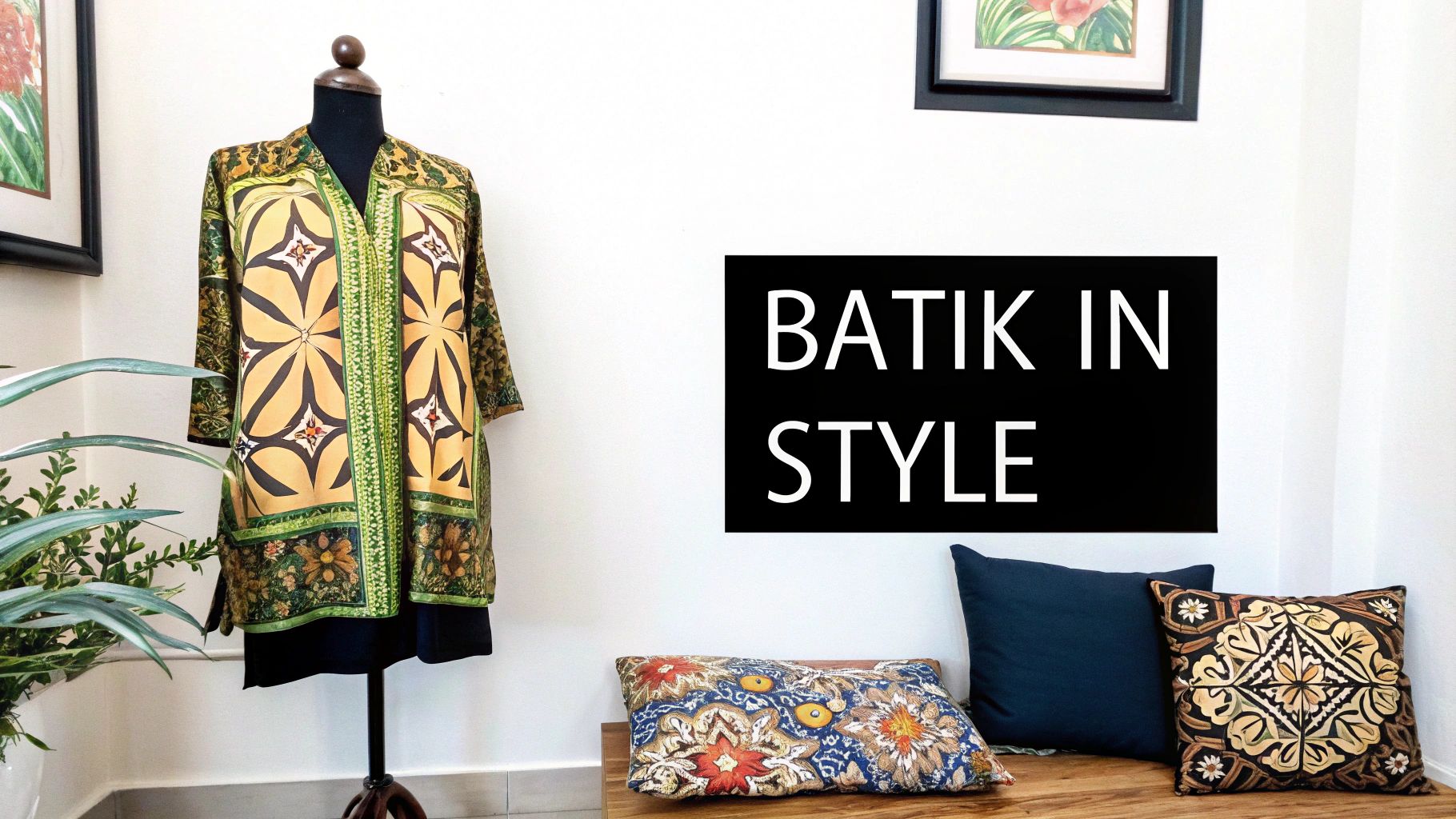
Batik has traveled an incredible path, from the sacred courts of ancient Java all the way to today's high-fashion runways. It’s a textile that’s constantly being reinvented, proving it’s so much more than a traditional craft. Designers are falling in love with its rich history, weaving its signature patterns and vibrant colors into everything from haute couture to your favorite everyday jacket.
What makes batik so appealing right now is its authenticity. In a world of mass production, each piece of batik is genuinely one-of-a-kind. Its organic designs and deeply saturated colors make a powerful statement, whether on a flowing dress, a sharp blazer, or a unique handbag. This blend of old-world technique and modern style is giving the craft a whole new energy.
And this isn't just a passing fad. The global demand for batik is projected to climb by 15-20% annually through 2026, largely thanks to the slow fashion movement and a renewed appreciation for things made by hand. It's a testament to how beautifully batik can adapt to new trends while holding onto its cultural soul. You can dig deeper into the market trends shaping batik's future to see its growing place on the world stage.
It’s not just fashion that has embraced batik; the fabric has found a very dedicated following in the worlds of quilting and home decor. Quilters, especially, are passionate about it. Because of its higher thread count and wax-resist dyeing process, the fabric is firm and frays less, which is a dream for intricate piecing and appliqué.
But the real magic for quilters is the visual texture. Those little "crackle" lines and subtle shifts in color mean that no two cuts are ever exactly the same. This gives a quilt an incredible sense of depth and personality, elevating it from a simple blanket to a true piece of art.
The beauty of using batik in a quilt is that every piece tells its own story. The slight imperfections and color shifts are not flaws; they are the heart of the fabric, ensuring that each project has a personality that can't be replicated.
That same artistic feel makes batik a fantastic choice for home decor, offering an easy way to bring a global, handcrafted vibe into any space. The possibilities are endless:
Whether it’s draped on a model, stitched into a quilt, or decorating a living room, batik fabric continues to showcase its timeless appeal. It beautifully bridges the gap between ancient craftsmanship and modern living, weaving a story of culture and artistry into our daily lives.
As you get more familiar with batik, you'll probably find yourself asking a few practical questions. It's only natural. Whether you're a seasoned quilter wondering how it behaves under the needle or just trying to figure out if you've found the real deal, getting good answers is key. Let's tackle some of the most common questions people have about this incredible fabric.
Think of this as a quick chat to clear things up, helping you work with and appreciate batik even more.
Oh, absolutely. In fact, many quilters consider batik a go-to fabric, and for good reason. It’s typically made with a higher thread count and a much tighter weave than the quilting cottons you might be used to. This dense structure makes it incredibly sturdy and far less likely to fray at the edges—a lifesaver when you're working with small, intricate pieces.
But the real magic comes from the dyeing process itself. The layers of wax and dye give the colors a depth and subtle mottling that you just can't get from a printed fabric. Every yard is slightly different, adding a rich, hand-painted texture to your quilt blocks that makes your entire project feel alive.
For quilters, the beauty of batik is in its "perfect imperfections." No two cuts are ever truly identical, which guarantees every quilt has a unique character that honors the hands that made it.
Spotting a genuine, handmade batik is actually pretty simple once you know the tell-tale signs. It all comes down to how it was made.
The best way to check? Just flip it over.
Taking proper care of your batik is all about preserving those brilliant colors. Since it’s hand-dyed, you’ll want to treat it a little more gently than your standard machine-printed fabrics.
At High Country Quilts, we celebrate the unique beauty of textiles like batik. Explore our extensive collection of high-quality fabrics, notions, and BERNINA machines to bring your next creative project to life. Visit us online or in-store to find your inspiration today at https://hcquilts.com.
At High Country Quilts we care deeply about community. With our experiences in retail, we know that a store is not only a place to shop but also a place for the community to gather and share. During this busy...

Hi! We’re Adam and Renee Wheaton, the new owners of High Country Quilts! For more than 40 years, we’ve owned and operated vacuum and sewing businesses. Following in Renee’s father’s footsteps after he retired from All Discount Vacuum and Sewing in Colorado...


Leave a comment