

We Love Our Quilting Community
At High Country Quilts we care deeply about community. With our experiences in retail, we know that a store is not only a place to shop but also a place for the community to gather and share. During this busy...


So, what exactly is a batik fabric? At its heart, it’s a textile decorated using an ancient art form called wax-resist dyeing. An artist applies hot wax to fabric to create a design, and that wax acts as a shield, preventing dye from reaching those areas. After dyeing, the wax is removed, and a stunning, intricate pattern is left behind.
One of the things quilters love most is the "crackle" effect that often appears—tiny veins of color where the dye seeped through cracks in the hardened wax. It’s part of what makes each piece so unique.
Think of the process like this: instead of a painter using a brush and paint on canvas, a batik artist uses hot wax on fabric to map out where the color won't go. This very hands-on method guarantees that no two yards of handmade batik are ever identical. Each bolt of fabric carries the unique touch of its maker, giving your quilting projects a story and a depth of color that you just can't get from standard machine-printed cottons.
This technique is far more than just a craft; it's a huge cultural and economic pillar, especially in Indonesia, where it originated centuries ago. Batik production has grown into a major player in the global textile scene. In fact, the Indonesian textiles market, with batik as a major feature, was valued at USD 14.5 billion in 2025 and is projected to climb to USD 23.1 billion by 2034. If you're curious, you can explore more data on the Indonesian textiles market to see just how significant its growth is.
The story of how batik traveled from revered ceremonial garments to a staple in a modern quilter's stash is a beautiful one. It really speaks to the fabric's timeless appeal! What was once worn for important cultural events has found a vibrant new life in the hands of quilters all over the world. This rich heritage gives us an amazing opportunity to bring something special to our projects.
By incorporating batiks, you’re not just using fabric; you’re weaving a piece of living history into your quilt. The subtle color variations and one-of-a-kind patterns add a layer of soul and vibrancy that can turn a simple design into a true work of art.
Whether you’re piecing an intricate art quilt or a simple nine-patch, batiks bring a visual texture and richness that really make a project pop. As we dig into how these fabrics are made, you'll start to see why they're so special and get a better sense of how to choose the perfect ones to bring your own creative ideas to life.
You can't fully appreciate a beautiful batik fabric until you understand the incredible artistry that goes into making it. Unlike a standard printed textile where ink is just applied to the surface, a true batik is created through an intimate, hands-on dance of wax and dye. It's a method that requires immense skill, patience, and a deep connection to the craft.
At its heart, the process is all about wax-resist dyeing. Artisans apply hot wax to the cloth, which acts as a barrier to block the dye from reaching certain areas. This fundamental principle is what gives batiks their signature look, but the way that wax is applied can vary dramatically. Each method gives the final fabric a completely different personality, and knowing how to spot them is key to picking the right one for your next quilt.
The most revered and painstaking technique is known as Batik Tulis, which literally translates to "written batik." Using a small, pen-like tool called a canting, artisans meticulously draw intricate designs onto the fabric with molten wax. Every single line, dot, and swirl is applied by hand. This isn't just fabric production; it's art.
Because this freehand process is so demanding—a single yard can take weeks, or even months, to finish—Batik Tulis is considered the most valuable. These one-of-a-kind textiles are perfect for heirloom projects or art quilts where you want the fabric itself to tell a story.
For a method that's a bit faster but still deeply rooted in tradition, there's Batik Cap (pronounced "chop"). Here, artisans use large copper stamps, called caps, which are works of art in their own right. They dip the stamp into hot wax and then carefully press it onto the fabric, section by section, to create a repeating pattern.
While it's quicker than drawing by hand, it still takes a very steady hand to align the stamps perfectly and apply just the right amount of pressure. This method produces the consistent yardage quilters often need for larger projects while still keeping that authentic, handcrafted feel.
The core of both these traditional methods boils down to two key steps: applying the wax and then dyeing the fabric.
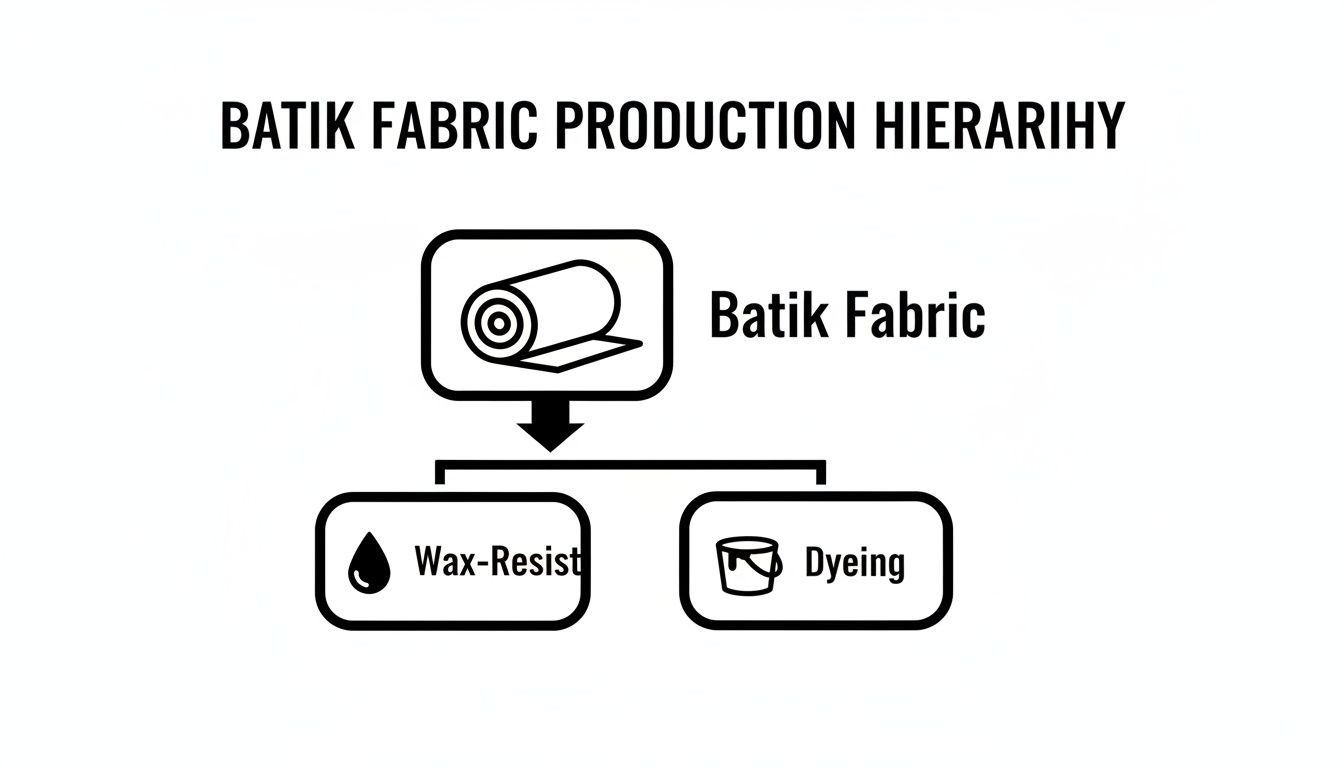
This diagram neatly shows how those two stages—the wax resist and the dye bath—are the essential building blocks for creating a genuine batik textile.
Now, it’s also important to be aware of fabrics designed to look like batiks but are made very differently. These are typically screen-printed fabrics that mimic the aesthetic but skip the traditional wax-resist process entirely. They can be beautiful and are often more budget-friendly, but they just don't have the same soul.
These printed "batik-style" fabrics lack the deep color saturation and the signature "crackle" lines that come from the wax cracking during the dye process.
How to Spot a True Batik: The easiest way to tell the difference is to flip the fabric over. An authentic wax-resist batik will look almost identical on both sides because the dye soaks all the way through the cloth. A printed imitation will be noticeably lighter or even white on the back.
To help you choose the right fabric, here’s a quick comparison of the different production methods.
| Method | Technique | Key Characteristic | Best For Quilting |
|---|---|---|---|
| Batik Tulis | Artisans draw designs by hand with a wax pen (canting). | One-of-a-kind, intricate patterns. Considered a fine art form. | Special projects, art quilts, and heirloom pieces where the fabric is the star. |
| Batik Cap | Artisans use copper stamps (caps) to apply wax patterns. | Consistent repeating patterns with slight, charming variations. | Larger quilts requiring several yards of matching fabric, like backings or borders. |
| Printed "Batik" | Designs are screen-printed onto the fabric with ink. | Perfectly uniform patterns with no wax "crackle." Color is much paler on the back. | Budget-friendly projects, though it lacks the depth and feel of authentic batik. |
Understanding these distinctions ensures you know exactly what you’re buying. Whether it's a hand-drawn masterpiece or a beautifully stamped yard, knowing the story behind the fabric makes every stitch that much more meaningful.
Batik isn't just fabric; it's a story told in wax and dye. For centuries, this living tradition has been woven into the very cultural identity of Indonesia. The intricate patterns weren't just for decoration—they symbolized status, shared folklore, and marked important ceremonies. Each design is a direct line to a history of artistry passed down through countless hands. That's the real soul of batik.
From its celebrated Indonesian roots, batik has journeyed across the globe, sparking the creativity of artists and makers everywhere. The very things that made it so treasured—the stunningly vibrant colors, the one-of-a-kind patterns, and the touch of a human hand—are exactly what make it irresistible to us today. Its path from ceremonial wear to a staple in modern sewing rooms is a beautiful story of enduring artistry.
Lately, batik has found a fresh, exciting voice well beyond its traditional uses. You can now spot its artisanal charm on high-fashion runways and in urban streetwear, proving this ancient craft is more relevant than ever. The growing desire for unique, handcrafted pieces has sparked a full-blown modern revival.
In fact, as of early 2026, batik-inspired streetwear has officially crossed over from a niche interest to a mainstream trend in cities like Los Angeles and New York. Designers are applying traditional wax-resist methods to everything from oversized hoodies to technical outerwear and even luxury sneakers. This gives each piece a ‘one-of-one’ feel that stands out in a world of fast fashion. This movement beautifully blends Southeast Asian craftsmanship with Western style, driven by a new generation that craves unique textures over mass-produced logos. You can see how batik is shaping streetwear trends and influencing modern style.
For quilters, every time you use a batik, you're weaving a piece of this global history into your project. That yard of fabric connects your work to a rich heritage, turning a quilt into something with a much deeper story to tell.
The quilting community, maybe more than any other, has fallen completely in love with batiks. And for good reason! Their tight weave means minimal fraying, and the dye saturates the fabric through and through, making them as practical as they are beautiful. They bring a depth and texture to a quilt that few other fabrics can match.
Think about how this rich heritage can energize your own work:
When you choose batiks for your next project, you're not just picking out pretty fabric. You're creating something beautiful that's also tied to a worldwide artistic tradition.
Walking into a fabric store and seeing bolts of brilliant batiks is one of quilting’s great joys. But with so many options, how do you choose the right one with confidence? Knowing what to look for will help you pick fabrics that not only look stunning but also behave exactly how you need them to for your project.
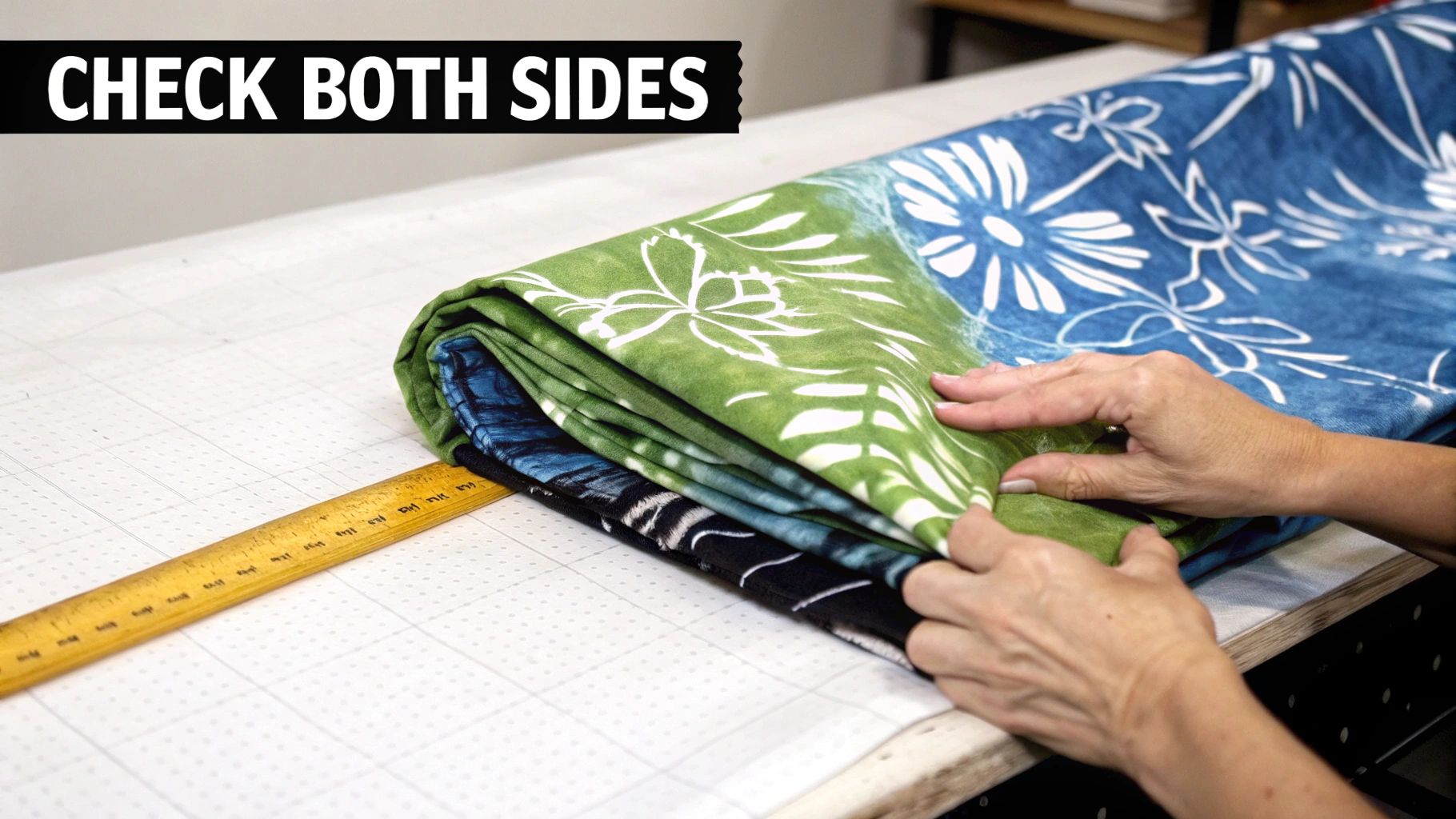
First things first: let's talk authenticity. The easiest way to spot a true wax-resist batik is to simply flip it over. Because the dye soaks all the way through the cloth, the color and design should be nearly as vibrant on the back as on the front. If the reverse side looks pale or white, you’re almost certainly holding a screen-printed imitation, not a genuine batik.
You’ll probably notice that batiks feel a bit stiffer on the bolt than your average quilting cotton. Don't worry about that! This crispness is usually from a tiny bit of leftover wax from the dyeing process. It almost always washes right out, leaving the fabric beautifully soft.
In fact, that initial stiffness is a quilter’s secret weapon. Batiks are famous for their higher thread count, which creates a dense, tight weave. This gives the fabric a few key advantages that we quilters love:
The real magic of batik fabrics is in their deep, saturated colors. The layered dyeing process creates an incredible depth and subtle shifts in tone that you just can't get from a printed textile. This mottling and gentle variation adds a rich, painterly quality to any quilt.
These unique textiles have a huge economic impact. Indonesia's textile industry, driven heavily by batik, is on track to reach USD 41.27 billion by 2026. While many fibers are used, durable polyesters are often blended with cotton for modern batiks that hold their color incredibly well through lots of washing and sewing. This global trade is what allows shops like ours to keep a diverse and beautiful selection in stock. You can discover more about the textile industry's growth and see the bigger picture.
When you're picking out batiks, think about where they'll end up in your quilt. A fabric with big, dramatic motifs makes a perfect centerpiece or border. A subtler, tone-on-tone design works beautifully as a background or blender. For landscape quilts, nothing beats the organic textures and color shifts of batiks for creating realistic-looking water, skies, or leaves. Once you know these little secrets, you can choose fabrics that will turn your next project into a masterpiece.
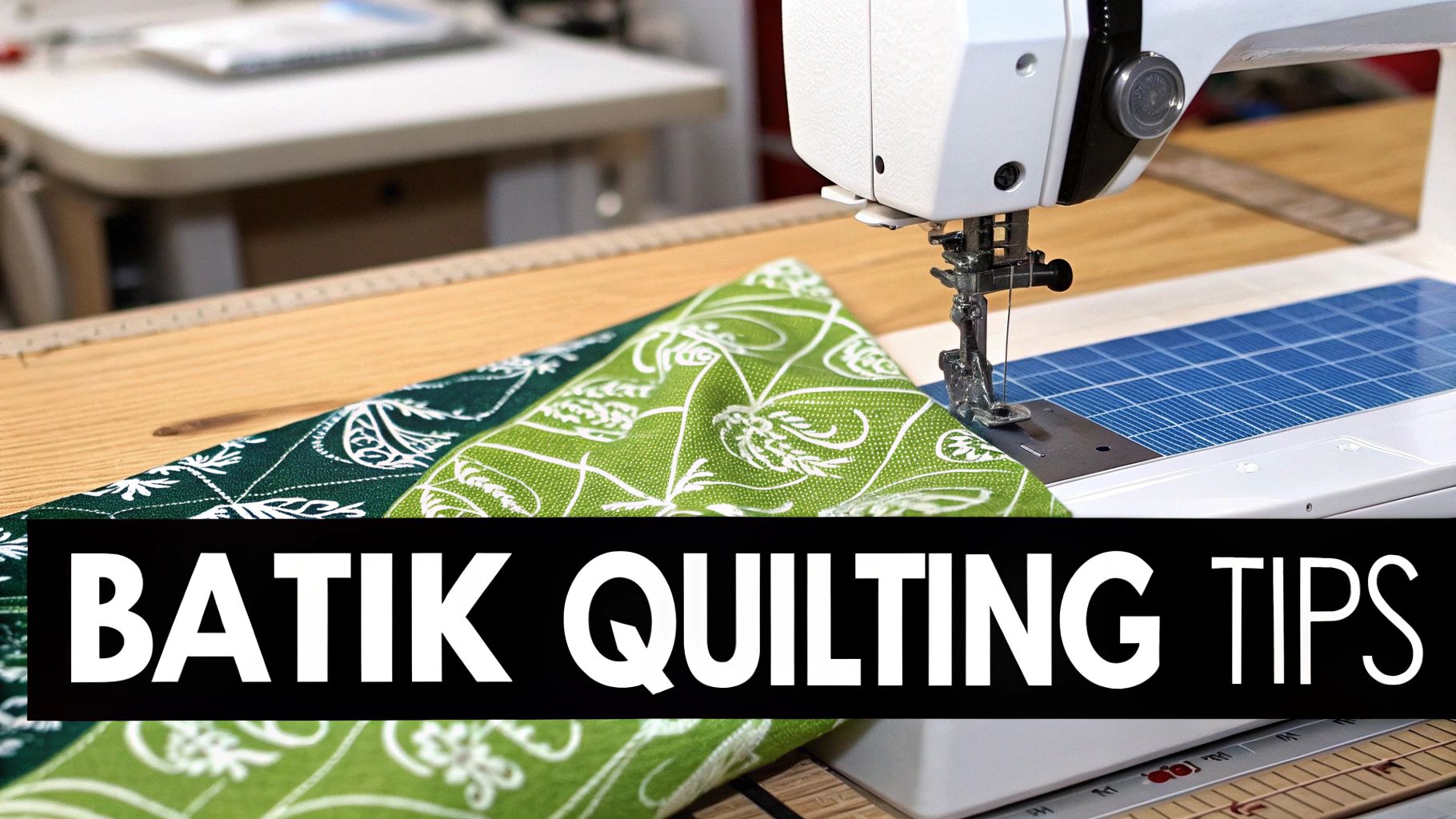
There’s nothing quite like the feeling of working with batiks. The colors are incredible, and the fabric feels substantial in your hands. But those same unique qualities—the tight weave and deep, saturated dyes—mean they behave a little differently than your average quilting cotton.
With just a few adjustments to your routine, you can make sewing with batiks a total breeze and get truly stunning results. It’s all about working with the fabric, not against it.
Let's start with the big question: to pre-wash or not to pre-wash? For batiks, I'm firmly in the pre-washing is highly recommended camp. That beautiful hand-dyeing process can leave a bit of extra dye behind, and the last thing you want is for it to bleed onto lighter fabrics in your quilt.
Washing also gets rid of any leftover wax, which softens the fabric right up. Just toss it in on a gentle cycle with a color catcher sheet, and you’ll be good to go.
Once your fabric is prepped, it's time to think about your machine setup. That crisp, firm feel of a batik comes from its high thread count. It’s a dense fabric, and your standard sewing machine needle might struggle a bit, leading to skipped stitches or puckering.
The secret is to switch to a sharp, fine needle. I always recommend a size 70/10 or 80/12 Microtex needle, often just called a "sharp." Its super-fine point is designed to pierce right through the dense threads instead of trying to push them out of the way. You get a much cleaner, more professional stitch.
Your thread choice matters, too. A good quality, 50-weight cotton thread is the perfect partner for batiks. It’s strong enough to hold your quilt together for years but fine enough not to add bulk to your seams. This lets your precise piecing be the star of the show.
Pressing is where batiks really shine, but they do ask for a slightly different touch. Since tiny amounts of wax can linger in the fibers, a super-hot iron with a lot of steam isn't your friend here. It can melt the wax or even cause leftover dye to set where you don't want it.
Here are my go-to tips for pressing and piecing batiks:
After you've brought home your gorgeous new batiks, you'll want to keep them looking their best. A big part of that is learning about proper storage for fabrics to protect them from things like fading or damage.
So, are you ready to dive into the world of batiks? Consider this your personal invitation to come see, feel, and explore the incredible collection we've curated just for you at High Country Quilts. There's really no substitute for experiencing these fabrics in person—the way the light catches the colors and the unique texture under your fingertips is something a screen just can't capture.
Feeling the fabric's weight and drape is the best way to know if it’s right for your project. We encourage you to come in and wander through our bolts. We have an extensive selection of batik yardage, perfect for anything from a bold quilt back to the most delicate appliqué pieces. Our team is always on hand, ready to help you find that perfect shade or simply chat about your latest idea.
If you're looking for a creative shortcut, our precuts are a fantastic place to start. We've got beautifully coordinated fat quarter bundles, charm packs, and jelly rolls that make color coordination a breeze. They're a quilter's best friend for getting a project off the ground quickly or for building a versatile batik stash without committing to full-yard cuts.
We also put together a variety of project kits that feature stunning batiks, pairing them with patterns so you have everything you need to get started right away.
At High Country Quilts, we believe fabric is the heart of every project. Our goal is to connect you with textiles that not only look beautiful but also inspire you to create something truly special and uniquely yours.
But we're more than just a shop! We host a wide range of workshops and classes designed to help you build your skills and confidence. You can learn techniques specifically for working with batiks and connect with other quilters right here in our Colorado Springs community.
Stop by the shop for a visit. Let our friendly team help you find the perfect batiks to bring your next masterpiece to life. We can't wait to see what you create
Even after you fall in love with a particular batik, a few practical questions might pop into your head before you start cutting. It's completely normal! Getting these details sorted out first is the key to building confidence and making sure your project turns out just the way you imagined.
Let's dive into some of the most common questions we hear from quilters here at the shop.
Our advice? Yes, it's a very good idea. The traditional hand-dyeing process is what gives batiks their incredible color, but it can also leave a little excess dye behind. Pre-washing gets rid of that extra dye so it doesn't bleed onto lighter fabrics in your quilt.
Washing also removes any tiny bits of wax left over from the resist process, which instantly softens the fabric and makes your needle glide through it much more smoothly.
Just use a gentle cycle with cool water and toss in a color catcher sheet to be safe. If you're a quilter who absolutely never pre-washes, just be sure not to use steam when you press. The heat and moisture can set any loose dye right into your other fabrics.
The price difference comes down to one thing: human artistry. The cost of a batik directly reflects the incredible amount of skilled, hands-on labor poured into every single yard. Unlike a standard quilting cotton that zips through a printing machine, each bolt of authentic batik has been touched by an artisan multiple times.
Think of it less like manufacturing and more like creating art. From an artist meticulously drawing with a canting tool to the rhythm of stamping with a cap and dipping the cloth into successive dye baths—the entire process is a testament to skill and time. That's why each piece is unique.
Absolutely! This is one of our favorite ways to play with texture and depth. Mixing the rich, saturated colors of batiks with the softer look of regular prints creates a beautiful, dynamic contrast that can make a quilt truly sing.
Here’s the golden rule for mixing: pre-wash all your fabrics together before you start cutting. Batiks and other cottons can shrink at slightly different rates. Washing them all at once levels the playing field, ensuring your pieced blocks stay perfectly square and your finished quilt lies flat. The natural crispness of an unwashed batik can also add some wonderful stability when piecing.
Feeling inspired to find the perfect batik for your next masterpiece? Explore the stunning collection at High Country Quilts and let your creativity bloom. Visit us online or stop by the shop to see what’s new! https://hcquilts.com
At High Country Quilts we care deeply about community. With our experiences in retail, we know that a store is not only a place to shop but also a place for the community to gather and share. During this busy...

Hi! We’re Adam and Renee Wheaton, the new owners of High Country Quilts! For more than 40 years, we’ve owned and operated vacuum and sewing businesses. Following in Renee’s father’s footsteps after he retired from All Discount Vacuum and Sewing in Colorado...


Leave a comment