

We Love Our Quilting Community
At High Country Quilts we care deeply about community. With our experiences in retail, we know that a store is not only a place to shop but also a place for the community to gather and share. During this busy...


Think of a UV protectant spray as sunscreen for your stuff. It's a simple, invisible shield that you can apply to just about any outdoor fabric to guard against the sun's harsh rays. By absorbing or blocking that ultraviolet radiation, it stops the fading, weakening, and general breakdown of things like patio cushions, umbrellas, and awnings. It’s a small step that can make a big difference in how long your outdoor gear lasts.
Have you ever bought a beautiful, vibrant patio umbrella only to see it look washed-out and sad after a single summer? The sun is to blame. That constant exposure to UV radiation is brutal, breaking down the chemical bonds in fabric dyes and fibers.
This process, called photodegradation, is what causes those bright colors to dull and the material itself to become brittle. It’s not just in your head; your fabrics are literally being cooked by the sun.
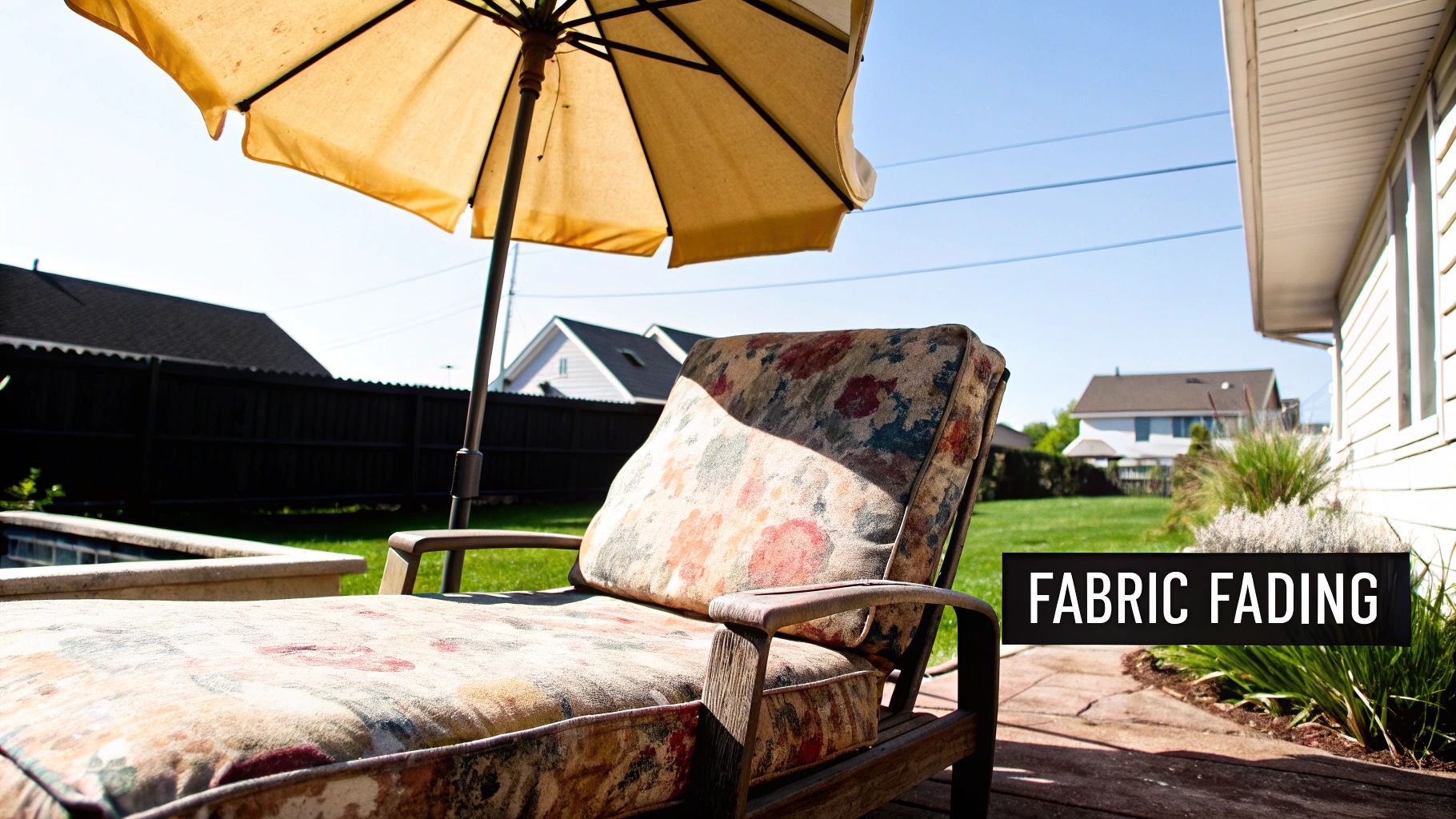
The damage goes deeper than just looks. As those fibers break down, the fabric loses its strength. That once-tough boat cover starts feeling stiff and thin, and your favorite outdoor pillows might rip at the seams with the slightest tug. It’s a slow-motion process of decay that you can easily prevent.
Some premium outdoor fabrics are sold with an Ultraviolet Protection Factor (UPF) rating already baked in. This means the sun protection is part of the fabric's DNA, woven right into the material. They work incredibly well but, as you might guess, they usually come with a much higher price tag.
For everything else, a good UV protectant spray for fabric is the perfect solution. It's a practical and budget-friendly way to add a layer of defense to new items or give a much-needed boost to older, UPF-rated fabrics that have lost some of their protective mojo over the years.
The global market for 'anti-UV' fabrics was valued at over USD 5 billion in 2023. While a lot of that is for textiles with built-in protection, aftermarket sprays are a huge part of the picture, helping people maintain and protect the things they already own.
Of course, spraying your fabrics isn't the only move you can make. It's also worth looking into other effective ways to block sunlight from windows, which can help protect your indoor furniture and rugs from fading, too.
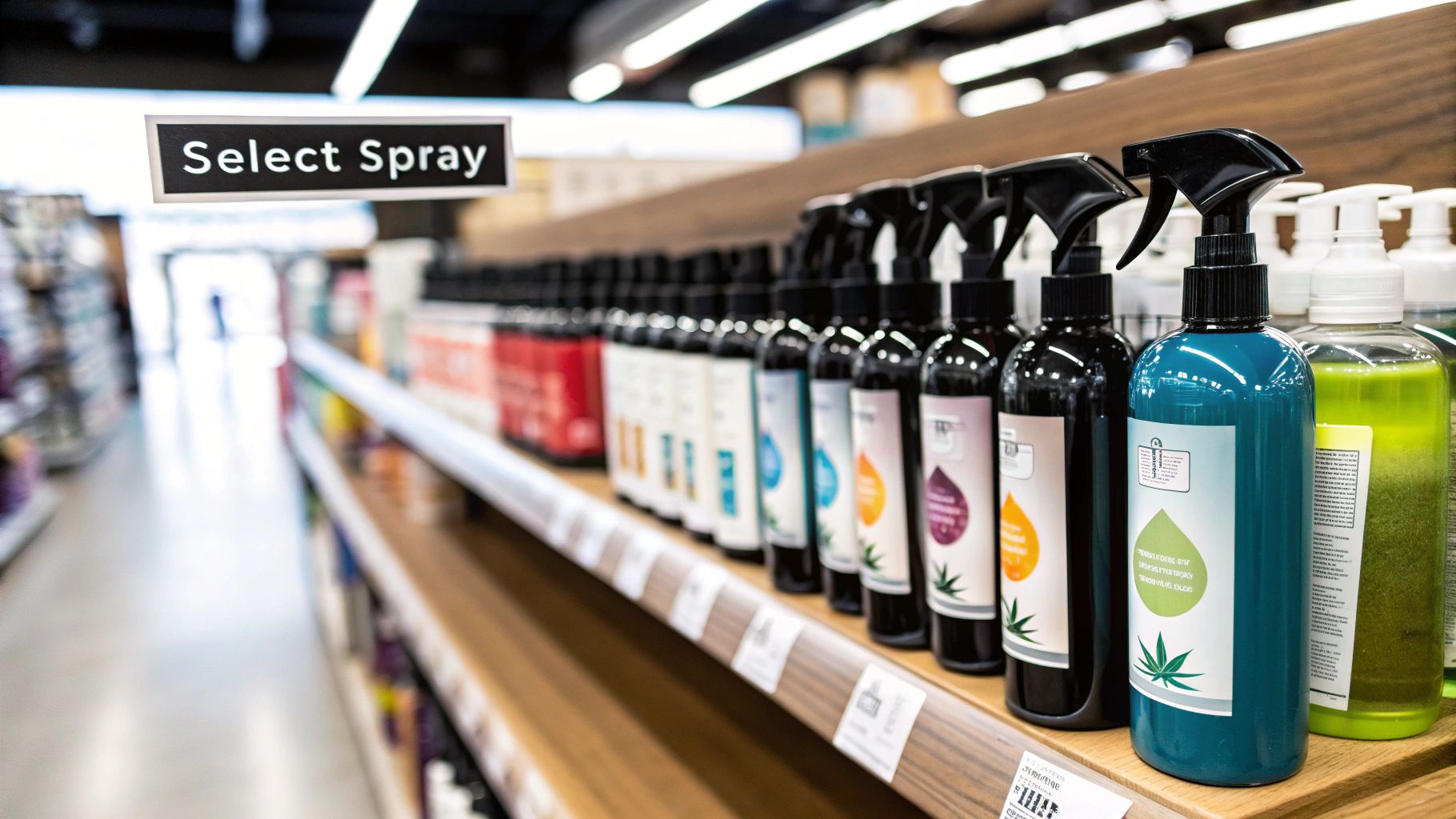
Picking the right UV protectant spray for fabric isn't just about grabbing the first can you see. To get results that actually last, you have to play matchmaker between the formula and your fabric. The spray that works wonders on a synthetic boat cover might be a total disaster on your favorite cotton patio umbrella.
It all starts with knowing what you're working with. Synthetic fabrics like polyester or acrylic need a formula that can properly bond to those man-made fibers. On the other hand, natural materials like cotton or canvas require a gentler touch to protect them without ruining their natural texture and breathability.
Once you know your fabric, the next big decision is the base of the spray. Each has its own pros and cons, and they're built for different jobs.
Remember, the goal is to create an invisible shield. A good spray shouldn't leave a sticky residue or change the color of your fabric. If it does, it's not the right match for your material.
Why stop at just UV protection? Many of the best products on the market today are multi-taskers. A spray that also repels water is a game-changer, preventing moisture from seeping into your fabrics and causing mold or mildew. Some even throw in stain resistance for good measure.
Choosing a multi-functional spray just makes life easier and saves you from buying multiple products. This demand for do-it-all solutions has fueled major industry growth, with the 'Fabric UV Protection Spray' market hitting a value of about USD 745 million by 2024. This boom is all about innovation that adds real value, which you can read about in detailed industry reports.
When you're comparing products, it helps to break down the features and see what works best for your specific situation.
| Feature | Best For | Considerations |
|---|---|---|
| Water Repellency | Outdoor cushions, umbrellas, awnings, boat covers | Some formulas may slightly affect fabric breathability. |
| Mold/Mildew Resistance | Items in humid climates or shaded, damp areas | Requires thorough cleaning before application for best results. |
| Stain Resistance | Dining chair cushions, car upholstery, high-traffic furniture | May not protect against all types of stains (e.g., oil-based). |
| Low Odor/VOC | Indoor furniture, children's items, enclosed spaces | Can sometimes be less durable than solvent-based options. |
| Quick-Dry Formula | Projects with tight deadlines or unpredictable weather | Always test in a small area first, as "quick-dry" varies. |
Ultimately, taking a few minutes to read the label and compare these features will ensure you get a product that truly protects your investment from the sun and elements.
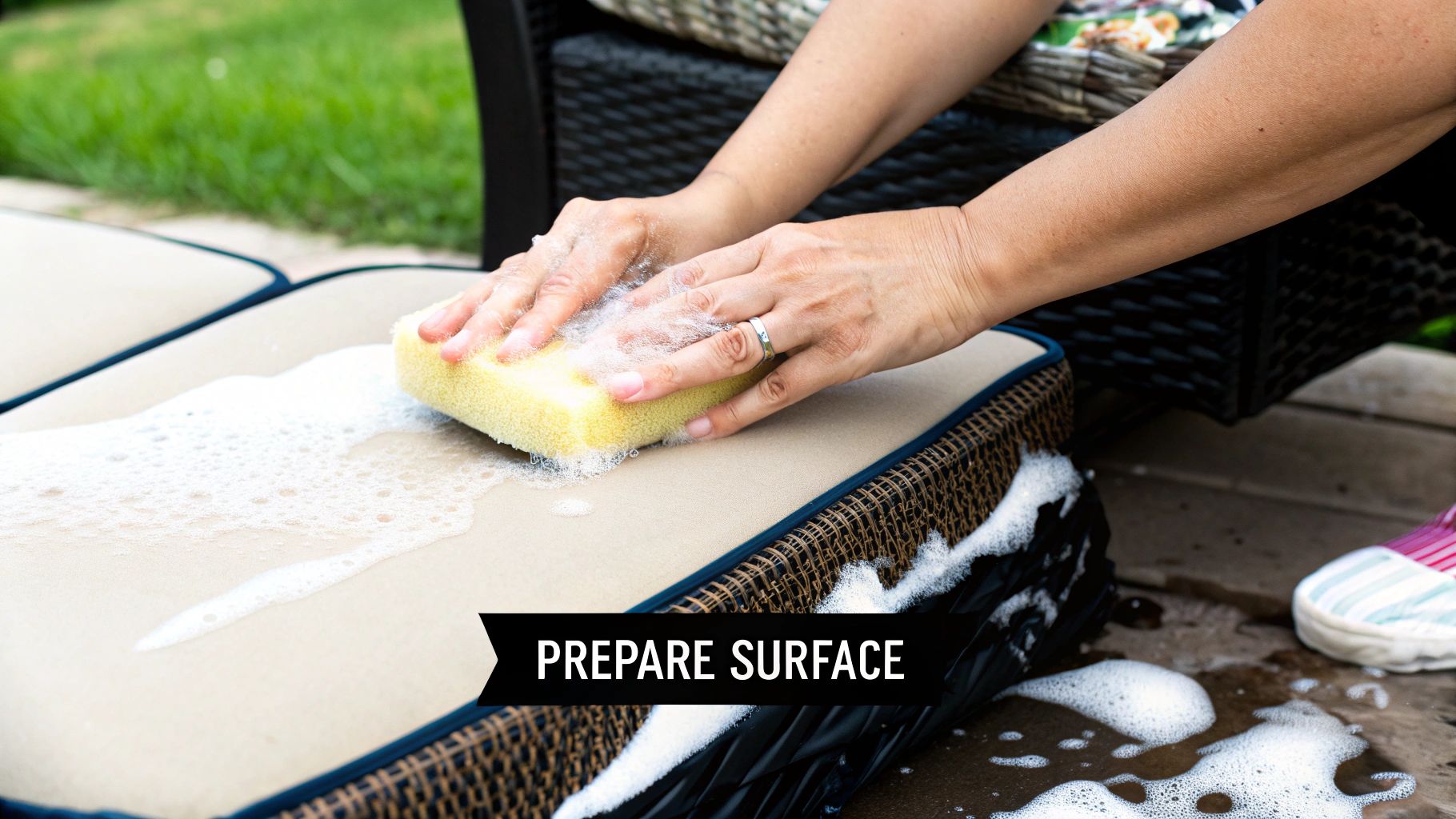
Here’s a little secret I've learned over the years: the key to a durable, even coat of UV protectant spray for fabric has almost nothing to do with your spraying technique. It all comes down to the prep work. If you want a successful application, you have to start with a surface that is perfectly clean and completely dry.
Think about it like painting a wall. You'd never just slap a coat of paint over dirt and expect a flawless finish, right? The same logic applies here.
If you spray over dust, pollen, or general grime, the protectant ends up bonding to the dirt, not the fabric itself. This creates a weak, flaky barrier that provides almost zero real protection. All your hard work goes down the drain, and your gear is left just as vulnerable to the sun.
Before you even pop the cap on that spray can, your fabric needs a solid cleaning. The exact method will change depending on what you’re treating, but the end goal is always the same: get every last speck of dirt off.
Once you're done scrubbing, rinsing is just as critical. Any soap residue left behind can mess with how the protectant bonds to the fibers. Keep rinsing until the water runs totally clear, with no suds in sight.
Crucial Tip: Your fabric must be bone-dry before applying any UV protectant. I can't stress this enough. Even the slightest hint of dampness can stop the formula from curing correctly, leaving you with a splotchy, useless finish. Depending on the humidity, you might need to give it a full 24 hours to dry out.
Lastly, whatever you do, don't skip the spot test. This one simple step can save you the headache of discoloring an entire piece of furniture.
Just pick a small, hidden area to test—the underside of a cushion or an inside seam works perfectly. Apply a little bit of the UV protectant spray for fabric and let it dry completely. Once it's dry, check for any weird color changes or texture issues. If everything looks good, you're cleared for takeoff.
Properly applying a uv protectant spray for fabric is less about brute force and more about finesse. Think of it like spray painting a piece of furniture—your goal is a light, even layer that creates an invisible shield. Rushing this stage or just spraying haphazardly will give you splotchy, uneven results and waste a lot of product, undoing all your careful prep work.
First things first, let's talk about where you're working. You need a well-ventilated space, like an open garage or a covered patio. Pick a calm day. Even a slight breeze can whisk the spray away before it even hits the fabric, which means spotty coverage for your gear and wasted spray for you. A shady spot is also best, as direct sun can make the spray dry too quickly, preventing it from bonding properly with the fibers.
This infographic breaks down the core steps for a perfect finish.
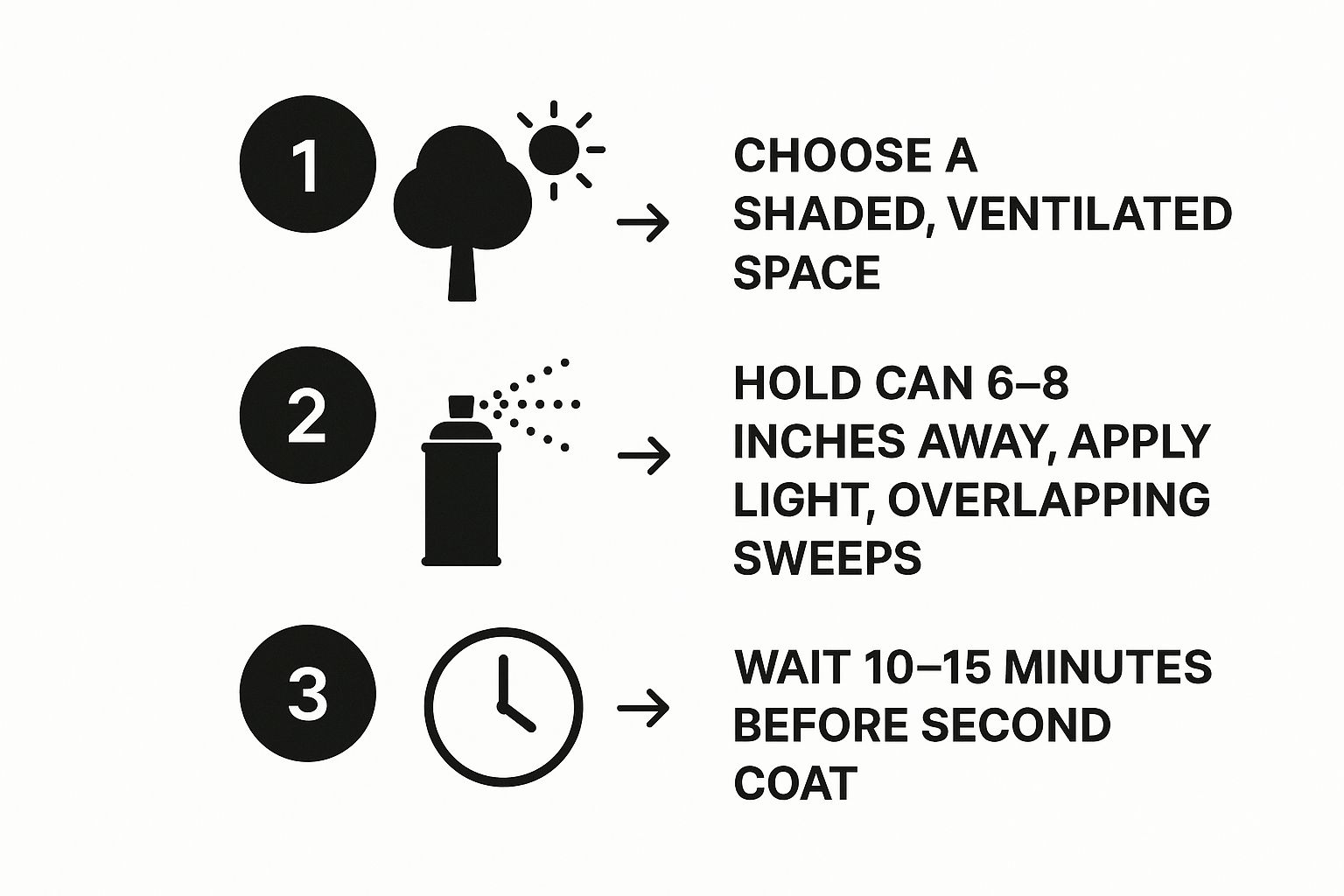
As you can see, a consistent distance and a smooth motion are what really matter for getting that even, protective layer.
Technique is everything here. Hold the can about 6 to 8 inches from the fabric. This is the sweet spot. It allows the spray to come out as a fine mist, which is what you want. Get too close, and you'll soak the fabric, leaving it stiff and causing drips. Too far away, and half the spray dissipates into the air.
Use a steady, sweeping motion, moving back and forth across the material. You’ll want to slightly overlap each pass, just like you would if you were painting a wall. This simple step is key to avoiding those unprotected "stripes" that will be the first things to fade in the sun.
The biggest mistake I see people make is trying to get it all done in one heavy, drenching pass. A light, even coat is so much more effective. A heavy, dripping application doesn't add more protection; it just creates a sticky, blotchy mess that takes forever to dry.
For pretty much anything that lives outdoors, a second coat isn't just a good idea—it's essential for getting protection that actually lasts. I like to think of the first layer as the primer that grabs onto the fabric, and the second as the tough topcoat that seals everything in.
Give the first coat about 10–15 minutes to get tacky before you go in for the second round (or whatever the can says). This lets the solvents flash off, creating a great surface for the next layer to adhere to. If you spray again too soon, you can actually dissolve the first coat, weakening the whole barrier. This simple two-step process is what builds a really robust, uniform shield against the sun.
Think of applying a UV protectant as the first step, not the last. To really get your money's worth and keep that fabric shield intact, you'll need a simple maintenance routine. The last thing you want to do is scrub away all that hard work with harsh chemicals or abrasive brushes.
Gentle, routine care is the name of the game. Most of the time, a little mild soap and water is all you need to handle everyday dirt and spills. If you're looking for safe and effective cleaning methods, this guide to non toxic upholstery cleaning has some fantastic tips that won't compromise the protective layer.
That invisible barrier from a uv protectant spray for fabric won't last forever. Sun, rain, and general use will gradually break it down. The trick is to reapply before you notice any fading or damage. Once you see the color starting to go, the sun has already won that round.
Here are a couple of my tried-and-true methods for knowing when it's time for a fresh coat:
This proactive approach to maintenance is why the fabric protector market is booming. Valued at USD 1.5 billion back in 2023, the industry's growth shows just how much people want products that genuinely extend the life of their belongings. For anyone interested in the market trends, you can dig into more data over at dataintelo.com.
Even after you’ve done everything right, a few questions tend to crop up. Let's walk through some of the most common ones I hear, so you can feel confident you’re getting the best protection for your fabric.
This is probably the number one question people have. For things that live outdoors and bake in the sun all day—like your patio cushions or that trusty boat cover—a fresh application at the start of each sunny season is your best bet.
If you're in a place with intense, year-round sun like Arizona or Florida, you'll want to be more proactive. I'd recommend a new coat every six to nine months to keep that protection strong.
A great little trick is to watch how water acts on the surface. Many of these sprays also repel water, so when you notice that rain or dew is starting to soak in instead of beading up and rolling off, that's your signal. It's time for another coat.
Tempting, right? But hold on before you spray that favorite jacket. Most of the heavy-duty formulas designed for outdoor gear are way too harsh for clothing. They can leave the fabric feeling stiff and completely ruin its breathability.
If you want to add UV protection to apparel, you need to find a product that is specifically made for clothing. Even then, you absolutely have to do a spot test. Pick an inconspicuous area, like an inside seam or a cuff, to make sure it doesn't cause any discoloration or weird texture changes.
So, will this spray make my fabric totally waterproof?
Not really. Think of it more as water repellent. A good UV spray will help morning dew or a spilled drink bead up, which is incredibly handy. But it's not going to make your fabric truly waterproof in a heavy downpour. For that kind of serious protection, you'd need a dedicated waterproofing product.
A high-quality UV spray is designed to dry perfectly clear and be completely invisible, no matter the color of your fabric. But, and this is important, you should always rely on your spot test.
It's rare, but once in a while, a specific spray formula might not play nicely with certain fabric dyes. A quick test on a hidden spot gives you the peace of mind that the spray is compatible and won't leave you with any unwelcome surprises.
At High Country Quilts, we're passionate about helping you protect your beautiful fabric creations from the elements. To keep your projects looking vibrant for years to come, explore our full selection of fabric care products.
At High Country Quilts we care deeply about community. With our experiences in retail, we know that a store is not only a place to shop but also a place for the community to gather and share. During this busy...

Hi! We’re Adam and Renee Wheaton, the new owners of High Country Quilts! For more than 40 years, we’ve owned and operated vacuum and sewing businesses. Following in Renee’s father’s footsteps after he retired from All Discount Vacuum and Sewing in Colorado...


Leave a comment