

We Love Our Quilting Community
At High Country Quilts we care deeply about community. With our experiences in retail, we know that a store is not only a place to shop but also a place for the community to gather and share. During this busy...


A lot of sewists arrive at the same moment before they ever buy the machine. They've picked a project that feels a little more ambitious than a pillow or table runner, something with real presence in the room, and they realize their current setup may not enjoy thick layers, slippery backing, and bulky seams nearly as much as they do.
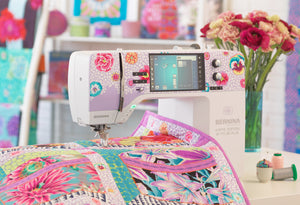
A faux fur weighted blanket is one of those projects. Done well, it feels custom, substantial, and supremely comforting. Done with the wrong machine, it can turn into a wrestling match with feed issues, skipped stitches, and seams that don't inspire confidence. That's why many makers start looking at used BERNINA machines for sale. They want strength, reliability, and stitch quality without stepping straight into a brand-new premium purchase.
The appeal of this project is easy to understand. You get the softness of faux fur, the structure of a well-executed sewn finish, and the satisfying weight that makes the blanket feel like something you'd keep for years rather than one more quick craft.

What makes this project different is the fabric behavior. Faux fur has bulk and drag. Weighted inserts add mass that pulls on seams while you sew. If you decide to quilt the inner layer so the fill stays evenly distributed, you also need consistent feeding across repeated rows. A lightweight machine can do simple home decor well enough, but this kind of project rewards a machine with steadier feeding, clean stitch formation, and the ability to stay composed when the layers get awkward.
BERNINA's roots trace to 1893, and the company remains privately held, focusing on long product lifecycles and serviceability, which matters when you're considering older machines that are still traded and supported in the market through the brand's sewing machine ecosystem and pre-owned pathway (BERNINA sewing machine catalog and brand history). That history changes the way many sewists should look at used equipment. An older BERNINA isn't automatically a compromise. In many cases, it's a deliberate choice to buy a machine built for years of use.
Practical rule: For bulky comfort projects, buy for feeding control and serviceability first. Decorative stitch count comes later.
That's especially true if your real goal isn't merely to own a machine, but to make harder projects feel manageable. A weighted blanket asks a lot from the machine at the exact points where quality matters most. It asks for traction through thick layers, stable seam quality at the corners, and enough confidence that you won't dread every pass under the presser foot.
Used BERNINA machines for sale appeal to a wide range of sewists because the brand's current lineup still speaks to people who are just starting and to more advanced users. That broad installed base keeps resale demand alive across many machine types. It also means you can shop more thoughtfully. Instead of asking whether a used machine is “good enough,” ask whether it has the right combination of feeding help, throat space, accessory support, and traceable history for the exact kind of sewing you want to do.
If your dream project is a blanket that looks elegant on the sofa and feels substantial in use, a sound used BERNINA can be the tool that takes it from intimidating to enjoyable.
A weighted blanket works best when the weight feels even, the blanket drapes well, and the finished project fits the person who will use it. If the weight is too light, it can feel underwhelming. If the weight is too concentrated in a few pockets, it can feel lumpy and tiring rather than restful.

People often choose weighted blankets because they like the grounded feeling of steady pressure. You'll see this described as deep pressure stimulation, which is the idea that gentle, distributed pressure can help the body feel more settled. For sewing purposes, the important part isn't the terminology. It's the build quality. The pressure only feels pleasant when the weight is distributed consistently and the blanket doesn't shift into heavy clumps.
That's why the inner construction matters just as much as the outer fabric. The weighted portion needs a well-planned grid or channel system, and each pocket needs to receive a measured amount of filler before you close it.
Many sewists use a guideline of 7 to 12 percent of body weight for an adult weighted blanket. That gives you a reasonable starting range for planning, not a rigid rule for every person or every use case.
| User Body Weight | Recommended Blanket Weight (lbs) |
|---|---|
| 100 lbs | 7 to 12 lbs |
| 120 lbs | 8.4 to 14.4 lbs |
| 140 lbs | 9.8 to 16.8 lbs |
| 160 lbs | 11.2 to 19.2 lbs |
| 180 lbs | 12.6 to 21.6 lbs |
| 200 lbs | 14 to 24 lbs |
This chart is only a planning tool. Personal preference, blanket size, and intended use all matter. Some people want a throw for the couch that feels comforting but not especially dense. Others want a sleep blanket with more noticeable heft. The safest approach is to decide on your target feel first, then design the insert grid around that choice.
If you're unsure, start on the lighter side of your comfort range. You can always remake an insert. It's much harder to enjoy a blanket that feels oppressively heavy.
Most sewists compare glass beads and poly pellets because both can work, but they behave differently inside the blanket.
If you're gathering supplies locally or online, specialty quilt shops often carry the tools and notions you need for this kind of build, from funnel-friendly fillers to needles and sturdy thread.
The finished blanket's behavior comes from several decisions working together:
A beautiful weighted blanket isn't just heavy. It's balanced.
You feel the difference before the first seam. A good weighted blanket stack feels substantial but still pliable in your hands. A bad one feels thick, slippery, and stubborn, which usually means trouble at the machine. That matters even more with faux fur, where bulk, drag, and shifting can turn a premium project into a wrestling match.
Start with the outer fabric, because it sets the tone of the whole blanket. Faux fur gives the project its luxury, but not every faux fur is pleasant to sew. Check the backing first. A stable woven backing behaves far better than one that stretches, sheds heavily, or ripples when you lift it from the cutting table. For most sewists, a moderate pile is the sweet spot. It still looks rich, but it produces less bulk at the seams and topstitching.
Cut from the wrong side and separate the backing only. A craft knife or the tip of small scissors works well. That keeps the pile intact and reduces loose fibers all over the room. Before cutting full panels, confirm the nap direction on every piece. Faux fur running in opposite directions looks wrong immediately, especially on a large blanket.
The inside layers need just as much discipline. For the visible inner side of the blanket, minky, fleece, and flannel each create a different result. Minky feels plush and modern. Fleece adds warmth and some stretch. Flannel gives a quieter finish and is often easier to square and sew accurately. For the actual weighted insert, choose a tightly woven cotton or similar stable fabric that can hold stitching lines cleanly and keep the filler where it belongs.
Fabric behavior is easier to judge when you know what created it in the first place. If you want a useful primer before you shop, this article on understanding how fabrics are made explains why some fabrics recover well, why others distort, and why backing structure matters so much on a project like this.
On a blanket this bulky, notions stop being an afterthought. They directly affect stitch quality and how hard your machine has to work. A used BERNINA in good condition earns its keep here because strong feeding, consistent stitch formation, and presser foot control make a noticeable difference once you are sewing faux fur, lining, and insert layers together.
Use supplies that match the job:
One practical test saves frustration. Stack your planned outer fabric, inner fabric, and insert material together, fold the layers as if they were entering the machine, and pinch the seam allowance. If that bundle already feels hard to compress or awkward to hold straight, sewing it cleanly will take more machine control, more patience, and possibly a different fabric combination.
That is often the point where buyers start to understand why machine features matter on advanced projects. A beautiful used BERNINA does more than save money compared with new. The right model gives you the piercing power, foot options, and stitch consistency that make thick, high-drape projects feel manageable instead of exhausting.
You are halfway through planning a faux fur weighted blanket. The fabrics look beautiful on the table, but the project will only feel luxurious if the machine can keep thick layers feeding evenly and hold a clean straight stitch through bulk. That is why the used BERNINA market deserves a closer look. For a project like this, machine choice affects the sewing experience as much as fabric choice.

“Used” is one label for several very different buying situations. A dealer-serviced machine with records, accessories, and a recent inspection belongs in a different category than a private listing that says only “powers on” or “worked last time I used it.”
BERNINA's own pre-owned process reflects that distinction. Their support page asks sellers for the exact model, selling price, and proof of purchase before buyer contact begins (BERNINA pre-owned machine support process). That tells you what matters in practice. Clear model identification, traceable ownership, and paperwork reduce guesswork.
You will usually see four broad groups:
For advanced home sewing, that difference matters. A weighted blanket is forgiving in style but demanding in handling. Plush fabrics, long seams, and bulky turning expose feed issues fast.
Used BERNINA machines for sale sit across a wide range. In one dealer inventory, a BERNINA Artista 730 sewing and embroidery machine is listed at $749.00, while a BERNINA 790 PLUS sewing and embroidery machine with extras is listed at $3,599.00 (used BERNINA inventory examples).
That gap changes how a smart buyer shops. Compare machines by class, age, and included functions, not by brand name alone. An older embroidery combo model, a current premium sewing machine, and a basic mechanical model solve different problems and belong at different price points.
Another dealer listing shows how features affect value. A pre-owned BERNINA 590 package with an embroidery module is advertised at $4,499 against an original MSRP of $8,199, with an 8.5-inch throat, Dual Feed, and embroidery capability included (pre-owned BERNINA 590 listing details). For someone sewing a faux fur blanket now and quilting or embellishing future projects, that kind of package may justify the higher spend. For someone who only needs reliable straight stitching through bulk, a simpler used model can be the better buy.
A weighted blanket does not demand every premium feature BERNINA has ever made. It does reward the right ones.
| Feature | Why it matters on a faux fur weighted blanket |
|---|---|
| Strong, even feeding | Plush and bulky layers shift easily if the machine feeds unevenly |
| Walking foot or Dual Feed | Helps keep the top and bottom layers traveling together |
| Adequate throat space | Gives you more room to control a large, heavy project |
| Clean straight stitch formation | Repeated channel seams and perimeter seams need consistency |
| Accessory completeness | Missing feet, cords, or modules can erase the savings fast |
From the worktable, the priority list is simple. Feed quality comes first. Then stitch quality. Then space and accessories.
I tell students to be realistic here. A beautiful machine with embroidery capability is nice to have. A machine that can feed faux fur and woven layers without fighting you is far more useful on this project.
A polished listing means very little if the machine has not been tested under conditions that resemble your actual sewing. For this project, bring layered fabric. I want to see how a machine behaves when there is real thickness under the foot.
Check the machine in this order:
One sentence from a seller can save you time. “Recently serviced, paperwork included, all original feet present” means something. “Untested, selling for a relative” means something too.
If you are evaluating private listings, seller behavior matters almost as much as the machine. Clear photos, direct answers, a realistic description of wear, and a willingness to demonstrate the machine are all good signs. This UK guide to selling online from Baslon Digital is not sewing-specific, but it is useful for spotting how serious sellers present condition, details, and transaction terms.
Refurbished and dealer-serviced machines usually cost more than private-party finds. In return, you often get a service record, some form of inspection, and a better chance that the machine is ready to sew instead of ready to troubleshoot.
For a premium project, that trade-off often makes sense. Faux fur, bulk, and long seams are not the time to discover feed problems, missing accessories, or an intermittent foot control. Buyers comparing used BERNINA machines for sale through High Country Quilts should pay close attention to what is included, how the machine was serviced, and whether the model fits the kind of sewing they do.
The right used BERNINA does more than lower the cost of entry. It makes a challenging project feel controlled, clean, and satisfying from the first seam.
The build goes more smoothly if you think of it as three separate jobs. First, you make a controlled inner weighted insert. Then you build the faux fur cover. Finally, you join everything cleanly so the blanket feels luxurious rather than homemade in the wrong way.

Start with a stable woven fabric for the insert. Cut a front and back panel to your finished insert size, allowing room for seam allowances. Mark your vertical channels on the wrong side with a removable fabric marker. Keep the spacing consistent. Uneven channels are one of the main reasons a weighted blanket feels sloppy in use.
Sew the outer perimeter first, leaving one short end open for filling. Then stitch the vertical channels. Use a longer stitch length around 3.5 to 4.0 mm so the seams stay clean and you aren't perforating the fabric too densely. On a BERNINA, engage Dual Feed if your model has it. If not, use your walking foot.
Keep the insert flat on the table while you sew. Don't let the weight drag from the needle area, or your seam accuracy will suffer row by row.
Once the channels are stitched, calculate the amount of filler that goes into each pocket based on your total target blanket weight and the number of sections you've planned. Work one row at a time. Pour the measured filler into each channel with a funnel, distribute it evenly along the lower edge, then stitch the horizontal seam to lock that row in place. Repeat until the insert is complete.
The cover is where many otherwise capable sewists lose patience. Faux fur behaves better when you control the mess before you ever sit down at the machine. Cut from the back, keep all pile running in the same direction, and brush fibers away from seam allowances as you pin or clip.
Sew the cover right sides together with your chosen lining, leaving an opening if you want the weighted insert to be removable. If you're making a permanent assembly, you can treat the cover more like an outer shell and join it directly around the insert later. Use clips generously. Pins disappear in thick pile and often distort the edge rather than stabilizing it.
For thick seams, slow down. A used BERNINA with a solid feed system will help, but the operator still needs to reduce speed over transitions. If the fabric stack rises sharply at a seam intersection, support it with a hump jumper or a folded scrap behind the presser foot so the foot starts level.
Lay the weighted insert flat inside the cover and smooth from the center outward. Don't just align corners and hope for the best. Faux fur can hide minor distortion until the blanket is turned, and then the problem becomes obvious.
If the blanket is removable, finish the opening with a zipper, button closure, or hand-sewn ladder stitch after the insert is inside. If it's permanent, stitch the final opening closed securely and consider perimeter topstitching where the fabric allows it. On some faux fur covers, topstitching disappears into the pile. On others, it can distort the edge. Test first.
Some makers like to see the motion before they tackle heavy layered sewing. This walkthrough can help you visualize handling and sequencing at the machine:
A few setup decisions save a lot of frustration:
If you want to improve layer control on projects like this, take a look at the BERNINA Walking Foot #50 and browse sewing classes and workshops at High Country Quilts if you'd prefer hands-on help before cutting expensive fabric.
Trim seam bulk where you can, but don't get aggressive around corners that need strength. Turn the blanket carefully, then use a blunt tool to shape edges rather than poking with scissors or anything sharp. Brush faux fur out of the seams with a pin or awl so the join looks full instead of trapped and thin.
A weighted blanket should feel substantial, not stiff. If it looks square but drapes poorly, the usual cause is too much bulk at the cover seams or a grid that's too coarse inside the insert. The second blanket always goes faster because you stop fighting the materials and start reading them.
A faux fur weighted blanket takes real effort to make, so maintenance matters. Treat it like a substantial textile project, not a toss-it-in-with-the-towels item. The cover fabric, the inner weighted insert, and the total finished heft all affect how you clean and store it.
If your blanket has a removable cover, care gets much easier. Wash the cover according to the fabric's requirements and clean the insert only when needed. Faux fur generally benefits from gentler handling than standard cotton. Rough agitation and high heat can flatten pile, distort backing, or leave the cover looking tired long before its time.
Heavier blankets can also challenge home laundry equipment. If the finished project feels excessively heavy for your machine or dryer, a commercial laundry setup is often the safer choice. Air drying or low-heat drying is kinder to plush fabrics than aggressive heat.
Weighted blankets aren't a universal project for every user. They are not appropriate for infants or toddlers, and they may not be suitable for people with certain medical, mobility, sensory, or respiratory concerns without a doctor's approval. The point of the blanket is calm, controlled comfort. If the user can't move it independently or can't tolerate the weight safely, the project needs to be reconsidered.
Comfort projects should feel easy to use, easy to remove, and easy to live with. If they don't, the design needs adjustment.
Some issues show up at the machine. Others only reveal themselves once the blanket is finished and in use.
A seam problem near the outer edge is usually repairable. Open the area, correct the seam, and resew with better support under the blanket. A weight-distribution problem throughout the insert is different. If many channels are inconsistent, patching rarely produces a polished result. In that case, remaking the insert is often the cleaner solution.
That may sound discouraging, but it's one of the reasons machine quality matters so much. On a dependable used BERNINA, you can focus on correcting technique rather than wondering whether the machine is creating half the problem.
If you're ready to make a weighted blanket and want guidance on the machine side as much as the sewing side, High Country Quilts is a practical next stop for comparing BERNINA options, accessories, service support, and classes before you start cutting into faux fur.
At High Country Quilts we care deeply about community. With our experiences in retail, we know that a store is not only a place to shop but also a place for the community to gather and share. During this busy...

Hi! We’re Adam and Renee Wheaton, the new owners of High Country Quilts! For more than 40 years, we’ve owned and operated vacuum and sewing businesses. Following in Renee’s father’s footsteps after he retired from All Discount Vacuum and Sewing in Colorado...


Leave a comment