
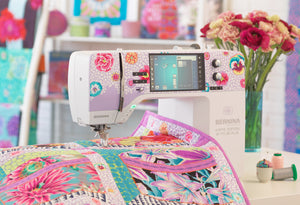

We Love Our Quilting Community
At High Country Quilts we care deeply about community. With our experiences in retail, we know that a store is not only a place to shop but also a place for the community to gather and share. During this busy...


Before you even sit down at your machine, the most important decision for beautiful machine quilting has already been made: choosing the right thread. It's the one thing that can make or break your project. The perfect thread ensures your stitches are strong and gorgeous, while the wrong one can lead to a tangled mess of breakage and tension headaches.
Think of it as the secret ingredient in your quilting recipe—it holds everything together.

Walking into a craft store and seeing a wall of thread can be intimidating. But don't worry, it's not as complicated as it looks. We can break it down into three simple things: what it's made of (fiber), how thick it is (weight), and what color it is.
Getting a handle on these three elements will give you the confidence to pick the perfect thread every time, taking your quilts from homemade to heirloom. Let's dig in.
What your thread is made of is the first big decision. Each fiber has its own personality and works best for certain jobs.
Thread weight is one of those things that seems backward at first. You’ll see it written as "wt" on the spool, and here’s the key: the higher the number, the finer the thread. So, a 50wt thread is actually thinner than a 40wt thread.
This choice completely changes the look of your quilting. A fine 50wt cotton is my go-to for most piecing and for quilting where I want the texture to be the star. It creates soft, subtle stitch lines that don't overpower the quilt top.
But sometimes you want your stitches to be seen! That's when I'll grab a heavier 40wt thread. It stands out more and really defines the quilting pattern, especially on solid fabrics. For a really bold, almost hand-stitched look, you can even use a super-heavy 12wt thread on top. Just be sure to switch to a larger needle (like a 90/14) and take it slow.
My Go-To Tip: When I use a heavy thread like 12wt in my needle, I always keep a standard 40wt or 50wt thread in the bobbin. This simple trick prevents a thick, bulky buildup on the back of your quilt and makes getting your tension just right so much easier.
Okay, this is the fun part—where your inner artist gets to play! The color you choose can either make your quilting whisper or sing. I generally think about it in three ways.
1. Blend In: Want to show off that gorgeous piecing and let the quilting create a subtle texture? Pick a thread that matches your fabric. This is also the most forgiving option, as it hides any little wobbles in your stitching. A great pro tip for multi-colored tops is to find a neutral gray or taupe that matches the overall "value" of the quilt; it will magically blend with almost everything.
2. Stand Out: When the quilting design itself is a main feature, a contrasting color is the way to go. This is a bold move that really turns your stitches into a design element. Just be ready—high contrast shows everything, so it’s a great way to showcase your neatest, most confident stitching.
3. Add Some Fun: Variegated threads, the ones that change color every few inches, are perfect for adding a bit of playful energy. They look amazing on quilts with busy prints or on solid fabrics where you want an unpredictable splash of color. For the most cohesive look, I try to pick a variegated spool that features colors already found in my quilt top.
To help you keep all this straight, I've put together a quick reference chart.
This table is a handy guide to have nearby when you're planning your next project. It breaks down the most common thread types and what they do best.
| Thread Fiber | Common Weights | Best For | Pros | Cons | Needle Size |
|---|---|---|---|---|---|
| Cotton | 50wt, 40wt, 28wt | Piecing, traditional quilting, heirloom | Natural fiber, matte finish, blends well | Can create more lint | 80/12, 90/14 |
| Polyester | 60wt, 50wt, 40wt | All-purpose quilting, high-use items | Strong, low-lint, slight sheen | Can outlast cotton fabric | 70/10, 80/12 |
| Rayon | 40wt, 30wt | Decorative stitching, embroidery | High sheen, vibrant colors | Not as strong, can be slippery | 90/14 |
| Metallic | 40wt | Topstitching, decorative accents | Brilliant sparkle, adds "wow" factor | Prone to breaking, requires care | 90/14 Metallic |
Remember, this is just a starting point! The best way to learn is to experiment.
Ultimately, stunning machine quilting comes from thoughtfully pairing your thread's fiber, weight, and color with your quilt's design. When you consider how these elements work together, you'll be able to choose a thread that not only behaves perfectly in your machine but also brings your creative vision to life.
So, you've picked out the perfect thread. That's a great start, but now it's time to get your machine on the same page. Think of this setup process as the warm-up before the main event; it's what lays the groundwork for those beautiful, even stitches and helps you sidestep a ton of frustration later on. Turning your everyday sewing machine into a quilting powerhouse is really just about paying attention to a few key details before you even think about starting.
First things first: a clean machine is a happy machine. Before I start any quilting project, I make it a habit to do a quick clean-up. Grab a small brush and gently sweep out all the lint and thread bits that have collected around the bobbin case and under the needle plate. All that fluff can soak up oil, mess with your tension, and even cause your thread to snap right in the middle of a beautiful line of stitching.
While you're at it, check your machine's manual for its specific oiling points. A well-lubricated machine just runs better—it’s quieter and smoother, which makes a huge difference when you're guiding a bulky quilt for long stretches. This whole check-up takes maybe five minutes, but it's one of the best things you can do for consistent stitches.
The presser foot you use has a massive impact on how your quilt sandwich feeds through the machine. For quilting, you'll pretty much always be reaching for one of two specialty feet, and which one you choose depends entirely on the style of quilting you're doing.
Trust me, choosing the right foot isn't optional if you want professional-looking results. Trying to quilt with a standard presser foot will almost always end with bunched-up fabric and a mess of uneven stitches.
If I could give just one piece of advice for machine quilting, it would be this: always start a new project with a new needle. A needle is so inexpensive, but it's absolutely critical. A needle that's even slightly dull or bent can cause skipped stitches, shredded thread, and tiny pulls in your fabric that you might not notice until it's too late.
For most quilts, a size 80/12 or 90/14 needle is your sweet spot. I personally prefer Quilting or Topstitch needles because they have a slightly rounded point that glides through the layers without snagging, and their larger eye gives the thread a smoother ride, which means less friction and breakage. A good rule of thumb is to match the needle to your thread—a finer 50wt thread pairs nicely with an 80/12 needle, while a heavier 40wt thread will thank you for the extra room in a 90/14.
I've seen so many tension headaches that were actually caused by a badly wound bobbin. If your bobbin is wound too loosely, too tightly, or just plain lopsided, it can’t feed the thread out smoothly. It’s an easy mistake to make, and people often start fiddling with their top tension when the real culprit is hiding underneath.
When you're winding your bobbin, you want it to look as neat and tidy as the spool of thread you bought it on—smooth and evenly filled. Be careful not to overfill it, though, or it can jam up in the bobbin case. It seems like a tiny detail, but a perfectly wound bobbin is a simple step that sets you up for flawless stitches from the get-go.
Prepping your machine properly makes the whole quilting process so much more fun and successful. When you take these few extra minutes, you're making sure your equipment is working with you, not against you, as you bring your vision to life.
This passion for quality equipment is a big deal in the sewing world. The global market for sewing machines, which includes our beloved quilting machines, was valued at $4.91 billion back in 2026 and is only expected to grow. It’s also interesting to note that the electric machines we all have in our homes made up 64.35% of the market's revenue in 2025, which really shows how important home sewing is. If you're a data nerd like me, you can find more insights about the sewing machine market on Mordor Intelligence.
Of all the things we learn in thread machine quilting, tension is the one that seems to trip everyone up. It can feel like some mysterious, dark art, but I promise you, it's just a simple balancing act. Once you get the hang of it, you'll be creating stitches that are not only gorgeous but also strong enough to last a lifetime.
So, what does perfect tension even look like? It's when your top thread and bobbin thread meet right in the middle of your quilt sandwich. They lock together perfectly between the top fabric and the backing. When you nail this, your stitches will look almost identical on both sides—just a neat, clean line of beautiful stitches.
The first step to taming tension is learning what your stitches are trying to tell you. Think of your machine as giving you feedback with every stitch. I can't stress this enough: always test on a scrap sandwich made from the same fabric, batting, and thread as your actual quilt. It's the only way to know for sure.
Here’s what you should be looking for:
Once you can spot these two issues, you're halfway to solving the problem.
My Favorite Analogy: Think of tension as a tug-of-war. Your goal isn't for the top or bobbin thread to win. You want them to meet in a perfect, balanced handshake right inside the batting.
Your machine's top tension dial is where you'll do most of your tinkering. This little dial controls the pressure on the thread as it travels through the machine. Higher numbers mean more pressure, which creates tighter tension.
I always start with my machine's default setting, which is usually a 4 or 5. Stitch a few inches on your practice piece and take a close look at both sides.
Is the bobbin thread showing on top? Decrease the top tension by turning the dial to a lower number (say, from 4 down to 3.5). Is the top thread loopy on the bottom? Increase the tension by turning it up (from 4 to 4.5).
The key here is to make tiny, incremental changes. I only adjust by a half-step at a time, stitch another test line, and check again. This slow and steady approach keeps you from overcorrecting. Remember, a hefty 40wt cotton will need a completely different tension setting than a delicate 60wt polyester, so you'll do this for every new project.

This simple three-step ritual—cleaning the machine, putting in a fresh needle, and using the right foot—is the foundation for great stitches. Following this sequence solves most problems before they even start.
Listen closely: adjusting your bobbin case tension should be the absolute last resort. I mean it! From my experience, well over 90% of tension troubles can be fixed by adjusting the top tension, re-threading your machine, or simply changing the needle.
But, every once in a while, you run into a situation where a tiny bobbin tweak is the only answer. These are rare, but they happen.
The bobbin case has a teensy-tiny screw. Turning it clockwise tightens the tension, and counter-clockwise loosens it. When I say tiny adjustments, I mean tiny—think about the face of a clock and only turn it "five minutes" at a time. A lot of us serious quilters buy a second bobbin case just for quilting, so we can mess with that one and leave our original one at the perfect factory setting.
This whole process is getting a lot more precise these days, especially with newer machines. Manufacturers are building in digital tension gauges that let you record exact settings for different threads—cotton, poly, metallic—so you can get consistent results every single time. As you can read in this report on computerized quilting machines from Cognitive Market Research, technology is really changing the game, especially for professional quilters.
By taking the time to read your stitches and make methodical adjustments, you'll be the one in control, ensuring every quilt you make has that flawless, professional finish we all strive for.

Alright, you've picked the perfect thread and your machine is humming along happily. Now for the fun part—the actual quilting! This is where your pieced top officially becomes a quilt. You're adding the texture, the dimension, and the final artistic touch that brings it all together.
When it comes to machine quilting, you’ve basically got two paths you can go down. One is all about beautiful, clean precision, and the other is about creative freedom and flow. Both are incredibly rewarding, and getting comfortable with them will open up a world of possibilities for your projects. Let's get into it.
Straight-line quilting has such a modern, elegant vibe, but don't let its simplicity fool you—it can make a huge impact. It's the perfect place to start if you're new to this, and it remains a favorite for creating crisp, graphic textures on any quilt.
The secret weapon for this style is your walking foot. This amazing tool grips all three layers of your quilt sandwich and feeds them through the machine in perfect sync, which is your best defense against dreaded puckers and shifting fabric.
So, how do you get those perfectly spaced, parallel lines? You've got options.
And don't think you're limited to just straight lines! A walking foot can handle gentle, sweeping curves beautifully. The key is to go slow, relax, and guide the quilt smoothly through the machine.
If straight lines feel a little too rigid for your style, you're going to love free-motion quilting (FMQ). This is where you get to truly draw with your sewing machine. The setup here is different, though. You'll need to attach a darning or free-motion foot and—this is critical—lower your machine's feed dogs.
With those feed dogs down, you are 100% in control of the fabric. The machine isn't pushing it forward anymore; you are. This means your stitch length is created by the dance between your machine's speed and your hand movements. Finding that rhythm takes a bit of practice, but once it clicks, it's magical.
Start by getting comfortable. A lot of quilters swear by quilting gloves for better grip, placing their hands flat on either side of the needle to steer the quilt. I always recommend starting with simple, forgiving patterns to build that muscle memory.
The real secret to smooth FMQ is consistency. If your hands move too fast for your machine speed, you'll get long, sloppy stitches. If you floor the pedal but don't move your hands, you'll end up with a tiny, dense knot. Aim for a comfortable "hum" from your machine and try to match your hand speed to it.
Nothing screams "professional finish" like clean starts and stops. Whether you’re quilting straight lines or doodling with FMQ, knowing how to handle your thread tails without leaving messy knots on the back is a must. The absolute best way to do this is by burying your threads.
This little extra step makes your start and end points completely invisible and super secure. Here's how it's done:
It might sound fussy, but I promise this small ritual makes a massive difference in how polished and durable your quilting looks. It's one of those little skills that really elevates your work.

Sooner or later, every single quilter runs into a frustrating thread issue. It just happens. The trick isn't to avoid it forever, but to know how to diagnose what's going on without wanting to throw your machine out the window.
When your machine starts acting up, it’s usually trying to tell you something simple is off. Let’s walk through the most common headaches and how to fix them so you can get back to the fun part.
There is almost nothing more maddening than your top thread snapping over and over again. Before you get too frustrated, take a deep breath and work through this mental checklist. Nine times out of ten, it’s a quick fix.
Sometimes, the thread itself is the diva. Specialty threads, like beautiful but finicky metallics, are famous for breaking. They often need a special metallic needle and a much, much slower sewing speed to behave.
Skipped stitches and those nasty little loops on the back of your quilt can ruin the look of a beautiful design. These problems almost always point back to the needle, tension, or the way you're moving the fabric.
If you’re seeing skipped stitches, your needle is the first suspect. Make sure it's the right type and size for your thread and that it isn't dull. Another culprit is "fabric flagging," which is when the fabric bounces up and down with the needle. This is especially common in free-motion quilting if you're moving the quilt sandwich too fast for your stitch speed.
"Eyelashes" are what we call those ugly little loops of top thread that get pulled to the back of your quilt. They’re a dead giveaway of a tension problem. Specifically, it means your top tension is too loose. The bobbin thread is winning the tug-of-war. To fix it, just gradually increase your top tension—turning the dial from a 4 to a 4.5, for example—and stitch a test swatch until those loops disappear.
A Quilter's Reality Check: Don't get discouraged when problems pop up! The quilting world has exploded into a $4.5 billion industry for a reason—people love it, challenges and all. That's a massive jump from just $1.8 billion in 2000, which proves how many of us are working through these exact same issues. If you're curious, you can read more about the growth of the quilting market on Craft Industry Alliance.
Running into a snag is part of the process. Below is a quick-glance table to help you pinpoint the problem and get back to your thread machine quilting with a lot less stress.
| Problem | Potential Causes | How to Fix It |
|---|---|---|
| Top thread breaks or shreds | Old/damaged needle, incorrect threading, tension too tight. | Start with a new needle. Rethread the entire machine (presser foot up!). Lower the top tension. |
| Skipped stitches | Wrong needle type/size, dull needle, moving fabric too fast. | Match the needle to your thread/fabric. Change to a fresh needle. Slow down your hands for free-motion quilting. |
| "Eyelashes" on quilt back | Top tension is too loose. | Gradually increase the top tension setting (e.g., from 4 to 4.5) until loops disappear. |
| Bobbin thread "nests" | Bobbin inserted incorrectly, machine not threaded properly. | Remove the thread nest. Take out the bobbin and re-insert it. Completely rethread the top of the machine. |
| Uneven or inconsistent stitches | Machine needs cleaning, inconsistent speed in free-motion. | Clean out lint from the bobbin area. Practice keeping a steady speed with your hands and foot pedal. |
By calmly working your way through these potential fixes, you can solve just about any thread-related hiccup and keep the joy in your quilting.
Even after you've got the basics down, a few nagging questions always seem to pop up right in the middle of a project. Let's tackle some of the most common ones I hear from fellow quilters. Getting these answers straight will help you quilt with a lot more confidence.
You can, but I really wouldn't recommend it. While it seems like an easy swap, that all-purpose sewing thread (usually a 50-weight polyester) is made for garment seams, not for holding a quilt together for years to come.
Quilting thread is a whole different beast. It’s engineered to be much stronger and smoother, and it produces way less lint. This strength is crucial because it has to hold up to the high speeds and friction of machine quilting. Using the right thread means fewer frustrating breaks and a much cleaner machine.
For a quilt you want to last, investing in a quality quilting thread is non-negotiable.
This is one of the most maddening problems in machine quilting, but it usually comes down to a few simple culprits. Nine times out of ten, the problem is your needle. A dull, bent, or slightly burred needle will chew up your thread with every stitch. My best advice? Always start a new quilting project with a fresh needle.
Also, double-check that you’re using the right size and type of needle for your thread. If the eye is too small for the thread's thickness, it will literally strip and shred the fibers as you go. Of course, if you’ve already tried a new needle and re-threaded everything, the thread itself might just be poor quality.
Here's a little trick I've learned over the years: If your thread is shredding, check the needle first. If your thread is breaking, your tension is the likely culprit.
Nope! In fact, most seasoned quilters prefer not to. It's incredibly common to use a finer thread in the bobbin, like a lightweight 60wt polyester or even a 50wt cotton.
Using a finer thread on the bottom has some great benefits:
The key is to still use a high-quality thread in the bobbin. Just remember to always test your stitches on a practice quilt sandwich, since using two different thread weights will definitely require a few tension adjustments.
This really depends on the style of quilting you're doing.
For straight-line quilting with a walking foot, I find a slightly longer stitch length of 2.5 mm to 3.5 mm looks best. It creates a beautiful, defined stitch that sinks into the quilt top just right without puckering the fabric.
When you're free-motion quilting, you are the stitch regulator! The stitch length is all about the rhythm between your hands moving the fabric and your foot on the pedal. The goal is to find a comfortable, consistent speed. You want to avoid those tiny, tight stitches that can perforate your fabric, but also stay away from long, loopy ones that are easy to snag. Learning about how a beautiful quilted comforter is constructed can give you a new appreciation for just how important that perfect stitch really is.
Here at Famcut.com, we live and breathe quilting. We're dedicated to helping you find success and joy in every part of your creative process. Whether you need premium threads, expert advice, or want to join one of our local classes in the Atlanta area, we've got you covered.
Come explore our curated selection of quilting supplies at https://famcut.com and get inspired for your next project
At High Country Quilts we care deeply about community. With our experiences in retail, we know that a store is not only a place to shop but also a place for the community to gather and share. During this busy...

Hi! We’re Adam and Renee Wheaton, the new owners of High Country Quilts! For more than 40 years, we’ve owned and operated vacuum and sewing businesses. Following in Renee’s father’s footsteps after he retired from All Discount Vacuum and Sewing in Colorado...


Leave a comment