
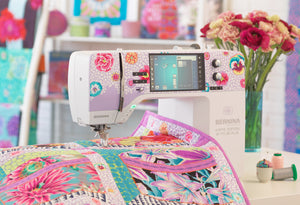

We Love Our Quilting Community
At High Country Quilts we care deeply about community. With our experiences in retail, we know that a store is not only a place to shop but also a place for the community to gather and share. During this busy...


You’re probably here because you saw a fabric print with tiny scissors, thread spools, tape measures, or vintage sewing machines and thought, “I need this, but what would I make with it?” That’s a familiar moment in any sewing shop. A print can feel like pure delight on the bolt, then suddenly turn confusing once you start thinking about drape, seam placement, durability, and whether it belongs in a quilt, a skirt, or a convention-ready costume.
That’s where sewing themed fabric gets especially fun. It isn’t just novelty fabric. It’s fabric that reflects the craft back to the maker. It can be playful, nostalgic, elegant, or surprisingly refined, depending on the print and the base cloth underneath it.
In Atlanta, I meet two kinds of shoppers all the time. One wants to make a cheerful sewing-room accent, maybe a machine cover or quilted tote. The other wants to work a notion print into cosplay, streetwear, or a convention accessory without it looking childish. Both are looking at the same shelf. They just need help reading the fabric correctly.
A sewing themed print often grabs you before you’ve even touched it. Maybe it has old-fashioned dress forms and pin cushions. Maybe it has clean black line drawings of shears and buttons. Maybe it’s packed with tiny measuring tapes that almost read as a geometric pattern from a distance.

What makes these prints worth talking about is the way they connect identity and craft. If you quilt, sew garments, alter costumes, or teach children to sew, the fabric itself becomes part of the story. A tote made from button-print cotton says something different from a plain canvas tote, even if the pattern is identical.
That instinct to choose expressive cloth isn’t new. The long history of quilted fabrics shows how people have used stitched textiles for protection, status, comfort, and symbolism across centuries. Quilted fabrics began in ancient Egypt, appeared as royal garments in 5th-century China, spread into medieval Europe through the Crusades, and became an everyday household craft in America by the 18th century, where quilt patterns such as Log Cabin carried meanings of home and warmth, as described in this history of quilted fabrics.
Sewing themed fabric works best when it feels personal, not gimmicky.
Some prints are obvious. They feature sewing machines, thimbles, pins, scissors, buttons, mannequins, and thread cones. Others are more subtle and often more versatile. A repeat of stitched lines, ruler marks, or tailor’s grid motifs can read almost like a classic geometric.
A few examples you might spot in a shop:
Quilters like these prints because they can anchor a whole project. One strong sewing motif can become the focal fabric for a gift, wall hanging, retreat bag, or class sample. Cosplayers and costume makers like them for a different reason. They can create a self-aware detail. A lining, apron panel, bustle pocket, or sewing-kit prop in a themed print can add personality without overwhelming the character design.
That’s the sweet spot. Sewing themed fabric can be sentimental or smart, loud or understated. The trick is learning how to read the print, then matching it to the right material and project.
The first skill to build is visual vocabulary. If you can describe the print clearly, you can shop faster, substitute better, and avoid buying fabric that looks charming folded but chaotic once it’s cut.

Some motifs dominate this category because they read instantly.
A sewing themed fabric can say “happy craft room,” “heritage maker,” or “fashion-forward costume detail” depending on its artwork.
Here’s a quick mental sorting system:
| Style | What it looks like | Where it shines |
|---|---|---|
| Realistic illustration | Detailed scissors, thread, machines | Aprons, gifts, sewing-room decor |
| Vintage reproduction | Aged ads, retro labels, old motifs | Quilts, machine covers, nostalgia projects |
| Whimsical cartoon | Bright colors, playful scale, simplified shapes | Children’s items, fun bags, casual accessories |
| Graphic modern | Line drawings, clean repeats, limited palette | Apparel accents, lining, minimalist projects |
When readers get stuck, it’s usually because they’re mixing up theme with style. A spool print can be whimsical or elegant. A sewing machine print can look antique or modern. Don’t just ask, “Do I like sewing motifs?” Ask, “What mood is this print creating?”
If the print already feels busy on the bolt, simplify the pattern you pair it with.
Small motifs behave very differently from large ones. Tiny scattered buttons can blend into patchwork. Oversized dress forms need room to breathe. If you’re making quilt blocks, pocket pieces, collar stands, or small pouches, a large-scale print may lose its best features when chopped into narrow shapes.
A useful habit in the shop is to step back. Hold the bolt at arm’s length. Then move close and inspect one repeat. From a distance, ask whether it reads as texture or picture. Up close, ask whether the key motif will survive your pattern pieces.
Printed cottons became much easier for everyday sewers to access in the early 19th century after Eli Whitney’s 1793 cotton gin made cotton processing 10 times faster, and the rise of commercial paper patterns in the 1860s helped make sewing with varied themed prints more available beyond wealthy households, according to this overview of cotton and sewing pattern history.
If you want to see how print choice changes a finished project, this quick video is worth a look before you buy yardage.
When you’re shopping online, search in layers instead of using one broad phrase.
Try combining:
That small change saves time. It also helps you separate cute novelty prints from fabrics that can support the project you want to make.
Once you love the print, turn your attention to the cloth itself. Many projects encounter difficulties here. A charming motif printed on the wrong base can make a tote too limp, a skirt too stiff, or a costume panel too fragile.

Most sewing themed fabric appears on quilting cotton, and that’s a good starting place because it’s stable, easy to cut, and friendly for beginners. But themed prints also show up on canvas, flannel, poplin, cotton-linen blends, and occasional knit bases.
If you’ve ever bought a print online and been disappointed when it arrived, the problem was probably not the artwork. It was the base cloth.
Here’s how the common options behave.
This is the standard workhorse. It has body, presses well, and usually behaves nicely under a rotary cutter or shears. It’s ideal for patchwork, quilt backs, pouches, placemats, and many simple garments with structure.
It doesn’t drape like rayon, and it won’t stretch. That’s a strength when you need precision.
These are smoother and often a little crisper in appearance. They can work well for shirts, simple skirts, aprons, and lightweight costume details. If the print is dense and graphic, poplin can make it look sharper.
The tradeoff is feel. Some poplins can seem flatter or less cozy than quilting cotton.
If you find sewing themed fabric on flannel, think softness first. Flannel suits pajamas, receiving blankets, warm quilt backs, and lounge items. It’s less common for sharp-edged accessories because the brushed surface softens the print.
These are the structured options. They’re useful for storage bins, market bags, sewing-machine mats, tool rolls, and sturdy convention totes. A larger motif often looks excellent on canvas because the heavier cloth supports bold design.
For garments, though, canvas can feel rigid unless the pattern is designed for that structure.
These can bring a more grown-up look to a themed print. They wrinkle more, but they offer texture and an easy, relaxed feel for apparel and home sewing. If you want sewing themed fabric that doesn’t read juvenile, this base is worth watching for.
These can be durable and budget-friendly. They’re useful for everyday utility projects, test garments, and some decor items. They may not press as crisply as pure cotton, and hand feel can vary a lot.
Practical rule: For your first project in a new print, choose the base cloth you already know how to sew.
| Fabric Type | Key Characteristics | Best for Quilting | Best for Apparel | Best for Cosplay & Accessories |
|---|---|---|---|---|
| Quilting cotton | Stable, breathable, easy to cut and press | Excellent for piecing, blocks, borders, binding accents | Good for aprons, skirts, simple tops with structure | Good for linings, panels, accessories, some costume details |
| Poplin or broadcloth | Smooth surface, crisp look, light to medium body | Fine for simple quilt accents, less common for full quilts | Good for shirts, aprons, simple dresses | Good for clean costume details and lightweight props |
| Flannel | Soft, brushed, warm, slightly thicker feel | Very good for cozy quilts and backs | Good for sleepwear and lounge pieces | Limited, best for soft accessories rather than structured wear |
| Linen or linen blend | Textured, breathable, relaxed look | Useful as accent fabric rather than full patchwork | Very good for tunics, tops, and home-sewn apparel | Good for rustic or natural-looking costume pieces |
| Canvas or duck | Heavy, sturdy, structured | Useful for quilted utility items, not standard piecing | Limited for most apparel | Excellent for bags, organizers, tool rolls, and structured accessories |
| Poly-cotton blend | Durable, often wrinkle-resistant, variable hand | Good for practical projects | Useful for easy-care garments | Useful for utility accessories and mock-ups |
The biggest misunderstanding is this: print category doesn’t tell you project suitability. “Sewing themed fabric” only describes the design. It doesn’t tell you whether the fabric has drape, stretch, density, or enough body for your pattern.
Before you buy, ask these questions:
In a store, scrunch the fabric lightly in your hand, then let it drop. Does it fall softly or hold shape? Fold one corner over your finger. Does it collapse or stick out? Those two tests tell you a lot before you ever reach the cutting table.
If you’re ordering online, look for fiber content, width, and intended use. If a listing only shows the artwork and says almost nothing about the cloth, slow down. The prettiest print in the world won’t rescue the wrong substrate.
A good project happens when the print scale, fabric weight, and pattern shape all agree with each other. If one of those pieces is off, the finished item usually looks awkward even when the sewing is solid.

Quilters often fall in love with a focal print, then cut it into pieces too small to show what made it special. If your fabric has sewing machines, mannequins, or full motif clusters, give those images room. Use them in block centers, borders, bag panels, or fussy-cut medallions.
Small prints behave differently. A fabric sprinkled with buttons or tiny thread spools can act almost like a texture. That makes it useful in piecing, especially when you want the sewing theme to support the quilt instead of dominate it.
A balanced quilting approach often looks like this:
Garment sewing asks a slightly different question. You’re not only thinking about scale. You’re also watching how the print lands on the body.
Directional prints matter here. If your scissors point upward in one area and sideways in another, the result can look accidental. Large motifs also need placement care around bust, hip, and seat areas. You want the fabric to support the silhouette, not fight it.
A few practical pairings help:
| Project | Print scale | Fabric behavior to look for |
|---|---|---|
| Apron | Medium to large | Stable body and easy pressing |
| Button-up shirt | Small to medium | Crisp but wearable, not stiff |
| Gathered skirt | Small to medium | Enough drape for movement |
| Utility vest or overshirt | Medium | Structure that supports pockets and topstitching |
A great print can still be the wrong print for the pattern piece it lands on.
Beginners often underestimate stress points. A costume may only be worn occasionally, but it still deals with bending, walking, sitting, posing, and repeated seam strain. Decorative fabric has to function like clothing.
For cosplay durability, cotton performs especially well in seam testing. In tests comparing cotton, wool, and silk, cotton showed the highest seam efficiency, and for stressed seams on printed cotton, a more complex seam such as SSn can raise strength by 10 to 20%, while silk and wool can perform less efficiently because of yarn slippage, according to this discussion of seam efficiency and fabric behavior.
That matters when you’re choosing where to place a themed print in a costume.
Sometimes the whole costume shouldn’t be made from the novelty print. Often the strongest result comes from strategic placement.
Silky novelty prints can look beautiful but may shift, slip, and weaken at the seam if the garment takes strain. Wool can be sturdy in other ways but may not give the seam behavior you want for repeated wear in fitted costume areas. If you want crisp motif placement and predictable stitching, cotton remains the easiest place to start.
Choose a medium or large print on cotton or canvas. Let one outer panel showcase the motif. Use a calmer coordinate for pockets and straps.
Pick a small or medium print with good allover distribution. Avoid giant motifs unless you’re ready to cut carefully around the hem and side seams.
Use printed cotton for the visible body and reinforce stress areas with sturdy seam choices. Keep the pockets and ties in solids or a coordinate so the main fabric gets attention without becoming noisy.
The best sewing themed projects don’t just use cute fabric. They respect the behavior of the cloth, the size of the print, and the life the item will have once it leaves the cutting table.
Printed fabric rewards planning. That’s especially true when the print is directional, conversational, or built around motifs you want people to notice. Random cutting can make even good fabric look clumsy.
Fussy cutting means isolating and placing a motif exactly where you want it. Quilters use it for block centers. Garment sewers use it for pockets, cuffs, yokes, or bodice fronts. Costume makers use it when a single image needs to land in a visible, intentional spot.
A simple method works well:
Not every project needs perfect matching. In fact, many busy allover prints don’t benefit much from the extra effort. But for center fronts, bag exteriors, shirt plackets, and large pocket joins, matching can make the work look much more polished.
Use this order:
If the print has text, machines, or rulers, tiny mismatches show quickly. On scattered mini motifs, they usually disappear.
Match the print where the eye naturally pauses. Let the side seams be less perfect if that saves fabric.
Directional sewing themed fabric has an up and down. Machines sit upright. Scissors point one way. Text reads correctly only from one direction. This affects layout more than beginners expect.
Check these spots before cutting:
If you’re using a directional print in patchwork, decide early whether all motifs must face one way. That choice affects yardage efficiency and block rotation.
The busier the print, the less your topstitching may show. Sometimes that’s helpful. Sometimes it hides beautiful construction. Decide what role you want the stitching to play.
A practical guide:
| Situation | Better choice |
|---|---|
| Busy multicolor print | Thread that blends with the background color |
| Graphic black-and-white print | Deliberate contrast if you want visible structure |
| Fine cotton print | Universal needle for general sewing |
| Slippery or tightly woven print | Sharper needle and slower stitching pace |
If the fabric puckers, don’t assume the cloth is bad. Check needle condition, thread tension, stitch length, and whether you’re pulling the fabric as it feeds.
Occasionally the motif looks straight, but the fabric grain doesn’t. Or the selvedge suggests one thing while the print says another. That’s frustrating, especially with novelty fabrics.
When it happens:
The biggest waste usually comes from panic cutting. Slow planning saves yardage, especially with directional or large-scale novelty prints. Before you cut, identify your hero areas, your hidden areas, and your “doesn’t matter much” areas. Then place your pattern pieces accordingly.
That one habit separates a fabric stash regret from a project you’re proud to show off.
You spot a print covered in tiny scissors, thread spools, and dress forms. It looks perfect for a retreat tote, a quilt border, or even a cosplay lining that gives a costume a private little joke. Then you open the listing and hit the usual wall. No fiber content, no clear scale photo, no note about care, and no clue whether the base cloth is crisp like quilting cotton or limp like costume-bin broadcloth.
That sourcing gap is real. In 2025, searches for “cosplay sewing fabric” on sites like Etsy showed 40% growth, yet only 10% of listings specified fiber content or care instructions suitable for repeated wear, according to this review of the fabric sourcing gap for themed sewing projects.
For Atlanta sewists, that matters in two different ways. Quilters need repeatable color, dependable cuts, and prints that play nicely with solids from one block to the next. Cosplayers need more from a fabric than a cute surface. The cloth has to press cleanly, move with the body, and survive long convention days, quick repairs, and packed travel.
A strong listing answers the questions you would ask at the cutting counter. A weak one sells the artwork and leaves the fabric itself a mystery.
Check for these details before you buy:
One more tip from the shop floor. If a seller cannot tell you what the fabric is made of, save that listing for a wall hanging or stash inspiration board, not a wearable project.
These shops often provide the best technical descriptions. You are more likely to find the substrate named clearly, matching coordinates, and useful cut options such as fat quarters, half yards, or full-yard increments. For quilters, that makes collection planning easier. For cosplay sewists, it reduces the risk of ordering a print on the wrong base fabric.
Marketplace platforms are great for unusual art and hard-to-find novelty themes. They reward careful reading. Check whether the seller describes the actual cloth, not just the design. If you are making a fitted costume piece, ask about opacity, stretch, and how the fabric behaves under steam. Those details matter more than a pretty thumbnail.
Custom printing gives you control, which can be wonderful for guild gifts, one-of-a-kind accessories, or cosplay details that need a very specific motif. It also asks more of you. The print is only half the choice. The fabric base acts like the foundation of a house. Pick the wrong one and the whole project feels off, even if the artwork is excellent.
Local shopping still solves problems faster than a screen. You can feel drape in your hands, compare two reds in real light, and decide whether a print belongs in a quilt, a camp shirt, or the inside of a prop bag. Around Atlanta, that matters because many makers work across categories. One week it is a traditional block swap. The next week it is Dragon Con prep and a deadline that leaves no room for guessing.
A good local shop also helps with speed. If you are building cosplay and need cleaner seam assembly, you can pair a novelty print with the right lining, interfacing, or stabilizer in one trip instead of waiting through two correction orders.
Skip “Is this good quality?” and ask questions that produce usable answers:
Those questions work like a pattern adjustment. They turn a vague maybe into a clear yes, no, or not for this project.
If you sew across categories, keep a simple sourcing notebook. Write down the seller, base fabric, width, and how it behaved after washing and pressing. That record becomes especially helpful when you branch into specialty fibers or mixed-material builds. Even care references outside standard quilting cotton can sharpen your buying decisions. A guide on how to wash bamboo clothing is a good reminder that fiber type changes everything from prewash planning to long-term wear.
A finished project keeps teaching you after the final seam. Some fabrics soften beautifully. Some prints stay crisp. Some need gentle handling from the first wash onward. Good care protects your time as much as your materials.
For quilting cotton and many apparel-weight cottons, prewashing is often the safest route if the finished item will ever be laundered. It helps you spot color issues, softens the fabric, and reduces surprises later. For structured bags or projects where you want every bit of body, some sewists skip prewashing and rely on spot cleaning instead.
Cosplay pieces need their own plan. If the item includes interfacing, trim, painted areas, or mixed fibers, test a scrap sandwich first. Don’t guess. A quick sample wash can save a finished costume.
If you work with specialty plant-based fabrics in other projects, care rules may differ from standard cotton. A helpful example is this guide on how to wash bamboo clothing, which shows how fiber type changes washing choices.
A few habits go a long way:
The push toward more mindful sewing is real, and it has practical value. Efforts such as Sew-cular Exchange aim to reduce U.S. fabric waste, and while there are over 100 general scrap projects available, there’s still a clear need for guidance on turning themed scraps into durable cosplay accessories and quilted items without fraying or being discarded, as noted in this discussion of scrap projects and fabric waste reduction.
That’s good news for anyone who fussy-cuts. Your leftovers are often the most interesting pieces in the room.
The point isn’t to save every thread forever. It’s to recognize when a motif scrap still has design value. A single little spool cluster might be useless in a garment panel and perfect on a needle case flap.
You are standing at your cutting table with a sewing-themed print you have been saving for months. The motifs are too charming to waste, but too specific to use carelessly. That hesitation is common, especially when you sew across more than one world, like quilting on Tuesday night and cosplay prep before a downtown Atlanta convention on Saturday.
Atlanta makers have a real advantage here. You can see fabric in person, compare scale and color under shop lighting, and talk through project choices with quilters, garment sewists, and costume builders who deal with the same questions all the time. A novelty print that feels tricky on the bolt often makes perfect sense once you match it to the right job.
Start small, but start with purpose.
A sewing-themed fabric can become a quilt label, a class tote, a machine mat, a convention apron, a pocket facing, or the hidden lining inside a cosplay piece that feels like a private joke between you and the garment. For quilters, that might mean centering one motif like a focal block. For cosplayers, it might mean using the print where bulk stays low and seams stay efficient, such as a yoke lining, cuff facing, or organizer panel inside a prop bag.
That is where community helps most. Someone in an Atlanta class may point out that your favorite print works better as trim than as yardage. Another maker may show you how to place motifs so you cut less and keep cleaner seam lines. Good advice saves fabric, time, and frustration.
If you are ready to turn inspiration into a real project, visit Famcut.com to explore sewing resources, connect with the Atlanta-area sewing community, and find your next quilting, cosplay, or fabric-focused class.
At High Country Quilts we care deeply about community. With our experiences in retail, we know that a store is not only a place to shop but also a place for the community to gather and share. During this busy...

Hi! We’re Adam and Renee Wheaton, the new owners of High Country Quilts! For more than 40 years, we’ve owned and operated vacuum and sewing businesses. Following in Renee’s father’s footsteps after he retired from All Discount Vacuum and Sewing in Colorado...


Leave a comment