

We Love Our Quilting Community
At High Country Quilts we care deeply about community. With our experiences in retail, we know that a store is not only a place to shop but also a place for the community to gather and share. During this busy...


A creative mind thrives in an organized environment, yet a sewing room can quickly become a beautiful mess of fabric, thread, and notions. When piles of projects and scattered tools start to hinder your creativity rather than inspire it, it's time for a change. This comprehensive guide moves beyond generic advice to offer specific, actionable sewing room organization ideas that address the unique challenges sewers and quilters face. We will explore seven powerful strategies designed to transform cluttered corners into functional, inspiring zones of productivity.
Each idea is a practical blueprint for taking control of your supplies. You'll learn how to implement systems like a pegboard wall for easy-to-grab tools, vertical solutions for your fabric stash, and zone-based layouts that create a seamless workflow from cutting to pressing to final stitch. As you begin the transformation from chaos to a creative haven, you can also explore valuable storage solutions for small spaces that can inspire your sewing room setup.
Whether you're working in a dedicated studio or a small nook, these detailed plans will help you build a space that works as hard as you do. Get ready to create a sewing room that not only looks incredible but also makes every moment you spend on your craft more enjoyable and efficient.
A pegboard wall is a cornerstone of many highly functional creative spaces, and for good reason. This system uses a perforated hardboard mounted to the wall, creating a versatile grid for hooks, shelves, bins, and other accessories. For sewers, this translates into a customizable, visible, and easily accessible storage solution that takes advantage of vertical space, freeing up valuable work surfaces. It's one of the most effective sewing room organization ideas for keeping frequently used tools within arm's reach.
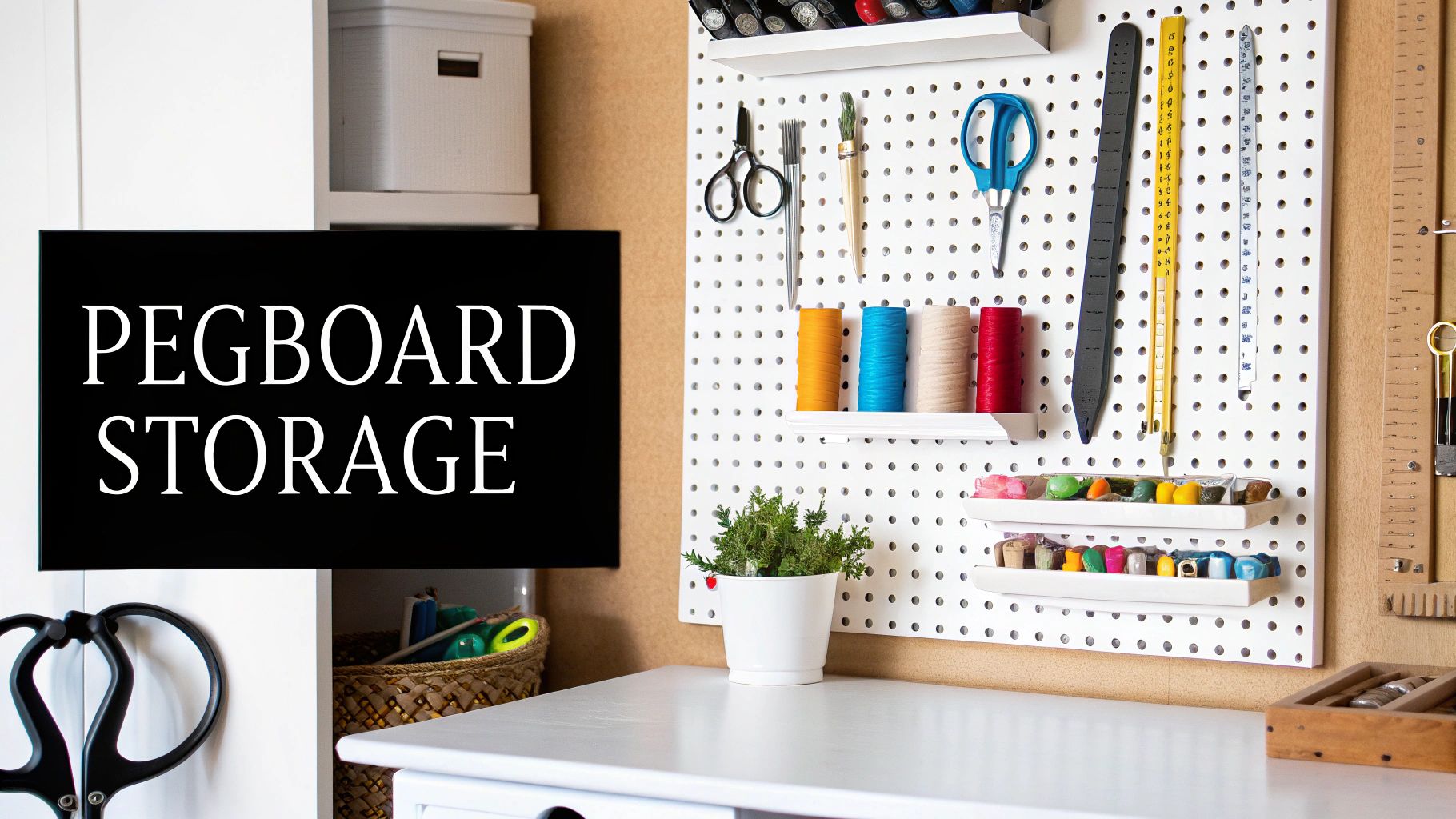
Popularized by brands like IKEA with their SKÅDIS system and industrial-grade options from Wall Control, pegboards can be adapted to any sewing room, from a small corner to an entire studio wall. They are ideal for storing everything from scissors and rotary cutters to thread spools and bobbins. The ability to see all your tools at a glance not only saves time but also reduces the frustration of searching through cluttered drawers for that one specific item.
To get the most out of your pegboard system, consider these practical strategies:
This organization method is perfect for visual thinkers who benefit from having their supplies out in the open rather than hidden away. The system's adaptability means it can evolve with your craft, allowing you to reconfigure the layout as you acquire new tools or start different types of projects.
A well-organized thread collection is not just practical; it can be an inspiring focal point of your creative space. Arranging your thread spools in a color gradient, like a rainbow, is an intuitive and visually stunning method. This system organizes threads by their position in the color spectrum, making it incredibly easy to find the exact shade you need for any project. It’s a beautiful and functional approach that transforms a simple supply into a piece of decor, making it one of the most aesthetically pleasing sewing room organization ideas.
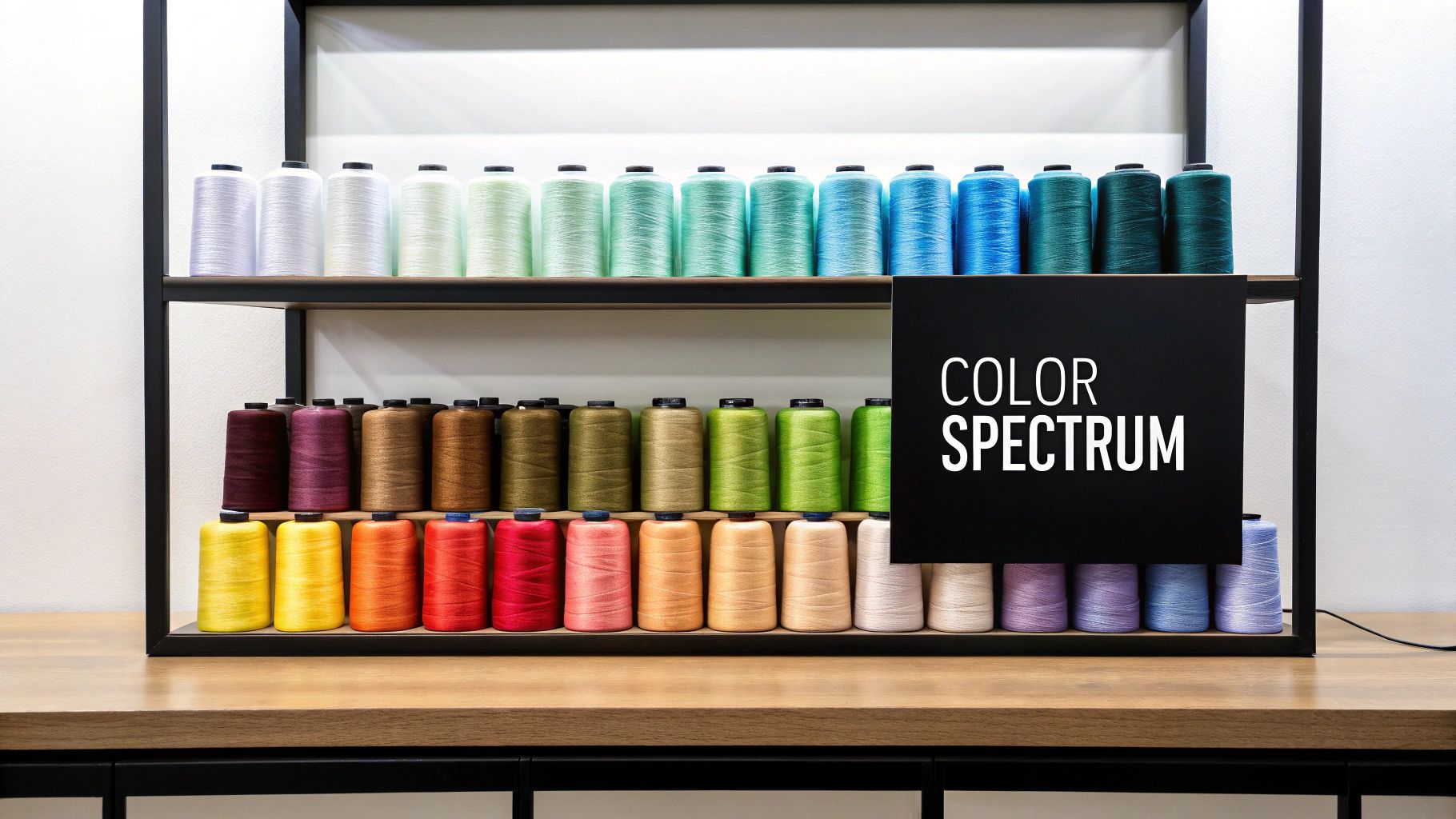
Popularized by professional quilters, Instagram sewing influencers, and thread manufacturers like Aurifil in their displays, this method works with any storage solution. Whether you use a wall-mounted thread rack, clear storage boxes, or dedicated drawer inserts, the gradient principle applies. The system excels at helping you quickly visualize your color options, assess your inventory at a glance, and select complementary or contrasting shades with confidence, saving you time and sparking creative color combinations.
To effectively create a beautiful and functional thread gradient, consider these strategies:
This organization method is perfect for visual creators, especially quilters and embroiderers, who work extensively with color. It turns the often-tedious task of finding the right thread into an enjoyable part of the creative process, ensuring your supplies are as inspiring as they are organized.
A rolling cart is the ultimate flexible assistant in a sewing room, offering a mobile storage solution that adapts to your workflow in real time. These multi-tiered carts on wheels allow you to keep essential tools and supplies close at hand, whether you're cutting fabric, sitting at your sewing machine, or working at your ironing station. This mobility is a key advantage, as it eliminates the need to constantly get up and search for items, creating a more efficient and enjoyable sewing process. It's one of the most dynamic sewing room organization ideas for those who work in different zones within their space.
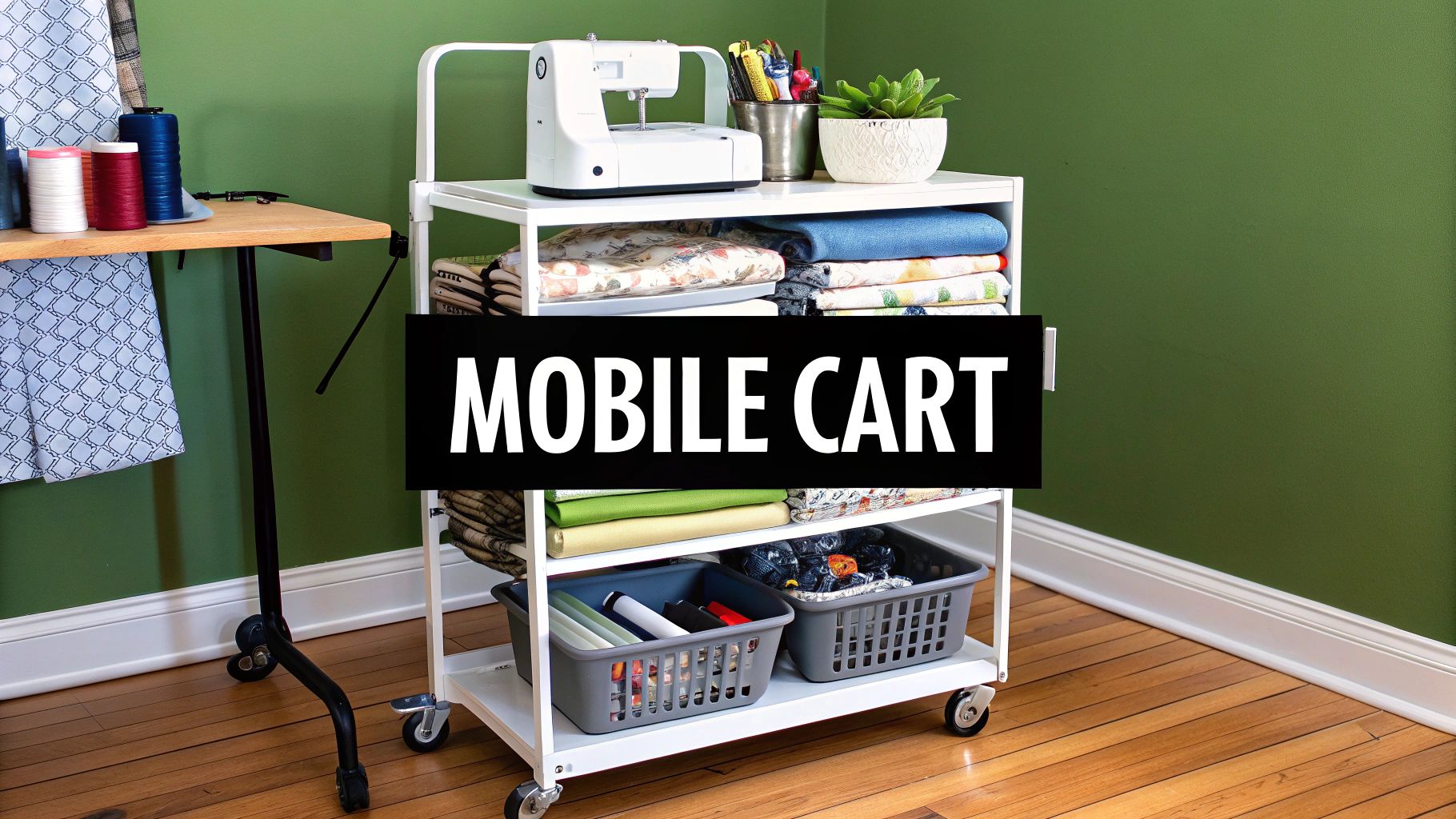
This concept has been widely popularized by IKEA's versatile RÅSKOG cart, which crafters have universally adopted. However, the options are extensive, ranging from specialized sewing furniture by brands like Arrow and Kangaroo Kabinets to repurposed medical or utility carts that offer robust storage. The core benefit is the ability to create a dedicated, portable station for specific tasks or projects, bringing order and convenience directly to your fingertips without sacrificing permanent surface area.
To maximize the functionality of a rolling cart in your sewing room, consider these strategic tips:
This organization method is perfect for sewers who have a multi-station setup or limited permanent storage. The ability to roll a project's entire set of supplies out of the way when you need to clear your main table is invaluable, especially in a multi-purpose room. It’s an adaptable solution that keeps your sewing momentum going, no matter where you are in your creative process.
A transparent container system is a simple yet profoundly effective organization method that champions visibility. This approach uses clear, see-through containers, bins, and drawers, allowing you to instantly identify contents without needing to open or unstack them. For sewers, this means less time spent searching for a specific bobbin color or a particular type of interfacing, making it one of the most practical sewing room organization ideas for maintaining a tidy and efficient workflow.
This method has been popularized by home organization giants like The Container Store and is a favorite among professional organizers and crafters. From stackable plastic shoe boxes holding notions to large IRIS drawer systems beloved by quilters for organizing fabric scraps by color, the principle remains the same: what you can see, you will use. Glass mason jars are another excellent option for displaying beautiful items like buttons and trims, turning your storage into part of the room's decor.
To effectively implement a transparent container system, consider these key strategies:
This organization method is ideal for anyone who finds "out of sight, out of mind" to be a major obstacle to creativity. By keeping your supplies visible and accessible, you not only stay organized but are also more likely to be inspired by the materials you already own, preventing duplicate purchases and encouraging you to use your stash.
Adopting a zone-based organization system is like applying industrial workflow efficiency to your creative space. This method involves dividing your sewing room into distinct functional areas, with each zone dedicated to a specific activity such as cutting, pressing, sewing, or storing supplies. By equipping each zone with all the necessary tools for that particular task, you create a seamless and logical workflow, minimizing movement and maximizing productivity. It's one of the most strategic sewing room organization ideas for those who work on complex or multi-stage projects.
This systematic approach is standard practice in professional tailoring studios, costume shops, and quilting spaces, but it is just as effective in a home sewing room. For example, a "cutting zone" would have a large cutting mat, rotary cutters, and rulers, while a "pressing zone" would feature an ironing board, iron, and pressing tools. Keeping everything you need for a specific step of the process in one place eliminates the time wasted searching for tools and helps maintain focus on the task at hand.
To effectively set up a zone-based system in your sewing room, consider these practical tips:
This method is ideal for sewers who want to establish a more professional and streamlined process. By creating a dedicated space for each part of the sewing journey, you reduce clutter, save time, and can more easily focus on your creativity rather than on managing your environment.
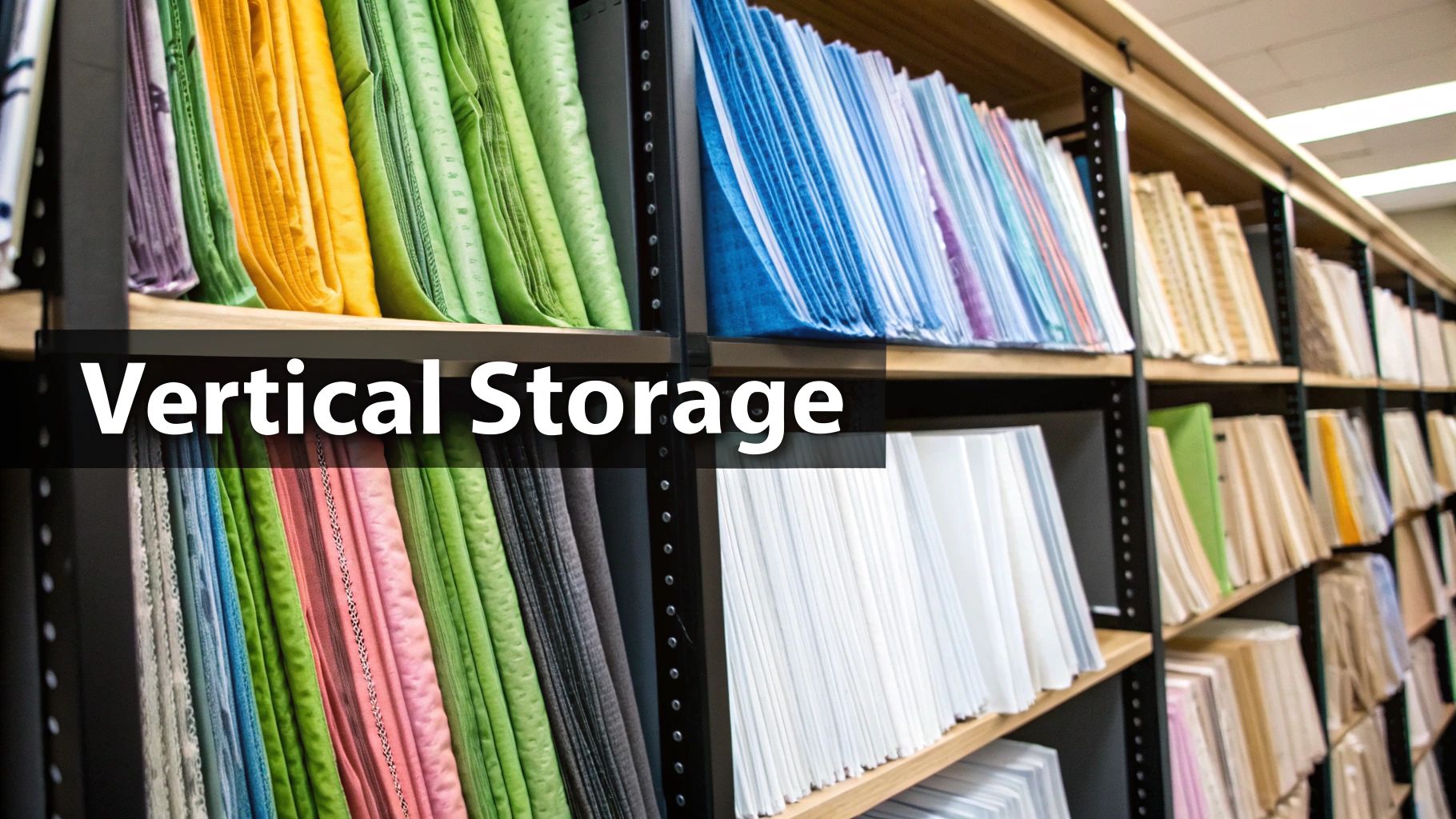
Stacking fabric in piles is a common practice, but it often leads to a frustrating cycle of wrinkled material and forgotten treasures buried at the bottom. A vertical fabric storage system completely transforms this dynamic by storing fabric cuts on their edges, like files in a filing cabinet. This approach allows you to see your entire collection at a glance, making it incredibly easy to find the exact piece you need without disturbing the entire stash. This is one of the most game-changing sewing room organization ideas for managing a growing fabric collection.
Inspired by the efficient merchandising of fabric stores and the meticulous systems of professional costume departments, this method can be adapted for any space. It works wonderfully in deep drawers, on open shelves, or inside cube storage units. By preventing the weight compression that causes deep-set wrinkles in stacked fabric, this system not only keeps your materials in better condition but also significantly speeds up your project preparation time.
To effectively set up a vertical fabric storage system, consider these practical strategies:
This organization method is ideal for sewists who feel overwhelmed by their fabric stash and want a clear, visual inventory. It turns fabric selection from a chore into a delightful experience, much like browsing the shelves of your favorite library or fabric shop.
In spaces where every square inch counts, multi-functional furniture is a game-changing sewing room organization idea. This approach involves selecting or building furniture pieces that serve more than one purpose, combining essential work surfaces with integrated storage. By doing so, you can create a highly efficient and uncluttered environment, even in a small or shared space. This method maximizes utility without sacrificing style, turning your sewing area into a model of smart design.
Leading brands like Koala Studios and Arrow International have perfected this concept with sewing cabinets that feature machine lifts, fold-out extensions, and extensive drawer systems. Other examples include cutting tables built on top of cube shelving, ottomans that open to store fabric, and ironing boards that fold away into sleek cabinets. These clever solutions consolidate your workstation, storage, and seating, which is ideal for anyone looking to maintain a tidy and versatile creative area.
To effectively integrate multi-functional furniture into your sewing room, consider these strategies:
This organization method is perfect for sewers working in compact areas like a guest room corner, a dual-purpose office, or a small apartment. It allows for a fully equipped sewing station that can be neatly packed away, preserving the room's primary function while keeping all your essential supplies organized and ready for your next project.
| Organization System | Implementation Complexity 🔄 | Resource Requirements ⚡ | Expected Outcomes 📊 | Ideal Use Cases 💡 | Key Advantages ⭐ |
|---|---|---|---|---|---|
| Pegboard Wall Organization System | Medium - requires wall mounting and setup | Low - inexpensive materials and accessories | High - flexible, visible, easy access | Spaces with available wall area needing customizable tool storage | Highly adaptable, easy to reconfigure, professional look |
| Thread Organization by Color Gradient | Medium-High - time-intensive initial setup | Medium - requires specific racks or displays | High - intuitive color selection, visually appealing | Users focusing on thread color management and display | Reduces decision fatigue, inspiring aesthetic, quick color matching |
| Rolling Cart Mobile Storage | Low-Medium - simple setup, mobility adds complexity | Medium - cost varies with cart size and features | Medium - mobile, versatile storage | Small or multi-use sewing areas needing flexible supply transport | Mobility, space-efficient, configurable for projects |
| Transparent Container System | Low - straightforward placement and stacking | Medium-High - clear containers can be pricier | High - instant visual inventory, dust protection | All space sizes needing quick content identification | Reduces search time, clean look, protects supplies |
| Zone-Based Organization | High - requires planning and space allocation | Low-Medium - uses existing furniture/tools | High - efficient workflow, reduced movement | Larger spaces or those prioritizing workflow optimization | Increases efficiency, logical setup, scalable design |
| Vertical Fabric Storage System | Medium - requires folding technique and organizing | Medium - needs drawers/shelves and supports | High - fabric preservation, easy browsing | Fabric-heavy users wanting to prevent damage and improve access | Prevents wrinkles, maximizes space, easy inventory management |
| Multi-Functional Furniture Integration | High - custom or specialized furniture needed | High - investment in multi-use pieces | High - maximizes space use, clean appearance | Small spaces needing multifunctional solutions | Space-saving, professional look, specialized features |
Transforming a cluttered sewing space into a streamlined creative studio is a journey, not a destination. Throughout this guide, we've explored a wealth of sewing room organization ideas, from the visual efficiency of a pegboard wall system to the mobile convenience of a rolling cart. The ultimate goal is to craft an environment where your tools, fabrics, and notions are not obstacles but extensions of your creative process. An organized space reduces the time spent searching and increases the time spent sewing, allowing your inspiration to flow without interruption.
The most effective organizational systems are those tailored to your specific habits and projects. Remember the core principles we've discussed:
Feeling inspired but not sure where to begin? Start small. Don't feel pressured to overhaul your entire room in a single weekend. Instead, choose one area that causes the most frustration and tackle it first.
Ultimately, a well-organized sewing room does more than just look neat; it becomes a sanctuary for creativity. By eliminating physical and mental clutter, you create the headspace needed to design, stitch, and bring your most ambitious projects to life. Your studio should be a place that energizes and inspires you every time you walk in, with every tool and piece of fabric ready for your next masterpiece.
Ready to equip your newly organized creative space with the finest tools and materials? Visit High Country Quilts to explore our curated selection of premium fabrics, notions, and state-of-the-art BERNINA sewing machines. Let our expert team help you find the perfect additions to complement your streamlined studio and elevate your next project.
At High Country Quilts we care deeply about community. With our experiences in retail, we know that a store is not only a place to shop but also a place for the community to gather and share. During this busy...

Hi! We’re Adam and Renee Wheaton, the new owners of High Country Quilts! For more than 40 years, we’ve owned and operated vacuum and sewing businesses. Following in Renee’s father’s footsteps after he retired from All Discount Vacuum and Sewing in Colorado...


Leave a comment