

We Love Our Quilting Community
At High Country Quilts we care deeply about community. With our experiences in retail, we know that a store is not only a place to shop but also a place for the community to gather and share. During this busy...


There’s something deeply satisfying about making something with your own hands. Whether you want to design a whole new wardrobe or just learn how to hem your own pants, that creative spark often starts with a simple search: sewing classes near me. This guide is your roadmap to finding the perfect local class to get you started.
Let's be honest, starting a new skill like sewing can feel a little daunting. While you can find a million videos online, nothing beats having an experienced teacher right there beside you. A great local class offers more than just technical skills; it’s a place to build confidence and meet other people who share your passion.
This guide goes beyond just plugging "sewing" into a search engine. We’re going to walk through how to find, evaluate, and choose the right workshop for you and what you want to accomplish.
Think of this as your personal game plan. By the time you're done reading, you’ll know exactly how to:
I’ve always found that the most valuable part of sewing is the process. Every project is a puzzle with new skills to figure out. Pushing yourself to try that tricky pattern or unfamiliar fabric, even when it’s intimidating, is where the magic really happens.
Your journey from that first wobbly stitch to a finished garment you’re proud of begins with finding the right support. A good class sets you up for success, helping you sidestep common beginner frustrations and turning those inevitable mistakes into lightbulb moments.
Instead of getting lost in a sea of online listings, you’ll have the confidence to pick a class that truly gets you excited to start. This is about making sure your first steps into sewing are fun and rewarding, setting the stage for a creative hobby you’ll love for years.
Let's find your perfect class.
Finding the perfect sewing class is a bit like a treasure hunt. The best spots aren't always the ones with flashy websites or huge advertising budgets. You’ve got to know where to dig to uncover those hidden gems right in your own backyard.
Your first instinct might be to just search "sewing classes near me," and that's a decent start. But to get better results, you have to be a little more strategic. Think like a local! Try more specific phrases in Google Maps like "fabric shop with classes" or even "quilting lessons." This simple tweak can cut through the noise and point you straight to businesses that specialize in teaching. It's interesting to see how local spots get found; much of it comes down to things like optimizing a Google Business Profile, which gives you a peek behind the curtain of local search.
Once you’ve exhausted the usual search engines, it's time to branch out to the places where workshops and one-off classes live.
Think about where creative people hang out, both online and in real life. Platforms like Eventbrite are goldmines for finding unique, short-term workshops. You might stumble upon a weekend-long bag-making intensive or a special evening class on pattern fitting taught by a visiting instructor.
And don't sleep on social media. Jump on Facebook and search for groups like "[Your City] Crafters" or "Sewing Enthusiasts of [Your Town]." People in these online communities are usually more than happy to give you the real scoop on local studios and teachers. That kind of honest, direct feedback is often way more insightful than the polished testimonials you’ll find on a business website.
One of the best-kept secrets for finding amazing classes is your local fabric store. The folks who work there are usually deeply passionate about sewing and know the local scene like the back of their hand. Just striking up a conversation can lead you to a fantastic class you would have never found online.
Don't forget to look right in your own neighborhood. Many local community centers and even libraries offer surprisingly affordable sewing programs for beginners. They might cover the basics, but they're a wonderful, low-pressure way to get your feet wet and connect with other new sewists.
Here are a few other places people often forget to check:
Finally, never underestimate good old-fashioned word-of-mouth. Just ask! Mention to friends, family, or coworkers that you're looking to learn. A personal recommendation might just connect you with a talented private instructor who can give you one-on-one lessons tailored perfectly to what you want to learn. By mixing these digital tricks with some real-world detective work, you’ll get a full picture of all the sewing opportunities hiding just around the corner.
So, you've started Googling "sewing classes near me," and now you're staring at a surprisingly long list of options. It's not a one-size-fits-all world. You'll find everything from intensive courses to quick weekend workshops, each designed for different goals and learning styles.
Picking the right one is about being honest with yourself. Are you looking to finally master your sewing machine and build skills that will last a lifetime? Or are you just hoping to finish a cute tote bag in an afternoon? Your answer will point you in the right direction and make sure you get the most out of your time and money.
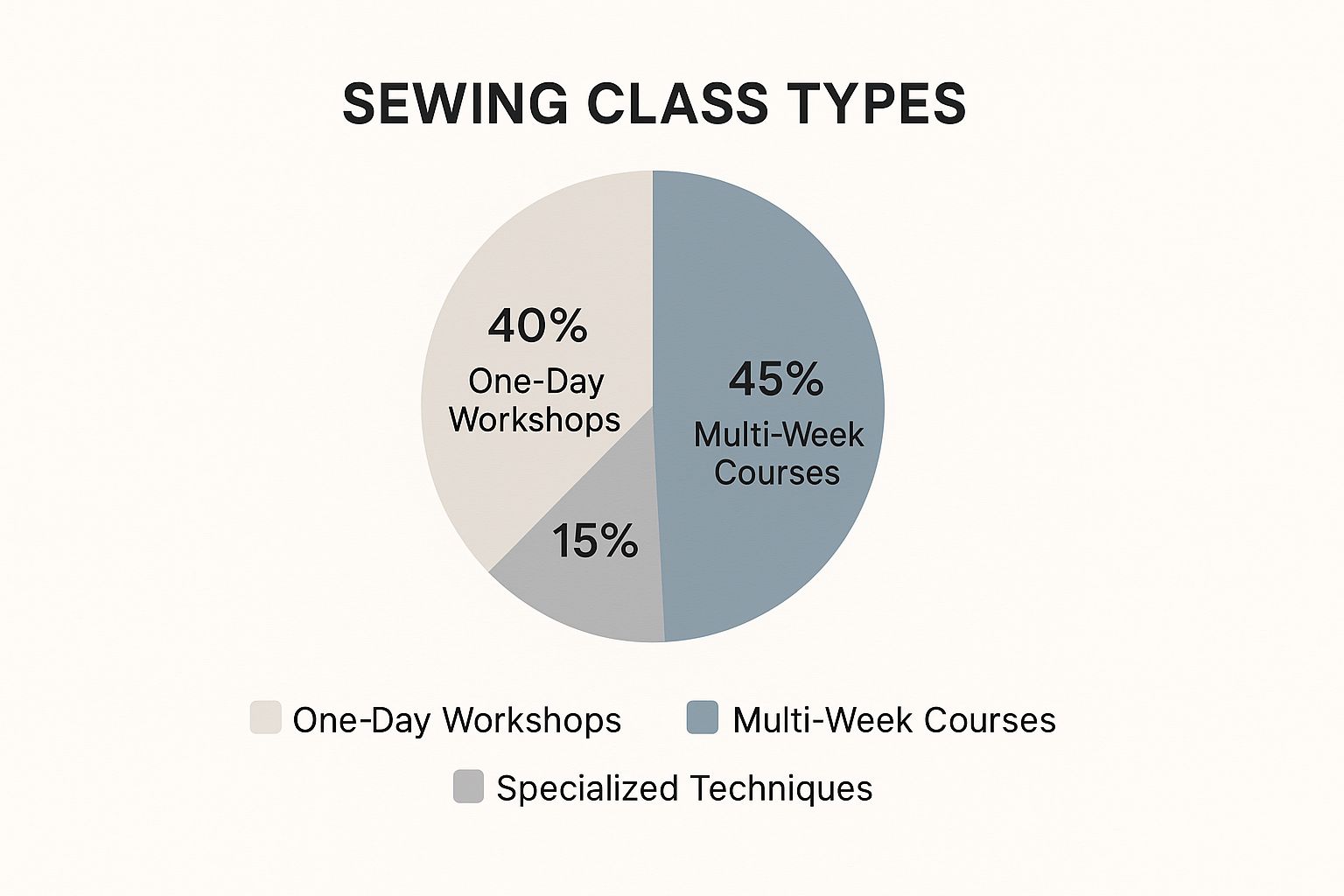
As you can see, most local studios focus on multi-week courses and single-day workshops. These cover the majority of what new sewers are looking for. But those specialized classes are where you can really start to hone your craft later on.
Think of this as your "Sewing 101." These courses are the real deal, usually running for four to eight weeks, and they're built for people who are starting from scratch. The whole point isn't just to make one thing; it's to build a solid foundation, skill by skill.
You'll move through the essentials in a logical order, covering things like:
This is the best route if you're serious about learning to sew the right way. The weekly practice and steady progression really help the knowledge stick, building your confidence one session at a time.
Feeling a little intimidated by a multi-week commitment? A one-day workshop might be perfect for you. These are all about instant gratification. You walk in, and a few hours later, you walk out with a finished project—like a zippered pouch, a simple skirt, or a pair of pajama pants.
These workshops are a fantastic way to just dip your toes in. You can get a feel for sewing and see if you even like it before you sign up for something longer.
The best part of a one-day workshop is that "I did it!" feeling. Creating something real and usable in a single afternoon is a huge confidence booster and often gives you the push you need to keep going.
Once you've got the basics handled, you might find yourself wanting to go deeper. Maybe you're obsessed with the idea of quilting, or you want to learn how to tailor a blazer to fit you perfectly. That's where specialized classes come in.
These classes are for sewers who already have some experience but want to level up. You could find workshops on advanced pattern fitting, lingerie making, or even cosplay construction. They’re usually taught by experts in that specific niche, so you get insights you'd never find in a beginner's course.
The interest in these skills is definitely on the rise. The sewing supplies market was valued at an impressive USD 5.24 billion in 2024 and is expected to grow, which just goes to show how many people are diving into creative DIY projects. You can discover more insights about the sewing supplies market growth and what it means for makers like us.
Choosing a class format can feel overwhelming, so I've put together a quick comparison to help you see the options side-by-side. Think about your schedule, your budget, and what you really want to achieve.
| Class Type | Best For | Typical Duration | Average Cost |
|---|---|---|---|
| Multi-Week Course | Absolute beginners serious about building a strong foundation. | 4-8 weeks (weekly sessions) | $200 - $400 |
| One-Day Workshop | Trying out sewing, learning a single project, or a fun social outing. | 2-5 hours | $50 - $125 |
| Specialized Class | Intermediate/advanced sewers looking to master a specific skill. | 1-3 days | $150 - $500+ |
| Private Lessons | Personalized instruction, tackling a specific problem, or a flexible schedule. | 1-2 hours per session | $50 - $100 per hour |
No matter which path you start on, the most important thing is to just start. Each format offers a unique way to learn and grow, so pick the one that feels most exciting to you right now. You can always try another one later
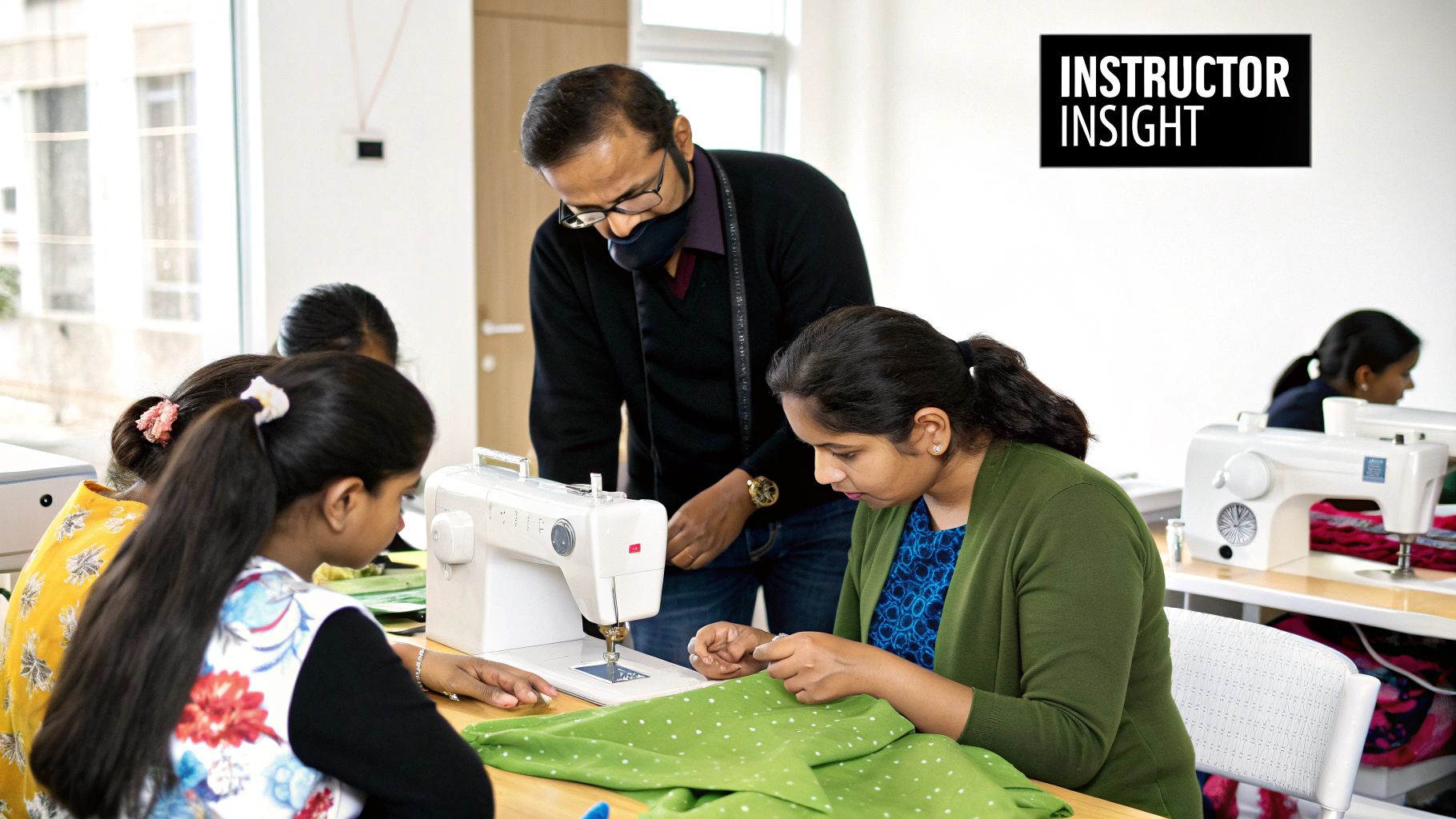
Alright, you’ve got a shortlist of potential sewing classes. Now it's time to play detective. The difference between a class you merely tolerate and one you absolutely love often boils down to the curriculum and, most importantly, the instructor. A fantastic teacher can make even the most intimidating techniques feel totally achievable.
Don't just skim the class description—dig a little deeper. Look for specifics on what you'll actually do. A vague promise to “learn sewing basics” is one thing, but a clear outline saying you'll master threading the machine, sew straight seams, and finish a simple tote bag is far more helpful.
The person leading the class is your guide on this new adventure, so their approach is everything. You're looking for someone who not only has serious sewing skills but also a genuine passion for teaching beginners. Trust me, a skilled artisan isn't always a great teacher, and patience is a non-negotiable trait when you're just starting out.
Most studios have instructor bios on their website. Check them out! Do they specialize in something you're excited about, like garment making, quilting, or even cosplay? Finding a teacher whose expertise lines up with your goals is a huge win. Online reviews are also a goldmine for clues about their teaching style—are they known for being encouraging, super detail-oriented, or a whiz at troubleshooting?
Another huge factor is class size. A smaller group, usually under eight students, means you'll get way more one-on-one attention. That personalized guidance is invaluable when you're trying to figure out why your thread keeps bunching up for the tenth time. Don’t be shy—call the studio and ask about their student-to-teacher ratio.
A great instructor creates a "good enough is good enough" atmosphere. They encourage you to embrace the learning process and not get stuck on tiny imperfections, which is crucial for building confidence and actually finishing projects you're proud of.
Now for the nitty-gritty details that can make or break your experience. A well-run class will have clear policies and a great learning environment. This is where you can really tell the difference between a professional studio and a more casual setup.
Before you hand over your credit card, make sure you get answers to these questions:
Finally, if you can, pop into the studio before enrolling. Is the space clean, well-lit, and organized? A gallery of past student projects on display is a fantastic sign; it shows they're proud of what their students accomplish. Seeing the space in person helps you envision yourself learning there and confirms it's a comfortable and inspiring place to begin your sewing journey.
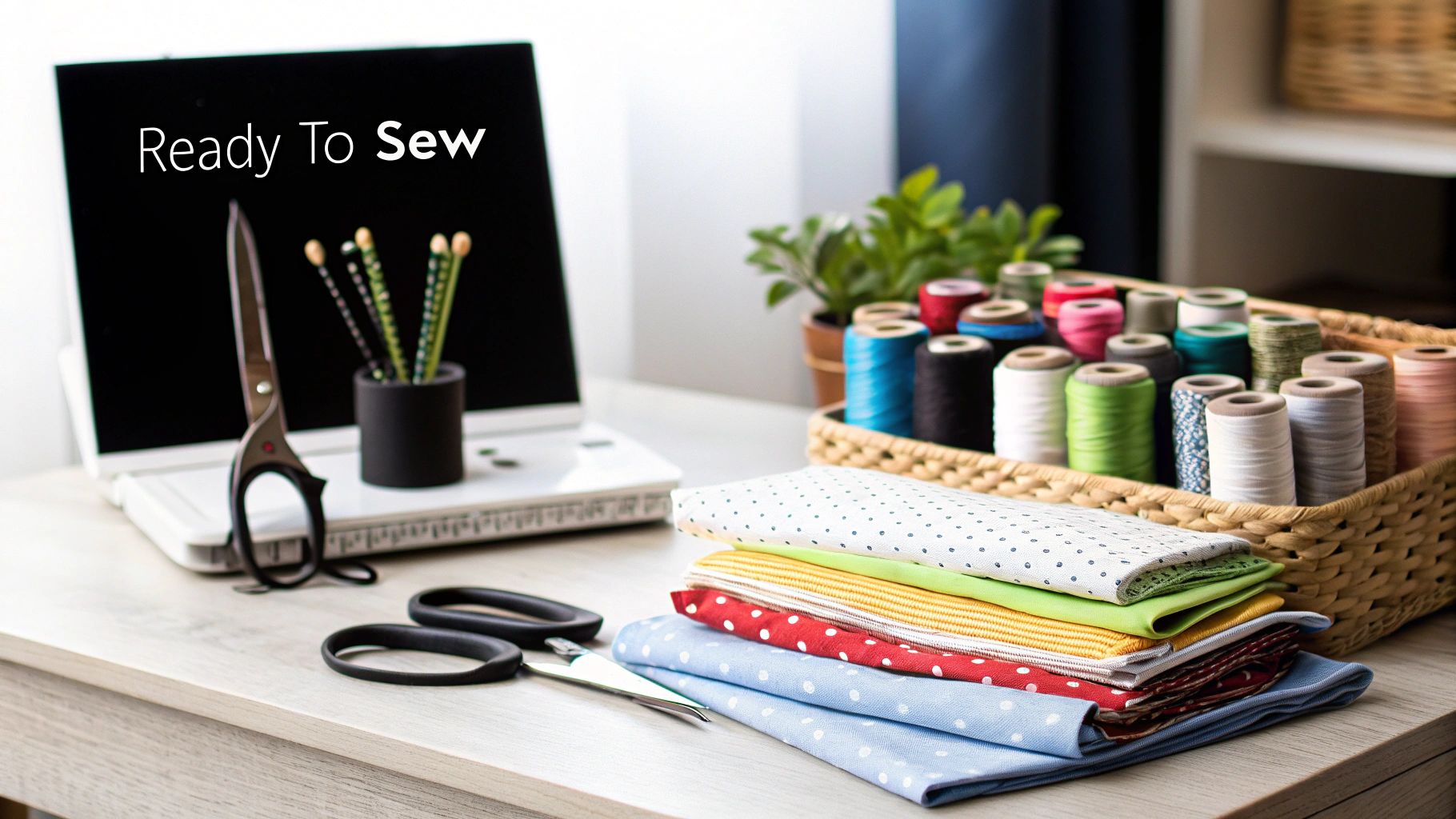
So you've taken the leap and signed up for one of the sewing classes near you—that’s fantastic! Now for the fun part: getting everything ready for your first day. A little prep work can make a world of difference, helping you walk in feeling confident instead of flustered.
The very first thing you should do is figure out exactly what you need to bring. Before you start buying up the whole fabric store, check the class description or shoot the studio an email. Most classes designed for beginners will provide all the major equipment, especially the sewing machines themselves. This is a huge plus because it lets you get your feet wet without a massive upfront investment.
It's pretty common for studios to supply machines, particularly as more people are getting into home sewing. The U.S. sewing machine market is actually projected to hit USD 1989.56 million in 2025, a trend driven by this growing interest. You can read the full research about the sewing machine market to get a feel for how this boom supports local classes. Studios often have popular, user-friendly models, which is perfect for getting you comfortable before you decide to buy your own machine.
Even if the big stuff is covered, you’ll likely need to bring a small personal kit. The basics usually include:
Getting a clear list from the instructor ahead of time means you'll show up with exactly what you need, without wasting money on tools the studio already has waiting for you.
Beyond any physical tools, the most important thing to bring with you is the right attitude. Learning to sew is a journey, and mistakes aren't just part of it—they're how you learn. Nobody expects your first seam to be perfectly straight, so don't put that pressure on yourself.
"My biggest piece of advice is to view this whole thing as an ongoing, continually improving process... THIS IS SUPPOSED TO BE FUN. You are making pants because you enjoy the actual time you spend sewing. Actually enjoy yourself! This means doing the best you can to resolve any fit issues, but also learning when to say 'good enough'."
Try to embrace a "good enough" mindset, especially at the beginning. Your instructor is there to help, so never hesitate to ask a question, no matter how small or "silly" you think it is. The goal of your first class isn't perfection. It's about learning something new, having a good time, and leaving with the spark to keep creating.
You've done the research and have a few promising studios on your list. Awesome! But it's totally normal to still have some questions floating around. What’s this really going to cost? Am I ready for the next level? Let’s clear up some of the most common uncertainties people have before they sign up.
The first question is almost always about the price tag. While it definitely varies from city to city, you can generally expect a multi-week beginner's course to run somewhere between $200 and $400. If you're not ready for that kind of commitment, look for a single-project workshop. These are a great way to dip your toes in, and they usually cost between $50 and $125.
Keep in mind that the fee often covers more than just the teacher's time. Many studios include the use of their high-quality sewing machines, access to specialty tools like sergers, and sometimes even the fabric and thread for your first project.
Moving up from the beginner level is a huge milestone! You're probably ready for an intermediate class once you feel comfortable with the basics and don't need an instructor hovering over you for every little step.
You’re likely ready to level up if you can:
The goal here is confidence, not perfection. If you've got the fundamentals down and you're getting excited to learn more complex skills—like putting in zippers, working with slinky fabrics, or trying a more detailed pattern—that’s your cue. It's time to challenge yourself.
You can find a tutorial for just about anything online, but nothing quite replaces the experience of a live, in-person class. The biggest difference is the immediate, personalized feedback. When your thread suddenly turns into a tangled mess or a pattern diagram looks like gibberish, having a teacher who can literally point to the problem is a game-changer.
There's also a real sense of community that you just don't get from a screen. You'll be learning alongside other people who are just as excited (and maybe a little nervous) as you are. Sharing those "aha!" moments and getting inspired by what everyone else is making is a huge motivator and makes the whole process way more fun.
This hands-on, community-driven approach is a big reason why home sewing has seen such a resurgence. It's not just about saving money; it's about sustainable fashion, creativity, and connecting with others. The sewing machine market itself is valued at around USD 4.65 billion as of 2025 and is only expected to grow. If you're curious, you can discover more insights about sewing machine market trends on Mordor Intelligence and see how this boom is supporting local craft communities.
It’s tempting to want to sew a ball gown on day one, but starting simple is the secret to success. A good beginner's course will have you making things that focus on the absolute essentials, like sewing straight seams and basic construction.
Think along the lines of:
These projects are chosen for a reason! They teach you core skills that you'll use in everything you make later on, but in a way that isn't overwhelming. You get to walk away with something cute and functional that you can actually be proud of.
Don’t get stuck on tiny imperfections. Finishing a project, even with a few wonky stitches, is a huge win. The goal is to build confidence and enjoy the process, not to achieve flawless results on your very first try.
Seriously, embrace this mindset. It lets you celebrate how far you've come and keeps you excited to learn more. Every project is just a stepping stone to the next one.
Here at Famcut.com, we're all about helping you get started on your creative path, whether you're into cosplay, quilting, or just making your own clothes. We've got a great community and all the high-quality materials you need to make something amazing. Come explore our resources and join the fun
At High Country Quilts we care deeply about community. With our experiences in retail, we know that a store is not only a place to shop but also a place for the community to gather and share. During this busy...

Hi! We’re Adam and Renee Wheaton, the new owners of High Country Quilts! For more than 40 years, we’ve owned and operated vacuum and sewing businesses. Following in Renee’s father’s footsteps after he retired from All Discount Vacuum and Sewing in Colorado...


Leave a comment