

We Love Our Quilting Community
At High Country Quilts we care deeply about community. With our experiences in retail, we know that a store is not only a place to shop but also a place for the community to gather and share. During this busy...


When you're trying to decide between a serger vs sewing machine, the simplest way to think about it is this: a sewing machine is for construction, and a serger is for finishing. Your sewing machine is the tool you'll use to actually build your projects—joining fabric pieces, putting in zippers, and making buttonholes. A serger, on the other hand, is a specialist that creates clean, durable, professional-looking edges that stop fabric from fraying, especially on tricky knit fabrics.
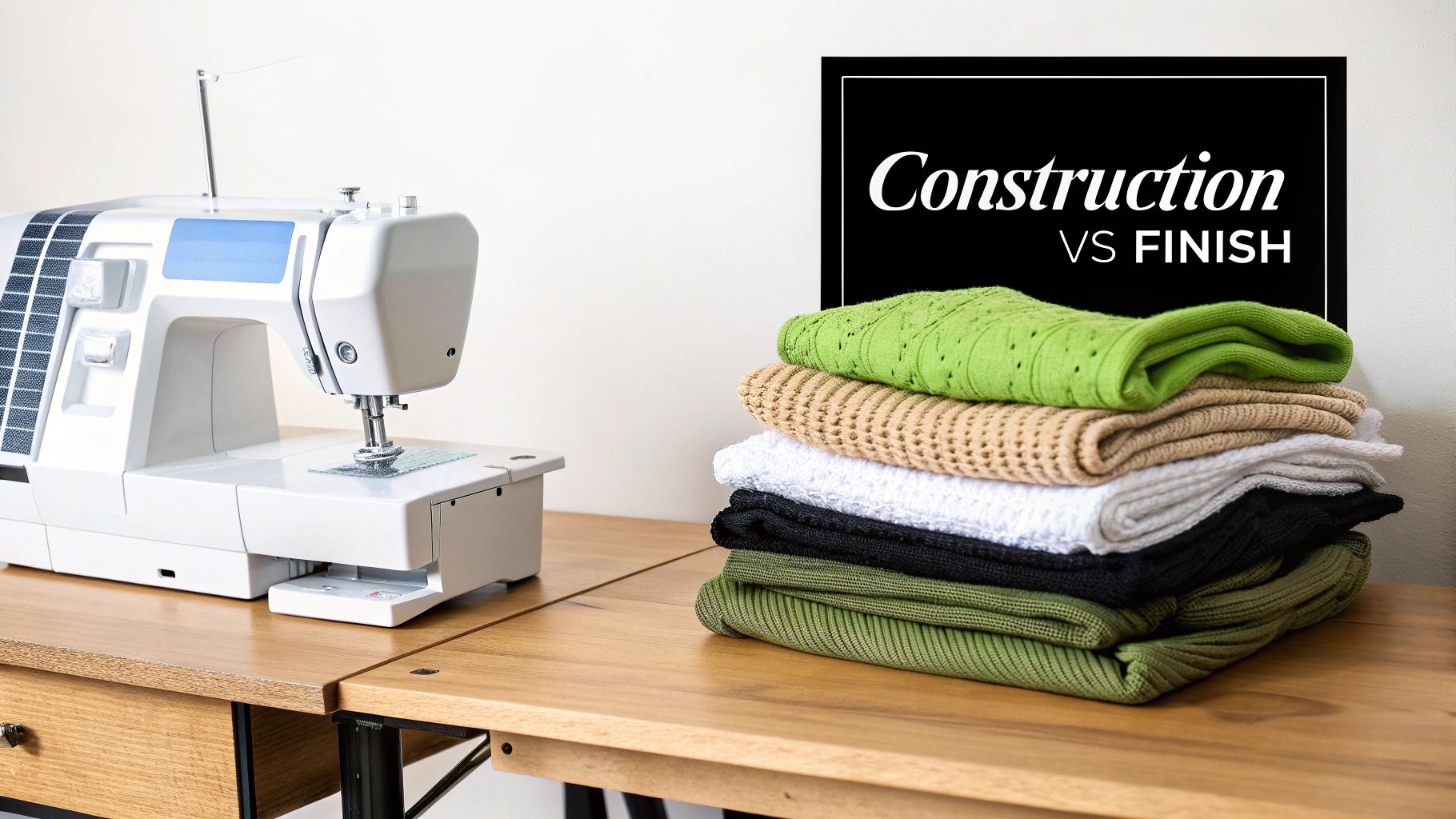
It's best to see these two machines as partners in your sewing room, not rivals. A sewing machine is the foundational tool for almost any project you can imagine. It handles all the primary structural work, whether you're piecing quilt blocks or assembling a dress from a pattern.
A serger, which you'll often hear called an overlocker, is the machine that delivers that "store-bought" finish. Its main job is to wrap the raw edges of fabric in a neat, looped thread stitch. This not only prevents unraveling but also creates a polished look inside a garment. It's the secret weapon behind the durable, stretchy seams you find on everything from t-shirts to activewear.
You can absolutely sew without a serger, but you can't build most projects from scratch with only a serger. Think of the sewing machine as the versatile workhorse and the serger as the specialist that provides a flawless, professional-grade finish.
Let's break down their primary roles with a quick comparison to help you see their unique functions at a glance.
The most fundamental difference between these two machines is their purpose. One builds, the other perfects. While a sewing machine is a jack-of-all-trades designed for a wide range of assembly tasks, a serger is a master of a few specific jobs, primarily related to finishing edges and seaming knit fabrics.
This table gives a high-level summary of what sets them apart.
| Feature | Sewing Machine | Serger (Overlocker) |
|---|---|---|
| Primary Function | Construction (seams, zippers, buttonholes) | Finishing (edges, seams on knits) |
| Stitch Type | Lockstitch (using a top thread and bobbin) | Overlock Stitch (using multiple loopers) |
| Fabric Trimming | No, fabric must be cut beforehand | Yes, has a built-in knife that trims as it sews |
| Number of Threads | Typically uses 1-2 threads | Uses 2-5 threads simultaneously |
| Versatility | High (quilting, embroidery, topstitching) | Low (specialized for edges and stretch seams) |
| Best For | All-purpose sewing, beginners, quilting | Garment making, knits, professional finishing |
Seeing the specs side-by-side makes it clear: these machines are designed for very different jobs. Their core mechanics are what truly dictate what each one does best.
A standard sewing machine operates with a single needle and a bobbin. Together, they create a lockstitch, which is incredibly strong and stable but doesn't have much natural stretch. This is exactly what you want for the sturdy seams needed in quilting and woven apparel.
A serger works completely differently. It uses multiple needles and loopers—with no bobbin in sight—to create a chain of stitches that wraps neatly around the fabric's edge. This overlock stitch is inherently stretchy, making it the perfect choice for fabrics like jersey, spandex, and lycra.
Plus, a serger's differential feed system is a game-changer for those stretchy materials. It helps prevent the fabric from puckering or getting wavy as you sew, a common frustration when using a regular sewing machine on knits. Once you understand these mechanical differences, it's easy to see why each machine shines in its own domain.
To really get what separates a serger from a sewing machine, you have to peek under the hood. It’s not just about looks; the guts of these machines are fundamentally different, and that’s why they shine in completely different areas. Each one is a master of its own craft, and its design tells the whole story.
A sewing machine is built around a single, brilliant concept: the lockstitch. It's a simple, elegant system that has been the backbone of garment making and quilting for over a century. This mechanism creates the strong, reliable seams that hold our quilts and clothes together.
The magic of a standard sewing machine happens with the partnership of two threads: the upper thread from the spool and the lower thread from the bobbin. When your foot hits the pedal, a single needle plunges into the fabric, taking that upper thread down with it.
Underneath, a little rotating shuttle hook is waiting. It swoops in, grabs the upper thread, and wraps it around the bobbin thread. As the needle pulls back up, it cinches the loop tight, "locking" the two threads together right in the middle of your fabric layers. It's a beautiful, simple process.
This lockstitch is tough and dependable, which is exactly what you want for woven fabrics like cotton, denim, or linen. The downside? Because it's so tightly interlocked, it has almost zero stretch. This is why a regular straight stitch on a knit t-shirt will often pop the second you try to pull it on.
A serger, often called an overlocker, is a whole different beast. It doesn't use a bobbin at all. Instead, it creates an overlock stitch with multiple threads fed through an intricate network of moving parts called loopers. In one swift pass, it sews a seam, trims away the excess fabric, and wraps the raw edge in thread.
Let’s break down how this mechanical dance happens:
A serger’s secret weapon is its differential feed. It has two sets of feed dogs that can be set to move at different speeds. By tweaking this, you can stop knit fabrics from getting wavy or stretched out as you sew. You can even use it to create professional-looking gathers or ruffly lettuce edges.
This complex system is what makes a serger unbelievably fast. We’re talking speeds of over 1,300 stitches per minute on some models. The resulting seam isn't just tidy; it's also incredibly flexible, which is why it's the go-to for sewing knits that need to stretch.
So, the mechanical difference is pretty clear: a sewing machine locks two threads together for pure strength. A serger loops multiple threads together for speed, flexibility, and a clean finish. Once you grasp this core difference, choosing the right machine for the job becomes second nature.
The real difference between a serger and a sewing machine isn't just about speed; it's written in the stitches themselves. While both can join fabric, the look, feel, and durability of their seams are miles apart. This choice directly shapes whether your project looks handmade or professionally crafted.
A sewing machine is the master of construction. Its go-to tool is the lockstitch—a powerful, stable stitch that forms the backbone of everything from tough denim jeans to precision-pieced quilts. It’s built for strength.
When it comes to finishing edges, though, a sewing machine has to improvise. Most sewers turn to the zigzag stitch to stop raw edges from fraying. It gets the job done, but it often adds bulk and can look a little clumsy, especially after a few trips through the laundry.
Let's look at the core stitches that make a sewing machine the undisputed king of building a project from scratch.
These stitches provide the structural integrity. But for finishing, they are often a good-enough solution, not a perfect one. That’s where a serger completely changes the game.
A serger doesn't just sew a seam; it wraps the raw edge in a cocoon of thread, creating a finish that looks like it came straight from a high-end clothing rack. This is why so many stitchers feel that getting a serger is a huge leap toward professional-quality results.
It's no surprise that the global sewing machine market, valued at USD 4.65 billion, is dominated by the industrial sector, which accounts for 64.51% of sales. Professionals demand speed, durability, and a flawless finish—precisely what a serger delivers. This industry reliance on specialized machines, which you can read more about in the sewing machine market report from Mordor Intelligence, shows just how valuable the right tool is.
Here are the serger stitches that will elevate your work:
The most dramatic difference is on the inside of a garment. A sewing machine's zigzag finish can look bulky and still fray with wear. A serger’s overlock is neat, compact, and completely encases the raw edge. It’s not going anywhere.
Picture yourself making a simple t-shirt. With a sewing machine, you'd first sew the seams with a stretch stitch. Then, you'd have to go back over every single one of those seams with a zigzag stitch to control the fraying. It's a two-step process that’s not only slower but can also leave you with wavy, stretched-out seams.
Now, imagine doing it with a serger. You do it all in one pass. The machine trims the seam allowance, stitches a flexible seam, and overlocks the edge—all at once. The result is a seam that's stronger, lies flatter, and moves with your body for a far more comfortable and polished garment. The gap in both function and final appearance is huge, making a serger an indispensable tool for anyone serious about making their own clothes.
The "serger vs. sewing machine" debate isn't about which one is better overall. It's about which one is better for you and the things you love to make. Let's get past the generic advice and look at real-world sewing scenarios to help you figure out where to put your money.
If you're just starting out, a passionate quilter, or someone whose projects involve zippers, buttonholes, and topstitching, a sewing machine is your non-negotiable starting point. It's the foundational tool for actually building a project, giving you the control and stitch variety needed to piece everything together.
But, if you're hooked on sewing with knits, dream of launching your own apparel line, or want to make custom activewear, a serger is what will give you that polished, stretchy finish that a regular machine just can't match. It’s the secret to creating durable, flexible seams that look and feel like they came straight from a high-end store.
Think beyond your current to-do list and consider where you want your sewing journey to go. Do you see yourself selling handmade clothes one day? Are you itching to sew your own leggings or swimwear? The answers to those questions will point you toward the right machine.
This simple decision tree helps cut through the noise by focusing on what you're trying to do: construct or finish.
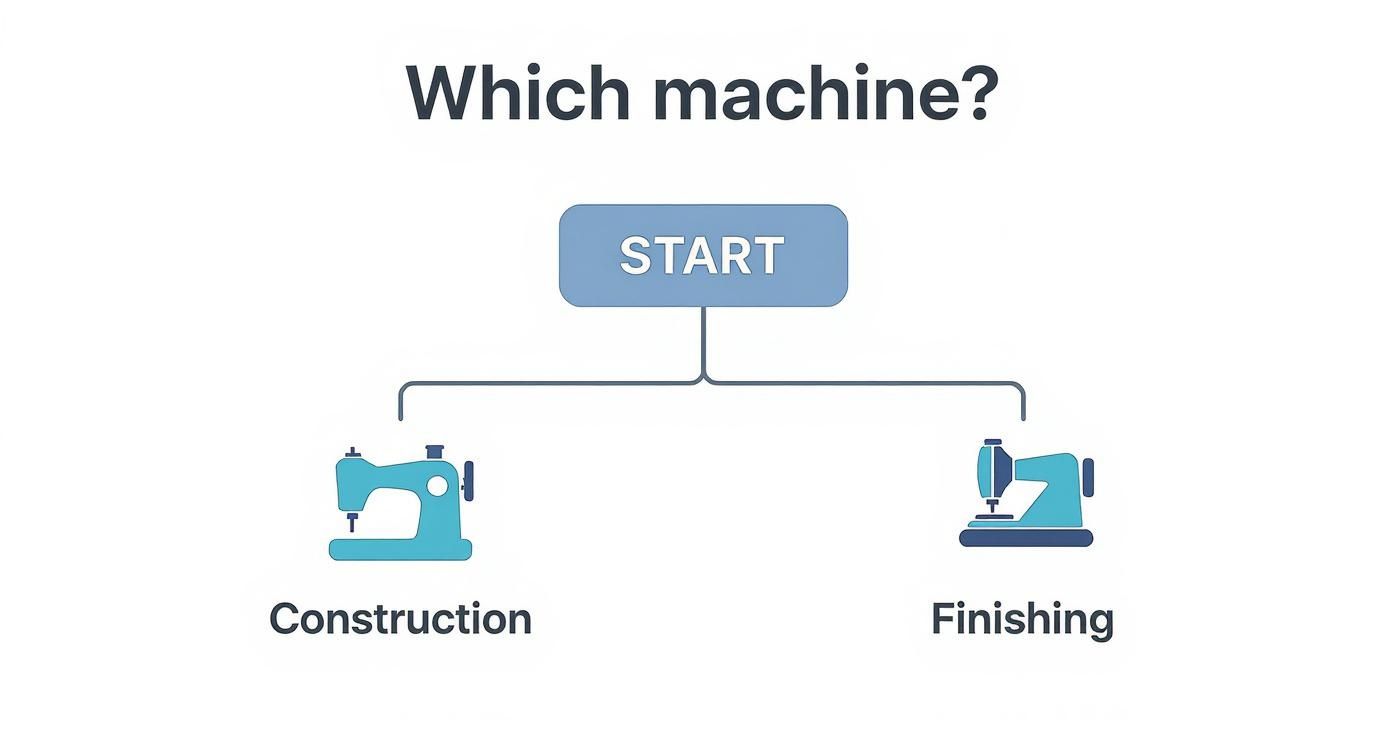
As you can see, a sewing machine is your go-to for building projects from scratch. The serger is the specialist you bring in to perfect the edges and masterfully handle anything stretchy. The core task really dictates the tool.
Some jobs just flat-out require a sewing machine. It’s the only one that can handle the fundamental techniques of garment construction and quilting that are simply impossible on a serger.
You absolutely need a sewing machine if your projects involve:
Bottom line: if you're building it, you need a sewing machine. It’s your workhorse.
A serger, sometimes called an overlocker, is what elevates your work from "homemade" to "handcrafted," especially when it comes to clothes. Its ability to sew, trim, and encase a seam all in one lightning-fast pass is a total game-changer for both speed and quality.
Investing in a serger is often the turning point for a home sewer looking to create garments that are indistinguishable from high-end retail clothing. The internal seams and hems are cleaner, more durable, and far more flexible.
A serger should be your top priority if you:
The demand for these professional-grade tools is growing. The serger machine market was valued at $2.1 billion and is expected to climb to $3.4 billion as more home sewers and small businesses aim for top-tier results. This trend, detailed in the full serger machine market report from MarketIntelo, shows just how critical this machine has become. Ultimately, the answer to the "serger vs. sewing machine" question isn't about choosing one over the other, but knowing when it’s time to add a serger's specialized power to your sewing arsenal.
When you’re weighing a serger against a sewing machine, the price tag is only part of the story. You have to look at the whole financial picture, from the initial purchase to what it’ll cost to keep the machine humming along for years.
A good, basic sewing machine will set you back about $100 to $300, which is a pretty gentle entry point for anyone starting out. If you want more stitch options and features, you’re looking at mid-range models in the $300 to $700 bracket. Sergers start a little higher on the price ladder; you can find a basic one for $200 to $400, but mid-range machines with perks like easier threading often run between $400 and $1,000.
While those price ranges might look similar at first glance, what you get for your money is quite different. An entry-level sewing machine is usually a solid, dependable tool. The cheapest sergers, on the other hand, can be a real headache with their fussy tension and nightmare threading. Honestly, spending a little more on a serger from a well-known brand can save you a world of frustration.
Of course, both machines have high-end models that cost thousands, but those are really for professionals or dedicated hobbyists who need specialized features—think air-threading on a serger or full embroidery functions on a sewing machine. For most of us sewing at home, a reliable mid-range machine is the sweet spot where performance and price meet.
This is where the financial paths of the two machines really start to split. A sewing machine is pretty low-maintenance in the supplies department—it just needs one spool of thread and a single needle at a time.
A serger, however, is a different beast entirely. It's thirsty.
One of the biggest long-term costs to wrap your head around is the thread. A single cone of serger thread is cheap, but you’re buying four at a time. That initial outlay can be a real shock if you're used to just grabbing a single spool for your sewing machine.
Both machines need regular TLC to stay in good shape, but a serger is the more demanding of the two. Its complex system of loopers, multiple tension dials, and a cutting blade just means there are more places for things to go wrong. Lint also builds up like crazy in a serger, so you have to be much more diligent about cleaning it out.
When things do go haywire, figuring out the problem can be trickier with a serger. On a sewing machine, the issue is often a simple fix related to the needle or bobbin. On a serger, you have to diagnose and balance the tension across multiple threads, which takes some practice. This complexity often means that professional servicing for a serger can take longer and cost more. A sewing machine, with its simpler mechanics, is almost always easier and cheaper to care for over its lifetime.
https://www.youtube.com/embed/kw-MJTLKtxQ
So, you want that clean, professional-looking edge you see on store-bought clothes, but you're not quite ready to invest in a serger. It’s a classic question: can a sewing machine pull off a convincing serger finish? The short answer is a resounding yes—you can get surprisingly close.
For anyone on a budget or those who only need a finished edge once in a while, your trusty sewing machine has a few clever workarounds up its sleeve. These tricks are all about mimicking what a serger does best: neatly encasing the raw fabric edge to stop it from fraying. But it's good to know what you're getting into, both the possibilities and the real-world limitations.
The goal here is to find a stitch on your machine that can join a seam and cover the raw edge at the same time, just like a serger. Most modern machines are equipped for this very task.
Here are the most effective ways to fake that serger look:
Key Takeaway: While these techniques are fantastic for making your projects look more professional, they are still workarounds. They're slower, the stitches aren't quite as durable as a true overlock, and—most importantly—they don't trim the fabric as they sew.
Let's be real: these sewing machine hacks are incredibly useful, but they can't fully replace a dedicated serger. A serger's magic lies in its integrated system. It has a blade that trims the seam allowance to a perfectly consistent width an instant before the loopers wrap the edge in thread. That's a level of precision and neatness a sewing machine just can't match.
Even with a special foot, a sewing machine's overcast stitch can sometimes be a little less consistent. It might not fully encase every single raw fiber, which could lead to fraying down the road. Plus, the process is just plain slower. What a serger does in one quick, high-speed pass takes careful guiding and a more deliberate pace on a sewing machine.
Ultimately, knowing how to fake a serger finish is a fantastic skill for any sewing enthusiast. It opens the door to creating more polished garments without needing another machine. But as soon as you start sewing a lot of knits or find yourself craving speed and top-tier durability, you’ll start to see the powerful, undeniable advantage that only a serger can offer.
When you're trying to decide between a serger and a sewing machine, a few key questions always pop up. Let's tackle some of the most common ones so you can feel confident you're picking the right tool for your projects.
Yes, you absolutely do. A serger is a fantastic, specialized machine, but it’s designed to complement your sewing machine, not replace it.
Think of it this way: your sewing machine is your go-to for all the foundational work. It’s the only one that can handle critical construction tasks like:
A serger is like a finishing expert. It comes in to give your seams a professional, durable edge, especially on knits, but your sewing machine is what builds the actual garment or quilt.
I’ll be honest, sergers can look a bit intimidating at first. They definitely have a steeper learning curve than a basic sewing machine, mostly because of that complex network of loopers and threads. Getting 3-4 threads threaded through their specific paths takes some patience to learn.
The good news is that modern sergers are much more user-friendly than their older cousins. Many now come with features like color-coded threading guides or even air-threading systems that pretty much do the work for you. Once you get the hang of it, the speed and beautiful results are well worth that initial learning period.
The biggest hurdle for new serger users is usually figuring out the threading and tension. Once you understand how the needles and loopers work together, it clicks into place and becomes second nature.
Technically, you can use a standard spool of sewing thread if you're in a real bind, but it’s not a great idea for regular use. Sergers fly along at incredible speeds—often over 1,300 stitches per minute—and they eat up a ton of thread. Using those small spools is just not practical or cost-effective.
There’s a reason serger thread comes on those big cones. It's generally a bit finer and specifically engineered to handle the high speed and friction without snapping. Sticking to serger thread will give you stronger seams and save you money in the long run.
The serger's secret weapon for sewing knits is its differential feed. This brilliant system has two sets of feed dogs that can move the fabric through the machine at different speeds.
By adjusting the differential feed, you gain complete control over stretchy fabrics. It stops them from getting wavy or stretched out as you sew and prevents puckering. The result is a beautifully flat, flexible seam that moves with the fabric—something a sewing machine really can't do on its own. It's this single feature that makes a serger a must-have for professional-looking knit garments.
Ready to take your sewing to the next level? At High Country Quilts, we're an authorized BERNINA dealer, and we love helping people find the perfect machine for their creative passion. Come explore our selection of premium sewing machines and sergers at https://hcquilts.com.
At High Country Quilts we care deeply about community. With our experiences in retail, we know that a store is not only a place to shop but also a place for the community to gather and share. During this busy...

Hi! We’re Adam and Renee Wheaton, the new owners of High Country Quilts! For more than 40 years, we’ve owned and operated vacuum and sewing businesses. Following in Renee’s father’s footsteps after he retired from All Discount Vacuum and Sewing in Colorado...


Comments
Leave a comment