
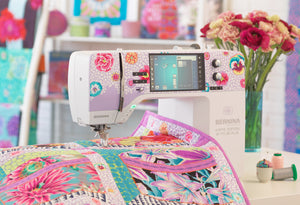

We Love Our Quilting Community
At High Country Quilts we care deeply about community. With our experiences in retail, we know that a store is not only a place to shop but also a place for the community to gather and share. During this busy...


You've probably had this moment at the sewing table. The project is nearly done, the fabric choice was right, the fit is close, and then you turn the piece inside out and see raw edges fraying, seams looking a little homemade, or knit fabric rippling when it should lie flat.
That's usually when a serger starts to make sense.
For many beginners, a serger feels like the mysterious extra machine sitting beside a regular sewing machine. It has more thread cones, more moving parts, and a reputation for being hard to thread. But once you understand what it does, it stops feeling intimidating and starts feeling practical. It's a tool that helps you make cleaner seams, neater edges, and garments that hold up better in wear.
At High Country Quilts, I've seen new sewists relax the moment they realize a serger isn't asking them to become more technical overnight. It helps them finish fabric more cleanly and sew stretchy materials with less frustration.
A lot of people come to a serger after making a few garments on a regular sewing machine and wondering why the inside doesn't look as polished as ready-to-wear clothing. The outside may be lovely. The inside may be a tangle of pinked edges, zigzag finishing, or seams that look fine until the first wash.
That's exactly where a serger earns its place.
A serger is part of a long line of sewing innovation. Barthélemy Thimonnier's 1830 machine was the first practical factory model, and Singer introduced the first electric sewing machine for home use in 1889. Modern sergers belong to that same story. They take tasks that once required more time and more hand-finishing, and make them faster and more consistent.
Sewing tools have kept moving toward cleaner, more repeatable results. A serger is one of the clearest examples of that.
If you sew clothes, especially knit tops, lounge sets, children's clothes, or simple everyday garments, a serger can change how your work feels. Seams look tidier. Edges behave better. Projects move faster once you get comfortable with setup.
That doesn't mean you need to know everything on day one. You just need to know what problem the machine solves. It gives raw edges a finished look and helps fabric behave the way you hoped it would when you first bought it.
A regular sewing machine is your all-purpose tool. A serger is a specialist.
If you are new to sergers, that distinction helps right away. Your sewing machine handles a wide range of jobs across a project. A serger focuses on one area especially well. It joins fabric, trims the edge, and wraps thread around that edge at the same time. That is why serged seams look so tidy inside ready-to-wear clothes.
A serger uses several threads working together, often three or four, to build a strong finished edge in one pass. A regular sewing machine usually forms its stitch with a needle thread and a bobbin. A serger also behaves differently at the machine. It is built for continuous seaming, not for reversing, pivoting through tight corners, or adding detailed topstitching. This overview of how sergers differ from regular sewing machines gives a helpful visual comparison.

Your regular machine stays at the center of many sewing tasks:
A serger shines for speed, stretch, and clean edge finishing.
One simple way to remember the difference is this. A sewing machine builds the project. A serger refines many of the seams.
That point matters for beginners because many new sewists assume they need to choose one or the other. In practice, they work as a pair. At High Country Quilts, this is often the moment the machine starts to make sense in class. Once you see a serger beside a regular sewing machine and try each one on the same fabric, the difference stops feeling abstract and starts feeling useful.
You sit down at a serger for the first time, lift the front cover, and suddenly it looks more like the inside of a clock than a sewing machine. That reaction is normal. A serger has a few parts that are unfamiliar at first, but once you know each job, the machine starts to feel logical.

At High Country Quilts, this is one of the biggest lightbulb moments for beginners. Seeing the parts in person, with someone pointing to each path and showing what moves during stitching, usually clears up the mystery much faster than studying a diagram alone.
The loopers are often the first new term that trips people up. Loopers work like tiny thread carriers. They swing back and forth to wrap thread around the fabric edge, creating the overlock finish that makes a serged seam look neat and enclosed.
The needles do part of the job too. They pass thread through the fabric while the loopers catch and cross those threads around the edge. If you are used to a sewing machine, the easiest way to understand the difference is this: your regular machine relies on a bobbin underneath, while a serger uses loopers instead.
That one idea clears up a lot.
The built-in knife trims the raw edge as you sew. It works like a guide with a cutter attached. If your fabric edge is uneven going in, the knife helps create a clean, consistent edge before the threads wrap around it.
The presser foot holds the fabric in place, just as it does on a sewing machine. On a serger, though, edge placement matters more because the fabric is passing beside the knife while the stitch forms. Beginners often want to push the fabric inward. Usually, gentle guiding works better than force.
If the edge starts drifting, slow down and realign the fabric with the guide. Let the knife trim a little at a time.
The tension dials control how firmly each thread is pulled into the stitch. Balanced tension gives you an edge that looks even and snug. If the tension is off, the stitch may hang off the edge, pull too tight, or ripple the fabric.
The term differential feed sounds technical, but the job is simple. A serger has two sets of feed dogs working together, and differential feed changes how quickly they move the fabric. That helps stretchy knits stay flat instead of waving, and it can also help very light fabrics feed more evenly. If that feature still feels abstract, it usually clicks once you test it on two scraps side by side, which is exactly the kind of hands-on practice that helps new serger owners at High Country Quilts.
For a broader beginner explanation of why differential feed and 4-thread capability matter, this beginner serger guide focused on differential feed and 4-thread capability gives helpful background.
| Term | What it means in plain language | Why you care |
|---|---|---|
| Looper | The part that carries thread around the fabric edge | It creates the overlock finish |
| Knife | The blade near the stitching area | It trims fabric as you sew |
| Tension | How tightly each thread is pulled | It changes how balanced the stitch looks |
| Differential feed | A control for how fabric feeds under the machine | It helps prevent stretching or puckering |
| 4-thread stitch | A common serger setup using two needles and two loopers | It gives many beginners a strong, useful seam |
If you can identify those five terms on the machine in front of you, you are already past the most confusing part of beginner serger language.
Choosing a serger machine for beginners gets much easier when you ignore the flashy extras for a moment and focus on what will help you sew. The first question isn't “What has the most features?” It's “What will help me set up, practice, and troubleshoot without getting discouraged?”
For a first machine, I'd pay attention to three things right away: differential feed, 4-thread capability, and how easy the machine is to thread and access for cleaning. Those are the features that support real use, not just a nice product page.
Differential feed is the one I'd place at the top of the list. It helps control how fabric moves so knits don't stretch out and lightweight fabric doesn't pucker. Pair that with 4-thread capability and you have the core function many beginners need for a broad range of projects.
Then look at the setup experience. If a machine gives you clear threading paths, easy front access, and a manual that feels understandable, that often matters more than a long list of decorative possibilities.
The right first serger usually feels teachable, not impressive.
| Tier | Typical Price Range | Key Features | Best For |
|---|---|---|---|
| Entry-level | Varies by brand and dealer | Basic overlock functions, manual threading, core finishing stitches | New sewists learning serger basics |
| Mid-range | Varies by brand and dealer | 3/4-thread options, differential feed, easier adjustments | Garment sewing and frequent use |
| Premium | Varies by brand and dealer | Convenience-focused threading systems, advanced controls, smoother setup experience | Sewists who want faster setup and more comfort features |
Because pricing changes by model, dealer, and package, it's smarter to compare machines by learning curve and support than by trying to chase a fixed number.
If you want a straightforward machine with a practical feature set, check out the BERNINA L 450. It's the kind of model many beginners look at when they want room to grow without jumping straight to a more automation-heavy machine.
If easier setup is high on your wish list, the BERNINA L 850 is worth a look. Convenience features like air-threading are often appealing to sewists who know threading anxiety is likely to slow them down.
This is the part many shoppers underestimate. A serger purchase isn't only about the machine. It's also about what happens the first time a thread slips out, the stitch looks wrong, or you can't remember the threading order after a few weeks away.
That's why buying from an authorized dealer can matter so much. Lessons, demonstrations, and service support aren't side perks. For many beginners, they're the reason the machine keeps getting used instead of sitting covered in a corner.
Threading is the step that scares people most, but it becomes manageable once you treat it like a sequence instead of a puzzle. Most modern sergers use color-coded guides, and that alone takes much of the mystery out of the process.
Start with patience. Don't thread when you're rushed, and don't try to memorize everything the first time through. Follow the machine's path exactly, one thread at a time.

Most beginners do better when they use the same routine every time:
Here's a helpful video if you want to watch the process before trying it yourself:
The most common problem isn't that someone “can't thread a serger.” It's that one step happened out of order. Independent beginner tutorials often stress that if a thread breaks, you may need to rethread in sequence, and that you should test-chain before sewing. They also warn that cutting a pin can damage the knife, as noted in this serger troubleshooting and maintenance guide.
If your stitch suddenly looks wrong, stop and check the simple things first:
A serger rewards methodical habits. Once your routine settles in, threading gets much faster.
One practical trick many sewists use is tying the new thread to the old one when changing cones, then gently pulling the thread through part of the path. It doesn't replace full rethreading in every situation, but it can save time when all is going smoothly.
Your first serger project should feel like practice with a purpose. You are not trying to impress anyone. You are teaching your hands how fast the fabric feeds, where the blade trims, and what a balanced stitch looks like on real fabric.
Start with projects that are simple enough to repeat. Repetition is how confidence grows.
Cloth napkins are a friendly starting point. They are small, flat, and easy to guide, so you can pay attention to the cut edge and stitch formation instead of worrying about fit. Sew a set of four and you will get steady practice without the pressure of a complicated pattern.
Pillowcases give you long, forgiving seams. That makes them useful for learning how to keep the fabric edge lined up with the knife while maintaining an even pace. By the end, you have something practical and a clear sense of how the machine sounds and feels when it is stitching well.
Simple knit pajama pants or lounge shorts are often the project that makes a beginner smile. Knit fabric stretches, and a serger stitch is built to stretch with it while finishing the raw edge at the same time. The machine is doing three jobs in one pass, as explained in this serging overview from EBSCO.
A helpful rule is to choose projects with straight or gently curved seams and forgiving fabric. Cotton wovens and stable knits are much kinder to learn on than slippery rayon or thick layers of fleece.
Save the tricky projects for later, after the machine feels familiar. Early wins matter because they give you a reference point. Once you know what a good seam looks like, troubleshooting gets much easier.
Try to skip:
If you are not sure which first project makes sense, ask the team at High Country Quilts to help you match fabric and pattern to your current skill level. That kind of hands-on guidance can turn a confusing first attempt into a solid, successful finish.
A serger works hard, and it creates lint fast. Beginners who get into the habit of simple care usually have a much smoother experience. That care doesn't need to be complicated. It just needs to be regular.
Start with the basics. Clean lint from the machine area, change needles when they become dull or damaged, and keep your stitching area free of pins near the knife. Hitting a pin isn't a small mistake on a serger. It can damage the cutting blade.
The bigger lesson is that troubleshooting is part of learning, not proof that you bought the wrong machine. Broken threads, stitch imbalance, and setup errors are common early on. What matters is whether you have help available when they happen.
Need a tune-up or have a tricky repair? Our certified technicians at High Country Quilts are here to help.
Yes. A serger handles finishing and many seam tasks very well, but you'll still use a regular sewing machine for topstitching, closures, and many construction details.
No. It's often associated with clothing, but it's also useful for finishing edges on home sewing projects and simple accessories.
Yes. It takes practice, but it's a repeatable routine. Color-coded guides, careful order, and testing on scraps make a big difference.
Choose simple projects with long seams and forgiving fabric. Pillowcases, cloth napkins, and basic knit loungewear are all friendly starting points.
Stop and recheck the basics. Look at the threading path, the order used, whether the thread is seated correctly, and whether you tested on scrap fabric first.
If you're ready to move from curiosity to confidence, visit High Country Quilts to explore sergers, compare BERNINA models, and find hands-on classes and support that make learning far less intimidating.
At High Country Quilts we care deeply about community. With our experiences in retail, we know that a store is not only a place to shop but also a place for the community to gather and share. During this busy...

Hi! We’re Adam and Renee Wheaton, the new owners of High Country Quilts! For more than 40 years, we’ve owned and operated vacuum and sewing businesses. Following in Renee’s father’s footsteps after he retired from All Discount Vacuum and Sewing in Colorado...


Leave a comment