

We Love Our Quilting Community
At High Country Quilts we care deeply about community. With our experiences in retail, we know that a store is not only a place to shop but also a place for the community to gather and share. During this busy...


A lot of pet sewing projects start the same way. Your dog claims the couch, your cat picks one sunny spot in the stroller, and suddenly you're thinking, “I could make something cuter than that plain store-bought blanket.”
That instinct is a good one.
A small pet blanket is one of the friendliest quilting projects for a beginner because it gives you a real, useful finish without the pressure of making a full bed quilt. It's manageable, washable, and easy to personalize. It also gives you a perfect excuse to play with seasonal quilting fabric bundles, which are one of the easiest ways to make a project look coordinated right from the start.
A spring bundle can feel fresh and airy. A fall bundle can add warmth and rich color. A winter bundle can turn a simple stroller ride into something festive and cozy. When the fabrics are already designed to work together, you spend less time worrying about color matching and more time sewing.
One of my favorite beginner project ideas is a designer-style pet stroller blanket. It feels special, but it doesn't ask too much from a new quilter. You're working on a smaller scale, so your cutting is easier to manage, your piecing goes faster, and you get to enjoy the finished project right away.

A handmade blanket can change the whole feel of a pet outing. Think about a cool autumn walk with leaves blowing across the path, or a bright spring morning when your pet wants comfort without too much weight. A seasonal blanket adds softness for your pet and style for you. It also feels far more personal than grabbing a fleece throw off a shelf.
That's where seasonal bundles shine. Retailers commonly group these collections around spring, summer, fall, and winter, and they're often presented as a way to “celebrate your favorite time of year”. For a beginner, that matters because it removes the hardest early decision: choosing fabrics that belong together.
When you buy individual bolts, you have to judge print scale, contrast, undertones, and overall balance. New quilters often pick every fabric they love, then discover the group feels busy or disconnected once the pieces are cut.
A curated bundle does much of that work for you. The prints already share a mood, whether that mood is crisp winter, cheerful summer, or classic holiday color. Your job becomes editing and arranging, not solving the whole palette from scratch.
Practical rule: If you want your first project to look polished, let the bundle handle the color story and let your sewing build the personality.
If your pet travels often, comfort matters just as much as appearance. If you're also comparing ready-made travel options, this guide to find the best dog travel beds offers useful ideas for what makes a pet setup cozy on the go.
For makers who like sharing projects or product photos with brands, some also explore collaboration programs like this gifted collaboration application, especially when a finished pet accessory has a strong seasonal look.
A pet blanket gives you room to practice the core skills that show up in larger quilts later:
You also get a forgiving project. If one corner isn't perfect, your pet won't mind. But you'll still learn the habits that lead to neater work next time.
That's the sweet spot. You're making something useful, attractive, and doable in a weekend or a few relaxed evenings.
A designer-looking pet blanket starts with materials that already work well together. That matters even more on a first project, because you are learning construction and design at the same time. A curated seasonal bundle takes one big decision off your plate. Instead of building a color palette from scratch, you can focus on choosing prints that suit your pet's personality and the season you want to highlight.

For this project, fat quarter bundles are a comfortable place for beginners to begin. Each piece is large enough to give you options, but small enough that the project still feels manageable on the cutting table. Curated bundles are especially helpful when you want the finished blanket to look intentional, like a boutique pet accessory instead of a practice piece.
A seasonal bundle also makes auditioning prints much easier. Lay out several fabrics side by side and you can quickly see which ones should lead and which ones should support. It works like arranging a room. One print becomes the statement chair, a few prints echo the color story, and a quieter fabric keeps the whole space from feeling crowded.
You probably will not need every print in the bundle. That is normal. On a pet blanket, using only part of the bundle often gives a cleaner result, and the leftovers are perfect for a matching bandana, toy mat, or small basket liner.
Beginners often choose only the cutest prints. The stronger approach is to choose prints that do different jobs.
A useful mix usually includes:
If the fabrics all shout at the same volume, the blanket can feel busy. If they are all soft and subtle, the design can disappear. A good bundle gives you both personality and balance, which is exactly what helps a small project look designed.
Some makers who enjoy photographing finished projects also join creator networks through a UGC creator application for handmade content and project sharing.
Batting changes the feel of the blanket more than many beginners expect. For a stroller or carrier blanket, choose something that bends and folds easily. Too much loft can make the blanket stiff, bulky, and harder to quilt neatly.
Here are three beginner-friendly options:
For backing, quilting cotton is the simplest choice. It presses well, feeds predictably, and pairs nicely with a pieced cotton top. If you want a cozier finish, flannel can be lovely, but it may shift a bit more while sewing, so many first-time quilters prefer to start with cotton.
A pet blanket gets used, folded, washed, and carried around. Choose materials that stay soft without becoming fussy to sew.
Good tools make the process calmer. They do not do the sewing for you, but they remove a lot of beginner frustration.
Keep these nearby before you start:
At High Country Quilts, many beginners compare fabric bundles, notions, and BERNINA machines in one place, which makes it easier to match the right tools to the project.
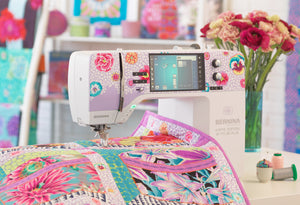
Small projects reveal machine quality quickly. If the fabric drags, if layers shift, or if the stitch formation is uneven, you notice it right away. A BERNINA machine helps keep piecing accurate and quilting more controlled, which is reassuring when you are still building confidence.
That precision is part of what gives a simple pet blanket a designer finish. Your seams line up more cleanly. Your quilting looks more deliberate. The project feels like a polished accessory made with care, not just a basic blanket stitched in a hurry.
This is the stage that makes the finished blanket feel custom instead of generic. A pet stroller blanket that fits well stays in place better, folds more neatly, and looks more intentional.
Beginners often rush to cutting because it feels productive. Slow down here. Careful measuring saves fabric, prevents warped patchwork, and makes assembly much calmer.
Measure the area where the blanket will sit. Don't measure the outside of the stroller frame. Measure the usable interior space, then decide whether you want the blanket to sit flat inside it or drape slightly over an edge.
A soft tape measure works well for this because many pet strollers have curved corners and padded sides. Write down your width and length before you do anything else.
Use this simple planning table as a starting point.
| Stroller Size | Finished Blanket Width | Finished Blanket Length |
|---|---|---|
| Small | 18 inches | 22 inches |
| Medium | 22 inches | 28 inches |
| Large | 26 inches | 34 inches |
These are practical starter dimensions, not rigid rules. If your stroller has raised sides or a deeper basket, adjust the finished size to suit your pet and the space available.
Your top, batting, and backing shouldn't all be cut exactly the same size at the start. Beginners get tripped up here all the time.
Cut your backing and batting slightly larger than the quilt top so you have room to smooth, baste, quilt, and trim. If every layer starts identical, it's much easier to come up short once the quilt shifts under the machine.
Measure for the finished size you want, then give yourself extra room in the layers underneath. Precision in quilting includes planning for movement.
This project works especially well with a fat-quarter-friendly pattern or layout, because fat quarters are designed around cuts of about 18" x 22". A useful quality check is to choose 100% cotton, a tight weave, and at least 60 threads per inch. It also helps to mix large, medium, and small-scale prints so the finished blanket feels balanced rather than chaotic, as outlined in this guide on choosing fat quarter bundles.
That quality point matters most when you cut. Looser fabric can shift, stretch, and fray more quickly, especially in smaller patchwork units.
Quilters have different preferences, but for a pet blanket, pre-washing makes sense if washability is a top concern. Pets bring fur, dirt, and occasional surprises. If you know the blanket will be laundered often, pre-washing can reduce surprises later.
If you do pre-wash:
If you choose not to pre-wash, stay consistent across your fabrics. Mixing pre-washed and unwashed pieces can change how they behave together.
For a beginner, rectangles or squares are ideal. They show off seasonal prints nicely and don't require complicated templates.
Try one of these layouts:
If your bundle includes a print with pumpkins, snowflakes, florals, or other recognizable motifs, consider fussy cutting. That means cutting deliberately so the motif lands in the middle of a block or in another visible spot.
Use your ruler as the guide and your rotary cutter as the follower. Not the other way around. Hold the ruler firmly, keep the blade vertical, and make sure the fabric stays flat on the mat.
These habits make a big difference:
If you'd like a project built around these cuts, look for fat quarter bundles and layouts that use straightforward patchwork pieces rather than tiny units. That approach keeps the sewing fun and lets the fabric do a lot of the visual work.
Once your pieces are cut, the project starts feeling real. This is the point where a stack of fabric turns into something recognizable, and it's also where a calm sewing rhythm helps most.

For beginners, I like to treat assembly as three separate jobs. First, build the top. Second, layer the quilt sandwich. Third, quilt with control instead of speed. Breaking it up this way keeps you from feeling like you need to master everything at once.
Lay your cut pieces on a table or design wall before you sew anything. Move them around until the colors feel balanced. If one bold print keeps grabbing all your attention, shift it so the eye travels across the blanket instead of getting stuck in one spot.
Then sew the pieces into rows. After that, join the rows together.
A few habits make the top noticeably neater:
If you're sewing on a BERNINA, one of the advantages is consistent stitch formation during piecing. A machine that feeds smoothly lets you focus on seam accuracy instead of correcting wobble at the fabric edge.
Don't treat pressing as an optional cleanup step. It shapes the top.
Pressing keeps seam allowances under control, reduces bulk, and helps corners meet more accurately. If you skip pressing until the end, you'll usually get a top that feels puffier and looks less crisp.
A quilt top becomes easier to quilt when it lies flat before you layer it. Flat piecing creates calm quilting.
Once the top is complete, layer the backing wrong side up, the batting in the middle, and the quilt top right side up. Smooth each layer carefully before securing them.
You can baste with pins, clips around the perimeter, or another method you trust. The key is stability. Small projects tempt people to skip proper basting, but even a pet blanket can shift enough to create wrinkles on the back.
For a closer look at machine handling and quilting flow, this video is a helpful visual reference:
If you own or are considering a BERNINA setup, the BERNINA Walking Foot #50 is especially useful for this stage because it helps feed multiple layers more evenly. That matters when you're quilting through a pieced top, batting, and backing all at once.
Without even feeding, the top layer can creep ahead of the lower layers. The result is puckering, shifted corners, or a backing that bunches near the end of a quilting line. The walking foot helps prevent that by moving layered fabric more consistently.
For makers who want to sharpen machine confidence and quilt handling, this quilting course resource may also be useful as a supplemental learning tool.
Straight-line quilting is the easiest place to start. It looks clean, holds the layers together well, and suits modern seasonal prints beautifully.
Some simple options:
If you're quilting with a walking foot, guide the project steadily and let the machine do the feeding. Don't pull from the back, and don't push from the front. Support the weight of the quilt so the needle area isn't carrying everything alone.
Beginners often ask for exact settings, but the better answer is to test on a quilt sandwich scrap first. Thread, batting, and fabric all affect what looks right. A scrap test shows whether the stitch looks balanced and whether the layers stay smooth.
Pay attention to these details:
The goal isn't perfection. It's controlled, even quilting that feels deliberate. On a small pet blanket, that alone creates a very polished look.
A blanket becomes a quilt when the stitching on top adds structure and intention. This is the moment where a simple pet accessory starts to look custom made rather than just assembled.
Many beginners stop after securing the layers because they think decorative quilting is advanced. It doesn't have to be. In fact, the easiest quilting designs often look the most refined when the fabrics already carry a strong seasonal theme.

A strong bundle usually has one print that feels like the star of the group. A practical workflow is to choose one hero print, add only 2 to 3 supporting prints with similar color temperature and intensity, and then use solids to steady the palette. That approach helps prevent the project from feeling visually overcrowded, as explained in this article on creating a fabric bundle in 3 easy steps.
That same idea works for quilting design. If your fabrics already have movement, keep the quilting simple. If the fabrics are quieter, the stitching can carry more personality.
You don't need feathers or dense free-motion work to get a designer finish. Start with one of these.
Decorative quilting doesn't need to be complex. It needs to look intentional.
Because this blanket is small, it's easy to get carried away. Too many quilting lines can make the fabric stiff, especially if the top already includes several prints.
Try asking yourself two questions before you start:
That second question matters. A stroller blanket should still drape nicely and fold into a carrier basket or bag.
You can mark quilting lines if that helps you stay consistent, but you don't always need to. Many straight-line designs can be guided by the edge of your walking foot or by existing patchwork seams.
A few simple ways to stay steady:
If you like trying different quilting tools and workflow aids, some makers also compare platforms and resources like these UGC creator platforms when sharing craft content and project process online.
The fun begins here. Your quilting can subtly echo the fabric theme without becoming literal.
For example:
| Seasonal mood | Quilting idea | Overall effect |
|---|---|---|
| Spring florals | Soft vertical lines | Light, fresh, airy |
| Summer prints | Organic waves | Relaxed and playful |
| Fall plaids or leaves | Straight channels | Cozy and structured |
| Winter motifs | Grid quilting | Crisp and classic |
That kind of pairing makes the blanket feel designed on purpose.
Quilting adds more than texture. It controls shifting, helps the blanket wear better, and gives the surface that finished, touchable quality people associate with handmade luxury.
If your top is pretty but still feels a little plain, quilting is usually the missing layer. Even simple repeated lines can make the prints feel unified.
A beginner doesn't need to do more. A beginner needs to do it neatly.
A pet blanket starts looking custom in the final minutes, not only in the piecing. The edge, the thread choice, the scale of the binding, and the way the blanket washes over time all shape whether it reads as homemade in the best sense or unfinished.
That is good news for beginners. These are learnable details.
Binding does more than cover raw edges. It frames the piece the way a mat frames artwork. A narrow binding looks crisp and refined. A slightly wider binding feels softer and more casual. If you want a designer pet accessory, decide on that frame before you sew. Seasonal quilting fabric bundles help here because the colors are already edited for you, so your binding can either blend seamlessly or act like a polished accent.
Start by trimming the quilt sandwich square. Even a lovely top looks less refined if the edges ripple, because the binding has to follow every bump.
Pressing matters here too. Cotton is a smart choice for this project because it holds a crease well, gives clear stitch definition, and usually behaves more predictably in the wash than many blends. That consistency helps your binding fold sharply and stay flat around corners. On a BERNINA machine, that steady feed and accurate stitching make it easier to keep the seam allowance even, which is one of the small details people notice right away.
A few finishing habits make a visible difference:
Clean edges make small quilts look carefully made.
If you want the blanket to feel more luxurious, pair texture with print. A smooth seasonal cotton print plus a soft flannel or stable fleece back creates a pleasing contrast without making the blanket hard to wash. The reason this pairing works is simple. The printed top gives color and personality, while the softer back adds the cozy hand people associate with boutique pet accessories.
Good customization for pets stays flat, secure, and washable. Skip buttons, beads, dangling trims, and loose ribbons.
Better options include:
The key is restraint. One or two details usually look more expensive than many competing ones. If your bundle includes florals, plaids, or winter blenders, repeat one print at the edge and let the center stay calmer. That repetition creates the collected, designed-on-purpose look many beginners want but cannot always name at first.
Seasonal fabrics can keep working long after one holiday passes. Small-scale prints, textured blenders, and classic motifs often move easily into scrap blocks or future accessories, which gives you more use from a themed bundle, as discussed in this overview of holiday and seasonal quilting fabric.
If you ever photograph your finished projects for gifts, craft fairs, or social posts, looking at how handmade items are packaged and presented through these influencer gifting platforms for product presentation ideas can spark simple finishing touches such as folded labels, belly bands, or coordinated gift tags.
A designer look lasts only if the blanket still looks good after real use. Before the first wash, clip loose threads and check the start and stop points of your quilting and binding seams. Those tiny inspections prevent the kind of corner lift or popped stitch that makes a finished project wear out early.
Fiber choice affects care. Cotton tops are popular for a reason. They press cleanly, absorb quilting texture beautifully, and tend to shrink in a more consistent way than mixed-fiber fabrics. That matters in a pet blanket because uneven shrinkage can cause twisting or puckering after laundering.
For regular care:
If you enjoy broader textile care guidance, this article on preserving your artisan wool blankets offers useful ideas about long-term storage and gentle handling that also apply to handmade blankets.
One small project can teach a lot. You practice finishing, color editing, proportion, and fabric pairing in a format that feels manageable. With a curated seasonal bundle and a reliable BERNINA, the results often look more polished than beginners expect, and that confidence tends to carry into the next project.
At High Country Quilts we care deeply about community. With our experiences in retail, we know that a store is not only a place to shop but also a place for the community to gather and share. During this busy...

Hi! We’re Adam and Renee Wheaton, the new owners of High Country Quilts! For more than 40 years, we’ve owned and operated vacuum and sewing businesses. Following in Renee’s father’s footsteps after he retired from All Discount Vacuum and Sewing in Colorado...


Leave a comment