
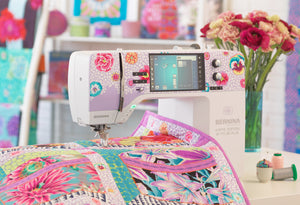

We Love Our Quilting Community
At High Country Quilts we care deeply about community. With our experiences in retail, we know that a store is not only a place to shop but also a place for the community to gather and share. During this busy...


You know the moment. You're halfway through cutting binding or trimming a stack of quilt pieces, and your shears stop slicing cleanly. The fabric bends. Threads fuzz at the edge. You press harder, adjust your grip, and tell yourself you can finish this project before dealing with the scissors.
That's usually when the scissors start doing visible damage.
For quilters, dull fabric shears aren't a small annoyance. They change accuracy, strain your hand, and turn careful cutting into guesswork. If you've been searching for Scissor sharpening Colorado Springs, the main question usually isn't just where to go. It's whether sharpening will help your shears, how to avoid ruining an expensive pair, and what kind of service is worth trusting with tools you use on good fabric.
A quilter can often tell something is wrong before the scissors fully fail. Cotton that normally parts with a clean, quiet cut starts dragging. Batik shifts under the blade. Fine pieces for appliqué fray at the edge instead of staying crisp. The scissors still cut, technically, but not in a way that supports accurate sewing.
That's the trap. Many people wait until their shears feel unusable, when the better habit is to respond as soon as cut quality changes.

Paper will often hide a weak edge longer than fabric does. Quilting cotton, linen blends, felted wool, and layered interfacing don't. They expose every flaw. If your shears hesitate at the tip or push fabric ahead of the cut, your measurements can stay correct while your pieces still come out wrong.
That matters because quilting is cumulative. A slight distortion at cutting becomes a mismatch at piecing, then a puckered seam, then a block that needs trimming down.
Practical rule: If you find yourself squeezing harder to get through familiar fabric, the problem usually isn't your hand. It's the edge, the tension, or both.
Colorado Springs has a long tradition of practical blade care, not throwaway-tool culture. A 2022 Gazette feature on a local sharpener continuing an old tradition described customers dropping off knives, scissors, and other blades while they shopped, then picking them up after service. That old habit makes sense to quilters. Good tools are maintained, not replaced at the first sign of trouble.
Not every pair of scissors needs immediate professional work the first time it feels rough. Sometimes a simple touch-up tool has a place for utility scissors, household snips, or workshop blades. If you keep a general-use pair around the house, something like the Accusharp knife and tool sharpener can make sense for light maintenance on lower-stakes tools.
That's different from preserving dedicated fabric shears.
For the scissors you reserve for quilting, a professional edge isn't about fussiness. It protects your cutting accuracy, your hands, and the money you already spent on tools worth keeping in service.
A lot of quilters wait for the obvious sign. The scissors won't cut. By then, the edge has usually been declining for a while.
Most of the time, fabric shears tell you earlier. You just have to know what to notice.
The cleanest clue isn't the blade. It's the material.
If your scissors need attention, fabric often starts behaving in ways that feel strangely slippery or stubborn even when you're using the same cottons you've cut many times before. Look for these changes:
A chef's knife gives a useful comparison. A sharp knife slices herbs cleanly. A dull one bruises and crushes them. Fabric scissors do the same thing to cloth.
Your hand often notices edge trouble before your eye does. If your forearm feels tired after routine cutting, or you find yourself changing grip to force the blades through, the scissors are asking for help.
That doesn't always mean sharpening, though. Sometimes the issue is simpler.
Before you send fabric shears out, check the easy things first:
Clean blades and correct tension can restore smooth cutting feel. They can't rebuild worn metal.
Some symptoms almost always mean the edge itself is the problem:
If that sounds familiar, stop testing them on good fabric. Continued use won't improve anything. It usually makes you compensate with pressure, and that's how hands get tired and delicate cuts get distorted.
If you own more than one pair, this is also the time to separate tasks. Keep one pair for fabric only, one for paper, and one for rough utility work. That simple habit is extraordinarily effective for edge life.
Not all sharpening helps. For high-quality shears, bad sharpening can be worse than leaving a dull edge alone for another week.
That's what worries experienced sewists, and it should. Expensive shears don't just need to be sharp. They need to be sharpened correctly.

The most important part of a good sharpening job is preserving the manufacturer's original sharpened angle. Expert Sharpeners explains that the original angle is what makes scissors cut well, and that a poorly sharpened angle can make an expensive shear perform like a cheap one. The same source notes angle differences by purpose, including about 45° for regular cutting, 35–40° for slide cutting, and about 32° for premium shears.
That's why “I sharpen everything” isn't always reassuring.
A service that treats all scissors the same can remove metal in the wrong way, change how the blades meet, and flatten geometry that was designed for a very specific cutting feel. Fabric shears can come back technically sharper but noticeably worse in use.
The wrong angle ruins the cut, even when the edge feels sharp at first.
Improper sharpening doesn't always announce itself immediately. Sometimes the scissors feel improved for a short time, then start dragging again because the geometry is off.
Watch for these outcomes after a poor sharpening job:
For quilters, the danger is practical. You may blame the fabric, your posture, or your cutting mat when the problem is altered blade geometry.
Many high-end sewing and fabric shears are built to do one thing beautifully. They aren't general kitchen scissors. They aren't utility snips. Their edge, ride line, set, and tension work together. Sharpening only the edge without respecting those relationships is incomplete work.
That's especially true for shears used on fine cotton, silkier garment fabrics, or precision appliqué. A rough grinding approach can leave a tool that still cuts broad strips but fails at controlled detail.
What to ask yourself: Do you want the scissors merely sharper, or do you want them to cut the way they were designed to cut?
That distinction matters. A good sharpener restores performance. A careless one changes the tool.
If you've got a pair you use only for fabric, protect that pair aggressively. Don't test unknown methods on it. Don't hand it over to someone who can't explain how they preserve edge geometry. For quilting shears, “close enough” usually isn't close enough.
You are halfway through cutting binding strips, and one blade starts hesitating on the fold. That is the moment many quilters reach for a home sharpener and hope for a quick fix. Sometimes that works well enough on a pair of household scissors. On fabric shears, it can turn a manageable maintenance job into a performance problem you feel on every cut.
Home sharpening does have a place. I keep that category small. If a pair is used for paper patterns, batting packages, or general sewing-room chores, a light touch-up may be fine. If the scissors are your good fabric shears, the pair you trust on clean cotton and careful piecing, the stakes are different.
At-home sharpening is best for low-risk scissors and minor edge fatigue. It is convenient, fast, and easy to repeat. That makes it useful for tools that do not need to track cleanly through quilting cotton or behave predictably at the tip.
DIY sharpening fits best for:
That is a narrow lane, and it should be.
Most home tools remove metal in a generalized way. They do not help much if the problem is uneven wear, poor contact along the blades, a nick in one section, or tension that has drifted. Quilters notice those issues quickly because fabric shows every hesitation. A blade can feel sharper after a few passes and still cut worse on a long strip.
A skilled sharpener looks beyond whether the edge feels keen. They check how the blades meet, whether the pivot tension supports a smooth draw, and whether the shear is worth restoring or touching up. That judgment matters more than many sewists expect.
Colorado Springs gives you more than one way to get that help. The Sharp Shop's Colorado Springs overview notes Tony's Saw Shop at 2838 North Prospect Street with weekday hours from 9 a.m. to 5 p.m. and no appointment required, alongside Springs Sharpening's mobile coverage and a separate listing with a 24-hour turnaround. For a quilter, that practical choice matters. Some jobs can wait a few days. Some cannot, especially if a retreat, class, or deadline is coming up.
Professional service also makes more sense when the shears were expensive to begin with. Good fabric scissors are not just sharper versions of cheap scissors. They are tuned tools. Paying for proper maintenance is often cheaper than replacing a pair that was “improved” at home and never feels right again.
High Country Quilts carries scissor options such as 8-inch scissors. That is useful if you want a backup pair in the sewing room, so your fabric-only shears can go out for service without forcing you to cut fabric with whatever is closest at hand.
| Feature | DIY Sharpening (Handheld Tools) | Professional Service |
|---|---|---|
| Best use case | Utility scissors and light touch-ups | Dedicated fabric shears and performance restoration |
| Control over angle | Limited | Better if the sharpener understands scissor geometry |
| Risk to premium shears | Higher | Lower when the service is experienced with fabric shears |
| Tension adjustment | Usually not addressed | Often part of a full evaluation |
| Convenience | Immediate at home | Requires drop-off, pickup, or scheduling |
| Final cut quality | Variable | More consistent when done by a specialist |
| Who it suits | Casual use and low-stakes tools | Quilters protecting long-term tool performance |
Use home methods on the scissors you would not mind replacing.
Use professional sharpening on the pair that touches your fabric stash, your appliqué, and your finished top pieces. That split protects both your budget and your work. It also helps keep your best shears doing what you bought them to do, cut fabric cleanly and without a fight.
For Scissor sharpening Colorado Springs, location pages usually appear first. Those can help you find names and service areas, but they don't tell you whether a sharpener understands sewing shears.
That's the true filter.

This is one of the clearest quality signals in the local market. ScissorPedia's Colorado Springs listings show providers offering both convex and bevel sharpening, with sample pricing that varies by type, including $26 for bevel hair shears and $35 for convex hair shears. That distinction matters because it shows some local sharpeners recognize that not all shears are built the same.
For a quilter, this is useful even if your scissors aren't salon shears. It tells you the service is thinking in terms of geometry, not just “sharp” versus “not sharp.”
Colorado Springs offers more than one way to get blades serviced. Some people want a storefront because they like face-to-face drop-off and pickup. Others prefer mobile sharpening if they're juggling classes, work, or family schedules. Quick-turnaround options can be helpful if your main pair is out of action and a project deadline is close.
The point isn't that one model is automatically better. It's that convenience should support quality, not replace it.
A fast turnaround is helpful. A rushed or generic sharpening job isn't.
A strong local service usually does a few things well. They ask what the shears are used for. They understand fabric work. They don't promise the same treatment for every blade that comes through the door.
Be cautious if a provider:
A good sharpener doesn't need to bury you in jargon. But they should be able to explain, in plain language, how they protect the cutting character of a fabric shear.
That's what you're really paying for.
Quilting asks for accuracy in small increments. Clean cuts, steady seams, square blocks, tidy trimming. Because the steps are small, it's easy to overlook the tool that starts most of them.
But scissors touch the work early, and they influence everything that follows.
A well-maintained pair of shears helps fabric stay flat, keeps edges cleaner, and reduces the urge to force a cut that should feel easy. A neglected pair does the opposite. It asks your hand to compensate, and your project pays for it.
There's also peace of mind in understanding what good care looks like. You don't need to guess whether every sharpener is suitable for sewing tools. You don't need to keep cutting with a pair that's clearly struggling. Once you know what signs matter and what questions to ask, you can protect both your tools and your fabric.
For a broader everyday overview of how scissors function across sewing tasks, Display Guru's crafter's guide is a useful companion read. It pairs well with the more practical question local quilters face, which is how to keep dedicated shears working properly over time.
Good scissors make cutting feel quiet, controlled, and almost boring. That's exactly what you want. No snagging. No forcing. No wondering whether the problem is you.
It's just a clean line through fabric, the way it should be.
You can, but it's a habit that usually catches up with the edge. Paper is more abrasive than most quilters expect. If a pair is dedicated to fabric, keep it dedicated. A cheap second pair for patterns, freezer paper, and packaging saves your good shears from unnecessary wear.
A tiny amount of oil at the pivot can help the action stay smooth. Wipe away any excess before the scissors go near fabric. The goal is smooth movement, not oily blades. If the blades themselves feel sticky, clean them first instead of adding more lubricant.
Because cleanliness and sharpness are different issues. Adhesive, lint, and thread buildup can definitely make scissors drag. But if the edge is worn, cleaning only removes the surface problem. The cut will still feel rough or hesitant.
Not always. It depends on the quality of the scissors and whether the blades are still structurally sound. A good pair of fabric shears is usually worth professional evaluation. A flimsy household pair may not be. If the scissors were never very good cutters to begin with, sharpening won't turn them into precision tools.
There isn't one schedule that fits everyone. It depends on how much you cut, what materials you cut, and how disciplined you are about keeping fabric shears away from paper and utility work. For most sewists, performance tells the story. When the cut loses its clean, easy feel, it's time to inspect, clean, and decide whether professional service is next.
Store scissors closed, dry, and separate from heavy metal tools that can nick the edge. A sheath, case, or dedicated drawer spot helps. Tossing fabric shears into a general notions bin is a good way to dull them sooner than necessary.
If you're building better sewing habits, High Country Quilts is a practical next stop for fabric, tools, classes, and guidance that support careful quiltmaking from the first cut onward. Bring your questions, compare your tool options, and build a sewing setup that treats good shears like the working tools they are.
At High Country Quilts we care deeply about community. With our experiences in retail, we know that a store is not only a place to shop but also a place for the community to gather and share. During this busy...

Hi! We’re Adam and Renee Wheaton, the new owners of High Country Quilts! For more than 40 years, we’ve owned and operated vacuum and sewing businesses. Following in Renee’s father’s footsteps after he retired from All Discount Vacuum and Sewing in Colorado...


Leave a comment