
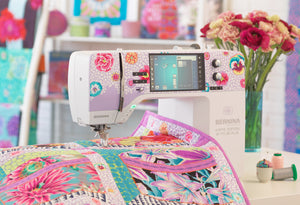

We Love Our Quilting Community
At High Country Quilts we care deeply about community. With our experiences in retail, we know that a store is not only a place to shop but also a place for the community to gather and share. During this busy...


When that creative spark hits, the first thing most of us do is reach for our phones to search for "quilting supplies near me." A quick search on Google Maps for "quilt shop" or "fabric store" is all it takes to see a sprinkle of pins pop up, each one a potential haven for your next project.
That initial search is fantastic, but it's really just the beginning. Think of those map results as a treasure map. Every pin is a potential goldmine of fabrics, threads, and tools, but not all treasure is created equal. Your map will generally point you to two types of places: the dedicated, independent quilt shop and the larger chain craft store.
Knowing the difference between these two can save you time and make your supply run so much more successful. A dedicated local quilt shop is like a cozy, specialized boutique. You'll find a thoughtfully curated selection of high-quality, 100% cotton fabrics from top designers, get brilliant advice from people who live and breathe quilting, and feel a real sense of community. These are the spots you visit when you need that perfect, unique fabric or some expert guidance on a tricky pattern.
On the other hand, a big-box craft store is more like a giant supermarket. It has a massive range of general craft supplies, and yes, there’s a fabric section. While it’s super convenient for grabbing basics, the fabric quality might not always be top-tier for quilting, and the selection is often more general-purpose. Your choice really boils down to what your project needs: are you looking for specialty ingredients or just stocking up on everyday staples?
To give you a better idea of what to expect, here's a quick comparison of the different types of stores where you can find your quilting goodies.
| Store Type | Best For | Typical Selection | Community Feel |
|---|---|---|---|
| Independent Quilt Shop | High-quality fabrics, expert advice, and unique finds. | Curated collections of designer cottons, specialty notions, and longarm services. | Strong and supportive. Often hosts classes, clubs, and events. |
| Big-Box Craft Store | Basic supplies, batting, and frequent sales. | A broad mix of fabrics (polyester, fleece, cotton blends), general sewing tools. | Minimal. Staff are generalists, not quilting specialists. |
| Sewing Machine Dealer | Machine-specific accessories, servicing, and high-end threads. | Top-of-the-line machines, specialty feet, stabilizers, and machine embroidery supplies. | Focused on machine education and technical support. |
| Online-Only Retailers | Massive selection, competitive pricing, and hard-to-find items. | Virtually endless choices of fabric from around the world, precuts, and kits. | Varies greatly; some have active forums or social media groups. |
Each type of store fills a different niche in a quilter's life. Sometimes you need the inspiration and expertise of a local shop, and other times, a quick trip to the chain store for a rotary blade is all that's required.
The chart below shows why so many quilters make a point to seek out their local, independent shops.
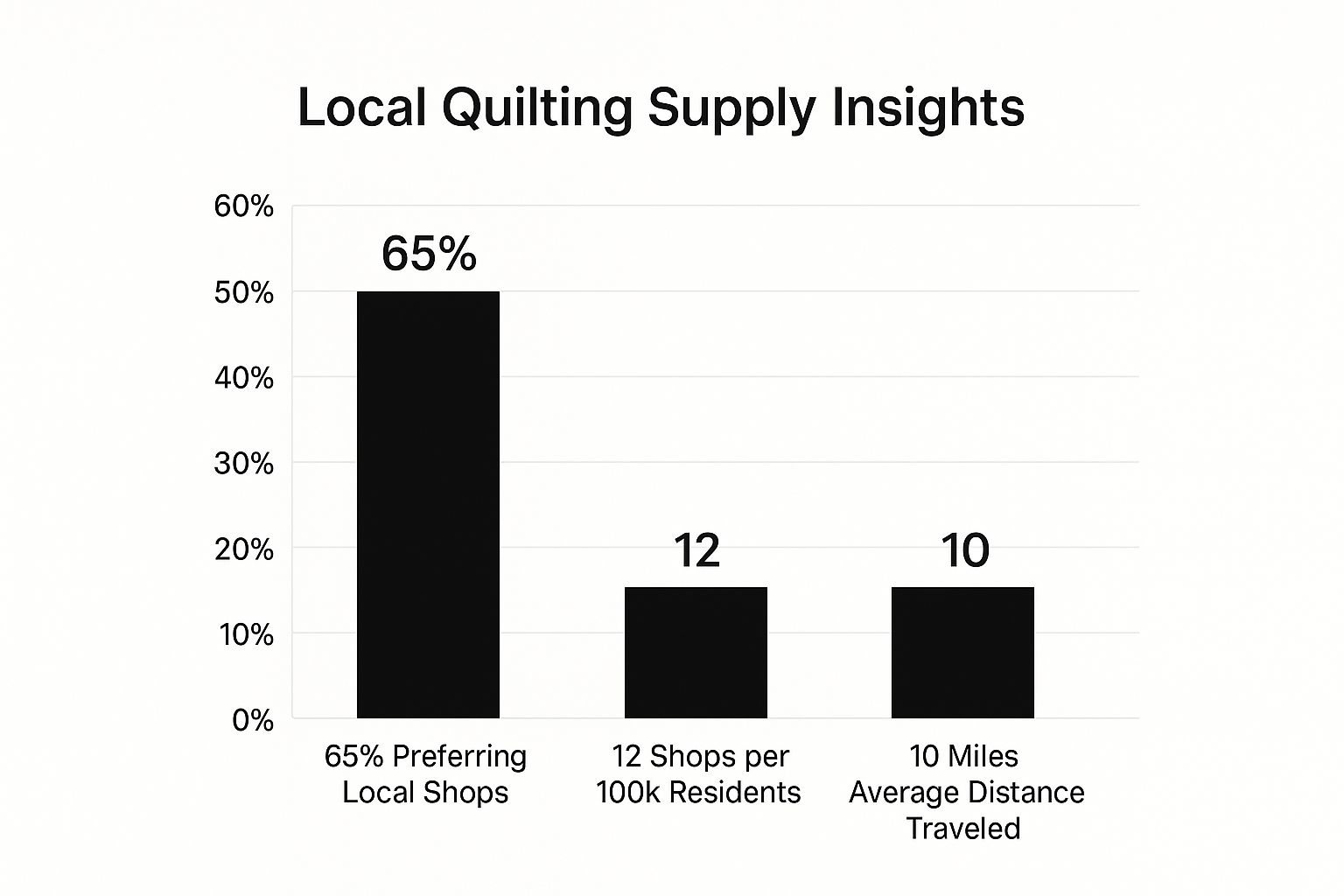
It's clear from the data that quilters really value the specialized experience. A huge majority will go the extra mile, literally, for the quality materials and supportive community that only a dedicated local shop can offer.
You’d think in an age where you can get anything delivered to your door, the local quilt shop might be a thing of the past. But if you've ever searched for "quilting supplies near me," you know that's far from the truth. These shops aren't just surviving; they're thriving.
The secret sauce? Quilting is about connection, and your local shop is the heart of that community. It’s a place that a website simply can't replace.
Walk into a local quilt shop, and you'll find it's a whole creative ecosystem. It's where a nervous beginner can get real, honest advice on a first sewing machine, and an expert quilter might stumble upon that one rare fabric they need to finish a project they've been dreaming about for years.
This is where you don't just buy a yard of fabric; you build relationships, learn new skills, and find your people.
What really sets them apart?
This community-first approach is a big reason why quilting is seeing such a comeback. The global quilt market is booming, with some projections showing it could hit $5 billion by 2025 and keep growing at around 6% each year through 2033. That's a lot of quilters who value the artistry and support that local shops offer. You can find more details on this trend in this global quilt market analysis.
A great quilt shop is like a creative's library. The shelves are filled with stories waiting to be told in bolts of fabric, and the staff are the experts who help you find the perfect one to start your own.
At the end of the day, local quilt shops succeed because they give us something we all crave: a sense of belonging. They host classes, workshops, and social "sew-ins" where friendships are formed right alongside quilt blocks.
When you choose to shop local, you're doing more than just buying supplies. You're investing in a place that keeps a beautiful craft alive, nurtures creativity, and quite literally strengthens the fabric of your community.
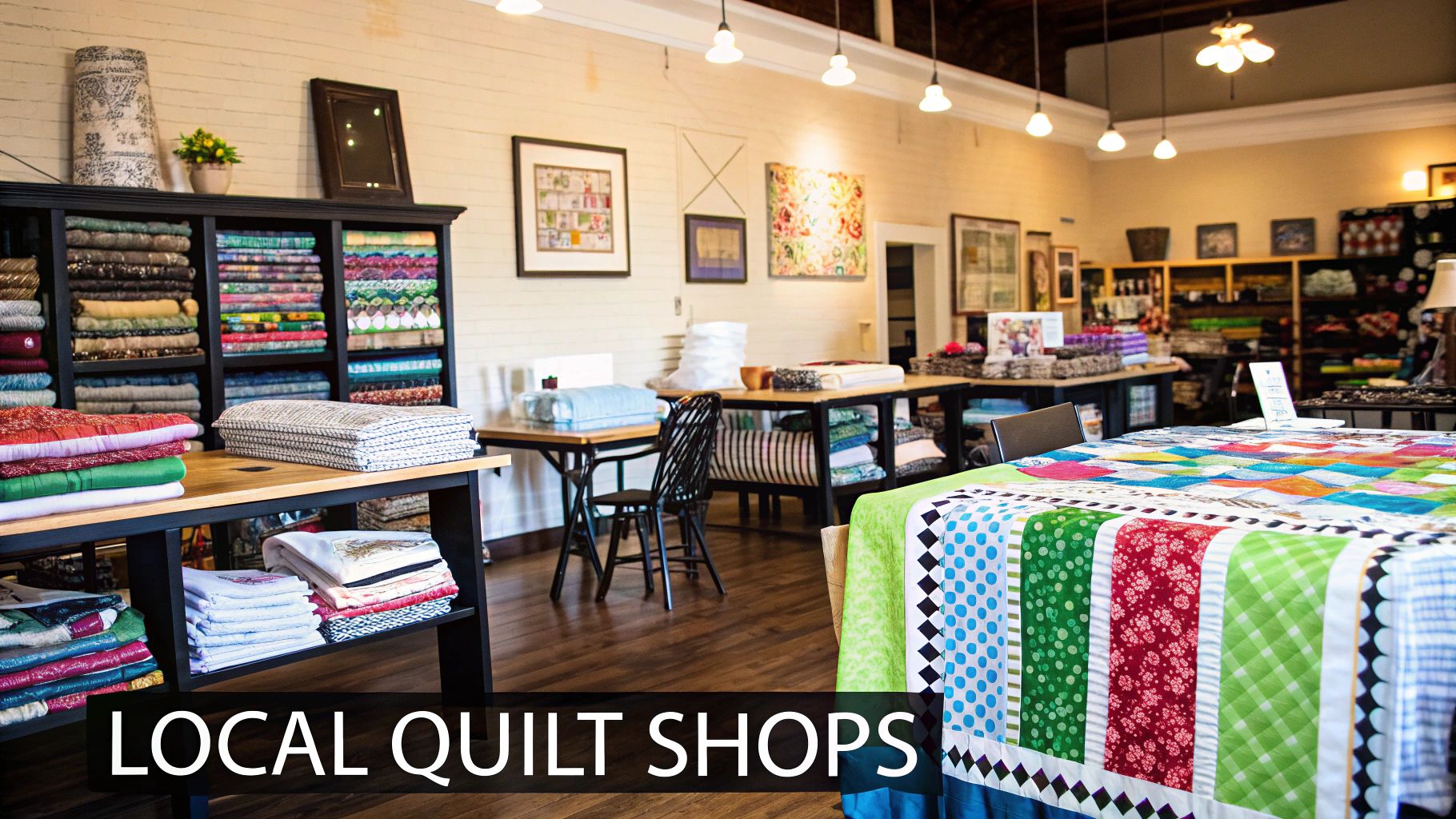
The first time you walk into a real quilt shop, it's an experience. The sheer volume of color and texture is incredible—bolts of fabric stacked to the ceiling, creating a vibrant, creative space. It’s a feast for the eyes, but it can also be a little overwhelming. A bit of planning can help you channel that sensory overload into pure inspiration.
Think of the staff as your personal quilting guides. These aren't just retail workers; they're almost always quilters themselves, brimming with practical knowledge about everything from color theory to how to fix a finicky pattern. Don't be shy about asking for help—they are truly your best resource in the store.
Walking in with a game plan is the best way to leave with what you actually need, not just a bag full of beautiful fabrics that don't quite go together. A little preparation makes all the difference.
Here’s a quick checklist of what to bring along:
Having these items ready helps the staff give you their best advice. They can steer you to the right section and even suggest complementary fabrics you might have missed. It turns your search for quilting supplies near me from a chore into a fun, collaborative project.
Your local quilt shop staff wants to see you succeed. They're not just selling fabric; they're nurturing a fellow crafter. Approaching them with clear project details allows them to share their expertise fully and help bring your vision to life.
To get the most out of your visit and be a good quilting citizen, a few simple courtesies go a long way. Always ask an employee before you unroll a bolt of fabric. They'll be happy to show you a larger section and know how to handle it properly to prevent wrinkles or damage.
When you’re ready for a cut, try to be patient. Cutting fabric accurately takes focus, and it’s best to let the pros handle their super-sharp rotary cutters without distractions. This ensures you get a clean, precise cut and keeps everyone safe.
Finally, just take your time. Wander the aisles, touch the different fabrics (gently!), and let the colors spark new ideas. A quilt shop is a place to be savored, not rushed. Enjoy the process, and you’ll leave with the perfect materials and a fresh dose of motivation for your next project.
Every quilt starts with an idea, but it’s the right tools that bring it to life. When you search for "quilting supplies near me" and walk into a local shop for the first time, the sheer variety can feel a bit overwhelming. But don't worry—let's break down the essential gear you'll need, starting with the heart of every project: the fabric.
Fabric is what gives a quilt its personality and warmth. While you'll see bolts of all kinds, the tried-and-true standard for quilting is 100% cotton. It's a dream to work with—it holds a press, cuts cleanly, and stands up to years of love and washing. You’ll also find gorgeous batiks with their one-of-a-kind dye patterns, and soft, cozy flannels that are perfect for a quilt you plan to snuggle under.
To help quilters get started on a project without buying yards of everything, shops offer pre-cuts. Think of them as a curated fabric tasting menu. They're bundles of coordinating fabrics from a single collection, cut into standardized shapes.
Pre-cuts are a fantastic way to build a diverse fabric stash without a massive investment. You get a little bit of everything from a designer's collection, all perfectly coordinated and ready to go.
Once you have your fabric, you need the tools to put it all together. In the quilting world, these gadgets and accessories are called "notions." They’re the workhorses that ensure your project comes together accurately and beautifully.
Your quilting notions are an investment in accuracy and enjoyment. The right tools don't just make the work easier; they make the process more joyful and the results more professional.
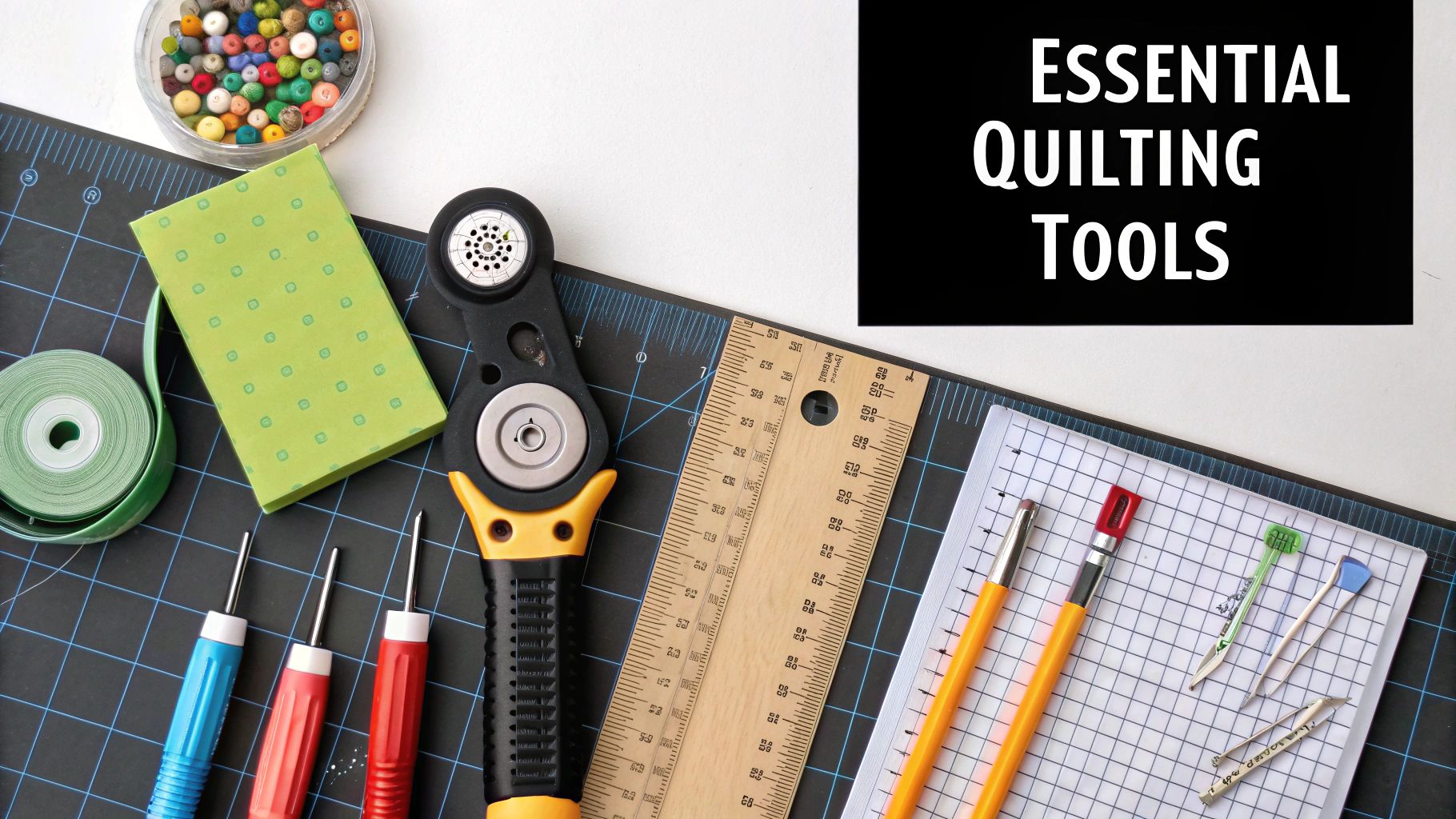
Here are the absolute must-haves for your toolkit:
Navigating all these supplies can feel like a lot at first, but your local quilt shop is the perfect place to get hands-on advice. Below is a simple checklist of the core items you'll want to gather as you get started.
| Category | Essential Item | Purpose |
|---|---|---|
| Cutting Tools | Rotary Cutter & Self-Healing Mat | For making fast, precise, and straight cuts through fabric. |
| Measuring Tools | Acrylic Rulers (e.g., 6"x24" & 5"x5") | Ensures accurate measuring and cutting of fabric pieces. |
| Sewing | Quality 50wt Cotton Thread | Strong, low-lint thread for piecing your quilt top together. |
| Sewing | Pins or Wonder Clips | To hold fabric pieces together securely while you sew. |
| Pressing | Iron & Ironing Board | Crucial for pressing seams flat for accurate piecing. |
| Finishing | Seam Ripper | Every quilter's best friend for fixing inevitable mistakes. |
This checklist covers the absolute essentials. As you progress, you'll discover more specialized tools, but these items will get you through countless beautiful projects.
Finally, what turns a patchwork top into an actual quilt is the "sandwich"—the three layers that make it complete. Batting is the fluffy middle layer that provides warmth and dimension. It comes in many materials, including cotton, wool, polyester, and blends, each giving the finished quilt a different feel and drape.
The backing is the fabric on the underside of your quilt. It’s your chance to add one last pop of color or a complementary pattern. Choosing the right batting and backing is the final creative step that brings your entire vision together.
This craft we love is part of a massive global community. In 2025, for instance, the Asia Pacific region alone made up 22.50% of the Four Seasons Quilt market, a segment valued at $1,079.32 million. It’s a powerful reminder of how this shared passion for textiles connects us all. If you’re curious about the numbers behind the craft, you can dive into this detailed quilt market report.
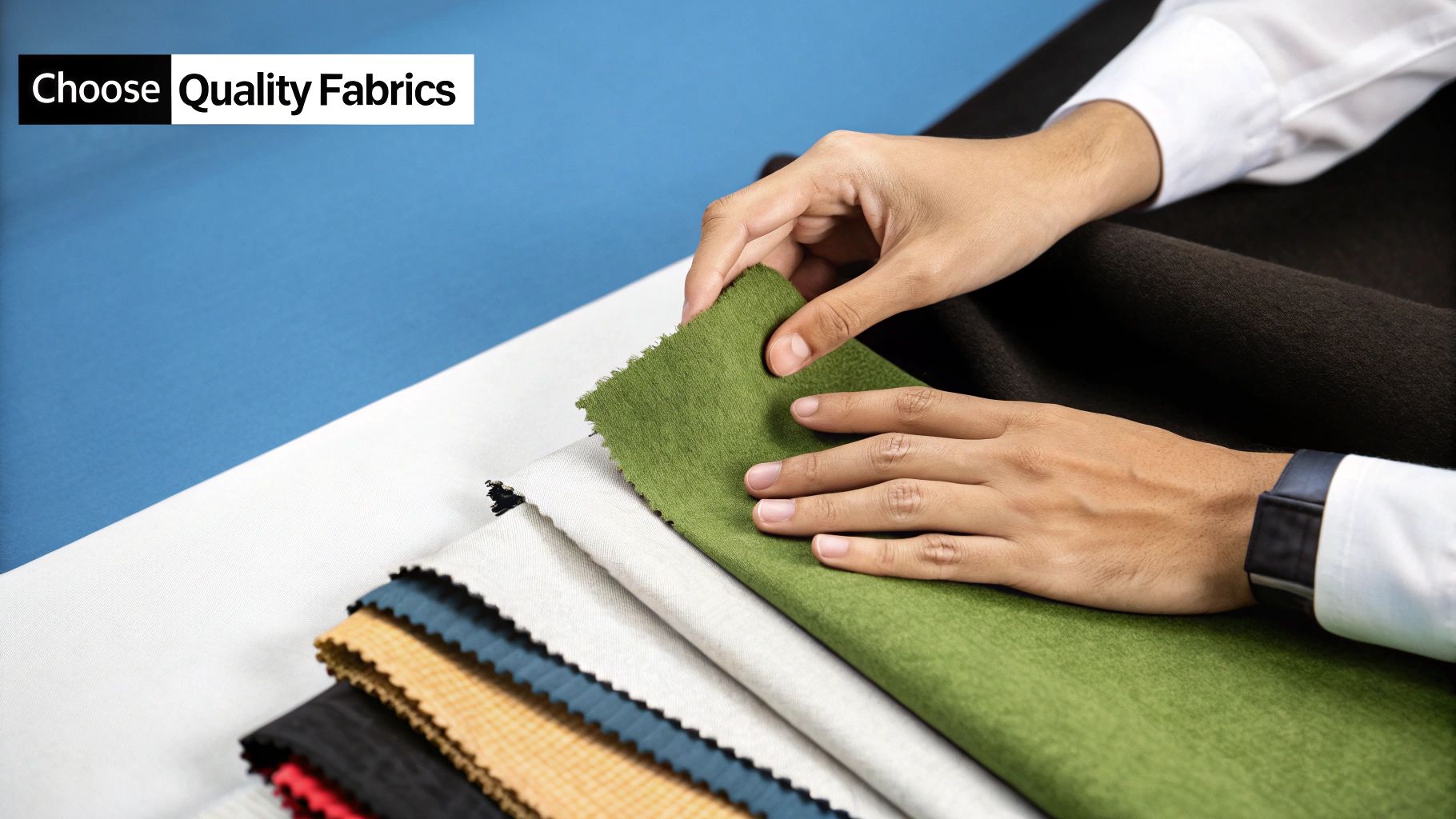
The fabric you choose is quite literally the foundation of your quilt. It’s what gives it life, beauty, and, most importantly, longevity. A quilt made from beautiful, sturdy material can become a cherished family heirloom, while one pieced together with flimsy fabric might not even survive its first trip through the washing machine. Learning to spot top-notch fabric is a skill that will serve you well on every single project.
Think of it like cooking a gourmet meal. A chef can instantly tell the difference between fresh, quality ingredients and subpar produce. It's the same for a quilter. You can feel the difference in fabric. High-quality quilting cotton feels substantial and smooth in your hands. It has a tight, solid weave and a certain crispness to it, never feeling thin or gauzy.
When you're out looking for quilting supplies near me, there are a few simple, hands-on tests you can do right in the store to check a fabric's quality. These little tricks will help you become a much smarter shopper, ensuring you only bring home the best for your next masterpiece.
First, just trust your sense of touch. A high thread count gives quilting cotton that silky, dense feel we all love. If it feels rough or you can easily see light between the threads, it’s a sign of lower quality. That kind of fabric just won't hold up to the demands of stitching and washing.
Next up is what I call the "light test." Unroll a bit of fabric from the bolt and hold it up to a light in the shop.
Another great clue is the dye saturation. The colors on premium fabric should be deep, vibrant, and look almost the same on the back as they do on the front. If the wrong side of the fabric looks noticeably paler, the dye probably isn't colorfast, which means you could have a bleeding disaster on your hands later.
Choosing your fabric is the first step in storytelling. The weight, color, and texture of the cloth are the words you’ll use. Selecting high-quality material ensures your story will be told for generations.
As you browse the aisles, you'll probably notice that quilters are getting more interested in premium and sustainable fibers beyond just standard cotton. This shift is pushing the whole industry to offer better materials. For instance, the use of luxurious silk in quilts is on the rise, reflecting a broader trend in textiles.
This demand for quality is having a huge impact. Global fiber production is projected to jump from 116 million tons in 2022 to 147 million tons by 2030. You can read more about these emerging quilt market trends here.
Arming yourself with this knowledge helps you invest in fabrics that not only look incredible but also honor the time, love, and artistry you pour into every single stitch.
 A truly great local quilt shop is so much more than a place to buy fabric and thread. It’s the heart of the quilting community—a creative clubhouse where you can sharpen your skills, share your passion, and finally meet people who get just as excited about a new fabric line as you do. When you search for quilting supplies near me, you’re really looking for a doorway into that world.
These shops are fantastic learning hubs, with classes and workshops designed for everyone. You’ll find everything from a "Quilting 101" class that gently guides you through your very first block to advanced workshops diving into tricky techniques like free-motion quilting or paper piecing. Taking a class is one of the best ways to build a solid foundation and gain the confidence to tackle bigger projects.
The learning and connecting don't stop when the class is over. Many shops host more relaxed social events that keep the creative vibes going all month long. These gatherings are perfect for making new friends and seeing what amazing things other quilters in your area are creating.
Keep an eye out for events like these on a shop’s calendar:
Joining in on these events isn’t just about mastering a new skill. It’s about finding your people, building a support system, and turning what can be a solitary hobby into a joyful, shared experience.
Plugging into your local quilting scene will enrich your craft in ways you can't even imagine. It's the motivation you need when you're stuck on a project and the cheering section that celebrates with you when you finish that quilt you're so proud of. This network turns a simple shopping trip into a meaningful part of your creative life.
Diving into the world of quilting can feel a little overwhelming at first. As you start searching for the perfect materials, a few common questions are bound to pop up. Let's walk through some of the most frequent queries so you can shop with confidence and get exactly what you need for your next masterpiece.
A classic question is whether to head to a dedicated quilt shop or a big-box craft store. It's helpful to think of a local quilt shop as a specialty boutique. They carry a carefully chosen collection of premium, 100% cotton fabrics from well-known designers, and the staff are almost always passionate quilters themselves who can offer fantastic, project-specific advice.
Big-box stores, on the other hand, are more like a general-purpose department store. While they have a broad array of craft supplies, their fabric selection is often more generic and the quality can be hit-or-miss for quilting.
Figuring out yardage is probably the most intimidating part for a new quilter. The easiest way to get it right is to start with a pattern. A good pattern takes all the guesswork out of the equation, telling you precisely how much of each fabric you'll need.
Another fantastic option is to grab a quilt kit. These bundles come with all the pre-cut fabric for your quilt top and binding, so you can just jump right into the fun part—sewing!
If you're adventuring without a pattern, here’s a rough guide for a small lap quilt (around 45" x 60"):
Sometimes, a search for "quilting supplies near me" just doesn't turn up many options. In that case, online fabric stores can be a lifesaver, offering a massive selection and often competitive prices. But there’s a trade-off.
The biggest downside is that you can’t physically touch the fabric. The tactile experience is a huge part of quilting, and it's impossible to truly judge a fabric's weight and texture through a screen. Colors can also look different from one monitor to another.
Many experienced quilters adopt a hybrid strategy. They might buy basics or hard-to-find notions online, but they rely on their local shop for the main fabrics—the ones they really need to see and feel in person. This approach truly gives you the best of both worlds, combining convenience with the irreplaceable experience of a local store.
At High Country Quilts, we believe in the power of touch, community, and expert guidance. Stop by our Colorado Springs shop to feel the quality of our fabrics, get personalized advice for your project, and connect with fellow creators. Explore our extensive selection of fabrics, BERNINA machines, and classes today!
At High Country Quilts we care deeply about community. With our experiences in retail, we know that a store is not only a place to shop but also a place for the community to gather and share. During this busy...

Hi! We’re Adam and Renee Wheaton, the new owners of High Country Quilts! For more than 40 years, we’ve owned and operated vacuum and sewing businesses. Following in Renee’s father’s footsteps after he retired from All Discount Vacuum and Sewing in Colorado...


Leave a comment