
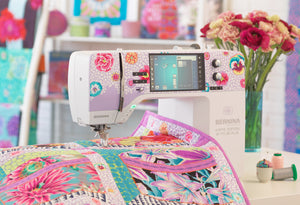

We Love Our Quilting Community
At High Country Quilts we care deeply about community. With our experiences in retail, we know that a store is not only a place to shop but also a place for the community to gather and share. During this busy...


You’ve pieced the quilt top. You’ve pressed the seams. You’ve stood back and thought, “It’s close, but it still needs something.”
That feeling is common, especially when you’re new and shopping at a quilting shop Colorado Springs makers already trust for fabric, notions, and machine help. A lot of beginners can choose a fabric line, but then freeze when it’s time for the finishing touches. Ribbon often sits right there in the notions area, and many people walk past it because they aren’t sure what it’s used for in quilting.
A 1.5-inch ribbon is one of those supplies that looks simple until you start using it. It can finish an edge, become a handle, create a closure, or add soft texture without asking you to learn an advanced technique first. If you’ve ever thought, “Is ribbon just decorative?” the short answer is no.
That beginner question matters. Local search data shows 40% of quilting queries in the Colorado Springs area are beginner-focused, and many people are looking for how-to help and basic supply guidance rather than another directory listing, according to local quilting search trend notes. That gap is exactly why hands-on, plain-language guidance helps so much.
A beginner came into class with a baby quilt top tucked under her arm and that look we all recognize. The piecing was done. The colors were sweet. The part that felt hard was finishing it neatly, without a bulky edge or a lot of fuss at the machine.
We pulled out a 1.5-inch ribbon from the notions wall at High Country Quilts, laid it across the quilt, and her shoulders dropped. She could see the solution.
New quilters often see ribbon as gift wrap material or something meant for bows. In quilting, a 1.5-inch ribbon works more like a helpful finishing tool. It can cover an edge, add a soft handle, make a tie closure, or bring in color without asking you to learn a complicated technique first.
That width helps for a simple reason. It gives you enough surface area to hold, pin, and stitch with control. A very narrow ribbon can twist and wander. A much wider one can feel floppy on smaller projects.
For beginners, that kind of control matters. You are already learning how fabric grain affects shape, how a quarter-inch seam really looks, and why pressing changes the final result. A ribbon that behaves predictably gives you one less thing to fight.
A useful notion should solve more than one problem.
The hesitation usually comes from three practical questions.
That is one reason local shop advice matters so much. In class, we can hand you two ribbon types, let you feel the difference, and show you on a scrap why one choice is easier for a tote handle while another is better for a soft edge finish. Once you feel that difference in your hands, ribbon stops being mysterious and starts becoming useful.
You pick up two rolls of ribbon at the shop. One feels slick and dressy. The other feels firm, almost like it already knows how to stay straight. They are the same width, but they will not behave the same way under your needle.
That is the part many beginners do not know yet. Width is only one piece of the decision. Material and finish decide how the ribbon folds, presses, grips the fabric, and holds up after use.
A 1.5-inch ribbon gives you a workable strip of color and coverage without feeling bulky on most quilting projects. From there, the main question becomes simple: what job does this ribbon need to do?
This width gives your hands something to manage. You can pin it, hold it flat, and guide it through a home machine without fighting a tiny, twisty strip.
It also shows its surface clearly. That matters because finish changes everything. A shiny ribbon reflects light and draws attention. A ribbed ribbon looks more casual and tends to stay put better. A soft matte cotton ribbon blends in more naturally with quilting cottons.
At High Country Quilts, this is often the moment in class when beginners start comparing trims by touch instead of color alone. That small shift helps a lot.
A good way to sort ribbon is by behavior, not by decoration. Ask yourself, “Will this ribbon slide, hold, soften, or stand up?”
| Material | Best For... | Sewing Tip |
|---|---|---|
| Satin | Soft decorative accents, gentle bindings, embellishment on special projects | Use fine pins or clips and stitch slowly to avoid shifting |
| Grosgrain | Tote handles, closures, sturdy accents, practical projects | Topstitch near the edge because the ribbed texture helps guide you |
| Cotton | Casual bindings, soft loops, projects that need a natural feel | Press lightly before sewing if it arrives creased |
| Velvet | Rich trim on pillows, seasonal décor, statement details | Test on a scrap first because the pile can creep under the presser foot |
Here is a beginner-friendly way to read ribbon finishes.
A smooth finish like satin can look beautiful, but it may slide while you stitch. A ribbed finish like grosgrain gives your presser foot and fingers more traction. A napped finish like velvet has depth and softness, but it can shift because of the pile. A matte woven finish in cotton often feels the most familiar if you are already comfortable sewing quilting cotton.
Ribbon works a lot like fabric in this sense. Two pieces can be the same size and color, yet one behaves nicely while the other needs extra patience.
Match the ribbon to the task first.
If your project needs to carry weight, start with grosgrain.
If your project needs to feel soft against skin, satin or cotton is often a better fit.
If your project needs texture and visual depth, velvet can be lovely, but it asks for more testing and slower stitching.
Beginners often choose with their eyes first. A steadier approach is to ask one practical question: “What does this ribbon need to do after I sew it on?”
Use this quick checklist:
Practical rule: If the ribbon has to resist pulling, hold both ends and give it a firm tug before you buy.
That tiny test tells you more than the label ever will.
A lot of beginners buy ribbon for one project, then realize it can solve three or four other sewing problems sitting right on the cutting table. That is part of what makes 1.5-inch ribbon so useful. It is wide enough to show, sturdy enough for practical jobs, and easy to handle without wrestling with tiny strips.
At High Country Quilts in Colorado Springs, this is the sort of notion we often pull from the wall and say, “Here are a few ways you can use this.” Once you see those uses in real projects, ribbon starts to feel less like an extra and more like a reliable tool.

Ribbon binding creates a clean border and gives the edge a finished look. For smaller projects, that can save time and reduce a lot of the folding and pressing that traditional binding requires.
It works especially well on mini quilts, table toppers, baby items, and other pieces that do not need the heavier wear of a full bed quilt. The key is choosing a ribbon with enough body to wrap the edge without collapsing.
Keep these points in mind:
Ribbon is also an easy way to add lines, curves, and color without cutting separate fabric shapes. You can stitch it across a quilt top in straight rows, gentle waves, or layered designs.
That makes it friendly for beginners. You place the ribbon where you want the design, pin or clip it, and stitch it down. There is less trimming, less edge prep, and less chance of small pieces shifting out of place.
It is a nice fit for:
A 1.5-inch ribbon can also do real work on a bag. Grosgrain is a common choice because it has grip, structure, and enough firmness to hold up well as a handle.
This width sits comfortably in the hand and spreads weight better than a narrow ribbon. If you are making a quilted tote, project bag, or small carryall, ribbon handles can look coordinated instead of bulky. Matching the ribbon to the fabric gives the whole piece a more thoughtful finish.
If you are new to bag making, ask for help in the shop before you cut. Pairing the ribbon with the right stabilizer, needle, and bag pattern makes a big difference.
This is one of the most practical uses, and beginners often overlook it. Ribbon ties are simple to sew and forgiving to use.
They work well for:
A tie closure does not ask for hardware, special tools, or perfect precision. If your stitching is still developing, the project can still function well and look neat. For many new quilters, that is a confidence builder. You finish the project, it works, and you are ready to try the next one.
You get home from the quilt shop with a ribbon that looked perfect on the bolt. Then you stitch it onto your project, and it wiggles, puckers, or lands a little crooked. That moment frustrates a lot of beginners, but it does not mean you did anything wrong. Ribbon behaves best when you prepare for it first.

Start by matching your needle to both the ribbon and the fabric underneath it. For many quilting cotton projects, a universal needle is a good starting point. If the ribbon is tightly woven, crisp, or slippery, a sharp needle often makes a cleaner hole and a neater stitch line.
Thread choice matters too. Matching thread helps the stitches blend in. Contrasting thread can look beautiful, but only if you want the stitching to become part of the design.
Before your main project goes under the presser foot, make a practice sandwich from scraps. Use the same layers, the same ribbon, and the same batting if the project has batting. That small test works like a dress rehearsal. It lets you spot problems while the stakes are low.
Try this quick check:
Puckers have a few common causes. Tension may be too tight. The stitch length may be too short. The ribbon may be getting pulled as it feeds. Sometimes the ribbon and the quilted layers move through the machine at different speeds.
The fix starts with your hands. Guide the ribbon, but do not stretch it. If you pull from the front or the back, the ribbon can lengthen slightly while you sew, then draw up into ripples after the stitching is finished.
A walking foot can help when the ribbon creeps across the surface or when a quilt sandwich feeds unevenly. If you are sewing ribbon onto thicker layers and your machine struggles to keep everything feeding evenly, ask at High Country Quilts which presser foot or setup suits your project. That kind of local help saves a lot of trial and error.
A clear order helps beginners stay calm and accurate. Follow these steps for most ribbon applications:
If you are attaching ribbon as a handle or tie, mark both ends before clipping. Beginners often focus on the stitching and forget alignment. A ruler and a fabric-safe marking tool solve that problem before it starts.
If the ribbon twists, stop and flatten it completely before you sew. Twists rarely fix themselves once the stitches are in.
If satin slides around, slow the machine down. A slower speed gives you time to keep both edges where they belong.
If your stitches wobble, practice on a scrap with a drawn guide line first. Straight stitching is a learned hand skill, much like keeping a rotary cutter on track. The more often you practice it, the steadier it gets.
If your project has quilted layers, bulky seams, or specialty ribbon, bring those questions into class or ask in the shop. A beginner can make clean, polished ribbon details with the right setup, and that hands-on guidance is one of the advantages of shopping locally in Colorado Springs.
You finish a small quilt top, hold it up, and realize it needs one more useful detail. Not more piecing. Not fancier fabric. Just a finishing touch that adds function or a little personality without turning the project into a struggle. That is where 1.5-inch ribbon shines for beginners.
A good first ribbon project gives the ribbon one clear job. It should hold, frame, hang, or decorate. If the ribbon is trying to do too many things at once, the project gets harder to control. If it has one purpose, you can focus on neat placement and steady stitching.

This is often the project that helps a beginner see ribbon as more than decoration. A soft satin or cotton ribbon around the edge can give a baby quilt a gentle, finished look and a pleasant hand feel.
Difficulty: Beginner
Best ribbon type: Satin or cotton
Why it works: You get practice guiding ribbon around the quilt edge on a manageable project.
Keep the quilt small. Baby quilts and stroller quilts are easier to turn, clip, and sew than larger sizes. If you are standing in the ribbon aisle at High Country Quilts and feeling unsure, this is a smart place to start because softness matters more than structure here.
A tote bag teaches you how ribbon can carry weight and color at the same time. Grosgrain usually works well because it has body. It feels more like a sturdy belt than a slippery trim, which helps many beginners sew straighter and trust the result.
Difficulty: Beginner to confident beginner
Best ribbon type: Grosgrain
Why it works: The ribbon has a practical job, so every stitch serves a purpose.
Choose your handle color on purpose. Matching ribbon makes the bag feel calm and polished. Contrast makes the handles part of the design. Either approach works if the choice looks connected to the fabric story.
Pillows are excellent practice boards. You can test ribbon placement on a flat square, step back, and see right away whether the spacing works. That quick feedback helps beginners learn faster.
Difficulty: Beginner
Best ribbon type: Satin, cotton, or velvet
Why it works: You can try stripes, frames, or simple geometric layouts without committing to a large project.
Start with one idea. A border near the edge. Two parallel lines. A framed center panel. Simple layouts usually look cleaner than busy ones, especially with wider ribbon.
Some ribbon projects are all about function, and that is a good thing. Hanging loops for a wall quilt are short, practical seams with very little fuss. They help a beginner practice accurate placement without managing long lengths of ribbon.
Difficulty: Very beginner-friendly
Best ribbon type: Grosgrain or cotton
Why it works: The sewing is brief, the purpose is clear, and the finished piece gets used right away.
If you want the loops to disappear, match the quilt backing. If you want them to become part of the design, repeat an accent color from the front. That kind of small color choice is something local shop staff and class samples at High Country Quilts can help make clearer, because you can compare ribbon and fabric side by side instead of guessing from a screen.
Small projects build skill quickly. They let you practice control, spacing, and color choices on something you can finish in an afternoon. For many Colorado Springs beginners, that first successful ribbon detail is the moment ribbon stops feeling optional and starts feeling useful.
You walk into the shop with a fabric pull in your hand and a plan that felt clear at home. Then you reach the ribbon wall and realize several blues look right, several feel different, and you are not yet sure which one belongs on a tote handle and which one belongs on a baby quilt tie. That is normal. Ribbon is much easier to choose when you can touch it, fold it, and compare it beside the fabric you will use.
For Colorado Springs beginners, that is one of the major strengths of shopping at High Country Quilts. You can place ribbon against quilting cotton, check whether the sheen fights with the print, and ask a simple question like, “Will this stay flat if I sew it around an edge?” Those small in-person checks save a lot of second-guessing later.
High Country Quilts is known locally for a large fabric selection and a wide range of notions, including ribbon. That matters because ribbon choice is part color decision, part texture decision, and part construction decision. A ribbon that looks perfect on the spool can feel too stiff once it is stitched into a soft project.

Start with the job, not the color alone. A pretty ribbon that slips, frays, or collapses will teach the wrong lesson to a beginner.
Ask yourself:
Use a sample-based approach. It works like auditioning fabric for a border. You are checking fit, not making a guess from memory.
If you are unsure between two options, choose the one that is easier to sew cleanly. Beginners usually build confidence faster with ribbon that stays put, presses well, and has a stable weave. Pretty matters, but usable matters first.
Ribbon seems small until you use it well. Then it becomes one of those supplies you keep reaching for because it can finish, support, decorate, and simplify all at once.
If you’re still building confidence, start with one job for the ribbon. Bind a small edge. Make a pair of tote handles. Add a tie closure to a project bag. Small wins matter.
Colorado Springs has a lively sewing community, and High Country Quilts helps foster collaboration among 500+ local sewing enthusiasts annually, in a local maker environment that also aligns with a 25% rise in beginner sewing interest nationwide from 2021-2025, according to the Colorado Springs Walmart store page reference used in local market context. That means you’re not learning alone. Plenty of people are starting right where you are.
The best next project usually isn’t the fanciest one. It’s the one you can finish, learn from, and feel proud to show someone.
If you’re ready to choose fabric, compare ribbon in person, or get help with your next quilt, visit High Country Quilts and turn that “I think I can make this” feeling into a finished project.
At High Country Quilts we care deeply about community. With our experiences in retail, we know that a store is not only a place to shop but also a place for the community to gather and share. During this busy...

Hi! We’re Adam and Renee Wheaton, the new owners of High Country Quilts! For more than 40 years, we’ve owned and operated vacuum and sewing businesses. Following in Renee’s father’s footsteps after he retired from All Discount Vacuum and Sewing in Colorado...


Leave a comment