
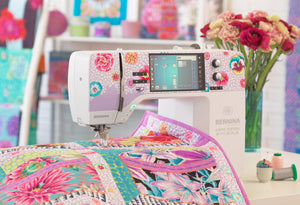

We Love Our Quilting Community
At High Country Quilts we care deeply about community. With our experiences in retail, we know that a store is not only a place to shop but also a place for the community to gather and share. During this busy...


Last Updated: October 19, 2026
When you're starting your quilting journey, choosing the right fabric matters more than you might think. The fabric you select affects how easy your project is to complete, how your finished quilt looks, and whether you'll enjoy the process. At High Country Quilts, we help beginners navigate quilting fabric types for beginners by breaking down what makes each option unique and why it matters for your first projects.
Quilting fabric types for beginners fall into several clear categories. Understanding these categories helps you make smart choices before you buy. The right fabric will make your project easier and more enjoyable from start to finish.
The best fabric for beginner quilters is high-quality quilting cotton. This fabric is forgiving, affordable, and designed specifically for quilting projects. Quilting cotton has a tight weave that holds up to cutting, piecing, and quilting without fraying excessively.

Start with 100% cotton fabrics that are labeled as quilting-weight. The consistency makes them predictable to work with.
Look for fabrics with a smooth finish rather than heavily textured ones. Beginners benefit from fabric that feeds smoothly through sewing machines and cuts cleanly with rotary cutters. Avoid novelty fabrics, heavily napped fabrics, or anything with a loose weave until you've completed a few projects.
High Country Quilts carries premium quilting cotton from trusted manufacturers. Our staff can help you pick fabrics that work well together and suit your skill level. We stock options for every budget and style preference across our Highlands Ranch and second Colorado location.
Quilting cotton is woven tighter and more densely than regular cotton fabric. This tight weave prevents fraying and holds up to the stress of cutting, piecing, and quilting. Quilting cotton also resists pilling and maintains its shape through repeated handling.

Regular cotton (like fabric from clothing stores) has a looser weave. It frays easily, stretches unpredictably, and falls apart when you try to cut it with rotary cutters. Regular cotton also doesn't hold stitches as securely, which causes seams to separate during quilting.
The difference shows up immediately when you start cutting. Quilting cotton cuts cleanly with sharp edges. Regular cotton shreds and pulls. When you sew quilting cotton seams, they stay secure. Regular cotton seams come apart under the tension of quilting.
Price matters too. Quilting cotton costs slightly more per yard, but it lasts longer and produces better results. You won't waste time fighting with fabric that doesn't behave. Beginners save money and frustration by starting with proper quilting cotton.
Solid quilting cotton is plain-colored fabric with no pattern. These fabrics form the backbone of most quilt designs. Solids let your piecing and quilting show without competing patterns.
Solid cotton comes in hundreds of colors. Neutrals like gray, white, and cream work as backgrounds. Bold colors like deep blue, red, and purple create focal points. Earth tones and pastels offer endless options for different aesthetics.
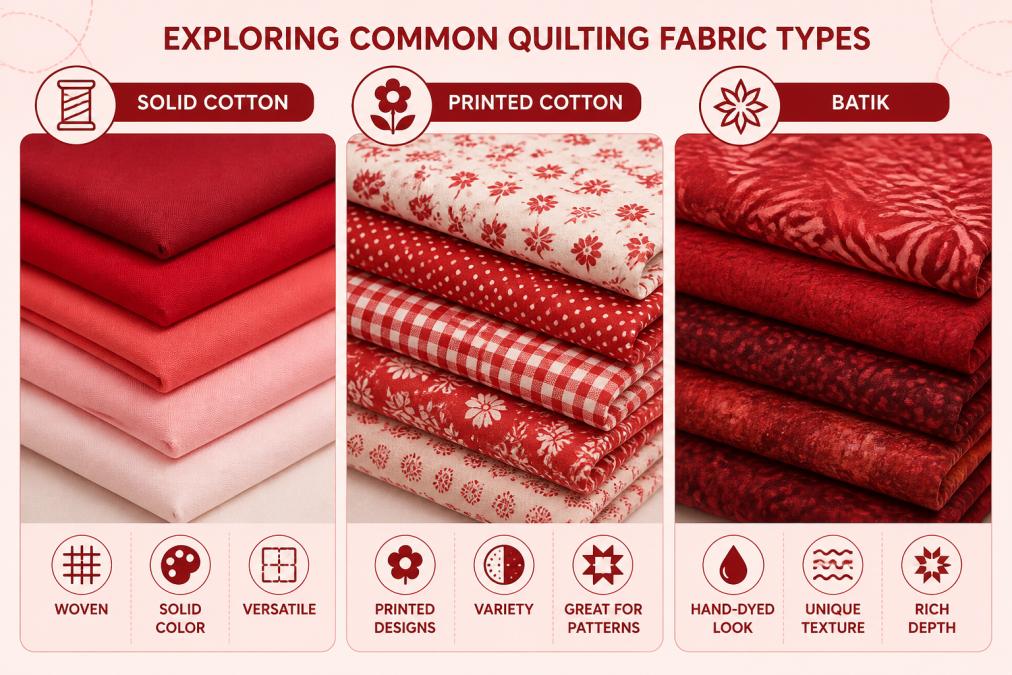
Solids are ideal for beginners because they're forgiving. Cutting mistakes don't show as much. Uneven seams blend into solid color. You can focus on learning technique rather than managing complex patterns.
The Gray Bella Solids 44"/45" Fabric Per Yard from Moda offers USA-grown cotton in a versatile neutral shade. This fabric works as a background, border, or binding fabric in almost any project. At $7.69 per yard, solid cotton is budget-friendly for starters.
Printed cotton features designs, patterns, or images on the fabric surface. These prints add visual interest and personality to quilts. Prints range from small geometric patterns to large scenic images.
Batik is a special type of printed cotton made using a hand-dyeing technique. The process creates unique, organic patterns with rich colors. Batik fabrics often feature intricate designs that look hand-painted. Each bolt is slightly different, making batik quilts feel one-of-a-kind.
Beginners can use printed fabrics successfully. Choose prints with clear contrast between colors so your seams stay visible. Avoid very busy prints that make it hard to see where pieces connect. Medium-scale prints work better than tiny patterns or huge images for first projects.
The Pastel Bali Chops - Fishing Net Quilting Cotton 44"/45" Fabric Per Yard features hand-dyed batik from Hoffman Fabrics. The soft pastel colors and organic pattern bring character to any project. At $10.39 per yard, batik costs more than basic prints but less than specialty fabrics.
The Brown Chrysanthemum Cotton 43"/44" Fabric Per Yard from Maywood Studio shows how printed cotton adds visual appeal. The rich brown tones and detailed chrysanthemum design work in traditional or modern quilts. This premium fabric runs $10.49 per yard.

Beginners should stick with 100% cotton for their first quilt. Cotton is predictable, affordable, and forgiving. Once you've completed a project, you can experiment with flannel or specialty blends.
Most beginner quilt patterns specify yardage requirements. Read your pattern carefully and add 10% extra for mistakes. This buffer prevents frustration if you cut wrong or need to remake a piece.
These amounts vary by pattern complexity. Simple designs use less fabric. Complex patterns with many pieces need more. Always check your specific pattern before buying.
Buy fabric in person at High Country Quilts if possible. Our staff can help you calculate yardage and suggest coordinating fabrics. Seeing the fabrics together in natural light prevents color surprises at home.
Brown Chrysanthemum Cotton 43"/44" Fabric Per Yard →
| Project Size | Total Fabric Needed | Background | Accents | Binding | Backing |
|---|---|---|---|---|---|
| Small (40x50") | 2-3 yards | 1-1.5 yards | 0.5-1 yard | 0.25 yard | 2.5-3 yards |
| Medium (50x60") | 3-4 yards | 1.5-2 yards | 1-1.5 yards | 0.25 yard | 3-3.5 yards |
| Large (60x80") | 4-6 yards | 2-3 yards | 1.5-2 yards | 0.5 yard | 4-5 yards |
Fabric bundles solve the color-matching problem for beginners. These pre-cut or pre-selected collections come with coordinating fabrics that work together. You skip the guesswork and focus on sewing.
Common bundle types include:
Bundles cost more per yard than buying individual yardage. However, they save time and reduce decision fatigue. For beginners, the convenience and guaranteed color coordination often justify the extra cost.
Look for bundles designed by fabric designers or manufacturers. These collections are tested to work together. Avoid random bundles that just throw colors together.
High Country Quilts in Highlands Ranch stocks popular bundle options. Our team can recommend bundles that match your style and skill level. Bundles are ideal for gift-givers too, since they make great starter kits for new quilters.
Prepare your fabric before cutting to prevent shrinkage and color bleeding. Prewashing removes sizing (a starch-like coating) and lets fabric relax to its final size.
Prewash quilting cotton in warm water with mild detergent. Use the gentle cycle and lay flat to dry or tumble dry on low heat.
Some quilters skip prewashing for 100% cotton quilting fabric. If you're uncertain, prewash to be safe. It takes extra time upfront but prevents heartbreak later.
After prewashing, press fabric with a hot iron to remove wrinkles. A smooth, wrinkle-free fabric cuts more accurately. Store fabric in a cool, dry place away from direct sunlight. Sunlight fades colors over time.
Keep your fabric stash organized by color. Use clear plastic bins or fabric organizers so you can see what you have. Label bins by color family so you find what you need quickly.
Color choice matters more than many beginners realize. The right color combination makes your quilt beautiful. Poor color choices make even a well-made quilt look flat or muddy.
Start with a simple color scheme. Pick one main color, one or two accent colors, and a neutral background. This limited palette is easier to manage than trying to use five or six colors.
Consider the mood you want. Warm colors (reds, oranges, yellows) feel energetic and cozy. Cool colors (blues, greens, purples) feel calm and peaceful. Neutrals (grays, creams, whites) create a sophisticated backdrop.
Test colors together before buying. Many quilters buy small amounts of potential fabrics and arrange them on a design wall. Live with the combination for a few days. Does it still appeal to you? If not, swap out one color.
Contrast matters for visibility. If your background is dark, choose light accent colors. If your background is light, dark accents pop. Medium colors against medium backgrounds blend together and disappear.
Print scale affects overall appearance. Small prints read as solid color from a distance. Large prints become focal points. Mix print sizes for visual interest. Combine small, medium, and large prints in your quilt.
Visit High Country Quilts to see fabric combinations in person. Our staff arranges fabrics to show how colors work together. You can take photos and refer to them while planning. Seeing colors under natural light in the store beats guessing from online photos.
The best fabric for beginner quilters is 100% cotton quilting fabric. It's forgiving to work with, holds its shape, and doesn't slip during piecing. Solid colors or simple prints are ideal for first projects because they help you focus on technique rather than pattern matching. Premium brands like Bella Solids offer excellent quality at reasonable prices, starting around $7.69 per yard.
Yes. Quilting cotton has a tighter weave and higher thread count than regular cotton, making it more durable and stable for piecing. Regular cotton may shift, fray, or lose shape during cutting and sewing. Quilting cotton also holds creases better, making it easier for beginners to achieve crisp seams. The slight weight difference matters significantly when you're learning precision piecing.
Always add an extra 0.25 yards as a buffer for mistakes or shrinkage. Check your specific pattern for exact requirements before purchasing.
Most quilters skip prewashing modern quilting cotton. However, if you're using darker colors or batik fabrics, a gentle prewash in cool water can prevent dye transfer later. If you do prewash, use mild detergent, avoid heat, and dry on low. For beginners, starting with unwashed fabric is acceptable and saves time on your first project.
Choosing the right quilting fabric types for beginners sets you up for success on your first project. Start with quality quilting cotton in colors and prints that speak to you. High Country Quilts has everything you need in Highlands Ranch and our second Colorado location. Visit us to see fabric samples, get expert guidance on yardage and color selection, and discover why so many quilters trust us with their projects. Our team is here to help you create with confidence and joy.
At High Country Quilts we care deeply about community. With our experiences in retail, we know that a store is not only a place to shop but also a place for the community to gather and share. During this busy...

Hi! We’re Adam and Renee Wheaton, the new owners of High Country Quilts! For more than 40 years, we’ve owned and operated vacuum and sewing businesses. Following in Renee’s father’s footsteps after he retired from All Discount Vacuum and Sewing in Colorado...


Leave a comment