

We Love Our Quilting Community
At High Country Quilts we care deeply about community. With our experiences in retail, we know that a store is not only a place to shop but also a place for the community to gather and share. During this busy...


Welcome to the world of quilting! It’s a place where a simple spool of thread holds the incredible power to take your project from just beautiful to absolutely breathtaking. This guide is here to unravel the mystery of quilting cotton thread and show you why it’s the go-to choice for quilters everywhere. Think of it as the perfect partner for your fabric, working quietly behind the scenes to create durable, heirloom-quality quilts.
Cotton thread is truly the unsung hero of any quilt. While all those gorgeous, vibrant fabrics steal the spotlight, it's the thread that provides the strong, steady framework holding everything together. If you're just starting, the sheer number of thread options can feel a bit dizzying. Even for seasoned quilters, finding the perfect thread is a constant learning process.
This guide is meant to be your companion on that journey. We'll dive into why the natural fibers, strength, and texture of quilting cotton are so perfectly suited for making quilts. Unlike polyester or other synthetics, cotton has minimal stretch and a lovely matte finish that just melts into your cotton fabrics.
A core principle in quilting is to match your thread fiber to your fabric fiber. This simple rule ensures that both your thread and fabric will age, shrink, and wear at a similar rate, which is your best defense against puckered seams and helps guarantee your quilt will last for generations.
We're going to break down all the essentials, giving you clear, practical advice so you can choose your thread with the same confidence you use to pick your fabrics. From understanding thread weight to mastering color matching, you'll be set up for success. To really round out your toolkit, it's also a great idea to get comfortable by understanding other essential sewing notions that play a key role in your projects.
Let’s get started by demystifying the foundational concepts that will help you build beautiful, lasting quilts from the inside out. First up: the two most critical factors, thread fiber and weight.
When you're standing in front of a wall of thread, the choices can feel overwhelming. But it all boils down to two key things: what the thread is made of (its fiber) and how thick it is (its weight). Nail these two, and you’re well on your way to a quilt that not only looks great but also lasts a lifetime.
Think of your cotton fabric and cotton thread as a perfect pair. When you use 100% quilting cotton thread on 100% cotton fabric, they’re in sync. They’ll shrink, stretch, and soften at the same rate through countless washes. This beautiful partnership is what keeps your seams from puckering and ensures your quilt ages gracefully.
It can be tempting to reach for a super-strong synthetic thread like polyester, but that can cause trouble down the line. Polyester is tough and doesn't stretch, which sounds like a good thing. The problem is, it's often too tough for the gentle cotton fabric it's holding together. Over time, that rigid polyester thread can act like a tiny saw, slowly cutting through the softer cotton fibers and causing your seams to literally shred apart.
That's why sticking with cotton is usually the best bet for traditional quilting.
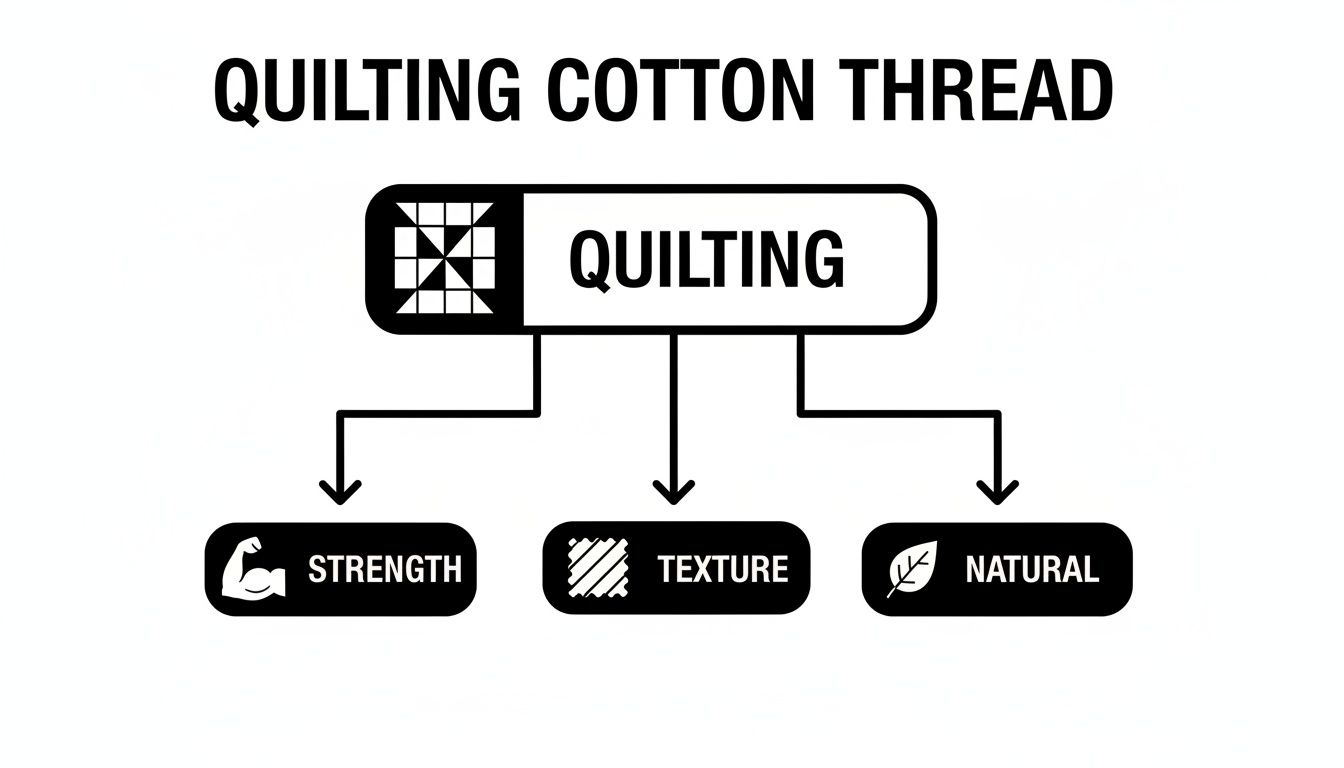
As the diagram shows, cotton’s natural strength, soft texture, and organic nature create a thread that’s just right for quilting projects. For a deeper dive into how natural fibers behave, this Linen vs Cotton Sheets comparison offers some fantastic insights.
Next up is thread weight, which you'll see noted as "wt" on the spool. This is where things get a little counterintuitive, but it's simple once you get the hang of it.
The rule of thumb is: the lower the number, the thicker the thread. The higher the number, the thinner the thread.
So, a 12wt thread is thick and chunky, almost like a thin yarn—perfect for bold, decorative hand quilting where you want the stitches to be a design element. On the other end, a 100wt thread is incredibly fine, almost invisible, making it ideal for delicate appliqué or "invisible" quilting.
This table breaks down the most common weights you'll encounter for quilting projects.
| Thread Weight | Description | Best Used For |
|---|---|---|
| 40wt | A slightly thicker thread that adds texture and visibility. | Decorative quilting, machine embroidery, topstitching, and machine appliqué. |
| 50wt | The all-around workhorse. Strong but not bulky. | Piecing quilt tops, general sewing, and subtle machine quilting. |
| 60wt | A finer thread that blends into the fabric. | Stitch-in-the-ditch, detailed machine quilting, heirloom sewing, appliqué. |
The global market for these threads shows just how essential they are to quilters. Demand for cotton quilting threads hit US$89.7 million in 2024 and is expected to climb to US$109 million by 2031. This isn't just a niche hobby; it's a thriving craft built on these trusted materials. Quilters everywhere rely on these core thread weights to bring their projects to life, which is why understanding them is so important.
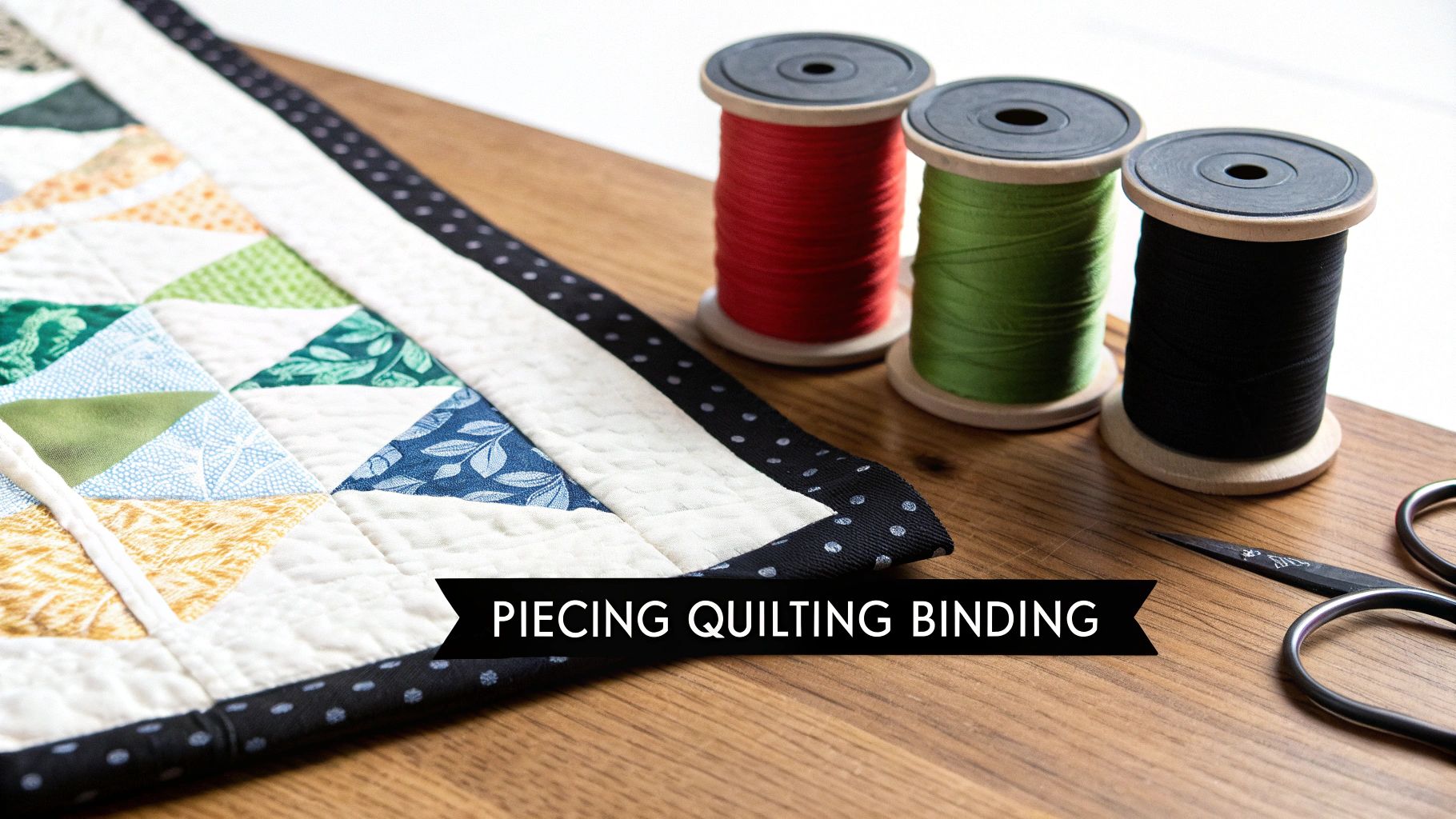
A quilt isn’t made in a single step. It’s a process, built layer by layer, with each stage having its own demands. Think about it like building a house—you wouldn't use the same nails for the frame as you would for the delicate trim work. Quilting is no different.
You need to match your quilting cotton thread to the task at hand, whether it's piecing, quilting, or binding. Getting this right is about more than just looks; it's about making a quilt that will last a lifetime. Let's walk through which thread to grab for each phase of the project.
When you're piecing, your main goal is to create seams that are strong but also incredibly flat. Any extra bulk can cause problems down the line. This is exactly why a 50wt cotton thread is the go-to for experienced quilters. It’s the perfect workhorse thread for this job.
It’s strong enough to hold everything together through years of use, but it’s fine enough to disappear into the fabric once you press your seams. If you use a thread that’s too thick, you’ll create a little ridge along every seam line. That might not seem like a big deal, but it adds up across an entire quilt and can make your top feel lumpy and uneven.
A fine 50wt cotton thread lets your seams almost melt into the fabric. The result is a beautifully smooth quilt top that’s a dream to quilt over, with no bumps or ridges getting in the way of your quilting stitches.
Now for the fun part! The quilting stage is where thread really gets to show off. These are the stitches that run through all three layers of your quilt sandwich—the top, batting, and backing—and they become a key part of the design.
The thread you pick here depends entirely on the look you’re going for:
Last but not least, we have the binding. This is the frame for your artwork, and it takes the most abuse. It’s what gets held, tugged on, and tossed in the wash. For that reason, the thread you use here has to be tough.
A strong 40wt or 50wt cotton thread is what I always recommend for attaching the binding. You need that extra strength to make sure the edges stay locked down tight and don't fray with time. This final, crucial step ensures your quilt can be loved and used for generations. It’s this focus on quality materials that supports the massive $4.5 billion U.S. quilting market and turns simple projects into cherished heirlooms. You can discover more about the quilting industry's economic impact and trends.
Getting your sewing machine to cooperate and produce beautiful stitches is a delicate dance between your machine, needle, and thread. When all three are in sync, your stitches are flawless. But when they're not? That's when you run into frustrating issues like skipped stitches, shredding thread, and puckered fabric.
I like to think of the sewing machine needle as the tunnel your thread has to travel through. If the thread is too thick for that tunnel, it's going to snag, shred, and break. On the other hand, if the tunnel is way too big for the thread, the thread won't be controlled properly, which leads to sloppy, inconsistent stitches. The real magic is in finding the perfect match.
The relationship between your needle size and quilting cotton thread weight is truly the foundation of good stitch quality. A sharp, correctly sized needle is one of the most affordable and impactful tools you can have in your quilting arsenal. Honestly, changing your needle is often the quickest fix for most stitching woes.
Here's a simple guide to get you started on the right foot:
A mismatched needle and thread is the number one cause of stitching problems. If your thread is shredding, the very first thing to check is your needle—nine times out of ten, it’s just too small for the thread you’re using.
That tension dial on your machine isn't something to be afraid of! It's simply a tool for fine-tuning your stitches. The goal is to get the top thread and bobbin thread to meet perfectly in the middle of your fabric layers, creating stitches that look identical on both sides.
The best way to check your tension is with a quick "sandwich test." Grab two different colored scraps of fabric and a thread that contrasts with both, then sew a straight line. Now, take a close look:
Adjust in small increments and stitch a new test line. Keep tweaking until the stitches look balanced and beautiful on both the top and bottom.
Finally, let’s not forget about the bobbin. It’s a small part that plays a big role. As a general rule, you should always try to use the same weight of thread in your bobbin as you do for your top thread, especially when piecing.
While some longarm quilters use a finer bobbin thread for quilting, keeping the weights matched for everyday sewing is the easiest way to get a balanced, strong stitch. Also, make sure your bobbin is wound evenly—not too loose, not too tight—and isn't overfilled, as that can cause tension headaches all on its own.
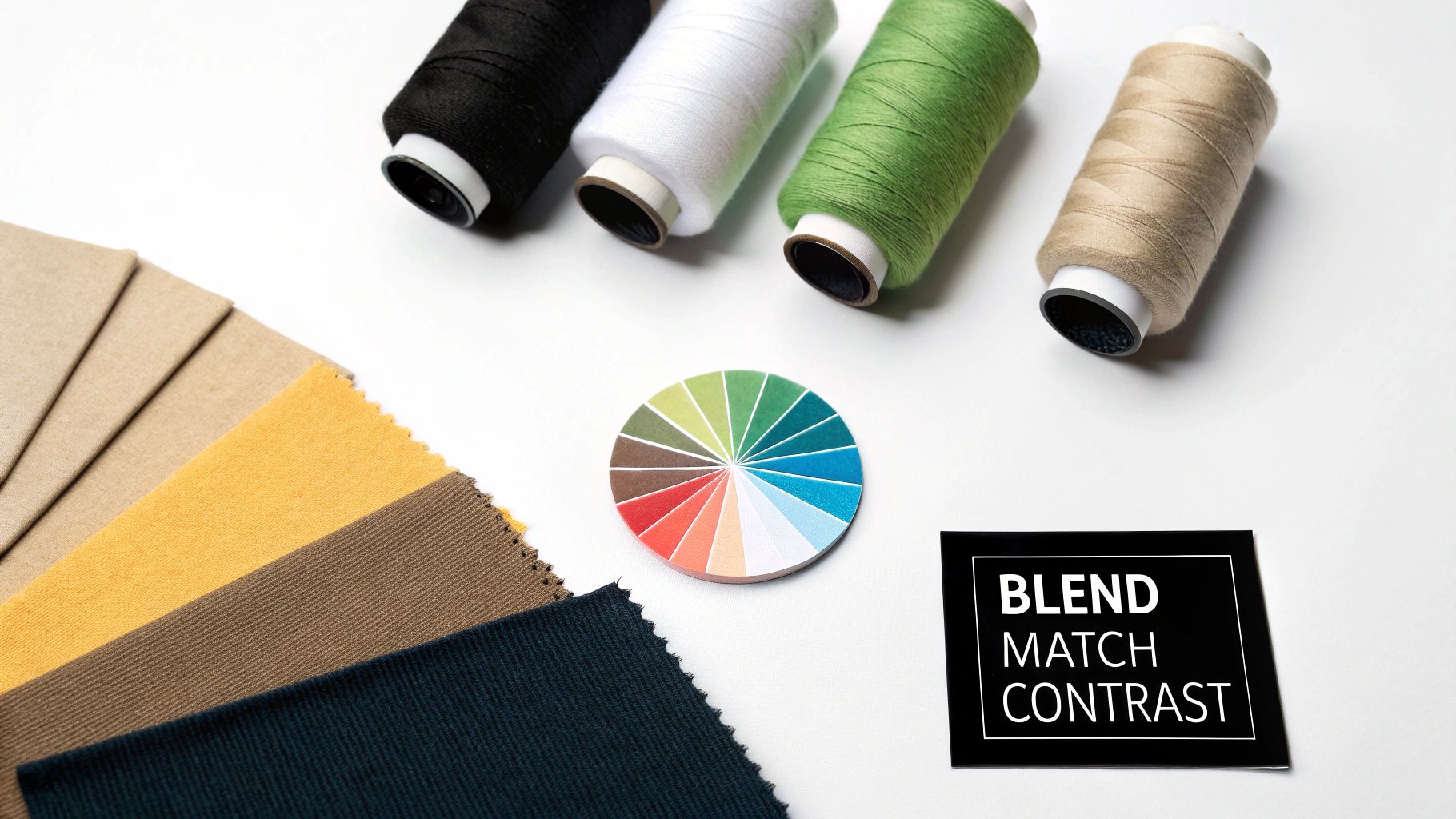
Choosing a thread color is easily one of the most exciting artistic decisions in the whole quilting process. It’s your chance to move beyond pure function and add another layer of personality to your work. Instead of just grabbing the spool that looks "close enough," let's talk about three powerful strategies that seasoned quilters use to make their thread choices count.
This is the moment your quilting cotton thread goes from being a construction tool to a design element. With the right choice, you can either make your stitches practically disappear or turn them into the star of the show.
Sometimes, you want the fabric to do all the talking. The goal of blending is to make your quilting stitches recede into the background, letting the color and pattern of your piecing shine. This is a go-to for piecing seams or for quilting over busy, multi-colored fabrics where you don't want the thread to create a distracting line.
The secret weapons for blending are rarely stark white or black. Instead, think in neutrals. A good medium gray, taupe, or beige thread acts like a chameleon, magically picking up the tones of the surrounding fabrics. It becomes almost invisible without washing out light colors or creating a harsh line against dark ones.
Think of a neutral gray thread as a shadow. It doesn't scream for attention. It just provides quiet depth and structure, letting the quilt top's design take center stage.
Matching is the most straightforward approach, and it’s absolutely essential when you want your stitches to be invisible. This is the perfect technique for appliqué, where the whole point is to secure fabric shapes with stitches that are completely hidden from view.
To pull this off, you simply select a thread that is an exact, or near-exact, match to the fabric you’re stitching on. When you match the color and value perfectly, the thread just sinks into the fabric. The result is a flawless, professional finish where the appliqué shape seems to float on the background.
Alright, now it’s time to be bold. With the contrasting method, the thread is no longer just holding layers together—it becomes a prominent design feature. Here, you intentionally choose a color that pops against the fabric to show off a beautiful quilting pattern.
This is a fantastic opportunity to pull out a color wheel for a little inspiration.
This creative use of thread is part of a larger trend. The global sewing thread market is projected to grow from USD 2.29 billion to USD 3.18 billion by 2034, with cotton threads holding their own due to their beloved aesthetic in home textiles. You can read more about the growth of the sewing thread market to see how these industry shifts are shaping our craft.
All this talk about thread is great, but the real magic happens when you start putting it to use. That's where we come in. Here at High Country Quilts, think of us as your quilting partners, ready to help you take what you've learned and find that perfect spool of quilting cotton thread. We're not just another shop; we're your local home base in Colorado Springs for all things quilting.
Our team has years of hands-on experience, and honestly, we just love talking about thread. We’ve carefully selected a collection of premium cotton threads from brands we know and trust. Overwhelmed by color choices? Bring your fabric in! We'll lay it all out under our true color lights and help you find a match that makes your project sing.
As an authorized BERNINA dealer, our knowledge goes deeper than just the thread on the spool. We know how your machine, needle, and thread need to play together. We can give you practical, specific advice to get your machine humming along happily with whatever thread you choose, so you can get those smooth, gorgeous stitches you're after.
Picking the right thread can feel like a lot, but you never have to figure it out on your own. We’re here to be a place where you can ask any question, get a personal recommendation, and walk away feeling totally confident about your project.
Whether you're piecing your very first quilt or you're a seasoned quilter on the hunt for a specific thread to bring your vision to life, we've got your back. Stop by the shop, join one of our classes, or just come in to show us what you're working on. We're excited to be your local quilting resource and can't wait to see what you create.
When you're deep in the quilting world, a few common questions about thread always seem to pop up. Getting a handle on these details can really boost your confidence and, more importantly, the quality of your finished quilts. Let's tackle some of the most frequent ones we hear from quilters.
You can, but I wouldn't recommend it for a quilt you want to stand the test of time. Think of it this way: most all-purpose thread is polyester. It has a different stretch, a slight sheen, and it ages differently than cotton.
When you’re piecing together 100% cotton fabric, using a 100% quilting cotton thread means everything is playing on the same team. The fabric and thread will shrink and wear at the same rate through years of washing and loving. This harmony is your secret weapon against puckered seams down the road. For that classic matte finish and long-term durability, a good quality 50wt cotton thread is always the right call.
You’ll see this term on almost every quality spool. Mercerized cotton is thread that has been given a special bath in a sodium hydroxide solution. It sounds scientific, but the results are fantastic for quilters.
This process strengthens the cotton fibers, smooths them out so they glide through your fabric like butter, and helps them soak up dye more evenly for those rich, gorgeous colors we love.
In short, mercerizing gives you a stronger, smoother thread with a beautiful, subtle luster. The biggest bonus? It produces way less lint, which keeps your sewing machine happy. It's the modern standard for a reason.
Proper storage is more than just being tidy—it's about protecting your investment. The two biggest culprits that will ruin your thread are direct sunlight and dust.
The best thing you can do is keep your spools in a closed container. A clear plastic box or a thread rack tucked away in a cabinet works perfectly. This simple habit keeps them clean, organized, and shielded from light. Also, try to avoid stashing them in a damp basement or a hot attic, as extreme temperatures aren't a friend to your thread's long-term strength.
At High Country Quilts, our team lives and breathes this stuff. We're always here to answer your questions and help you find the perfect thread for your next masterpiece. Explore our collection and get expert advice today.
At High Country Quilts we care deeply about community. With our experiences in retail, we know that a store is not only a place to shop but also a place for the community to gather and share. During this busy...

Hi! We’re Adam and Renee Wheaton, the new owners of High Country Quilts! For more than 40 years, we’ve owned and operated vacuum and sewing businesses. Following in Renee’s father’s footsteps after he retired from All Discount Vacuum and Sewing in Colorado...


Leave a comment