
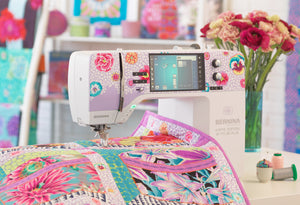

We Love Our Quilting Community
At High Country Quilts we care deeply about community. With our experiences in retail, we know that a store is not only a place to shop but also a place for the community to gather and share. During this busy...

You may be sitting at your kitchen table with a new rotary cutter, a stack of fabric you love, and one big question. How do I learn this without wasting fabric, getting lost in YouTube tabs, or feeling silly asking beginner questions?
That is exactly where many quilters begin.
Some people want to quilt but live far from a shop. Some work odd hours. Some have a sewing machine with buttons and feet they have never touched. Others have stitched for years but freeze the minute someone says “quarter-inch seam” or “walking foot.” Quilting classes online can make that first step feel much smaller. You can learn in slippers, pause when dinner burns, and replay the part about binding as many times as you need.
The best part is that online learning does not have to feel lonely. A good class can feel a lot like a quilt guild meeting. You hear another person explain the step, you see the sample, and you realize you are not the only one wondering why your points do not line up.
A few years ago, many quilters learned mostly from books, local classes, and guild friends. That still matters. But the circle has grown.
North America’s quilting market reached $4.2 billion in 2020, up from $3.8 billion in 2014, and the same survey found that 46% of quilters search online daily for quilting products and education, while 33% report they search and shop more online than they used to. The survey also notes that North America has 9 to 11 million quilters exploring these resources through websites, blogs, and YouTube (quilting trends survey results).
That sounds big, but on a personal level it feels simple. You need help. You open your laptop. You find a teacher.
Walking into a classroom can feel like showing up late to a potluck. Everyone else seems to know where the plates are. Online classes soften that feeling.
You can:
For many beginners, that control matters as much as the lesson itself.
Online quilting classes are not just videos on a screen. The good ones create rhythm and connection.
Some include live Q&A. Some have student groups where people post progress photos. Some combine video teaching with printable supply lists and cutting charts. That mix can feel surprisingly close to sitting beside a patient teacher at a classroom table.
A strong online class does not replace quilting community. It extends it into the hours and places where in-person help is hard to find.
That is why I think of the online world as a digital quilt guild. It is another doorway into the craft.
When people search for quilting classes online, they often hit a wall of choices. Beginner quilt. Jelly roll race. Free motion quilting. Foundation paper piecing. EQ8 design. Live Zoom workshop. Self-paced academy. It can all blur together.
A simpler way to sort it is to ask one question first. What kind of help do you need right now?
This is the best option if you are still learning the language of quilting.
Think of a beginner series like learning to cook from the basics. You do not start with a fancy layer cake. You learn how to hold the knife, read the recipe, and preheat the oven. In quilting, that means fabric grain, cutting safely with a rotary cutter, sewing a steady quarter-inch seam, pressing, and joining blocks without stretching them out of shape.
These classes suit people who want order. You do one lesson, then the next, then the next.
Typical outcome: confidence with foundational skills and a finished first project.
A project workshop is more like following one well-tested recipe from start to finish.
Maybe you want to make a table runner, a throw quilt, or a holiday wall hanging. The class focuses on that one project and teaches the skills needed along the way. This format works well for people who stay motivated when they can picture the final result from the first day.
Typical outcome: one completed item and a clearer sense of the full quilting process.
Some quilters already know the basics and want to improve one skill.
That is where technique classes shine. A class might focus only on free motion quilting, machine appliqué, binding, precise piecing, or color choice. Instead of skimming across many topics, it drills into one.
This works well if you keep saying, “I can make the top, but my quilting looks messy,” or “My borders ripple every time.”
Then there is the digital side of quilting.
If you use quilt design software, a structured class can save frustration. Electric Quilt 8 training helps quilters use built-in tools for fabric calculations and cutting instructions, and one source says this can save an estimated $20 to $50 per project by avoiding yardage mistakes (EQ8 membership training details).
That matters if you are designing your own layouts or trying to avoid buying too much, or too little, fabric.
| Class Type | Best For | Typical Outcome |
|---|---|---|
| Beginner series | Brand-new quilters | Core skills and a reliable first finish |
| Project workshop | Learners who want one guided make | A completed project and step-by-step practice |
| Technique masterclass | Quilters fixing one weak spot | Better control in a specific skill |
| Software training | Quilters designing digitally | More accurate planning and less fabric waste |
Some people need a full framework. Others learn best by making something useful right away. That is why it helps to understand your own preferences before you buy a class.
If you want a practical overview of adult learning styles, that resource can help you notice whether you prefer demonstration, repetition, discussion, or hands-on trial and error. In quilting, that can mean the difference between loving a class and abandoning it halfway through.
A final tip. Do not judge a class by the prettiest sample quilt. Judge it by whether the teacher helps you understand what to do next when your fabric shifts, your seams wobble, or your corners do not meet.
A good class is not just well filmed. It helps you finish.
That sounds obvious, but many quilters buy a class because the quilt is beautiful, then discover the teaching is rushed, the supply list is vague, or the platform is hard to use. A little screening up front saves a lot of frustration later.
Free tutorials can be helpful for quick ideas. But when a learner needs a dependable path, structure matters.
One source on structured quilting instruction reports that guided programs teaching fundamentals such as precise quarter-inch seams lead to a 70% reduction in seam ripper usage and that students are over twice as likely to complete a full quilt compared with those following free videos (structured online course results).
That tells me to look for classes that answer basic questions in the right order, instead of assuming you already know them.
Even a great teacher can be trapped inside a clunky system.
Before enrolling, look for:
If you are interested in how creators package and deliver digital courses, this course platform example gives a useful look at how online learning can be organized for students.
When I help someone choose a class, I usually ask these questions:
The best class is not the most advanced one. It is the one you will return to after a long day, with enough energy left to sew one more seam.
That is a true test. A class should make starting feel easier, not heavier.
Beginners often assume they need a dream studio before they can start. You do not.
You need a workable machine, a small set of reliable tools, and simple tech that lets you see and hear the lesson. That is enough to begin.
A basic sewing machine can absolutely get you started in quilting.
What matters most is that the machine sews a consistent straight stitch and that you understand how to thread it, change the needle, and keep the bobbin area clean. If your machine has more features, fine. If it does not, that is fine too.
If you already own a higher-end machine, the learning curve can be different. More features can be wonderful, but only if someone shows you when to use them.
Your first toolkit does not need to be huge. It needs to be dependable.
Beginners also benefit from a seam ripper within reach. That is not a sign of failure. It is part of quilting.
Online classes usually need less tech than people expect.
A laptop or tablet works well. A phone can work in a pinch, but a larger screen makes it easier to see hand placement, ruler position, and stitch detail. Headphones help if your room is noisy. A camera is useful for live sessions when you want to show your work.
This quick video gives a helpful visual starting point for setting up and learning at home:
Your first sewing space can be a dining table, a corner desk, or a fold-out table.
Try this:
If your setup lets you cut safely, sew comfortably, and hear the instructor clearly, it is good enough for your first class.
You can always add more gadgets later. Quilting rewards skill faster than it rewards shopping.
Some quilters love an appointment on the calendar. Others want to sew at midnight in pajama pants with the video paused every three minutes. Both are valid.
The right format depends less on skill level and more on how you learn and how your week functions.

A live class gives you real-time contact with the teacher and the group.
That can be a huge help when you are stuck on something visual, like ruler placement or thread tension. You ask, they answer. If you need a broader sense of what interactive teaching can include, this overview of features of live classes is useful.
Live classes often work best for quilters who like accountability. If the class starts Tuesday at six, you show up Tuesday at six.
Recorded classes fit around caregiving, work shifts, travel, and plain old tiredness.
They are especially helpful in quilting because many steps benefit from replay. Maybe the instructor demonstrates chain piecing quickly. Maybe the binding corner happens fast. With a recording, you stop, rewind, and watch hands and fabric move together until it clicks.
A lot of quilters also like building their own learning library over time.
| Format | Best Fit | Main Strength | Main Challenge |
|---|---|---|---|
| Live sessions | Learners who want interaction and routine | Immediate feedback | You must be available at set times |
| Recorded lessons | Learners who need flexibility and repetition | Pause and rewatch anytime | You need more self-discipline |
You may prefer live if:
You may prefer recorded if:
If you are comparing broader online creator and course ecosystems, this roundup of UGC creator platforms is a handy way to think about how different platforms support different learning experiences.
The happy middle ground is a hybrid class. You watch lessons when it suits you, then join a live session for questions. For many quilters, that is the sweet spot.
Online learning is convenient. Local support is grounding. Put them together and you get something much better than either one alone.
That is especially true in quilting, where a person may learn piecing from a video at home, then need fabric advice, machine help, or a second set of eyes on a block the next day.
One quilting industry source says 76% of quilters still prefer local quilt shops over big box stores, even while online sales continue to grow (quilting industry statistics). That lines up with what many of us see every week. Quilters enjoy digital convenience, but they still want a real place for fabric, conversation, troubleshooting, and encouragement.
That is where a local shop with online class options becomes so valuable.
A hybrid model can look like this:
Generic quilting classes often teach universal techniques. That part is helpful.
But many do not address the machine sitting right in front of you. If you own a more advanced machine, you may still wonder which foot to use, how to handle dual-feed, or why the stitch quality changes when you move from piecing to quilting.
That gap matters. A quilter can understand the project and still struggle because the machine setup is unclear.
This is one reason hybrid learning makes sense for machine owners who want more than broad instruction. Some students do fine with universal classes. Others need machine-specific support layered on top.
Quilting is full of small judgments.
Should this border fabric be quieter? Is this thread too dark? Did I trim the block correctly, or did I shave off the points? A local quilting community helps with those decisions in a way recorded content often cannot.
You also gain the emotional side of learning:
For people exploring different ways creative communities are built online, this join form example for a creator agency shows how digital communities often start with a simple entry point, then grow through support and participation. Quilting communities work much the same way. People join, ask, share, and improve together.
The strongest quilting classes online do not leave students alone with a supply list and a password. They connect skill-building to real support.
That matters for every quilter, but especially for anyone sewing on a machine with advanced features they want to use well, not just own.
Yes. A beginner can learn very well online if the class is structured, clear, and paced for real beginners.
The key is choosing a class that starts with basic skills instead of dropping you into the middle of a project. Good beginner instruction treats rotary cutting, seam allowance, pressing, and fabric handling as skills to learn, not assumptions.
Prices vary widely.
Some recorded classes are modestly priced. Live workshops and multi-week courses usually cost more because they include more direct instruction or support. Instead of looking only at price, look at what is included. Patterns, templates, replay access, and question support all affect value.
That happens to almost everyone at some point.
Try one of these fixes:
Stop before guessing too much.
Check the lesson again. Compare your piece to the sample. Look at the step before the mistake, not just the step where you noticed it. In quilting, the visible problem often began earlier.
If support is available, ask a specific question. A clear photo and a short description usually get better help than “It looks wrong.”
Sometimes yes, sometimes no.
A key underserved area in online quilting education is machine-specific training, especially for owners of advanced machines such as BERNINA models that include features like stitch regulators or dual-feed systems. That kind of support is a gap generic online classes do not always fill, while hybrid help from an authorized dealer can address it more directly (online quilting classes and machine-specific support).
If your class teaches piecing well but not your machine setup, you may still need extra guidance.
No.
A reliable sewing machine, basic cutting tools, thread, fabric, and a way to watch the class are enough to begin. Start with what supports the lesson in front of you. Add specialty rulers, feet, and extras only when your projects call for them.
Read the supply list and class description carefully.
If the class assumes comfort with cutting, piecing, and pressing, and you have not done those things yet, begin with a more foundational option. There is no prize for starting too hard.
If you want quilting guidance that pairs online convenience with in-person expertise, especially for BERNINA owners who need machine-specific help, High Country Quilts is worth a close look. Their Colorado Springs shop brings together fabric, machines, classes, and the kind of practical support that helps quilters keep going when a project gets tricky.
At High Country Quilts we care deeply about community. With our experiences in retail, we know that a store is not only a place to shop but also a place for the community to gather and share. During this busy...

Hi! We’re Adam and Renee Wheaton, the new owners of High Country Quilts! For more than 40 years, we’ve owned and operated vacuum and sewing businesses. Following in Renee’s father’s footsteps after he retired from All Discount Vacuum and Sewing in Colorado...


Leave a comment