
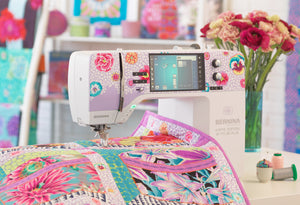

We Love Our Quilting Community
At High Country Quilts we care deeply about community. With our experiences in retail, we know that a store is not only a place to shop but also a place for the community to gather and share. During this busy...


So, you’ve started searching for "quilting classes for beginners near me." That’s a brilliant move. While you can find tons of tutorials online, nothing truly compares to the experience of a live, in-person class. It’s hands-down the single best way to build a strong foundation in this incredible craft.

Learning to quilt is a bit like learning to dance. You could watch videos and try to mimic the steps on your own, but having a teacher there to guide your rhythm and correct your form makes all the difference. A local quilting class provides that same kind of immersive, supportive environment to kick off your creative journey.
For most new quilters, the first major hurdle is the deceptively simple quarter-inch seam. This one little seam is the absolute bedrock of accurate piecing, and getting it right can feel frustrating at first. This is where a great instructor is worth their weight in gold.
In a class, they can look right over your shoulder and offer immediate, personalized feedback. "Try holding your fabric like this," or "Let's tweak your machine tension just a bit." That kind of real-time correction helps you build good habits from day one and speeds up your learning curve in a way a video simply can't. It’s the difference between watching a cooking show and having a chef right there in the kitchen with you.
When you sign up for a local class, you’re not just learning a new skill—you’re plugging into a community. Suddenly, you're in a room full of other people who are just as excited (and maybe a little nervous!) as you are. Sharing those "aha!" moments and navigating the learning process together makes everything more fun and way less intimidating.
Quilting is a massive and incredibly welcoming world. There are an estimated 9-11 million active quilters in the US and Canada alone, and newcomers like you are a huge part of what keeps this craft thriving. You can find more cool facts in the 2022 Quilting Trends Survey.
This guide is here to help you find the perfect class to get started. We’ll break down what to expect in a beginner course, how to spot a great teacher, and what supplies you'll actually need, so you can walk into your first class with confidence and excitement.
Walking into your first quilting class can feel a little nerve-wracking, like the first day of school all over again. There's a buzz of excitement mixed with a bit of "What am I getting myself into?" Let me walk you through what actually happens, so you can step into that classroom with confidence.
Your first session is almost always about getting acquainted with the essential tools of the trade. Think of it as your quilting toolkit orientation. Instead of just being handed a supply list, a good instructor will introduce you to the holy trinity of quilting: the rotary cutter, a self-healing cutting mat, and a clear acrylic ruler. They'll spend time showing you how to hold and use them safely—this is non-negotiable for getting those clean, precise cuts that make everything else so much easier.
Once you're comfortable with your cutting tools, you’ll zero in on the single most important technique in all of quilting: sewing a perfect quarter-inch seam. This is the secret sauce. It's what makes all your carefully cut pieces fit together like a puzzle. It sounds almost too simple, but trust me, getting that seam consistent is a game-changer.
Your instructor will show you exactly how to set up your sewing machine, maybe even suggesting a specific presser foot, to nail that perfect 1/4" every single time. Honestly, if you only take one thing away from your first class, let it be this. Getting this right from day one will save you a world of frustration down the road.
With your new seam-sewing prowess, you'll be ready to tackle your very first quilt block. Most beginner classes start with a classic, for good reason.
Your teacher will break it all down into bite-sized pieces. You’ll learn how to cut your squares, how to "chain piece" them to sew more efficiently (a fantastic little trick), and finally, how to put them all together.
As you progress through the class, each new skill will stack neatly on top of the last. You’ll go from making just one block to making several, and then you’ll learn how to join them together to create a "quilt top"—the pretty, patterned front of your quilt. This is the moment when you really start to see your work come to life.
Quilting is a beautifully layered process. You start by piecing the top. Next, you build the 'quilt sandwich' with the top, the batting (the cozy middle layer), and a backing fabric. The magic happens when you quilt all three layers together and finish the edges with binding.
The later parts of a beginner course will guide you through these finishing steps. You'll learn the knack of layering your quilt sandwich without getting lumps or wrinkles. Then you'll do some basic "quilting," which is just the stitching that holds it all together. This might be simple straight lines or "stitching in the ditch" (sewing right along your existing seam lines).
Finally, you’ll tackle binding. This is the fabric strip that wraps around the raw edges of your quilt, giving it a clean, durable, and professional-looking finish. When all is said and done, you'll leave that class not just with a finished quilt, but with the confidence and know-how to start your next project.
Choosing your first quilting class feels a bit like picking out fabric for a new project—there are so many options, and you want to find the one that just feels right. The goal isn't just to learn a skill; it's to have a great time doing it. The right class will set you up for a lifelong love of quilting, not leave you feeling frustrated.
So, what should you look for? Think about class size first. A smaller group, usually under ten people, means you’ll get more one-on-one attention from the instructor. That personal guidance is gold when you're trying to figure out how to use a rotary cutter safely or get that perfect quarter-inch seam.
The instructor’s teaching style is just as crucial. Are they known for being patient and encouraging, or do they move at a brisk, technical pace? Sift through online reviews for clues. Look for comments about how the teacher helps students who are struggling or whether they create a welcoming atmosphere. A good beginner teacher makes it safe to ask questions—even the ones you think are silly.
You’ll quickly discover that quilting classes aren't a one-size-fits-all deal. They’re offered in a few different formats, and understanding them will help you narrow down your search for "quilting classes for beginners near me."
Here are the most common setups you'll run into:
No matter which format you choose, you'll be learning the same fundamental three-stage process: cut, sew, and finish.

This simple workflow is the heartbeat of every quilting project, and you’ll master each step whether you’re in a quick workshop or a longer course.
To help you decide, think about what you really want to get out of the experience. Are you just dipping a toe in the water, or are you ready to build a solid foundation? If you're curious about what else is out there, you can explore different courses to see the wide variety of learning opportunities available. For a deeper dive on what makes any course worthwhile, you might find our guide on what to look for at https://ugccreator.com/course/ helpful.
Choosing the right format can make all the difference. This table breaks down what to expect from each type so you can match a class to your learning style and schedule.
| Class Format | Typical Duration | Best For | Pros | Cons |
|---|---|---|---|---|
| Single-Day Workshop | 4-8 hours | Quick skill-building, testing the waters | Immediate results, low time commitment | Can feel rushed, less time for practice |
| Multi-Week Course | 2-3 hours/week for 4-8 weeks | Building a solid foundation, detailed instruction | Paced learning, time to absorb skills, community feel | Requires a consistent weekly commitment |
| Project-Based Class | Varies (workshop or multi-week) | Goal-oriented learners, creating a finished item | High motivation, tangible accomplishment | Skills learned may be project-specific |
Ultimately, the best class for you is the one that gets you excited to start creating. Read the descriptions, check out the reviews, and pick the one that feels like the beginning of a wonderful new hobby.
A truly great class isn't just about the project; it's about the process and the people. The ideal environment makes you feel comfortable making mistakes, celebrates small wins, and inspires you to continue creating long after the final session ends.
Trust your gut. Look for a class that promises not just to teach you the how, but to spark a genuine passion for the craft.

Walking into a craft store for the first time can feel a little overwhelming. There are so many gadgets and gorgeous fabrics! But don't worry, you don't need to buy the whole store to get started. Let's break down the true must-haves versus the nice-to-haves so you can show up to class feeling prepared and confident.
First thing's first: check your class supply list. Before you spend a dime, see what the studio provides. Many beginner classes have sewing machines and large cutting mats available for student use, which can save you a significant upfront cost. Your instructor is your best guide, and they'll point you toward exactly what you need.
Precision is everything in quilting. To get those perfectly matched points and straight seams, you need cuts that are dead-on accurate, and scissors just won't, well, cut it. This trio of tools is the secret to getting it right from the very beginning.
These three items work together as a team. They're a non-negotiable investment that will make your piecing process smoother, safer, and far more enjoyable.
Okay, this is the fun part! For your first project, make it easy on yourself and stick with 100% quilting cotton. It's stable, presses beautifully, and doesn't wiggle around like slippery fabrics can. It's the ideal material to learn on.
Don't get bogged down by color theory just yet. A foolproof way to choose fabrics is to find one multi-colored "focus fabric" that you absolutely love. Then, simply pull three to five coordinating colors from the print itself. It's an instant recipe for a quilt that looks beautifully cohesive.
A Quick Pro-Tip: Always pre-wash your fabrics before you cut into them. Cotton is known to shrink and some colors can bleed in the first wash. Getting this step out of the way first means your finished quilt blocks will stay the right size and the colors will stay where they belong.
When it comes to thread, a good quality 50-weight 100% cotton thread is the way to go. Start with a neutral color like gray, cream, or beige. A neutral thread will blend into almost any fabric, which is a fantastic little trick when your stitches aren't quite perfect yet! With these supplies gathered, you’ll be all set to start your quilting adventure.

If your search for “quilting classes for beginners near me” led you here, and you’re in the Atlanta metro area, you’re in luck. At Famcut, Atlanta's go-to studio for sewing and cosplay creation, we’re all about turning that online search into a hands-on creative adventure.
Our studio is a bright, modern space designed for makers like you. We get it—starting a new hobby can feel a little daunting. That’s why our beginner workshops are taught by experts who are not only skilled but also patient and encouraging. We’ve built a place where questions are always welcome and every stitch feels like a small victory.
Here at Famcut, we love connecting timeless quilting skills with cool, modern projects. You’ll absolutely learn the fundamentals needed to create a beautiful traditional quilt, but we also love showing you how those same skills can elevate other passions, like crafting amazing cosplay or unique custom clothing.
Our beginner projects are all about building your confidence and letting you walk away with something you’re proud of. You might start with one of these:
Quilting isn't just a craft; it's a massive creative movement. The global quilt market hit a value of $5.32 billion in 2024, and it’s still growing as more people rediscover the joy of making things by hand. We see that passion every day at Famcut as Atlanta locals join the 30 million sewists worldwide.
The best way to get a feel for what we do is to check out our schedule and find a workshop that sparks your interest. It's also interesting to see how local service businesses optimize for discovery to understand why certain classes pop up first in your search results.
Ready to put down the phone and pick up a needle? Visit Famcut.com to see our upcoming classes and join a welcoming community of creators right here in Atlanta.
Jumping into something new always brings up a few questions. Trust me, every single quilter has been in your shoes, wondering about the same things before their first class. So, let's get those common concerns out of the way and give you the confidence to dive in.
This is easily the number one question I hear, and the answer is almost always a resounding no! Most quilt shops and studios know that a sewing machine is a big investment, and they don't expect beginners to have one.
They’ll often have classroom machines you can use, either as part of the class fee or for a small rental. This is actually a huge perk. You get to test-drive a good machine and figure out what features you love before you even think about buying. Of course, if you already have a machine, bring it! Learning on your own machine with an expert looking over your shoulder is the fastest way to get comfortable with it. Just double-check the class details first.
Prices can be all over the map, depending on where you live, how long the class is, and what's included. But to give you a ballpark idea, here's what you can generally expect.
When you're looking at the price, remember to consider the total value. A more expensive class that includes your fabric kit, the pattern, and access to all the tools can actually be a fantastic deal. It saves you the headache and hidden costs of trying to gather everything yourself.
Think of it this way: you’re not just paying for a lesson. You're paying for the dedicated space to create, an expert's guidance to help you avoid frustrating (and expensive!) mistakes, and a perfectly planned experience to make sure you walk away with something you love.
Don't worry, no one's going to ask you to make a king-sized masterpiece on your first try! A good beginner class is all about setting you up for a win. Your first project will be something small, satisfying, and totally doable.
You’ll likely make something like a quilted pillow cover, a simple table runner, a set of placemats, or a small wall hanging often called a "mini-quilt." These are chosen for a reason: they teach you all the essential quilting skills—cutting, piecing, quilting, and binding—on a scale that won't feel overwhelming.
Let’s bust this myth right now. You absolutely do not need to be some kind of artistic genius to be a fantastic quilter. Thinking you're not "creative" is one of the biggest hurdles people put in front of themselves, and it’s just not true.
Quilting is this wonderful mix of technical skill and artistic choice. At its heart, you're following a pattern and a series of steps, a lot like following a recipe to bake a cake. The instructor and the pattern give you the framework.
Your creativity shines through in the fun part—choosing your fabrics! The colors and prints you put together are what make the project uniquely yours. Once you get the hang of the techniques, your creative confidence will grow all on its own. Seriously, if you can follow directions, you can make a beautiful quilt.
Ready to stop wondering and start sewing? Here at Famcut, we absolutely love welcoming new quilters into the fold with fun, supportive classes right here in Atlanta.
Explore our beginner-friendly workshops and sign up today at Famcut.com!
At High Country Quilts we care deeply about community. With our experiences in retail, we know that a store is not only a place to shop but also a place for the community to gather and share. During this busy...

Hi! We’re Adam and Renee Wheaton, the new owners of High Country Quilts! For more than 40 years, we’ve owned and operated vacuum and sewing businesses. Following in Renee’s father’s footsteps after he retired from All Discount Vacuum and Sewing in Colorado...


Leave a comment