

We Love Our Quilting Community
At High Country Quilts we care deeply about community. With our experiences in retail, we know that a store is not only a place to shop but also a place for the community to gather and share. During this busy...


Ever dream of sewing a cozy quilt or a sharp, stylish jacket but feel daunted by all the prep work? Buying quilted cotton fabric by the yard is your secret weapon. This clever, pre-layered material lets you jump straight to the fun part of sewing, making those ambitious projects feel surprisingly simple.

Think of it this way: traditional quilting is a bit like baking from scratch. You have to gather your top fabric, batting, and backing, then painstakingly pin or baste them all together into a "quilt sandwich" before you even think about your first stitch. It's a lot of work.
Quilted cotton fabric, on the other hand, is like getting that sandwich delivered right to your door. It arrives as a single, complete textile, already professionally stitched together. For anyone who wants beautiful quilted results without hours of prep, this convenience is a huge relief.
But this isn't just about saving time—it’s about opening up a whole new world of creative possibilities. Projects that once seemed too complicated or time-consuming are suddenly well within reach.
It’s no surprise that sewers are falling in love with these versatile materials. The global fabrics market, valued at $142.3 billion in 2025, is expected to grow to $198.94 billion by 2030. For us, that means an ever-expanding selection of gorgeous, high-quality quilted cottons to choose from. You can get more details by reading the full fabrics market report.
This guide will walk you through everything you need to know about this amazing material so you can start your next project with total confidence.
When you start looking for quilted cotton fabric by the yard, you'll quickly realize there's more than one way to get that beautiful, puffy texture. It really comes down to how much of the work you want to do yourself.
Think of it like making dinner. You could grab a delicious, ready-made meal, use a meal-prep kit where the ingredients are chopped and ready to combine, or cook everything completely from scratch. Each approach gets you a wonderful result, but the process, time, and creative input are totally different. Let’s break down your options.
The most common option you’ll see sold by the yard is pre-quilted fabric. This is your ready-made meal. It's already a finished "quilt sandwich"—a top layer of fabric, a cozy middle layer of batting, and a backing, all professionally stitched together for you.
The huge win here is speed. You can just lay it out, cut your pattern pieces, and get right to sewing. It’s an absolute game-changer for projects where you want the quilted look without the hours spent layering, basting, and quilting large panels yourself.
Think of pre-quilted fabric like a beautifully decorated sheet cake. You can slice it into any shape you want and add your own sprinkles, but the fundamental cake and frosting layers are already baked in.
Quilt-As-You-Go (QAYG) is less a type of fabric you buy and more of a brilliant technique that offers a middle ground. With QAYG, you create and quilt individual blocks one at a time before joining them together.
This method gives you way more creative freedom than a pre-quilted fabric. You get to hand-pick the fabrics, batting, and backing for every single block, opening the door for really personal and intricate designs. It's a lot like making a gourmet sandwich—you control every single ingredient.
While it's more hands-on, quilting one small block at a time is far more manageable than wrestling a huge, heavy quilt through your sewing machine.
Finally, we have the traditional method. This is your "from-scratch" five-course meal. Here, you piece together your entire quilt top first, then layer it with a single large piece of batting and backing fabric. Only then do you quilt through all three layers.
This approach gives you complete and total creative control, from the piecing to the final stitch. It's the path most quilters take when they're making heirloom bed quilts, detailed art quilts, or large wall hangings. It's the most time and labor-intensive option, but the results can be breathtaking.
So, which method is right for you? It all depends on your project, your timeline, and how much control you want over the final look.
This table gives you a quick snapshot to help you decide which approach best fits what you're trying to accomplish.
| Method | Best For | Skill Level | Time Commitment |
|---|---|---|---|
| Pre-Quilted Fabric | Speedy projects, garments, accessories | Beginner | Low |
| Quilt-As-You-Go | Custom block designs, smaller projects | Intermediate | Medium |
| Traditional Quilting | Heirloom quilts, maximum creativity | Intermediate to Advanced | High |
Whether you're looking for instant gratification or a long-term creative journey, there’s a quilted fabric option that’s perfect for you.
To really understand what makes quilted cotton fabric by the yard so special, you have to look at what’s going on inside. I always tell my students to think of it like a fabric sandwich. The pretty fabric on top is what catches your eye, but the real magic—the warmth, the texture, the body—comes from the layers hidden within.
The heart of this fabric sandwich is the batting. This is the fluffy middle layer that gives your project its signature puffiness and cozy feel. It’s the difference between a simple piece of cloth and something that feels substantial and warm.

Choosing a batting really comes down to two things: what it’s made of and how thick it is. The fiber content affects everything from breathability to how it drapes, while the thickness, or "loft," determines how much your quilting stitches will pop.
When we talk about "loft," we're just talking about the batting’s thickness. Think of a low-loft batting as a light jacket—it's thin, flexible, and gives you a subtle, more modern quilted look. High-loft batting, on the other hand, is like a big, puffy winter coat—it’s thick, incredibly warm, and makes your stitches create deep, pillowy channels.
The last piece of our sandwich is the backing. This is the fabric on the underside that completes the project, adding durability and a finished feel. While many pre-quilted fabrics use a simple coordinating cotton, the possibilities here are endless.
A great backing can completely change the personality of a project. Always ask yourself how it will feel against the skin, especially if you’re making a garment or a throw blanket.
For example, using a soft flannel on the back of a baby quilt adds an extra layer of snuggly warmth. Or, you could use a plush minky to turn a simple lap quilt into something truly luxurious.
These little details are what drive so many of us to this craft. It's part of a huge consumer demand for quality, natural textiles. In fact, the global cotton market is projected to be worth USD 5.66 billion by 2026, with textiles like ours making up a massive 40.2% of that pie. That passion ensures we’ll always have a wonderful supply of materials to work with. If you're a data nerd like me, you can dig into the full cotton fiber market analysis to see the trends shaping our industry.
By understanding how these layers work together, you can pick the perfect quilted cotton fabric by the yard that has just the right warmth, drape, and texture for whatever you’re dreaming up.
Before you even think about numbers, take a moment to lay out your pattern pieces. This quick visualization is the best way to see the most efficient way to cut your fabric, giving you a solid baseline for how much you'll actually need.
My golden rule for buying fabric? Always get a little extra. I recommend adding 10-15% more yardage than you calculate. This isn't waste—it's your insurance policy against cutting mistakes, pre-washing shrinkage, or pattern matching.
A pattern can give you a starting point, but it doesn't know everything about the specific fabric you’ve fallen in love with. Here are a few critical details you’ll want to consider before heading to the cutting counter.
Let's see how this works with a classic project: a sturdy tote bag. Suppose your pattern calls for two main body pieces (18" x 20" each) and two straps (4" x 28" each).
First, let's arrange the pieces. On a standard 44-inch wide bolt of fabric, you can easily place the two 18-inch-wide body pieces side-by-side. This arrangement will use up a 20-inch length of fabric.
Next, we need room for the straps. Placing the two 28-inch straps will require another 28 inches of length. So, your absolute minimum need is 48 inches (20" + 28"), or about 1 1/3 yards.
But we're not stopping there. Let's add that buffer. If the fabric has a directional print and you want to leave room for error, adding an extra half-yard is a smart move. This brings your new shopping total to just under 2 yards, giving you the peace of mind to cut and sew without worrying about running out.
 Once you've chosen the perfect quilted cotton fabric by the yard, the real fun begins. Sewing with this thicker, layered material is a blast, but it does take a few tricks to get that smooth, professional finish you're after. The right tools and a little know-how can turn what might seem tricky into a genuinely joyful process.
Think of it like driving in the snow. Sure, you can probably manage with regular tires, but snow tires give you the grip and control to drive with confidence. When it comes to quilted fabric, your "snow tires" are a walking foot and the right kind of needle.
A walking foot is, without a doubt, your best friend for this job. It has its own set of feed dogs on top that work with your machine's feed dogs below. This dream team grips both the top and bottom layers of your fabric sandwich, moving them through the machine at the exact same pace. The result? No more frustrating shifting, bunching, or puckering.
Next up, let's talk needles. A standard needle just won't cut it here; it's likely to bend, break, or skip stitches. You need something with a bit more muscle. Grab a Universal or Quilting 90/14 needle. It's strong enough to pierce all those layers cleanly, giving you a beautiful, even stitch every time.
Pro Tip: Lengthen your stitch! I find a stitch length between 3.0 mm and 3.5 mm is the sweet spot. It creates a stronger seam on bulky fabric and helps your machine feed everything through much more easily.
You want your beautiful creations to last, and that all comes down to how you care for them. The big question is always: to pre-wash or not to pre-wash? If you're making a garment or mixing this fabric with others, I highly recommend pre-washing on a gentle, cold cycle. This takes care of any potential shrinkage before you ever make a cut.
On the other hand, if you love that classic, slightly crinkled quilt look, feel free to skip the pre-wash! The fabric will shrink up just a bit after its first wash, giving you that wonderfully cozy, traditional texture.
When it's time to clean your finished project:
Our collective love for cotton and quilting is stronger than ever. In 2024 alone, global consumption of woven cotton fabrics reached an incredible 15 billion square meters. This steady demand is great news for us, as it means a constant flow of beautiful, high-quality materials for all our projects. You can dive deeper into the numbers by checking out the global cotton fabric market data on IndexBox.io.
You've got the theory down, from understanding the layers of quilted cotton fabric by the yard to figuring out exactly how much you need. Now for the fun part—turning all that knowledge into a real, tangible project. The next step is all about getting your hands on some beautiful fabric and connecting with people who share your passion.
There’s a certain magic to a great local quilt shop that you just can't find online. It’s a place where you can actually feel the difference between a flannel and a cotton backing, or see how a particular print catches the light. This is where you stumble upon the perfect fabric you didn't even know you were looking for and get to hold it right next to your other choices to see how they play together.
Here at High Country Quilts, we’ve built more than just a store—we’ve created a home for makers right here in Colorado Springs. Our team is made up of passionate quilters who genuinely love to talk shop. We're always ready to help you brainstorm ideas, whether you're stuck on a color combination or wondering which batting is best for your project.
We think of our shop as a library of creative possibilities. Every aisle is carefully curated with high-quality fabrics and notions, just waiting to spark your next idea.
The best projects are often born from shared ideas and encouragement. Finding a supportive community turns a solitary hobby into a shared journey, where you can celebrate successes and learn from challenges together.
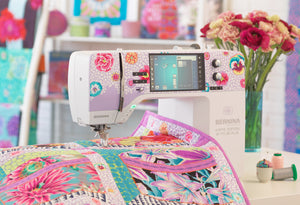
And because we know how important your sewing machine is, we are also an authorized BERNINA dealer. We offer expert service to keep your machine humming along perfectly, from routine maintenance to more complex repairs. A happy machine makes a happy quilter!
To help you build your confidence and expand your skills, we also offer a wide range of classes for every level. Whether you're making your very first tote bag or want to master an advanced technique, our classrooms are a fun, supportive space to learn and create.
We hope you'll stop by for a visit. Come join our community, and let's make something beautiful together.
When you're excited to start a new project with quilted cotton fabric by the yard, it's natural for a few questions to pop up. Trust me, we’ve all been there! Thinking through these details before you make that first cut can make all the difference.
Let's walk through some of the common queries we hear from sewists just like you.
This is a great first question! When you're stitching through three layers at once, you need the right tool for the job. We almost always recommend a 90/14 Universal or Quilting needle.
It has the strength to punch through the top fabric, batting, and backing cleanly without skipping stitches or shredding your beautiful fabric. For a perfect pairing, grab a good quality 40wt or 50wt cotton thread.
And here’s a pro-tip: don't even think about sewing this stuff without your walking foot! It’s the secret to keeping all those layers moving together smoothly and avoiding any unwanted puckers or ripples in your seams.
Oh, absolutely! Quilted cotton is having a major moment in fashion, and for good reason. It’s perfect for creating warm, structured outerwear that looks incredibly chic. Think trendy quilted jackets, stylish vests, and wonderfully cozy coats.
When you’re browsing patterns, keep an eye out for designs made for medium-to-heavyweight fabrics. Simpler shapes and clean lines are often your best bet, as they really let the quilted texture of the fabric shine.
Think of it this way: the fabric has already done the hard work of creating texture and interest. All you need is a simple silhouette to show it off beautifully.
Ah, the great pre-washing debate! The right answer really depends on what you're making.
For a Classic Quilt Look: If you're making a traditional quilt and all your other fabrics are also 100% unwashed cotton, feel free to skip the pre-wash. When you wash the finished quilt for the first time, all the fabrics will shrink up together, giving you that soft, crinkly texture that quilters adore.
For Garments and Mixed Fabrics: For clothing, bags, or any project where you're mixing quilted cotton with other types of fabric (like flannel or rayon), you should definitely pre-wash. A gentle, cold cycle and a low tumble dry will take care of any potential shrinkage before you cut. This ensures your finished garment fits just right and holds its shape wash after wash.
Ready to start creating? The team here at High Country Quilts would love to help you find the perfect fabric and supplies for your next masterpiece. Explore our collection and get inspired today!
At High Country Quilts we care deeply about community. With our experiences in retail, we know that a store is not only a place to shop but also a place for the community to gather and share. During this busy...

Hi! We’re Adam and Renee Wheaton, the new owners of High Country Quilts! For more than 40 years, we’ve owned and operated vacuum and sewing businesses. Following in Renee’s father’s footsteps after he retired from All Discount Vacuum and Sewing in Colorado...


Leave a comment